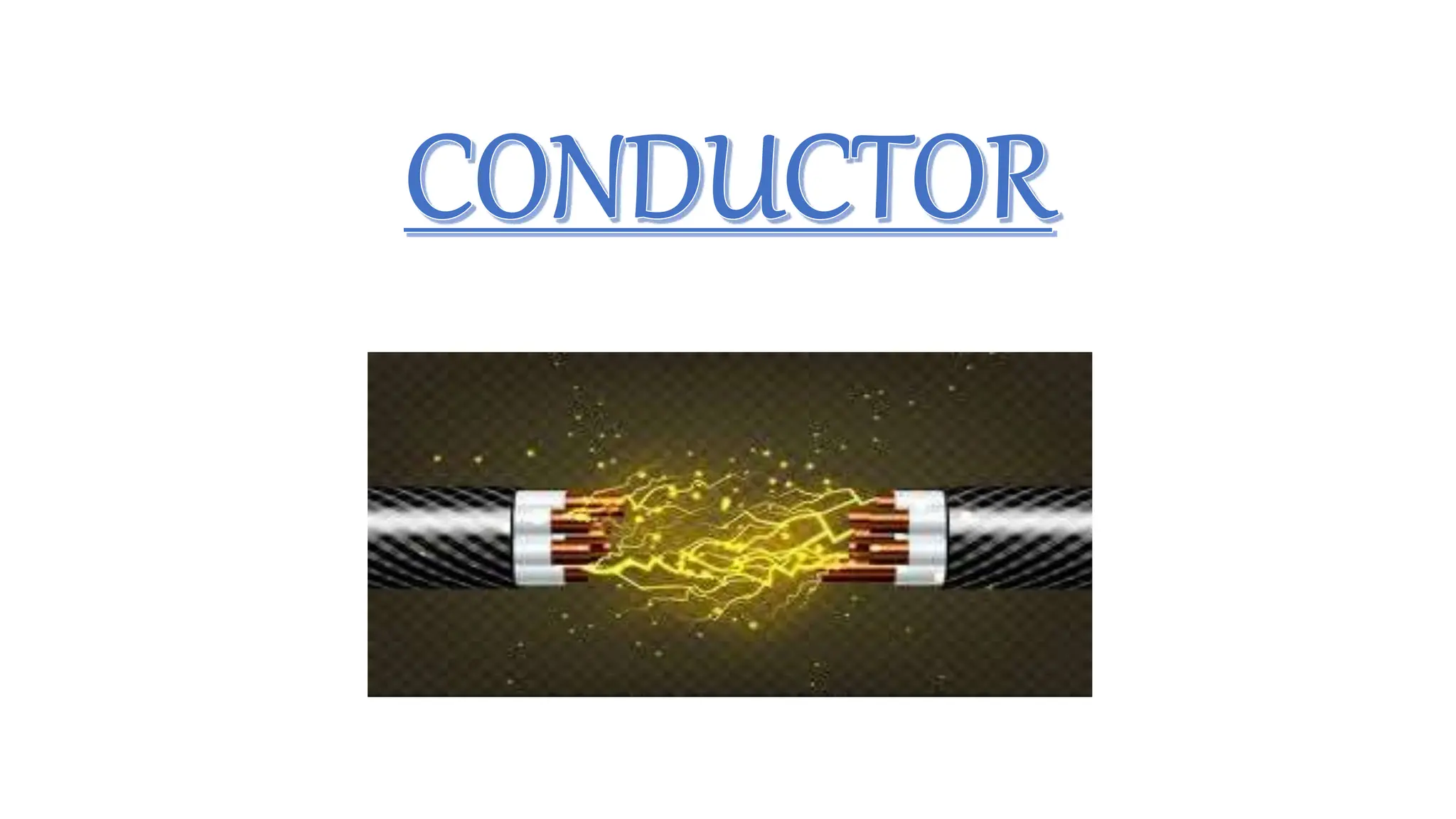
WHAT IS CONDUCTOR
A conductor is a substance or material that
allows electricity and heat to flow or pass
through it is called conductor.
The ability to conduct electricity is called
electrical conductivity.
The ability to conduct heat is called heat
conductivity.
In an electrical conductor, the electrical charges
moves from atom to atom when the potential
difference is applied across them.most metals
are electrical conductors.
In an thermal conductor,the heat passes from
atom to atom when we supply heat energy.
TYPES OF ELECTRICAL CONDUCTORS
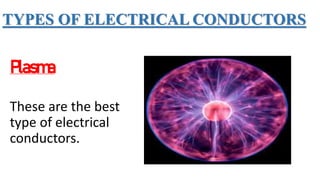
Plasma
These are the best
type of electrical
conductors.
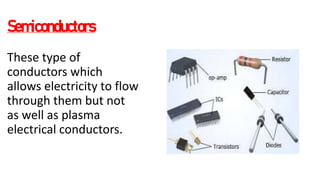
Semiconductors
These type of
conductors which
allows electricity to flow
through them but not
as well as plasma
electrical conductors.
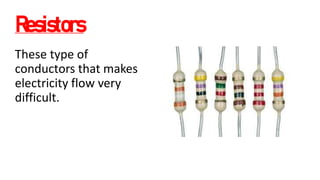
Resistors
These type of
conductors that makes
electricity flow very
difficult.
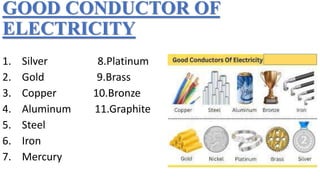
GOOD CONDUCTOR OF
ELECTRICITY
1. Silver 8.Platinum
2. Gold 9.Brass
3. Copper 10.Bronze
4. Aluminum 11.Graphite
5. Steel
6. Iron
7. Mercury
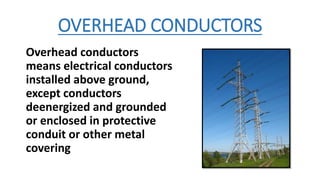
OVERHEAD CONDUCTORS
Overhead conductors
means electrical conductors
installed above ground,
except conductors
deenergized and grounded
or enclosed in protective
conduit or other metal
covering
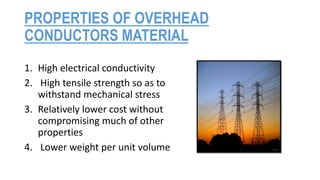
PROPERTIES OF OVERHEAD
CONDUCTORS MATERIAL
1. High electrical conductivity
2. High tensile strength so as to
withstand mechanical stress
3. Relatively lower cost without
compromising much of other
properties
4. Lower weight per unit volume
TYPES OF CONDUCTING MATERIAL
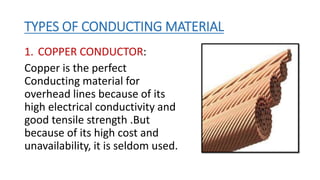
1. COPPER CONDUCTOR:
Copper is the perfect
Conducting material for
overhead lines because of its
high electrical conductivity and
good tensile strength .But
because of its high cost and
unavailability, it is seldom used.
2. ALUMINIUM CONDUCTOR :
As compared to copper, Aluminium
has very low conductivity and lower
tensile strength. However, the main
advantage of aluminium is that it is
cheaper. Considering the various
properties such as cost,
conductivity and weight and tensile
strength etc. Aluminium is widely
used for heavy current
transmission.
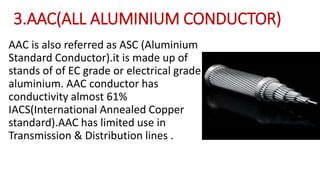
3.AAC(ALL ALUMINIUM CONDUCTOR)
AAC is also referred as ASC (Aluminium
Standard Conductor).it is made up of
stands of of EC grade or electrical grade
aluminium. AAC conductor has
conductivity almost 61%
IACS(International Annealed Copper
standard).AAC has limited use in
Transmission & Distribution lines .
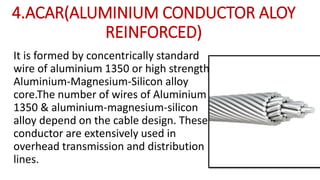
4.ACAR(ALUMINIUM CONDUCTOR ALOY
REINFORCED)
It is formed by concentrically standard
wire of aluminium 1350 or high strength
Aluminium-Magnesium-Silicon alloy
core.The number of wires of Aluminium
1350 & aluminium-magnesium-silicon
alloy depend on the cable design. These
conductor are extensively used in
overhead transmission and distribution
lines.
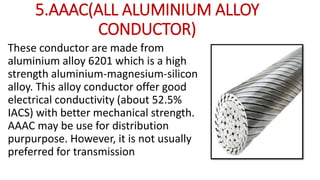
5.AAAC(ALL ALUMINIUM ALLOY
CONDUCTOR)
These conductor are made from
aluminium alloy 6201 which is a high
strength aluminium-magnesium-silicon
alloy. This alloy conductor offer good
electrical conductivity (about 52.5%
IACS) with better mechanical strength.
AAAC may be use for distribution
purpurpose. However, it is not usually
preferred for transmission
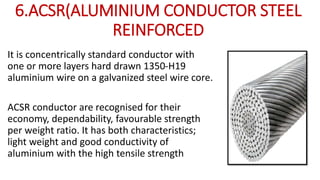
6.ACSR(ALUMINIUM CONDUCTOR STEEL
REINFORCED
It is concentrically standard conductor with
one or more layers hard drawn 1350-H19
aluminium wire on a galvanized steel wire core.
ACSR conductor are recognised for their
economy, dependability, favourable strength
per weight ratio. It has both characteristics;
light weight and good conductivity of
aluminium with the high tensile strength
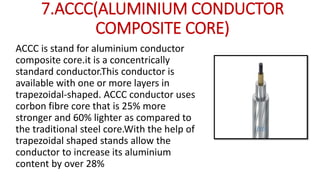
7.ACCC(ALUMINIUM CONDUCTOR
COMPOSITE CORE)
ACCC is stand for aluminium conductor
composite core.it is a concentrically
standard conductor.This conductor is
available with one or more layers in
trapezoidal-shaped. ACCC conductor uses
corbon fibre core that is 25% more
stronger and 60% lighter as compared to
the traditional steel core.With the help of
trapezoidal shaped stands allow the
conductor to increase its aluminium
content by over 28%
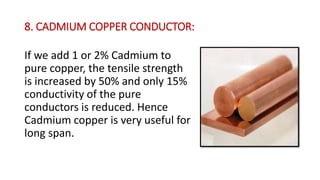
8. CADMIUM COPPER CONDUCTOR:
If we add 1 or 2% Cadmium to
pure copper, the tensile strength
is increased by 50% and only 15%
conductivity of the pure
conductors is reduced. Hence
Cadmium copper is very useful for
long span.
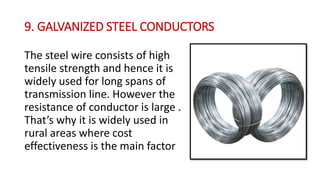
9. GALVANIZED STEEL CONDUCTORS
The steel wire consists of high
tensile strength and hence it is
widely used for long spans of
transmission line. However the
resistance of conductor is large .
That’s why it is widely used in
rural areas where cost
effectiveness is the main factor
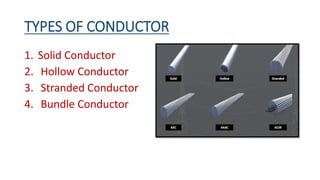
TYPES OF CONDUCTOR
1. Solid Conductor
2. Hollow Conductor
3. Stranded Conductor
4. Bundle Conductor
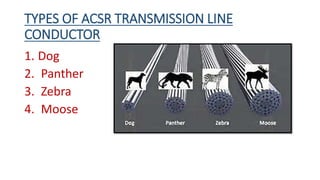
TYPES OF ACSR TRANSMISSION LINE
CONDUCTOR
1. Dog
2. Panther
3. Zebra
4. Moose
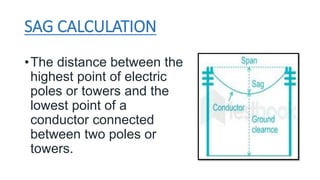
SAG CALCULATION
•The distance between the
highest point of electric
poles or towers and the
lowest point of a
conductor connected
between two poles or
towers.

Electrical Conductors and it's types.pptx

  • 2.
    WHAT IS CONDUCTOR Aconductor is a substance or material that allows electricity and heat to flow or pass through it is called conductor. The ability to conduct electricity is called electrical conductivity. The ability to conduct heat is called heat conductivity.
  • 3.
    In an electricalconductor, the electrical charges moves from atom to atom when the potential difference is applied across them.most metals are electrical conductors. In an thermal conductor,the heat passes from atom to atom when we supply heat energy.
  • 4.
    TYPES OF ELECTRICALCONDUCTORS Plasma These are the best type of electrical conductors.
  • 5.
    Semiconductors These type of conductorswhich allows electricity to flow through them but not as well as plasma electrical conductors.
  • 6.
    Resistors These type of conductorsthat makes electricity flow very difficult.
  • 7.
    GOOD CONDUCTOR OF ELECTRICITY 1.Silver 8.Platinum 2. Gold 9.Brass 3. Copper 10.Bronze 4. Aluminum 11.Graphite 5. Steel 6. Iron 7. Mercury
  • 8.
    OVERHEAD CONDUCTORS Overhead conductors meanselectrical conductors installed above ground, except conductors deenergized and grounded or enclosed in protective conduit or other metal covering
  • 9.
    PROPERTIES OF OVERHEAD CONDUCTORSMATERIAL 1. High electrical conductivity 2. High tensile strength so as to withstand mechanical stress 3. Relatively lower cost without compromising much of other properties 4. Lower weight per unit volume
  • 10.
    TYPES OF CONDUCTINGMATERIAL 1. COPPER CONDUCTOR: Copper is the perfect Conducting material for overhead lines because of its high electrical conductivity and good tensile strength .But because of its high cost and unavailability, it is seldom used.
  • 11.
    2. ALUMINIUM CONDUCTOR: As compared to copper, Aluminium has very low conductivity and lower tensile strength. However, the main advantage of aluminium is that it is cheaper. Considering the various properties such as cost, conductivity and weight and tensile strength etc. Aluminium is widely used for heavy current transmission.
  • 12.
    3.AAC(ALL ALUMINIUM CONDUCTOR) AACis also referred as ASC (Aluminium Standard Conductor).it is made up of stands of of EC grade or electrical grade aluminium. AAC conductor has conductivity almost 61% IACS(International Annealed Copper standard).AAC has limited use in Transmission & Distribution lines .
  • 13.
    4.ACAR(ALUMINIUM CONDUCTOR ALOY REINFORCED) Itis formed by concentrically standard wire of aluminium 1350 or high strength Aluminium-Magnesium-Silicon alloy core.The number of wires of Aluminium 1350 & aluminium-magnesium-silicon alloy depend on the cable design. These conductor are extensively used in overhead transmission and distribution lines.
  • 14.
    5.AAAC(ALL ALUMINIUM ALLOY CONDUCTOR) Theseconductor are made from aluminium alloy 6201 which is a high strength aluminium-magnesium-silicon alloy. This alloy conductor offer good electrical conductivity (about 52.5% IACS) with better mechanical strength. AAAC may be use for distribution purpurpose. However, it is not usually preferred for transmission
  • 15.
    6.ACSR(ALUMINIUM CONDUCTOR STEEL REINFORCED Itis concentrically standard conductor with one or more layers hard drawn 1350-H19 aluminium wire on a galvanized steel wire core. ACSR conductor are recognised for their economy, dependability, favourable strength per weight ratio. It has both characteristics; light weight and good conductivity of aluminium with the high tensile strength
  • 16.
    7.ACCC(ALUMINIUM CONDUCTOR COMPOSITE CORE) ACCCis stand for aluminium conductor composite core.it is a concentrically standard conductor.This conductor is available with one or more layers in trapezoidal-shaped. ACCC conductor uses corbon fibre core that is 25% more stronger and 60% lighter as compared to the traditional steel core.With the help of trapezoidal shaped stands allow the conductor to increase its aluminium content by over 28%
  • 17.
    8. CADMIUM COPPERCONDUCTOR: If we add 1 or 2% Cadmium to pure copper, the tensile strength is increased by 50% and only 15% conductivity of the pure conductors is reduced. Hence Cadmium copper is very useful for long span.
  • 18.
    9. GALVANIZED STEELCONDUCTORS The steel wire consists of high tensile strength and hence it is widely used for long spans of transmission line. However the resistance of conductor is large . That’s why it is widely used in rural areas where cost effectiveness is the main factor
  • 19.
    TYPES OF CONDUCTOR 1.Solid Conductor 2. Hollow Conductor 3. Stranded Conductor 4. Bundle Conductor
  • 20.
    TYPES OF ACSRTRANSMISSION LINE CONDUCTOR 1. Dog 2. Panther 3. Zebra 4. Moose
  • 21.
    SAG CALCULATION •The distancebetween the highest point of electric poles or towers and the lowest point of a conductor connected between two poles or towers.