1. Animation
2. 5 Types of Animation
3. Traditional Animation
4. 2d Vector-based Animation
5. 3d Computer Animation
6. Motion Graphics
7. Stop Motion
 Animation is an optical illusion a way of
tricking our eyes into thinking that lots of
motionless pictures are one moving image.
 If you have tried some simple animation then,
an animation course will develop this with
more sophisticated materials.
 The basic methods and techniques are the same
for all animation, and as of the wide range of
applications, animation graduates are in high
demand.
 So if you are a new animator, then learn more
about the different types of animation.
1. Traditional Animation
2. 2d Vector-based Animation
3. 3d Computer Animation
4. Motion Graphics
5. Stop Motion
 Traditional Animation is one of the older forms
of animation.
 Traditional Animation is sometimes referred
hand-drawn or cel animation.
 In Traditional Animation, the animators draw
images on a plain piece of paper fitted on a peg
using a coloured pencil, one frame at the time.
 Sequential drawings screened quickly one after
another creates the illusion of movement.
 2D Animation has become very popular due to
the accessibility of the technology. The growth
is increases of online video.
 2D animation can use many layers to build up
pictures. It can show anything from
backgrounds and landscapes to multiple
characters.
 Flash easy to use, as are other vector-based
animation programs.
 2D Animation can be created using software
such as Flash, Cel Action, After Effects and TV
Paint.
 3D Computer Animation is digitally modeled
in the program and then fitted with a ‘skeleton’
that allows animators to move the models.
 3D animation can be very realistic, and
animators can be very artistically skilled to
create a character.
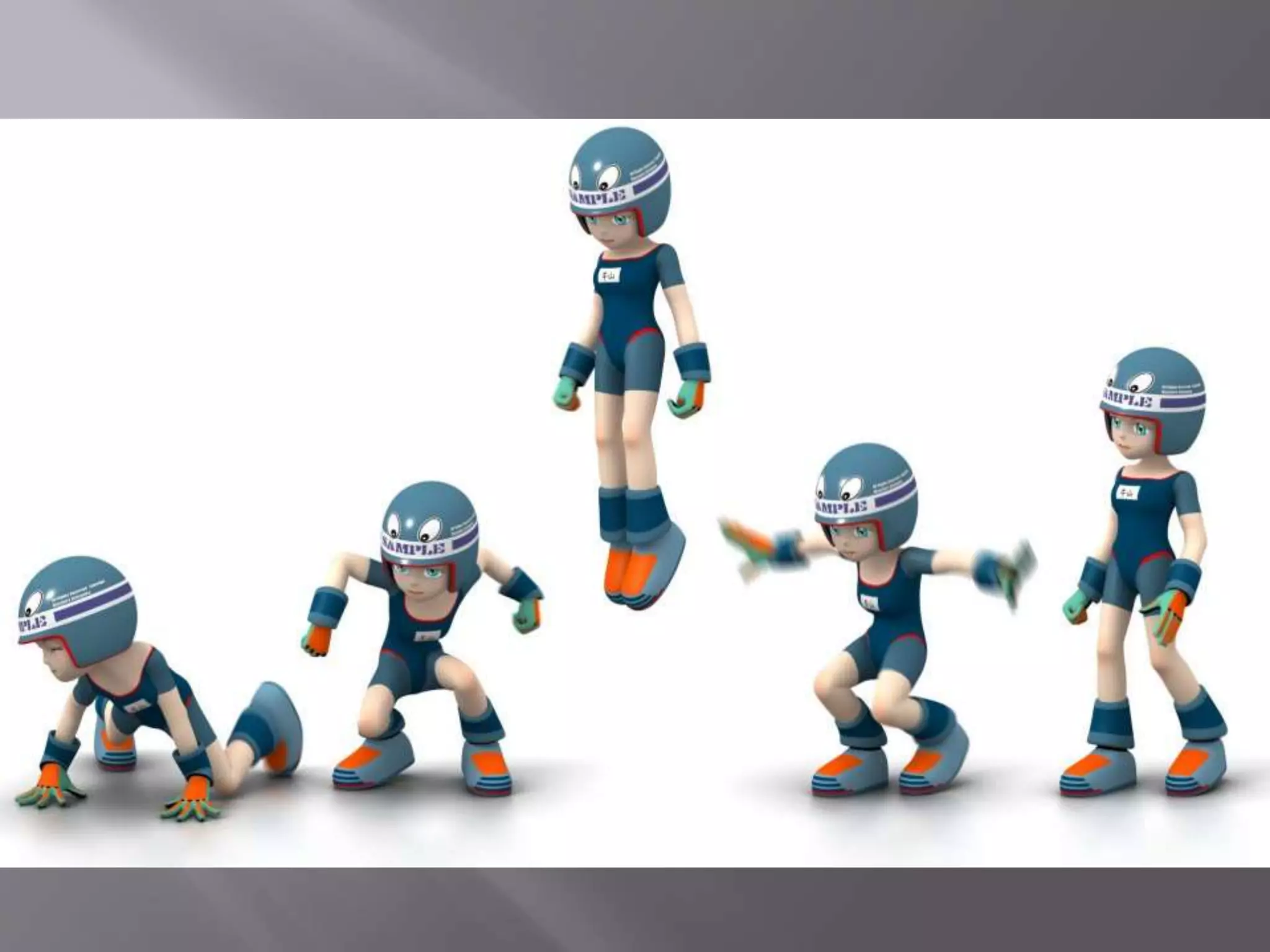
 3D animation, also referred as CGI or CG.
 It is made by generating images using
computers.
 The series of images are the frames of an
animated shot.
 In 3D Animation, they use programmes such as
Maya to create animation.
 It is the art of creatively moving graphic texts
or elements, usually for commercial or
promotional purposes.
 The process of creating Motion Graphics
depends on different programs.
 An actor will be filmed doing actions,
speaking, or even acting full scenes, while
special sensors on body and face are ‘captured’
using a film camera.
 This is then translated into a digital character,
which can be controlled by the animator.
 The process of Stop Motion is done by taking a
photo of an object, and then moving a little bit
and then taking another picture.
 The process is repeated and when the photos
are played one after another they give the
illusion of movement.
 Stop-motion uses photographic materials to
create the physical objects.
 Many animators work with stop-motion for
artistic reasons, as it is still difficult to recreate
stop-motion models digitally.
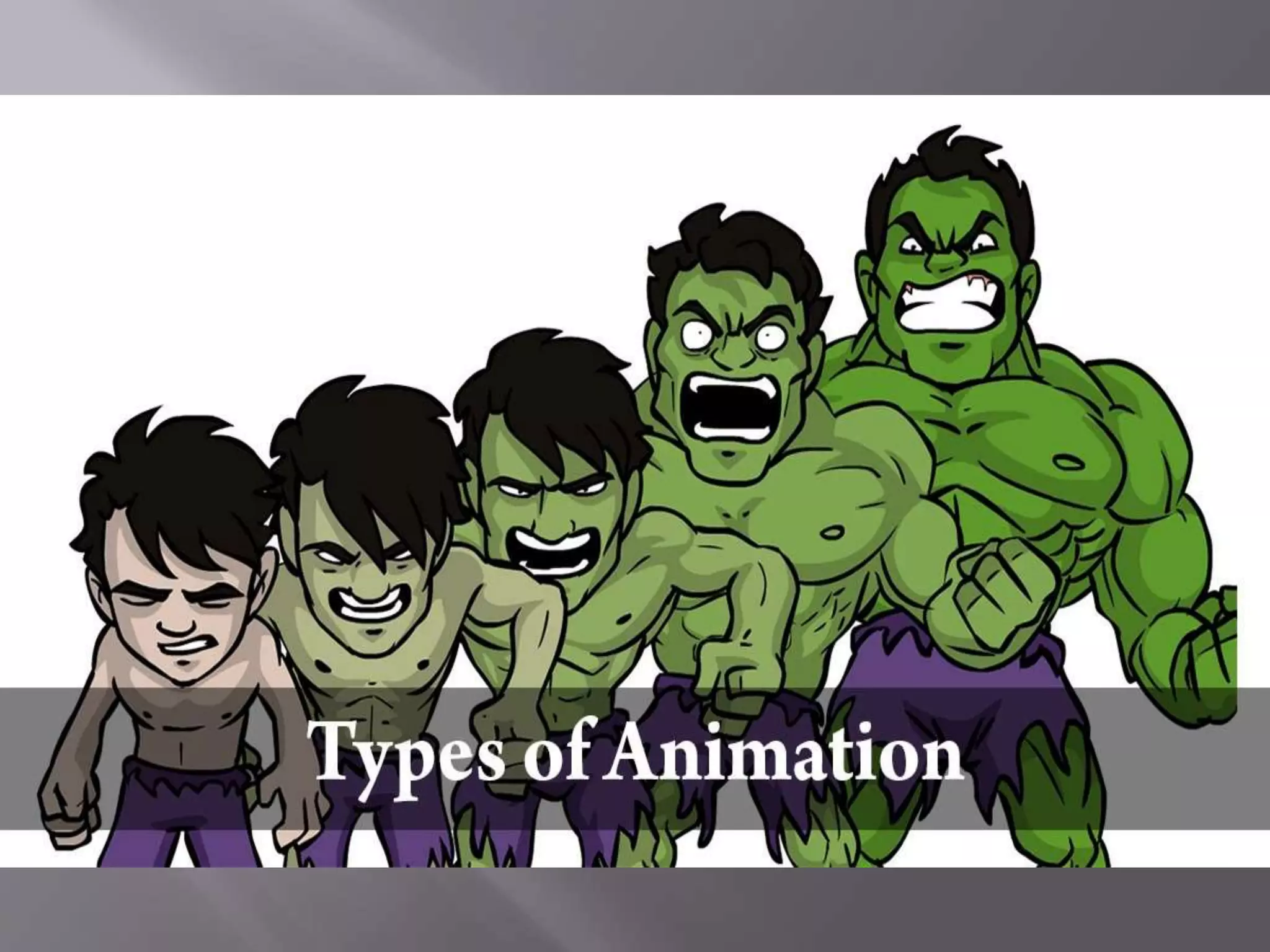
Types of animation

Types of animation

  • 2.
    1. Animation 2. 5Types of Animation 3. Traditional Animation 4. 2d Vector-based Animation 5. 3d Computer Animation 6. Motion Graphics 7. Stop Motion
  • 4.
     Animation isan optical illusion a way of tricking our eyes into thinking that lots of motionless pictures are one moving image.  If you have tried some simple animation then, an animation course will develop this with more sophisticated materials.
  • 5.
     The basicmethods and techniques are the same for all animation, and as of the wide range of applications, animation graduates are in high demand.  So if you are a new animator, then learn more about the different types of animation.
  • 7.
    1. Traditional Animation 2.2d Vector-based Animation 3. 3d Computer Animation 4. Motion Graphics 5. Stop Motion
  • 8.
     Traditional Animationis one of the older forms of animation.  Traditional Animation is sometimes referred hand-drawn or cel animation.
  • 9.
     In TraditionalAnimation, the animators draw images on a plain piece of paper fitted on a peg using a coloured pencil, one frame at the time.  Sequential drawings screened quickly one after another creates the illusion of movement.
  • 10.
     2D Animationhas become very popular due to the accessibility of the technology. The growth is increases of online video.  2D animation can use many layers to build up pictures. It can show anything from backgrounds and landscapes to multiple characters.
  • 11.
     Flash easyto use, as are other vector-based animation programs.  2D Animation can be created using software such as Flash, Cel Action, After Effects and TV Paint.
  • 12.
     3D ComputerAnimation is digitally modeled in the program and then fitted with a ‘skeleton’ that allows animators to move the models.  3D animation can be very realistic, and animators can be very artistically skilled to create a character.  3D animation, also referred as CGI or CG.
  • 13.
     It ismade by generating images using computers.  The series of images are the frames of an animated shot.  In 3D Animation, they use programmes such as Maya to create animation.
  • 14.
     It isthe art of creatively moving graphic texts or elements, usually for commercial or promotional purposes.  The process of creating Motion Graphics depends on different programs.
  • 15.
     An actorwill be filmed doing actions, speaking, or even acting full scenes, while special sensors on body and face are ‘captured’ using a film camera.  This is then translated into a digital character, which can be controlled by the animator.
  • 16.
     The processof Stop Motion is done by taking a photo of an object, and then moving a little bit and then taking another picture.  The process is repeated and when the photos are played one after another they give the illusion of movement.
  • 17.
     Stop-motion usesphotographic materials to create the physical objects.  Many animators work with stop-motion for artistic reasons, as it is still difficult to recreate stop-motion models digitally.