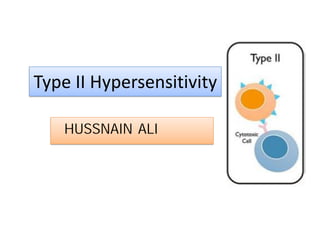
Type II Hypersensitivity
HUSSNAIN ALI
Type II Hypersensitivity
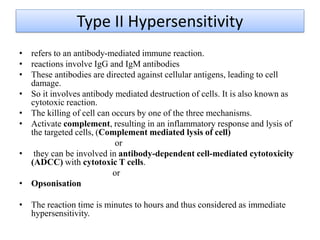
• refers to an antibody-mediated immune reaction.
• reactions involve IgG and IgM antibodies
• These antibodies are directed against cellular antigens, leading to cell
damage.
• So it involves antibody mediated destruction of cells. It is also known as
cytotoxic reaction.
• The killing of cell can occurs by one of the three mechanisms.
• Activate complement, resulting in an inflammatory response and lysis of
the targeted cells, (Complement mediated lysis of cell)
or
• they can be involved in antibody-dependent cell-mediated cytotoxicity
(ADCC) with cytotoxic T cells.
or
• Opsonisation
• The reaction time is minutes to hours and thus considered as immediate
hypersensitivity.
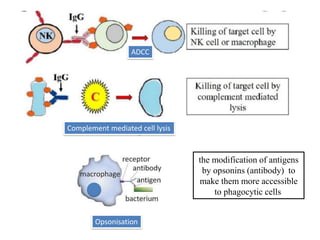
Opsonisation
ADCC
Complement mediated cell lysis
the modification of antigens
by opsonins (antibody) to
make them more accessible
to phagocytic cells
Type II Hypersensitivity
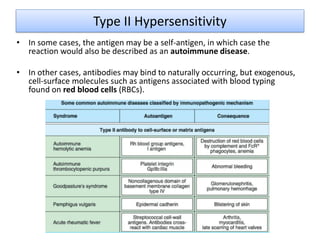
• In some cases, the antigen may be a self-antigen, in which case the
reaction would also be described as an autoimmune disease.
• In other cases, antibodies may bind to naturally occurring, but exogenous,
cell-surface molecules such as antigens associated with blood typing
found on red blood cells (RBCs).
Mechanism of Type II Hypersensitivity Reactions
• The reaction is completed in two phases – sensitization
phase and effector phase.
• A sensitization phase leads to production of antibodies
that recognize substances or metabolites that accumulate
in cellular membrane structures.
• In the effector phase, target cells become coated with
antibodies which lead to cellular destruction.
• Antibody bound to a surface antigen can induce the death
of the antibody-bound cell by three distinct mechanisms –
• by activation of the complement system,
• cell destruction by antibody dependent cell mediated
cytotoxicity (ADCC) or
• by the process of opsonization.
Some examples of Type II Hypersensitivity
• Transfusion reactions
• Hemolytic disease of the newborn
• Autoimmune hemolytic anemia,
agranulocytosis, and thrombocytopenia
• Specific drug reactions
• Glomerulonephritis
• Myasthenia gravis, Graves disease, and other
autoimmune disorders
Transfusion reaction
• A patient may require a blood transfusion because they lack sufficient
RBCs (anemia).
• For instance, if a person with type B blood receives a transfusion of type A
blood, their anti-A antibodies will bind to and agglutinate the transfused
RBCs.
• In addition, activation of the classical complement cascade will lead to a
strong inflammatory response, and the complement membrane attack
complex (MAC) will mediate massive hemolysis of the transfused RBCs.
• The debris from damaged and destroyed RBCs can occlude blood vessels
in the alveoli of the lungs and the glomeruli of the kidneys.
• Within 1 to 24 hours of an incompatible transfusion, the patient
experiences fever, chills, pruritus (itching), urticaria (hives), dyspnea,
hemoglobinuria (hemoglobin in the urine), and hypotension (low blood
pressure).
• In the most serious reactions, dangerously low blood pressure can lead to
shock, multi-organ failure, and death of the patient.

typeiihypersensitivityab-210607180234.pdf

  • 1.
  • 2.
    Type II Hypersensitivity •refers to an antibody-mediated immune reaction. • reactions involve IgG and IgM antibodies • These antibodies are directed against cellular antigens, leading to cell damage. • So it involves antibody mediated destruction of cells. It is also known as cytotoxic reaction. • The killing of cell can occurs by one of the three mechanisms. • Activate complement, resulting in an inflammatory response and lysis of the targeted cells, (Complement mediated lysis of cell) or • they can be involved in antibody-dependent cell-mediated cytotoxicity (ADCC) with cytotoxic T cells. or • Opsonisation • The reaction time is minutes to hours and thus considered as immediate hypersensitivity.
  • 3.
    Opsonisation ADCC Complement mediated celllysis the modification of antigens by opsonins (antibody) to make them more accessible to phagocytic cells
  • 4.
    Type II Hypersensitivity •In some cases, the antigen may be a self-antigen, in which case the reaction would also be described as an autoimmune disease. • In other cases, antibodies may bind to naturally occurring, but exogenous, cell-surface molecules such as antigens associated with blood typing found on red blood cells (RBCs).
  • 5.
    Mechanism of TypeII Hypersensitivity Reactions • The reaction is completed in two phases – sensitization phase and effector phase. • A sensitization phase leads to production of antibodies that recognize substances or metabolites that accumulate in cellular membrane structures. • In the effector phase, target cells become coated with antibodies which lead to cellular destruction. • Antibody bound to a surface antigen can induce the death of the antibody-bound cell by three distinct mechanisms – • by activation of the complement system, • cell destruction by antibody dependent cell mediated cytotoxicity (ADCC) or • by the process of opsonization.
  • 6.
    Some examples ofType II Hypersensitivity • Transfusion reactions • Hemolytic disease of the newborn • Autoimmune hemolytic anemia, agranulocytosis, and thrombocytopenia • Specific drug reactions • Glomerulonephritis • Myasthenia gravis, Graves disease, and other autoimmune disorders
  • 7.
    Transfusion reaction • Apatient may require a blood transfusion because they lack sufficient RBCs (anemia). • For instance, if a person with type B blood receives a transfusion of type A blood, their anti-A antibodies will bind to and agglutinate the transfused RBCs. • In addition, activation of the classical complement cascade will lead to a strong inflammatory response, and the complement membrane attack complex (MAC) will mediate massive hemolysis of the transfused RBCs. • The debris from damaged and destroyed RBCs can occlude blood vessels in the alveoli of the lungs and the glomeruli of the kidneys. • Within 1 to 24 hours of an incompatible transfusion, the patient experiences fever, chills, pruritus (itching), urticaria (hives), dyspnea, hemoglobinuria (hemoglobin in the urine), and hypotension (low blood pressure). • In the most serious reactions, dangerously low blood pressure can lead to shock, multi-organ failure, and death of the patient.