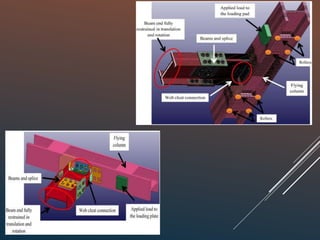
WEB CLEAT
CONNECTIONS
Connections are structural elements used for joining
different members of a structural steel frame work.
Steel Structure is an assemblage of different
member such as “BEAMS,COLUMNS” which are
connected to one other, usually at member ends
fastners,so that it shows a single composite unit.
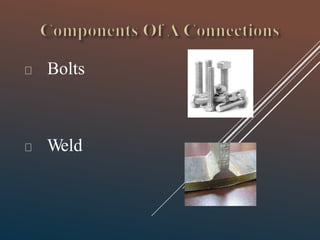
Bolts
Weld
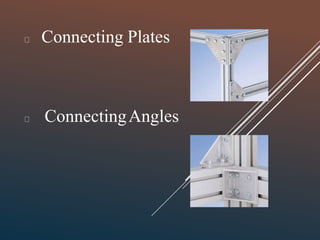
Connecting Plates
ConnectingAngles
On the Basis of Connecting Medium.
According to the type of internal forces.
According to the type of structural Elements
According to the type of members joining
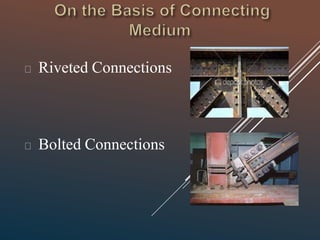
Riveted Connections
Bolted Connections
Welded Connections
Bolted-Welded Connections
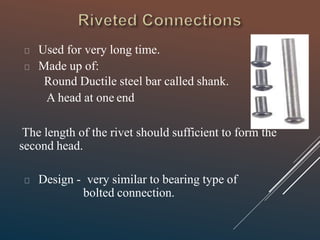
Used for very long time.
Made up of:
Round Ductile steel bar called shank.
A head at one end
The length of the rivet should sufficient to form the
second head.
Design - very similar to bearing type of
bolted connection.
The introduction of high strength structural bolts.
The labour costs associated with large riveting
crews
The cost involved in careful inspection and removal
of poorly installed rivets.
The high level of noise associated with driving
rivets.
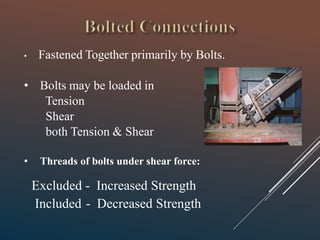
• Fastened Together primarily by Bolts.
• Bolts may be loaded in
Tension
Shear
both Tension & Shear
• Threads of bolts under shear force:
Excluded - Increased Strength
Included - Decreased Strength
ADVANTAGES
1. The bolting operation is very silent
2. Bolting is a cold process hence there is no risk of fire
3. Bolting operation is more quicker than riveting.
4. Less man power is required in making the connections.
Disadvantages
1. If subjected to vibratory loads, results in reduction in
strength get loosened.
2. Unfinished bolts have lesser strength because of non
uniform diameter
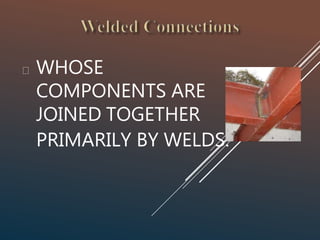
WHOSE
COMPONENTS ARE
JOINED TOGETHER
PRIMARILY BY WELDS.
• Groove ( More reliable than others)
Fillet (Mostly used, Weaker than groove and
others)
Plug (expensive – poor transmission of tensile
forces)
Slot (expensive - poor transmission of tensile
forces)
Plug and Slot welds – stitch different partsof
members together.
Economical – Cost of materials and labors.
Efficiency is 100% as compared to rivets (75- 90%)
Fabrication of Complex Structures – Easy – like
Circular Steel pipes.
Provides Rigid Joints – Modern Practice is of Rigid
Joints.
No provision for expansion or contraction therefore
greater chances of cracking.
Uneven heating and cooling - member may distort -
may result in additional stresses.
Inspection is difficult and more costlier than rivets
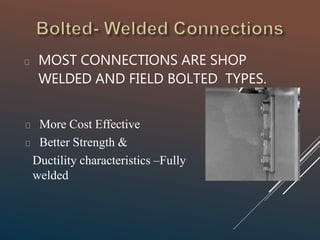
MOST CONNECTIONS ARE SHOP
WELDED AND FIELD BOLTED TYPES.
More Cost Effective
Better Strength &
Ductility characteristics –Fully
welded
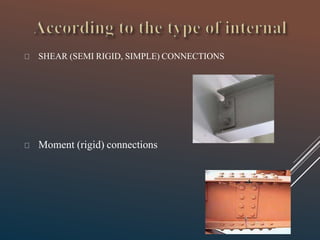
SHEAR (SEMI RIGID, SIMPLE) CONNECTIONS
Moment (rigid) connections
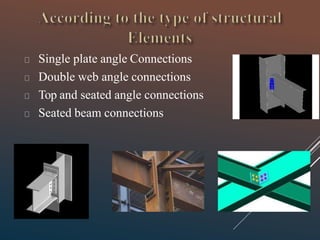
Single plate angle Connections
Double web angle connections
Top and seated angle connections
Seated beam connections
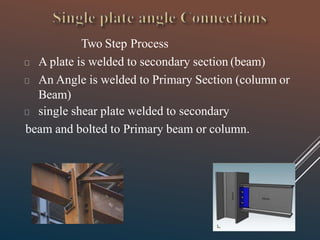
Two Step Process
A plate is welded to secondary section (beam)
An Angle is welded to Primary Section (column or
Beam)
single shear plate welded to secondary
beam and bolted to Primary beam or column.
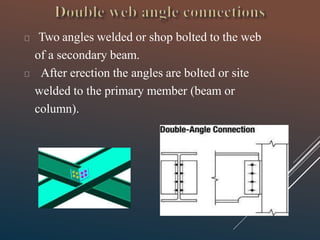
Two angles welded or shop bolted to the web
of a secondary beam.
After erection the angles are bolted or site
welded to the primary member (beam or
column).
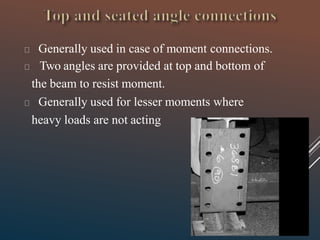
Generally used in case of moment connections.
Two angles are provided at top and bottom of
the beam to resist moment.
Generally used for lesser moments where
heavy loads are not acting
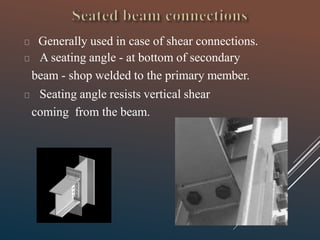
Generally used in case of shear connections.
A seating angle - at bottom of secondary
beam - shop welded to the primary member.
Seating angle resists vertical shear
coming from the beam.
Beam to beam connections
Column to column connections
(column splices)
Beam to Column Connections
Column Base Plate Connections
Two Types
Primary Beam to Secondary Beam Connection
Beam Splice
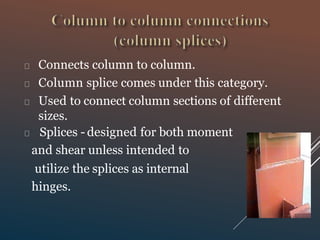
Connects column to column.
Column splice comes under this category.
Used to connect column sections of different
sizes.
Splices - designed for both moment
and shear unless intended to
utilize the splices as internal
hinges.
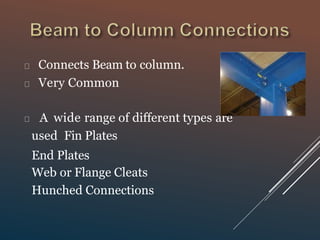
Connects Beam to column.
Very Common
A wide range of different types are
used Fin Plates
End Plates
Web or Flange Cleats
Hunched Connections
Beams are normally attached using two or
more bolts through the web.
End plate connections
single plate welded to the end of the beams
Bolted to the column flange or web - two or bolts
pair.
Fin plate connections
Single Plate welded to the Column.
Beams are normally attached using two or more
bolts through the web.
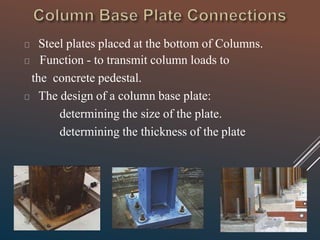
Steel plates placed at the bottom of Columns.
Function - to transmit column loads to
the concrete pedestal.
The design of a column base plate:
determining the size of the plate.
determining the thickness of the plate
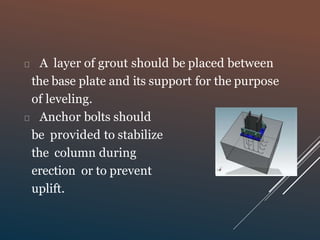
A layer of grout should be placed between
the base plate and its support for the purpose
of leveling.
Anchor bolts should
be provided to stabilize
the column during
erection or to prevent
uplift.
Thank you

Type Of Connection

  • 1.
  • 2.
    Connections are structuralelements used for joining different members of a structural steel frame work. Steel Structure is an assemblage of different member such as “BEAMS,COLUMNS” which are connected to one other, usually at member ends fastners,so that it shows a single composite unit.
  • 4.
  • 5.
  • 6.
    On the Basisof Connecting Medium. According to the type of internal forces. According to the type of structural Elements According to the type of members joining
  • 7.
  • 8.
  • 9.
    Used for verylong time. Made up of: Round Ductile steel bar called shank. A head at one end The length of the rivet should sufficient to form the second head. Design - very similar to bearing type of bolted connection.
  • 10.
    The introduction ofhigh strength structural bolts. The labour costs associated with large riveting crews The cost involved in careful inspection and removal of poorly installed rivets. The high level of noise associated with driving rivets.
  • 11.
    • Fastened Togetherprimarily by Bolts. • Bolts may be loaded in Tension Shear both Tension & Shear • Threads of bolts under shear force: Excluded - Increased Strength Included - Decreased Strength
  • 12.
    ADVANTAGES 1. The boltingoperation is very silent 2. Bolting is a cold process hence there is no risk of fire 3. Bolting operation is more quicker than riveting. 4. Less man power is required in making the connections. Disadvantages 1. If subjected to vibratory loads, results in reduction in strength get loosened. 2. Unfinished bolts have lesser strength because of non uniform diameter
  • 13.
  • 14.
    • Groove (More reliable than others) Fillet (Mostly used, Weaker than groove and others) Plug (expensive – poor transmission of tensile forces) Slot (expensive - poor transmission of tensile forces) Plug and Slot welds – stitch different partsof members together.
  • 15.
    Economical – Costof materials and labors. Efficiency is 100% as compared to rivets (75- 90%) Fabrication of Complex Structures – Easy – like Circular Steel pipes. Provides Rigid Joints – Modern Practice is of Rigid Joints.
  • 16.
    No provision forexpansion or contraction therefore greater chances of cracking. Uneven heating and cooling - member may distort - may result in additional stresses. Inspection is difficult and more costlier than rivets
  • 17.
    MOST CONNECTIONS ARESHOP WELDED AND FIELD BOLTED TYPES. More Cost Effective Better Strength & Ductility characteristics –Fully welded
  • 18.
    SHEAR (SEMI RIGID,SIMPLE) CONNECTIONS Moment (rigid) connections
  • 19.
    Single plate angleConnections Double web angle connections Top and seated angle connections Seated beam connections
  • 20.
    Two Step Process Aplate is welded to secondary section (beam) An Angle is welded to Primary Section (column or Beam) single shear plate welded to secondary beam and bolted to Primary beam or column.
  • 21.
    Two angles weldedor shop bolted to the web of a secondary beam. After erection the angles are bolted or site welded to the primary member (beam or column).
  • 22.
    Generally used incase of moment connections. Two angles are provided at top and bottom of the beam to resist moment. Generally used for lesser moments where heavy loads are not acting
  • 23.
    Generally used incase of shear connections. A seating angle - at bottom of secondary beam - shop welded to the primary member. Seating angle resists vertical shear coming from the beam.
  • 24.
    Beam to beamconnections Column to column connections (column splices) Beam to Column Connections Column Base Plate Connections
  • 25.
    Two Types Primary Beamto Secondary Beam Connection Beam Splice
  • 26.
    Connects column tocolumn. Column splice comes under this category. Used to connect column sections of different sizes. Splices - designed for both moment and shear unless intended to utilize the splices as internal hinges.
  • 27.
    Connects Beam tocolumn. Very Common A wide range of different types are used Fin Plates End Plates Web or Flange Cleats Hunched Connections
  • 28.
    Beams are normallyattached using two or more bolts through the web. End plate connections single plate welded to the end of the beams Bolted to the column flange or web - two or bolts pair. Fin plate connections Single Plate welded to the Column. Beams are normally attached using two or more bolts through the web.
  • 29.
    Steel plates placedat the bottom of Columns. Function - to transmit column loads to the concrete pedestal. The design of a column base plate: determining the size of the plate. determining the thickness of the plate
  • 30.
    A layer ofgrout should be placed between the base plate and its support for the purpose of leveling. Anchor bolts should be provided to stabilize the column during erection or to prevent uplift.
  • 31.