Two C++ Tools*
Compiler Explorer and Cpp Insights
Alison Chaiken
alison@she-devel.com
Jan 23, 2020
*with a brief excursion into HW exploits
Overview
●
Compiler Explorer and Cpp Insights look under the hood of C++
compilation.
– Both kick off a compiler within the browser and show side-by-side
source and output.
– Both can be locally hosted.
●
Compiler Explorer produces assembly output.
●
Cpp Insights shows the output from the clang parser (specifically AST
converted back to C++).
Compiler Explorer Basics
●
Supports GCC and Clang plus many more.
●
Multiarch including many ARM flavors.
●
Arbitrary compiler options are supported.
●
Settles a lot of arguments about what the compiler actually
does.
●
Has a wiki, FAQ.
CE example: the “Spectre” exploit
●
Many security holes involving speculation execution by
processors disclosed in recent years.
●
Exploits now exist “in the wild.”
●
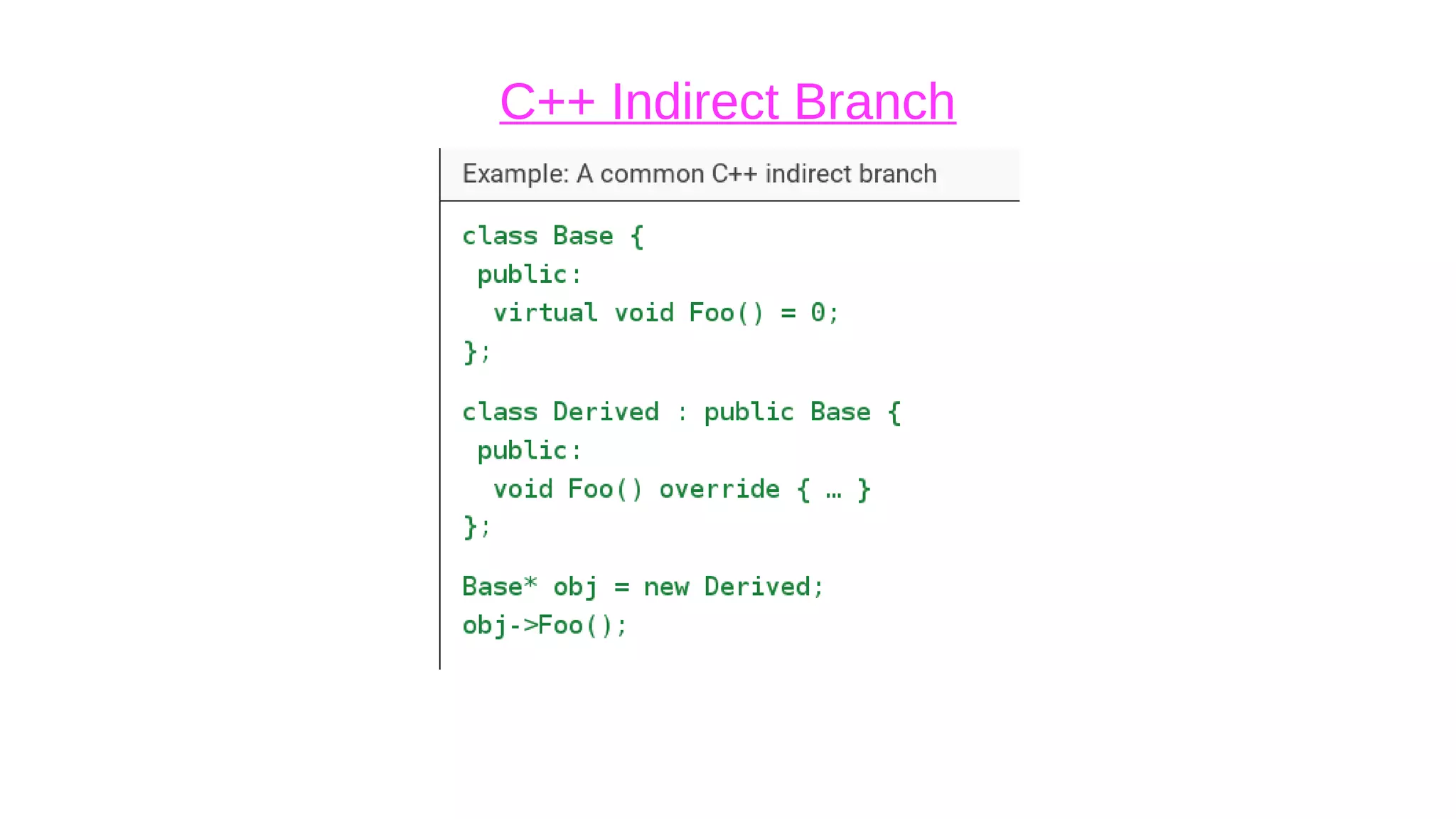
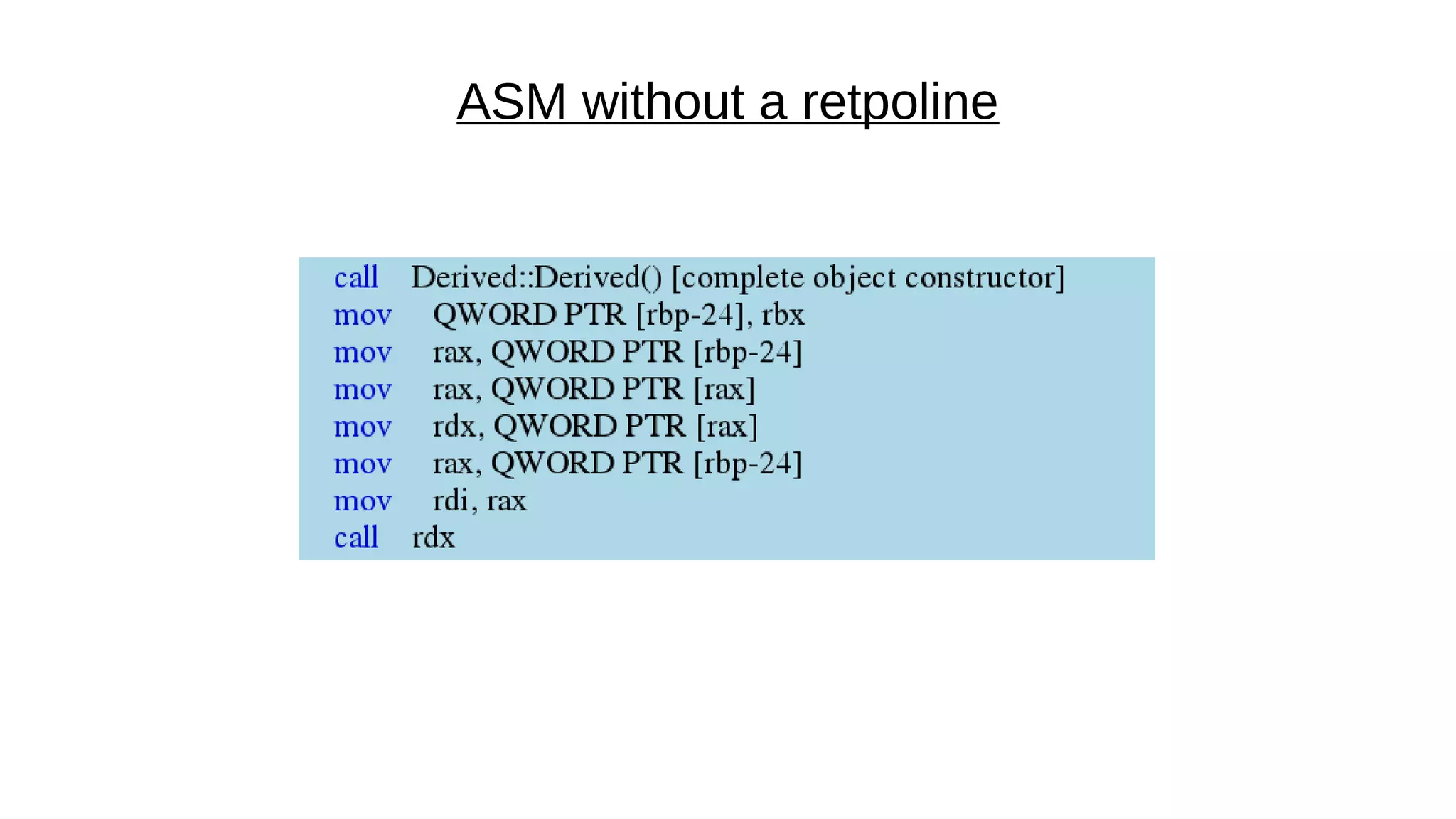
CE illustrates how the “retpoline” fix for C++ indirect branch
speculation works.
C++ Indirect Branch
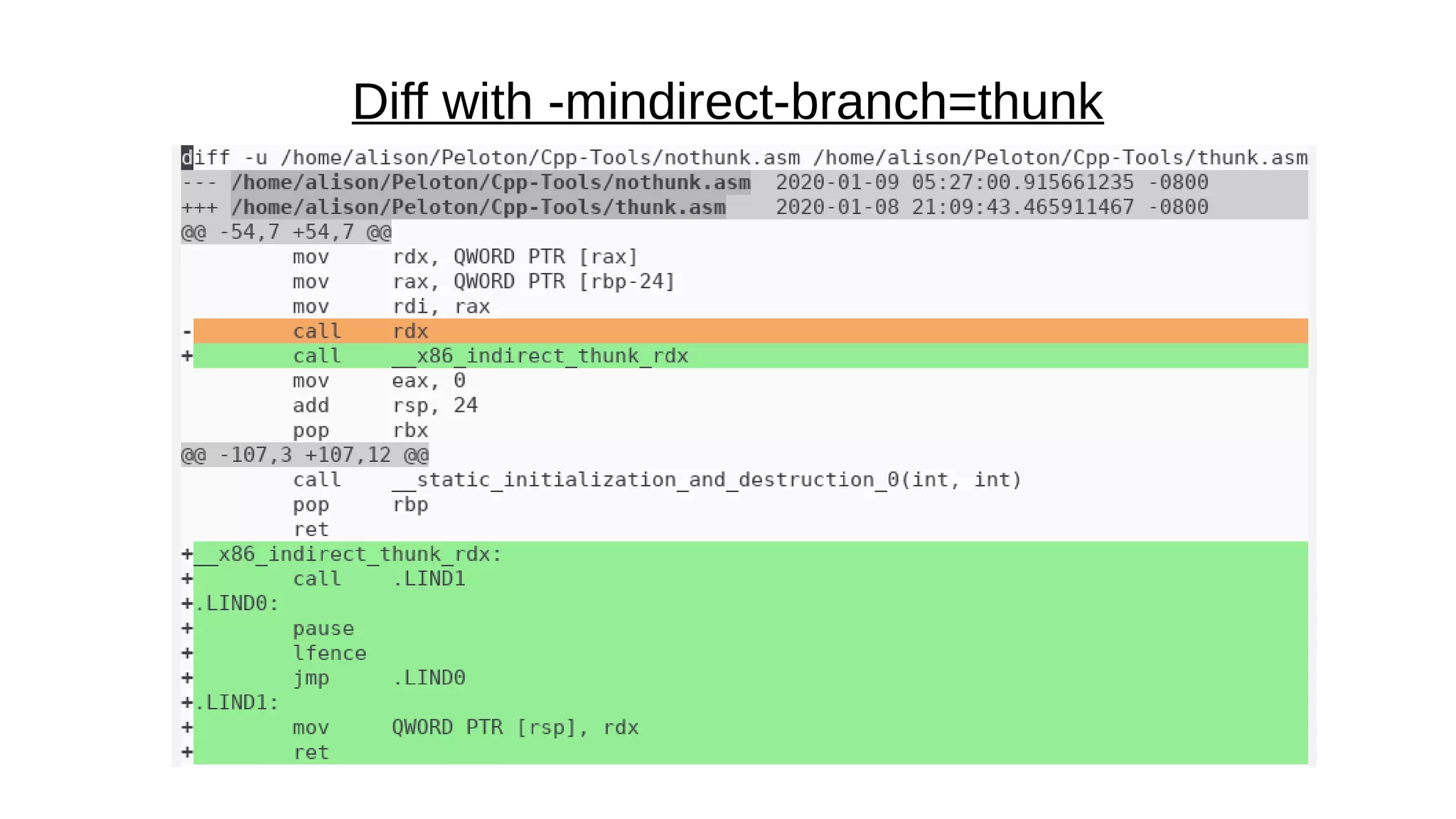
The fix: “retpoline”
●
trampoline: intermediary function that execution bounces off
●
Takes advantage of the fact that in modern ISAs, “function
return is itself an indirect branch. However, unlike other indirect
branches, its target may be directly cached for exact future
prediction at the point of function call.”[source]
●
retpoline strategy: make sure that a do-nothing branch keeps
the processor busy so that the desirable branch has a chance
to look up the correct address.
ASM without a retpoline
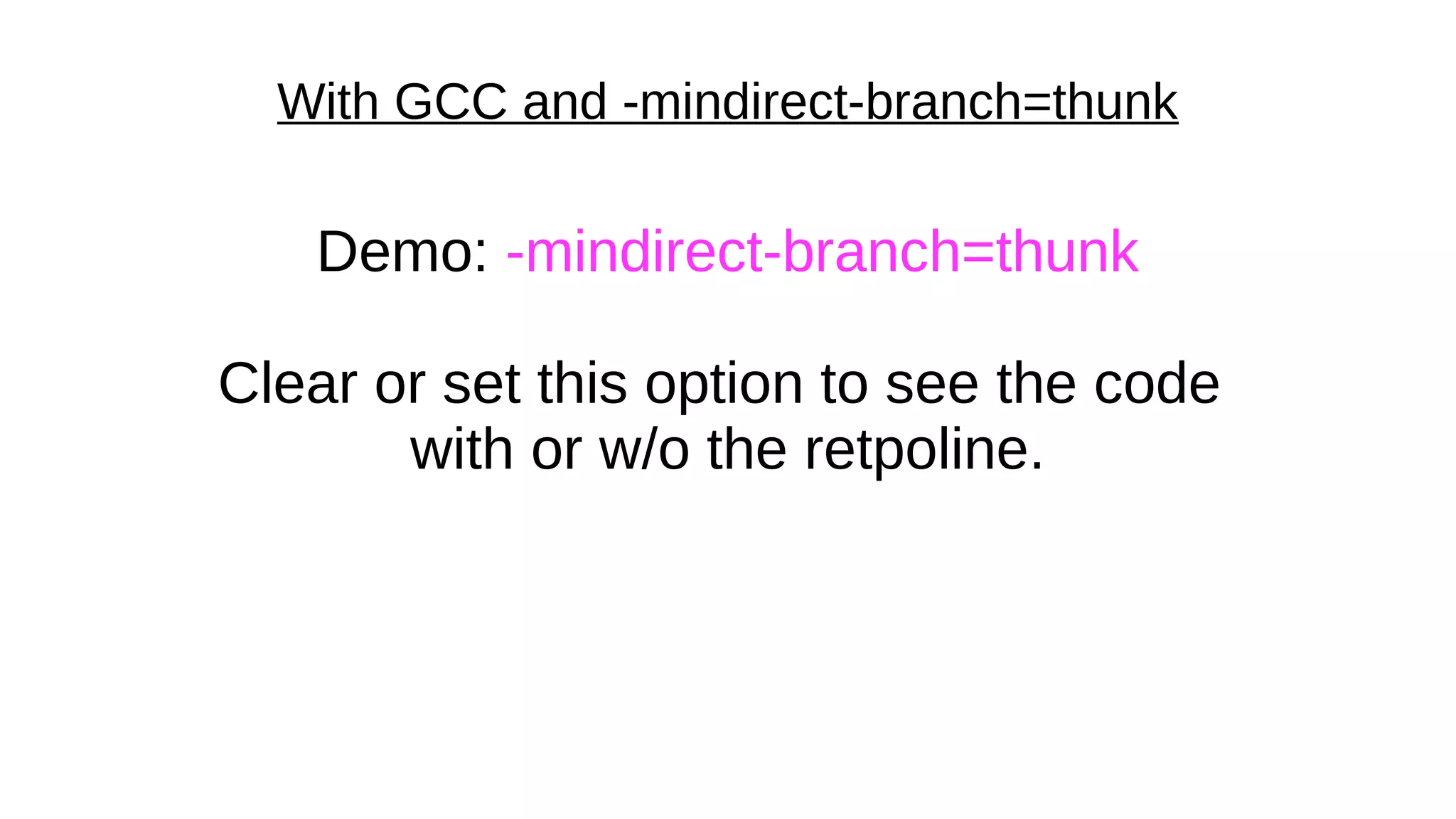
With GCC and -mindirect-branch=thunk
Demo: -mindirect-branch=thunk
Clear or set this option to see the code
with or w/o the retpoline.
Diff with -mindirect-branch=thunk
Cpp Insights Basics
●
Clang only.
●
Support for various C++ versions.
What's that auto doing?
Demo: https://cppinsights.io/s/517ae3bb
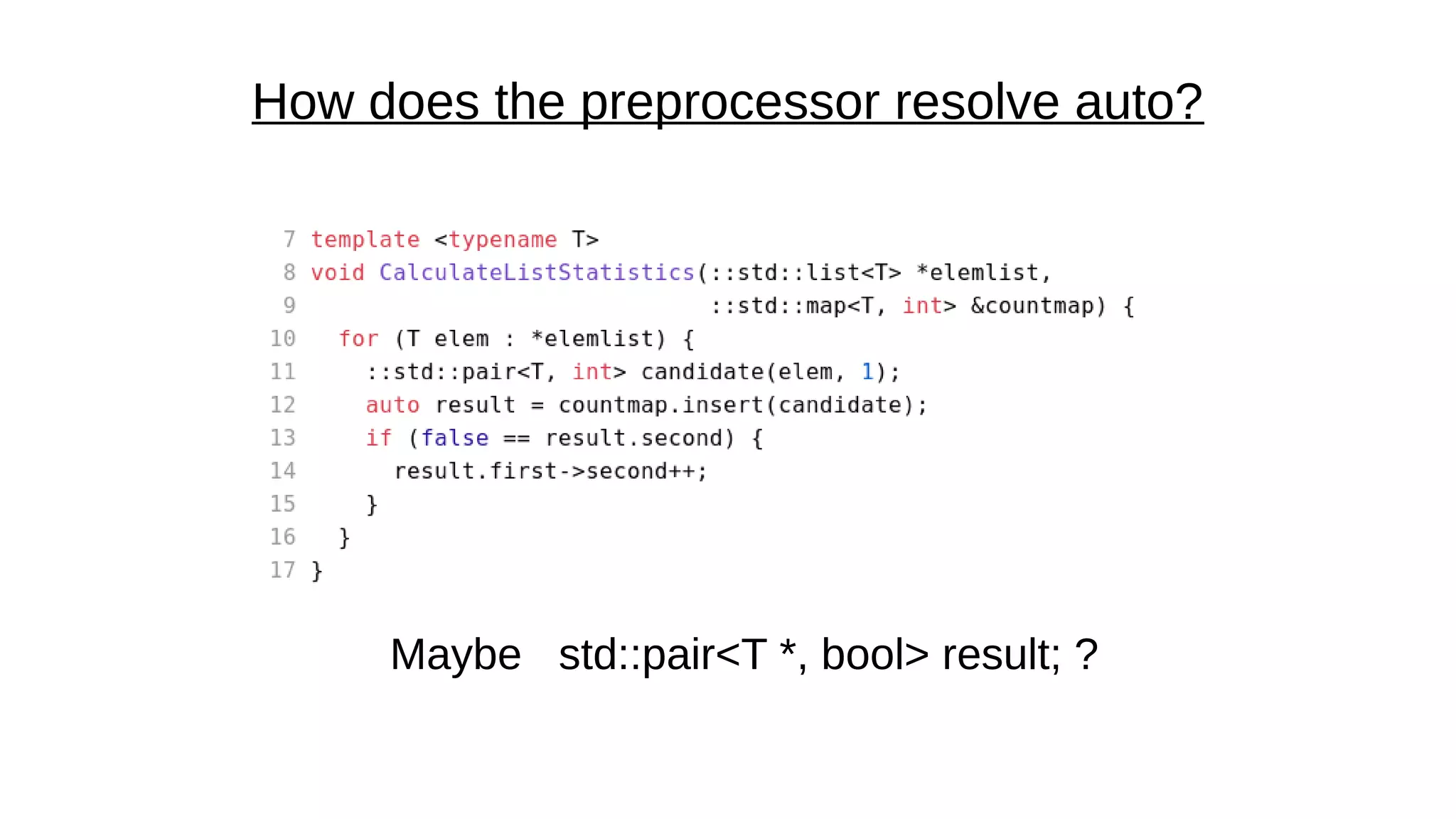
How does the preprocessor resolve auto?
Maybe std::pair<T *, bool> result; ?
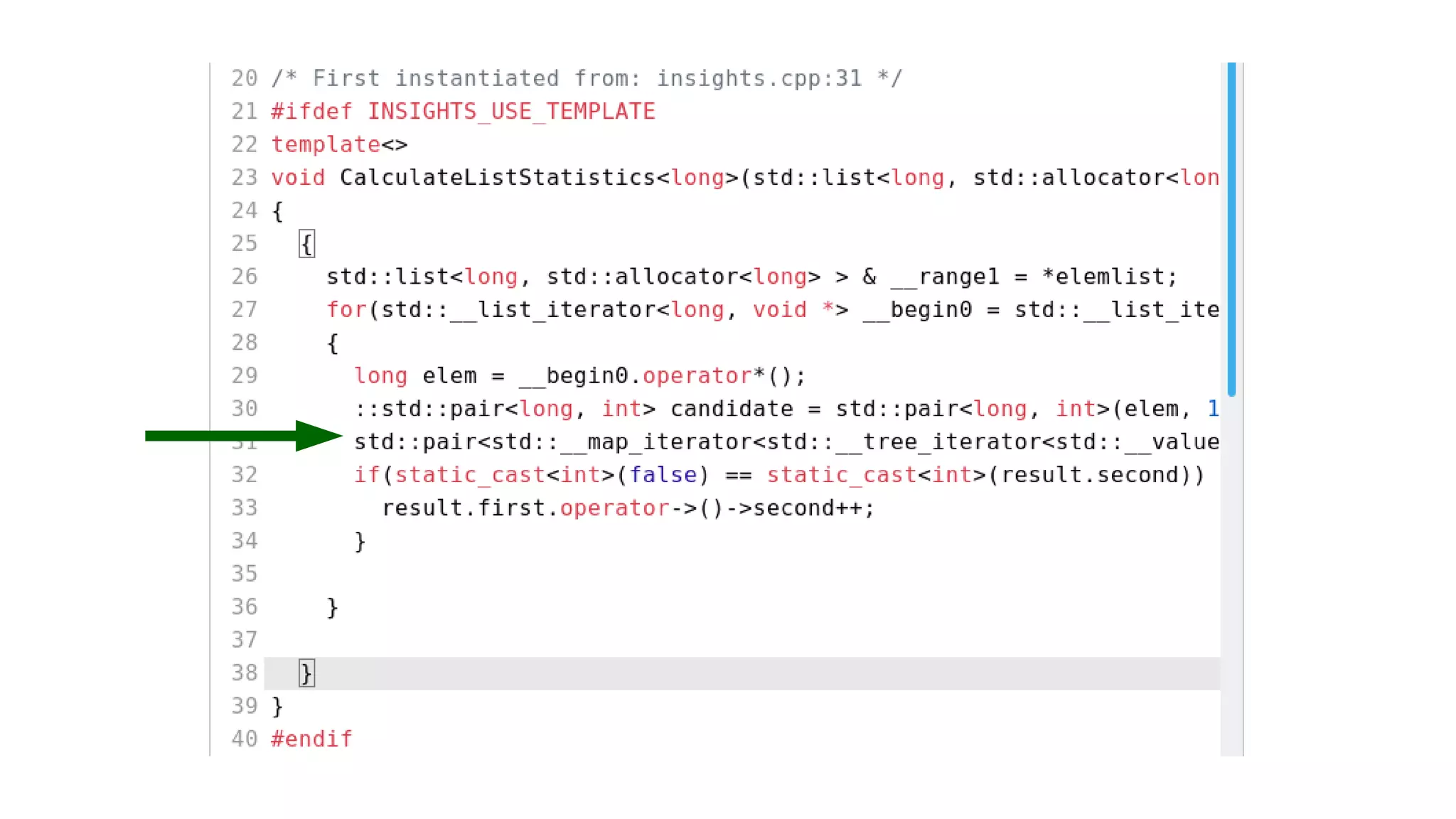
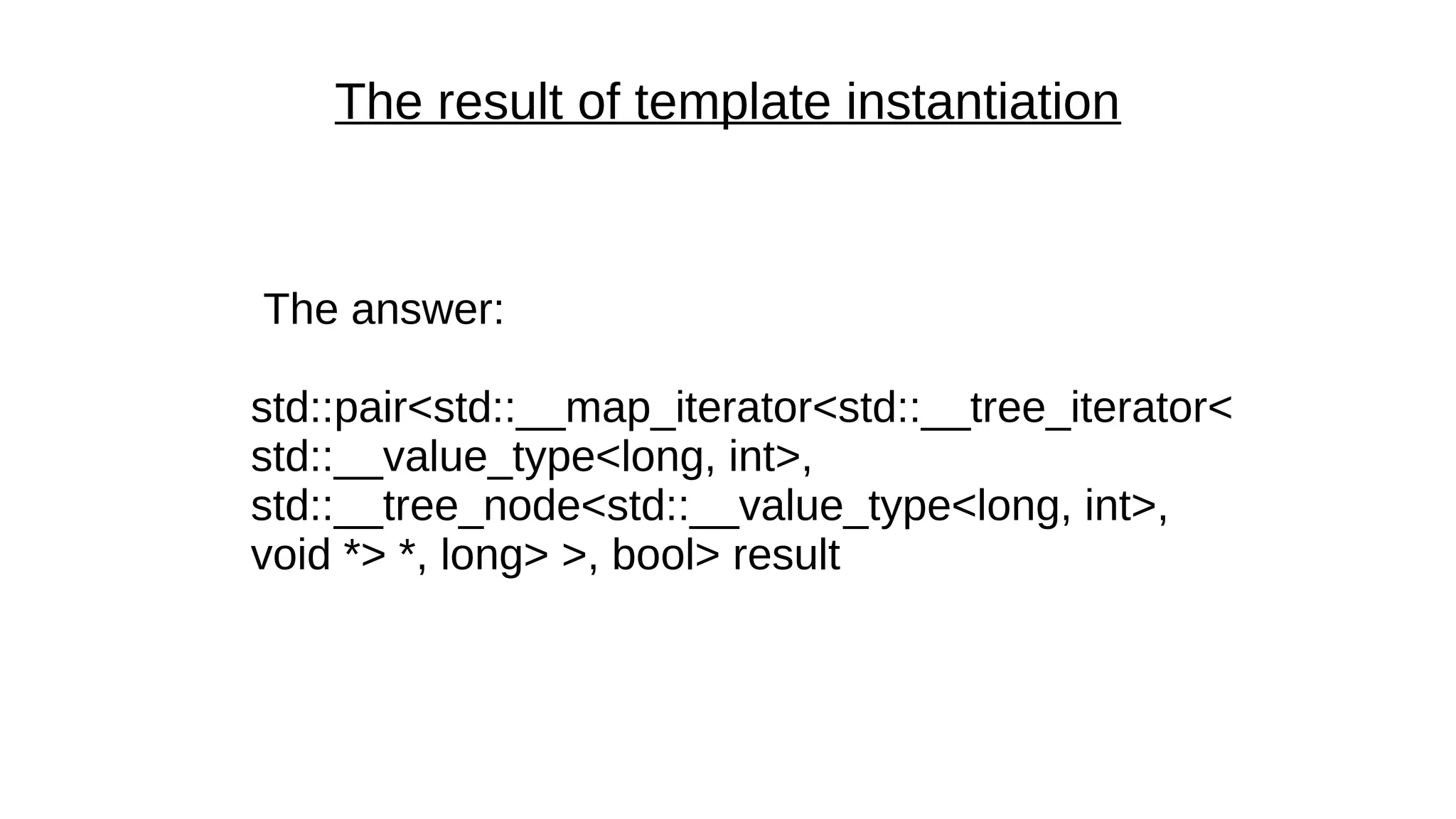
The result of template instantiation
The answer:
std::pair<std::__map_iterator<std::__tree_iterator<
std::__value_type<long, int>,
std::__tree_node<std::__value_type<long, int>,
void *> *, long> >, bool> result
Example: macros vs. constexpr
Demo: first CppInsights,
then CompilerExplorer
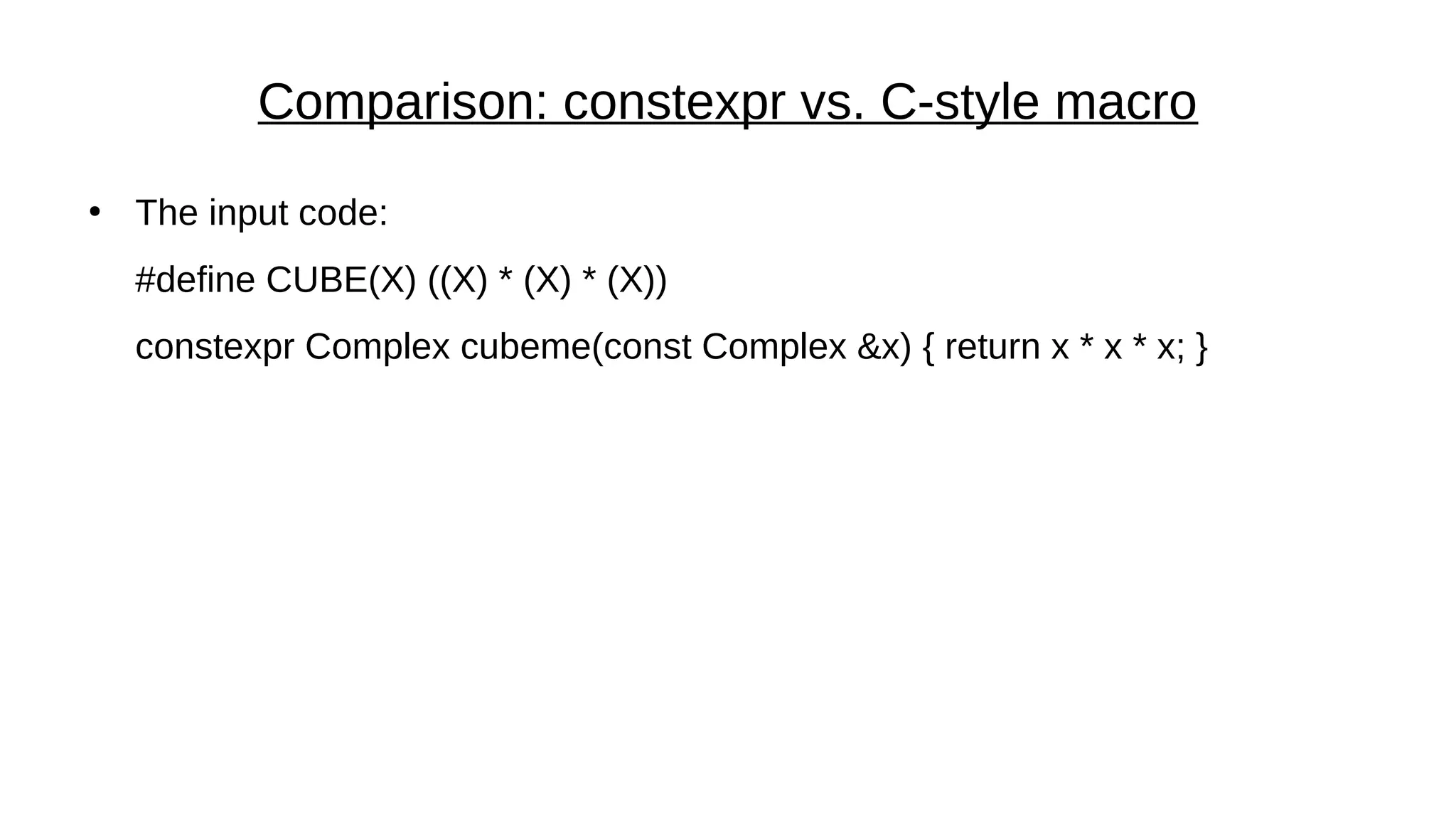
Comparison: constexpr vs. C-style macro
●
The input code:
#define CUBE(X) ((X) * (X) * (X))
constexpr Complex cubeme(const Complex &x) { return x * x * x; }
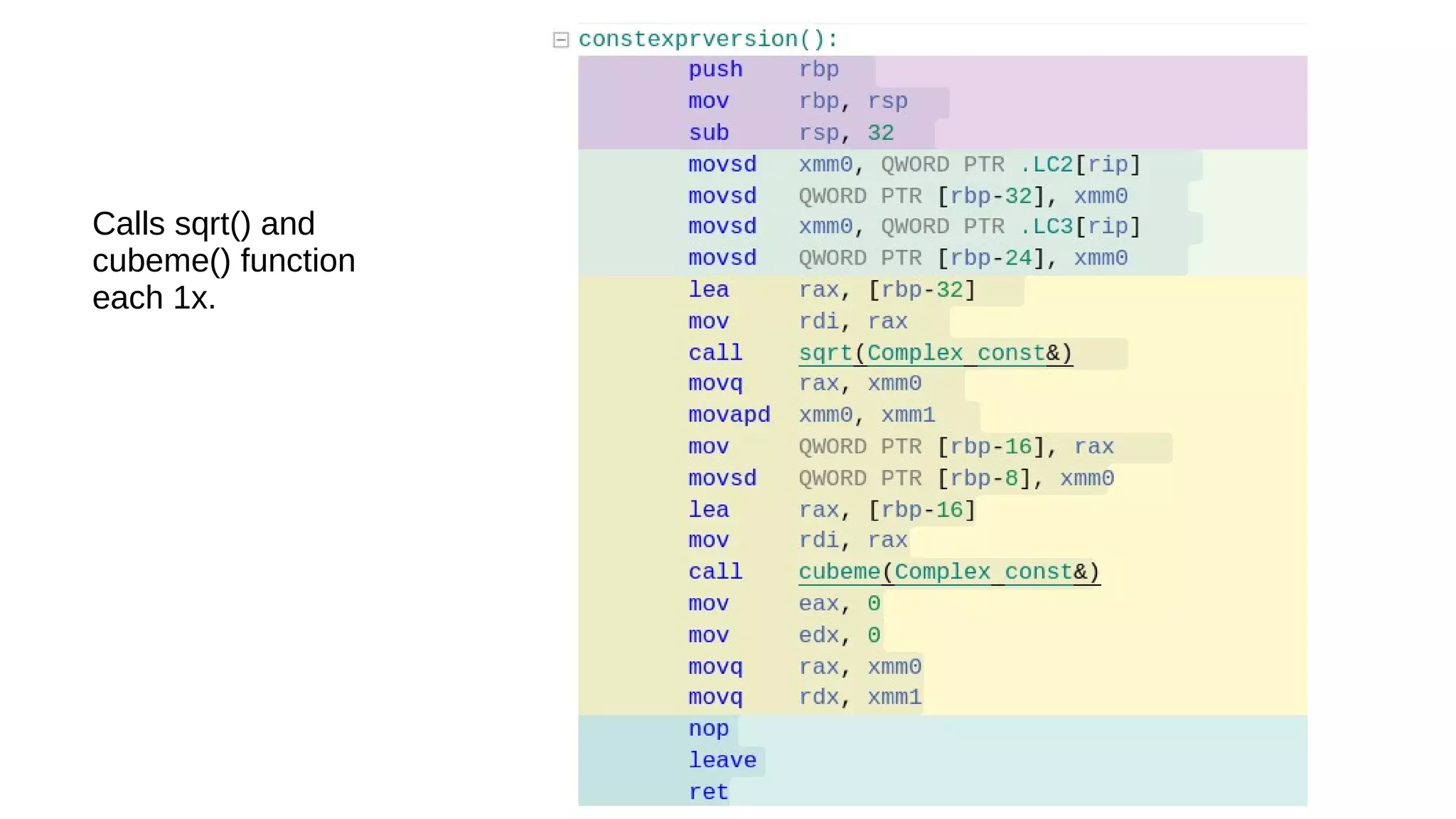
with constexpr
Calls sqrt() and
cubeme() function
each 1x.
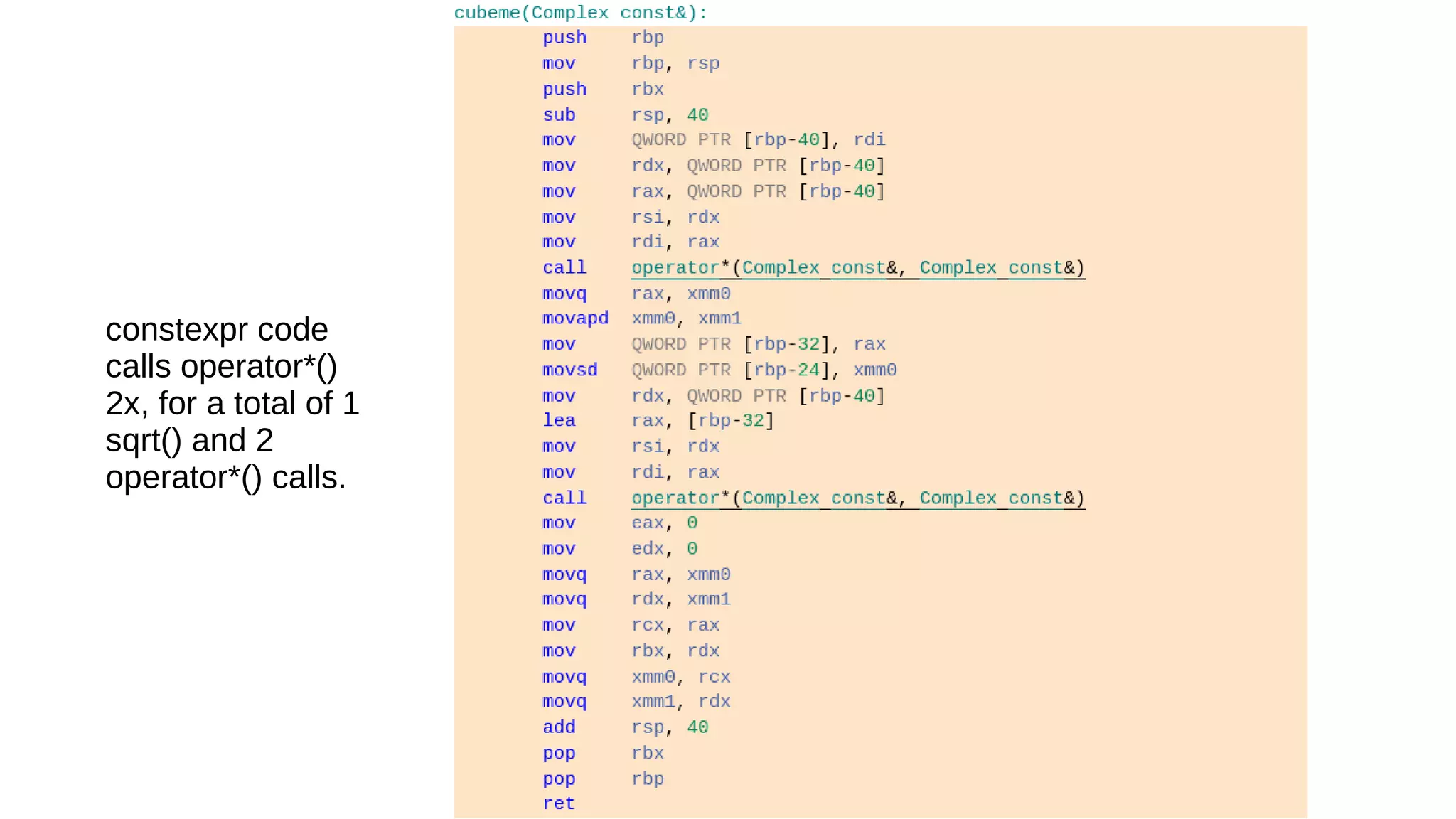
constexpr code
calls operator*()
2x, for a total of 1
sqrt() and 2
operator*() calls.
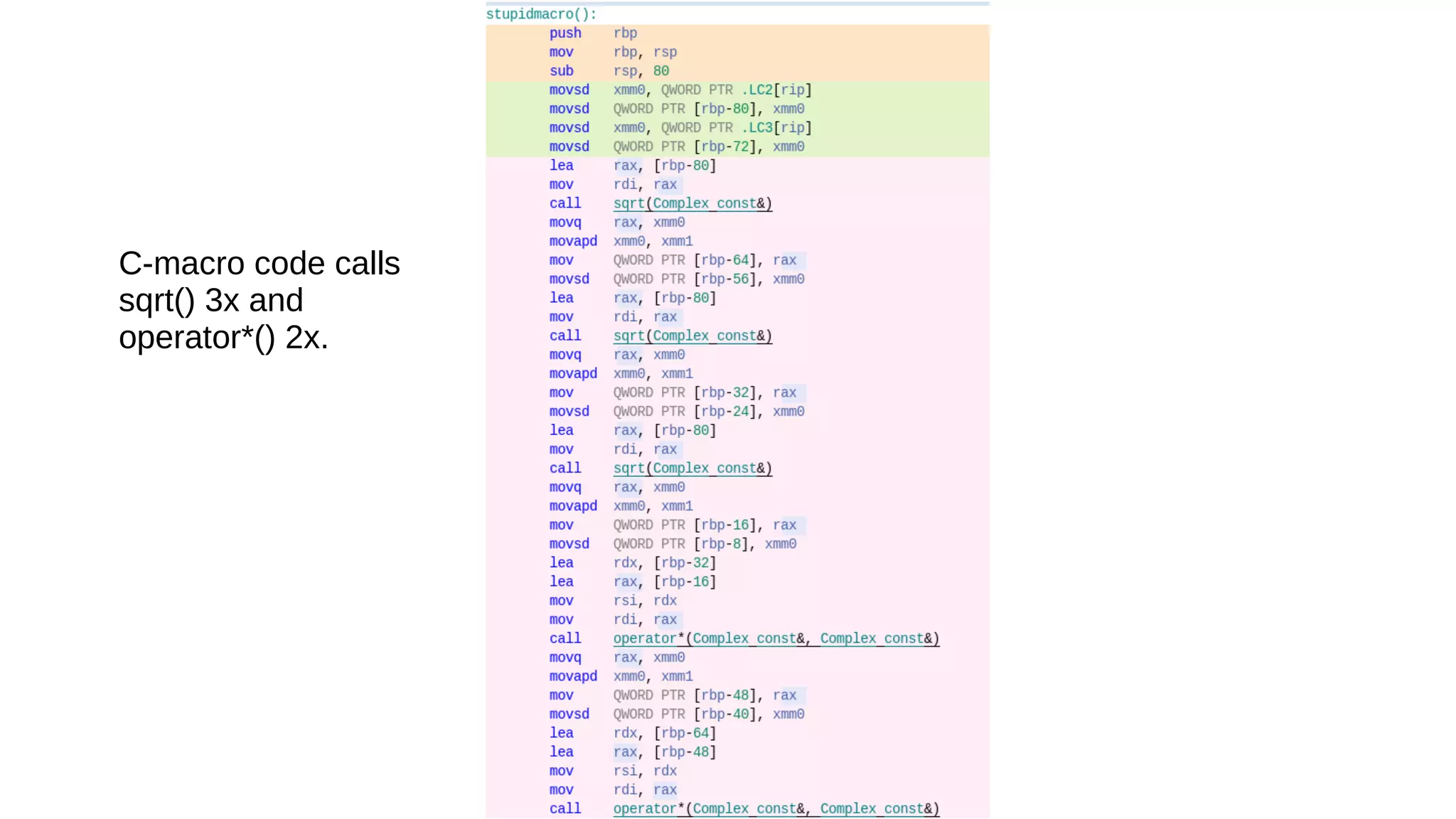
C-macro code calls
sqrt() 3x and
operator*() 2x.
Summary
●
Compiler Explorer and Cpp Insights make differences among
compilers, compiler options and arches easier to understand.
●
Pasting code into them is fast and painless.

Two C++ Tools: Compiler Explorer and Cpp Insights

  • 1.
    Two C++ Tools* CompilerExplorer and Cpp Insights Alison Chaiken alison@she-devel.com Jan 23, 2020 *with a brief excursion into HW exploits
  • 2.
    Overview ● Compiler Explorer andCpp Insights look under the hood of C++ compilation. – Both kick off a compiler within the browser and show side-by-side source and output. – Both can be locally hosted. ● Compiler Explorer produces assembly output. ● Cpp Insights shows the output from the clang parser (specifically AST converted back to C++).
  • 3.
    Compiler Explorer Basics ● SupportsGCC and Clang plus many more. ● Multiarch including many ARM flavors. ● Arbitrary compiler options are supported. ● Settles a lot of arguments about what the compiler actually does. ● Has a wiki, FAQ.
  • 4.
    CE example: the“Spectre” exploit ● Many security holes involving speculation execution by processors disclosed in recent years. ● Exploits now exist “in the wild.” ● CE illustrates how the “retpoline” fix for C++ indirect branch speculation works.
  • 5.
  • 6.
    The fix: “retpoline” ● trampoline:intermediary function that execution bounces off ● Takes advantage of the fact that in modern ISAs, “function return is itself an indirect branch. However, unlike other indirect branches, its target may be directly cached for exact future prediction at the point of function call.”[source] ● retpoline strategy: make sure that a do-nothing branch keeps the processor busy so that the desirable branch has a chance to look up the correct address.
  • 7.
    ASM without aretpoline
  • 8.
    With GCC and-mindirect-branch=thunk Demo: -mindirect-branch=thunk Clear or set this option to see the code with or w/o the retpoline.
  • 9.
  • 10.
    Cpp Insights Basics ● Clangonly. ● Support for various C++ versions.
  • 11.
    What's that autodoing? Demo: https://cppinsights.io/s/517ae3bb
  • 12.
    How does thepreprocessor resolve auto? Maybe std::pair<T *, bool> result; ?
  • 14.
    The result oftemplate instantiation The answer: std::pair<std::__map_iterator<std::__tree_iterator< std::__value_type<long, int>, std::__tree_node<std::__value_type<long, int>, void *> *, long> >, bool> result
  • 15.
    Example: macros vs.constexpr Demo: first CppInsights, then CompilerExplorer
  • 16.
    Comparison: constexpr vs.C-style macro ● The input code: #define CUBE(X) ((X) * (X) * (X)) constexpr Complex cubeme(const Complex &x) { return x * x * x; }
  • 17.
    with constexpr Calls sqrt()and cubeme() function each 1x.
  • 18.
    constexpr code calls operator*() 2x,for a total of 1 sqrt() and 2 operator*() calls.
  • 19.
    C-macro code calls sqrt()3x and operator*() 2x.
  • 20.
    Summary ● Compiler Explorer andCpp Insights make differences among compilers, compiler options and arches easier to understand. ● Pasting code into them is fast and painless.