array1.cpp (4 of 7) 
1 
77 
78 return *this; // enables x = y = 
z, for example 
79 
80 } // end function operator= 
81 
82 // determine if two arrays are 
equal and 
83 // return true, otherwise return 
false 
84 bool Array::operator==( const 
Array &right ) const 
85 { 
86 if ( size != right.size ) 
87 return false; // arrays of
array1.cpp (5 of 7) 
2 
98 // overloaded subscript operator 
for non-const Arrays 
integers1[5] calls 
integers1.operator[]( 5 ) 
99 // reference return creates an 
lvalue 
100 int &Array::operator[]( int 
exit() (header <cstdlib>) ends 
the program. 
subscript ) 
101 { 
102 // check for subscript out of 
range error 
103 if ( subscript < 0 || subscript >= 
size ) { 
104 cout << "nError: Subscript " 
<< subscript
array1.cpp (6 of 7) 
3 
115 // overloaded subscript operator for 
const Arrays 
116 // const reference return creates an 
rvalue 
117 const int &Array::operator[]( int 
subscript ) const 
118 { 
119 // check for subscript out of range 
error 
120 if ( subscript < 0 || subscript >= size ) 
{ 
121 cout << "nError: Subscript " << 
subscript 
122 << " out of range" << endl; 
123 
124 exit( 1 ); // terminate program; 
subscript out of range 
125 
126 } // end if
array1.cpp (7 of 7) 
4 
142 
143 // overloaded output operator for 
class Array 
144 ostream &operator<<( ostream 
&output, const Array &a ) 
145 { 
146 int i; 
147 
148 // output private ptr-based 
array 
149 for ( i = 0; i < a.size; i++ ) { 
150 output << setw( 12 ) << a.ptr[ 
i ]; 
151 
152 if ( ( i + 1 ) % 4 == 0 ) // 4
5 
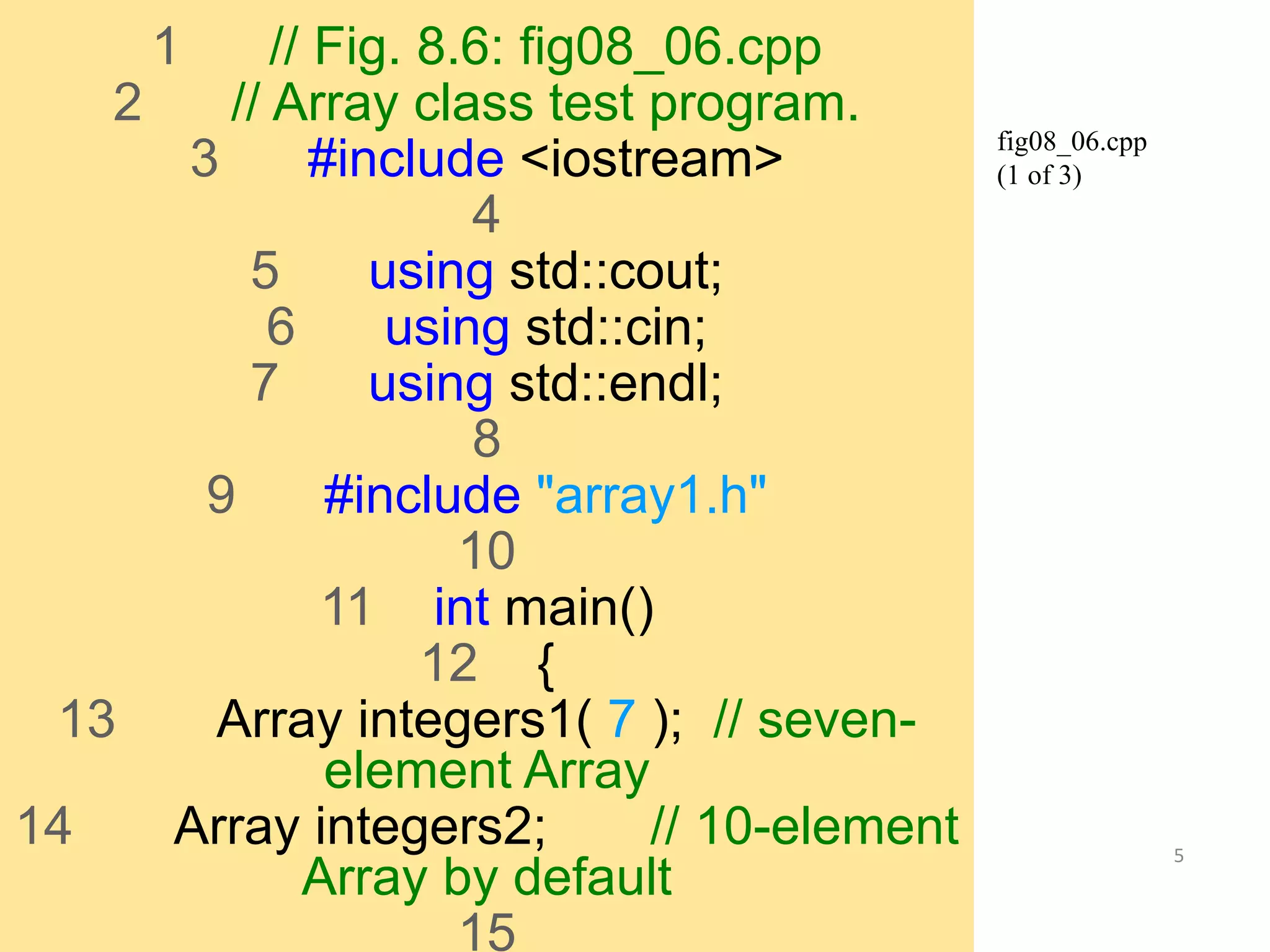
fig08_06.cpp 
(1 of 3) 
1 // Fig. 8.6: fig08_06.cpp 
2 // Array class test program. 
3 #include <iostream> 
4 
5 using std::cout; 
6 using std::cin; 
7 using std::endl; 
8 
9 #include "array1.h" 
10 
11 int main() 
12 { 
13 Array integers1( 7 ); // seven-element 
Array 
14 Array integers2; // 10-element 
Array by default 
15
6 
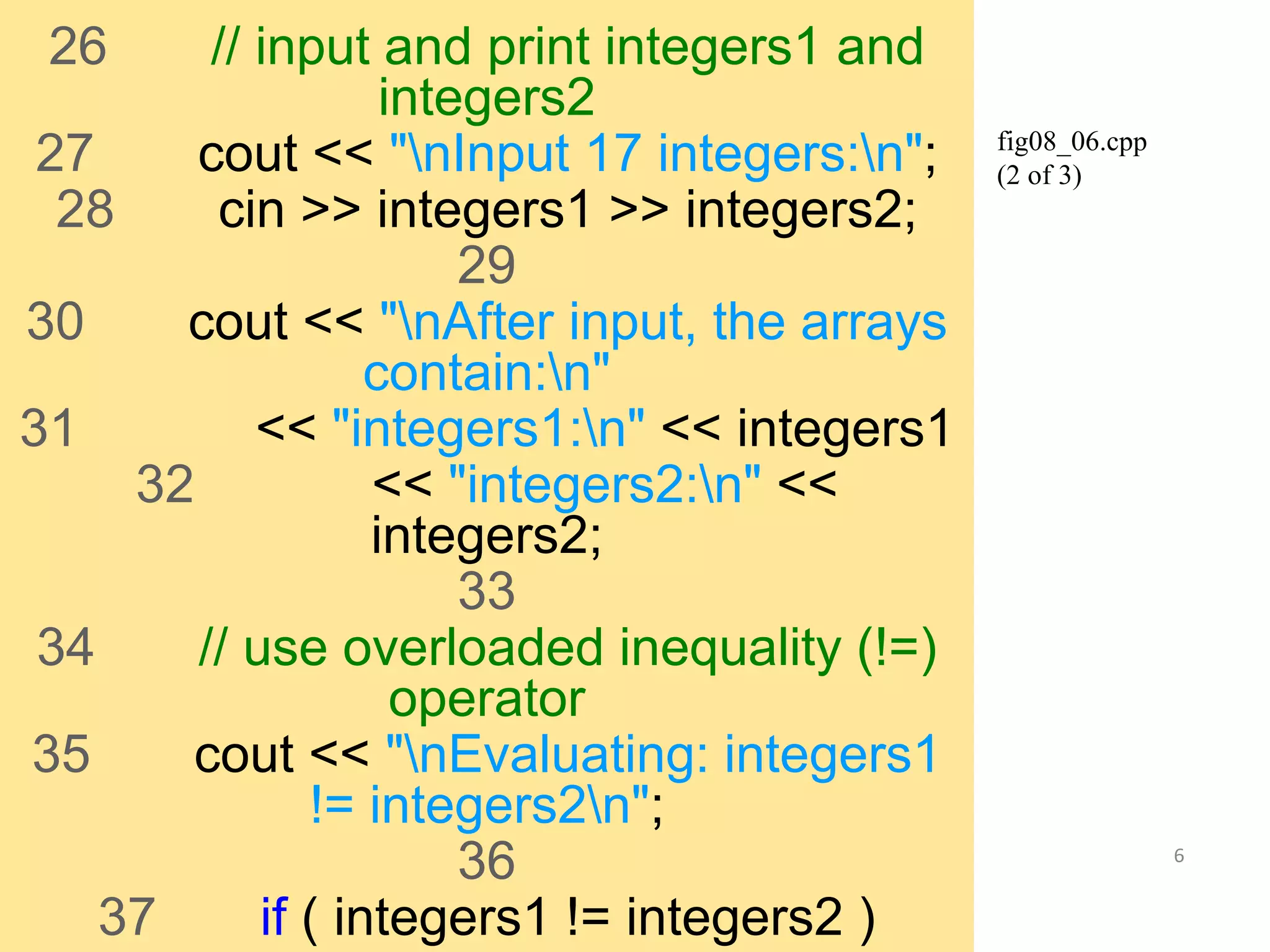
fig08_06.cpp 
(2 of 3) 
26 // input and print integers1 and 
integers2 
27 cout << "nInput 17 integers:n"; 
28 cin >> integers1 >> integers2; 
29 
30 cout << "nAfter input, the arrays 
contain:n" 
31 << "integers1:n" << integers1 
32 << "integers2:n" << 
integers2; 
33 
34 // use overloaded inequality (!=) 
operator 
35 cout << "nEvaluating: integers1 
!= integers2n"; 
36 
37 if ( integers1 != integers2 )
7 
fig08_06.cpp 
(3 of 3) 
48 // use overloaded assignment (=) 
operator 
49 cout << "nAssigning integers2 to 
integers1:n"; 
50 integers1 = integers2; // note target is 
smaller 
51 
52 cout << "integers1:n" << integers1 
53 << "integers2:n" << integers2; 
54 
55 // use overloaded equality (==) operator 
56 cout << "nEvaluating: integers1 == 
integers2n"; 
57 
58 if ( integers1 == integers2 ) 
59 cout << "integers1 and integers2 are 
equaln"; 
60 
61 // use overloaded subscript operator to 
create rvalue 
62 cout << "nintegers1[5] is " << integers1[
8 
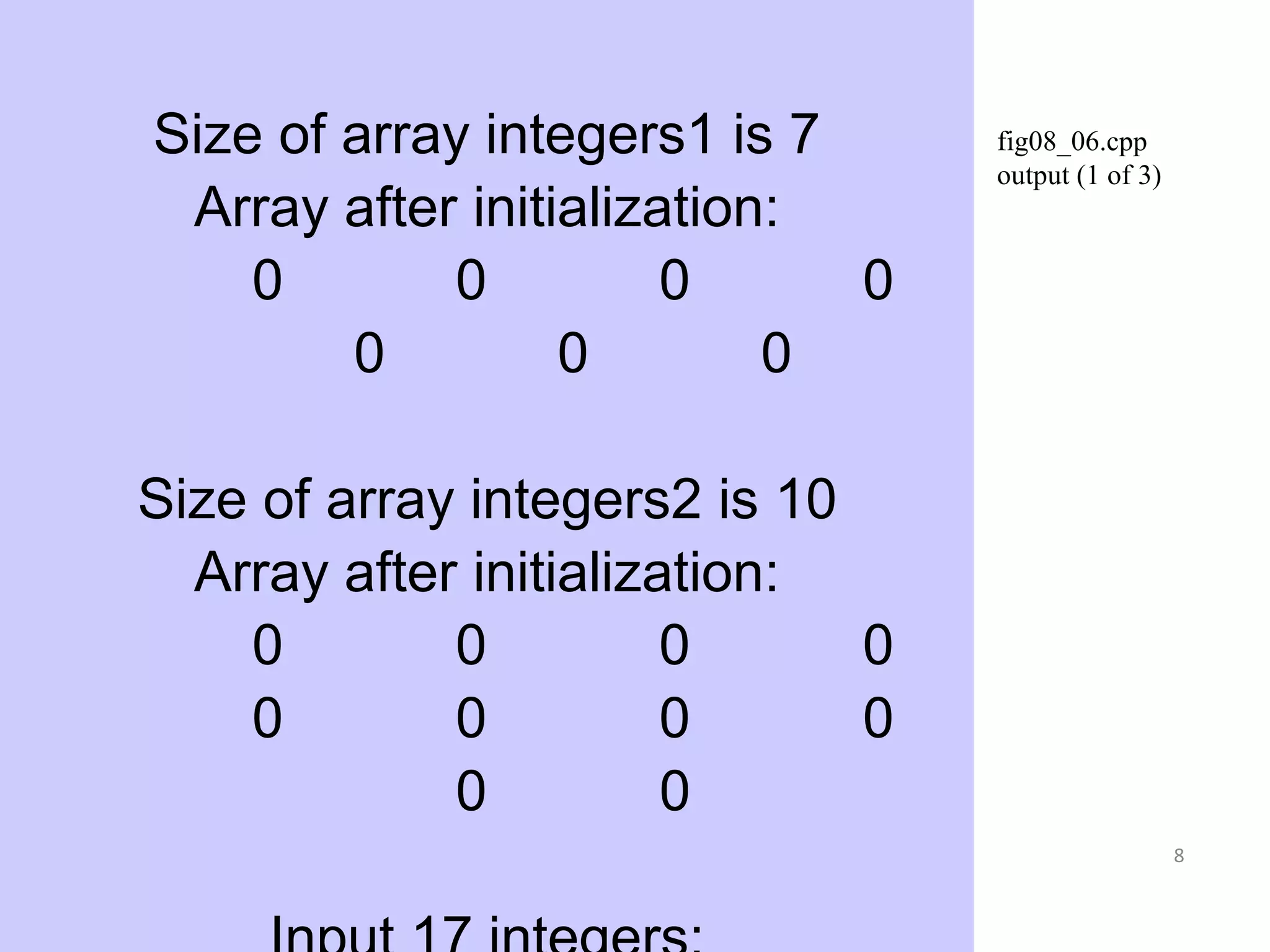
fig08_06.cpp 
output (1 of 3) 
Size of array integers1 is 7 
Array after initialization: 
0 0 0 0 
0 0 0 
Size of array integers2 is 10 
Array after initialization: 
0 0 0 0 
0 0 0 0 
0 0 
Input 17 integers:
9 
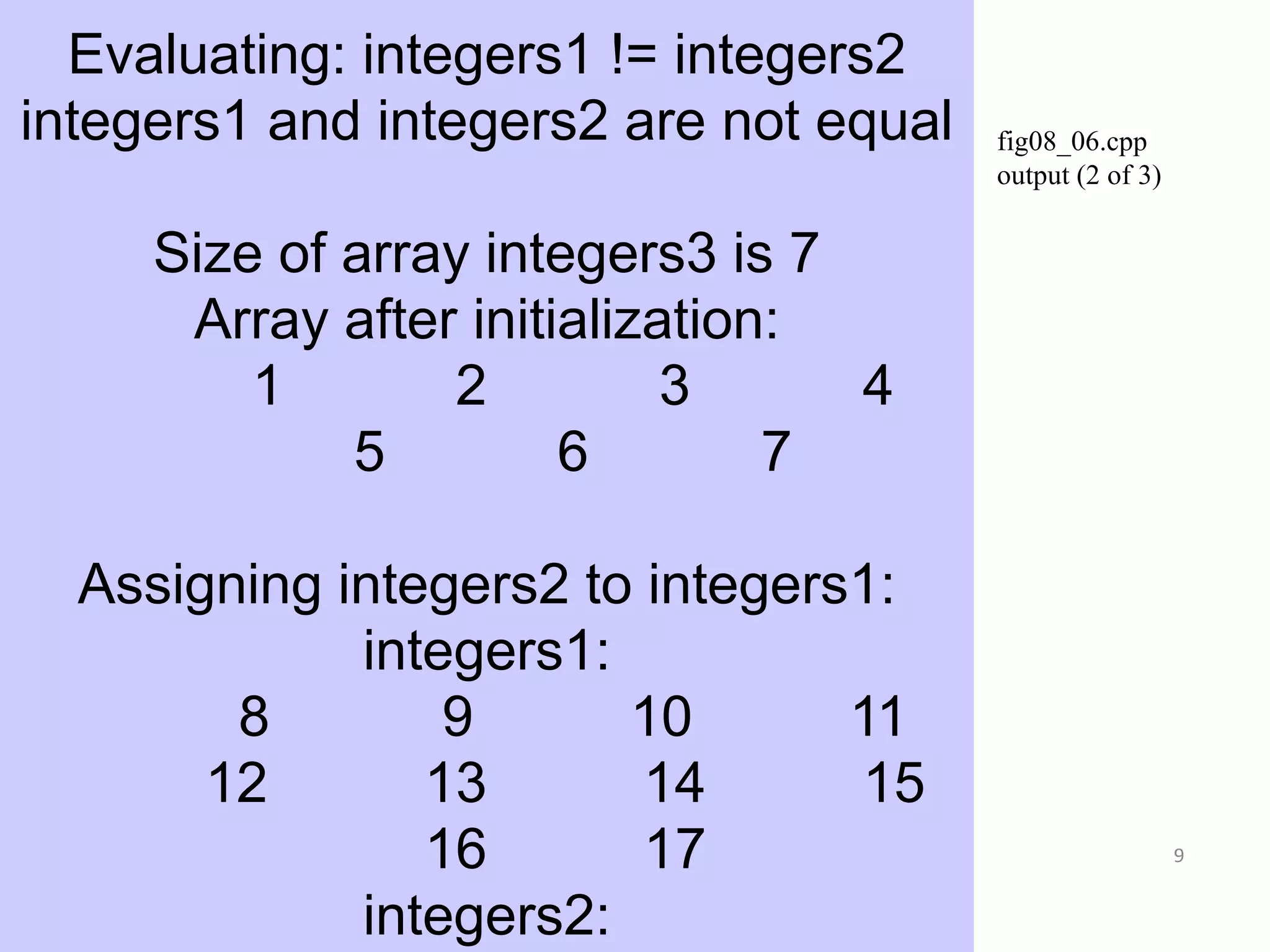
fig08_06.cpp 
output (2 of 3) 
Evaluating: integers1 != integers2 
integers1 and integers2 are not equal 
Size of array integers3 is 7 
Array after initialization: 
1 2 3 4 
5 6 7 
Assigning integers2 to integers1: 
integers1: 
8 9 10 11 
12 13 14 15 
16 17 
integers2:
10 
fig08_06.cpp 
output (3 of 3) 
Assigning 1000 to integers1[5] 
integers1: 
8 9 10 11 
12 1000 14 15 
16 17 
Attempt to assign 1000 to 
integers1[15] 
Error: Subscript 15 out of range
11 
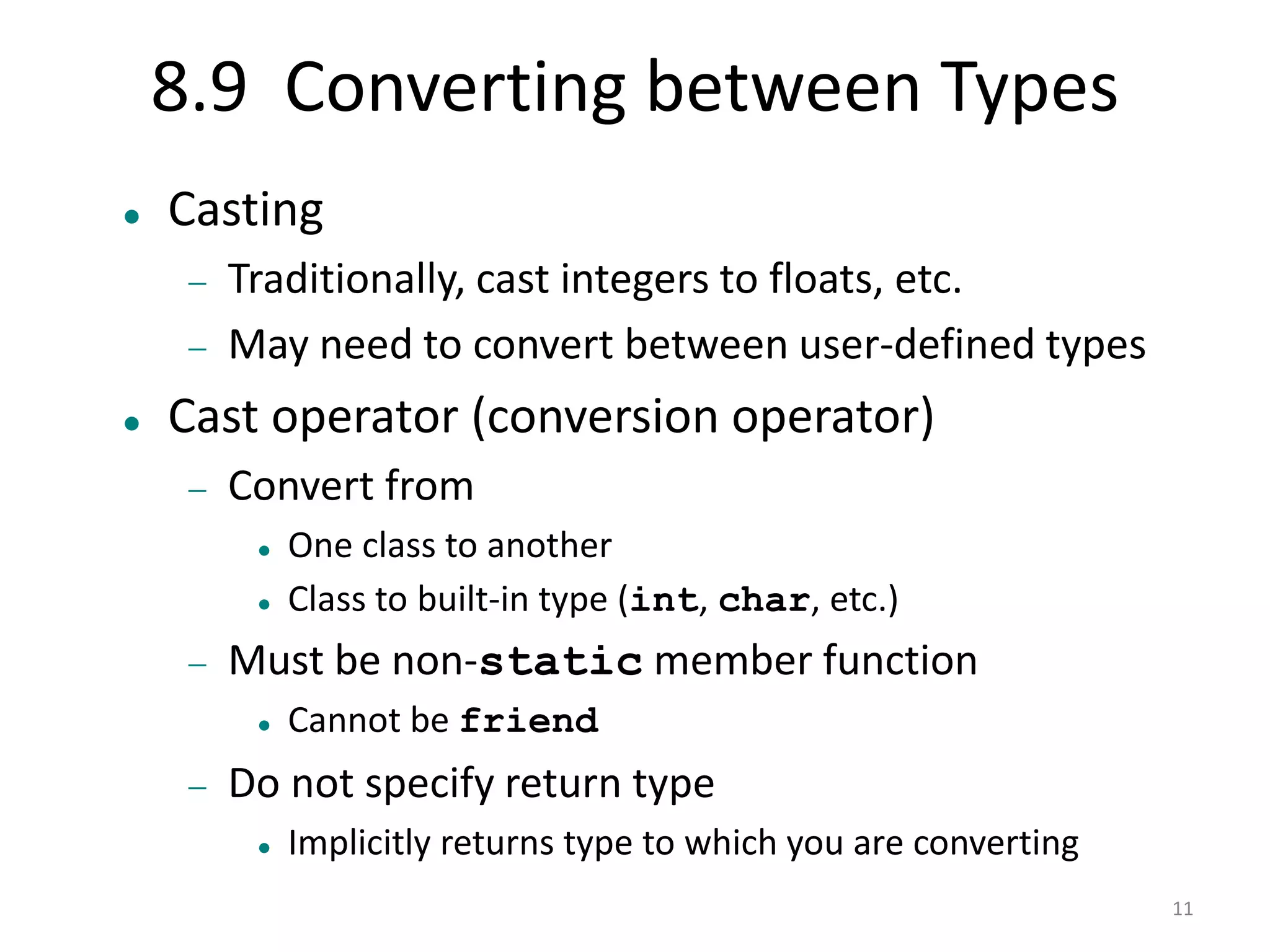
8.9 Converting between Types 
 Casting 
 Traditionally, cast integers to floats, etc. 
 May need to convert between user-defined types 
 Cast operator (conversion operator) 
 Convert from 
 One class to another 
 Class to built-in type (int, char, etc.) 
 Must be non-static member function 
 Cannot be friend 
 Do not specify return type 
 Implicitly returns type to which you are converting
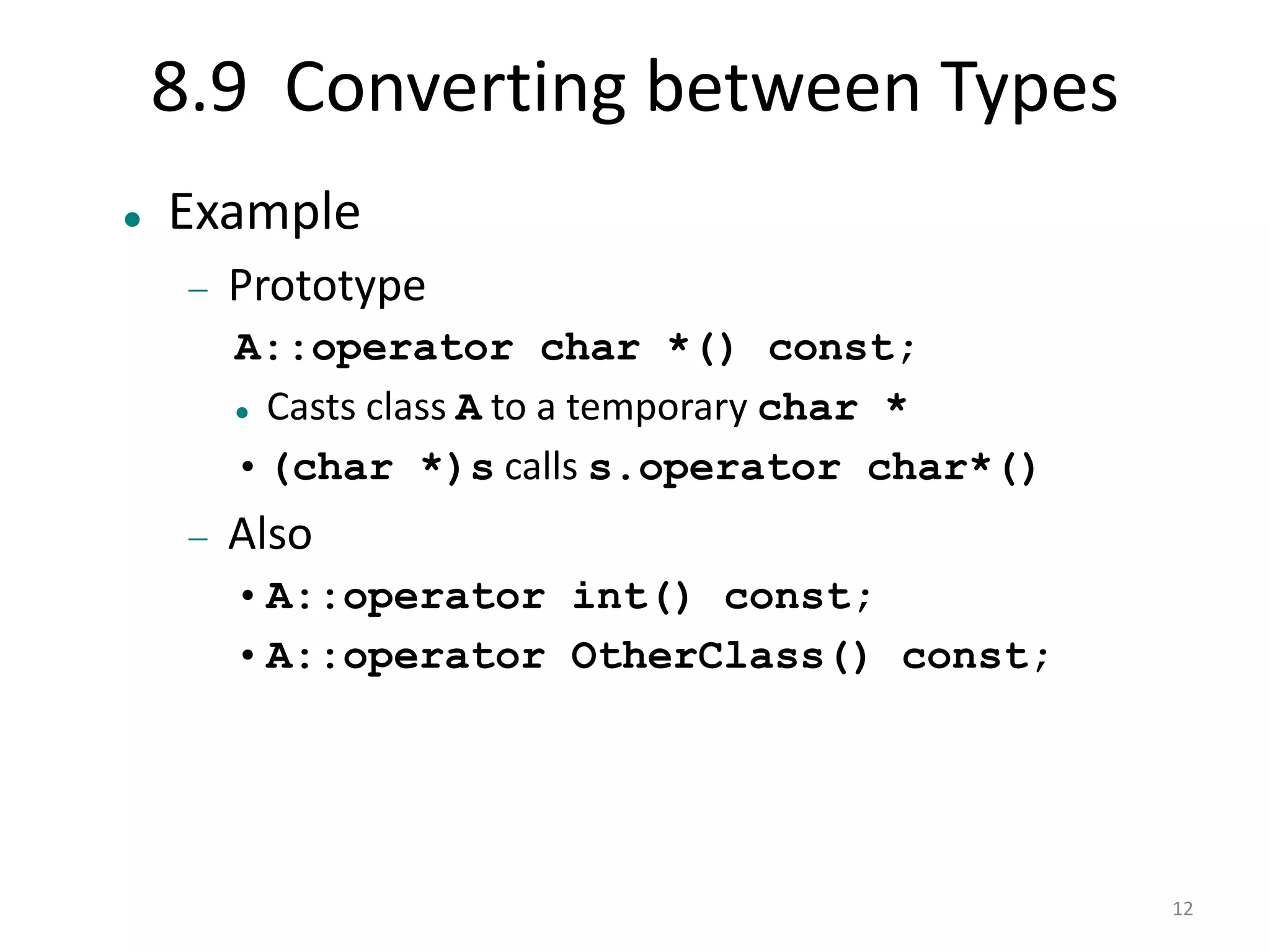
12 
8.9 Converting between Types 
 Example 
 Prototype 
A::operator char *() const; 
 Casts class A to a temporary char * 
•(char *)s calls s.operator char*() 
 Also 
•A::operator int() const; 
•A::operator OtherClass() const;

Synapse india dotnet development overloading operater part 3

  • 1.
    array1.cpp (4 of7) 1 77 78 return *this; // enables x = y = z, for example 79 80 } // end function operator= 81 82 // determine if two arrays are equal and 83 // return true, otherwise return false 84 bool Array::operator==( const Array &right ) const 85 { 86 if ( size != right.size ) 87 return false; // arrays of
  • 2.
    array1.cpp (5 of7) 2 98 // overloaded subscript operator for non-const Arrays integers1[5] calls integers1.operator[]( 5 ) 99 // reference return creates an lvalue 100 int &Array::operator[]( int exit() (header <cstdlib>) ends the program. subscript ) 101 { 102 // check for subscript out of range error 103 if ( subscript < 0 || subscript >= size ) { 104 cout << "nError: Subscript " << subscript
  • 3.
    array1.cpp (6 of7) 3 115 // overloaded subscript operator for const Arrays 116 // const reference return creates an rvalue 117 const int &Array::operator[]( int subscript ) const 118 { 119 // check for subscript out of range error 120 if ( subscript < 0 || subscript >= size ) { 121 cout << "nError: Subscript " << subscript 122 << " out of range" << endl; 123 124 exit( 1 ); // terminate program; subscript out of range 125 126 } // end if
  • 4.
    array1.cpp (7 of7) 4 142 143 // overloaded output operator for class Array 144 ostream &operator<<( ostream &output, const Array &a ) 145 { 146 int i; 147 148 // output private ptr-based array 149 for ( i = 0; i < a.size; i++ ) { 150 output << setw( 12 ) << a.ptr[ i ]; 151 152 if ( ( i + 1 ) % 4 == 0 ) // 4
  • 5.
    5 fig08_06.cpp (1of 3) 1 // Fig. 8.6: fig08_06.cpp 2 // Array class test program. 3 #include <iostream> 4 5 using std::cout; 6 using std::cin; 7 using std::endl; 8 9 #include "array1.h" 10 11 int main() 12 { 13 Array integers1( 7 ); // seven-element Array 14 Array integers2; // 10-element Array by default 15
  • 6.
    6 fig08_06.cpp (2of 3) 26 // input and print integers1 and integers2 27 cout << "nInput 17 integers:n"; 28 cin >> integers1 >> integers2; 29 30 cout << "nAfter input, the arrays contain:n" 31 << "integers1:n" << integers1 32 << "integers2:n" << integers2; 33 34 // use overloaded inequality (!=) operator 35 cout << "nEvaluating: integers1 != integers2n"; 36 37 if ( integers1 != integers2 )
  • 7.
    7 fig08_06.cpp (3of 3) 48 // use overloaded assignment (=) operator 49 cout << "nAssigning integers2 to integers1:n"; 50 integers1 = integers2; // note target is smaller 51 52 cout << "integers1:n" << integers1 53 << "integers2:n" << integers2; 54 55 // use overloaded equality (==) operator 56 cout << "nEvaluating: integers1 == integers2n"; 57 58 if ( integers1 == integers2 ) 59 cout << "integers1 and integers2 are equaln"; 60 61 // use overloaded subscript operator to create rvalue 62 cout << "nintegers1[5] is " << integers1[
  • 8.
    8 fig08_06.cpp output(1 of 3) Size of array integers1 is 7 Array after initialization: 0 0 0 0 0 0 0 Size of array integers2 is 10 Array after initialization: 0 0 0 0 0 0 0 0 0 0 Input 17 integers:
  • 9.
    9 fig08_06.cpp output(2 of 3) Evaluating: integers1 != integers2 integers1 and integers2 are not equal Size of array integers3 is 7 Array after initialization: 1 2 3 4 5 6 7 Assigning integers2 to integers1: integers1: 8 9 10 11 12 13 14 15 16 17 integers2:
  • 10.
    10 fig08_06.cpp output(3 of 3) Assigning 1000 to integers1[5] integers1: 8 9 10 11 12 1000 14 15 16 17 Attempt to assign 1000 to integers1[15] Error: Subscript 15 out of range
  • 11.
    11 8.9 Convertingbetween Types  Casting  Traditionally, cast integers to floats, etc.  May need to convert between user-defined types  Cast operator (conversion operator)  Convert from  One class to another  Class to built-in type (int, char, etc.)  Must be non-static member function  Cannot be friend  Do not specify return type  Implicitly returns type to which you are converting
  • 12.
    12 8.9 Convertingbetween Types  Example  Prototype A::operator char *() const;  Casts class A to a temporary char * •(char *)s calls s.operator char*()  Also •A::operator int() const; •A::operator OtherClass() const;