Flowex - Flow-Based
Programming with
Elixir GenStage
Elixir Club 5, Kyiv, January 28, 2017
- Ruby developer at Matic Insurance
- Elixir fan
- Author and maintainer of
ESpec BDD test framework
github: antonmi
Hello!
I am Anton Mishchuk
2
The problem
◎ There are some problems in
“conventional programing”:
- code is procedural and sequential
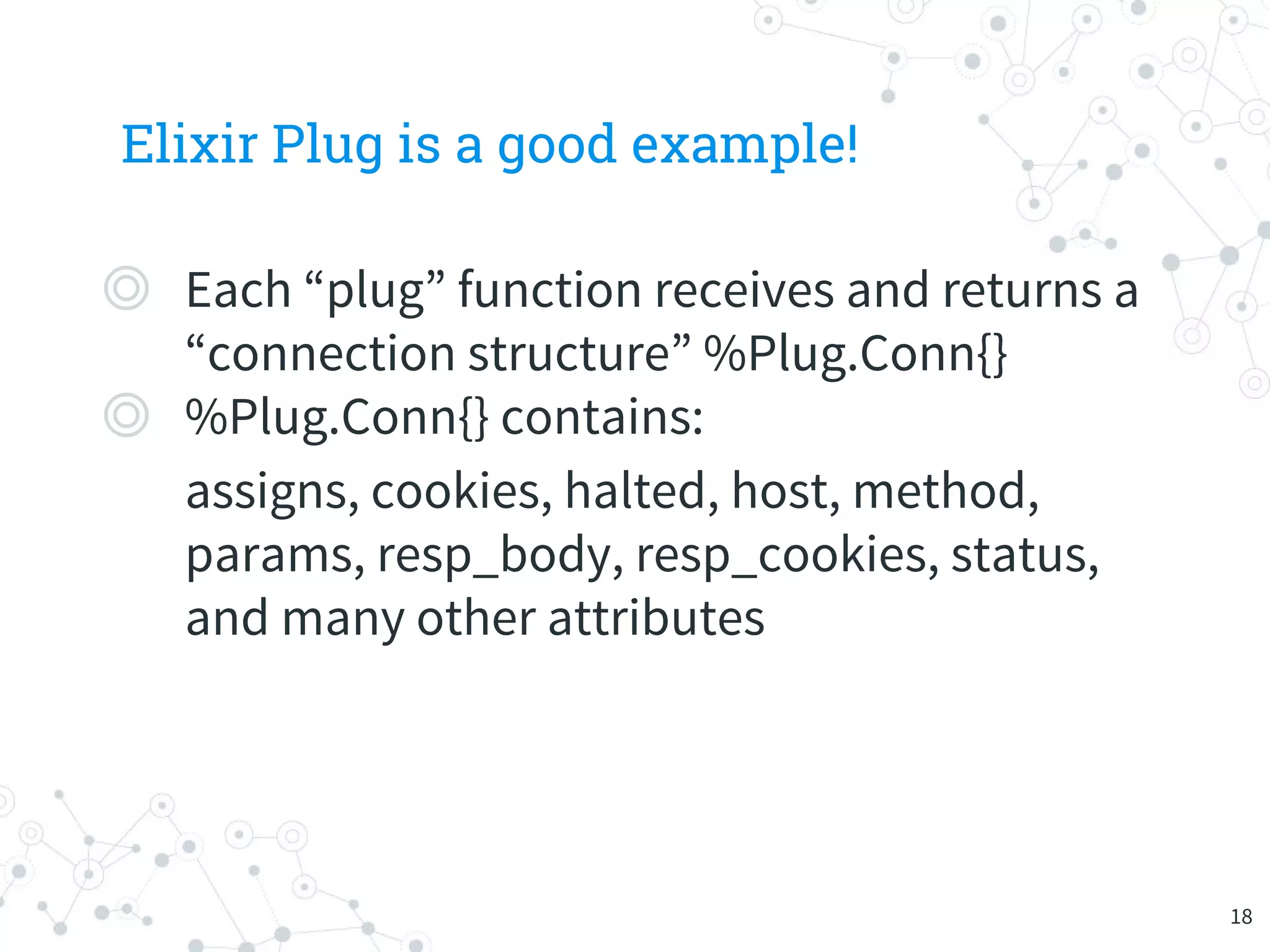
- parallelism is not native
- hierarchical structure of program
- visualisation is more about structure
◎ We need alternative approaches for
building our programs to make software
better!
3
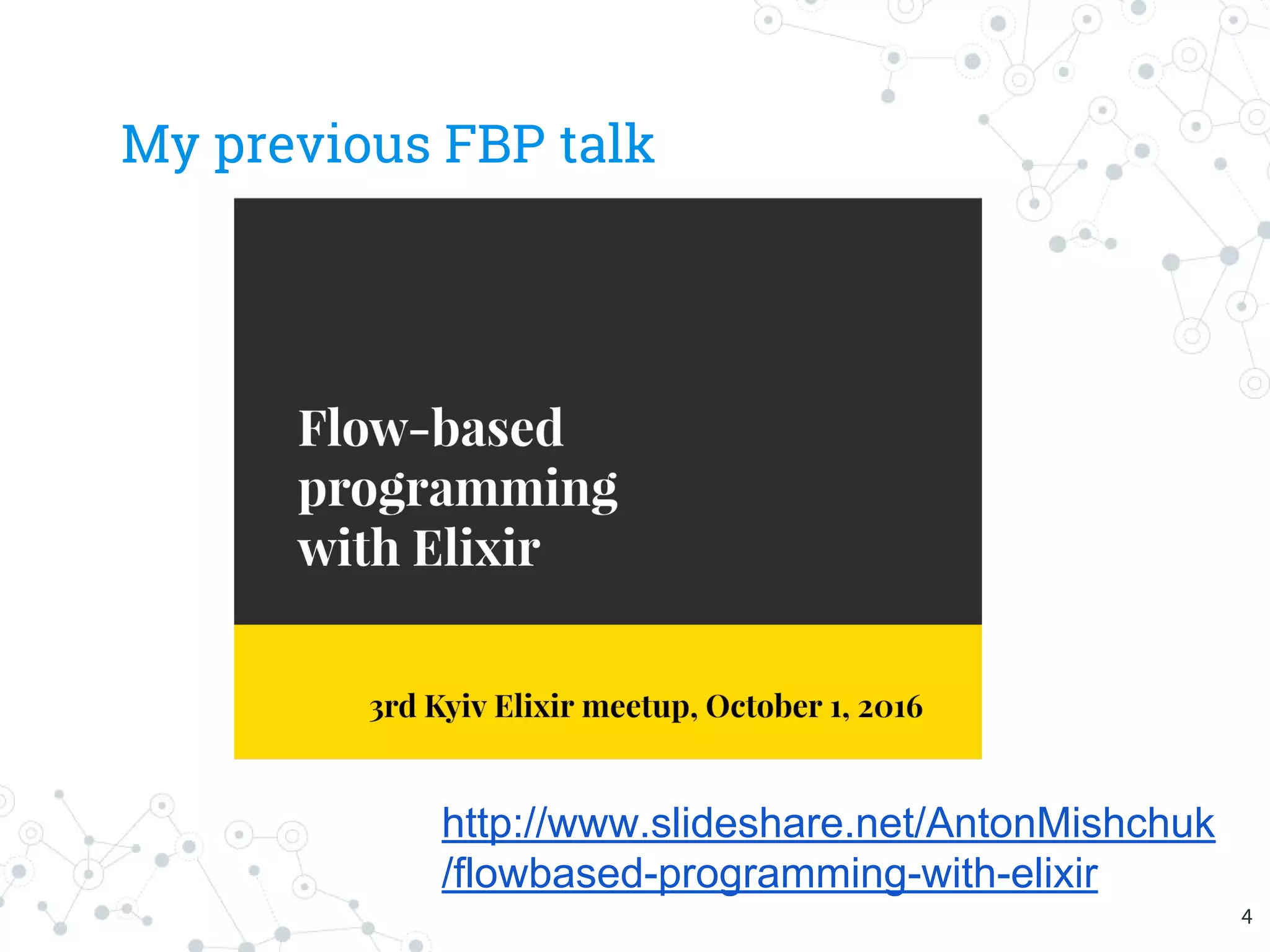
My previous FBP talk
4
http://www.slideshare.net/AntonMishchuk
/flowbased-programming-with-elixir
The goal of the talk
◎ Discuss a special case of Flow-Based
Programming: “Railway FBP” (R-FBP)
◎ Present Flowex library which helps to
create R-FBP abstractions
◎ Show that Elixir GenStage is not only about
data-processing but about software design
5
What will be about
◎ Flow-Based Programming (FBP)
◎ Railway Oriented Programming (ROP)
◎ Railway FBP
◎ Flowex library
Lots of pictures!
6
1.
Flow-Based
Programming
Basic concepts
7
“
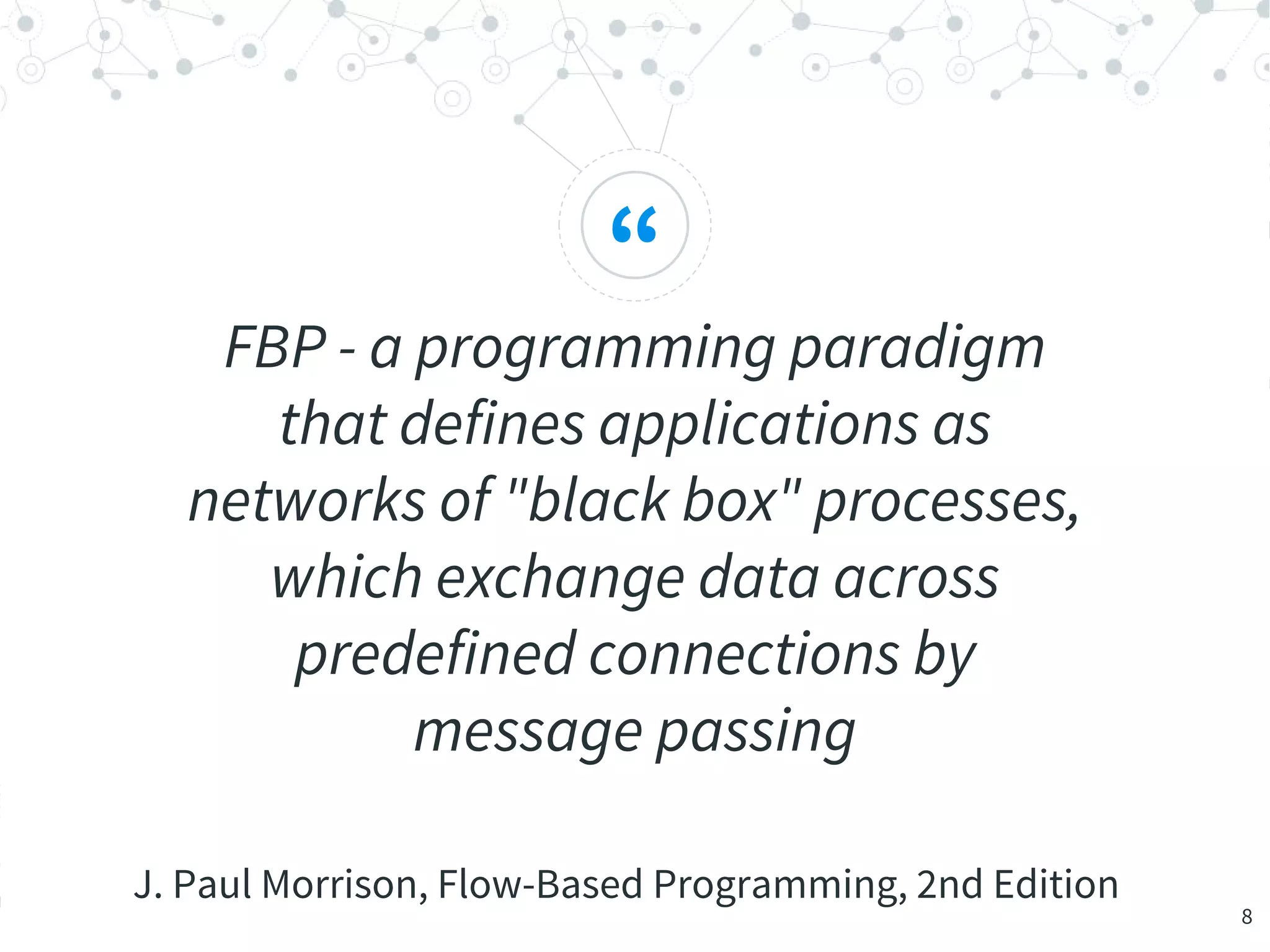
FBP - a programming paradigm
that defines applications as
networks of "black box" processes,
which exchange data across
predefined connections by
message passing
J. Paul Morrison, Flow-Based Programming, 2nd Edition
8
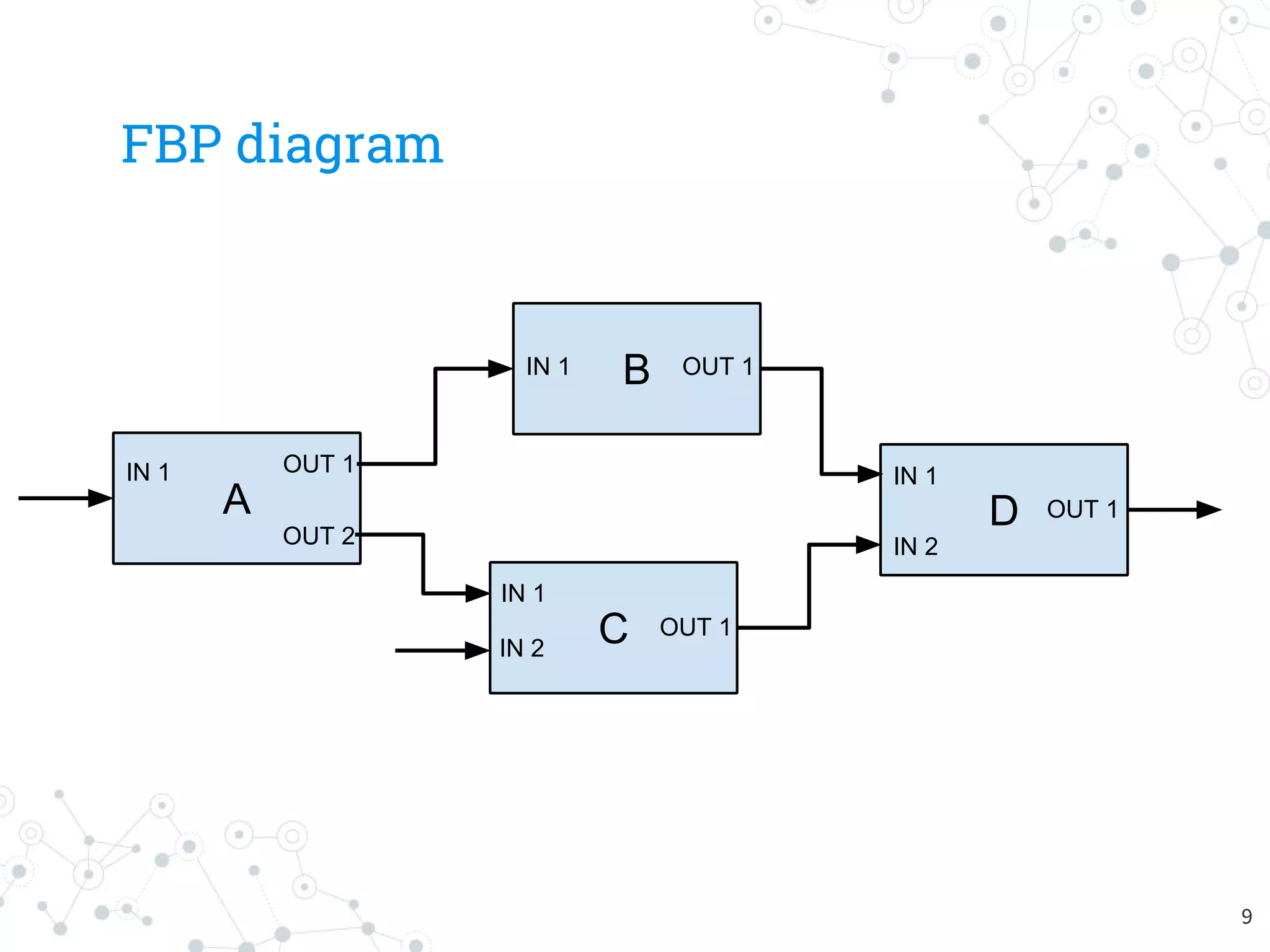
FBP diagram
A
B
D
C
IN 1
IN 1
IN 1
IN 2
IN 1
IN 2
OUT 1
OUT 2
OUT 1
OUT 1
OUT 1
9
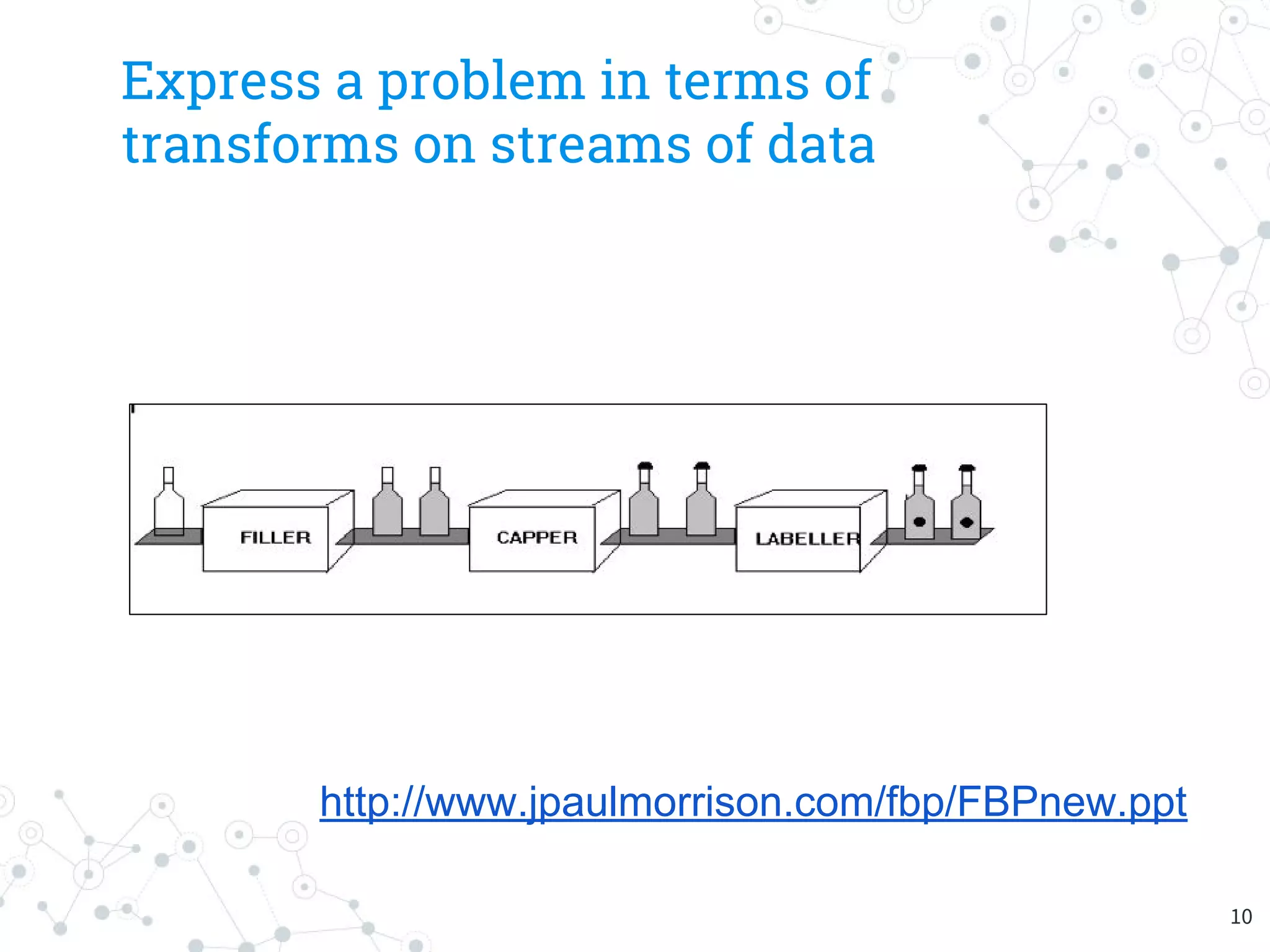
Express a problem in terms of
transforms on streams of data
http://www.jpaulmorrison.com/fbp/FBPnew.ppt
10
Design pros
◎ Independent and reusable components
◎ Clean interfaces
◎ Simple to reconfigure
◎ Minimizes side-effects
◎ Designer can sit at one “station”, or can
follow an item through system
http://www.jpaulmorrison.com/fbp/FBPnew.ppt
11
“Native parallelism”
12
2.
Railway Oriented
Programming
Design pattern
13
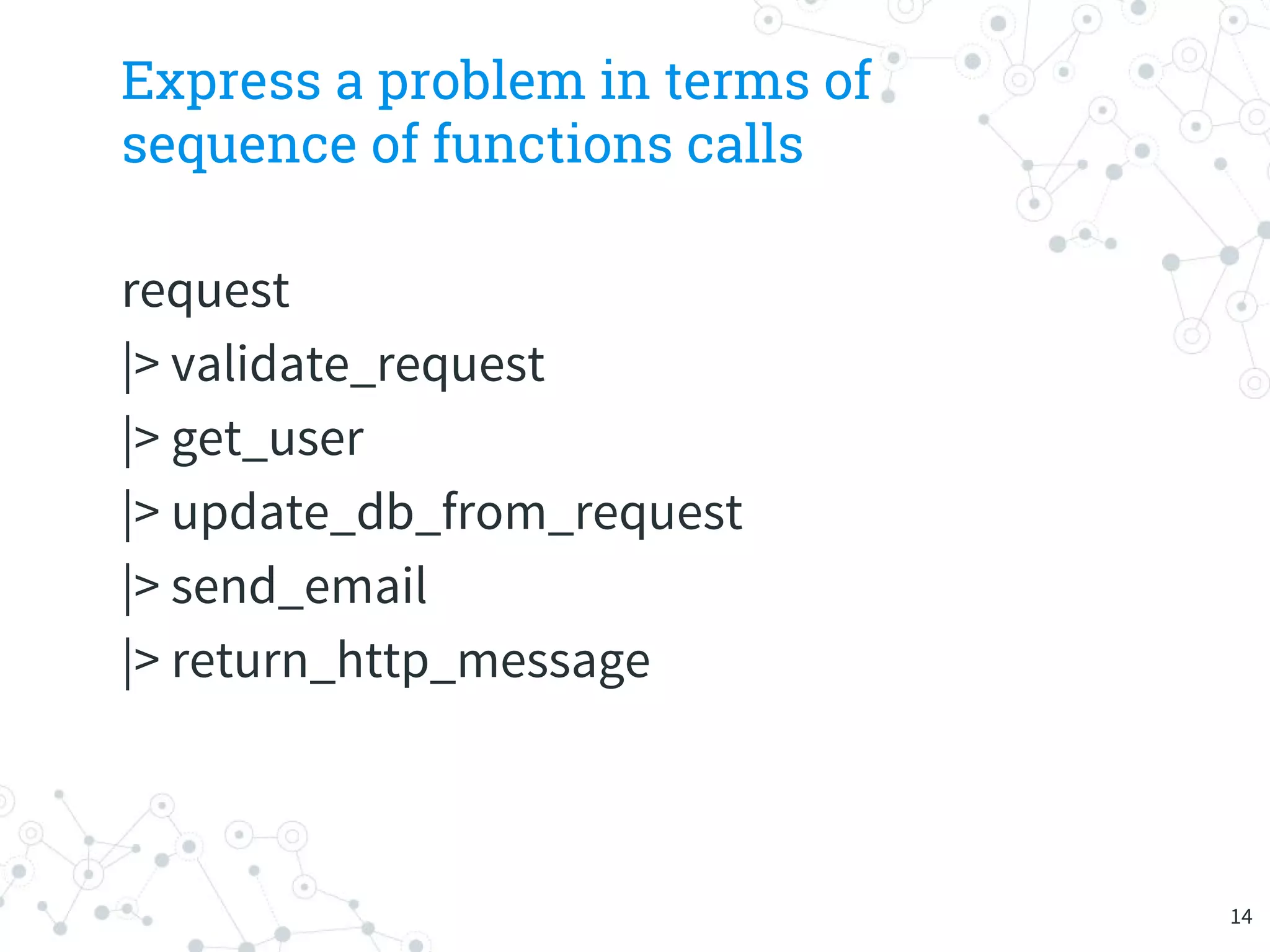
Express a problem in terms of
sequence of functions calls
request
|> validate_request
|> get_user
|> update_db_from_request
|> send_email
|> return_http_message
14
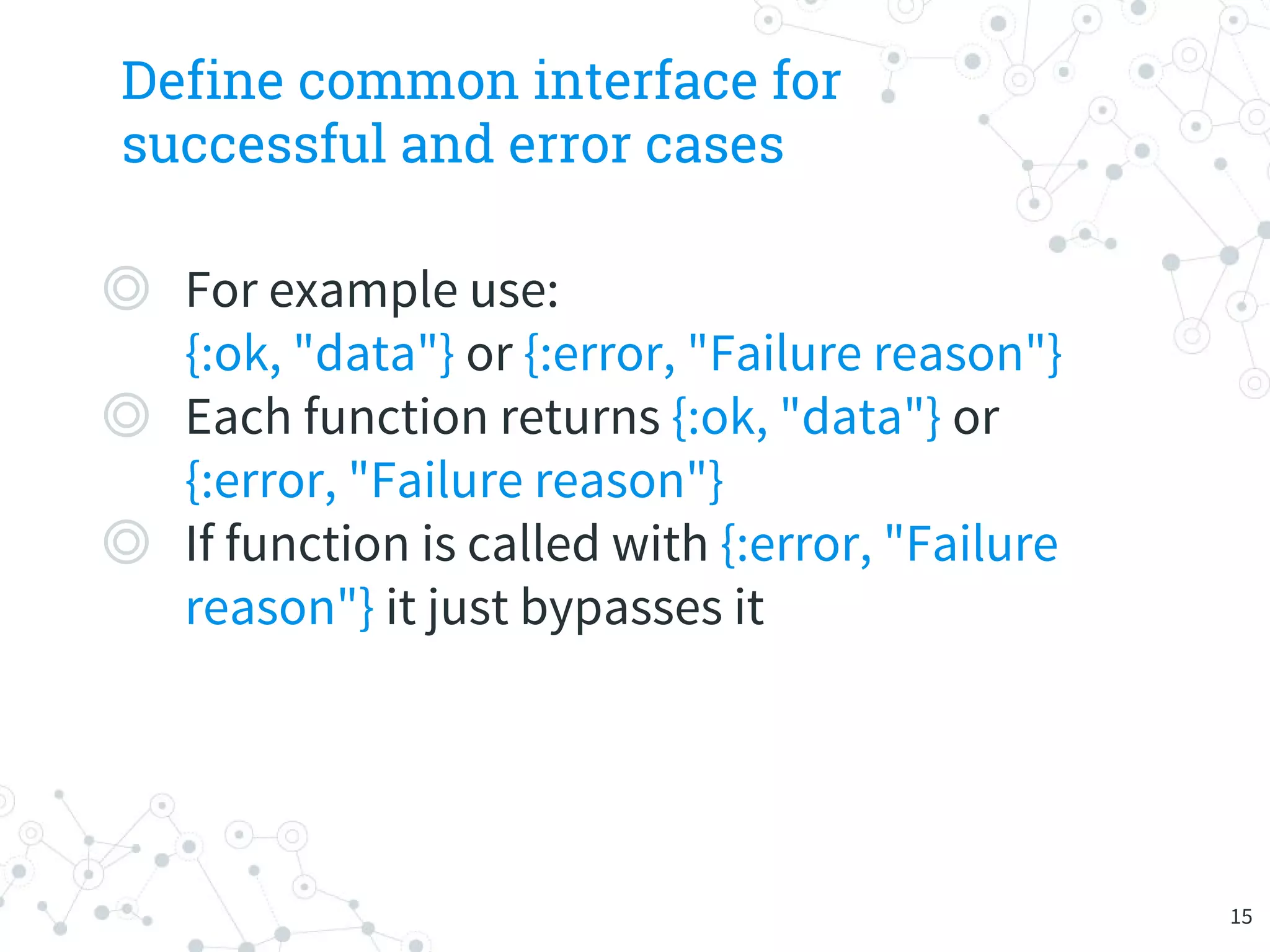
Define common interface for
successful and error cases
◎ For example use:
{:ok, "data"} or {:error, "Failure reason"}
◎ Each function returns {:ok, "data"} or
{:error, "Failure reason"}
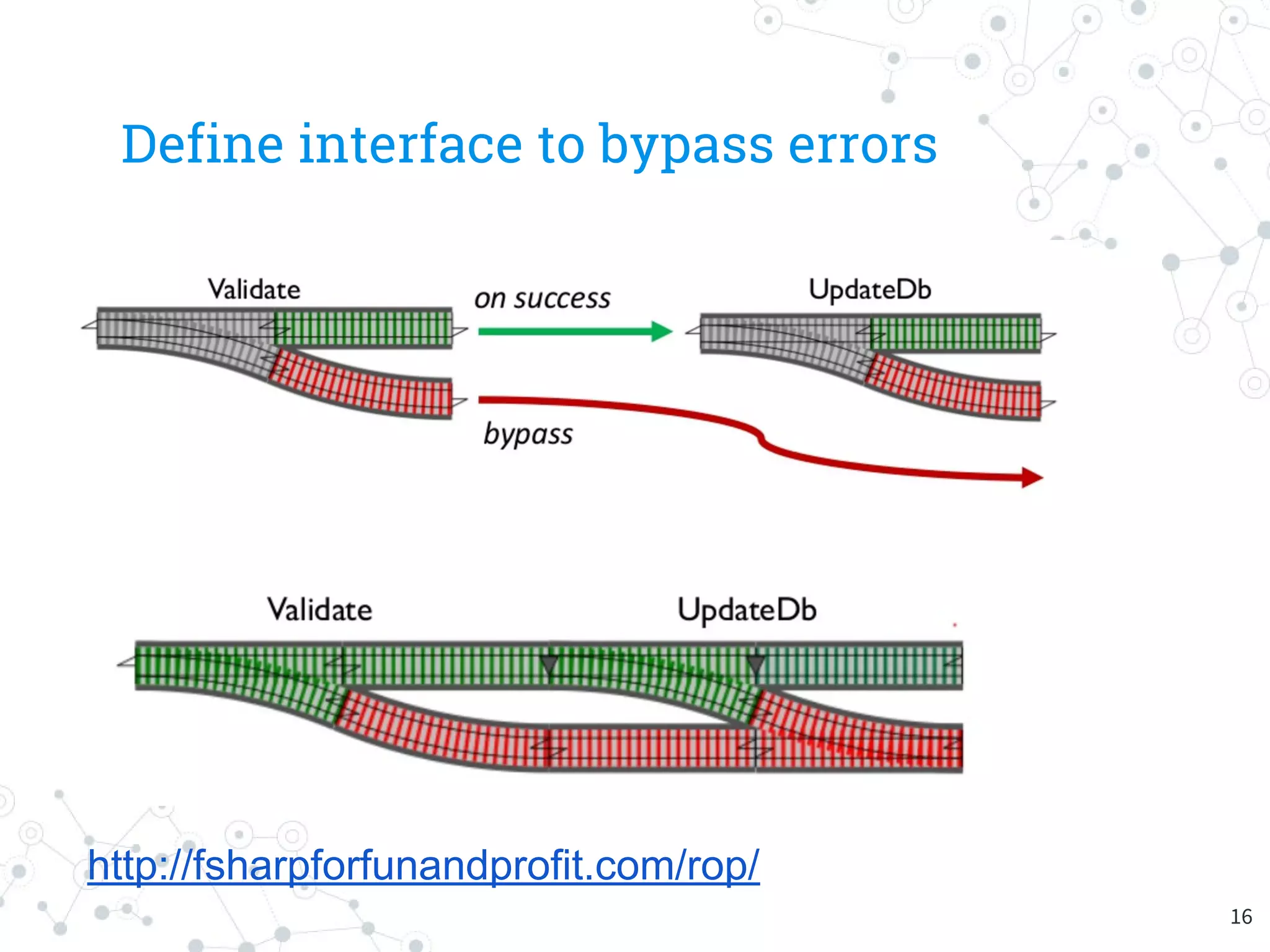
◎ If function is called with {:error, "Failure
reason"} it just bypasses it
15
Define interface to bypass errors
http://fsharpforfunandprofit.com/rop/
16
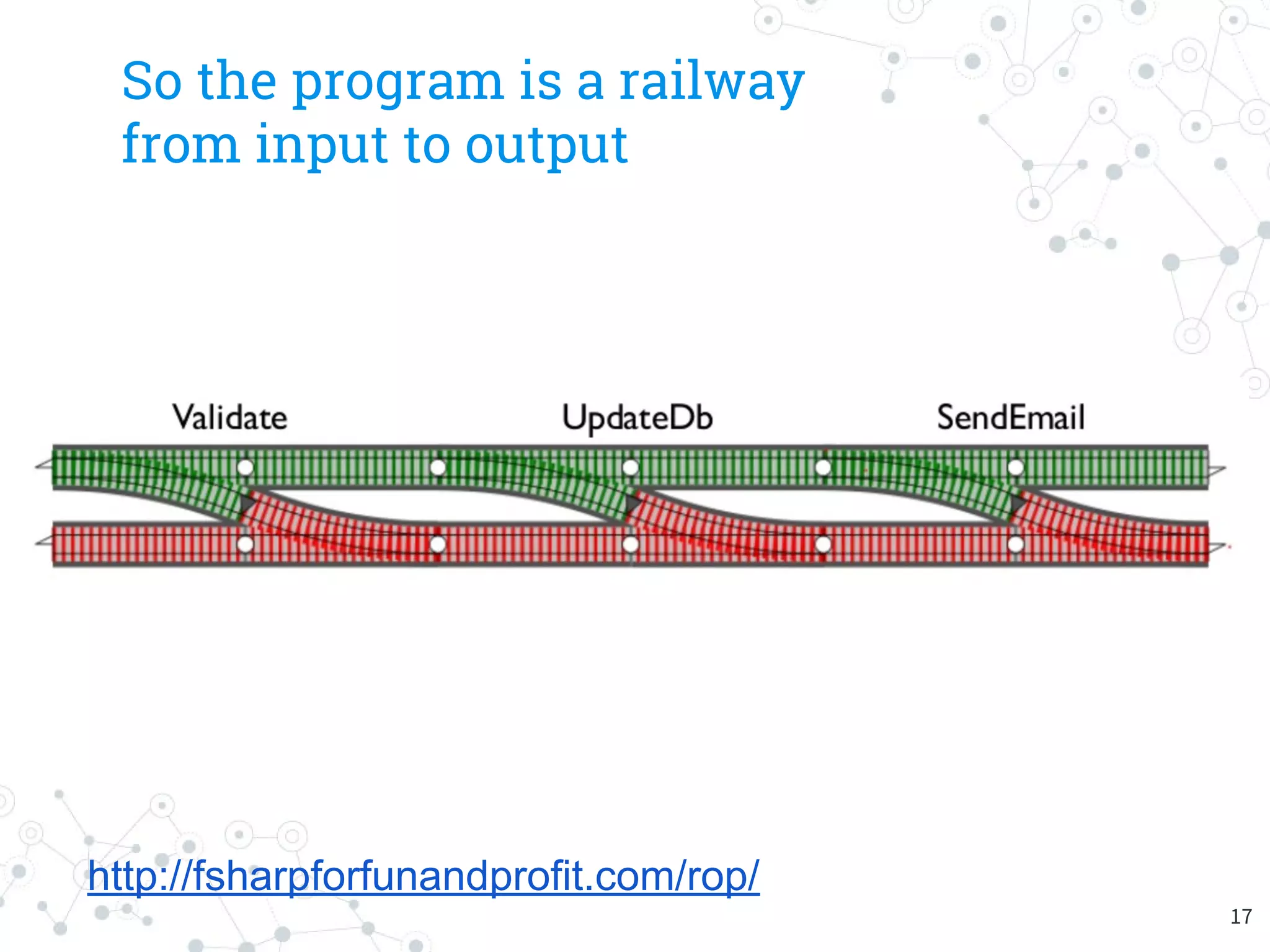
So the program is a railway
from input to output
http://fsharpforfunandprofit.com/rop/
17
Elixir Plug is a good example!
◎ Each “plug” function receives and returns a
“connection structure” %Plug.Conn{}
◎ %Plug.Conn{} contains:
assigns, cookies, halted, host, method,
params, resp_body, resp_cookies, status,
and many other attributes
18
3.
Railway FBP
ROP + FBP
19
Let’s transform each part of
“Railway” into FBP component!
20
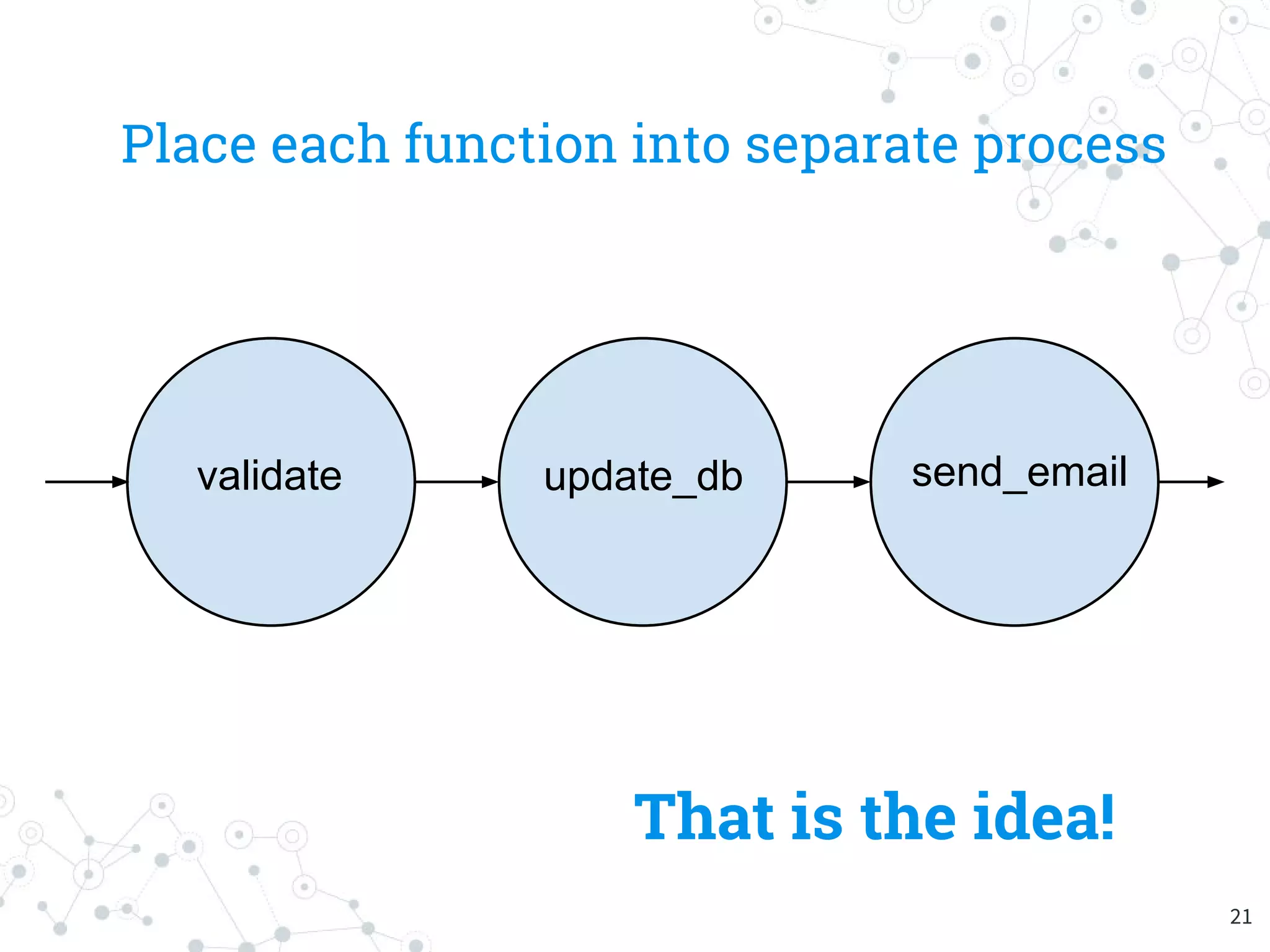
Place each function into separate process
validate send_emailupdate_db
That is the idea!
21
Why Elixir?
22
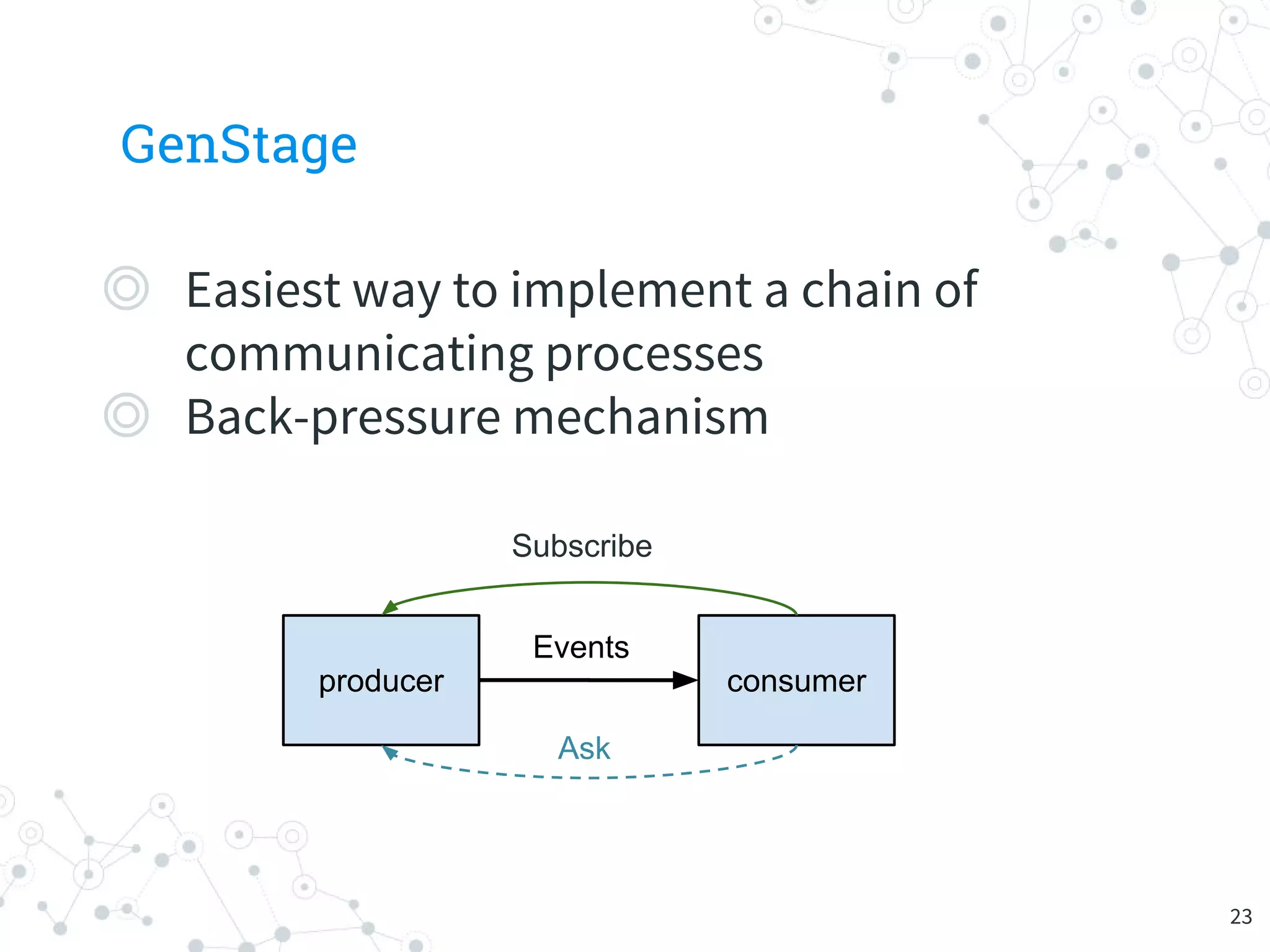
GenStage
◎ Easiest way to implement a chain of
communicating processes
◎ Back-pressure mechanism
producer consumer
Subscribe
Ask
Events
23
Metaprogramming
◎ Simple way for sharing functionality
◎ Ability to create expressive DSL
24
4.
Flowex
Railway FBP
25
Consider an example!
26
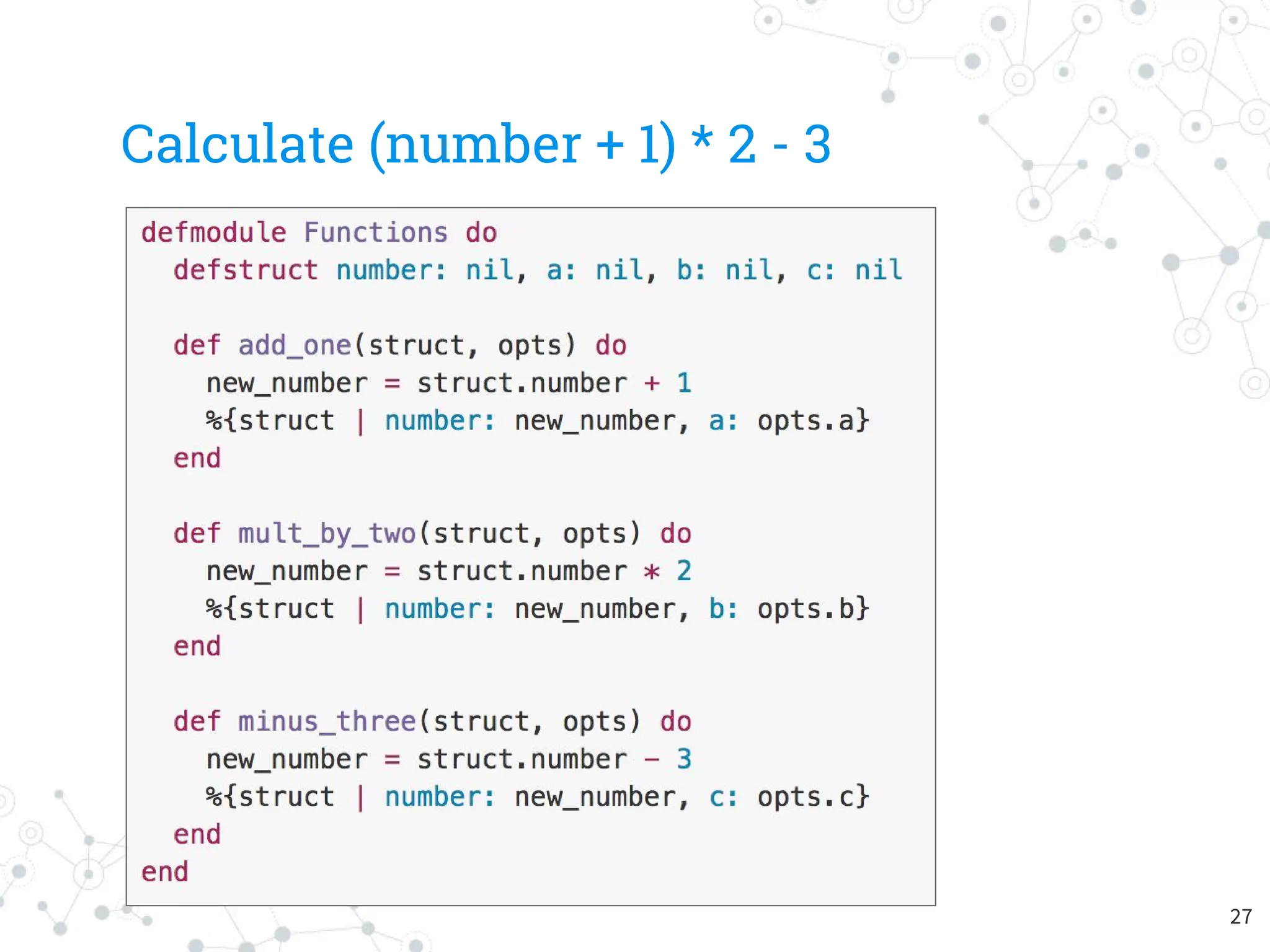
Calculate (number + 1) * 2 - 3
27
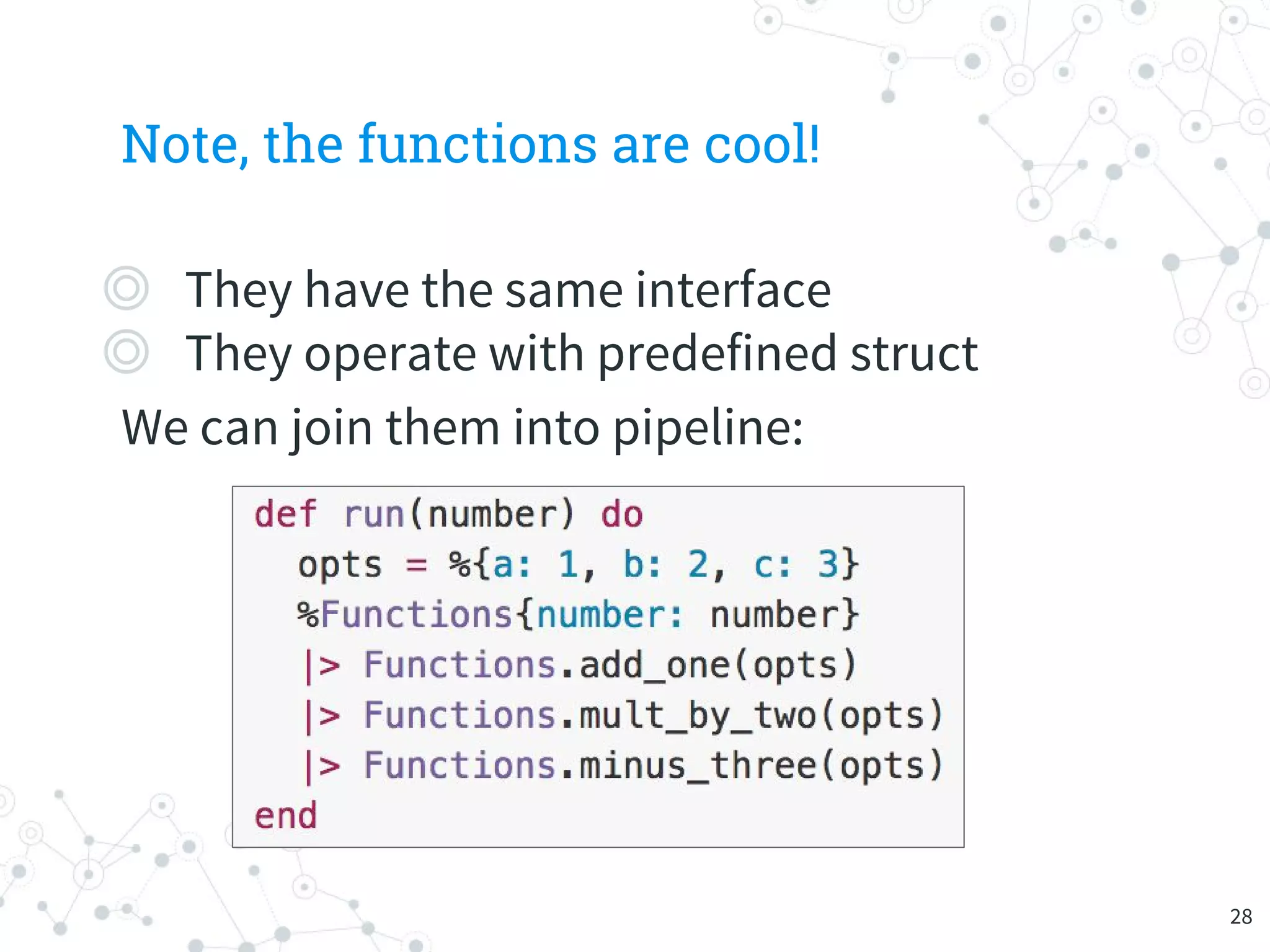
Note, the functions are cool!
◎ They have the same interface
◎ They operate with predefined struct
We can join them into pipeline:
28
Let’s add some Flowex magic!
29
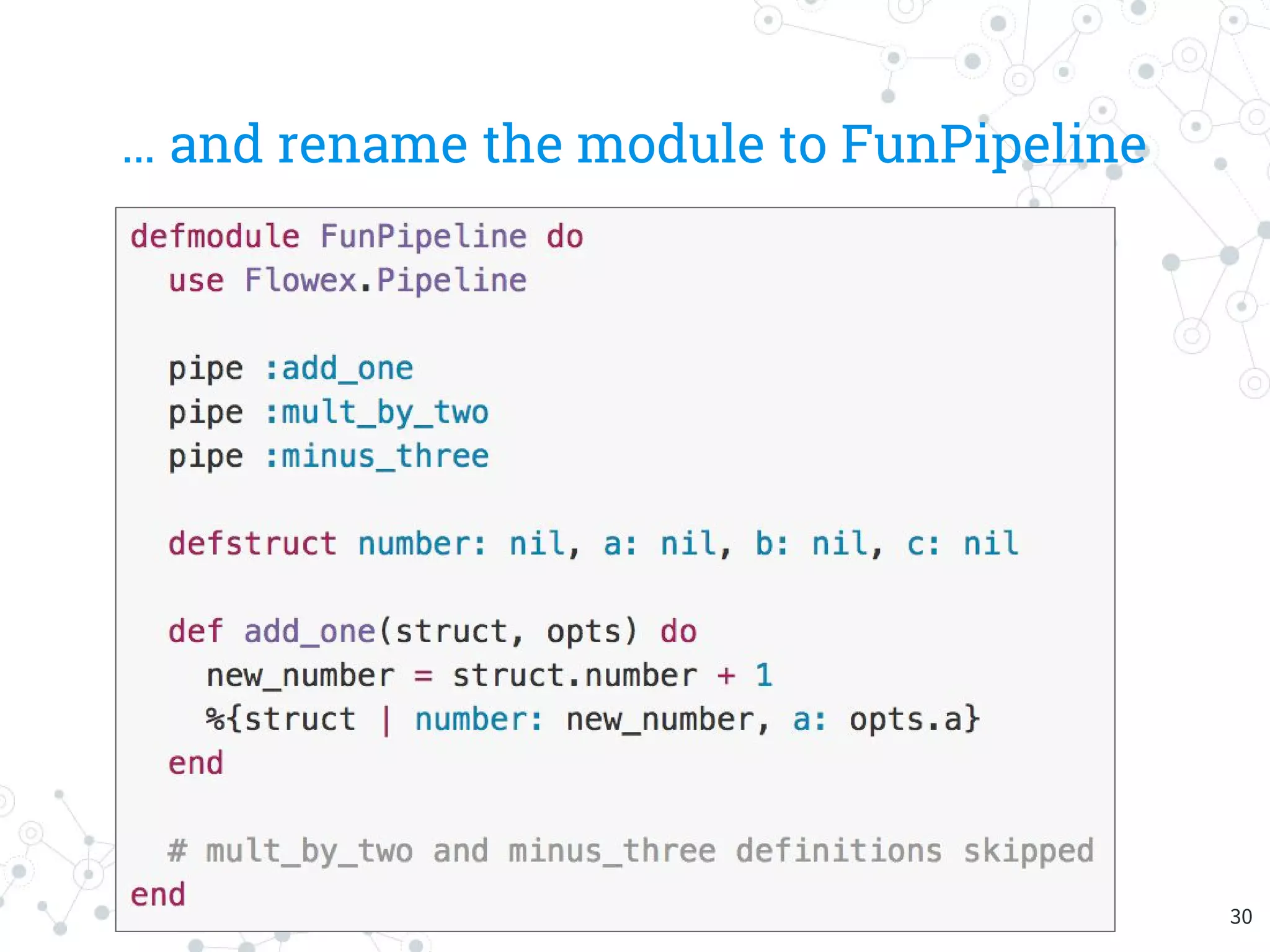
… and rename the module to FunPipeline
30
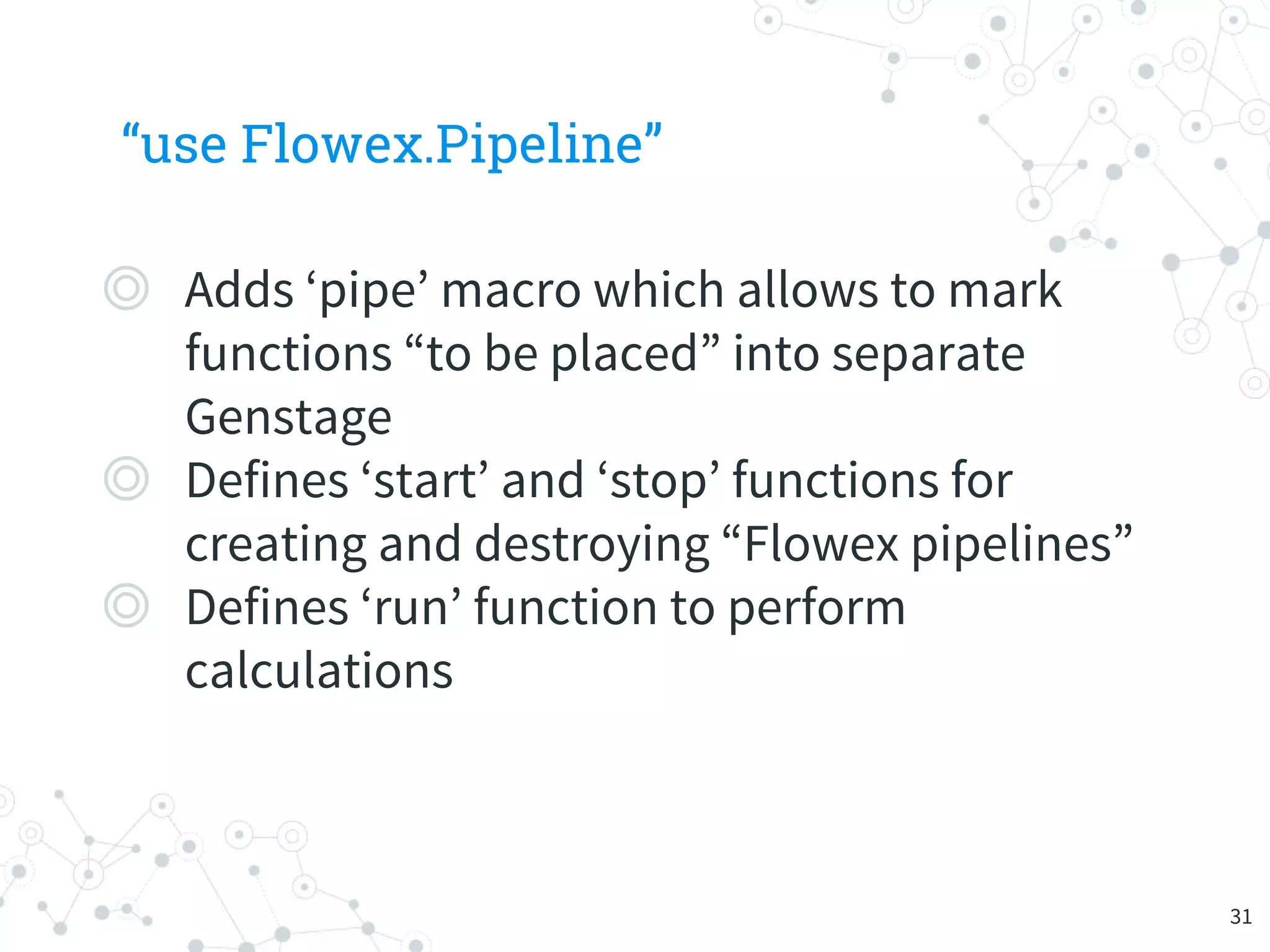
“use Flowex.Pipeline”
◎ Adds ‘pipe’ macro which allows to mark
functions “to be placed” into separate
Genstage
◎ Defines ‘start’ and ‘stop’ functions for
creating and destroying “Flowex pipelines”
◎ Defines ‘run’ function to perform
calculations
31
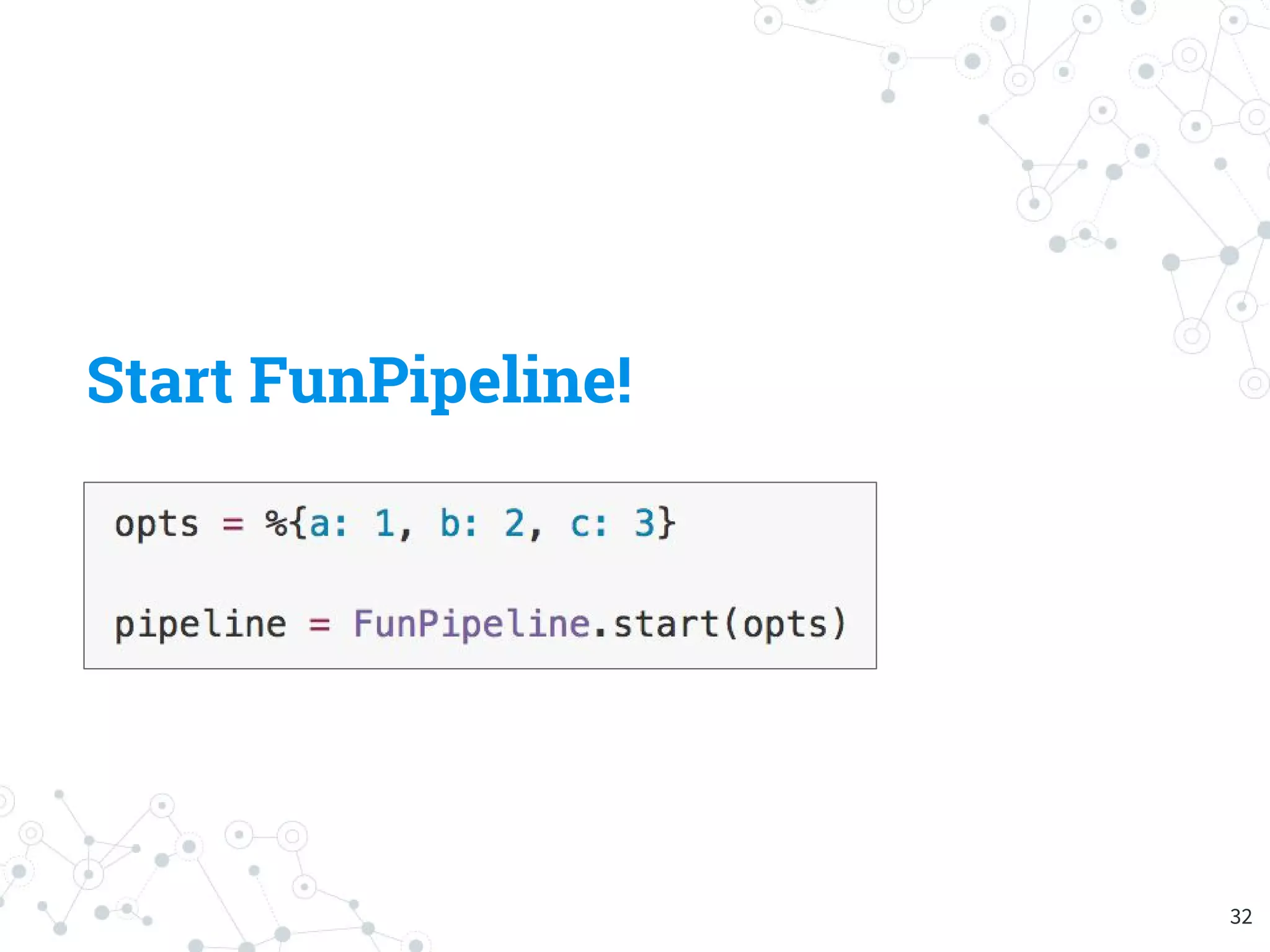
Start FunPipeline!
32
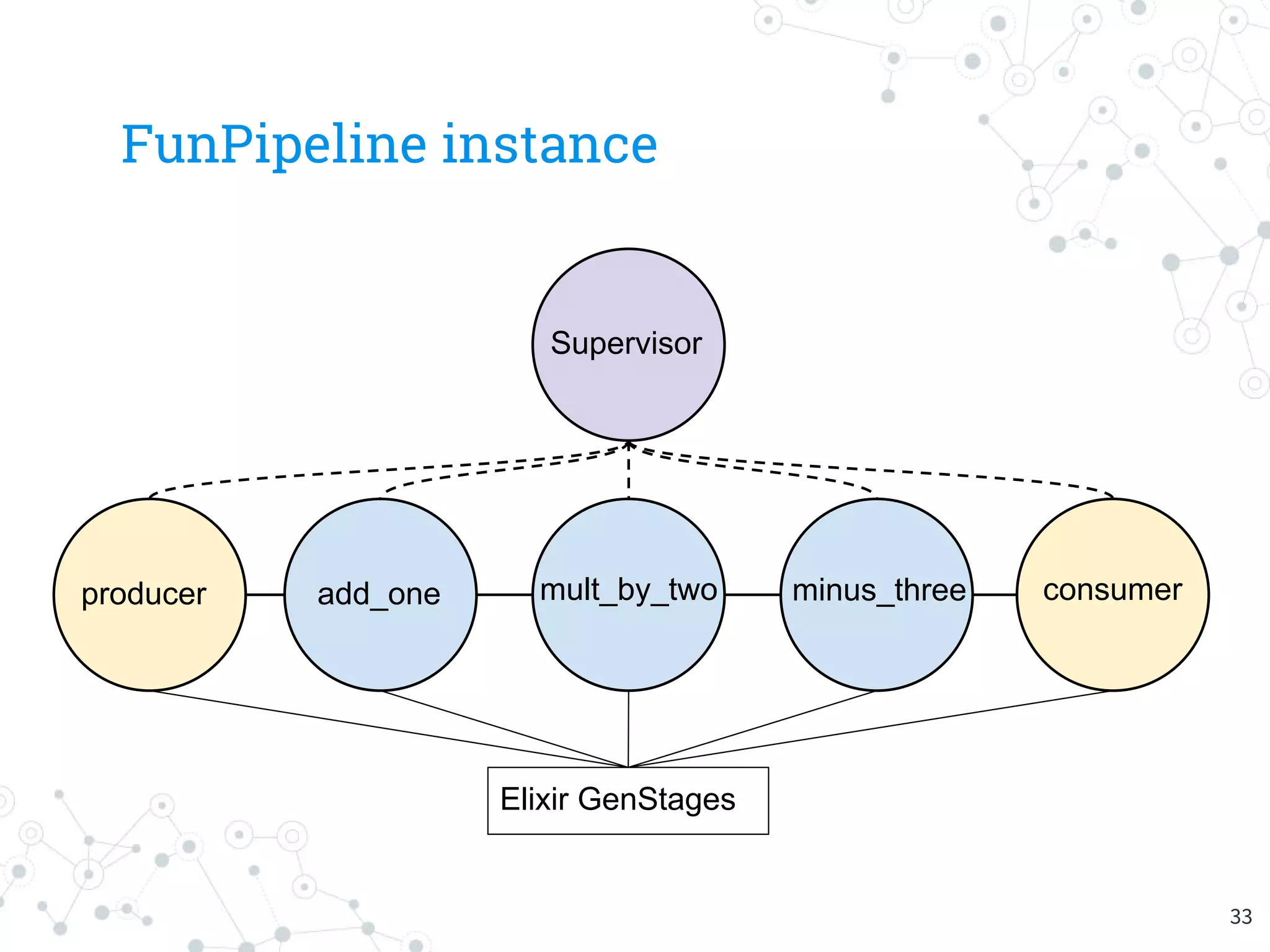
FunPipeline instance
add_one minus_threemult_by_twoproducer consumer
Supervisor
Elixir GenStages
33
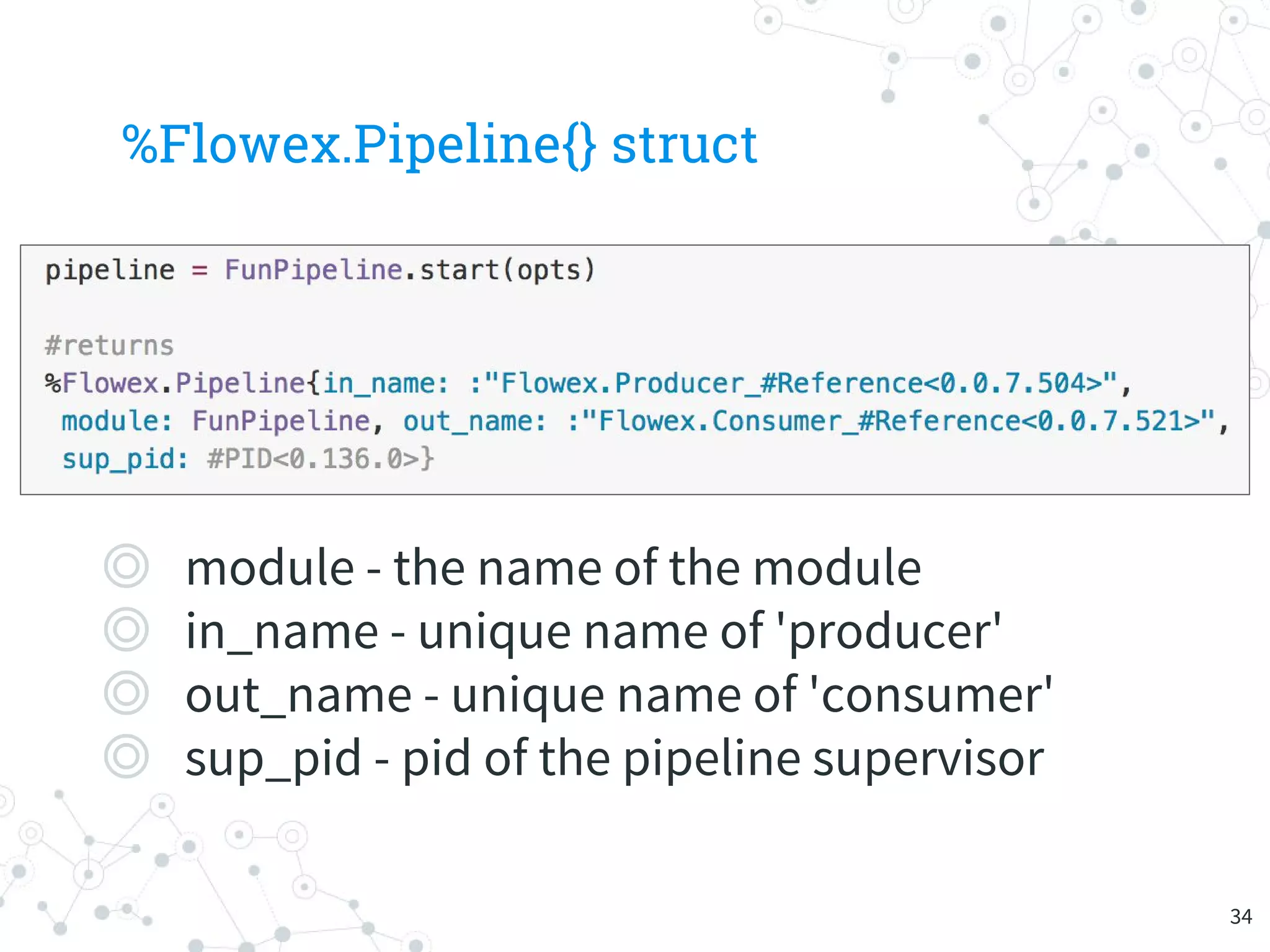
%Flowex.Pipeline{} struct
◎ module - the name of the module
◎ in_name - unique name of 'producer'
◎ out_name - unique name of 'consumer'
◎ sup_pid - pid of the pipeline supervisor
34
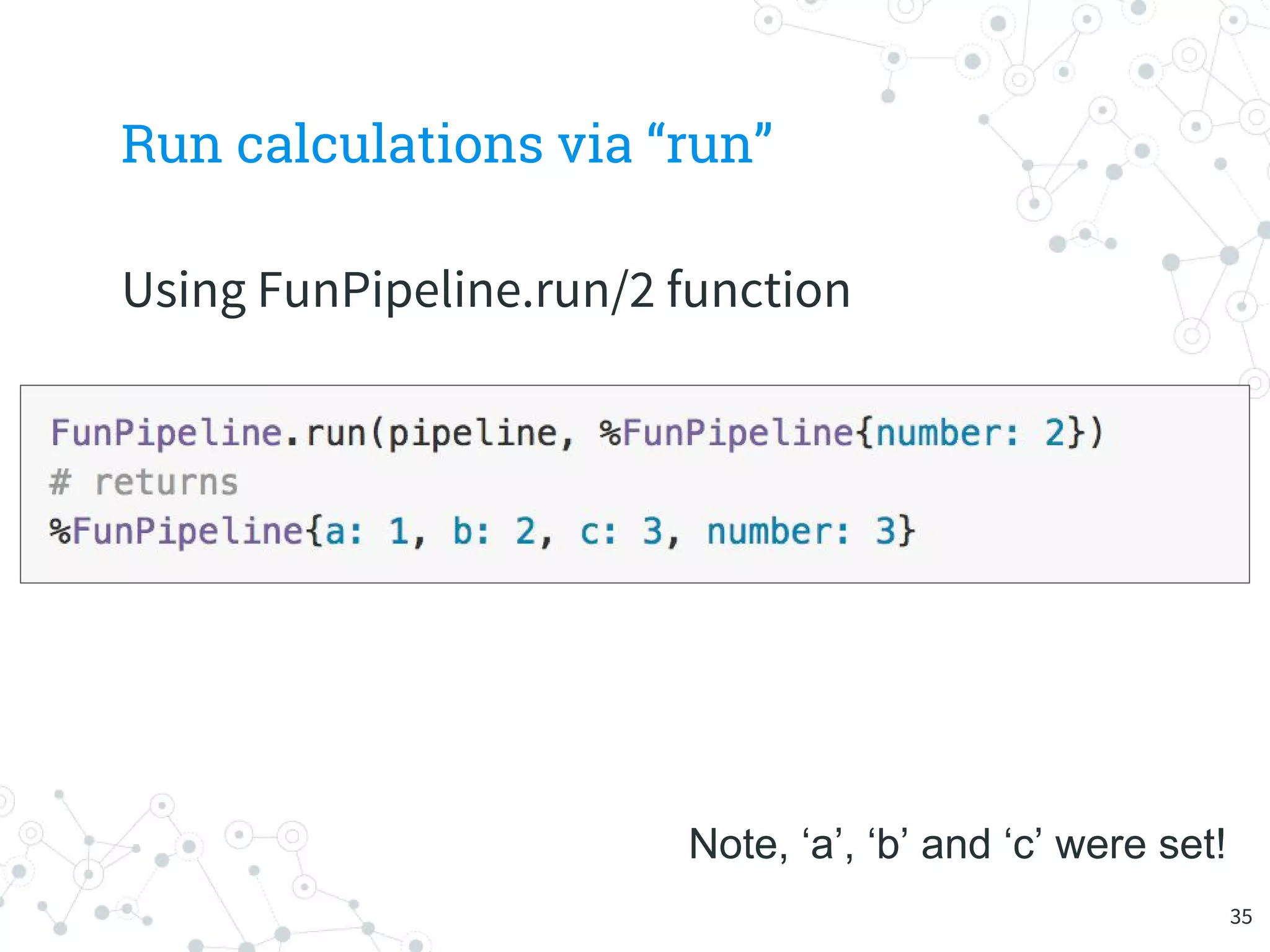
Run calculations via “run”
Using FunPipeline.run/2 function
Note, ‘a’, ‘b’ and ‘c’ were set!
35
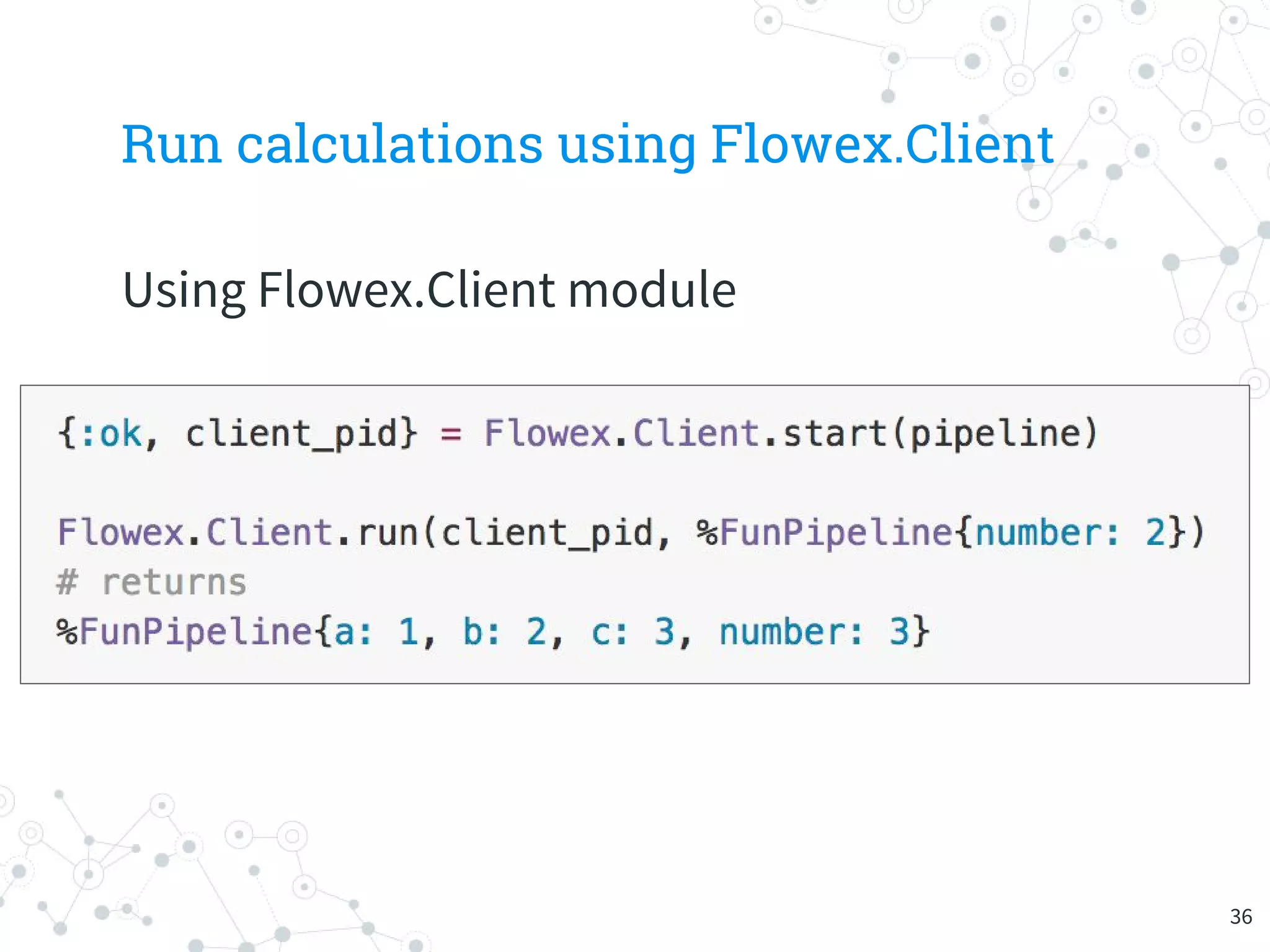
Run calculations using Flowex.Client
Using Flowex.Client module
36
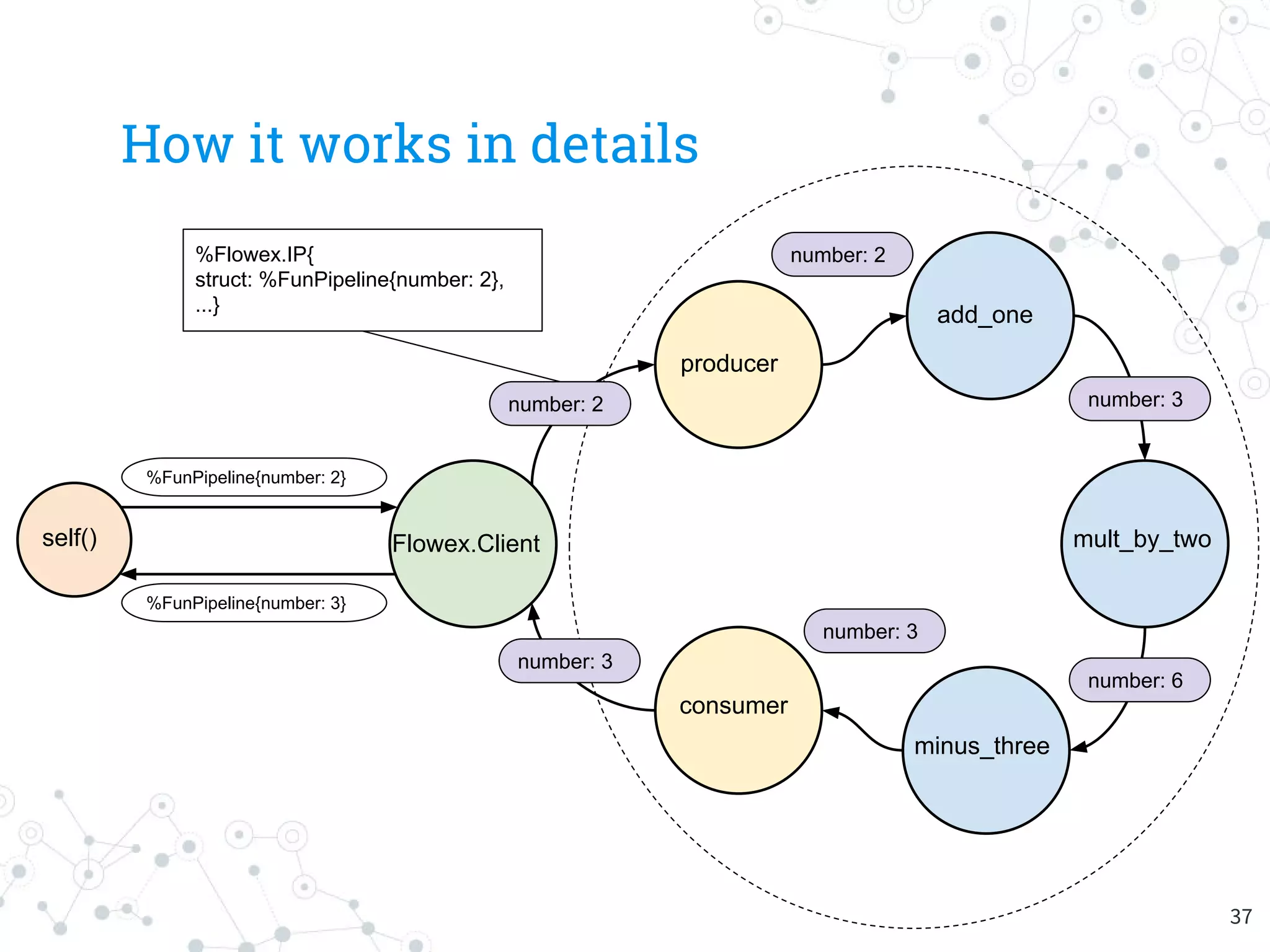
How it works in details
add_one
minus_three
mult_by_two
producer
consumer
Flowex.Client
%FunPipeline{number: 2}
%Flowex.IP{
struct: %FunPipeline{number: 2},
...}
number: 2
number: 2
number: 3
number: 6
number: 3
number: 3
self()
%FunPipeline{number: 3}
37
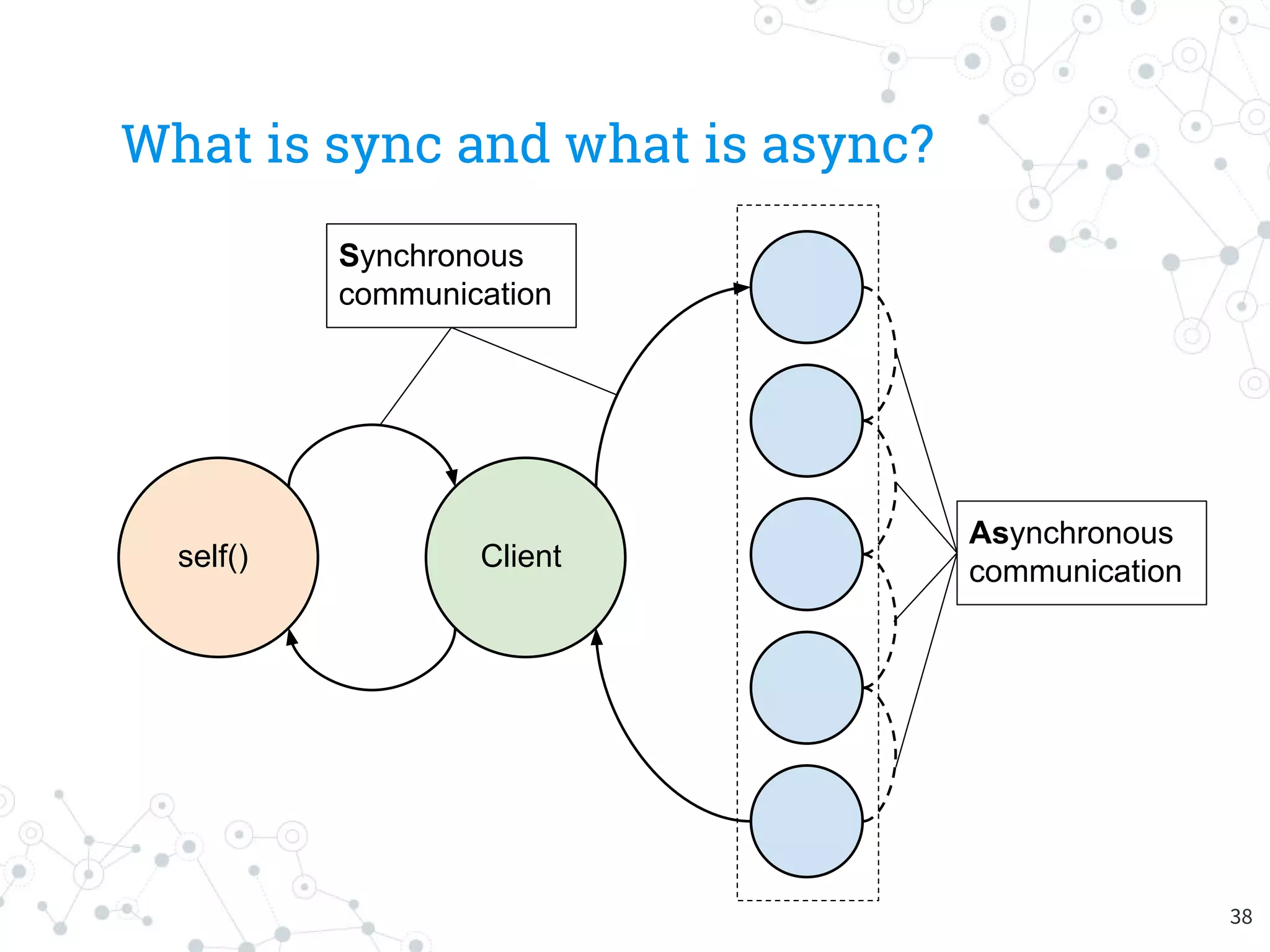
What is sync and what is async?
Client
Asynchronous
communicationself()
Synchronous
communication
38
Is there no parallelism?
39
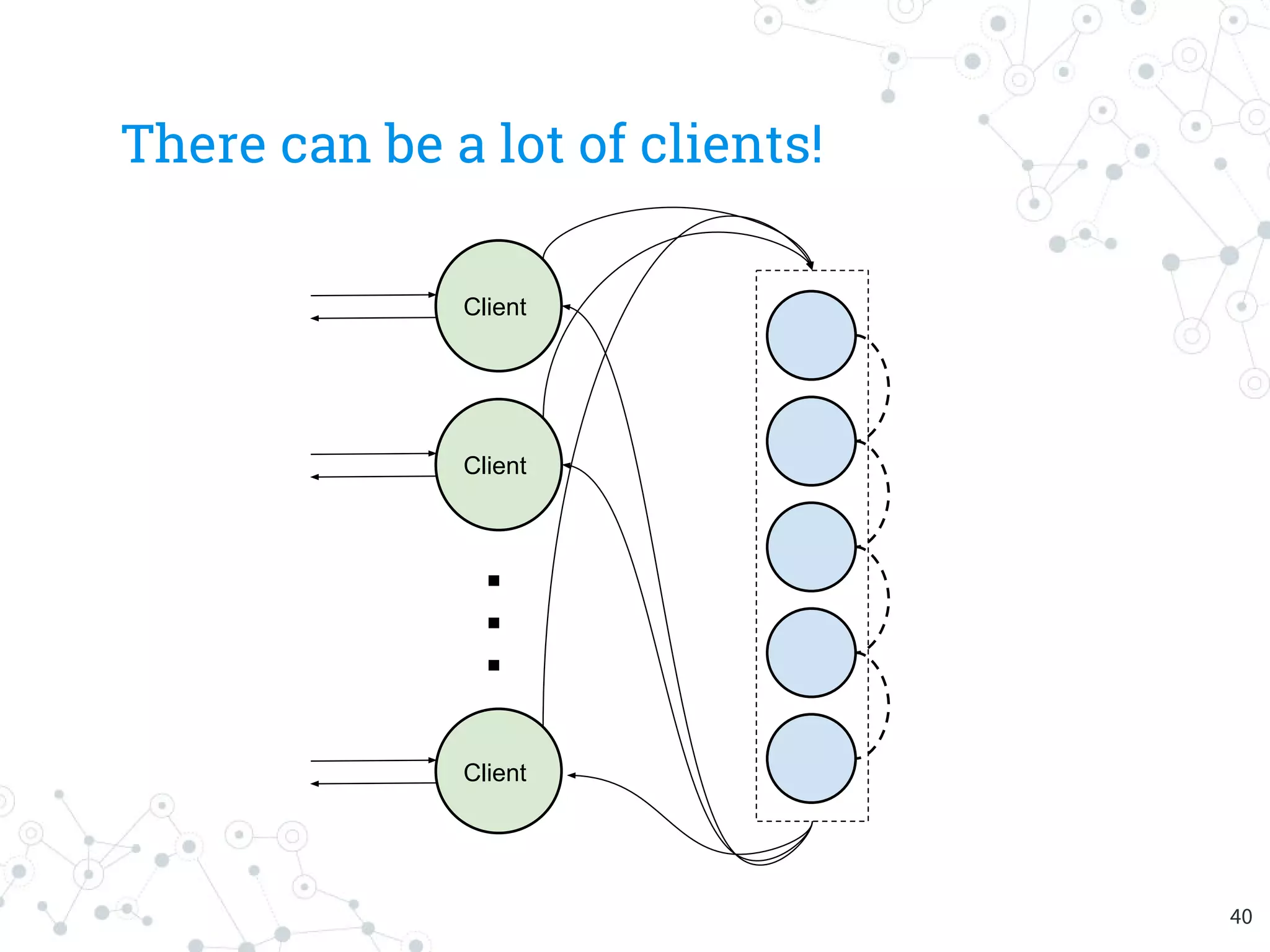
There can be a lot of clients!
Client
Client
Client
40
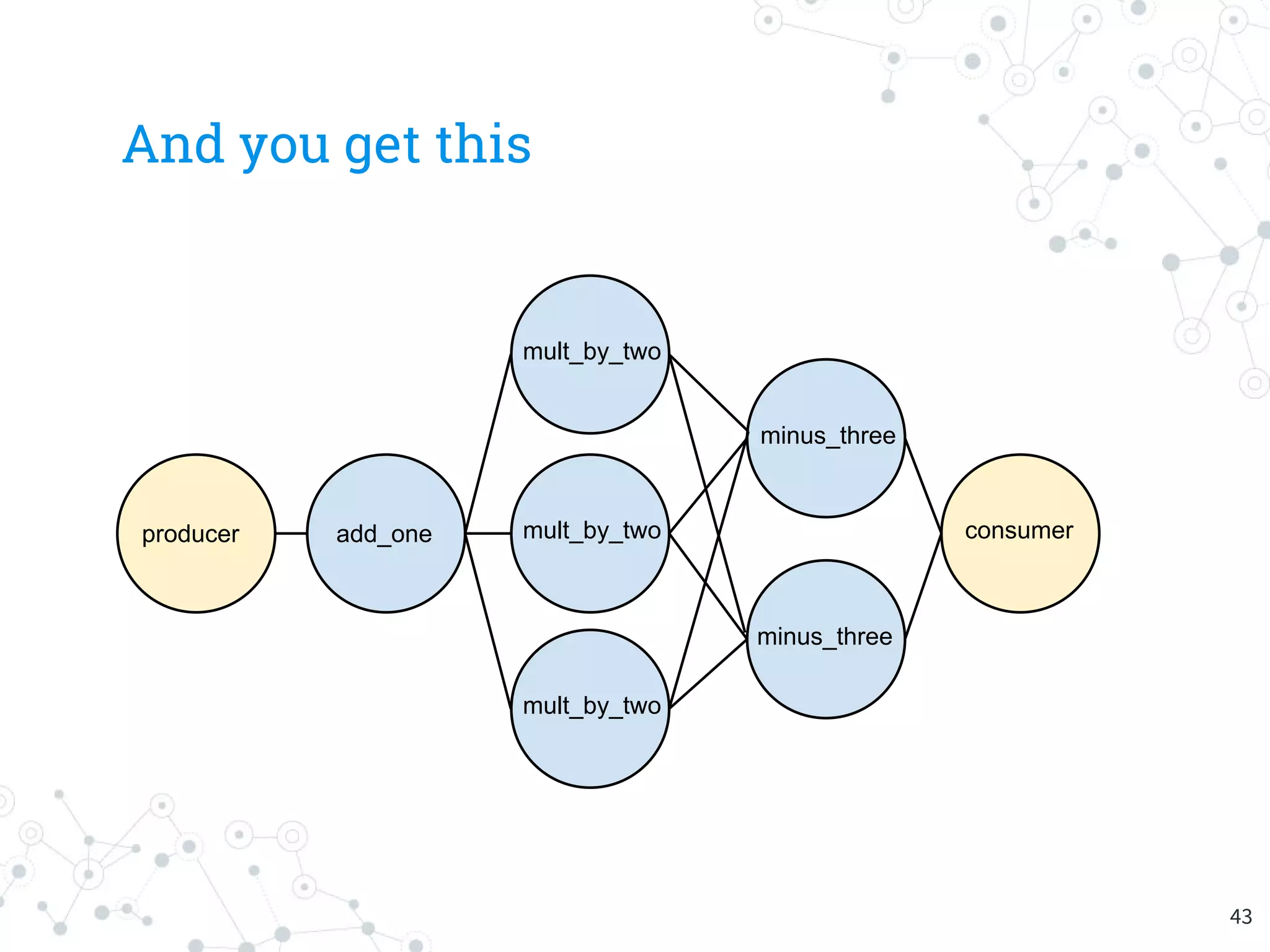
Bottlenecks.
What if there is very slow
process in the pipeline?
41
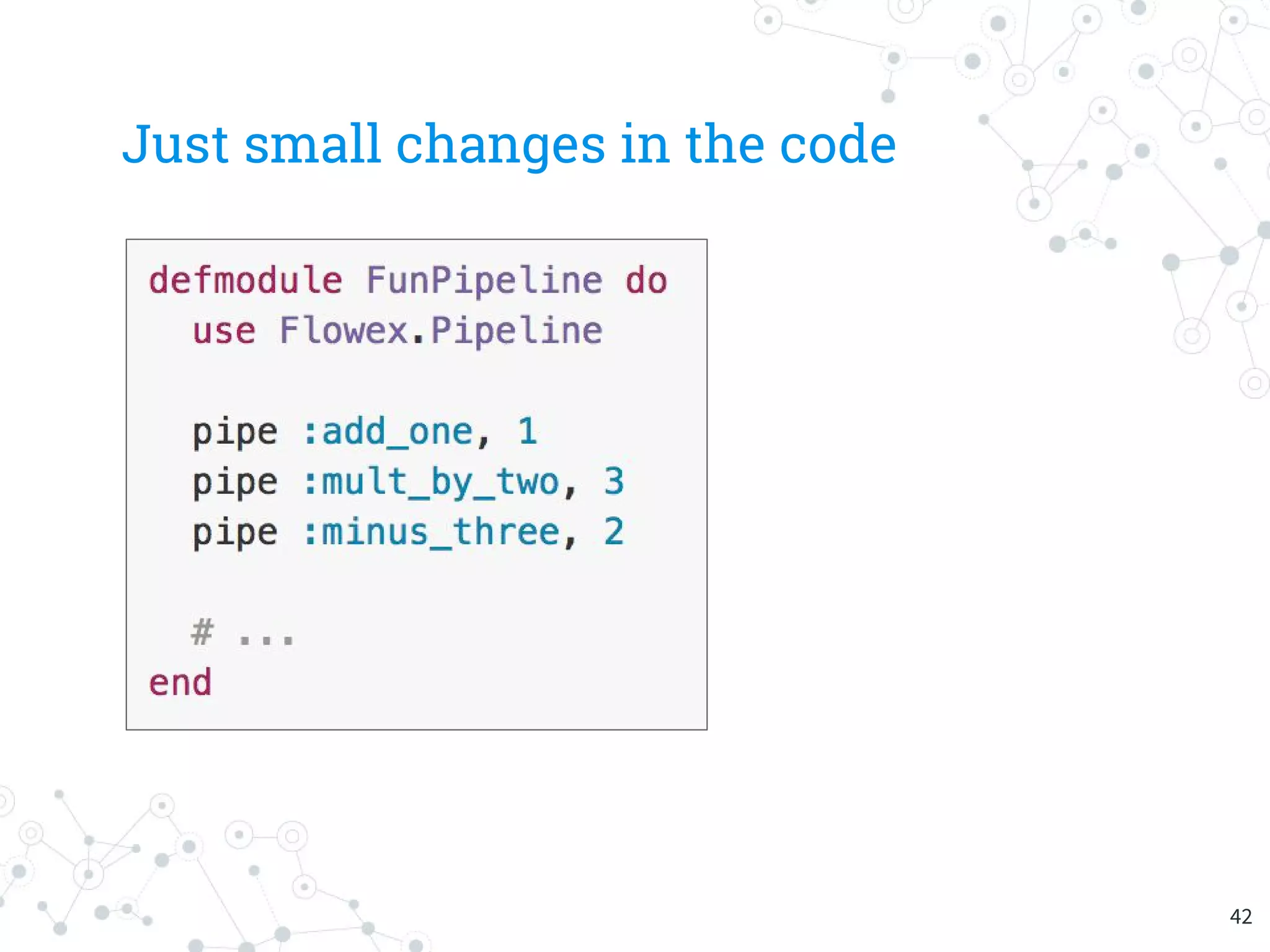
Just small changes in the code
42
And you get this
add_one
minus_three
mult_by_twoproducer consumer
mult_by_two
minus_three
mult_by_two
43
Reusable components with
“module pipelines”
44
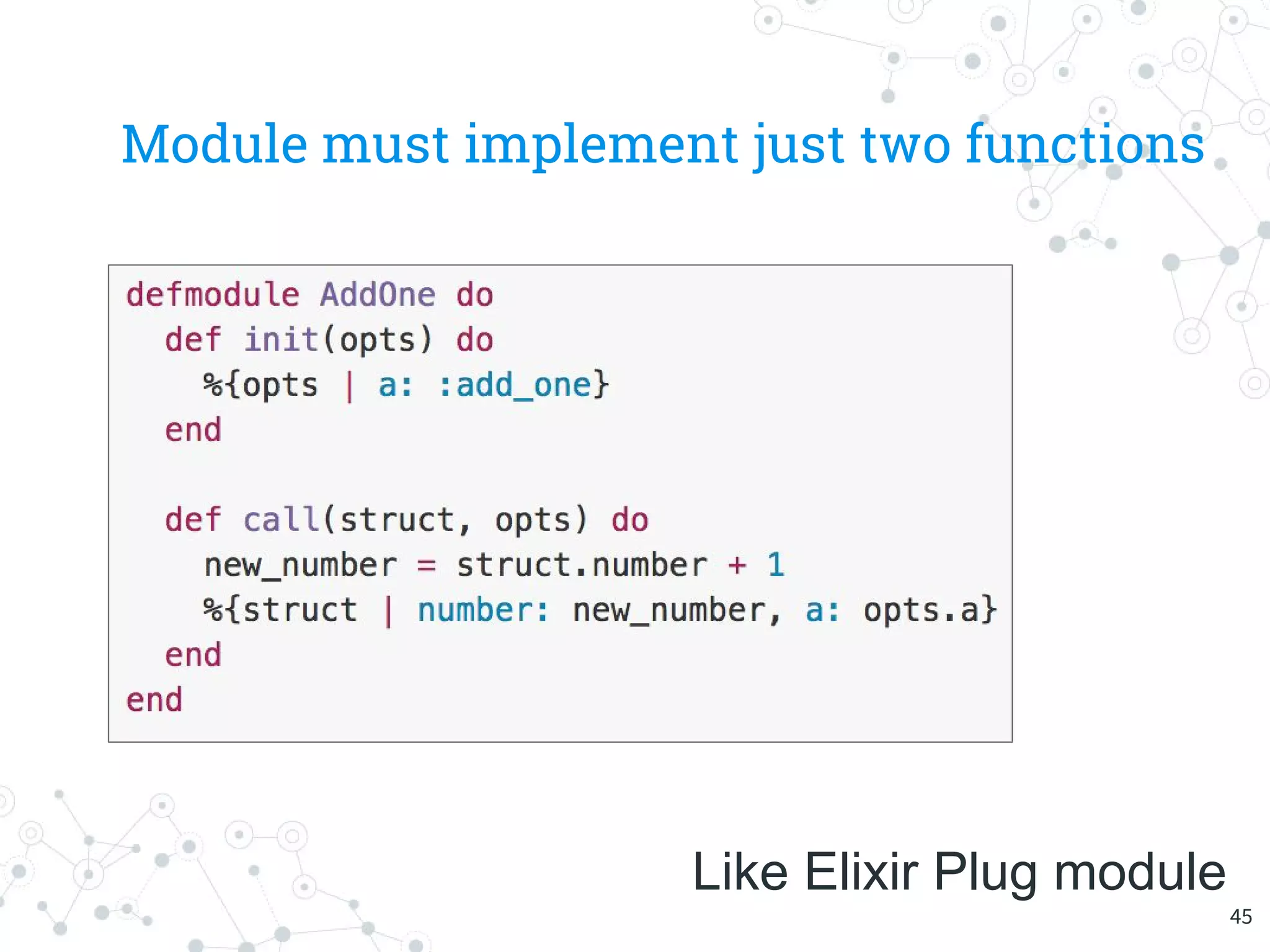
Module must implement just two functions
Like Elixir Plug module
45
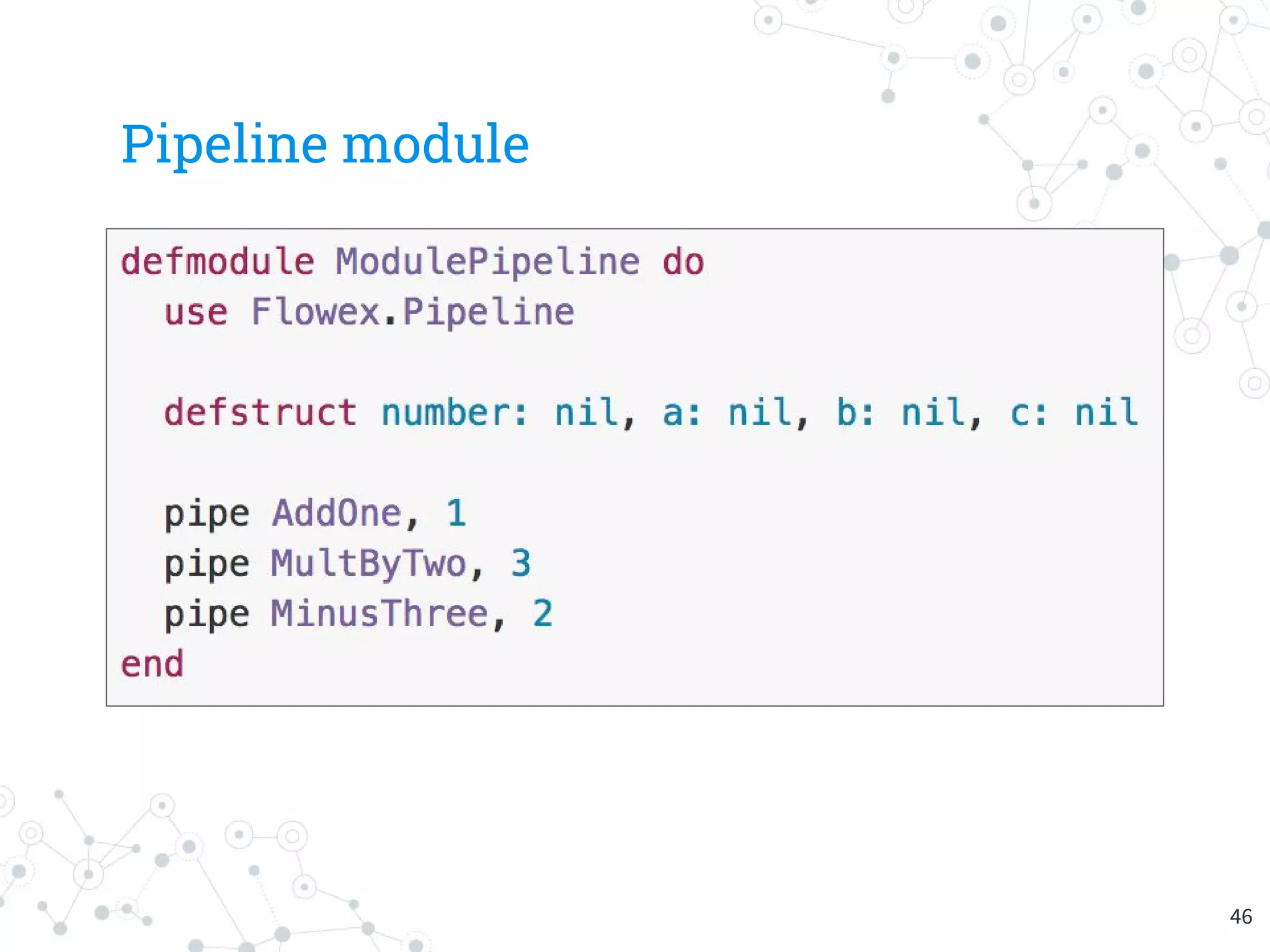
Pipeline module
46
Conclusion
47
Why it is cool!
48
It is easy to understand
◎ Pipelines explicitly define a
structure of data will be processed
◎ Pipelines explicitly define a
way the data will come
◎ Pipelines explicitly define a
parallel executors structure
49
It is easy to maintain and reuse
◎ There is a predefined set of working
processes (components) in a program
◎ Each component is isolated
◎ Pipelines can (and should) reuse
components
50
It is about controlled parallelism
◎ One can controll number of clients
supplying data to a pipeline
◎ One can control the number of processes
available for each component
51
Thank you! Questions?
52
You can star the project here:
https://github.com/antonmi/flowex

Flowex: Flow-Based Programming with Elixir GenStage - Anton Mishchuk

  • 1.
    Flowex - Flow-Based Programmingwith Elixir GenStage Elixir Club 5, Kyiv, January 28, 2017
  • 2.
    - Ruby developerat Matic Insurance - Elixir fan - Author and maintainer of ESpec BDD test framework github: antonmi Hello! I am Anton Mishchuk 2
  • 3.
    The problem ◎ Thereare some problems in “conventional programing”: - code is procedural and sequential - parallelism is not native - hierarchical structure of program - visualisation is more about structure ◎ We need alternative approaches for building our programs to make software better! 3
  • 4.
    My previous FBPtalk 4 http://www.slideshare.net/AntonMishchuk /flowbased-programming-with-elixir
  • 5.
    The goal ofthe talk ◎ Discuss a special case of Flow-Based Programming: “Railway FBP” (R-FBP) ◎ Present Flowex library which helps to create R-FBP abstractions ◎ Show that Elixir GenStage is not only about data-processing but about software design 5
  • 6.
    What will beabout ◎ Flow-Based Programming (FBP) ◎ Railway Oriented Programming (ROP) ◎ Railway FBP ◎ Flowex library Lots of pictures! 6
  • 7.
  • 8.
    “ FBP - aprogramming paradigm that defines applications as networks of "black box" processes, which exchange data across predefined connections by message passing J. Paul Morrison, Flow-Based Programming, 2nd Edition 8
  • 9.
    FBP diagram A B D C IN 1 IN1 IN 1 IN 2 IN 1 IN 2 OUT 1 OUT 2 OUT 1 OUT 1 OUT 1 9
  • 10.
    Express a problemin terms of transforms on streams of data http://www.jpaulmorrison.com/fbp/FBPnew.ppt 10
  • 11.
    Design pros ◎ Independentand reusable components ◎ Clean interfaces ◎ Simple to reconfigure ◎ Minimizes side-effects ◎ Designer can sit at one “station”, or can follow an item through system http://www.jpaulmorrison.com/fbp/FBPnew.ppt 11
  • 12.
  • 13.
  • 14.
    Express a problemin terms of sequence of functions calls request |> validate_request |> get_user |> update_db_from_request |> send_email |> return_http_message 14
  • 15.
    Define common interfacefor successful and error cases ◎ For example use: {:ok, "data"} or {:error, "Failure reason"} ◎ Each function returns {:ok, "data"} or {:error, "Failure reason"} ◎ If function is called with {:error, "Failure reason"} it just bypasses it 15
  • 16.
    Define interface tobypass errors http://fsharpforfunandprofit.com/rop/ 16
  • 17.
    So the programis a railway from input to output http://fsharpforfunandprofit.com/rop/ 17
  • 18.
    Elixir Plug isa good example! ◎ Each “plug” function receives and returns a “connection structure” %Plug.Conn{} ◎ %Plug.Conn{} contains: assigns, cookies, halted, host, method, params, resp_body, resp_cookies, status, and many other attributes 18
  • 19.
  • 20.
    Let’s transform eachpart of “Railway” into FBP component! 20
  • 21.
    Place each functioninto separate process validate send_emailupdate_db That is the idea! 21
  • 22.
  • 23.
    GenStage ◎ Easiest wayto implement a chain of communicating processes ◎ Back-pressure mechanism producer consumer Subscribe Ask Events 23
  • 24.
    Metaprogramming ◎ Simple wayfor sharing functionality ◎ Ability to create expressive DSL 24
  • 25.
  • 26.
  • 27.
    Calculate (number +1) * 2 - 3 27
  • 28.
    Note, the functionsare cool! ◎ They have the same interface ◎ They operate with predefined struct We can join them into pipeline: 28
  • 29.
    Let’s add someFlowex magic! 29
  • 30.
    … and renamethe module to FunPipeline 30
  • 31.
    “use Flowex.Pipeline” ◎ Adds‘pipe’ macro which allows to mark functions “to be placed” into separate Genstage ◎ Defines ‘start’ and ‘stop’ functions for creating and destroying “Flowex pipelines” ◎ Defines ‘run’ function to perform calculations 31
  • 32.
  • 33.
    FunPipeline instance add_one minus_threemult_by_twoproducerconsumer Supervisor Elixir GenStages 33
  • 34.
    %Flowex.Pipeline{} struct ◎ module- the name of the module ◎ in_name - unique name of 'producer' ◎ out_name - unique name of 'consumer' ◎ sup_pid - pid of the pipeline supervisor 34
  • 35.
    Run calculations via“run” Using FunPipeline.run/2 function Note, ‘a’, ‘b’ and ‘c’ were set! 35
  • 36.
    Run calculations usingFlowex.Client Using Flowex.Client module 36
  • 37.
    How it worksin details add_one minus_three mult_by_two producer consumer Flowex.Client %FunPipeline{number: 2} %Flowex.IP{ struct: %FunPipeline{number: 2}, ...} number: 2 number: 2 number: 3 number: 6 number: 3 number: 3 self() %FunPipeline{number: 3} 37
  • 38.
    What is syncand what is async? Client Asynchronous communicationself() Synchronous communication 38
  • 39.
    Is there noparallelism? 39
  • 40.
    There can bea lot of clients! Client Client Client 40
  • 41.
    Bottlenecks. What if thereis very slow process in the pipeline? 41
  • 42.
    Just small changesin the code 42
  • 43.
    And you getthis add_one minus_three mult_by_twoproducer consumer mult_by_two minus_three mult_by_two 43
  • 44.
  • 45.
    Module must implementjust two functions Like Elixir Plug module 45
  • 46.
  • 47.
  • 48.
    Why it iscool! 48
  • 49.
    It is easyto understand ◎ Pipelines explicitly define a structure of data will be processed ◎ Pipelines explicitly define a way the data will come ◎ Pipelines explicitly define a parallel executors structure 49
  • 50.
    It is easyto maintain and reuse ◎ There is a predefined set of working processes (components) in a program ◎ Each component is isolated ◎ Pipelines can (and should) reuse components 50
  • 51.
    It is aboutcontrolled parallelism ◎ One can controll number of clients supplying data to a pipeline ◎ One can control the number of processes available for each component 51
  • 52.
    Thank you! Questions? 52 Youcan star the project here: https://github.com/antonmi/flowex