CHAPTER 8CHAPTER 8
Principle 2 :Principle 2 :
Create Continuous Process Flow toCreate Continuous Process Flow to
Bring Problems to the SurfaceBring Problems to the Surface
Chapter 8: The 14 Principles of the Toyota Way: An Executive Summary of the Culture Behind TPSChapter 8: The 14 Principles of the Toyota Way: An Executive Summary of the Culture Behind TPS 1
Chapter 8: The 14 Principles of the Toyota Way: An Executive Summary of the Culture Behind TPS
The Right Process Will Produce the Right Results
SECTION II : THE RIGHT PROCESS WILL
PRODUCE THE RIGHT RESULTS
waste
waste
waste
waste
waste
waste
waste
waste
90%
10%
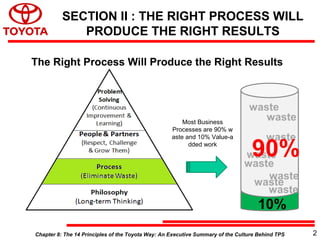
Most Business
Processes are 90% w
aste and 10% Value-a
dded work
2
Chapter 8: The 14 Principles of the Toyota Way: An Executive Summary of the Culture Behind TPS
EXAMPLE OF BATCH MANUFACTURE
VS ONE-PIECE FLOW
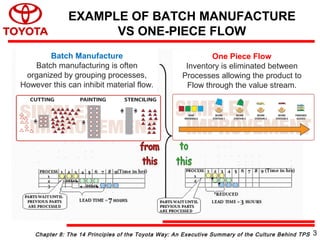
Batch Manufacture
Batch manufacturing is often
organized by grouping processes,
However this can inhibit material flow.
One Piece Flow
Inventory is eliminated between
Processes allowing the product to
Flow through the value stream.
3
Chapter 8: The 14 Principles of the Toyota Way: An Executive Summary of the Culture Behind TPS
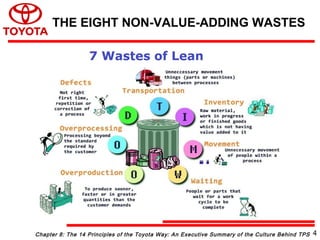
THE EIGHT NON-VALUE-ADDING WASTES
4
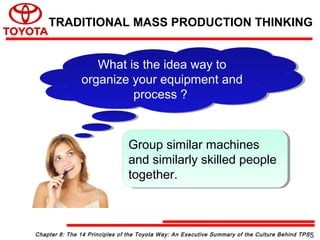
What is the idea way to
organize your equipment and
process ?
What is the idea way to
organize your equipment and
process ?
Group similar machines
and similarly skilled people
together.
Group similar machines
and similarly skilled people
together.
Chapter 8: The 14 Principles of the Toyota Way: An Executive Summary of the Culture Behind TPS
TRADITIONAL MASS PRODUCTION THINKING
5
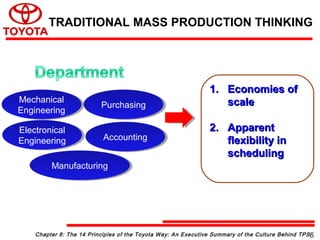
1.1. Economies ofEconomies of
scalescale
2.2. ApparentApparent
flexibility inflexibility in
schedulingscheduling
Mechanical
Engineering
Mechanical
Engineering
Electronical
Engineering
Electronical
Engineering AccountingAccounting
PurchasingPurchasing
ManufacturingManufacturing
Chapter 8: The 14 Principles of the Toyota Way: An Executive Summary of the Culture Behind TPS
TRADITIONAL MASS PRODUCTION THINKING
6
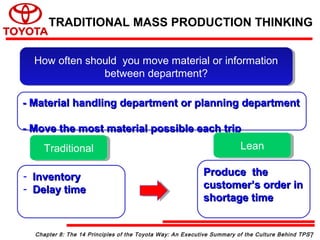
- Material handling department or planning department- Material handling department or planning department
- Move the most material possible each trip- Move the most material possible each trip
How often should you move material or information
between department?
How often should you move material or information
between department?
- InventoryInventory
- Delay timeDelay time
Produce theProduce the
customer’s order incustomer’s order in
shortage timeshortage time
TraditionalTraditional LeanLean
Chapter 8: The 14 Principles of the Toyota Way: An Executive Summary of the Culture Behind TPS
TRADITIONAL MASS PRODUCTION THINKING
7
Chapter 8: The 14 Principles of the Toyota Way: An Executive Summary of the Culture Behind TPS
TRADITIONAL MASS PRODUCTION THINKING
8
Chapter 8: The 14 Principles of the Toyota Way: An Executive Summary of the Culture Behind TPS
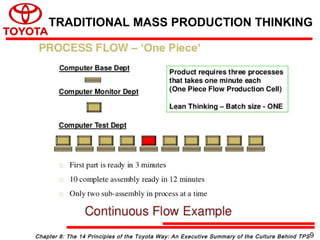
TRADITIONAL MASS PRODUCTION THINKING
9
“ Often we think that increasing the speed of a process
means compromising quality, that faster is sloppier. But flow
achieves just the opposite---it generally improves quality.
Chapter 8: The 14 Principles of the Toyota Way: An Executive Summary of the Culture Behind TPS
WHY FASTER MEANS BETTER IN A FLOW
10
Chapter 8: The 14 Principles of the Toyota Way: An Executive Summary of the Culture Behind TPS
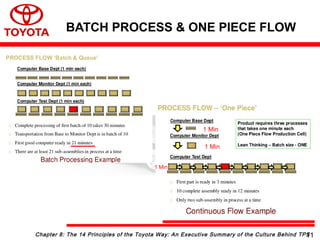
BATCH PROCESS & ONE PIECE FLOW
11
1 Min
1 Min
1 Min
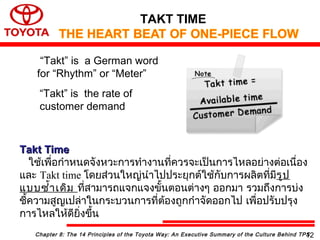
“Takt” is a German word
for “Rhythm” or “Meter”
“Takt” is the rate of
customer demand
Takt TimeTakt Time
ใช้เพื่อกำำหนดจังหวะกำรทำำงำนที่ควรจะเป็นกำรไหลอย่ำงต่อเนื่อง
และ Takt time โดยส่วนใหญ่นำำไปประยุกต์ใช้กับกำรผลิตที่มีรูป
แบบซำ้ำเดิม ที่สำมำรถแจกแจงขั้นตอนต่ำงๆ ออกมำ รวมถึงกำรบ่ง
ชี้ควำมสูญเปล่ำในกระบวนกำรที่ต้องถูกกำำจัดออกไป เพื่อปรับปรุง
กำรไหลให้ดียิ่งขึ้น
TAKT TIME
Chapter 8: The 14 Principles of the Toyota Way: An Executive Summary of the Culture Behind TPS12
Builds in Quality
Creates Real Flexibility
Creates Higher Productivity
Frees up Floor Space
Improves Safety
Improves Morale
Reduces Cost of Inventory
BENEFITS OF ONE-PIECE FLOW
Chapter 8: The 14 Principles of the Toyota Way: An Executive Summary of the Culture Behind TPS13
Chapter 8: The 14 Principles of the Toyota Way: An Executive Summary of the Culture Behind TPS
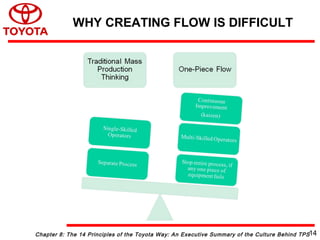
WHY CREATING FLOW IS DIFFICULT
14
Chapter 8: The 14 Principles of the Toyota Way: An Executive Summary of the Culture Behind TPS
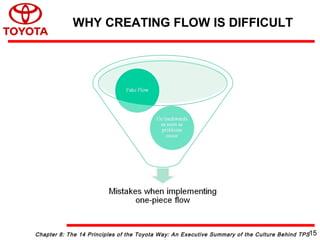
WHY CREATING FLOW IS DIFFICULT
15
Chapter 8: The 14 Principles of the Toyota Way: An Executive Summary of the Culture Behind TPS
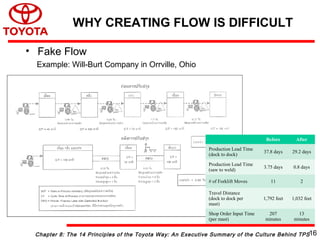
• Fake Flow
Example: Will-Burt Company in Orrville, Ohio
Before After
Production Lead Time
(dock to dock)
37.8 days 29.2 days
Production Lead Time
(saw to weld)
3.75 days 0.8 days
# of Forklift Moves 11 2
Travel Distance
(dock to dock per
mast)
1,792 feet 1,032 feet
Shop Order Input Time
(per mast)
207
minutes
13
minutes
WHY CREATING FLOW IS DIFFICULT
16
Chapter 8: The 14 Principles of the Toyota Way: An Executive Summary of the Culture Behind TPS
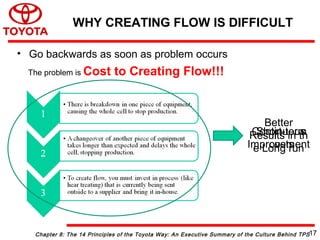
• Go backwards as soon as problem occurs
The problem is Cost to Creating Flow!!!
Short-term
costs
Continuous
Improvement
Better
Results in th
e Long run
WHY CREATING FLOW IS DIFFICULT
17
Chapter 8: The 14 Principles of the Toyota Way: An Executive Summary of the Culture Behind TPS
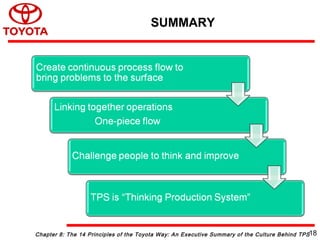
SUMMARY
18
Chapter 8: The 14 Principles of the Toyota Way: An Executive Summary of the Culture Behind TPS
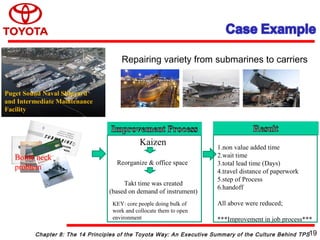
Puget Sound Naval Shipyard
and Intermediate Maintenance
Facility
Repairing variety from submarines to carriers
Bottle neck
problem
Takt time was created
(based on demand of instrument)
Kaizen
Reorganize & office space
KEY: core people doing bulk of
work and collocate them to open
environment
1.non value added time
2.wait time
3.total lead time (Days)
4.travel distance of paperwork
5.step of Process
6.handoff
All above were reduced;
***Improvement in job process***
19
Thank youThank you
Chapter 8: The 14 Principles of the Toyota Way: An Executive Summary of the Culture Behind TPS20

Tw8

  • 1.
    CHAPTER 8CHAPTER 8 Principle2 :Principle 2 : Create Continuous Process Flow toCreate Continuous Process Flow to Bring Problems to the SurfaceBring Problems to the Surface Chapter 8: The 14 Principles of the Toyota Way: An Executive Summary of the Culture Behind TPSChapter 8: The 14 Principles of the Toyota Way: An Executive Summary of the Culture Behind TPS 1
  • 2.
    Chapter 8: The14 Principles of the Toyota Way: An Executive Summary of the Culture Behind TPS The Right Process Will Produce the Right Results SECTION II : THE RIGHT PROCESS WILL PRODUCE THE RIGHT RESULTS waste waste waste waste waste waste waste waste 90% 10% Most Business Processes are 90% w aste and 10% Value-a dded work 2
  • 3.
    Chapter 8: The14 Principles of the Toyota Way: An Executive Summary of the Culture Behind TPS EXAMPLE OF BATCH MANUFACTURE VS ONE-PIECE FLOW Batch Manufacture Batch manufacturing is often organized by grouping processes, However this can inhibit material flow. One Piece Flow Inventory is eliminated between Processes allowing the product to Flow through the value stream. 3
  • 4.
    Chapter 8: The14 Principles of the Toyota Way: An Executive Summary of the Culture Behind TPS THE EIGHT NON-VALUE-ADDING WASTES 4
  • 5.
    What is theidea way to organize your equipment and process ? What is the idea way to organize your equipment and process ? Group similar machines and similarly skilled people together. Group similar machines and similarly skilled people together. Chapter 8: The 14 Principles of the Toyota Way: An Executive Summary of the Culture Behind TPS TRADITIONAL MASS PRODUCTION THINKING 5
  • 6.
    1.1. Economies ofEconomiesof scalescale 2.2. ApparentApparent flexibility inflexibility in schedulingscheduling Mechanical Engineering Mechanical Engineering Electronical Engineering Electronical Engineering AccountingAccounting PurchasingPurchasing ManufacturingManufacturing Chapter 8: The 14 Principles of the Toyota Way: An Executive Summary of the Culture Behind TPS TRADITIONAL MASS PRODUCTION THINKING 6
  • 7.
    - Material handlingdepartment or planning department- Material handling department or planning department - Move the most material possible each trip- Move the most material possible each trip How often should you move material or information between department? How often should you move material or information between department? - InventoryInventory - Delay timeDelay time Produce theProduce the customer’s order incustomer’s order in shortage timeshortage time TraditionalTraditional LeanLean Chapter 8: The 14 Principles of the Toyota Way: An Executive Summary of the Culture Behind TPS TRADITIONAL MASS PRODUCTION THINKING 7
  • 8.
    Chapter 8: The14 Principles of the Toyota Way: An Executive Summary of the Culture Behind TPS TRADITIONAL MASS PRODUCTION THINKING 8
  • 9.
    Chapter 8: The14 Principles of the Toyota Way: An Executive Summary of the Culture Behind TPS TRADITIONAL MASS PRODUCTION THINKING 9
  • 10.
    “ Often wethink that increasing the speed of a process means compromising quality, that faster is sloppier. But flow achieves just the opposite---it generally improves quality. Chapter 8: The 14 Principles of the Toyota Way: An Executive Summary of the Culture Behind TPS WHY FASTER MEANS BETTER IN A FLOW 10
  • 11.
    Chapter 8: The14 Principles of the Toyota Way: An Executive Summary of the Culture Behind TPS BATCH PROCESS & ONE PIECE FLOW 11 1 Min 1 Min 1 Min
  • 12.
    “Takt” is aGerman word for “Rhythm” or “Meter” “Takt” is the rate of customer demand Takt TimeTakt Time ใช้เพื่อกำำหนดจังหวะกำรทำำงำนที่ควรจะเป็นกำรไหลอย่ำงต่อเนื่อง และ Takt time โดยส่วนใหญ่นำำไปประยุกต์ใช้กับกำรผลิตที่มีรูป แบบซำ้ำเดิม ที่สำมำรถแจกแจงขั้นตอนต่ำงๆ ออกมำ รวมถึงกำรบ่ง ชี้ควำมสูญเปล่ำในกระบวนกำรที่ต้องถูกกำำจัดออกไป เพื่อปรับปรุง กำรไหลให้ดียิ่งขึ้น TAKT TIME Chapter 8: The 14 Principles of the Toyota Way: An Executive Summary of the Culture Behind TPS12
  • 13.
    Builds in Quality CreatesReal Flexibility Creates Higher Productivity Frees up Floor Space Improves Safety Improves Morale Reduces Cost of Inventory BENEFITS OF ONE-PIECE FLOW Chapter 8: The 14 Principles of the Toyota Way: An Executive Summary of the Culture Behind TPS13
  • 14.
    Chapter 8: The14 Principles of the Toyota Way: An Executive Summary of the Culture Behind TPS WHY CREATING FLOW IS DIFFICULT 14
  • 15.
    Chapter 8: The14 Principles of the Toyota Way: An Executive Summary of the Culture Behind TPS WHY CREATING FLOW IS DIFFICULT 15
  • 16.
    Chapter 8: The14 Principles of the Toyota Way: An Executive Summary of the Culture Behind TPS • Fake Flow Example: Will-Burt Company in Orrville, Ohio Before After Production Lead Time (dock to dock) 37.8 days 29.2 days Production Lead Time (saw to weld) 3.75 days 0.8 days # of Forklift Moves 11 2 Travel Distance (dock to dock per mast) 1,792 feet 1,032 feet Shop Order Input Time (per mast) 207 minutes 13 minutes WHY CREATING FLOW IS DIFFICULT 16
  • 17.
    Chapter 8: The14 Principles of the Toyota Way: An Executive Summary of the Culture Behind TPS • Go backwards as soon as problem occurs The problem is Cost to Creating Flow!!! Short-term costs Continuous Improvement Better Results in th e Long run WHY CREATING FLOW IS DIFFICULT 17
  • 18.
    Chapter 8: The14 Principles of the Toyota Way: An Executive Summary of the Culture Behind TPS SUMMARY 18
  • 19.
    Chapter 8: The14 Principles of the Toyota Way: An Executive Summary of the Culture Behind TPS Puget Sound Naval Shipyard and Intermediate Maintenance Facility Repairing variety from submarines to carriers Bottle neck problem Takt time was created (based on demand of instrument) Kaizen Reorganize & office space KEY: core people doing bulk of work and collocate them to open environment 1.non value added time 2.wait time 3.total lead time (Days) 4.travel distance of paperwork 5.step of Process 6.handoff All above were reduced; ***Improvement in job process*** 19
  • 20.
    Thank youThank you Chapter8: The 14 Principles of the Toyota Way: An Executive Summary of the Culture Behind TPS20

Editor's Notes

  • #11 เหตุใดการไหลของกระบวนการที่เร็วกว่า จึงถือว่าดีกว่า? บ่อยครั้งที่เราคิดว่าการเพิ่มความเร็วของกระบวนการหมายถึง การทำให้คุณภาพด้อยลงไป ด้วยว่ายิ่งเร็วก็ยิ่งเลินเล่อ แต่การไหลกลับช่วยปรับปรุงคุณภาพให้ดียิ่งขึ้น
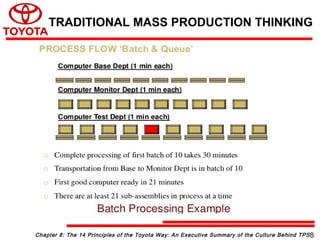
  • #12 ซึ่งในการผลิตแบบจำนวนมาก ในรูปที่ 8-1 พบว่ามีเครื่องคอม เสีย 1 เครื่อง ซึ่งในการผลิตแบบนี้จะทำให้ พบปัญหาและอาจทำให้มีอีก 21 ชิ้นส่วนในกระบวนการเป็นอย่างน้อยที่อาจจะเกิดปัญหานี้ด้วย และหากข้อบกพร่อง เกิดขึ้นในระหว่างการผลิตก็ต้องใช้เวลานานกว่า 21 นาที ถึงจะพบข้อบกพร่อง
  • #13 Takt Time : จังหวะ ของการไหลแบบทีละชิ้น Takt Time เป็นภาษาเยอรมันที่หมายถึง จังหวะ หรือ มาตรวัด Takt เป็นอัตราความต้องการ ผลิตภัณฑ์ของลูกค้า ถ้าเราต้องทำงาน 7 ชม.กับ 20 นาที ต่อวัน (440 นาที) เป็นเวลา 20 วันต่อเดือน และลูกค้ามีความต้องการผลิตภัณฑ์ 17,600 หน่วยต่อเดือน ดังนั้นคุณต้องผลิตให้ได้ 880 หน่วยต่อวัน (17,600/20) และใช้เวลาผลิต 30 วินาทีต่อหน่วย (880/440) ในกระบวนการไหลทีละชิ้นที่แท้จริงนั้น ทุกๆ 30 วินาทีจะต้องมีชิ้นส่วนออกมาหนึ่งชิ้น ถ้าผลิตออกมาเร็วกว่านั้นถือเป็นการผลิตที่มากเกิน แต่ถ้า ผลิตได้ช้ากว่านั้นถือว่าเป็นจุดคอขวด ดังนั้น Takt ใช้เพื่อกำหนดจังหวะการทำงานที่ควรจะเป็น การไหลอย่างต่อเนื่องและ Takt time โดยส่วนใหญ่นำไปประยุกต์ใช้กับการผลิตที่มีรูปแบบ ซ้ำเดิม ที่สามารถแจกแจงขั้นตอนต่างๆ ออกมา รวมถึงการบ่งชี้ความสูญเปล่าในกระบวนการที่ต้องถูก กำจัดออกไป เพื่อปรับปรุงการไหลให้ดียิ่งขึ้น “Takt Time” ก็เป็นความหมายของเวลาอีกประเภทหนึ่งซึ่งถือเป็นหัวใจสำคัญที่จะนำไปสู่การผลิตแบบ Just In Time ซึ่งเป็นแนวคิดหลักของระบบการผลิตแบบลีน (Lean Production System: LPS)           Takt เป็นภาษาเยอรมัน แปลว่า จังหวะในเพลง Takt Time ในความหมายของ LPS คือ จังหวะหรือความเร็วของการขายสินค้าให้กับลูกค้า (Customer Speed) ในการคำนวณ Takt Time จะคำนวณโดยการนำเวลาที่ผู้ผลิตทำงานตามปกติ หารด้วยปริมาณสินค้าที่ลูกค้าต้องการ   Takt Time               =                       Working Time                                                      Customer needed amount