TUMOR TARGETING
SUBMITTED TO-
Himanshi Mam
Institute of Pharmaceutical
Sciences
SUBMITTED BY-
Sidharth
Roll no.190121220005
M.Pharmacy (Pharmaceutics)
2nd Semester
DEPARTMENT OF PHARMACEUTICAL SCIENCES,
GURU JAMBHESHWAR UNIVERSITY OF SCIENCES & TECHNOLOGY, HISAR
CONTENTS-
 INTRODUCTION
 ANATOMY & PHYSIOLOGY
 HOW ARE TUMORS MONITORED?
 CLASSIFICATION OF TUMOR
 GRADES OF TUMOR
 HOW DOES TUMOR BECOME CANCEROUS?
 GROWTH OF CANCER CELLS
 TUMOR TARGETING
 PRINCIPLES OF TUMOR TARGETING -
a) Passive Targeting
b) Active Targeting
c) Triggered Drug Delivery
 MARKETED PRODUCTS
 REFERENCES
INTRODUCTION-
Cancer is a disease in which cell division is uncontrolled and spread
within the body of abnormal form from body’s own cells.
Cancer is commonly known as the second-leading cause of death
around the globe, and approximately 27 million new patients
are predicted to suffer from cancer by 2030.
The three most commonly used approaches for cancer treatment are
SURGERY, RADIATION, and CHEMOTHERAPY.
(a) Conventional Surgery proves effective for the treatment of
localized tumors.
(b) Radiation proves an effective supplementary cancer treatment
strategy.
(c)Chemotherapy is utilized as a major strategy for whole-body
cancer treatment.
TUMOR-
 Tumors are a classic sign of inflammation. It is a fluid-filled
lesion that may or may not be formed by an abnormal growth
of neoplastic cells that appears enlarged in size.
 Types - Benign tumor(Non-cancerous)
- Malignant tumor(Cancerous)
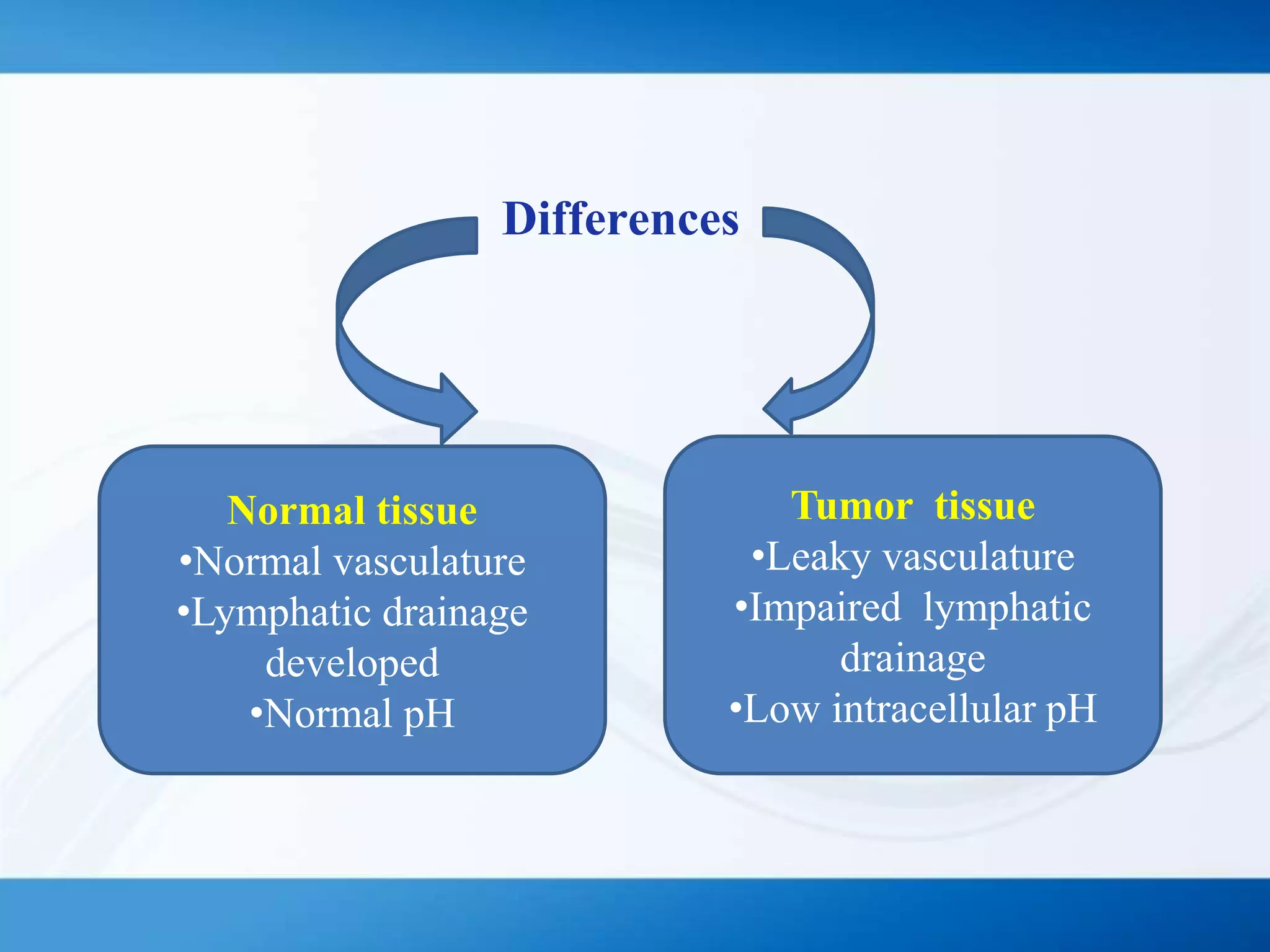
Differences
Normal tissue
•Normal vasculature
•Lymphatic drainage
developed
•Normal pH
Tumor tissue
•Leaky vasculature
•Impaired lymphatic
drainage
•Low intracellular pH
ANATOMY AND PHYSIOLOGY OF
TUMOR-
Tumor arises from-
 Agents that damage genes: controlling cell
proliferation and that increase the tumor cell
migration.
 Agents that do not damage genes: selectively
enhance the growth of tumor cell or their
precursors.
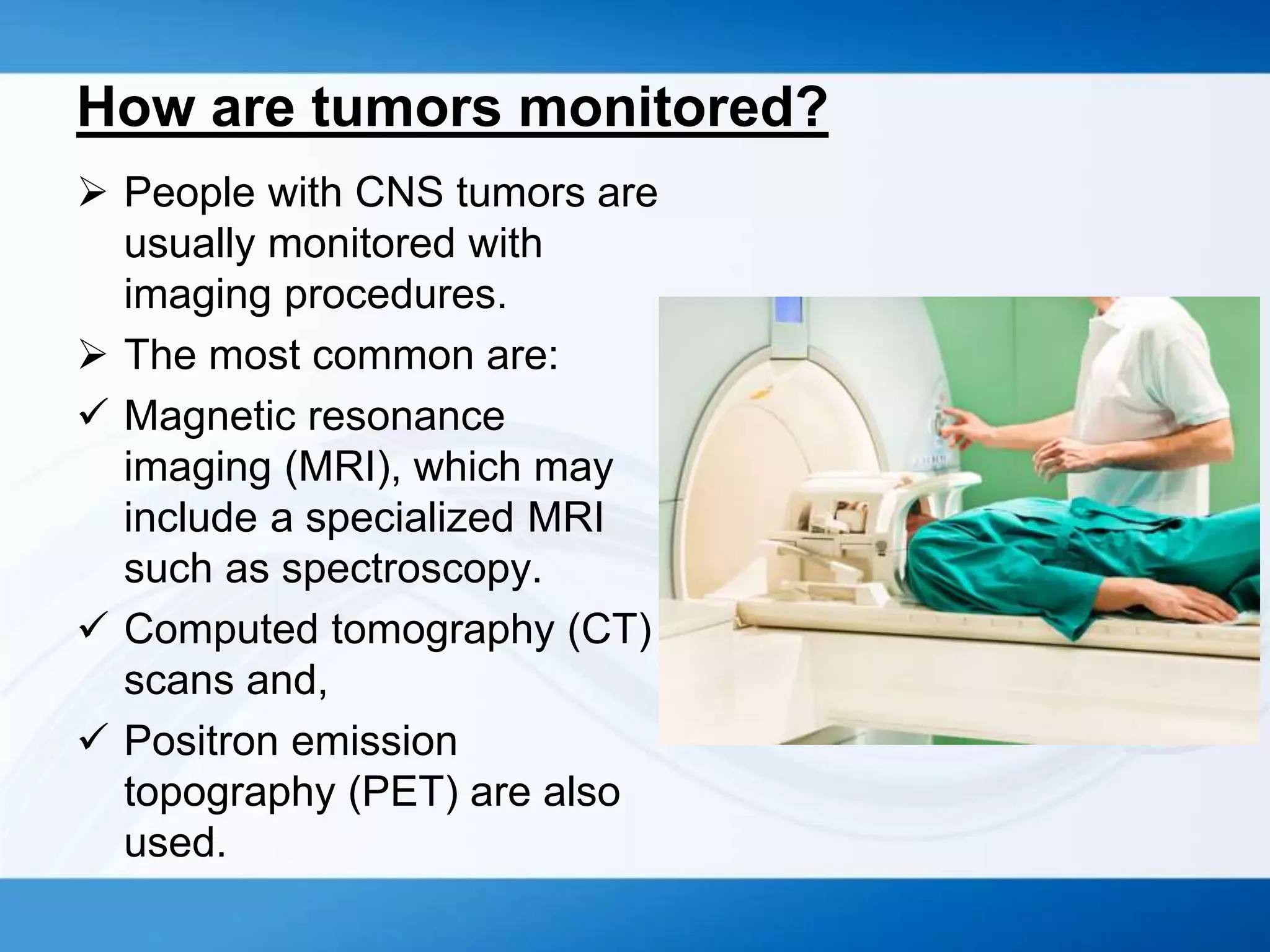
How are tumors monitored?
 People with CNS tumors are
usually monitored with
imaging procedures.
 The most common are:
 Magnetic resonance
imaging (MRI), which may
include a specialized MRI
such as spectroscopy.
 Computed tomography (CT)
scans and,
 Positron emission
topography (PET) are also
used.
CLASSIFICATION OF TUMOR-
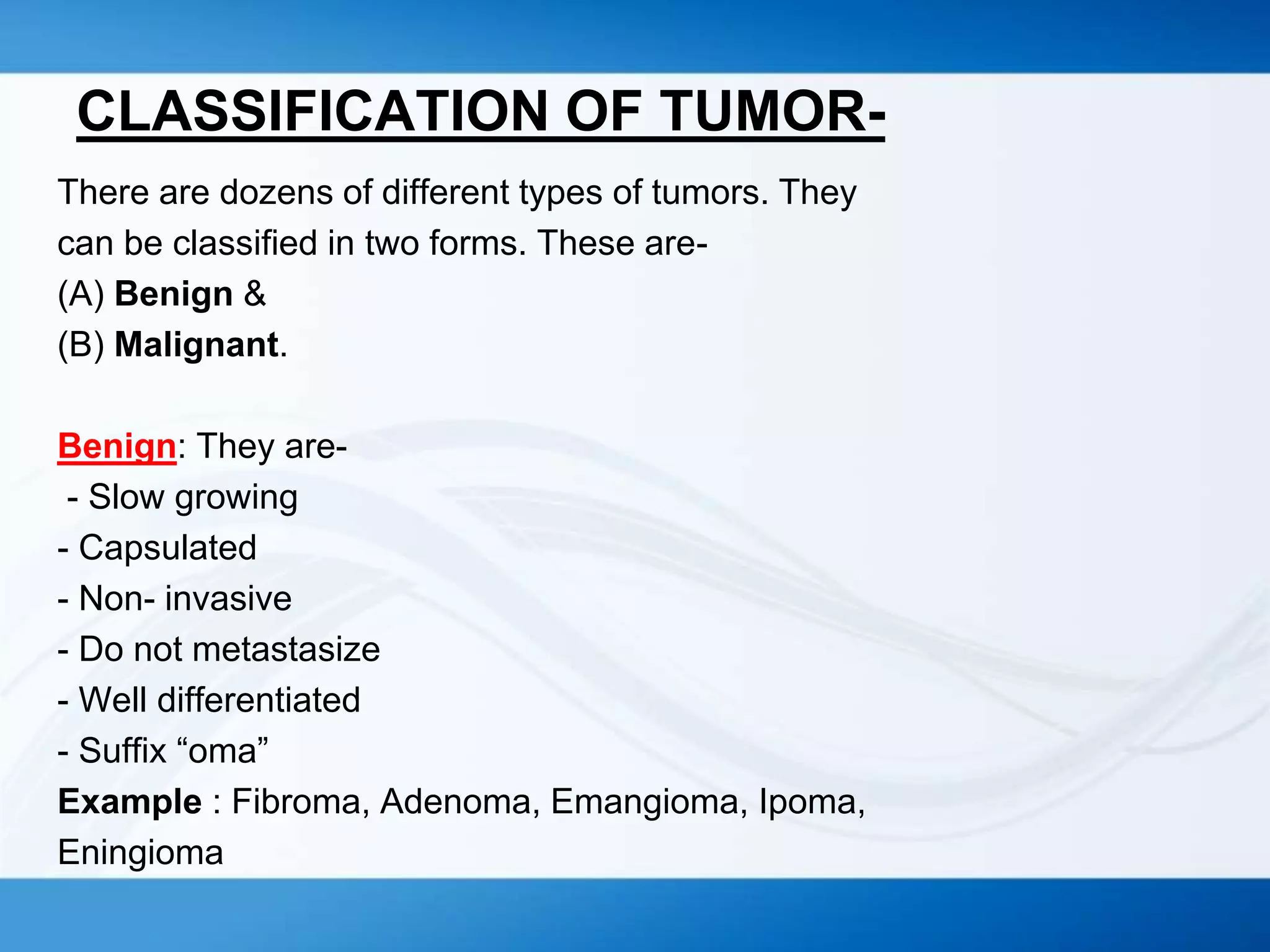
There are dozens of different types of tumors. They
can be classified in two forms. These are-
(A) Benign &
(B) Malignant.
Benign: They are-
- Slow growing
- Capsulated
- Non- invasive
- Do not metastasize
- Well differentiated
- Suffix “oma”
Example : Fibroma, Adenoma, Emangioma, Ipoma,
Eningioma
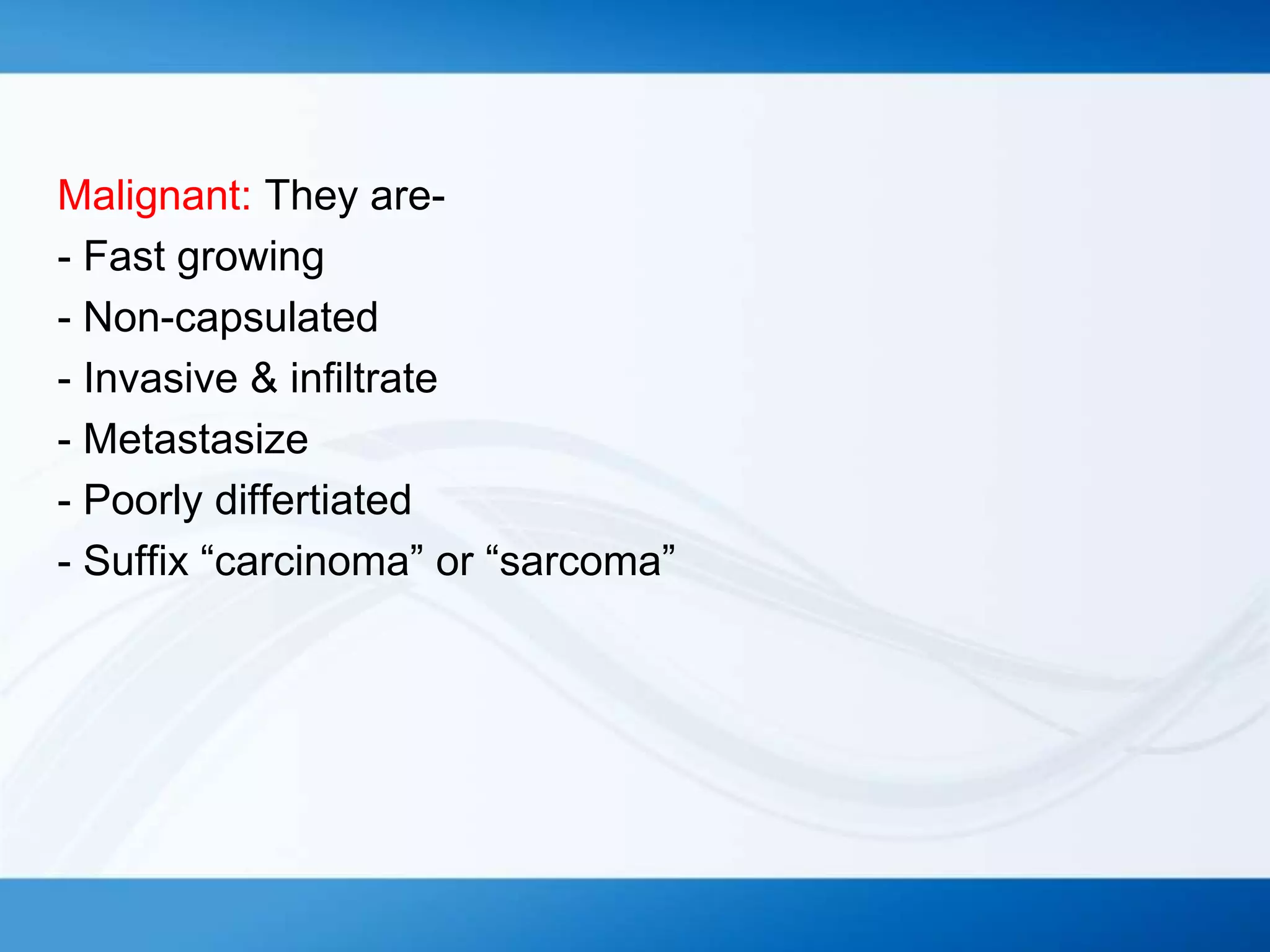
Malignant: They are-
- Fast growing
- Non-capsulated
- Invasive & infiltrate
- Metastasize
- Poorly differtiated
- Suffix “carcinoma” or “sarcoma”
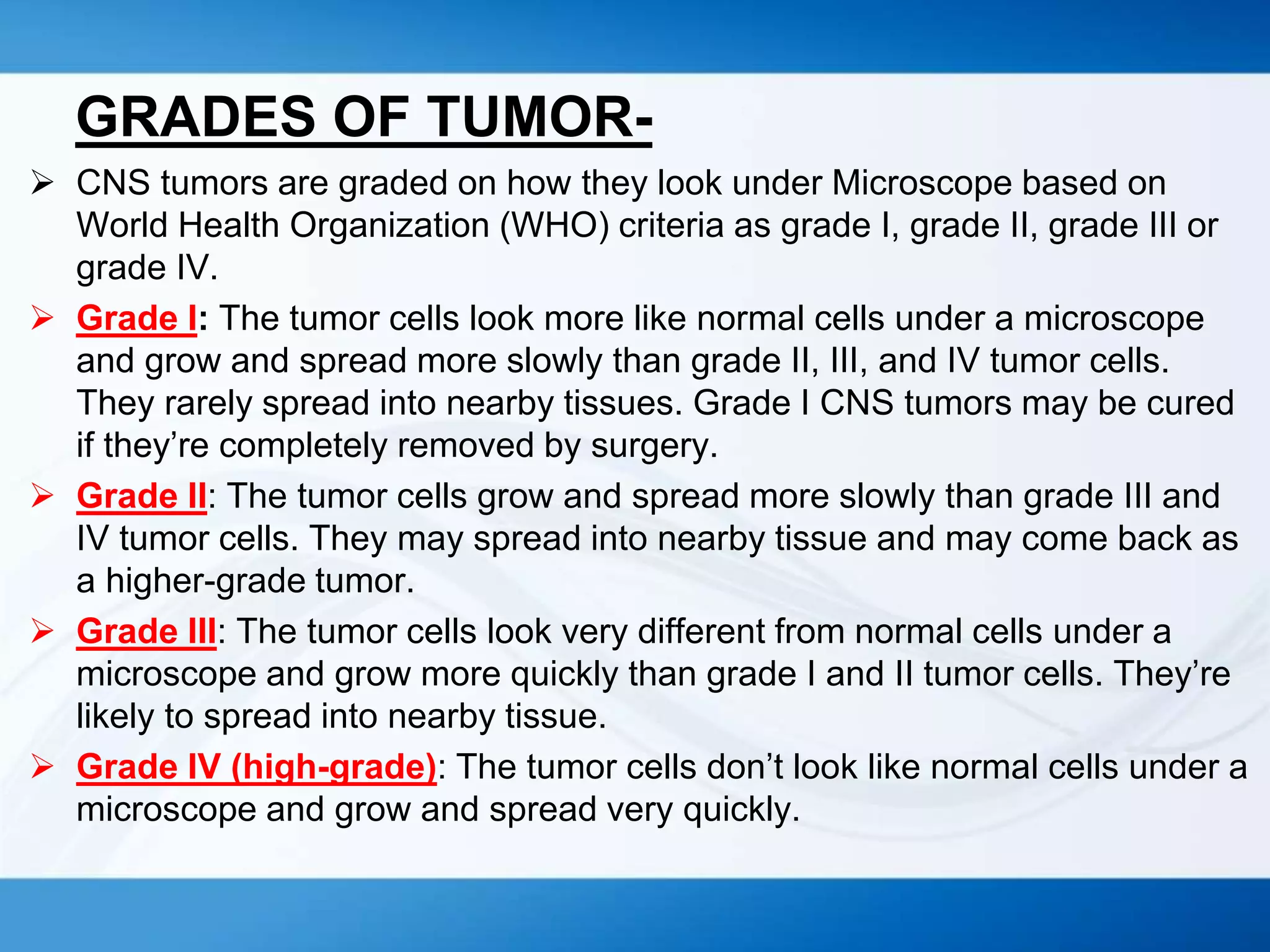
GRADES OF TUMOR-
 CNS tumors are graded on how they look under Microscope based on
World Health Organization (WHO) criteria as grade I, grade II, grade III or
grade IV.
 Grade I: The tumor cells look more like normal cells under a microscope
and grow and spread more slowly than grade II, III, and IV tumor cells.
They rarely spread into nearby tissues. Grade I CNS tumors may be cured
if they’re completely removed by surgery.
 Grade II: The tumor cells grow and spread more slowly than grade III and
IV tumor cells. They may spread into nearby tissue and may come back as
a higher-grade tumor.
 Grade III: The tumor cells look very different from normal cells under a
microscope and grow more quickly than grade I and II tumor cells. They’re
likely to spread into nearby tissue.
 Grade IV (high-grade): The tumor cells don’t look like normal cells under a
microscope and grow and spread very quickly.
HOW DOES TUMOR BECOME
CANCEROUS?
 Cancer harms the body when damaged cells divide uncontrollably to form
lumps or masses of tissue called tumors. Tumors can grow and interfere
with the digestive, nervous, and circulatory systems, and they can release
hormones that alter body function.
 Tumors that stay in one spot and demonstrate limited growth are generally
considered to be benign.
 More dangerous, or malignant, tumors form when two things occur:
1) a cancerous cell manages to move throughout the
body using the blood or lymph systems, destroying
healthy tissue in a process called invasion.
2) that cell manages to divide and grow, making new
blood vessels to feed itself in a process called
angiogenesis.
GROWTH OF CANCER CELL-
 Cancers are caused by a
series of mutations. Each
mutation alters the behavior
of the cell somewhat.
Genes that regulate cell
growth and differentiation
must be altered genetic and
epigenetic changes can
occur at many levels. These
changes are shown below
in a simple mechanism:
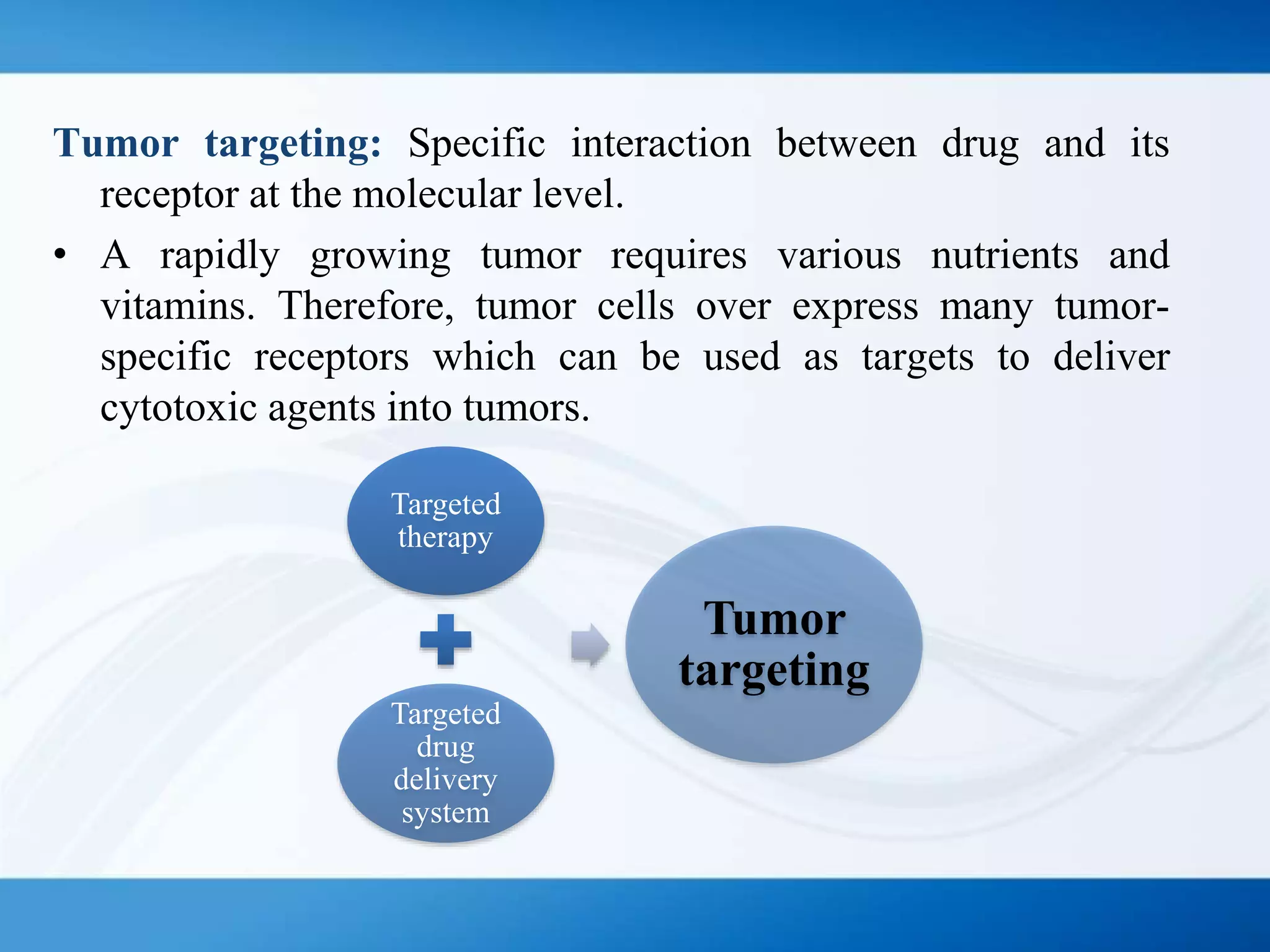
Tumor targeting: Specific interaction between drug and its
receptor at the molecular level.
• A rapidly growing tumor requires various nutrients and
vitamins. Therefore, tumor cells over express many tumor-
specific receptors which can be used as targets to deliver
cytotoxic agents into tumors.
Targeted
therapy
Targeted
drug
delivery
system
Tumor
targeting
• It is a type of medication that
blocks the growth of cancer
cells by interfering with
specific targets which are
needed for carcinogenesis and
tumor growth
Targeted
therapy
• Refers to predominant drug
accumulation within a target
zone that is independent of the
method and route of drug
administration
Targeted
drug delivery
Targeted drug delivery
 Targeted drug delivery system is achieved with the advantage
of morphology and physiological differences between the
normal cells and tumor cells.
 An ideal anticancer drug delivery system should fulfill the
following requirements
• Effectively kill tumor cells
• Be non-toxic for healthy organs, tissues, and cells
• Not induce multidrug resistance
Drug targeting to tumor is based on
 EPR effect(Enhanced Permeability and Retention)
 Nanoparticle properties and design
 Ligand-receptor interactions
Effective
drug
delivery
system
Retain
Evade Target
Release
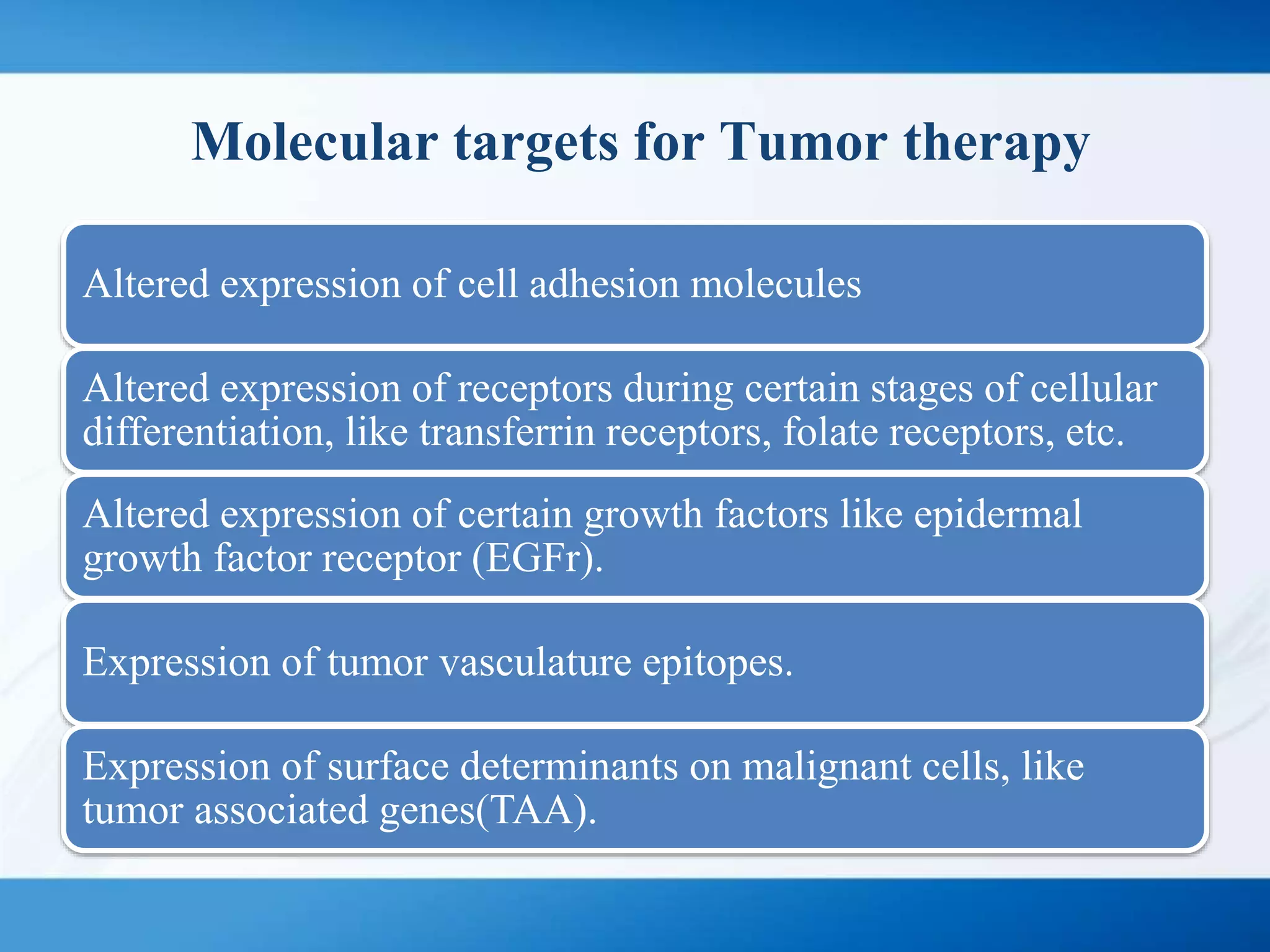
Molecular targets for Tumor therapy
Altered expression of cell adhesion molecules
Altered expression of receptors during certain stages of cellular
differentiation, like transferrin receptors, folate receptors, etc.
Altered expression of certain growth factors like epidermal
growth factor receptor (EGFr).
Expression of tumor vasculature epitopes.
Expression of surface determinants on malignant cells, like
tumor associated genes(TAA).
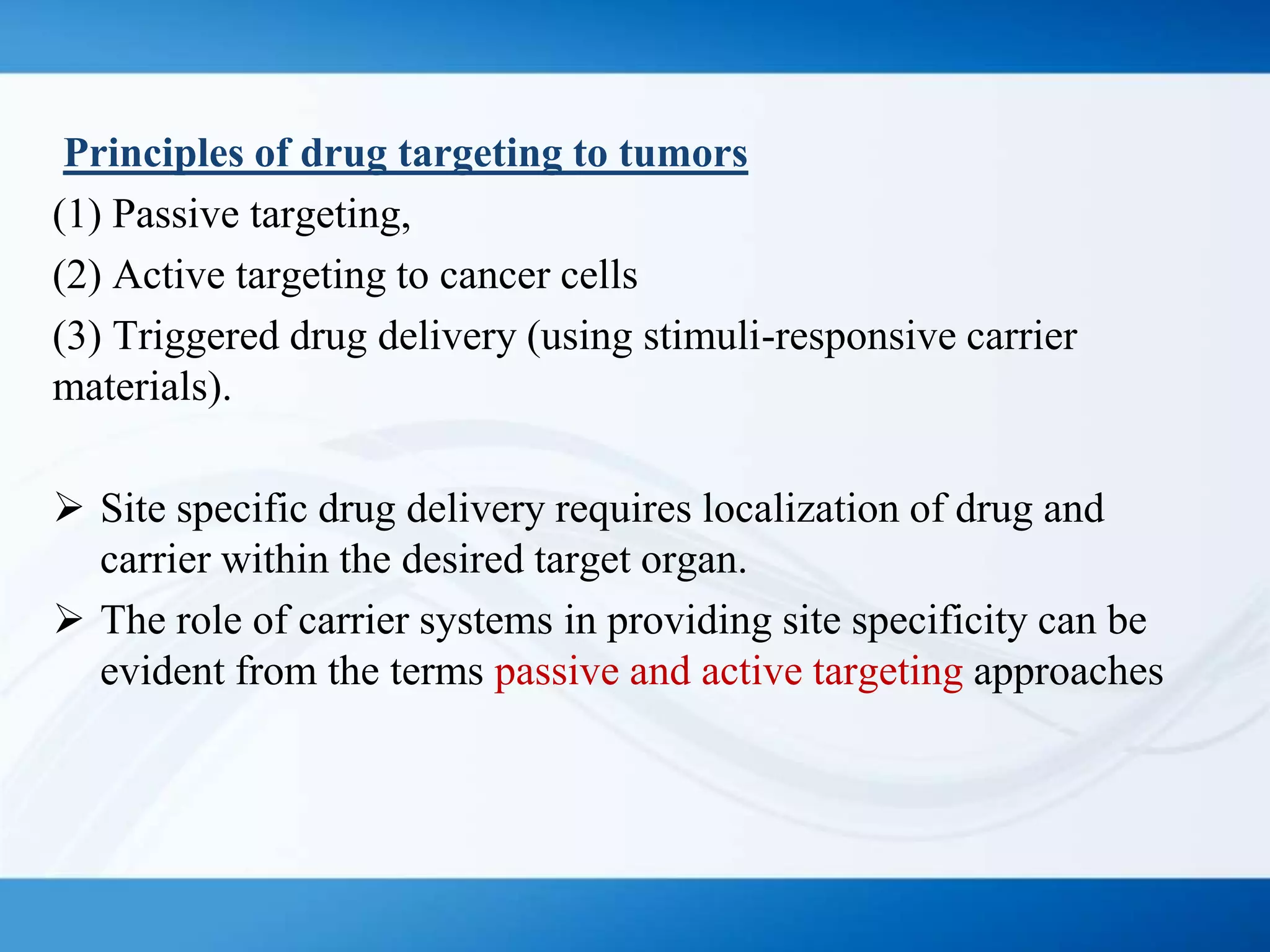
Principles of drug targeting to tumors
(1) Passive targeting,
(2) Active targeting to cancer cells
(3) Triggered drug delivery (using stimuli-responsive carrier
materials).
 Site specific drug delivery requires localization of drug and
carrier within the desired target organ.
 The role of carrier systems in providing site specificity can be
evident from the terms passive and active targeting approaches
(1) Passive targeting
 Passive targeting involves therapeutic exploitation of the
natural distribution pattern of a drug-carrier construct invivo.
 For e.g., the role of RES in clearing foreign particulate
materials from blood permits drug encapsulated in particulate
carriers like liposomes to be passively targeted to
macrophages.
 Passive targeting is based on
drug accumulation in the areas
around the tumors with leaky
vasculature; commonly referred
to Enhanced Permeation and Retention (EPR) effect
Enhanced Permeability and Retention effect(EPR)
• Leaky vasculature
• Impaired lymphatic drainage
• Renal clearance
• Reticuloendothelial System uptake(RES)
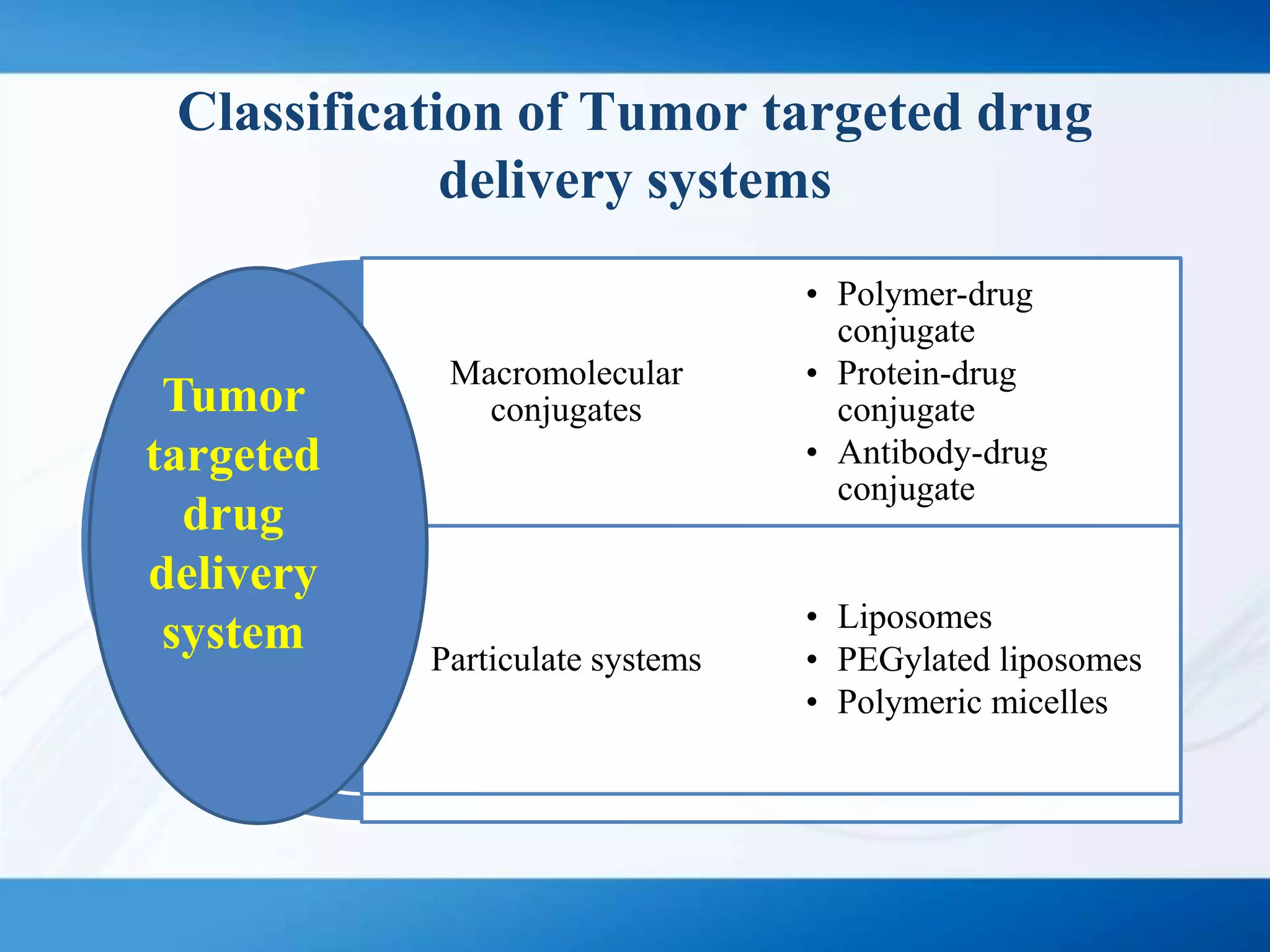
Classification of Tumor targeted drug
delivery systems
Macromolecular
conjugates
Particulate systems
• Polymer-drug
conjugate
• Protein-drug
conjugate
• Antibody-drug
conjugate
• Liposomes
• PEGylated liposomes
• Polymeric micelles
Tumor
targeted
drug
delivery
system
Approved passive Tumor targeted drug
delivery systems
Nanocarriers Drug Name Indications
Nanoparticles
Liposomes
(PEGylated)
Doxorubicin
Doxorubicin
Doxorubicin
Transdrug ®
Myocel ®
Doxil ®
Hepatocarcinoma
Breast cancer
Ovarian cancer
(2) Active targeting to cancer cells
• “Active targeting” is used to describe specific interactions between
drug/drug carrier and the target cells, usually through specific
ligand–receptor interactions
.
• The term “active targeting” simply means a specific ligand–
receptor type interaction for intracellular localization which occurs
only after blood circulation and extravasation
• Active drug targeting is generally implemented to improve target
cell recognition and target cell uptake, and not to improve overall
tumor accumulation.
• Ligand mediated targeting is the major focus of the current research
that involves ligands developed against cell receptors or antigenic
determinants expressed on tumor cells or vasculature.
Examples of targeting ligands used for active targeting
• Folate
• Transferin
• Galactosamine
Elements of active targeted drug delivery system
Active
targeted
drug delivery
system
Drug
Ligand
Drug
carrier
Release
trigger
Active targeting moieties
 Monoclonal antibodies recognize the protein(antigen) on the
surface of the cancer cell and lock onto it.
Some of the most exploited targets for antibody targetin are:
 Transferrin receptors – High level of transferrin receptors on
glioma cells
 Fibronectin – Expressed in and around neoplastic blood
vessels during angiogenesis
 Epidermal growth factor receptor – Over expressed in a
portion of breast cancers and other solid tumors
 Vascular endothelial growth factor – Expressed in neoplastic
blood vessels
E.g., Antibody---Mylotarg---CD33-targeted ozogamycin
gemtuzumab---Leukemia.
Immunoconjugates
Combine the targeting power of mABs and cytotoxic activity of
drugs
• Radio active substances
• ADEPT
• Drugs or toxins
Vitamins as Active targeting moieties
 The folate receptor is significantly upregulated on many
cancer cells compared to normal tissue
 Normal cells transport a reduced folate across their membranes
but will not transport folate conjugates of any type
 Malignant cells transport folate conjugates through the folate
receptor, which is considered the alternative route
(3) Triggered drug delivery
 The tumor microenvironment differs from that normal cells
microenvironment
 Advantage of the difference in pH, temperature is used to
release the drug in the tumor microenvironment
 It employs drug-carrier constructs that release drug only when
exposed to specific microenvironments such as change in pH
and temperature .
 The drug release also triggered on subjecting to the external
magnetic fields
 Thermosensitive liposomes – Destabilisation of lipid
membranes at mild hyperthermia
Simuli-responsive nanomedicines
• Thermodox (i.e. temperature-sensitive PEGylated liposomes
containing doxorubicin)
• Tamoxifen-loaded Fe3O4/poly(L-lactic acid) nanoparticles ---
Breast cancer
Marketed Products
REFERENCES
 Vyas S.P, Khar R.K, Targeted and Controlled Drug Delivery
Novel Carrier Systems; 512-556.
 You Han Bea, Kinam Park, Targeted Drug Delivery to
Tumors; Journal of Controlled Release (2011); 198-205.
 Twan Lammers, Fabian Kiessling, Wim E. Hennink, Gert
Storm, Drug Targeting to Tumors; Journal of Controlled
Release (2012); 175-187.
 David R. Khan, The Use of Nanocarriers for Drug Delivery in
Cancer Therapy; Journal of Cancer Science and Therapy
(2010); 058-062.
36

Tumor targeting

  • 1.
    TUMOR TARGETING SUBMITTED TO- HimanshiMam Institute of Pharmaceutical Sciences SUBMITTED BY- Sidharth Roll no.190121220005 M.Pharmacy (Pharmaceutics) 2nd Semester DEPARTMENT OF PHARMACEUTICAL SCIENCES, GURU JAMBHESHWAR UNIVERSITY OF SCIENCES & TECHNOLOGY, HISAR
  • 2.
    CONTENTS-  INTRODUCTION  ANATOMY& PHYSIOLOGY  HOW ARE TUMORS MONITORED?  CLASSIFICATION OF TUMOR  GRADES OF TUMOR  HOW DOES TUMOR BECOME CANCEROUS?  GROWTH OF CANCER CELLS  TUMOR TARGETING  PRINCIPLES OF TUMOR TARGETING - a) Passive Targeting b) Active Targeting c) Triggered Drug Delivery  MARKETED PRODUCTS  REFERENCES
  • 3.
    INTRODUCTION- Cancer is adisease in which cell division is uncontrolled and spread within the body of abnormal form from body’s own cells. Cancer is commonly known as the second-leading cause of death around the globe, and approximately 27 million new patients are predicted to suffer from cancer by 2030. The three most commonly used approaches for cancer treatment are SURGERY, RADIATION, and CHEMOTHERAPY. (a) Conventional Surgery proves effective for the treatment of localized tumors. (b) Radiation proves an effective supplementary cancer treatment strategy. (c)Chemotherapy is utilized as a major strategy for whole-body cancer treatment.
  • 4.
    TUMOR-  Tumors area classic sign of inflammation. It is a fluid-filled lesion that may or may not be formed by an abnormal growth of neoplastic cells that appears enlarged in size.  Types - Benign tumor(Non-cancerous) - Malignant tumor(Cancerous)
  • 5.
    Differences Normal tissue •Normal vasculature •Lymphaticdrainage developed •Normal pH Tumor tissue •Leaky vasculature •Impaired lymphatic drainage •Low intracellular pH
  • 6.
    ANATOMY AND PHYSIOLOGYOF TUMOR- Tumor arises from-  Agents that damage genes: controlling cell proliferation and that increase the tumor cell migration.  Agents that do not damage genes: selectively enhance the growth of tumor cell or their precursors.
  • 7.
    How are tumorsmonitored?  People with CNS tumors are usually monitored with imaging procedures.  The most common are:  Magnetic resonance imaging (MRI), which may include a specialized MRI such as spectroscopy.  Computed tomography (CT) scans and,  Positron emission topography (PET) are also used.
  • 8.
    CLASSIFICATION OF TUMOR- Thereare dozens of different types of tumors. They can be classified in two forms. These are- (A) Benign & (B) Malignant. Benign: They are- - Slow growing - Capsulated - Non- invasive - Do not metastasize - Well differentiated - Suffix “oma” Example : Fibroma, Adenoma, Emangioma, Ipoma, Eningioma
  • 9.
    Malignant: They are- -Fast growing - Non-capsulated - Invasive & infiltrate - Metastasize - Poorly differtiated - Suffix “carcinoma” or “sarcoma”
  • 10.
    GRADES OF TUMOR- CNS tumors are graded on how they look under Microscope based on World Health Organization (WHO) criteria as grade I, grade II, grade III or grade IV.  Grade I: The tumor cells look more like normal cells under a microscope and grow and spread more slowly than grade II, III, and IV tumor cells. They rarely spread into nearby tissues. Grade I CNS tumors may be cured if they’re completely removed by surgery.  Grade II: The tumor cells grow and spread more slowly than grade III and IV tumor cells. They may spread into nearby tissue and may come back as a higher-grade tumor.  Grade III: The tumor cells look very different from normal cells under a microscope and grow more quickly than grade I and II tumor cells. They’re likely to spread into nearby tissue.  Grade IV (high-grade): The tumor cells don’t look like normal cells under a microscope and grow and spread very quickly.
  • 11.
    HOW DOES TUMORBECOME CANCEROUS?  Cancer harms the body when damaged cells divide uncontrollably to form lumps or masses of tissue called tumors. Tumors can grow and interfere with the digestive, nervous, and circulatory systems, and they can release hormones that alter body function.  Tumors that stay in one spot and demonstrate limited growth are generally considered to be benign.  More dangerous, or malignant, tumors form when two things occur: 1) a cancerous cell manages to move throughout the body using the blood or lymph systems, destroying healthy tissue in a process called invasion. 2) that cell manages to divide and grow, making new blood vessels to feed itself in a process called angiogenesis.
  • 12.
    GROWTH OF CANCERCELL-  Cancers are caused by a series of mutations. Each mutation alters the behavior of the cell somewhat. Genes that regulate cell growth and differentiation must be altered genetic and epigenetic changes can occur at many levels. These changes are shown below in a simple mechanism:
  • 14.
    Tumor targeting: Specificinteraction between drug and its receptor at the molecular level. • A rapidly growing tumor requires various nutrients and vitamins. Therefore, tumor cells over express many tumor- specific receptors which can be used as targets to deliver cytotoxic agents into tumors. Targeted therapy Targeted drug delivery system Tumor targeting
  • 15.
    • It isa type of medication that blocks the growth of cancer cells by interfering with specific targets which are needed for carcinogenesis and tumor growth Targeted therapy • Refers to predominant drug accumulation within a target zone that is independent of the method and route of drug administration Targeted drug delivery
  • 16.
    Targeted drug delivery Targeted drug delivery system is achieved with the advantage of morphology and physiological differences between the normal cells and tumor cells.  An ideal anticancer drug delivery system should fulfill the following requirements • Effectively kill tumor cells • Be non-toxic for healthy organs, tissues, and cells • Not induce multidrug resistance
  • 17.
    Drug targeting totumor is based on  EPR effect(Enhanced Permeability and Retention)  Nanoparticle properties and design  Ligand-receptor interactions Effective drug delivery system Retain Evade Target Release
  • 18.
    Molecular targets forTumor therapy Altered expression of cell adhesion molecules Altered expression of receptors during certain stages of cellular differentiation, like transferrin receptors, folate receptors, etc. Altered expression of certain growth factors like epidermal growth factor receptor (EGFr). Expression of tumor vasculature epitopes. Expression of surface determinants on malignant cells, like tumor associated genes(TAA).
  • 20.
    Principles of drugtargeting to tumors (1) Passive targeting, (2) Active targeting to cancer cells (3) Triggered drug delivery (using stimuli-responsive carrier materials).  Site specific drug delivery requires localization of drug and carrier within the desired target organ.  The role of carrier systems in providing site specificity can be evident from the terms passive and active targeting approaches
  • 21.
    (1) Passive targeting Passive targeting involves therapeutic exploitation of the natural distribution pattern of a drug-carrier construct invivo.  For e.g., the role of RES in clearing foreign particulate materials from blood permits drug encapsulated in particulate carriers like liposomes to be passively targeted to macrophages.  Passive targeting is based on drug accumulation in the areas around the tumors with leaky vasculature; commonly referred to Enhanced Permeation and Retention (EPR) effect
  • 22.
    Enhanced Permeability andRetention effect(EPR) • Leaky vasculature • Impaired lymphatic drainage • Renal clearance • Reticuloendothelial System uptake(RES)
  • 23.
    Classification of Tumortargeted drug delivery systems Macromolecular conjugates Particulate systems • Polymer-drug conjugate • Protein-drug conjugate • Antibody-drug conjugate • Liposomes • PEGylated liposomes • Polymeric micelles Tumor targeted drug delivery system
  • 25.
    Approved passive Tumortargeted drug delivery systems Nanocarriers Drug Name Indications Nanoparticles Liposomes (PEGylated) Doxorubicin Doxorubicin Doxorubicin Transdrug ® Myocel ® Doxil ® Hepatocarcinoma Breast cancer Ovarian cancer
  • 26.
    (2) Active targetingto cancer cells • “Active targeting” is used to describe specific interactions between drug/drug carrier and the target cells, usually through specific ligand–receptor interactions . • The term “active targeting” simply means a specific ligand– receptor type interaction for intracellular localization which occurs only after blood circulation and extravasation • Active drug targeting is generally implemented to improve target cell recognition and target cell uptake, and not to improve overall tumor accumulation. • Ligand mediated targeting is the major focus of the current research that involves ligands developed against cell receptors or antigenic determinants expressed on tumor cells or vasculature.
  • 27.
    Examples of targetingligands used for active targeting • Folate • Transferin • Galactosamine
  • 28.
    Elements of activetargeted drug delivery system Active targeted drug delivery system Drug Ligand Drug carrier Release trigger
  • 29.
    Active targeting moieties Monoclonal antibodies recognize the protein(antigen) on the surface of the cancer cell and lock onto it. Some of the most exploited targets for antibody targetin are:  Transferrin receptors – High level of transferrin receptors on glioma cells  Fibronectin – Expressed in and around neoplastic blood vessels during angiogenesis  Epidermal growth factor receptor – Over expressed in a portion of breast cancers and other solid tumors  Vascular endothelial growth factor – Expressed in neoplastic blood vessels E.g., Antibody---Mylotarg---CD33-targeted ozogamycin gemtuzumab---Leukemia.
  • 30.
    Immunoconjugates Combine the targetingpower of mABs and cytotoxic activity of drugs • Radio active substances • ADEPT • Drugs or toxins Vitamins as Active targeting moieties  The folate receptor is significantly upregulated on many cancer cells compared to normal tissue  Normal cells transport a reduced folate across their membranes but will not transport folate conjugates of any type  Malignant cells transport folate conjugates through the folate receptor, which is considered the alternative route
  • 31.
    (3) Triggered drugdelivery  The tumor microenvironment differs from that normal cells microenvironment  Advantage of the difference in pH, temperature is used to release the drug in the tumor microenvironment  It employs drug-carrier constructs that release drug only when exposed to specific microenvironments such as change in pH and temperature .  The drug release also triggered on subjecting to the external magnetic fields  Thermosensitive liposomes – Destabilisation of lipid membranes at mild hyperthermia
  • 32.
    Simuli-responsive nanomedicines • Thermodox(i.e. temperature-sensitive PEGylated liposomes containing doxorubicin) • Tamoxifen-loaded Fe3O4/poly(L-lactic acid) nanoparticles --- Breast cancer
  • 33.
  • 35.
    REFERENCES  Vyas S.P,Khar R.K, Targeted and Controlled Drug Delivery Novel Carrier Systems; 512-556.  You Han Bea, Kinam Park, Targeted Drug Delivery to Tumors; Journal of Controlled Release (2011); 198-205.  Twan Lammers, Fabian Kiessling, Wim E. Hennink, Gert Storm, Drug Targeting to Tumors; Journal of Controlled Release (2012); 175-187.  David R. Khan, The Use of Nanocarriers for Drug Delivery in Cancer Therapy; Journal of Cancer Science and Therapy (2010); 058-062.
  • 36.

Editor's Notes

  • #8 Image Souce-https://www.google.co.in/url?sa=i&url=https%3A%2F%2Fwww.healthline.com%2Fhealth%2Fhead-mri&psig=AOvVaw1eUXyTXbqZ-y8d9X4BbJ5H&ust=1585551897795000&source=images&cd=vfe&ved=0CAIQjRxqFwoTCKDt2q6Pv-gCFQAAAAAdAAAAABAD