HAZARD #2: TROPICAL CYCLONES (HURRICANES, TYPHOONS, CYCLONES)


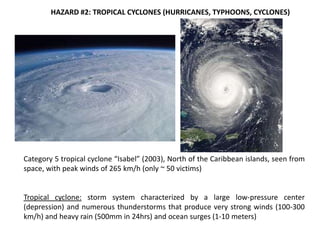
Category 5 tropical cyclone “Isabel” (2003), North of the Caribbean islands, seen from
space, with peak winds of 265 km/h (only ~ 50 victims)


Tropical cyclone: storm system characterized by a large low-pressure center
(depression) and numerous thunderstorms that produce very strong winds (100-300
km/h) and heavy rain (500mm in 24hrs) and ocean surges (1-10 meters)
TROPICAL CYCLONE CHARACTERISTICS: ATMOSPHERIC CIRCULATION
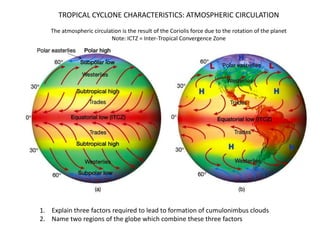
   The atmospheric circulation is the result of the Coriolis force due to the rotation of the planet
                          Note: ICTZ = Inter-Tropical Convergence Zone


1. Explain three factors required to lead to formation of cumulonimbus clouds
2. Name two regions of the globe which combine these three factors
TROPICAL CYCLONES CHARACTERISTICS: FORMATION OF A TROPICAL CYCLONE (DEPRESSION)
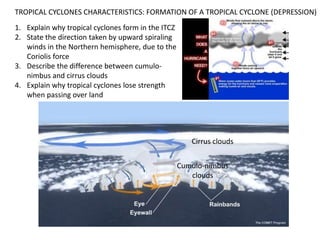
1. Explain why tropical cyclones form in the ITCZ
2. State the direction taken by upward spiraling
   winds in the Northern hemisphere, due to the
   Coriolis force
3. Describe the difference between cumulo-
   nimbus and cirrus clouds
4. Explain why tropical cyclones lose strength
   when passing over land


                                                       Cirrus clouds


                                                    Cumulo-nimbus
                                                       clouds
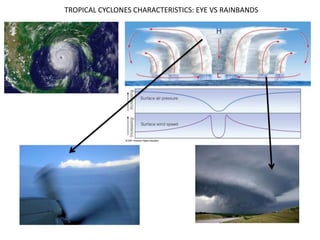
TROPICAL CYCLONES CHARACTERISTICS: EYE VS RAINBANDS
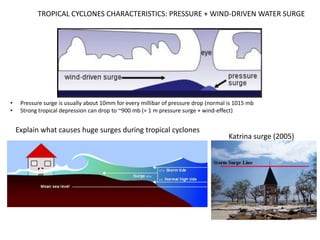
TROPICAL CYCLONES CHARACTERISTICS: PRESSURE + WIND-DRIVEN WATER SURGE


•    Pressure surge is usually about 10mm for every millibar of pressure drop (normal is 1015 mb
•    Strong tropical depression can drop to ~900 mb (= 1 m pressure surge + wind-effect)


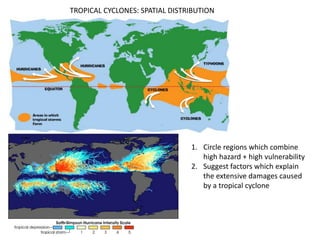
    Explain what causes huge surges during tropical cyclones
                                                                                      Katrina surge (2005)
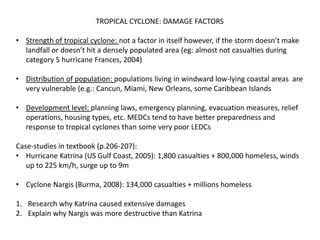
TROPICAL CYCLONES: SPATIAL DISTRIBUTION


                                1. Circle regions which combine
                                   high hazard + high vulnerability
                                2. Suggest factors which explain
                                   the extensive damages caused
                                   by a tropical cyclone
TROPICAL CYCLONE: DAMAGE FACTORS

• Strength of tropical cyclone: not a factor in itself however, if the storm doesn’t make
  landfall or doesn’t hit a densely populated area (eg: almost not casualties during
  category 5 hurricane Frances, 2004)

• Distribution of population: populations living in windward low-lying coastal areas are
  very vulnerable (e.g.: Cancun, Miami, New Orleans, some Caribbean Islands

• Development level: planning laws, emergency planning, evacuation measures, relief
  operations, housing types, etc. MEDCs tend to have better preparedness and
  response to tropical cyclones than some very poor LEDCs

Case-studies in textbook (p.206-207):
• Hurricane Katrina (US Gulf Coast, 2005): 1,800 casualties + 800,000 homeless, winds
   up to 225 km/h, surge up to 9m

• Cyclone Nargis (Burma, 2008): 134,000 casualties + millions homeless

1. Research why Katrina caused extensive damages
2. Explain why Nargis was more destructive than Katrina

I.2 Tropical cyclones

  • 1.
    HAZARD #2: TROPICALCYCLONES (HURRICANES, TYPHOONS, CYCLONES) Category 5 tropical cyclone “Isabel” (2003), North of the Caribbean islands, seen from space, with peak winds of 265 km/h (only ~ 50 victims) Tropical cyclone: storm system characterized by a large low-pressure center (depression) and numerous thunderstorms that produce very strong winds (100-300 km/h) and heavy rain (500mm in 24hrs) and ocean surges (1-10 meters)
  • 2.
    TROPICAL CYCLONE CHARACTERISTICS:ATMOSPHERIC CIRCULATION The atmospheric circulation is the result of the Coriolis force due to the rotation of the planet Note: ICTZ = Inter-Tropical Convergence Zone 1. Explain three factors required to lead to formation of cumulonimbus clouds 2. Name two regions of the globe which combine these three factors
  • 3.
    TROPICAL CYCLONES CHARACTERISTICS:FORMATION OF A TROPICAL CYCLONE (DEPRESSION) 1. Explain why tropical cyclones form in the ITCZ 2. State the direction taken by upward spiraling winds in the Northern hemisphere, due to the Coriolis force 3. Describe the difference between cumulo- nimbus and cirrus clouds 4. Explain why tropical cyclones lose strength when passing over land Cirrus clouds Cumulo-nimbus clouds
  • 4.
  • 5.
    TROPICAL CYCLONES CHARACTERISTICS:PRESSURE + WIND-DRIVEN WATER SURGE • Pressure surge is usually about 10mm for every millibar of pressure drop (normal is 1015 mb • Strong tropical depression can drop to ~900 mb (= 1 m pressure surge + wind-effect) Explain what causes huge surges during tropical cyclones Katrina surge (2005)
  • 6.
    TROPICAL CYCLONES: SPATIALDISTRIBUTION 1. Circle regions which combine high hazard + high vulnerability 2. Suggest factors which explain the extensive damages caused by a tropical cyclone
  • 7.
    TROPICAL CYCLONE: DAMAGEFACTORS • Strength of tropical cyclone: not a factor in itself however, if the storm doesn’t make landfall or doesn’t hit a densely populated area (eg: almost not casualties during category 5 hurricane Frances, 2004) • Distribution of population: populations living in windward low-lying coastal areas are very vulnerable (e.g.: Cancun, Miami, New Orleans, some Caribbean Islands • Development level: planning laws, emergency planning, evacuation measures, relief operations, housing types, etc. MEDCs tend to have better preparedness and response to tropical cyclones than some very poor LEDCs Case-studies in textbook (p.206-207): • Hurricane Katrina (US Gulf Coast, 2005): 1,800 casualties + 800,000 homeless, winds up to 225 km/h, surge up to 9m • Cyclone Nargis (Burma, 2008): 134,000 casualties + millions homeless 1. Research why Katrina caused extensive damages 2. Explain why Nargis was more destructive than Katrina