Transportation Forecasting
What is it?
Transportation Forecasting is used to estimate the
number of travelers or vehicles that will use a given
transportation facility in the future
The conventional approach to transportation
forecasting is based on what is commonly know as
the ‘four step model’
The Four Step Model
• Trip Generation
Estimates the number of trips from given origins and
destinations
• Trip Distribution
Determines the destination for each trip from a given origin
• Mode Choice
Determines the mode choice for each trip
• Route Assignment
Determines the specific route for each trip
Trip Generation
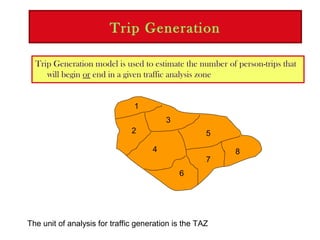
Trip Generation model is used to estimate the number of person-trips that
will begin or end in a given traffic analysis zone
The unit of analysis for traffic generation is the TAZ
1
2
3
4
5
6
8
7
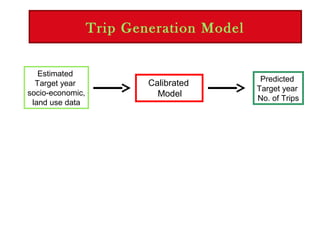
Trip Generation Model
Calibrated
Model
Estimated
Target year
socio-economic,
land use data
Predicted
Target year
No. of Trips
Trip Generation
What is Predicted?
Trip generation models predict so called TRIP ENDS for each zone
The trip ends maybe classified as either
• ORIGINS and DESTINATIONS (O-D)
or
• PRODUCTIONS and ATTRACTIONS
The two sets of terms sound similar but there is a technical difference
Origins and Destinations
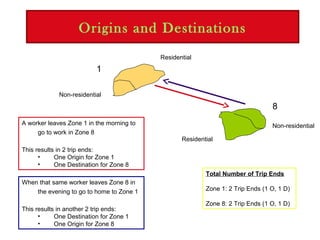
A worker leaves Zone 1 in the morning to
go to work in Zone 8
This results in 2 trip ends:
• One Origin for Zone 1
• One Destination for Zone 8
1
8
Residential
Non-residential
Residential
Non-residential
When that same worker leaves Zone 8 in
the evening to go to home to Zone 1
This results in another 2 trip ends:
• One Destination for Zone 1
• One Origin for Zone 8
Total Number of Trip Ends
Zone 1: 2 Trip Ends (1 O, 1 D)
Zone 8: 2 Trip Ends (1 O, 1 D)
Productions and Attractions
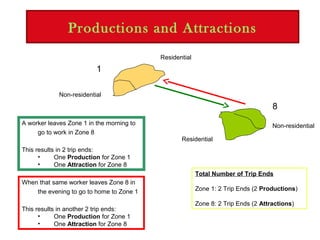
A worker leaves Zone 1 in the morning to
go to work in Zone 8
This results in 2 trip ends:
• One Production for Zone 1
• One Attraction for Zone 8
1
8
Residential
Non-residential
Residential
Non-residential
When that same worker leaves Zone 8 in
the evening to go to home to Zone 1
This results in another 2 trip ends:
• One Production for Zone 1
• One Attraction for Zone 8
Total Number of Trip Ends
Zone 1: 2 Trip Ends (2 Productions)
Zone 8: 2 Trip Ends (2 Attractions)
Origins and Destinations??
Productions and Attractions??
Based on the convention of trip generation models
Origins and Destinations are defined in terms of the direction of
the trip
Productions and Attractions are defined by the land use
Residential Land use PRODUCES trip ends
Non-residential land use ATTRACTS trip ends
This is a useful distinction because of how trip generation models
are typically developed based on this.

Trip generation

  • 1.
    Transportation Forecasting What isit? Transportation Forecasting is used to estimate the number of travelers or vehicles that will use a given transportation facility in the future The conventional approach to transportation forecasting is based on what is commonly know as the ‘four step model’
  • 2.
    The Four StepModel • Trip Generation Estimates the number of trips from given origins and destinations • Trip Distribution Determines the destination for each trip from a given origin • Mode Choice Determines the mode choice for each trip • Route Assignment Determines the specific route for each trip
  • 3.
    Trip Generation Trip Generationmodel is used to estimate the number of person-trips that will begin or end in a given traffic analysis zone The unit of analysis for traffic generation is the TAZ 1 2 3 4 5 6 8 7
  • 4.
    Trip Generation Model Calibrated Model Estimated Targetyear socio-economic, land use data Predicted Target year No. of Trips
  • 5.
    Trip Generation What isPredicted? Trip generation models predict so called TRIP ENDS for each zone The trip ends maybe classified as either • ORIGINS and DESTINATIONS (O-D) or • PRODUCTIONS and ATTRACTIONS The two sets of terms sound similar but there is a technical difference
  • 6.
    Origins and Destinations Aworker leaves Zone 1 in the morning to go to work in Zone 8 This results in 2 trip ends: • One Origin for Zone 1 • One Destination for Zone 8 1 8 Residential Non-residential Residential Non-residential When that same worker leaves Zone 8 in the evening to go to home to Zone 1 This results in another 2 trip ends: • One Destination for Zone 1 • One Origin for Zone 8 Total Number of Trip Ends Zone 1: 2 Trip Ends (1 O, 1 D) Zone 8: 2 Trip Ends (1 O, 1 D)
  • 7.
    Productions and Attractions Aworker leaves Zone 1 in the morning to go to work in Zone 8 This results in 2 trip ends: • One Production for Zone 1 • One Attraction for Zone 8 1 8 Residential Non-residential Residential Non-residential When that same worker leaves Zone 8 in the evening to go to home to Zone 1 This results in another 2 trip ends: • One Production for Zone 1 • One Attraction for Zone 8 Total Number of Trip Ends Zone 1: 2 Trip Ends (2 Productions) Zone 8: 2 Trip Ends (2 Attractions)
  • 8.
    Origins and Destinations?? Productionsand Attractions?? Based on the convention of trip generation models Origins and Destinations are defined in terms of the direction of the trip Productions and Attractions are defined by the land use Residential Land use PRODUCES trip ends Non-residential land use ATTRACTS trip ends This is a useful distinction because of how trip generation models are typically developed based on this.