Trip Distribution
Balancing Productions and Attractions
• Prior to proceeding to the trip distrubution step, it is
important to ensure that the productions and attractions
within the study are equal.
• Productions are generaly considered to be more accurate.
• Attractions are balanced proportionately to match
productions within each zone.
Balancing Home-Based Work Trips
Definition of Trip Distribution
• Trip distribution is a model of the number of trips that occur
between each origin zone and each destination zone. It uses the
predicted number of trips originating in each origin zone (trip
production model) and the predicted number of trips ending in
each destination zone (trip attraction model).
• It is the process by which all trips generated in a study area are
allocated among zones.
• The most widely used T/D method is the Gravity Model, which
uses the attributes of transportation system and land use
characteristcs to distribute trips throughout the network.
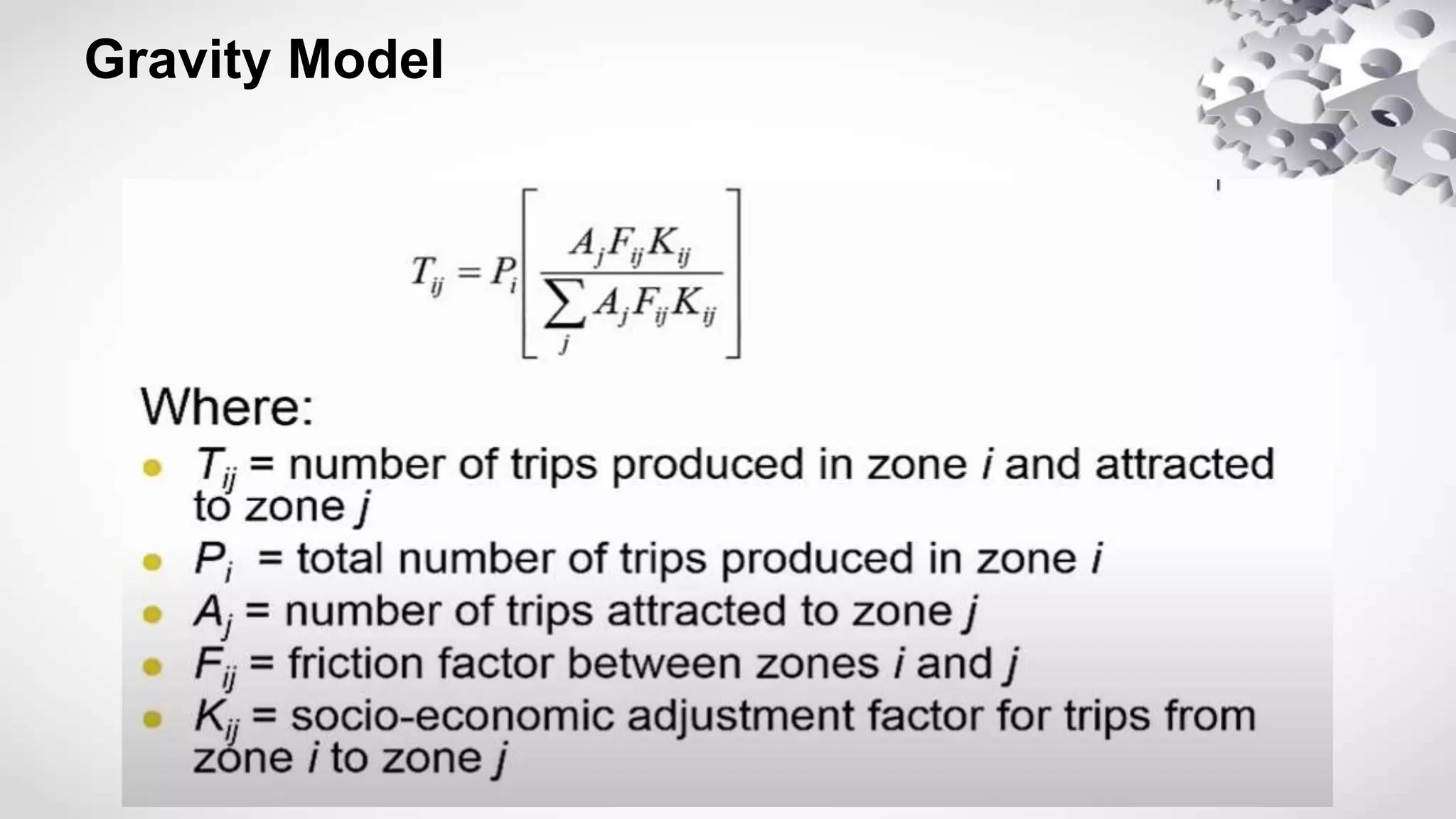
Gravity Model
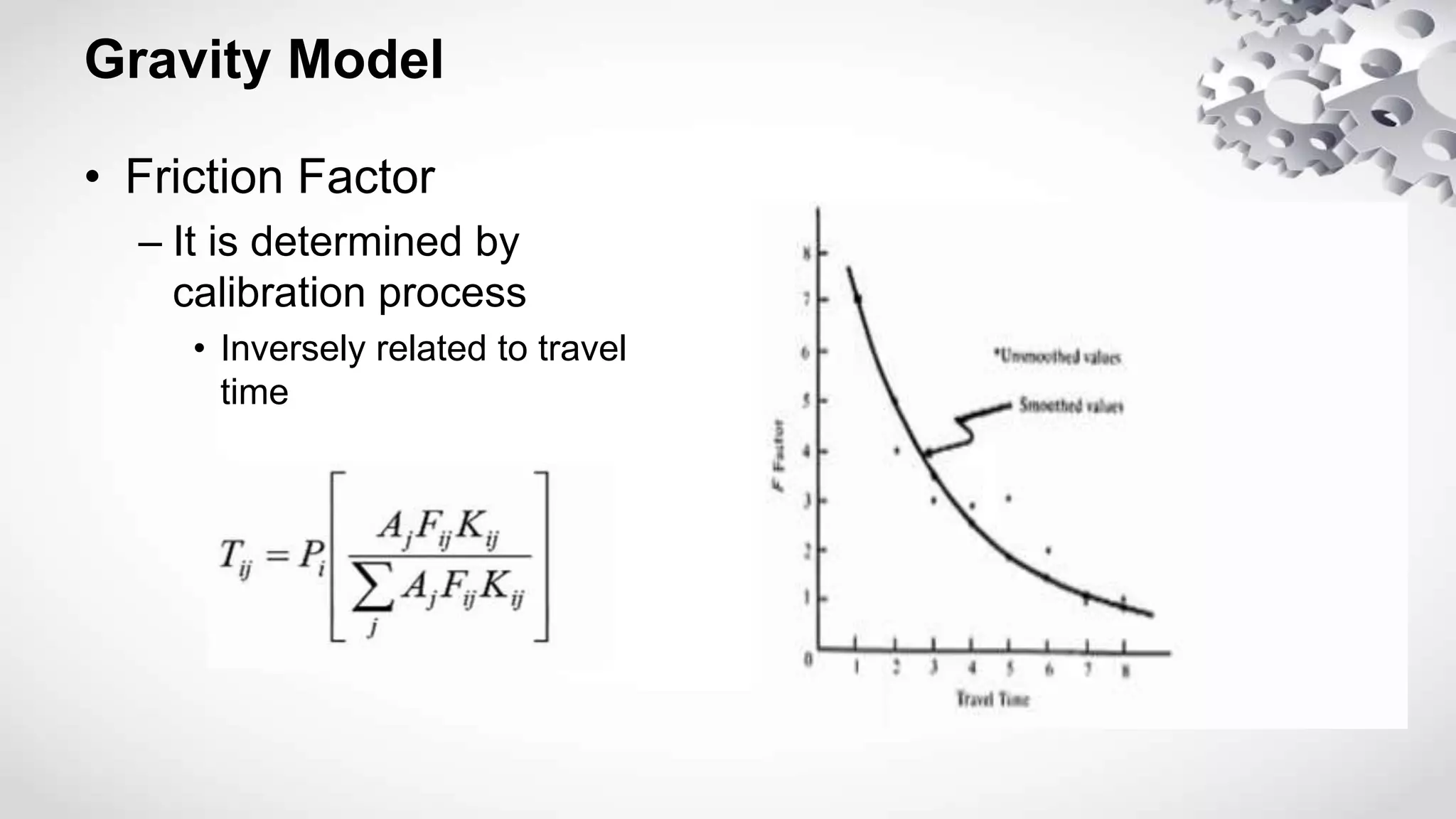
Gravity Model
• Friction Factor
– It is determined by
calibration process
• Inversely related to travel
time
Socioeconomic Adjustment Factor
• Used to make adjustments
of trip distribution values
between zones where:
– differences between
estimated and actual values
are significant
– Accounts for variables other
than travel time
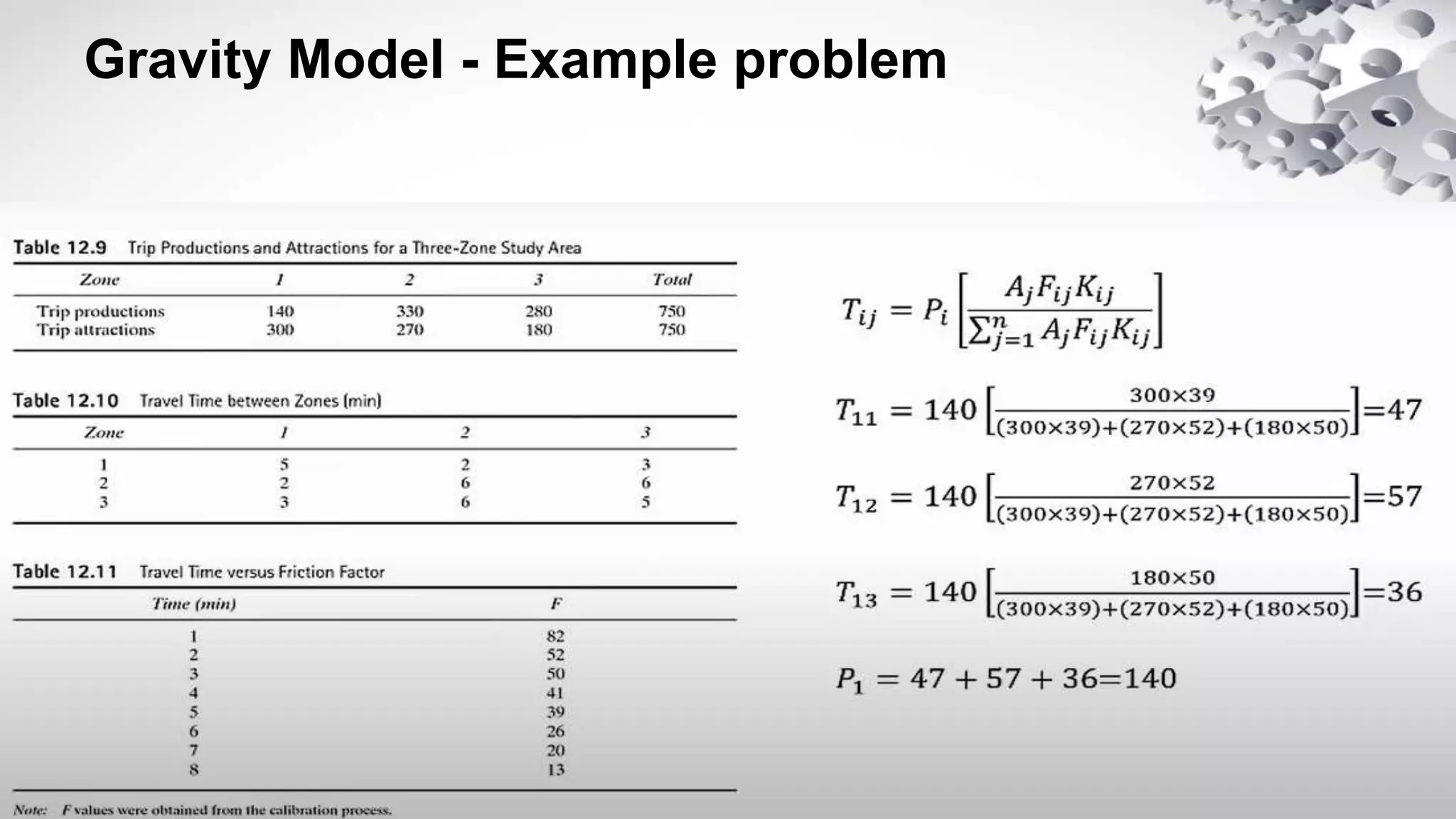
Gravity Model - Example problem

Trip Distribution.pptx

  • 1.
  • 2.
    Balancing Productions andAttractions • Prior to proceeding to the trip distrubution step, it is important to ensure that the productions and attractions within the study are equal. • Productions are generaly considered to be more accurate. • Attractions are balanced proportionately to match productions within each zone.
  • 3.
  • 4.
    Definition of TripDistribution • Trip distribution is a model of the number of trips that occur between each origin zone and each destination zone. It uses the predicted number of trips originating in each origin zone (trip production model) and the predicted number of trips ending in each destination zone (trip attraction model). • It is the process by which all trips generated in a study area are allocated among zones. • The most widely used T/D method is the Gravity Model, which uses the attributes of transportation system and land use characteristcs to distribute trips throughout the network.
  • 5.
  • 6.
    Gravity Model • FrictionFactor – It is determined by calibration process • Inversely related to travel time
  • 7.
    Socioeconomic Adjustment Factor •Used to make adjustments of trip distribution values between zones where: – differences between estimated and actual values are significant – Accounts for variables other than travel time
  • 8.
    Gravity Model -Example problem
  • 9.
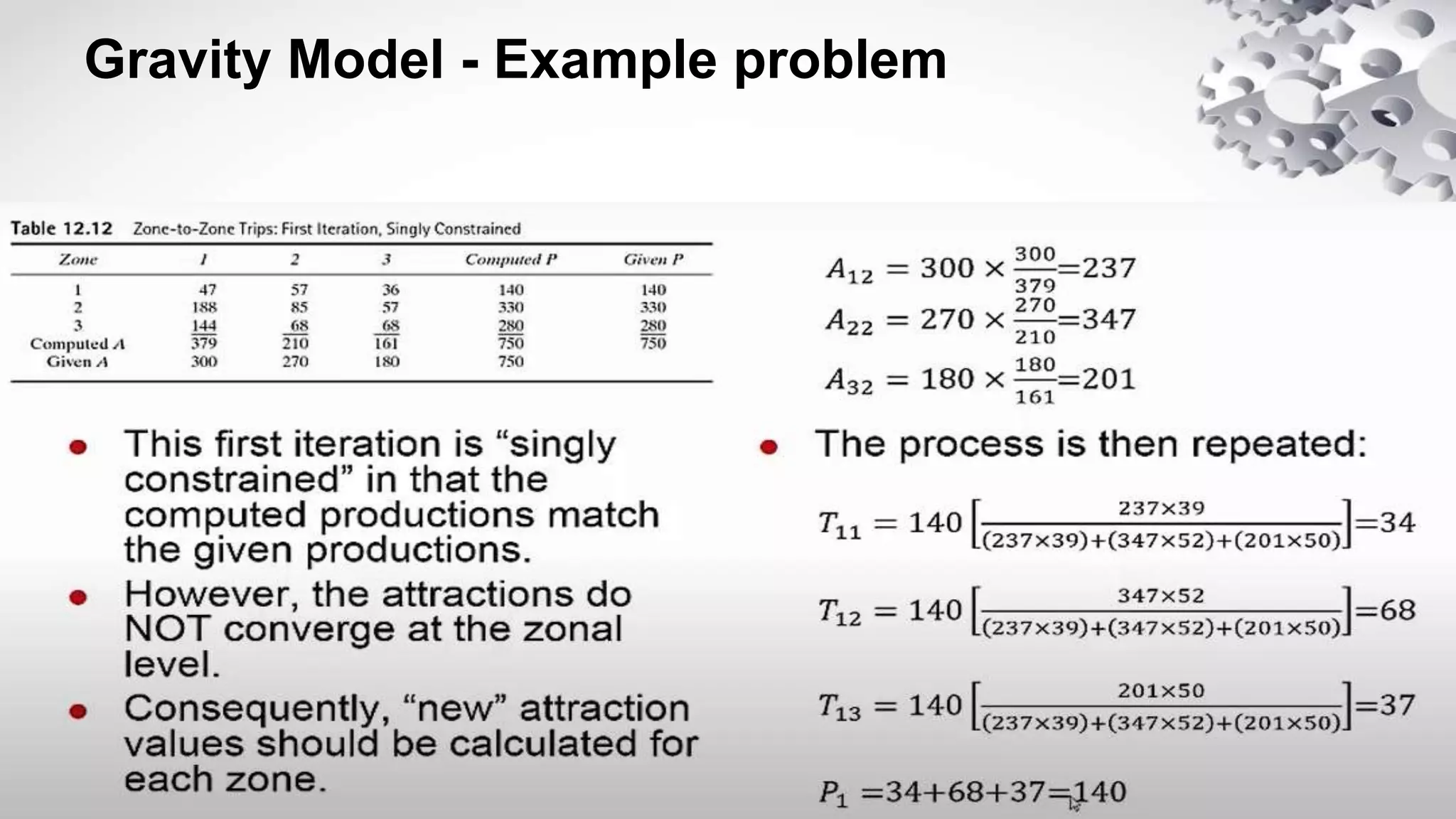
    Gravity Model -Example problem
  • 10.
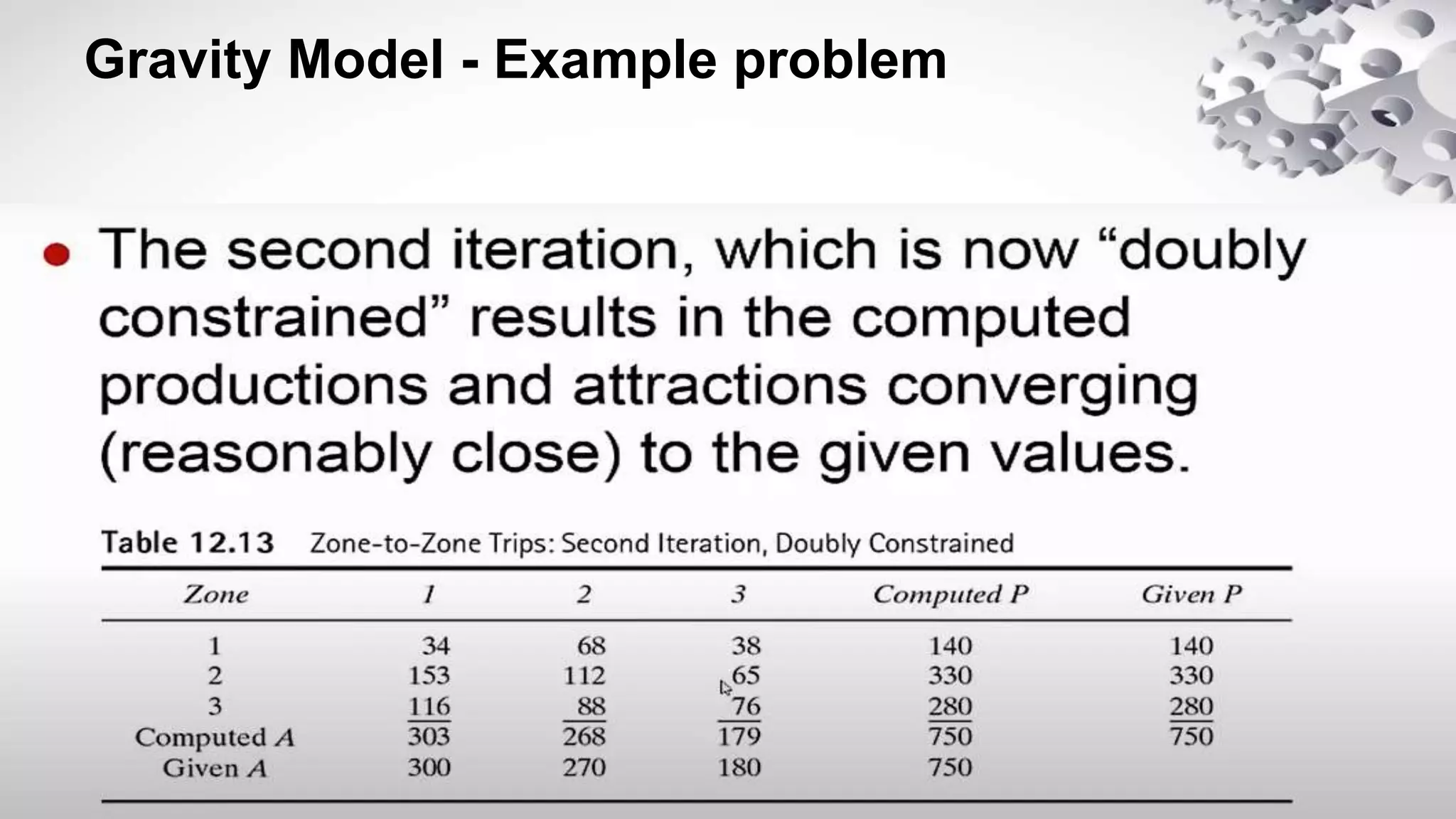
    Gravity Model -Example problem
  • 11.
    Gravity Model -Example problem