TRIAGING IN THE
EMERGENCY
DR AHMED ISMAIL
OUTLINE
 Introduction
 Triage process
 Triage systems
 ETAT
 Challenges
 Recommendation
 Conclusion
Introduction
 Many deaths in hospital occur within 24 hours of admission.
 Some of these deaths can be prevented if very sick children are quickly
identified on their arrival and treatment is started without delay.
 This is why the concept of triage is very important especially in emergency
settings
 It is necessary to identify the order in which patients should be given care in
an EPU when demand is high and resources are insufficient for all to be
treated immediately.
 Not needed if there is no queue
INTRODUCTION
 Triage originates from the French verb trier, meaning to separate, sift or
select
 The rating of patients clinical urgency.
 Determines the order and priority of emergency treatment, transport or
destination for patients
 TRIAGE is the sorting of patients into priority groups according to their need
and the resources available
 Process of rapidly screening sick children soon after their arrival in the
hospital and determining the priority of treatment based on the severity of
their condition irrespective of their order of arrival
History of Triage
 Originally developed in the 19th
century during the Napoleonic war
 Triage in emergency departments occurred sporadically in the early 1900s in
crowded inner-city hospital dispensaries
 However, it was not widely adapted in EDs until the latter half of the century
Triage Process
 Triage is a dynamic process, a patients condition may improve or deteriorate
while waiting for treatment
 Accurate triage is the key to the efficient operation of an emergency
department.
 All patients should be triaged within 10 minutes of arrival in the EPU.
WHO SHOULD BE TRIAGED?
 Triage should be carried out on all patients presenting to the health
facility
Who should do and where to triage
 All health facility staff can be trained to triage at different levels
 It is best to determine the first point of triaging and who does it, preferably
at the first point of contact
 Can be implemented at different points in the health facility setting
Triage assessment
 Chief complaint.
 Brief triage history
 General appearance.
 Vital signs.
 Brief physical appraisal at triage.
 The health worker should learn to assess several signs at the same time
 Assess and determine the severity or acuity of the presenting problem
 Process the patient into a triage level
 Re-evaluate patients
 Triage is a dynamic process, a patients condition may improve or deteriorate
while waiting for treatment
Triage systems
 Have 3 to 5 categories usually
 Triage scales aim to optimize waiting time of patients according to severity of
their medical condition
 Reliability according to research conducted by Van Veen 2009 showed MTAS –
GOOD, ESI – MODERATE TO GOOD, paedCTAS – MODERATE, ATS – POOR TO
MODERATE.
TYPES OF TRIAGE SYSTEMS
 INTERNATIONAL TRIAGE SYSTEM
 MANCHESTER TRIAGE SYSTEM (MTS)
 EMERGENCY SEVERITY INDEX (ESI)
 PAEDIATRIC CANADIAN TRIAGE AND ACQUITY SCALE (PAEDCTAS)
 AUSTRALIAN TRIAGE SCALE (ATS)
 SOUTH AFRICAN TRIAGE SCALE (SATS)
 WORLD HEALTH ORGANISATION TRIAGE SYSTEM
 EMERGENCY TRIAGE AND TREATMENT (ETAT)
• AIRWAY COMPROMISE
• INADEQUATE
BREATHING
• STRIDOR
• SHOCK
• UNRESPONSIVE
• DROOLING
• VERY LOW PEFR
• VERY LOW SPO2
• INCREASED WORK OF
BREATHING
• UNABLE TO TALK IN
SENTENCES
• SIGNIFICANT
RESPIRATORY
HISTORY
• ACUTE ONSET AFTER
INJURY
• RESPONDS TO PAIN
OR VOICE ONLY
• EXHAUSTION
• LOW PEFR
• LOW SPO2
• INAPPROPRIATE HISTORY
• PLEURITIC PAIN
WHEEZE
CHEST INFECTION
CHEST INJURY
RECENT PROBLEM
STANDARD
NON- URGENT
IMMEDIATE
VERY
URGENT
URGENT
YES
YES
YES
YES
MANCHESTER TRIAGE SYSTEM (MTS) – FLOW CHART FOR SHORTNESS OF
BREATHE
NO
NO
NO
NO
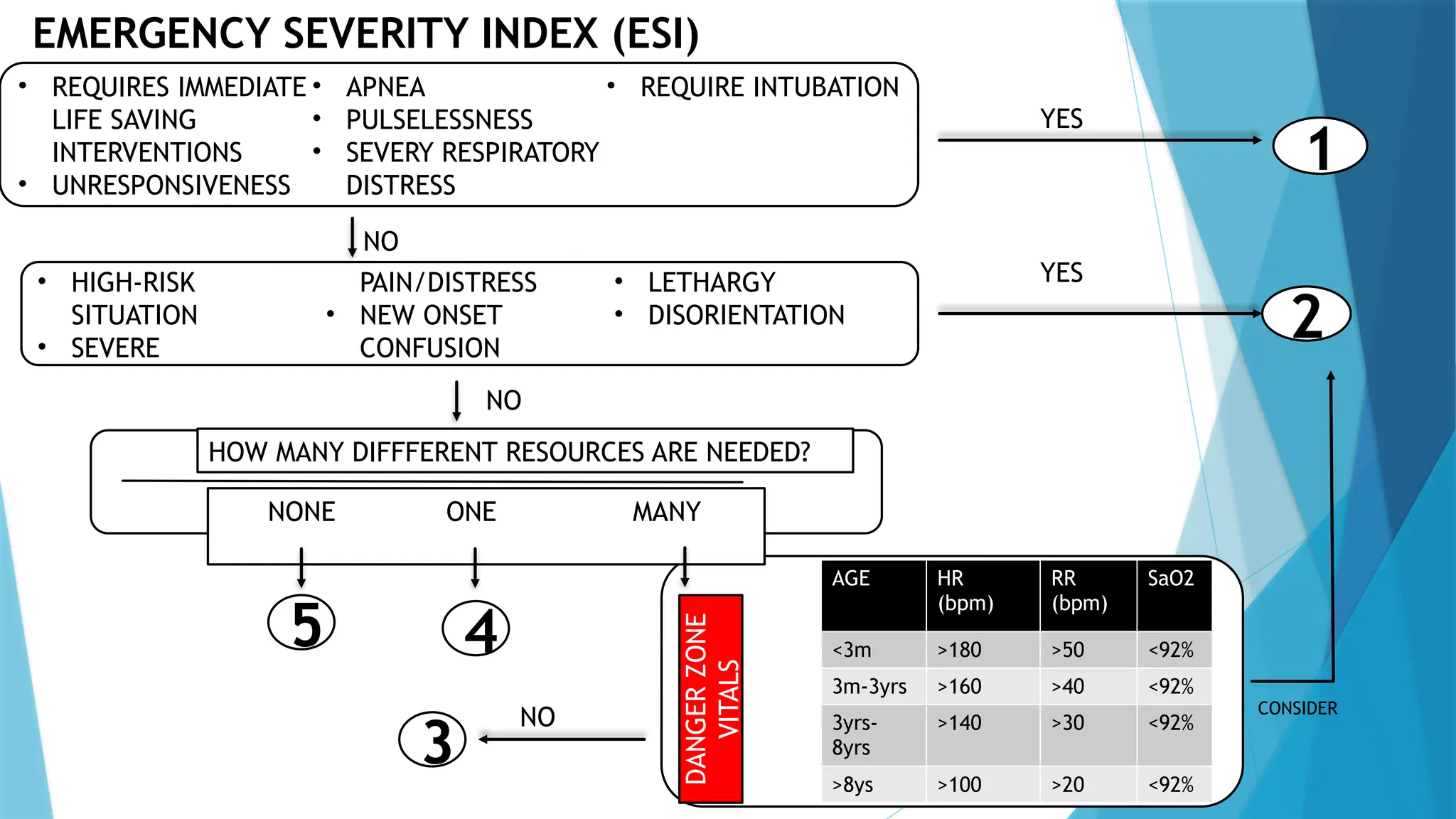
EMERGENCY SEVERITY INDEX (ESI)
• REQUIRES IMMEDIATE
LIFE SAVING
INTERVENTIONS
• UNRESPONSIVENESS
• APNEA
• PULSELESSNESS
• SEVERY RESPIRATORY
DISTRESS
• REQUIRE INTUBATION
• HIGH-RISK
SITUATION
• SEVERE
PAIN/DISTRESS
• NEW ONSET
CONFUSION
• LETHARGY
• DISORIENTATION
HOW MANY DIFFFERENT RESOURCES ARE NEEDED?
NONE ONE MANY
AGE HR
(bpm)
RR
(bpm)
SaO2
<3m >180 >50 <92%
3m-3yrs >160 >40 <92%
3yrs-
8yrs
>140 >30 <92%
>8ys >100 >20 <92%
DANGER
ZONE
VITALS
5 4
1
2
3
CONSIDER
NO
NO
YES
YES
NO
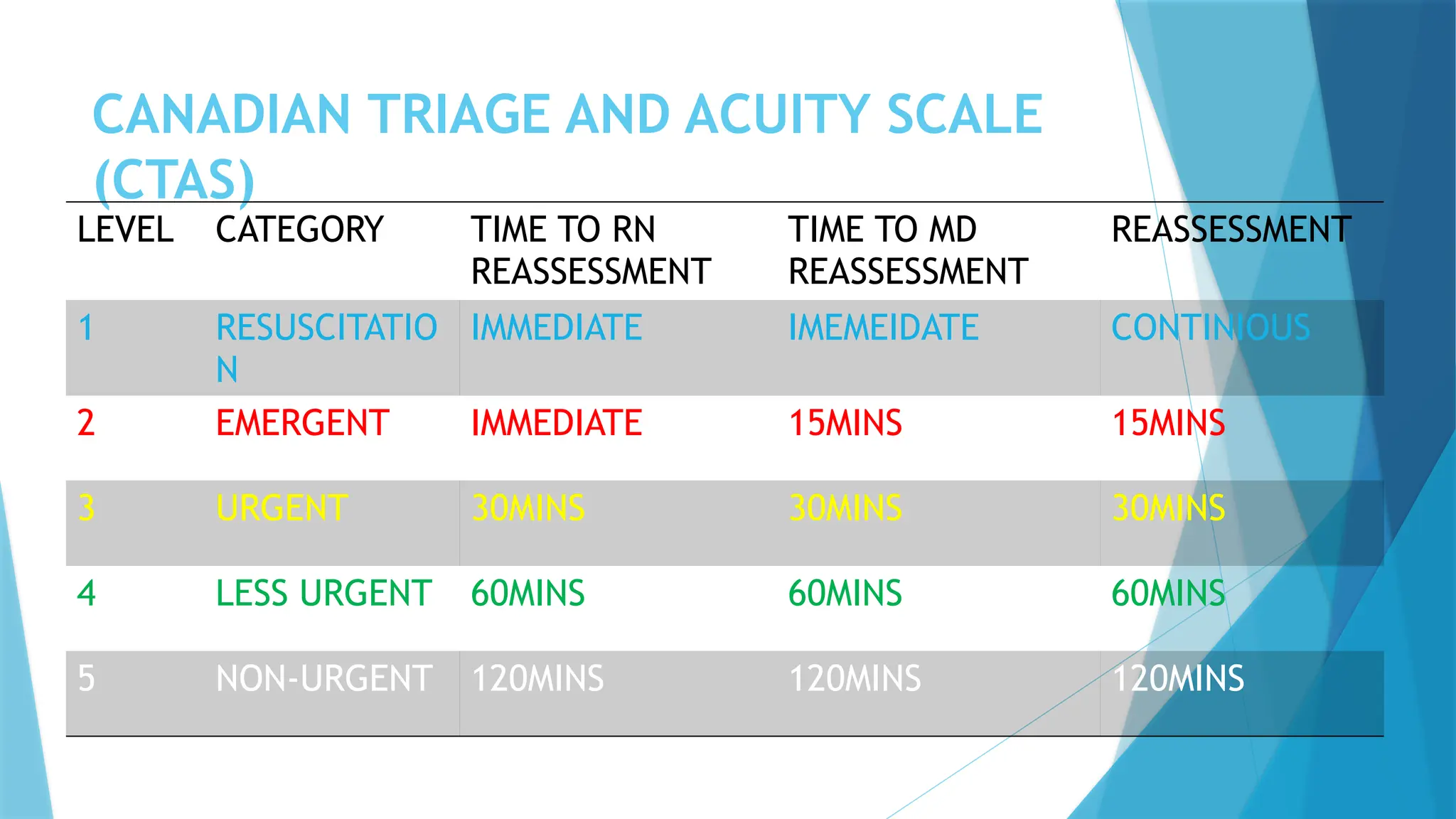
CANADIAN TRIAGE AND ACUITY SCALE
(CTAS)
LEVEL CATEGORY TIME TO RN
REASSESSMENT
TIME TO MD
REASSESSMENT
REASSESSMENT
1 RESUSCITATIO
N
IMMEDIATE IMEMEIDATE CONTINIOUS
2 EMERGENT IMMEDIATE 15MINS 15MINS
3 URGENT 30MINS 30MINS 30MINS
4 LESS URGENT 60MINS 60MINS 60MINS
5 NON-URGENT 120MINS 120MINS 120MINS
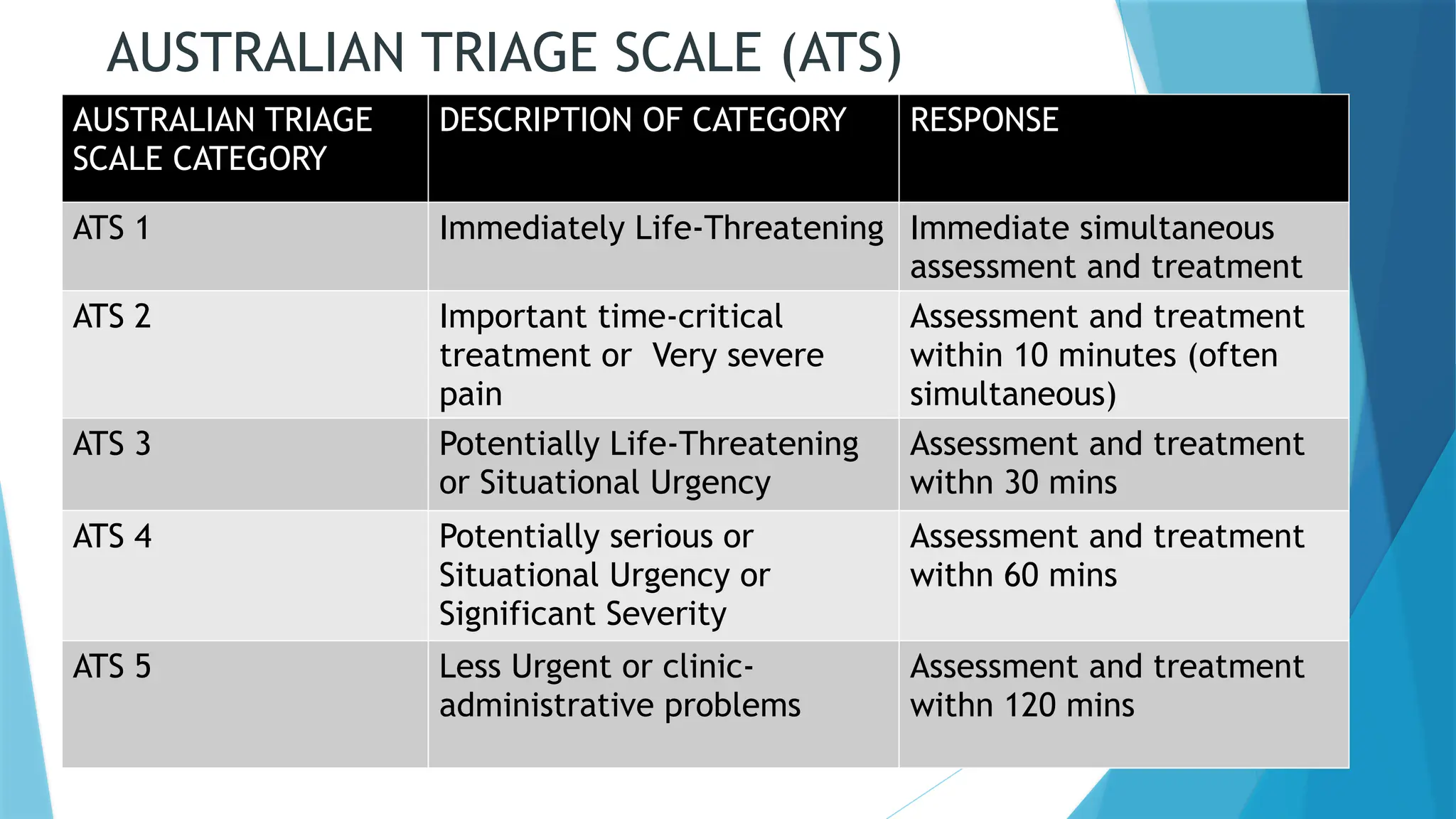
AUSTRALIAN TRIAGE SCALE (ATS)
AUSTRALIAN TRIAGE
SCALE CATEGORY
DESCRIPTION OF CATEGORY RESPONSE
ATS 1 Immediately Life-Threatening Immediate simultaneous
assessment and treatment
ATS 2 Important time-critical
treatment or Very severe
pain
Assessment and treatment
within 10 minutes (often
simultaneous)
ATS 3 Potentially Life-Threatening
or Situational Urgency
Assessment and treatment
withn 30 mins
ATS 4 Potentially serious or
Situational Urgency or
Significant Severity
Assessment and treatment
withn 60 mins
ATS 5 Less Urgent or clinic-
administrative problems
Assessment and treatment
withn 120 mins
South African triage scale (SATS)
Emegency Triage and Treatment (ETAT)
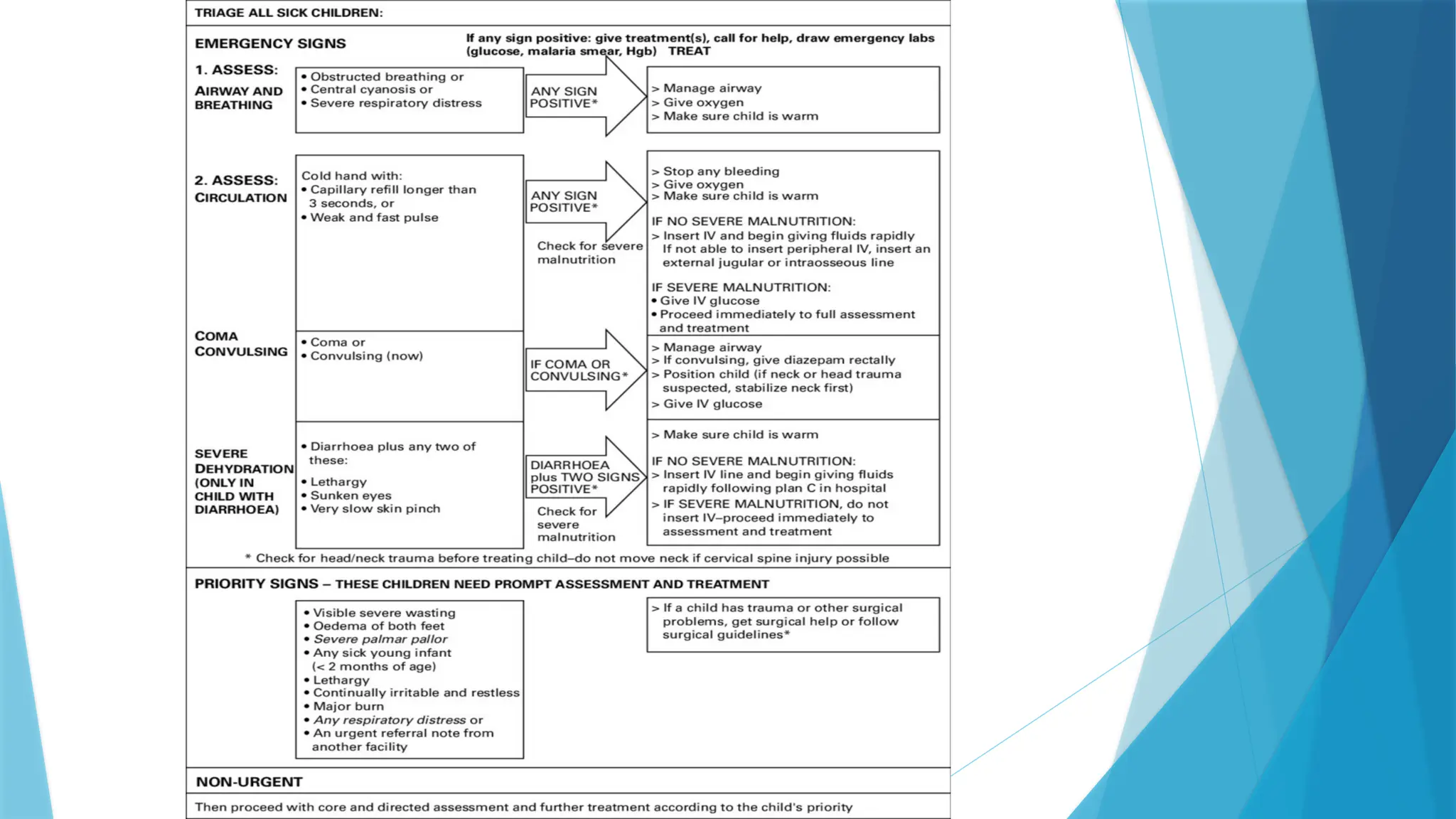
 Emergency Triage and Assessment Treatment (ETAT) developed in 2005
 Adapted from Advanced Paediatric Life Support guidelines
 Emphasis on triage
 Assumes only simple basic lab tests available
 Aim: identify children with emergency signs who require urgent appropriate
care to prevent death and provide clinical guidelines to health workers on
management of children presenting with signs of severe illness.
 Developed in Malawi, field tested in several other countries including Angola,
Brazil, Cambodia, Indonesia, Kenya, Niger.
 ETAT was reviewed in 2013 where points included were:
 Hypoxemia and oxygen therapy
 Fluid therapy
 Management of seizure
 ETAT categories
 E P Q
 EMERGENCY SIGNS: who require immediate emergency treatment (cannot wait and must be
seen and usually treated immediately

PRIORITY SIGNS: who should be given priority in the queue so that they can be assessed and
treated without delay (within 10-15mins maximum 1 hour)
 NON – URGENT CASES: who have neither emergency nor priority signs and can safely wait to be
seen (usually with 4 hours)
EMERGENCIES
 The ABCD concept
 Airway
 Breathing
 Circulation
 Coma
 Convulsions
 Severe Dehydration
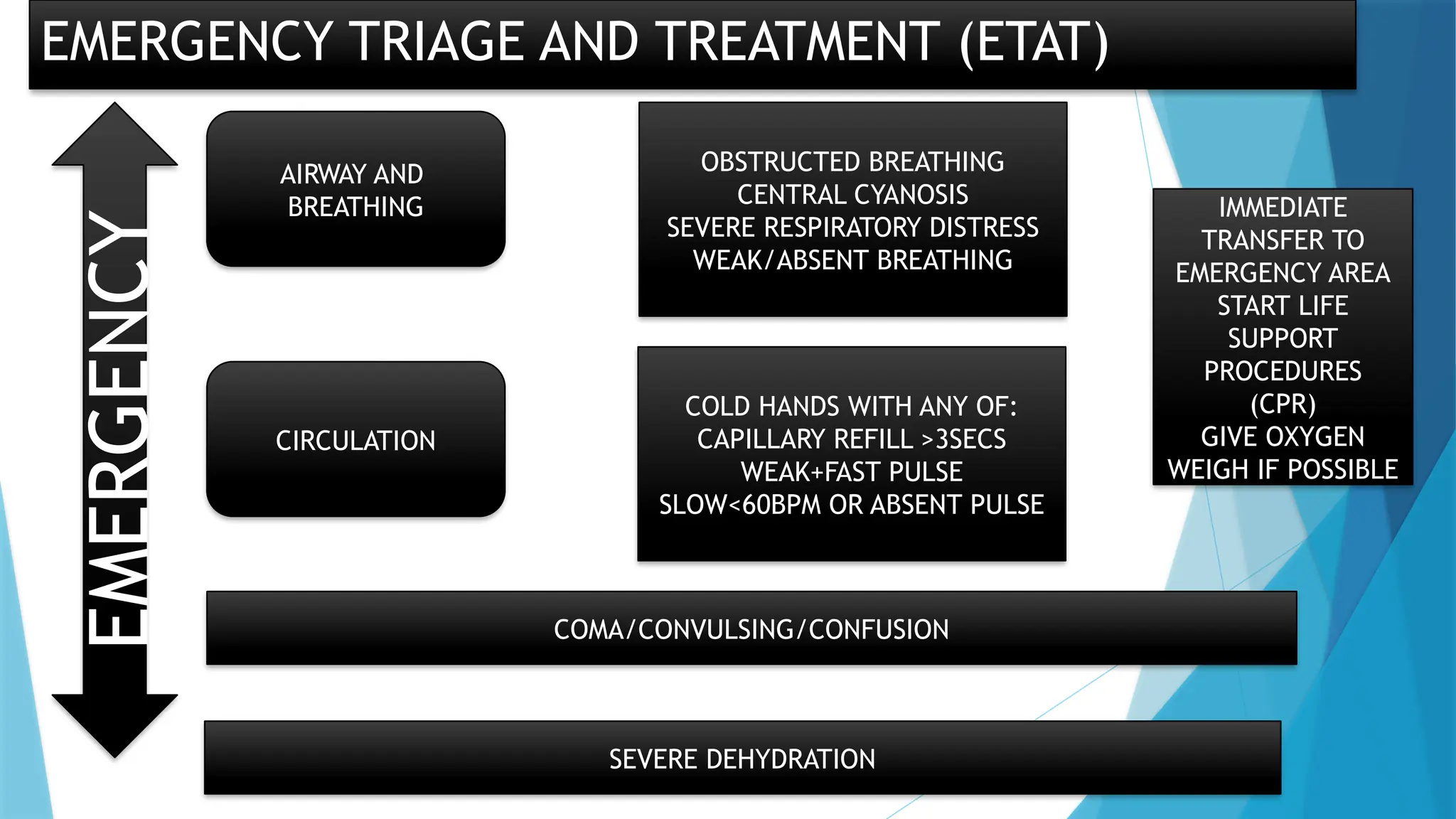
EMERGENCY TRIAGE AND TREATMENT (ETAT)
AIRWAY AND
BREATHING
CIRCULATION
OBSTRUCTED BREATHING
CENTRAL CYANOSIS
SEVERE RESPIRATORY DISTRESS
WEAK/ABSENT BREATHING
COLD HANDS WITH ANY OF:
CAPILLARY REFILL >3SECS
WEAK+FAST PULSE
SLOW<60BPM OR ABSENT PULSE
IMMEDIATE
TRANSFER TO
EMERGENCY AREA
START LIFE
SUPPORT
PROCEDURES
(CPR)
GIVE OXYGEN
WEIGH IF POSSIBLE
COMA/CONVULSING/CONFUSION
SEVERE DEHYDRATION
EMERGENCY
EMERGENCY SIGNS EMERGENCY TREATMENTS
Absent breathing,
Central cyanosis,
Noisy breathing
Severe respiratory
distress
Restore breathing
Manage the airway
Give Oxygen
Remove any foreign body
Stop bleeding
Give Oxygen
Give IV fluids 20ml/kg
Cold hands
CRT >3s
Weak fast pulse
Unconscious
Convulsing
Low blood sugar
Manage airway & give O2
Give 10% glucose IV
Position, Anticonvulsants
Lethargy
Sunken eyes
Skin pinch >2s
No malnutrition
Give IV fluids+ oral fluids
Malnutrition present
Give NGT + oral fluids




AIRWAY &
BREATHING
CIRCULATION
COMA,
CONVULSION
CONFUSION
DEHYDRATION
EMERGENCY
Priority Signs
 3TPR MOB
 3 Ts - Tiny infant: any sick child aged < 2 months, Temperature (Temp
>38.5C), Trauma or other urgent surgical condition
 3Ps - Pallor (severe), Poisoning (history of), Pain (severe)
 3 Rs - Respiratory distress, Restless, continuously irritable or lethargic,
Referral (urgent)
 MOB - Malnutrition: visible severe wasting, Oedema of both feet, Burns
(major)
Queue - Non Urgent Cases
 Conditions that may be acute but non-urgent, or conditions which may be
part of a chronic problem with or without evidence of deterioration.
 The investigation or interventions could be delayed or even referred to other
areas of the hospital or health care system.
Assessment of A and B
 To assess the airway and breathing you need to know
 Is the airway obstructed?
 Is the child breathing?
 Is the child cyanosed?
 Are there signs of severe respiratory distress?
 If the patient is not breathing you need to:
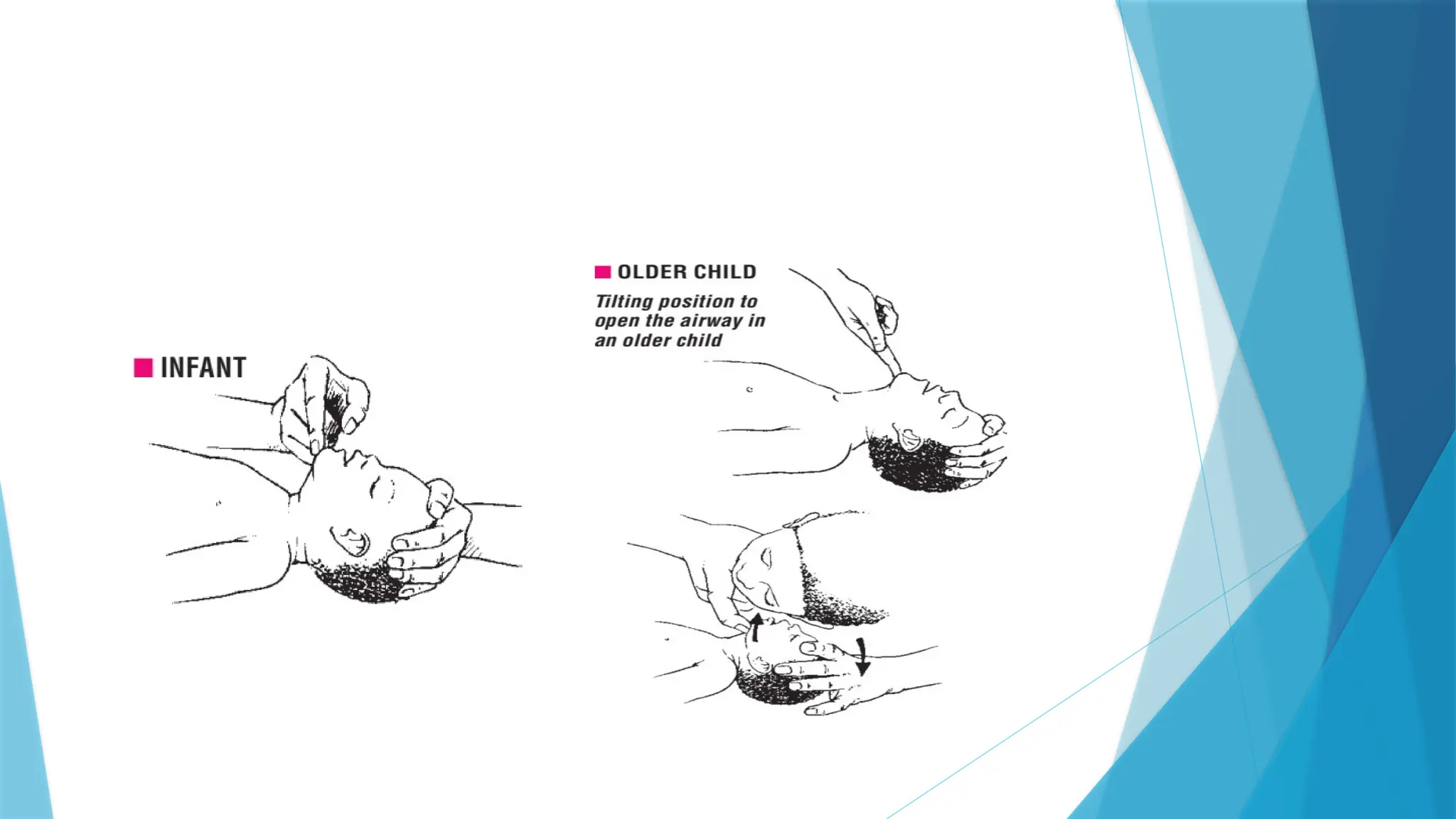
 Open the airway
 Remove any foreign body
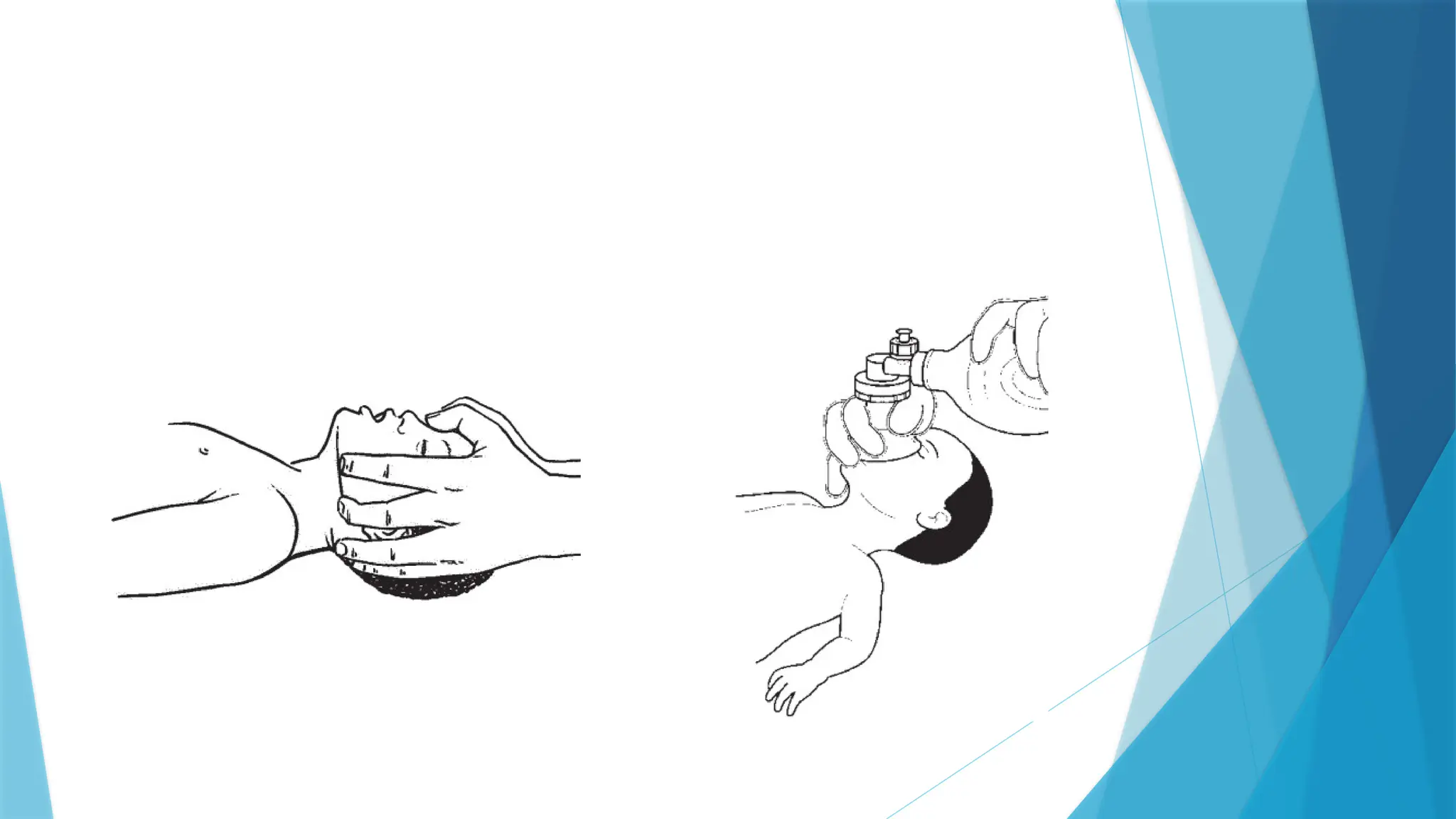
 Ventilate with a bag and mask.
 Assess oxygenation using SpO2
 In all cases of airway or breathing problems:
Give intranasal oxygen: wt x RR x tidal volume (4-6)litre/min (<1-year-olds)
and (6-8) litres/minute (older children)
Assessment Of Circulation
 Check Signs and Symptoms
 Check that the child is not severely malnourished
 Does the child have warm hands?
 If not, is the capillary refill time longer than 3 seconds?
 And is the pulse weak and fast?
 Look for obvious bleeding
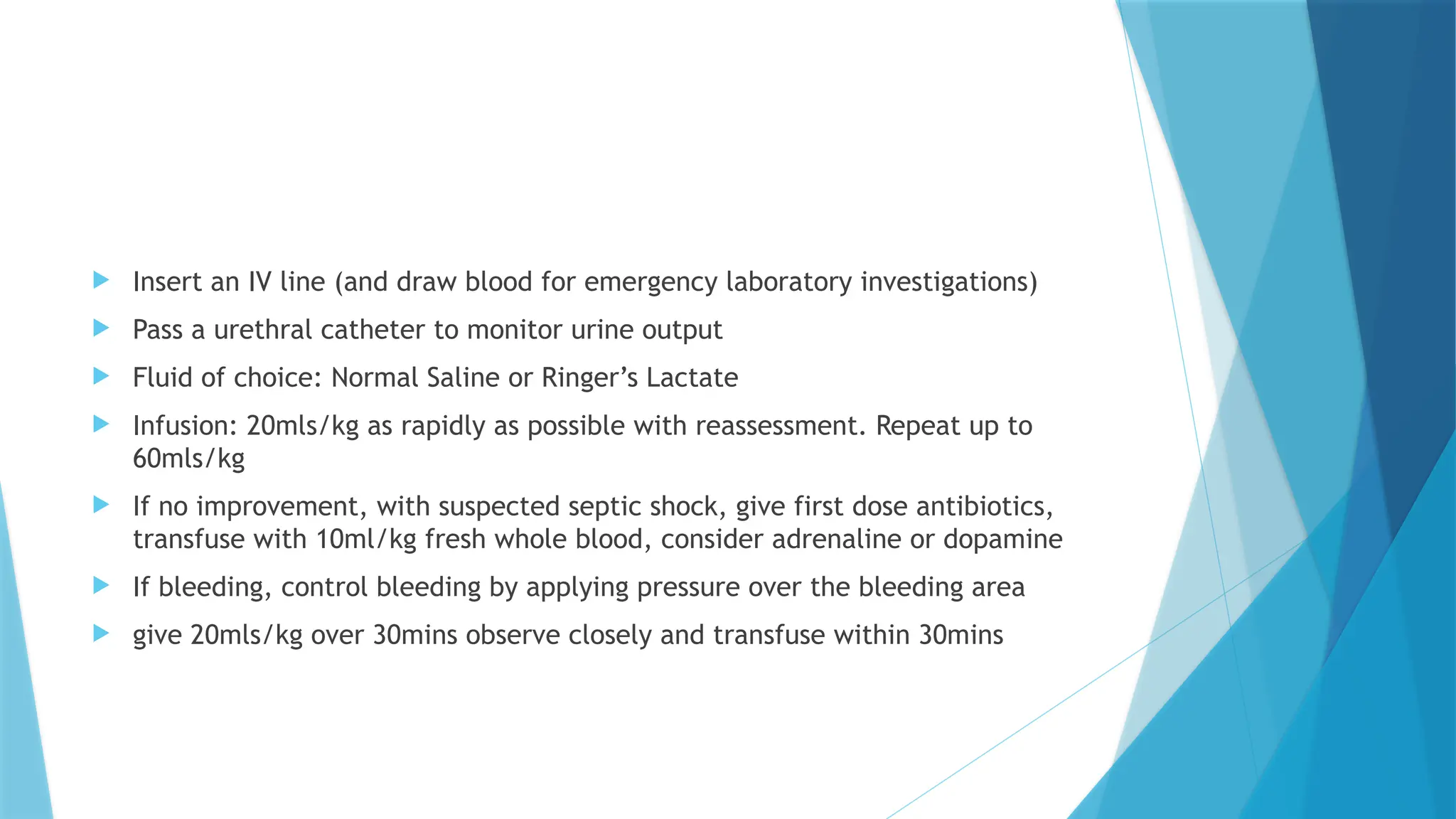
 Insert an IV line (and draw blood for emergency laboratory investigations)
 Pass a urethral catheter to monitor urine output
 Fluid of choice: Normal Saline or Ringer’s Lactate
 Infusion: 20mls/kg as rapidly as possible with reassessment. Repeat up to
60mls/kg
 If no improvement, with suspected septic shock, give first dose antibiotics,
transfuse with 10ml/kg fresh whole blood, consider adrenaline or dopamine
 If bleeding, control bleeding by applying pressure over the bleeding area
 give 20mls/kg over 30mins observe closely and transfuse within 30mins
 After improvement at any stage, (pulse volume increase, heart rate slows,
blood pressure increases by 10% or normalizes, CRT <2s).
 Give 70mls/kg of IVF (R/lactate or normal saline) over 5hours to infants or
2.5hours to children
 Reassess every 1-2hours
 Also give ORS (5mls/kg/hour) as soon as the child can drink
Assessment Of Coma Or Convulsion
 Check AVPU scale
Any child at P or U level can be considered as having coma and needs to be
treated accordingly
Is the child having convulsions?
Witnessed by health care personnel not a history
Management of coma
 Manage the airway as above
 Oropharyngeal airway may be needed to keep airway open
 Keep child at recovery position
 Check Random Blood Sugar
 If RBS <45mg/dl in a well nourished child:
 IVF 10%DW 5mls/kg bolus then maintenance 8mg/kg/min with RBG monitoring every 30mins until 3
consecutively normal readings
 Maintenance: feed child as soon as conscious
 If no danger of aspiration maintenance can be via NGTube with milk or sugar solution (4 teaspoon of
sugar in 200mls of water)
Management of Convulsion
 ABC of resuscitation
 Finger prick RBS
 Anticonvulsant:
 IM/IV midazolam <12kg: 0.2- 0.3mg/kg, 12-<32kg: 5mg, ≥ 32kg: 10mg
 IV lorazepam or Diazepam 0.2 - 0.3mg/kg or 0.5mg/kg rectally ( dose may be repeated once)
 If patient at baseline: Give routine medical care and screen for cause of seizure
 If it persists:
 IV phenobarbitone 15 to 20mg/kg
 IV Phenytoin 20mg/kg in 100mls of N/Saline over 20 – 30mins
 IM paraldehyde 1ml/year max. 10mls
Assessment Of Severe Dehydration
 Check Signs and Symptoms
 Hx of diarrhea and/or vomiting
 If no malnutrition
 Fluid of choice: Ringer’s lactate
 Infants:
 30mls/kg over 1 hour
 70mls/kg next 5 hours
 Children>1yr
 30mls/kg over 30mins
 70mls/kg next 2.5hours
 Reassess every 1-2hours
 ORS
 breastfeeding
 Reassess
Treatment of Emergency Signs in a child
with Severe Acute Malnutrition
 Shock: IVF 15mls/kg over 1hour, if there’s improvement, add 15mls/kg over 1
hour then convert to oral correction with RESOMAL
 Fluid of choice:
 Half strength Darrow’s solution with 5DW
 0.45% NaCl plus 5% glucose
 Ringer’s lactate with 5%glucose
 If no improvement after 2 boluses :
 Give maintenance IVF 4mls/kg while awaiting blood
 Transfuse 10mls/kg of fresh whole blood over 3hours
 give 1st dose of antibiotic
 Severe dehydration: Rehydrate orally using RESOMAL 5mls/kg every 30mins for
2hrs then 5-10mls/kg in alternate hours up to 10hours
 Commence feeding with F-75 100Kcal/kg/day in alternate hours
 Hypoglycaemia:
 Oral 50mls of 10%DW,
 One teaspoon sugar sublingual
 IVF 10%DW 5mls/kg then feed every 2hours. Initially give 1/4 of feed every
30mins for the first 2hours
 RBS monitoring every 30mins until 3 consecutively normal readings
BENEFITS OF TRIAGE
 Reduction in morbidity and mortality rates
 Improved patient-facility relationship
 Reduce wait time
 Better accountability
 Better team work
 Objectivity in triaging reduces the risk of biases based on personal relationships and
improves the user-friendliness of the facility
CHALLENGES OF TRIAGE
 Poor adherence to the guidelines
 Knowledge barriers
 Unavailable training programmes on the tool
 Triage scoring systems require extensive training to implement and some are labour intensive
 New employee with too little or no training on how to use the tool and caring of different cases
presenting to EPU
 Disagreement between triage officer and managing doctors on how categorization of patients should
be implemented
 Unavailability or non/mal-functioning equipment
 Shortage of staff
 Patient expectations are rising
 Health care systems are having to cope with problems of increasing demand,
increasing financial pressures, limitations on staff and an ability to apply ever
more complex medical processes to save the lives of patients
Triaging system in EPU, AKTH and
challenges
 Triage system used is WHO ETAT
 No particular personnel in charge of the triage
 No data
 Poor record keeping
 Poor adherence to the guidelines
 Unavailable training programmes on the tool
 Shortage of staff
 Improper and multiple job description resulting into delayed patient care and
work overload
 unbalanced patient/staff ratio which causes delays in providing quality of
care.
 Patient dissatisfaction and aggression
RECOMMENDATION
 Facility assessment to determine:
The layout and accessibility to clients
Care practices in the facility
Equipment and their functionality
Mortality pattern and contributors
 Review of the bottle necks in the facility: accessibility, timing of services, payment of bills
 Development of effective triage guidelines suitable for the hospital
 Regular training of staff & encourage adherence to guidelines
 Introduce sites for triaging & integrate it into current practices in the unit
 Provision of materials for effective care of patients- suction machines,
oxygen, emergency drugs, etc
 Provision of enough staff with skills in handling emergencies
 Proper job description
 Proper record keeping
 Make the facility user-friendly
REFERENCES
 Joshi N., Wadhwani R., et al. (2020). Implementing a triage tool to improve
appropriateness of care for children coming to the emergency department in a small
hospital in India. BMJ Open Quality, 9(4), e000935.
https://doi.org/10.1136/bmjoq-2020-000935
 King C., Dube A., et al. (2021). Paediatric Emergency Triage, Assessment and
Treatment (ETAT) – preparedness for implementation at primary care facilities in
Malawi. Global Health Action, 14 (1). https://doi.org/10.1080/16549716.2021.1989807
 Van Veen, M., Moll H.A (2009). Reliability and validity of triage systems in paediatric
emergency care. Scandinavian Journal of Trauma, Resuscitation and Emergency
Medicine, 17(1), 38. https://doi.org/10.1186/1757-7241-17-38
 Hands C, Hands S, Mustapha A, et al (2021) ETATP (ETAT+): adapting training to
strengthen quality improvement and task-sharing in emergency paediatric care in
Sierre Leone. J Global Health 11:04069
REFERENCES
 Qureshi N.A.(2010) Triage systems: a review of the literature with reference
to Saudi Arabia, Eastern Mediterranean Health Journal Volume 16
 Robertson S.I (2006) Evolution of triage systems; 23(2):
154–155.doi:10.1136/emj.2005.030270
 Sixtus R.S. (2012) Perceptions And Challenges Of Using Emergency Triage
Assessment Treatment Guideline In Emergency Department At Muhimbili
National Hospital, Tanzania.
 Mani Y, Kabir H. (2019) Pediatric Triage In The Emergency Unit, Aminu Kano
Teaching Hospital, Pediatrics Departmental Seminar Presentation.
 World Health Organization (2013) Emergency Triage and Treatment Plus
(ETAT+), WHO Department of Child and Adolescent Health and Development.
 Elbaih AH (2017) Different types of triage. Archives Medical Review Journal 26: 441-
68.
 E. Dippenaar. (2020). Triage systems around the world: a historical evolution
 Emergency triage Assessment and Treatment; Manual for Participants, world
health organization (2005)
 Pocket Book of Hospital Care for Children; Guidelines for the Management of
Common Childhood Illnesses. 2nd edition. World Health Organization. 2013
 Jafar B, Mehrdad F, Hamidreza K (2019). Triage Systems in Mass Casualty Incidents
and Disasters: A Review Study with A Worldwide Approach. Open Access Maced
J Med Sci. 2019 Feb 15; 7(3): 482–494. doi: 10.3889/oamjms.2019.119
TRIAGING IN THE EMERGENCY paediatric unit.pptx

TRIAGING IN THE EMERGENCY paediatric unit.pptx

  • 1.
  • 2.
    OUTLINE  Introduction  Triageprocess  Triage systems  ETAT  Challenges  Recommendation  Conclusion
  • 3.
    Introduction  Many deathsin hospital occur within 24 hours of admission.  Some of these deaths can be prevented if very sick children are quickly identified on their arrival and treatment is started without delay.  This is why the concept of triage is very important especially in emergency settings
  • 4.
     It isnecessary to identify the order in which patients should be given care in an EPU when demand is high and resources are insufficient for all to be treated immediately.  Not needed if there is no queue
  • 5.
    INTRODUCTION  Triage originatesfrom the French verb trier, meaning to separate, sift or select  The rating of patients clinical urgency.  Determines the order and priority of emergency treatment, transport or destination for patients
  • 6.
     TRIAGE isthe sorting of patients into priority groups according to their need and the resources available  Process of rapidly screening sick children soon after their arrival in the hospital and determining the priority of treatment based on the severity of their condition irrespective of their order of arrival
  • 7.
    History of Triage Originally developed in the 19th century during the Napoleonic war  Triage in emergency departments occurred sporadically in the early 1900s in crowded inner-city hospital dispensaries  However, it was not widely adapted in EDs until the latter half of the century
  • 8.
    Triage Process  Triageis a dynamic process, a patients condition may improve or deteriorate while waiting for treatment  Accurate triage is the key to the efficient operation of an emergency department.  All patients should be triaged within 10 minutes of arrival in the EPU.
  • 9.
    WHO SHOULD BETRIAGED?  Triage should be carried out on all patients presenting to the health facility
  • 10.
    Who should doand where to triage  All health facility staff can be trained to triage at different levels  It is best to determine the first point of triaging and who does it, preferably at the first point of contact  Can be implemented at different points in the health facility setting
  • 11.
    Triage assessment  Chiefcomplaint.  Brief triage history  General appearance.  Vital signs.  Brief physical appraisal at triage.
  • 12.
     The healthworker should learn to assess several signs at the same time  Assess and determine the severity or acuity of the presenting problem  Process the patient into a triage level  Re-evaluate patients  Triage is a dynamic process, a patients condition may improve or deteriorate while waiting for treatment
  • 13.
    Triage systems  Have3 to 5 categories usually  Triage scales aim to optimize waiting time of patients according to severity of their medical condition  Reliability according to research conducted by Van Veen 2009 showed MTAS – GOOD, ESI – MODERATE TO GOOD, paedCTAS – MODERATE, ATS – POOR TO MODERATE.
  • 14.
    TYPES OF TRIAGESYSTEMS  INTERNATIONAL TRIAGE SYSTEM  MANCHESTER TRIAGE SYSTEM (MTS)  EMERGENCY SEVERITY INDEX (ESI)  PAEDIATRIC CANADIAN TRIAGE AND ACQUITY SCALE (PAEDCTAS)  AUSTRALIAN TRIAGE SCALE (ATS)  SOUTH AFRICAN TRIAGE SCALE (SATS)  WORLD HEALTH ORGANISATION TRIAGE SYSTEM  EMERGENCY TRIAGE AND TREATMENT (ETAT)
  • 16.
    • AIRWAY COMPROMISE •INADEQUATE BREATHING • STRIDOR • SHOCK • UNRESPONSIVE • DROOLING • VERY LOW PEFR • VERY LOW SPO2 • INCREASED WORK OF BREATHING • UNABLE TO TALK IN SENTENCES • SIGNIFICANT RESPIRATORY HISTORY • ACUTE ONSET AFTER INJURY • RESPONDS TO PAIN OR VOICE ONLY • EXHAUSTION • LOW PEFR • LOW SPO2 • INAPPROPRIATE HISTORY • PLEURITIC PAIN WHEEZE CHEST INFECTION CHEST INJURY RECENT PROBLEM STANDARD NON- URGENT IMMEDIATE VERY URGENT URGENT YES YES YES YES MANCHESTER TRIAGE SYSTEM (MTS) – FLOW CHART FOR SHORTNESS OF BREATHE NO NO NO NO
  • 18.
    EMERGENCY SEVERITY INDEX(ESI) • REQUIRES IMMEDIATE LIFE SAVING INTERVENTIONS • UNRESPONSIVENESS • APNEA • PULSELESSNESS • SEVERY RESPIRATORY DISTRESS • REQUIRE INTUBATION • HIGH-RISK SITUATION • SEVERE PAIN/DISTRESS • NEW ONSET CONFUSION • LETHARGY • DISORIENTATION HOW MANY DIFFFERENT RESOURCES ARE NEEDED? NONE ONE MANY AGE HR (bpm) RR (bpm) SaO2 <3m >180 >50 <92% 3m-3yrs >160 >40 <92% 3yrs- 8yrs >140 >30 <92% >8ys >100 >20 <92% DANGER ZONE VITALS 5 4 1 2 3 CONSIDER NO NO YES YES NO
  • 19.
    CANADIAN TRIAGE ANDACUITY SCALE (CTAS) LEVEL CATEGORY TIME TO RN REASSESSMENT TIME TO MD REASSESSMENT REASSESSMENT 1 RESUSCITATIO N IMMEDIATE IMEMEIDATE CONTINIOUS 2 EMERGENT IMMEDIATE 15MINS 15MINS 3 URGENT 30MINS 30MINS 30MINS 4 LESS URGENT 60MINS 60MINS 60MINS 5 NON-URGENT 120MINS 120MINS 120MINS
  • 20.
    AUSTRALIAN TRIAGE SCALE(ATS) AUSTRALIAN TRIAGE SCALE CATEGORY DESCRIPTION OF CATEGORY RESPONSE ATS 1 Immediately Life-Threatening Immediate simultaneous assessment and treatment ATS 2 Important time-critical treatment or Very severe pain Assessment and treatment within 10 minutes (often simultaneous) ATS 3 Potentially Life-Threatening or Situational Urgency Assessment and treatment withn 30 mins ATS 4 Potentially serious or Situational Urgency or Significant Severity Assessment and treatment withn 60 mins ATS 5 Less Urgent or clinic- administrative problems Assessment and treatment withn 120 mins
  • 21.
  • 25.
    Emegency Triage andTreatment (ETAT)  Emergency Triage and Assessment Treatment (ETAT) developed in 2005  Adapted from Advanced Paediatric Life Support guidelines  Emphasis on triage  Assumes only simple basic lab tests available  Aim: identify children with emergency signs who require urgent appropriate care to prevent death and provide clinical guidelines to health workers on management of children presenting with signs of severe illness.
  • 26.
     Developed inMalawi, field tested in several other countries including Angola, Brazil, Cambodia, Indonesia, Kenya, Niger.  ETAT was reviewed in 2013 where points included were:  Hypoxemia and oxygen therapy  Fluid therapy  Management of seizure
  • 27.
     ETAT categories E P Q  EMERGENCY SIGNS: who require immediate emergency treatment (cannot wait and must be seen and usually treated immediately  PRIORITY SIGNS: who should be given priority in the queue so that they can be assessed and treated without delay (within 10-15mins maximum 1 hour)  NON – URGENT CASES: who have neither emergency nor priority signs and can safely wait to be seen (usually with 4 hours)
  • 28.
    EMERGENCIES  The ABCDconcept  Airway  Breathing  Circulation  Coma  Convulsions  Severe Dehydration
  • 29.
    EMERGENCY TRIAGE ANDTREATMENT (ETAT) AIRWAY AND BREATHING CIRCULATION OBSTRUCTED BREATHING CENTRAL CYANOSIS SEVERE RESPIRATORY DISTRESS WEAK/ABSENT BREATHING COLD HANDS WITH ANY OF: CAPILLARY REFILL >3SECS WEAK+FAST PULSE SLOW<60BPM OR ABSENT PULSE IMMEDIATE TRANSFER TO EMERGENCY AREA START LIFE SUPPORT PROCEDURES (CPR) GIVE OXYGEN WEIGH IF POSSIBLE COMA/CONVULSING/CONFUSION SEVERE DEHYDRATION EMERGENCY
  • 30.
    EMERGENCY SIGNS EMERGENCYTREATMENTS Absent breathing, Central cyanosis, Noisy breathing Severe respiratory distress Restore breathing Manage the airway Give Oxygen Remove any foreign body Stop bleeding Give Oxygen Give IV fluids 20ml/kg Cold hands CRT >3s Weak fast pulse Unconscious Convulsing Low blood sugar Manage airway & give O2 Give 10% glucose IV Position, Anticonvulsants Lethargy Sunken eyes Skin pinch >2s No malnutrition Give IV fluids+ oral fluids Malnutrition present Give NGT + oral fluids     AIRWAY & BREATHING CIRCULATION COMA, CONVULSION CONFUSION DEHYDRATION EMERGENCY
  • 31.
    Priority Signs  3TPRMOB  3 Ts - Tiny infant: any sick child aged < 2 months, Temperature (Temp >38.5C), Trauma or other urgent surgical condition  3Ps - Pallor (severe), Poisoning (history of), Pain (severe)  3 Rs - Respiratory distress, Restless, continuously irritable or lethargic, Referral (urgent)  MOB - Malnutrition: visible severe wasting, Oedema of both feet, Burns (major)
  • 32.
    Queue - NonUrgent Cases  Conditions that may be acute but non-urgent, or conditions which may be part of a chronic problem with or without evidence of deterioration.  The investigation or interventions could be delayed or even referred to other areas of the hospital or health care system.
  • 33.
    Assessment of Aand B  To assess the airway and breathing you need to know  Is the airway obstructed?  Is the child breathing?  Is the child cyanosed?  Are there signs of severe respiratory distress?  If the patient is not breathing you need to:  Open the airway  Remove any foreign body  Ventilate with a bag and mask.
  • 34.
     Assess oxygenationusing SpO2  In all cases of airway or breathing problems: Give intranasal oxygen: wt x RR x tidal volume (4-6)litre/min (<1-year-olds) and (6-8) litres/minute (older children)
  • 38.
    Assessment Of Circulation Check Signs and Symptoms  Check that the child is not severely malnourished  Does the child have warm hands?  If not, is the capillary refill time longer than 3 seconds?  And is the pulse weak and fast?  Look for obvious bleeding
  • 39.
     Insert anIV line (and draw blood for emergency laboratory investigations)  Pass a urethral catheter to monitor urine output  Fluid of choice: Normal Saline or Ringer’s Lactate  Infusion: 20mls/kg as rapidly as possible with reassessment. Repeat up to 60mls/kg  If no improvement, with suspected septic shock, give first dose antibiotics, transfuse with 10ml/kg fresh whole blood, consider adrenaline or dopamine  If bleeding, control bleeding by applying pressure over the bleeding area  give 20mls/kg over 30mins observe closely and transfuse within 30mins
  • 40.
     After improvementat any stage, (pulse volume increase, heart rate slows, blood pressure increases by 10% or normalizes, CRT <2s).  Give 70mls/kg of IVF (R/lactate or normal saline) over 5hours to infants or 2.5hours to children  Reassess every 1-2hours  Also give ORS (5mls/kg/hour) as soon as the child can drink
  • 41.
    Assessment Of ComaOr Convulsion  Check AVPU scale Any child at P or U level can be considered as having coma and needs to be treated accordingly Is the child having convulsions? Witnessed by health care personnel not a history
  • 42.
    Management of coma Manage the airway as above  Oropharyngeal airway may be needed to keep airway open  Keep child at recovery position  Check Random Blood Sugar  If RBS <45mg/dl in a well nourished child:  IVF 10%DW 5mls/kg bolus then maintenance 8mg/kg/min with RBG monitoring every 30mins until 3 consecutively normal readings  Maintenance: feed child as soon as conscious  If no danger of aspiration maintenance can be via NGTube with milk or sugar solution (4 teaspoon of sugar in 200mls of water)
  • 44.
    Management of Convulsion ABC of resuscitation  Finger prick RBS  Anticonvulsant:  IM/IV midazolam <12kg: 0.2- 0.3mg/kg, 12-<32kg: 5mg, ≥ 32kg: 10mg  IV lorazepam or Diazepam 0.2 - 0.3mg/kg or 0.5mg/kg rectally ( dose may be repeated once)  If patient at baseline: Give routine medical care and screen for cause of seizure  If it persists:  IV phenobarbitone 15 to 20mg/kg  IV Phenytoin 20mg/kg in 100mls of N/Saline over 20 – 30mins  IM paraldehyde 1ml/year max. 10mls
  • 45.
    Assessment Of SevereDehydration  Check Signs and Symptoms  Hx of diarrhea and/or vomiting  If no malnutrition  Fluid of choice: Ringer’s lactate  Infants:  30mls/kg over 1 hour  70mls/kg next 5 hours  Children>1yr  30mls/kg over 30mins  70mls/kg next 2.5hours  Reassess every 1-2hours  ORS  breastfeeding  Reassess
  • 46.
    Treatment of EmergencySigns in a child with Severe Acute Malnutrition  Shock: IVF 15mls/kg over 1hour, if there’s improvement, add 15mls/kg over 1 hour then convert to oral correction with RESOMAL  Fluid of choice:  Half strength Darrow’s solution with 5DW  0.45% NaCl plus 5% glucose  Ringer’s lactate with 5%glucose
  • 47.
     If noimprovement after 2 boluses :  Give maintenance IVF 4mls/kg while awaiting blood  Transfuse 10mls/kg of fresh whole blood over 3hours  give 1st dose of antibiotic  Severe dehydration: Rehydrate orally using RESOMAL 5mls/kg every 30mins for 2hrs then 5-10mls/kg in alternate hours up to 10hours  Commence feeding with F-75 100Kcal/kg/day in alternate hours
  • 48.
     Hypoglycaemia:  Oral50mls of 10%DW,  One teaspoon sugar sublingual  IVF 10%DW 5mls/kg then feed every 2hours. Initially give 1/4 of feed every 30mins for the first 2hours  RBS monitoring every 30mins until 3 consecutively normal readings
  • 50.
    BENEFITS OF TRIAGE Reduction in morbidity and mortality rates  Improved patient-facility relationship  Reduce wait time  Better accountability  Better team work  Objectivity in triaging reduces the risk of biases based on personal relationships and improves the user-friendliness of the facility
  • 51.
    CHALLENGES OF TRIAGE Poor adherence to the guidelines  Knowledge barriers  Unavailable training programmes on the tool  Triage scoring systems require extensive training to implement and some are labour intensive  New employee with too little or no training on how to use the tool and caring of different cases presenting to EPU  Disagreement between triage officer and managing doctors on how categorization of patients should be implemented
  • 52.
     Unavailability ornon/mal-functioning equipment  Shortage of staff  Patient expectations are rising  Health care systems are having to cope with problems of increasing demand, increasing financial pressures, limitations on staff and an ability to apply ever more complex medical processes to save the lives of patients
  • 53.
    Triaging system inEPU, AKTH and challenges  Triage system used is WHO ETAT  No particular personnel in charge of the triage  No data  Poor record keeping  Poor adherence to the guidelines  Unavailable training programmes on the tool  Shortage of staff
  • 54.
     Improper andmultiple job description resulting into delayed patient care and work overload  unbalanced patient/staff ratio which causes delays in providing quality of care.  Patient dissatisfaction and aggression
  • 55.
    RECOMMENDATION  Facility assessmentto determine: The layout and accessibility to clients Care practices in the facility Equipment and their functionality Mortality pattern and contributors  Review of the bottle necks in the facility: accessibility, timing of services, payment of bills
  • 56.
     Development ofeffective triage guidelines suitable for the hospital  Regular training of staff & encourage adherence to guidelines  Introduce sites for triaging & integrate it into current practices in the unit
  • 57.
     Provision ofmaterials for effective care of patients- suction machines, oxygen, emergency drugs, etc  Provision of enough staff with skills in handling emergencies  Proper job description  Proper record keeping  Make the facility user-friendly
  • 58.
    REFERENCES  Joshi N.,Wadhwani R., et al. (2020). Implementing a triage tool to improve appropriateness of care for children coming to the emergency department in a small hospital in India. BMJ Open Quality, 9(4), e000935. https://doi.org/10.1136/bmjoq-2020-000935  King C., Dube A., et al. (2021). Paediatric Emergency Triage, Assessment and Treatment (ETAT) – preparedness for implementation at primary care facilities in Malawi. Global Health Action, 14 (1). https://doi.org/10.1080/16549716.2021.1989807  Van Veen, M., Moll H.A (2009). Reliability and validity of triage systems in paediatric emergency care. Scandinavian Journal of Trauma, Resuscitation and Emergency Medicine, 17(1), 38. https://doi.org/10.1186/1757-7241-17-38  Hands C, Hands S, Mustapha A, et al (2021) ETATP (ETAT+): adapting training to strengthen quality improvement and task-sharing in emergency paediatric care in Sierre Leone. J Global Health 11:04069
  • 59.
    REFERENCES  Qureshi N.A.(2010)Triage systems: a review of the literature with reference to Saudi Arabia, Eastern Mediterranean Health Journal Volume 16  Robertson S.I (2006) Evolution of triage systems; 23(2): 154–155.doi:10.1136/emj.2005.030270  Sixtus R.S. (2012) Perceptions And Challenges Of Using Emergency Triage Assessment Treatment Guideline In Emergency Department At Muhimbili National Hospital, Tanzania.  Mani Y, Kabir H. (2019) Pediatric Triage In The Emergency Unit, Aminu Kano Teaching Hospital, Pediatrics Departmental Seminar Presentation.  World Health Organization (2013) Emergency Triage and Treatment Plus (ETAT+), WHO Department of Child and Adolescent Health and Development.
  • 60.
     Elbaih AH(2017) Different types of triage. Archives Medical Review Journal 26: 441- 68.  E. Dippenaar. (2020). Triage systems around the world: a historical evolution  Emergency triage Assessment and Treatment; Manual for Participants, world health organization (2005)  Pocket Book of Hospital Care for Children; Guidelines for the Management of Common Childhood Illnesses. 2nd edition. World Health Organization. 2013  Jafar B, Mehrdad F, Hamidreza K (2019). Triage Systems in Mass Casualty Incidents and Disasters: A Review Study with A Worldwide Approach. Open Access Maced J Med Sci. 2019 Feb 15; 7(3): 482–494. doi: 10.3889/oamjms.2019.119

Editor's Notes

  • #5 This can be done in an pre hospital, incident scene or in the health care setting
  • #7 by military surgeons …. between France and Russia when organized departments with on-duty physicians became a national standard
  • #9 Preferably at the first point of contact and
  • #10 Either while waiting for cards to be issued, at the clinic or emergency rooms
  • #13 with protocols or sentinel diagnoses as the anchor points for making decisions supported by triage guidelines and procedures in order to treat as fast as necessary the most intense symptoms and to reduce the negative impact on the prognosis of a prolonged delay before treatment
  • #29 CPR: 15:2 for one or 2 rescuers
  • #32 Strains, Sprains, Single episode of vomiting, Script refills, Chronic problems with no change., immunization
  • #33 Check chest wall movement Listen to breathe sounds Listen for stridor Labored breathing, chest wall in-drawing, grunting, gasping
  • #38 Infant: check brachial or femoral Child: check carotid or radial
  • #41 A : alert V : verb P : pain U : unconscious Occasionally a history can be considered if an accurate eyewitness account is gotten
  • #44 midazolam can be given intranasal or buccal
  • #45 lethargy without tears Unable to take water Sunken eyes Sunken anterior fontanelle Skin pinch goes back very slowly ORS 5mls/kg/hr as soon as child can drink usually 3-4hours (infants) or after (1-2hours) children
  • #46 Correct slowly. Only use i\v in shock. Reassess after 1st bolus
  • #50 Cases that would have died within the first few hrs of presentation would be detected early & effectively managed This will lead to improved care seeking and reduce the instances of late presentations with the overall benefit of reduced cost of care and less deaths
  • #51 requiring immediate attention and then allowed to start working immediately
  • #52 who previously would have been non‐survivors
  • #56 In order for the emergency unit to provide standard care
  • #57 are being assigned to duties which are not meant for triage officer resulting in delayed pt care and work overload