Present by Ms.TANATTA JUNTANAWONG Nurse unit Manager - ER  Phyathai 3  T R I A G E
Triage  คืออะไร  ? การคัดแยกผู้ป่วยให้ได้รับการรักษาพยาบาลในภาวะฉุกเฉินอย่างมี ประสิทธิภาพ ภายในเวลาที่เหมาะสม ไม่เน้นการวินิจฉัยโรคที่ถูกต้อง แต่ประเมินความต้องการการช่วยเหลือ ปัญหาฉุกเฉินอย่างทันท่วงที  ไม่เน้นการติดตามประเมินอาการผู้ป่วยอย่างสม่ำเสมอ แต่ต้องมั่นใจว่า ผู้ป่วยอาการไม่ทรุดลง ในระหว่างการรอคอย
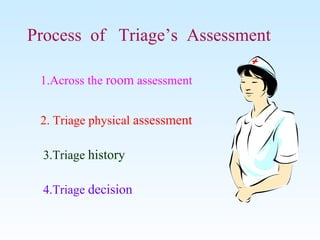
Process  of  Triage’s  Assessment   1.Across the  room  assessment 2. Triage physical  assessment   3.Triage  history   4.Triage  decision
Across the room assessment A – Airway status B – Breathing status C – Circulatory status D - Disability
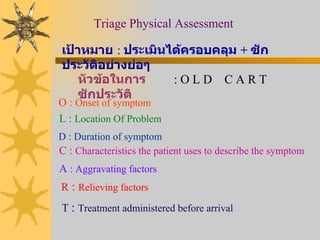
Triage Physical Assessment เป้าหมาย   :  ประเมินได้ครอบคลุม  +  ซักประวัติอย่างย่อๆ หัวข้อในการซักประวัติ   : O L D  C A R T  O :  Onset of symptom L :  Location Of Problem C :  Characteristics the patient uses to describe the symptom  D : Duration of symptom A  : Aggravating factors R  :  Relieving factors T  :  Treatment administered before arrival
Triage History C I A M P E D S C : Chief complaint I : Immunization A : Allergies M : Medication P : Past medical history E : Events surrounding D : Diet  S : Symptom
Triage Decision 1. Immediately life-threatening : 1A or 1B 1A : multiple trauma + life threatening 1B : life threatening 2. Imminently life threatening  3. Potential life-threatening  5. Least urgent 4. Potential serious Australasian  Triage Scale  :  ATS
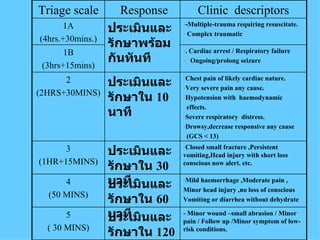
-Multiple-trauma requiring resuscitate. Complex traumatic ประเมินและรักษาพร้อมกันทันที 1A (4hrs.+30mins.) - Minor wound –small abrasion / Minor pain / Follow up /Minor symptom of low-risk conditions. ประเมินและรักษาใน  120  นาที 5 ( 30 MINS) Mild haemorrhage ,Moderate pain , Minor head injury ,no loss of conscious Vomiting or diarrhea without dehydrate ประเมินและรักษาใน  60  นาที 4 (50 MINS) Closed small fracture ,Persistent vomiting,Head injury with short loss conscious now alert. etc. ประเมินและรักษาใน  30  นาที 3 (1HR+15MINS) Chest pain of likely cardiac nature. Very severe pain any cause.  Hypotension with  haemodynamic effects. Severe respiratory  distress. Drowsy,decrease responsive any cause (GCS < 13) ประเมินและรักษาใน  10  นาที 2 (2HRS+30MINS) . Cardiac arrest / Respiratory failure Ongoing/prolong seizure  1B (3hrs+15mins) Clinic  descriptors Response Triage scale
Process of Triage   Nurse 1. Assessment  2. Priority of care  ( Triage category )  3. First aid 5. Public relations 6. Diagnostic , therapeutic intervention 4. Referral 7. Documentation
เครื่องมือที่ใช้ในการ  TRIAGE 1. วิธีการ  Triage  ตามแบบของ  ATS -  ช่วยในการประเมินสถานการณ์ในขณะนี้ -  จัดลำดับความสำคัญของงานและผู้ป่วย -  ให้การพยาบาลผู้ป่วยได้รวดเร็วตรงกับสภาวะของโรค 2.  โปรแกรม  Trend Care  ช่วยคำนวณ  Work load  ช่วยทำนาย อัตรากำลังที่เหมาะสมในแต่ละเดือน โดยใช้  แนวโน้มจากการ  Retrospective  เก็บสถิติยอดผู้ป่วยตามระดับความรุนแรง คำนวณ  HPPD   โดยเฉลี่ยของแผนก


THE END   OF  Triage  scale  Presentation

Triage

  • 1.
    Present by Ms.TANATTAJUNTANAWONG Nurse unit Manager - ER Phyathai 3 T R I A G E
  • 2.
    Triage คืออะไร ? การคัดแยกผู้ป่วยให้ได้รับการรักษาพยาบาลในภาวะฉุกเฉินอย่างมี ประสิทธิภาพ ภายในเวลาที่เหมาะสม ไม่เน้นการวินิจฉัยโรคที่ถูกต้อง แต่ประเมินความต้องการการช่วยเหลือ ปัญหาฉุกเฉินอย่างทันท่วงที ไม่เน้นการติดตามประเมินอาการผู้ป่วยอย่างสม่ำเสมอ แต่ต้องมั่นใจว่า ผู้ป่วยอาการไม่ทรุดลง ในระหว่างการรอคอย
  • 3.
    Process of Triage’s Assessment 1.Across the room assessment 2. Triage physical assessment 3.Triage history 4.Triage decision
  • 4.
    Across the roomassessment A – Airway status B – Breathing status C – Circulatory status D - Disability
  • 5.
    Triage Physical Assessmentเป้าหมาย : ประเมินได้ครอบคลุม + ซักประวัติอย่างย่อๆ หัวข้อในการซักประวัติ : O L D C A R T O : Onset of symptom L : Location Of Problem C : Characteristics the patient uses to describe the symptom D : Duration of symptom A : Aggravating factors R : Relieving factors T : Treatment administered before arrival
  • 6.
    Triage History CI A M P E D S C : Chief complaint I : Immunization A : Allergies M : Medication P : Past medical history E : Events surrounding D : Diet S : Symptom
  • 7.
    Triage Decision 1.Immediately life-threatening : 1A or 1B 1A : multiple trauma + life threatening 1B : life threatening 2. Imminently life threatening 3. Potential life-threatening 5. Least urgent 4. Potential serious Australasian Triage Scale : ATS
  • 8.
    -Multiple-trauma requiring resuscitate.Complex traumatic ประเมินและรักษาพร้อมกันทันที 1A (4hrs.+30mins.) - Minor wound –small abrasion / Minor pain / Follow up /Minor symptom of low-risk conditions. ประเมินและรักษาใน 120 นาที 5 ( 30 MINS) Mild haemorrhage ,Moderate pain , Minor head injury ,no loss of conscious Vomiting or diarrhea without dehydrate ประเมินและรักษาใน 60 นาที 4 (50 MINS) Closed small fracture ,Persistent vomiting,Head injury with short loss conscious now alert. etc. ประเมินและรักษาใน 30 นาที 3 (1HR+15MINS) Chest pain of likely cardiac nature. Very severe pain any cause. Hypotension with haemodynamic effects. Severe respiratory distress. Drowsy,decrease responsive any cause (GCS < 13) ประเมินและรักษาใน 10 นาที 2 (2HRS+30MINS) . Cardiac arrest / Respiratory failure Ongoing/prolong seizure 1B (3hrs+15mins) Clinic descriptors Response Triage scale
  • 9.
    Process of Triage Nurse 1. Assessment 2. Priority of care ( Triage category ) 3. First aid 5. Public relations 6. Diagnostic , therapeutic intervention 4. Referral 7. Documentation

  • 10.
    เครื่องมือที่ใช้ในการ TRIAGE1. วิธีการ Triage ตามแบบของ ATS - ช่วยในการประเมินสถานการณ์ในขณะนี้ - จัดลำดับความสำคัญของงานและผู้ป่วย - ให้การพยาบาลผู้ป่วยได้รวดเร็วตรงกับสภาวะของโรค 2. โปรแกรม Trend Care ช่วยคำนวณ Work load ช่วยทำนาย อัตรากำลังที่เหมาะสมในแต่ละเดือน โดยใช้ แนวโน้มจากการ Retrospective เก็บสถิติยอดผู้ป่วยตามระดับความรุนแรง คำนวณ HPPD โดยเฉลี่ยของแผนก
  • 11.
  • 12.
  • 13.
  • 14.
  • 15.
  • 16.
  • 17.
    THE END OF Triage scale Presentation