Treating with Prism
TARIQ AL FAYAD. M
B.OPTOM @Level
What is STRABISMUS
Crossed eyes, or strabismus, is a
condition in which both eyes do not
look at the same place at the same
time. It usually occurs in people who
have poor eye muscle control or are
very farsighted.
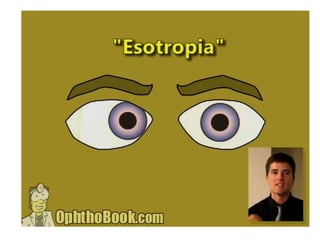
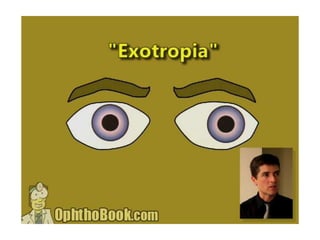
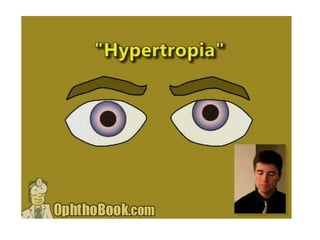
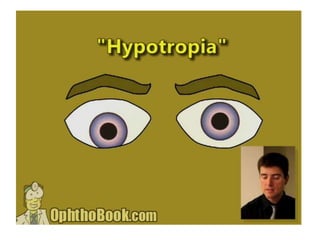
Strabismus is classified by the direction the eye
turns:
Inward turning is called esotropia
Outward turning is called exotropia
Upward turning is called hypertropia
Downward turning is called hypotropia.
How is strabismus treated?
Fresnel prisms
These special lenses have a prescription for
prism power in them. The prisms alter the
light entering the eye and reduce how
much turning the eye must do to view
objects. Sometimes the prisms can
eliminate the eye turning.
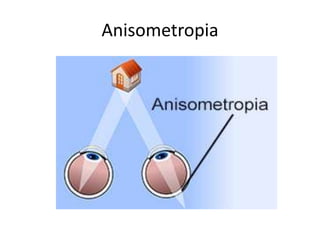
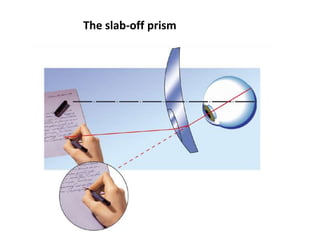
Anisometropia
• They will complain of double Vs while reading
• Due to prismatic effect
• To correct them, Vertical prisms are used in
the lower portion of one lens
• prisms are referred to as slab-off or reverse-
slab prisms
• The slab-off prism is placed on the more
minus or less plus lens,, (adds base-up prism)
• The reverse-slab prism is placed on the more
plus or less minus lens, (adds base-down
prism)
The slab-off prism
Childhood Cranial Nerve Palsies (Third,
Fourth, and Sixth Cranial Nerves)
• early treatment is important to prevent
amblyopia.
• Prisms may be used for smaller amount in
order to maintain binocular function
• Fresnel prisms is recommended prior to
grinding prisms into the child’s lense
• if prism therapy fails, surgery should be
considered.
Prisms for Enhancing Communication
• For patients with no useful vision in the
deviated eye, prisms can be extremely helpful
in improving the appearance of the eyes and
facilitating the patients’ communication and
interaction with others by alleviating
difficulties with eye contact.
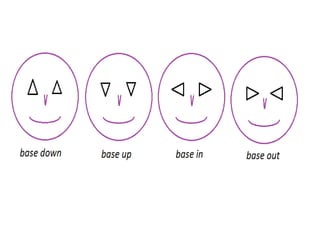
• A prism held opposite the direction of a
correcting (ie, base-in for esotropia and base-
out for exotropia)
Homonymous hemianopia
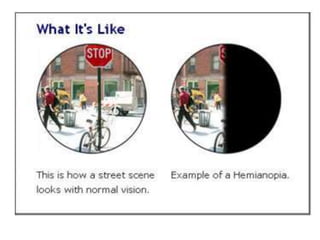
A homonymous hemianopia is the loss of half
of the field of view on the same side in both
eyes.
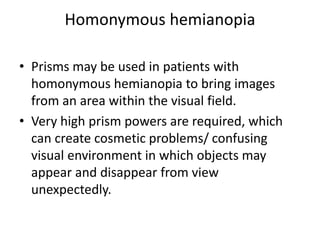
Homonymous hemianopia
• Prisms may be used in patients with
homonymous hemianopia to bring images
from an area within the visual field.
• Very high prism powers are required, which
can create cosmetic problems/ confusing
visual environment in which objects may
appear and disappear from view
unexpectedly.
Nystagmus with head turn
• Patients with a head turn to compensate for
nystagmus can benefit from yoked prisms.
• high prism powers which may lead to
decrease in visual acuity.
• Prescription of bilateral yoked prisms, with
base in the same direction as the head turn,
can keep the patient’s eyes in an eccentric null
position while lessening the head turn.
Head/neck position problems
• patients with severe ankylosing spondylitis,
may benefit from prisms.
• base-up “yoked” prisms can allow for
improvement in straight-ahead vision.
convergence insufficiency
• To resolve convergence, base-out prisms are
used which force the system to work harder to
converge.
• Base-in prisms can be used to artificially align
the eyes for reading; however, their use,
patient will develop stronger convergence on
their own.
Thank You
Blog: tariqalfayad.blogspot.com
Twitter: twitter.com/tariqalfayad

Treating with prism

  • 1.
    Treating with Prism TARIQAL FAYAD. M B.OPTOM @Level
  • 2.
    What is STRABISMUS Crossedeyes, or strabismus, is a condition in which both eyes do not look at the same place at the same time. It usually occurs in people who have poor eye muscle control or are very farsighted.
  • 3.
    Strabismus is classifiedby the direction the eye turns: Inward turning is called esotropia Outward turning is called exotropia Upward turning is called hypertropia Downward turning is called hypotropia.
  • 4.
    How is strabismustreated? Fresnel prisms These special lenses have a prescription for prism power in them. The prisms alter the light entering the eye and reduce how much turning the eye must do to view objects. Sometimes the prisms can eliminate the eye turning.
  • 10.
  • 11.
    • They willcomplain of double Vs while reading • Due to prismatic effect • To correct them, Vertical prisms are used in the lower portion of one lens • prisms are referred to as slab-off or reverse- slab prisms
  • 12.
    • The slab-offprism is placed on the more minus or less plus lens,, (adds base-up prism) • The reverse-slab prism is placed on the more plus or less minus lens, (adds base-down prism)
  • 13.
  • 14.
    Childhood Cranial NervePalsies (Third, Fourth, and Sixth Cranial Nerves) • early treatment is important to prevent amblyopia. • Prisms may be used for smaller amount in order to maintain binocular function • Fresnel prisms is recommended prior to grinding prisms into the child’s lense • if prism therapy fails, surgery should be considered.
  • 15.
    Prisms for EnhancingCommunication • For patients with no useful vision in the deviated eye, prisms can be extremely helpful in improving the appearance of the eyes and facilitating the patients’ communication and interaction with others by alleviating difficulties with eye contact. • A prism held opposite the direction of a correcting (ie, base-in for esotropia and base- out for exotropia)
  • 16.
    Homonymous hemianopia A homonymoushemianopia is the loss of half of the field of view on the same side in both eyes.
  • 18.
    Homonymous hemianopia • Prismsmay be used in patients with homonymous hemianopia to bring images from an area within the visual field. • Very high prism powers are required, which can create cosmetic problems/ confusing visual environment in which objects may appear and disappear from view unexpectedly.
  • 19.
    Nystagmus with headturn • Patients with a head turn to compensate for nystagmus can benefit from yoked prisms. • high prism powers which may lead to decrease in visual acuity. • Prescription of bilateral yoked prisms, with base in the same direction as the head turn, can keep the patient’s eyes in an eccentric null position while lessening the head turn.
  • 21.
    Head/neck position problems •patients with severe ankylosing spondylitis, may benefit from prisms. • base-up “yoked” prisms can allow for improvement in straight-ahead vision.
  • 22.
    convergence insufficiency • Toresolve convergence, base-out prisms are used which force the system to work harder to converge. • Base-in prisms can be used to artificially align the eyes for reading; however, their use, patient will develop stronger convergence on their own.
  • 23.