Roll Number-90,91
Definition
 A transverse lie occurs when the fetal long
axis lies perpendicular to that of the
maternal long axis and classically results in
a shoulder presentation.
Position
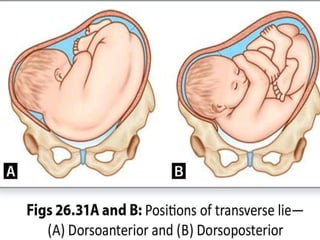
The position is determined by the direction of
the back, which is a denominator.
1. Dorsoanterior-most common (60%).
2. Dorsoposterior-increased risk of arm
prolapse
3. Dorsosuperior
4. Dorsoinferior
Incidence
 Incidence- 1 in 200 births
 More common in premature and macerated
fetuses
 5 times more common in multiparae than
primigravidae
 40% of twin pregnancy cases
Etiology
 Multiparity
 Prematurity
 Multiple pregnancy
 Polyhydramnios
 Contracted pelvic
 Placenta previa
 Pelvic tumors
 Congenital malformation of the uterus
 IUFD
Diagnosis of transverse lie
Abdominal Examination
Inspection
 Abdomen – asymmetrical , looks broader
Palpation
 The fundal height is smaller than her
gestational age
 Breech or head is not palpable on fundal
grip
 On lateral grip, breech on one side of
midline and head on the other side
 Palpation over the pelvic brim will reveal an
‘empty’ pelvic.
Auscultation
 FHS – heard easily below umbilicus in
dorsoanterior position
 In dorsoposterior position, FHS may be
heard at high level or indistinct
Vaginal Examination
 During pregnancy, presenting part is too
high that it cannot be identified properly but
one can feel some soft parts.
 During labour, elongated bag of the
membranes can be felt if it does not rupture
prematurely.
The shoulder is identified by palpating the
following parts
 acromion process
 the scapula
 the clavicle
 the axilla
Ultrasound Scan
 Transverse lie is confirmed by ultrasound
scan beyond 36 weeks
 Spontaneous version – before 36 weeks
Risk of transverse lie
The woman presenting at term with a
transverse lie is at potential risk of
 cord prolapse following spontaneous rupture
of the membranes
 Prolapse of the hand, shoulder or foot
Clinical course of labour
 No mechanism of labour for transverse lie and
an average size baby fails to pass through an
average size pelvis.
 If the lie remains uncorrected and the labour is
left uncared for, the following sequence of
events may occur.
 Unfavourable events
 Favourable events
UNFAVOURABLE EVENTS
 Common
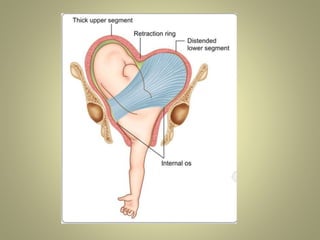
 The hand of the corresponding shoulder may
be prolapsed with or without a loop of cord
 With increasing uterine contraction, the
shoulder becomes wedged and impacted into
the pelvic and the prolapsed arm becomes
swollen and cyanosed.
Complications are impacted shoulder
obstructed labour rupture of uterus with
clinical evidence of
 Dehydration
 Ketoacidosis
 Shock
 sepsis
FAVOURABLE EVENTS
 Rare
i. Spontaneous version
ii. Spontaneous evolution
iii. Spontaneous expulsion
Prognosis
 In a well supervised pregnancy and labour,
the maternal and the fetal outlook is not
much unfavourable with the increased use of
cesearean section.
 In uncared pregnancy and labour, the
maternal risk is increased due to obstructed
labour. Fetal risk is increased due to cord
prolapsed.
Management of transverse lie
ECV should be done in all cases beyond 36 weeks.
Contraindications to ECV
 Fetal abnormality
 Placenta praevia
 Oligohydramnios or polyhydramnios
 Previous scar on the uterus
 Multiple gestation
 PE or hypertension
If version fails or contraindicated:
 Admission at 37th wk because risk of early
rupture of the membranes and cord prolapse
is very much there. Elective cesarean section
is the preferred mode of delivery.
 Vaginal delivery may be allowed in dead
or small size fetus under supervision.
Patient seen in labour
Early labour:
 External cephalic version: should be tried in
all cases if no contraindication.
 If version fails or contraindicated, cesarean
section is the preferred method of delivery.
Late labour
 Delivered by cesarean section whether the
baby is alive or dead
In modern practice , internal version is not
recommended except in the case of second twin.
Unstable lie
This is the condition where the presentation of
the fetus is constantly changed even beyond
36th week of pregnancy when it should have
been stabilized.
Causes
1) Grand multipara with the lack of uterine
tone and pendulous abdomen- the most
common cause
2) Polyhydramnios
3) Contracted pelvis
4) Placenta previa
5) Pelvic tumor
Management of unstable lie
Antenatal management
 At each AN visit , the presentation and the
lie are to be checked.
 External cephalic version: to be done if no
contraindication.
Time of admission
 At 37th week
 Premature or early rupture of the membrane
with cord prolapse is a real danger with
oblique lie.
Investigation
Ultrasound abdomen and pelvis to exclude
 Placenta praevia
 Contracted pelvis
 Congenital malformation of fetus
Mode of delivery
(1) Cesarean section
The normal plan would be to deliver by
cesarean section if the presentation is not
cephalic in early labour or of spontaneous
rupture of membrane occurs.
(2) Vaginal delivery
ECV is done ( if not contraindicated) after 37
weeks. Oxytocin infusion is started to initiate
effective uterine contractions. This is followed
by low rupture of the membranes. Labour is
monitored for successful vaginal delivery.

Transverse lie and unstable lie

  • 1.
  • 2.
    Definition  A transverselie occurs when the fetal long axis lies perpendicular to that of the maternal long axis and classically results in a shoulder presentation.
  • 3.
    Position The position isdetermined by the direction of the back, which is a denominator. 1. Dorsoanterior-most common (60%). 2. Dorsoposterior-increased risk of arm prolapse 3. Dorsosuperior 4. Dorsoinferior
  • 5.
    Incidence  Incidence- 1in 200 births  More common in premature and macerated fetuses  5 times more common in multiparae than primigravidae  40% of twin pregnancy cases
  • 6.
    Etiology  Multiparity  Prematurity Multiple pregnancy  Polyhydramnios  Contracted pelvic  Placenta previa  Pelvic tumors  Congenital malformation of the uterus  IUFD
  • 7.
    Diagnosis of transverselie Abdominal Examination Inspection  Abdomen – asymmetrical , looks broader
  • 8.
    Palpation  The fundalheight is smaller than her gestational age  Breech or head is not palpable on fundal grip  On lateral grip, breech on one side of midline and head on the other side  Palpation over the pelvic brim will reveal an ‘empty’ pelvic.
  • 9.
    Auscultation  FHS –heard easily below umbilicus in dorsoanterior position  In dorsoposterior position, FHS may be heard at high level or indistinct
  • 10.
    Vaginal Examination  Duringpregnancy, presenting part is too high that it cannot be identified properly but one can feel some soft parts.  During labour, elongated bag of the membranes can be felt if it does not rupture prematurely.
  • 11.
    The shoulder isidentified by palpating the following parts  acromion process  the scapula  the clavicle  the axilla
  • 12.
    Ultrasound Scan  Transverselie is confirmed by ultrasound scan beyond 36 weeks  Spontaneous version – before 36 weeks
  • 13.
    Risk of transverselie The woman presenting at term with a transverse lie is at potential risk of  cord prolapse following spontaneous rupture of the membranes  Prolapse of the hand, shoulder or foot
  • 14.
    Clinical course oflabour  No mechanism of labour for transverse lie and an average size baby fails to pass through an average size pelvis.  If the lie remains uncorrected and the labour is left uncared for, the following sequence of events may occur.  Unfavourable events  Favourable events
  • 15.
    UNFAVOURABLE EVENTS  Common The hand of the corresponding shoulder may be prolapsed with or without a loop of cord  With increasing uterine contraction, the shoulder becomes wedged and impacted into the pelvic and the prolapsed arm becomes swollen and cyanosed.
  • 16.
    Complications are impactedshoulder obstructed labour rupture of uterus with clinical evidence of  Dehydration  Ketoacidosis  Shock  sepsis
  • 18.
    FAVOURABLE EVENTS  Rare i.Spontaneous version ii. Spontaneous evolution iii. Spontaneous expulsion
  • 19.
    Prognosis  In awell supervised pregnancy and labour, the maternal and the fetal outlook is not much unfavourable with the increased use of cesearean section.  In uncared pregnancy and labour, the maternal risk is increased due to obstructed labour. Fetal risk is increased due to cord prolapsed.
  • 20.
    Management of transverselie ECV should be done in all cases beyond 36 weeks. Contraindications to ECV  Fetal abnormality  Placenta praevia  Oligohydramnios or polyhydramnios  Previous scar on the uterus  Multiple gestation  PE or hypertension
  • 21.
    If version failsor contraindicated:  Admission at 37th wk because risk of early rupture of the membranes and cord prolapse is very much there. Elective cesarean section is the preferred mode of delivery.  Vaginal delivery may be allowed in dead or small size fetus under supervision.
  • 22.
    Patient seen inlabour Early labour:  External cephalic version: should be tried in all cases if no contraindication.  If version fails or contraindicated, cesarean section is the preferred method of delivery.
  • 23.
    Late labour  Deliveredby cesarean section whether the baby is alive or dead In modern practice , internal version is not recommended except in the case of second twin.
  • 24.
    Unstable lie This isthe condition where the presentation of the fetus is constantly changed even beyond 36th week of pregnancy when it should have been stabilized.
  • 25.
    Causes 1) Grand multiparawith the lack of uterine tone and pendulous abdomen- the most common cause 2) Polyhydramnios 3) Contracted pelvis 4) Placenta previa 5) Pelvic tumor
  • 26.
    Management of unstablelie Antenatal management  At each AN visit , the presentation and the lie are to be checked.  External cephalic version: to be done if no contraindication.
  • 27.
    Time of admission At 37th week  Premature or early rupture of the membrane with cord prolapse is a real danger with oblique lie.
  • 28.
    Investigation Ultrasound abdomen andpelvis to exclude  Placenta praevia  Contracted pelvis  Congenital malformation of fetus
  • 29.
    Mode of delivery (1)Cesarean section The normal plan would be to deliver by cesarean section if the presentation is not cephalic in early labour or of spontaneous rupture of membrane occurs.
  • 30.
    (2) Vaginal delivery ECVis done ( if not contraindicated) after 37 weeks. Oxytocin infusion is started to initiate effective uterine contractions. This is followed by low rupture of the membranes. Labour is monitored for successful vaginal delivery.