Transportation injuries
Dr Nikita Prabhakaran
Senior Resident
Classification
• (1) Pedestrian injuries
• (2) Injuries sustained by a cyclist
• (3) Injuries sustained by a motorcyclist
• (4) Injuries sustained by occupants
Pedestrian injuries
• Can be classified into
• (a) Primary impact injury
• (b) secondary impact injury
• (c) secondary injuries
Primary impact Injury
• Occur when a pedestrian is first hit by the
vehicle
• Injuries depend on:
 on the relative position of the victim
 height of the victim
 height of the bumper
 action of the pedestrian- crossing, walking, etc
 position of hit
Injuries sustained:
• In adults,
• usually it is the legs
• leg bones get fractured, BUMPER FRACTURE
• Hit from behindboth bones fractured in both legs
• Hit while crossing usually in one leg
• In children, usually femur is affected
1. Bumper fracture
• Usually a wedge shaped/ spiral fracture
• But if the leg is lifted, transverse
• Distance of the fracture from heel height of
the bumper
• MLI: identification of the vehicle
• direction of hit apex of the wedge in th
direction of force
• spiral fracture, distal fragment apex-
point towards direction of force
• action of the victim can be guessed
Other primary impact injuries
2. Violent bending thoraco lumbar dislocation
3. Contact with hot parts  may cause burns on
that side
Secondary impact
• Feet slides forward and patient rotates back
on the vehicle
• Scooped up victim thrown over the bonnet
Injuries produced
• Head hit the windscreen contusion/ haemorrhages
• Face windscreen may break
• glass pieces may cause penetrating injuries in the
vital structures/ face
• Chest bonnet fractures
•  tortional injuries to aorta-> just below origin of
subclavian artery
•  heart rupture
• Abdomen liver / spleen rupture
• Pelvis: fracture
MLI
• When vehicle is in high speed rather than
person being hit on the bonnet
• may be thrown into the air and will fall on
the back part of the vehicle
• Children very rarely may occur
• as centre of gravity is lower
Secondary injuries
• Thrown out on the ground
• May hit some objects and can sustain fatal
injuries
• Injuries extensive graze abrasions
•  fracture of vertebrae due to hyperflexion
and hyper extension
•  fatal internal injuries
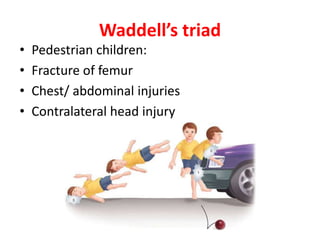
Waddell’s triad
• Pedestrian children:
• Fracture of femur
• Chest/ abdominal injuries
• Contralateral head injury
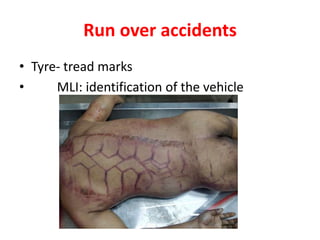
Run over accidents
• Tyre- tread marks
• MLI: identification of the vehicle
Whiplash injury
• Due to acceleration- deceleration force
• Applied to the passenger
• Who is usually on the front seat
• Hit from behind sudden acceleration
hyperextension followed by hyperflexion
• Sudden breaking hyperflexion followed by
hyperextension
Injury caused
• Fracture dislocation of atlanto-occipital joint
• C1-C2
• C5-C6
• Accompanied by severe contusions of spinal
cord/ laceration
• MLI: survivors- bedridden
• can solely be the cause of death
Seat belt syndrome
• Severe collisions chest and abdominal
injuries may be caused
• Abrasions, contusions, haematoma
• Lacerations of spleen, liver, urinary bladder
• Mediastinal injuries/ chest wall trauma
• Mesentric laceration
Hinge fracture/ motorcyclist fracture
Railway spine
• Concussion of spinal cord
• Due to momentary collision of the spinal cord against
the vertebral canal
• Due to violent deceleration/ acceleration
• Rotational injury
• Incidence: railway and motor car collision
• severe blow to the neck
• falls
• Temporary paralysis
• Focal paralysis
• Symptoms may appear suddenly/ after few
hours
• Headache, giddiness, weakness in limbs,
sleeplessness
• May resolve by 48 hours or may prolong
THANK YOU

Transportation injuries.pptx

  • 1.
    Transportation injuries Dr NikitaPrabhakaran Senior Resident
  • 2.
    Classification • (1) Pedestrianinjuries • (2) Injuries sustained by a cyclist • (3) Injuries sustained by a motorcyclist • (4) Injuries sustained by occupants
  • 3.
    Pedestrian injuries • Canbe classified into • (a) Primary impact injury • (b) secondary impact injury • (c) secondary injuries
  • 5.
    Primary impact Injury •Occur when a pedestrian is first hit by the vehicle • Injuries depend on:  on the relative position of the victim  height of the victim  height of the bumper  action of the pedestrian- crossing, walking, etc  position of hit
  • 6.
    Injuries sustained: • Inadults, • usually it is the legs • leg bones get fractured, BUMPER FRACTURE • Hit from behindboth bones fractured in both legs • Hit while crossing usually in one leg • In children, usually femur is affected
  • 7.
    1. Bumper fracture •Usually a wedge shaped/ spiral fracture • But if the leg is lifted, transverse • Distance of the fracture from heel height of the bumper
  • 8.
    • MLI: identificationof the vehicle • direction of hit apex of the wedge in th direction of force • spiral fracture, distal fragment apex- point towards direction of force • action of the victim can be guessed
  • 9.
    Other primary impactinjuries 2. Violent bending thoraco lumbar dislocation 3. Contact with hot parts  may cause burns on that side
  • 10.
    Secondary impact • Feetslides forward and patient rotates back on the vehicle • Scooped up victim thrown over the bonnet
  • 11.
    Injuries produced • Headhit the windscreen contusion/ haemorrhages • Face windscreen may break • glass pieces may cause penetrating injuries in the vital structures/ face • Chest bonnet fractures •  tortional injuries to aorta-> just below origin of subclavian artery •  heart rupture • Abdomen liver / spleen rupture • Pelvis: fracture
  • 12.
    MLI • When vehicleis in high speed rather than person being hit on the bonnet • may be thrown into the air and will fall on the back part of the vehicle • Children very rarely may occur • as centre of gravity is lower
  • 13.
    Secondary injuries • Thrownout on the ground • May hit some objects and can sustain fatal injuries • Injuries extensive graze abrasions •  fracture of vertebrae due to hyperflexion and hyper extension •  fatal internal injuries
  • 14.
    Waddell’s triad • Pedestrianchildren: • Fracture of femur • Chest/ abdominal injuries • Contralateral head injury
  • 15.
    Run over accidents •Tyre- tread marks • MLI: identification of the vehicle
  • 16.
    Whiplash injury • Dueto acceleration- deceleration force • Applied to the passenger • Who is usually on the front seat • Hit from behind sudden acceleration hyperextension followed by hyperflexion • Sudden breaking hyperflexion followed by hyperextension
  • 17.
    Injury caused • Fracturedislocation of atlanto-occipital joint • C1-C2 • C5-C6 • Accompanied by severe contusions of spinal cord/ laceration • MLI: survivors- bedridden • can solely be the cause of death
  • 18.
    Seat belt syndrome •Severe collisions chest and abdominal injuries may be caused • Abrasions, contusions, haematoma • Lacerations of spleen, liver, urinary bladder • Mediastinal injuries/ chest wall trauma • Mesentric laceration
  • 19.
  • 20.
    Railway spine • Concussionof spinal cord • Due to momentary collision of the spinal cord against the vertebral canal • Due to violent deceleration/ acceleration • Rotational injury • Incidence: railway and motor car collision • severe blow to the neck • falls
  • 21.
    • Temporary paralysis •Focal paralysis • Symptoms may appear suddenly/ after few hours • Headache, giddiness, weakness in limbs, sleeplessness • May resolve by 48 hours or may prolong
  • 22.