Transport
Atul Abhiman Agalawe
(M. Com, B. Ed , D.B.M)
Transportat
ion
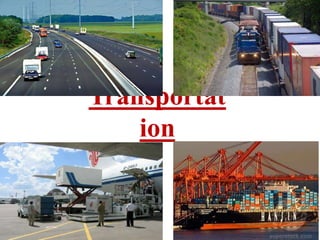
• Transportation is the movement of people,
animals and goods from one location to another
location.
• Modes of transport include air, rail, road, water,
cable, pipeline and space.
• Transport is one of the important aids to trade. It
makes possible production and distribution of
goods and services. It makes possible production
because of transfer of raw materials and other
requirements from the place of supply to the
production. It makes possible distribution
because it supplies the goods from the place of
production to the place of consumption.
Role /Functions/Importance
• Helps in Production
• Expanding Market
• Create Place Utility
• Create Employment
• Stability in Price
• Improves Standard of
Living
• Cost Reduction
• Provides helps in
Emergency
• National Defence
• Economic
Development
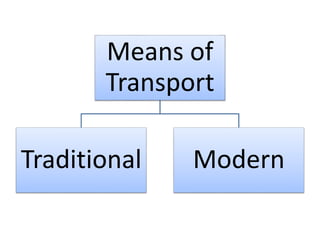
Means of
Transport
Traditional Modern
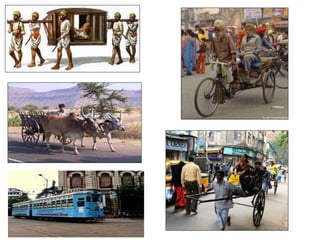
Traditional Means of Transport
• Walking
• Palanquin
• Bullock Cart and Horse
Carriage
• Bicycles
• Hand Puller
• Cycle rickshaw
• Trams
Modern Means of Transport
• Road Transport
• Rail Transport
• Water Transport
• Air Transport
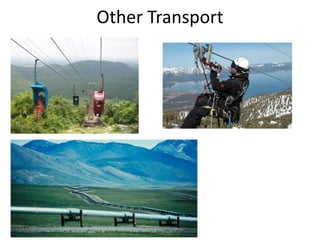
• Ropeway Transport
• Pipeline Transport
• Cable Transport
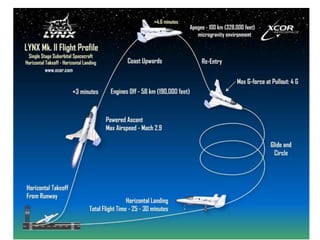
• Spaceflight
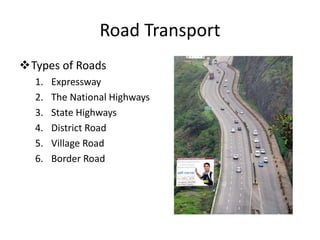
Road Transport
Types of Roads
1. Expressway
2. The National Highways
3. State Highways
4. District Road
5. Village Road
6. Border Road
Roads are the means that connect one place to another place on the surface
of land by using different vehicles on road like bullock-carts, cycles, motor
cycle, cars trucks, buses etc.
• Advantages
1. Door-to- door Service
2. Economical for short
Distance
3. Less Overhead Cost
4. Flexibility
5. Low Investment
6. Wider Coverage
7. Suitability
• Disadvantages
1. Not Suitable for Bulky
Goods
2. Uneconomical For Long
Distance
3. Limited Speed
4. Pollution
5. Less Reliable During
Monsoon
6. More Accidents
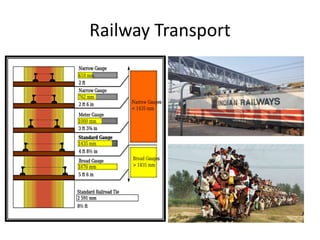
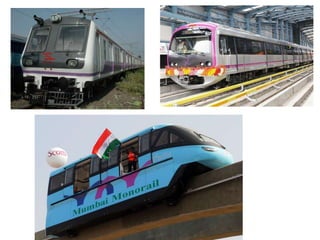
Railway Transport
Transportation of goods and passengers on rail track through trains is
call Rail Transport
Advantages
1. Convenient for Long
distance
2. Faster than Road
Transport
3. Suitable for Bulky Goods
4. Full Protection of Goods
5. Uniform Rates
6. Support to Business
7. Regularity
Disadvantages
1. Huge Investment and
Maintenance Cost
2. Inflexibility
3. Govt. Monopoly
4. Lacks of Door-to-Door
5. Less Coverage
6. Expensive for short
Distance
7. Heavy Loss in Accidents
Water Transport
1. Inland Water Transport
a) River Transport
b) Canal Transport
2. Sea Transport
a) Coastal Shipping
b) Overseas Shipping
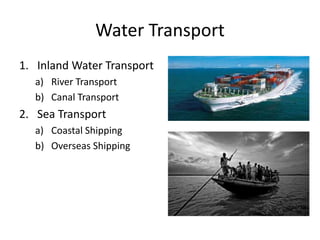
Water Transport refers to movement of goods and passengers on
waterways by using various means like boats, steamers, ships,
launchers, etc
• Advantage
1. Economical
2. Suitable for bulky and
Heavy Goods
3. Flexibility
4. Less Accidents
5. Huge Carrying Capacity
6. Easy Loading
7. Least Pollution
• Disadvantages
1. Huge Investment in
means of Transport
2. Perils of Seas
3. Lacks Door-to-Door
Service
4. Risk During war times
5. Limited Inland Coverage
6. Very Slow Speed
7. Seasonable Unsuitability
Air Transport
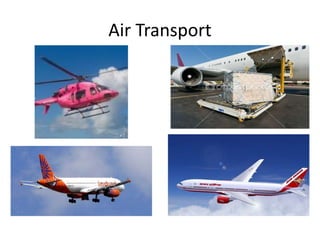
Air Transport refers to movement of goods and passengers through
airways by using aircraft, cargo aircraft, helicopter, etc.
• Advantages
1. High Speed
2. Suitable for
Light/Valuable Articles
3. Comfortable Journey
4. Vital During Emergencies
5. Safety
6. Easy Access
7. National Defence
• Disadvantages
1. Risk in Transportation
2. Limited Carrying Capacity
3. Heavy Maintenance Cost
4. High Overhead Cost
5. Costliest Form of
Transport
6. Restrictions Due to
International Law
7. Unreliable
Other Transport
Transport

Transport

  • 1.
  • 2.
  • 3.
    • Transportation isthe movement of people, animals and goods from one location to another location. • Modes of transport include air, rail, road, water, cable, pipeline and space. • Transport is one of the important aids to trade. It makes possible production and distribution of goods and services. It makes possible production because of transfer of raw materials and other requirements from the place of supply to the production. It makes possible distribution because it supplies the goods from the place of production to the place of consumption.
  • 4.
    Role /Functions/Importance • Helpsin Production • Expanding Market • Create Place Utility • Create Employment • Stability in Price • Improves Standard of Living • Cost Reduction • Provides helps in Emergency • National Defence • Economic Development
  • 5.
  • 6.
    Traditional Means ofTransport • Walking • Palanquin • Bullock Cart and Horse Carriage • Bicycles • Hand Puller • Cycle rickshaw • Trams
  • 8.
    Modern Means ofTransport • Road Transport • Rail Transport • Water Transport • Air Transport • Ropeway Transport • Pipeline Transport • Cable Transport • Spaceflight
  • 9.
    Road Transport Types ofRoads 1. Expressway 2. The National Highways 3. State Highways 4. District Road 5. Village Road 6. Border Road
  • 10.
    Roads are themeans that connect one place to another place on the surface of land by using different vehicles on road like bullock-carts, cycles, motor cycle, cars trucks, buses etc. • Advantages 1. Door-to- door Service 2. Economical for short Distance 3. Less Overhead Cost 4. Flexibility 5. Low Investment 6. Wider Coverage 7. Suitability • Disadvantages 1. Not Suitable for Bulky Goods 2. Uneconomical For Long Distance 3. Limited Speed 4. Pollution 5. Less Reliable During Monsoon 6. More Accidents
  • 11.
  • 12.
    Transportation of goodsand passengers on rail track through trains is call Rail Transport Advantages 1. Convenient for Long distance 2. Faster than Road Transport 3. Suitable for Bulky Goods 4. Full Protection of Goods 5. Uniform Rates 6. Support to Business 7. Regularity Disadvantages 1. Huge Investment and Maintenance Cost 2. Inflexibility 3. Govt. Monopoly 4. Lacks of Door-to-Door 5. Less Coverage 6. Expensive for short Distance 7. Heavy Loss in Accidents
  • 14.
    Water Transport 1. InlandWater Transport a) River Transport b) Canal Transport 2. Sea Transport a) Coastal Shipping b) Overseas Shipping
  • 15.
    Water Transport refersto movement of goods and passengers on waterways by using various means like boats, steamers, ships, launchers, etc • Advantage 1. Economical 2. Suitable for bulky and Heavy Goods 3. Flexibility 4. Less Accidents 5. Huge Carrying Capacity 6. Easy Loading 7. Least Pollution • Disadvantages 1. Huge Investment in means of Transport 2. Perils of Seas 3. Lacks Door-to-Door Service 4. Risk During war times 5. Limited Inland Coverage 6. Very Slow Speed 7. Seasonable Unsuitability
  • 16.
  • 17.
    Air Transport refersto movement of goods and passengers through airways by using aircraft, cargo aircraft, helicopter, etc. • Advantages 1. High Speed 2. Suitable for Light/Valuable Articles 3. Comfortable Journey 4. Vital During Emergencies 5. Safety 6. Easy Access 7. National Defence • Disadvantages 1. Risk in Transportation 2. Limited Carrying Capacity 3. Heavy Maintenance Cost 4. High Overhead Cost 5. Costliest Form of Transport 6. Restrictions Due to International Law 7. Unreliable
  • 18.