Fellow Constructor S.a.r.l                                                            10/01/2012


                                    Translucent Concrete

Light transmitting concrete (LiTraCon), also known as translucent concrete, is the brightest
building material development in recent years; it is one of the newest, most functional and
revolutionary elements in green construction materials.


Originally developed by Hungarian architect, Aron Losonczi, in 2001, light permitting concrete is
produced by embedding 4% to 5% optical glass fibers (by volume) into the concrete mixture.
Having a small size, the fibers blend into concrete and become a component of the material
similar to small pieces of aggregate. Light-transmitting concrete could reach a compressive
strength of 50 MPa.

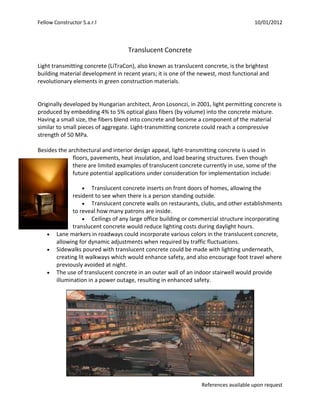
Besides the architectural and interior design appeal, light-transmitting concrete is used in
              floors, pavements, heat insulation, and load bearing structures. Even though
              there are limited examples of translucent concrete currently in use, some of the
              future potential applications under consideration for implementation include:

                       Translucent concrete inserts on front doors of homes, allowing the
               resident to see when there is a person standing outside.
                       Translucent concrete walls on restaurants, clubs, and other establishments
               to reveal how many patrons are inside.
                       Ceilings of any large office building or commercial structure incorporating
               translucent concrete would reduce lighting costs during daylight hours.
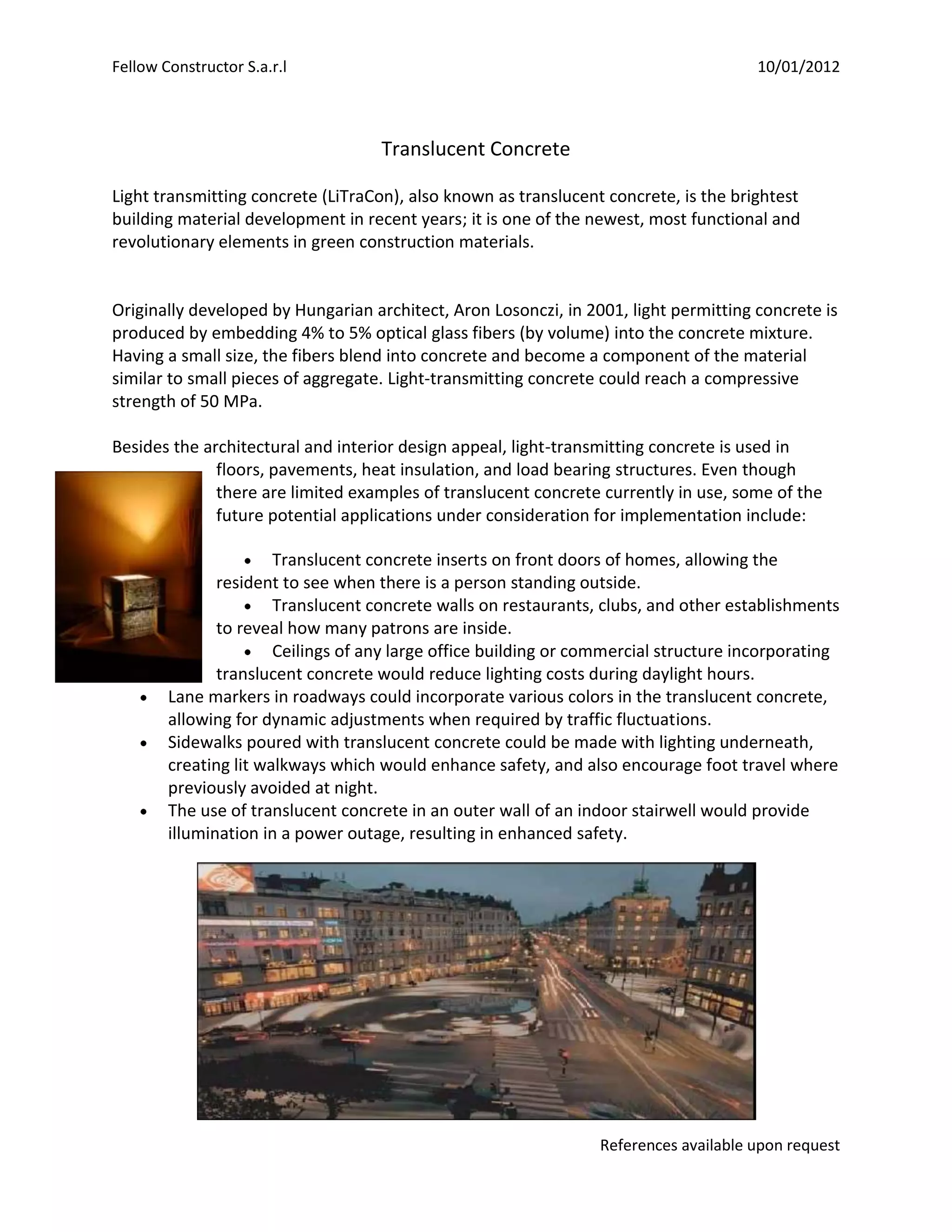
        Lane markers in roadways could incorporate various colors in the translucent concrete,
        allowing for dynamic adjustments when required by traffic fluctuations.
        Sidewalks poured with translucent concrete could be made with lighting underneath,
        creating lit walkways which would enhance safety, and also encourage foot travel where
        previously avoided at night.
        The use of translucent concrete in an outer wall of an indoor stairwell would provide
        illumination in a power outage, resulting in enhanced safety.


                                                                 References available upon request
Fellow Constructor S.a.r.l                                                                   10/01/2012


        Speed bumps in parking lots and driveways could be illuminated from below, making
        them more visible and therefore more effective.
        Subways using this material could be illuminated with daylight.


Greater day lighting means less electrical lighting, less energy use, less cost, less energy-related
emissions. Last but not least, “LiTraCon” matches conventional concrete in terms of strength,
insulation, and sustainability.

On the other hand, the product’s high cost due to expensive raw material and unavailability for
in situ casting represent some of the main drawbacks. The complex manufacturing process of
this product eliminates the possibility of using it on site: light transmission is directly related to
proper alignment of fibers; any deviation from the application technique would result in
ordinary concrete.

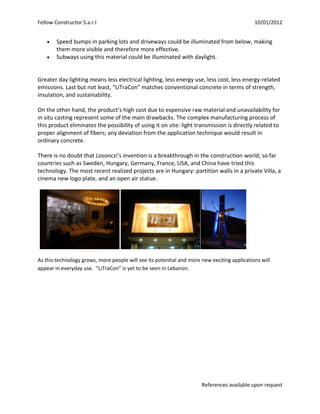
There is no doubt that Losonczi’s invention is a breakthrough in the construction world; so far
countries such as Sweden, Hungary, Germany, France, USA, and China have tried this
technology. The most recent realized projects are in Hungary: partition walls in a private Villa, a
cinema new logo plate, and an open air statue.


As this technology grows, more people will see its potential and more new exciting applications will
appear in everyday use. “LiTraCon” is yet to be seen in Lebanon.


                                                                      References available upon request

Translucent concrete

  • 1.
    Fellow Constructor S.a.r.l 10/01/2012 Translucent Concrete Light transmitting concrete (LiTraCon), also known as translucent concrete, is the brightest building material development in recent years; it is one of the newest, most functional and revolutionary elements in green construction materials. Originally developed by Hungarian architect, Aron Losonczi, in 2001, light permitting concrete is produced by embedding 4% to 5% optical glass fibers (by volume) into the concrete mixture. Having a small size, the fibers blend into concrete and become a component of the material similar to small pieces of aggregate. Light-transmitting concrete could reach a compressive strength of 50 MPa. Besides the architectural and interior design appeal, light-transmitting concrete is used in floors, pavements, heat insulation, and load bearing structures. Even though there are limited examples of translucent concrete currently in use, some of the future potential applications under consideration for implementation include: Translucent concrete inserts on front doors of homes, allowing the resident to see when there is a person standing outside. Translucent concrete walls on restaurants, clubs, and other establishments to reveal how many patrons are inside. Ceilings of any large office building or commercial structure incorporating translucent concrete would reduce lighting costs during daylight hours. Lane markers in roadways could incorporate various colors in the translucent concrete, allowing for dynamic adjustments when required by traffic fluctuations. Sidewalks poured with translucent concrete could be made with lighting underneath, creating lit walkways which would enhance safety, and also encourage foot travel where previously avoided at night. The use of translucent concrete in an outer wall of an indoor stairwell would provide illumination in a power outage, resulting in enhanced safety. References available upon request
  • 2.
    Fellow Constructor S.a.r.l 10/01/2012 Speed bumps in parking lots and driveways could be illuminated from below, making them more visible and therefore more effective. Subways using this material could be illuminated with daylight. Greater day lighting means less electrical lighting, less energy use, less cost, less energy-related emissions. Last but not least, “LiTraCon” matches conventional concrete in terms of strength, insulation, and sustainability. On the other hand, the product’s high cost due to expensive raw material and unavailability for in situ casting represent some of the main drawbacks. The complex manufacturing process of this product eliminates the possibility of using it on site: light transmission is directly related to proper alignment of fibers; any deviation from the application technique would result in ordinary concrete. There is no doubt that Losonczi’s invention is a breakthrough in the construction world; so far countries such as Sweden, Hungary, Germany, France, USA, and China have tried this technology. The most recent realized projects are in Hungary: partition walls in a private Villa, a cinema new logo plate, and an open air statue. As this technology grows, more people will see its potential and more new exciting applications will appear in everyday use. “LiTraCon” is yet to be seen in Lebanon. References available upon request