PRESENTED BY:
ANISH DHAKAL (ARYAN)
26TH MARCH, 2019
Outline
Introduction
Aetiology
Clinical Features
Differential Diagnosis
Investigations
Management
Introduction
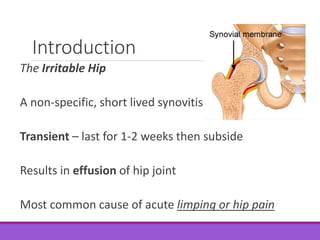
The Irritable Hip
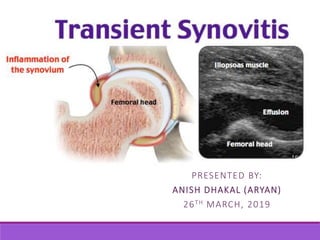
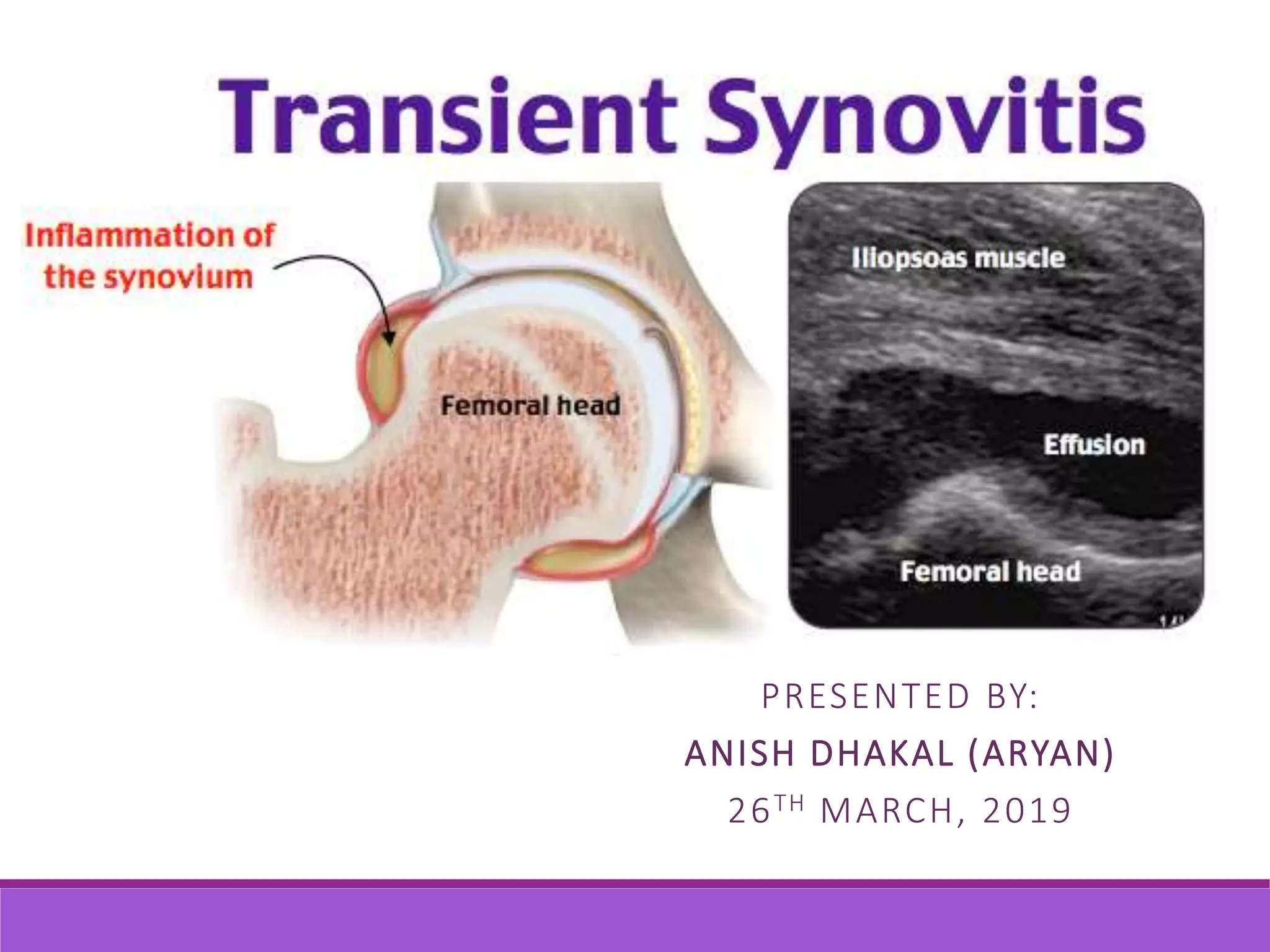
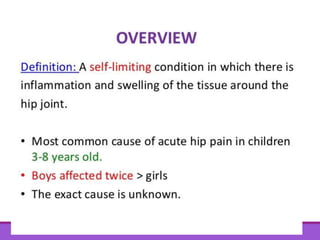
A non-specific, short lived synovitis
Transient – last for 1-2 weeks then subside
Results in effusion of hip joint
Most common cause of acute limping or hip pain
Aetiology
Exact cause not known
Viral infections, trauma and allergy
Leads to synovial effusion  Increased intra-articular pressure
Clinical Features
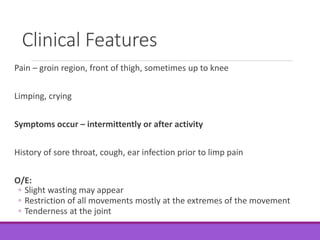
Pain – groin region, front of thigh, sometimes up to knee
Limping, crying
Symptoms occur – intermittently or after activity
History of sore throat, cough, ear infection prior to limp pain
O/E:
◦ Slight wasting may appear
◦ Restriction of all movements mostly at the extremes of the movement
◦ Tenderness at the joint
How to diagnose?
Mostly based on clinical features
Investigations – mostly done to rule out serious conditions
1. CBC, ESR, CRP : usually normal or may be raised
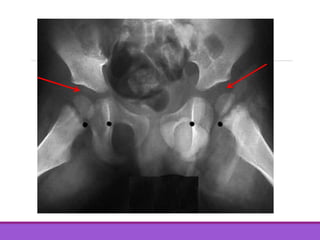
2. X-ray : increased joint space as compared to
unaffected side
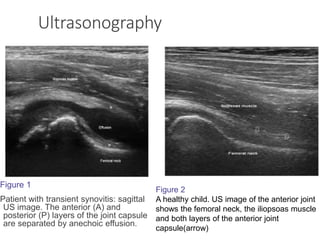
3. USG : effusion (capsular distention) and subluxation
of femoral head may appear
Ultrasonography
Figure 1
Patient with transient synovitis: sagittal
US image. The anterior (A) and
posterior (P) layers of the joint capsule
are separated by anechoic effusion.
Figure 2
A healthy child. US image of the anterior joint
shows the femoral neck, the iliopsoas muscle
and both layers of the anterior joint
capsule(arrow)
Management
Symptomatic
◦ Bed Rest
◦ Decrease activity of the joint
◦ Traction – might increase intra-articular pressure
◦ Joint Aspiration – symptoms relieve but is short-lived
Mostly symptoms resolves within few days
Weight bearing only after effusion disappears
Good prognosis but repeated episodes may occur
References
Solomon, Warwick, Nayagam; Appley’s System of Orthopedics and
Fractures, 9th Ed
Essential Orthopedics. 5th Edition
Transient Synovitis in Children

Transient Synovitis in Children

  • 1.
    PRESENTED BY: ANISH DHAKAL(ARYAN) 26TH MARCH, 2019
  • 2.
  • 4.
    Introduction The Irritable Hip Anon-specific, short lived synovitis Transient – last for 1-2 weeks then subside Results in effusion of hip joint Most common cause of acute limping or hip pain
  • 5.
    Aetiology Exact cause notknown Viral infections, trauma and allergy Leads to synovial effusion  Increased intra-articular pressure
  • 6.
    Clinical Features Pain –groin region, front of thigh, sometimes up to knee Limping, crying Symptoms occur – intermittently or after activity History of sore throat, cough, ear infection prior to limp pain O/E: ◦ Slight wasting may appear ◦ Restriction of all movements mostly at the extremes of the movement ◦ Tenderness at the joint
  • 7.
    How to diagnose? Mostlybased on clinical features Investigations – mostly done to rule out serious conditions 1. CBC, ESR, CRP : usually normal or may be raised 2. X-ray : increased joint space as compared to unaffected side 3. USG : effusion (capsular distention) and subluxation of femoral head may appear
  • 10.
    Ultrasonography Figure 1 Patient withtransient synovitis: sagittal US image. The anterior (A) and posterior (P) layers of the joint capsule are separated by anechoic effusion. Figure 2 A healthy child. US image of the anterior joint shows the femoral neck, the iliopsoas muscle and both layers of the anterior joint capsule(arrow)
  • 12.
    Management Symptomatic ◦ Bed Rest ◦Decrease activity of the joint ◦ Traction – might increase intra-articular pressure ◦ Joint Aspiration – symptoms relieve but is short-lived Mostly symptoms resolves within few days Weight bearing only after effusion disappears Good prognosis but repeated episodes may occur
  • 14.
    References Solomon, Warwick, Nayagam;Appley’s System of Orthopedics and Fractures, 9th Ed Essential Orthopedics. 5th Edition