Transformational
leadership
Presented by Khant
ID – 56010555004
khantkhant07@gmail.com
Definition
• Transformational leaders stimulate and inspire their
followers to achieve extraordinary outcomes and, in the
process, develop their followers’ own leadership
capacity. These leaders help followers to grow and
develop by responding to followers’ individual needs by
empowering them and aligning the objectives and goals
of the individual followers, the leader, the group,and the
larger organisation (Bass & Riggio, 2006).
Assumption
• People will follow a leader who inspires them
• Person with vision and passion can achieve great
things

• Energy and enthusiasm are the tonics that get
things done
A TRANSFORMATIONAL
LEADER’S GOAL
To inspire followers to share the
leaders’ values and connect with
the leader’s vision
James MacGregor Burns (1978)
“Leaders and followers make each other to advance
to a higher level of moral and motivation." Through
the strength of their vision and
personality, transformational leaders are able to
inspire followers to change
expectations, perceptions, and motivations to work
towards common goals
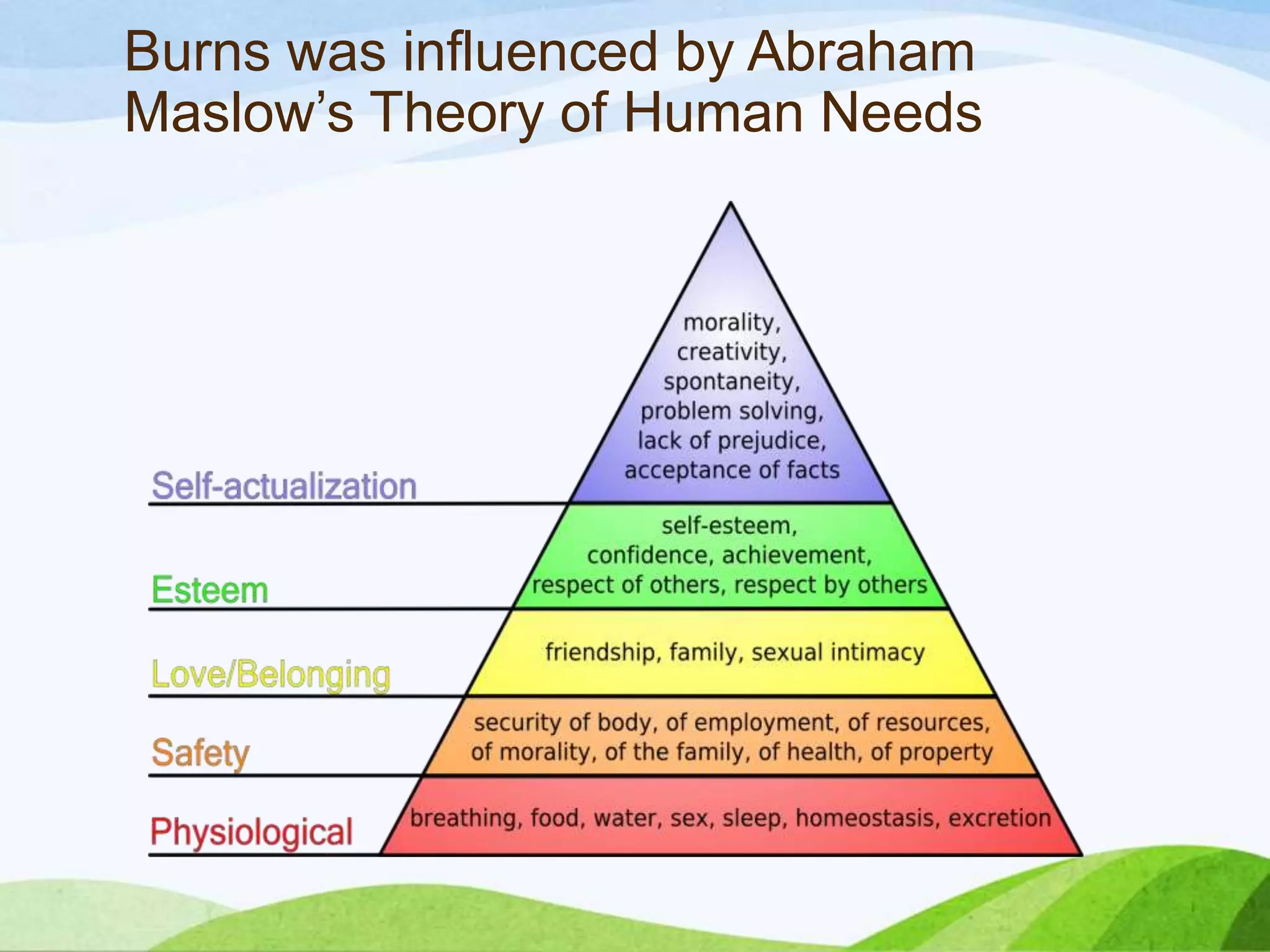
Burns was influenced by Abraham
Maslow’s Theory of Human Needs
BERNARD BASS (1985)
He identified three ways in which leaders transform
followers:
• Increasing their awareness of task importance and
value.
• Getting them to focus first on team or organizational
goals, rather than their own interests.
• Activating their higher-order needs.
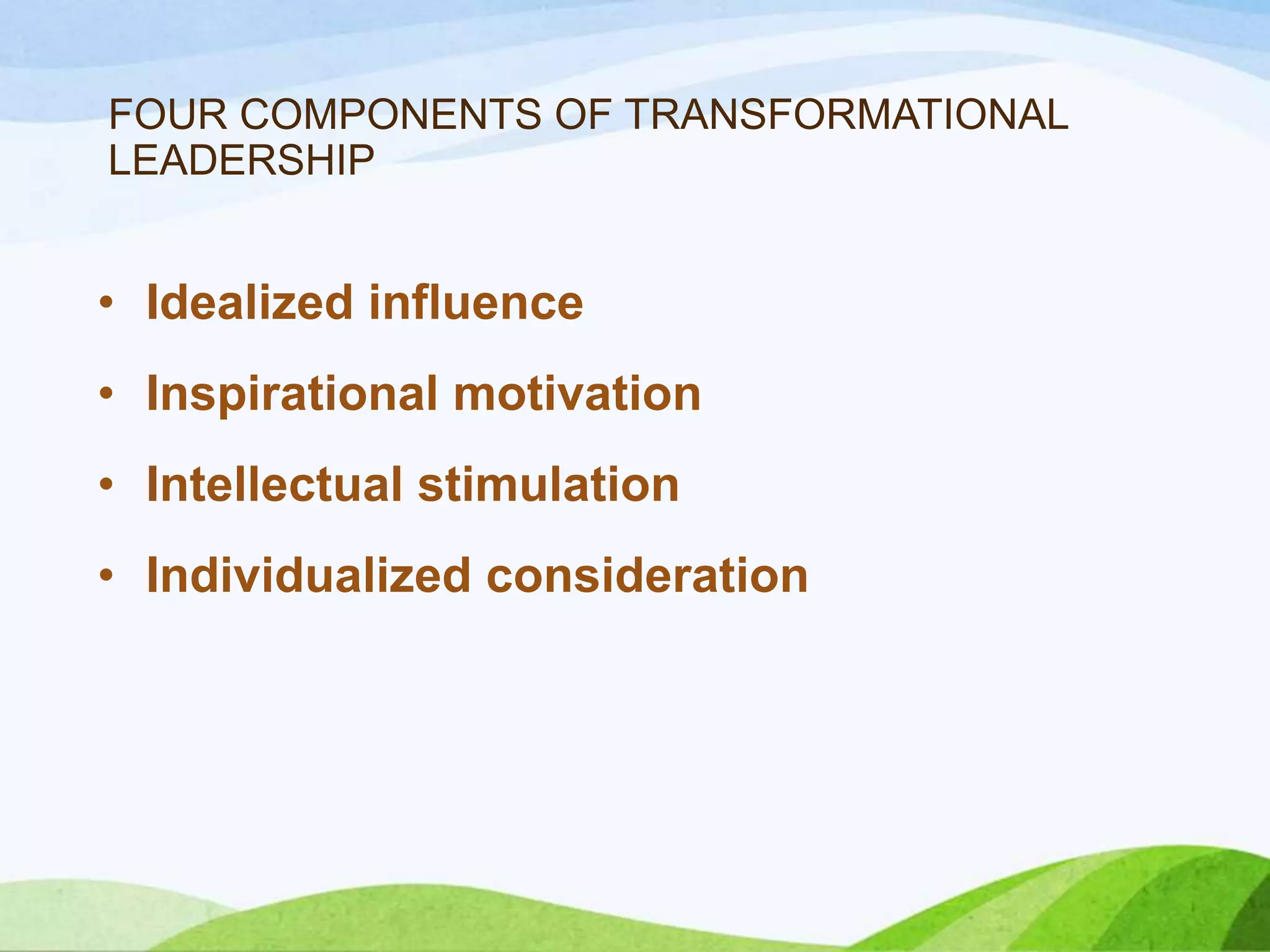
FOUR COMPONENTS OF TRANSFORMATIONAL
LEADERSHIP

• Idealized influence
• Inspirational motivation
• Intellectual stimulation

• Individualized consideration
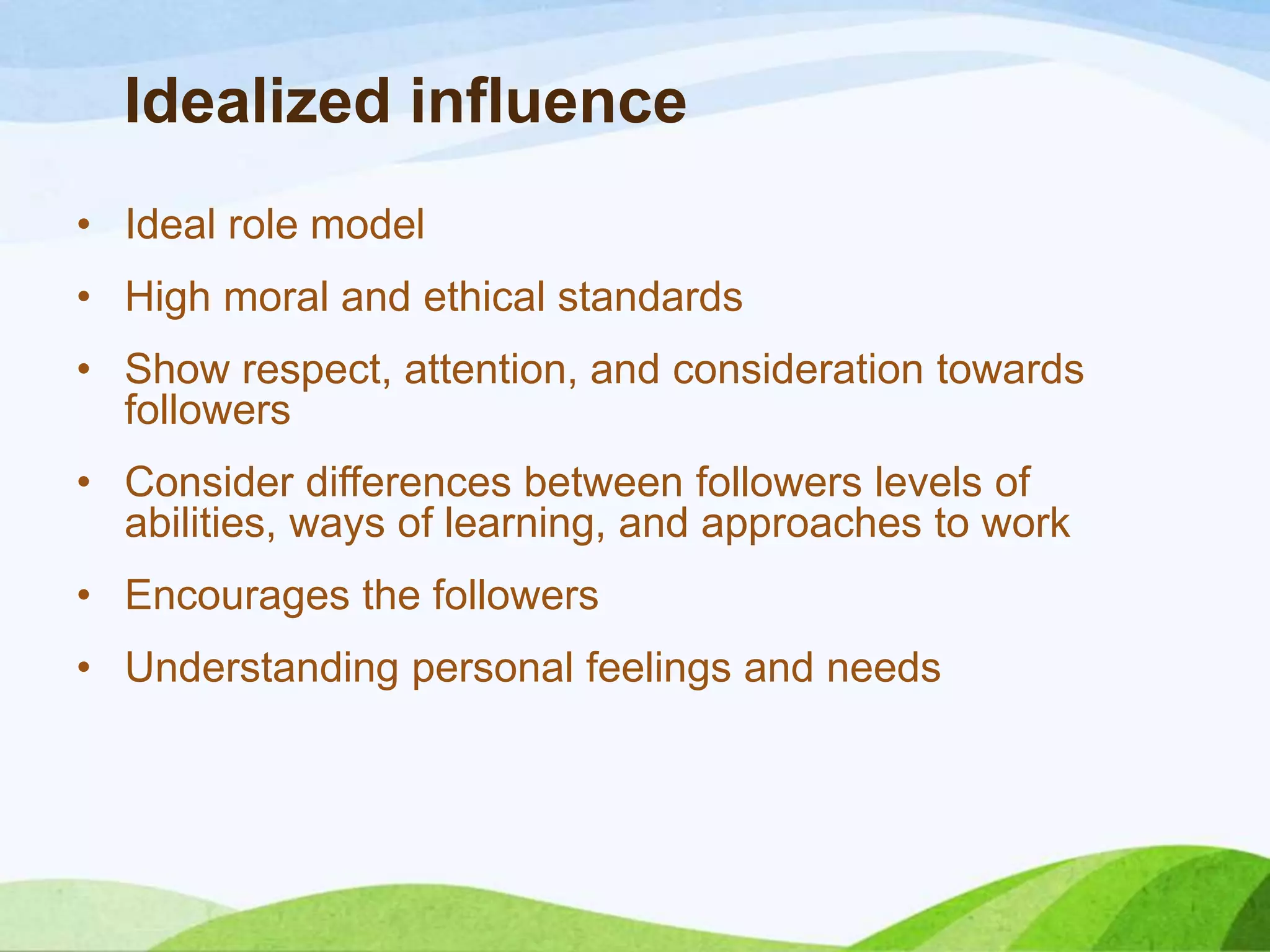
Idealized influence
• Ideal role model
• High moral and ethical standards
• Show respect, attention, and consideration towards
followers
• Consider differences between followers levels of
abilities, ways of learning, and approaches to work
• Encourages the followers
• Understanding personal feelings and needs
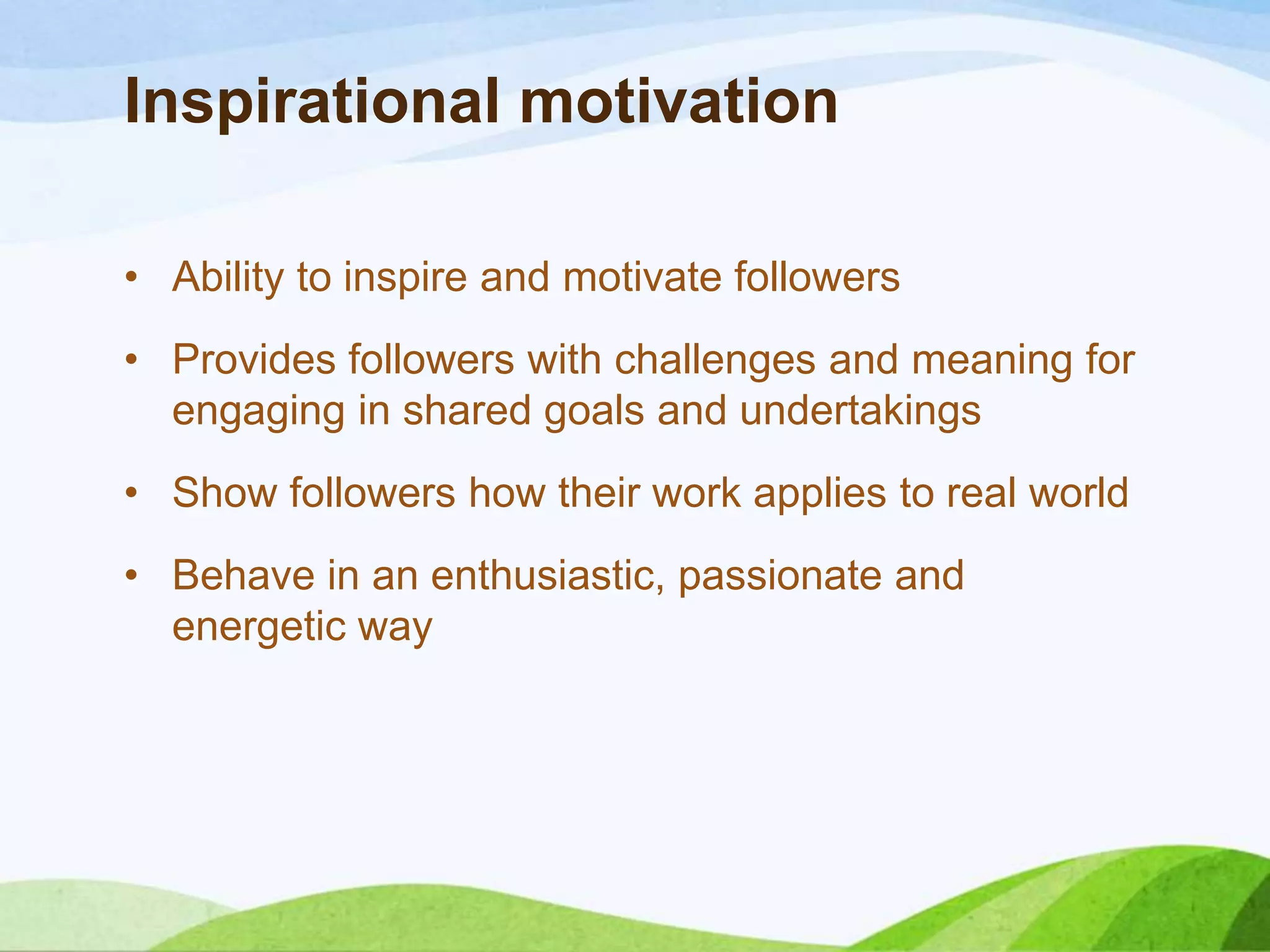
Inspirational motivation
• Ability to inspire and motivate followers

• Provides followers with challenges and meaning for
engaging in shared goals and undertakings
• Show followers how their work applies to real world

• Behave in an enthusiastic, passionate and
energetic way
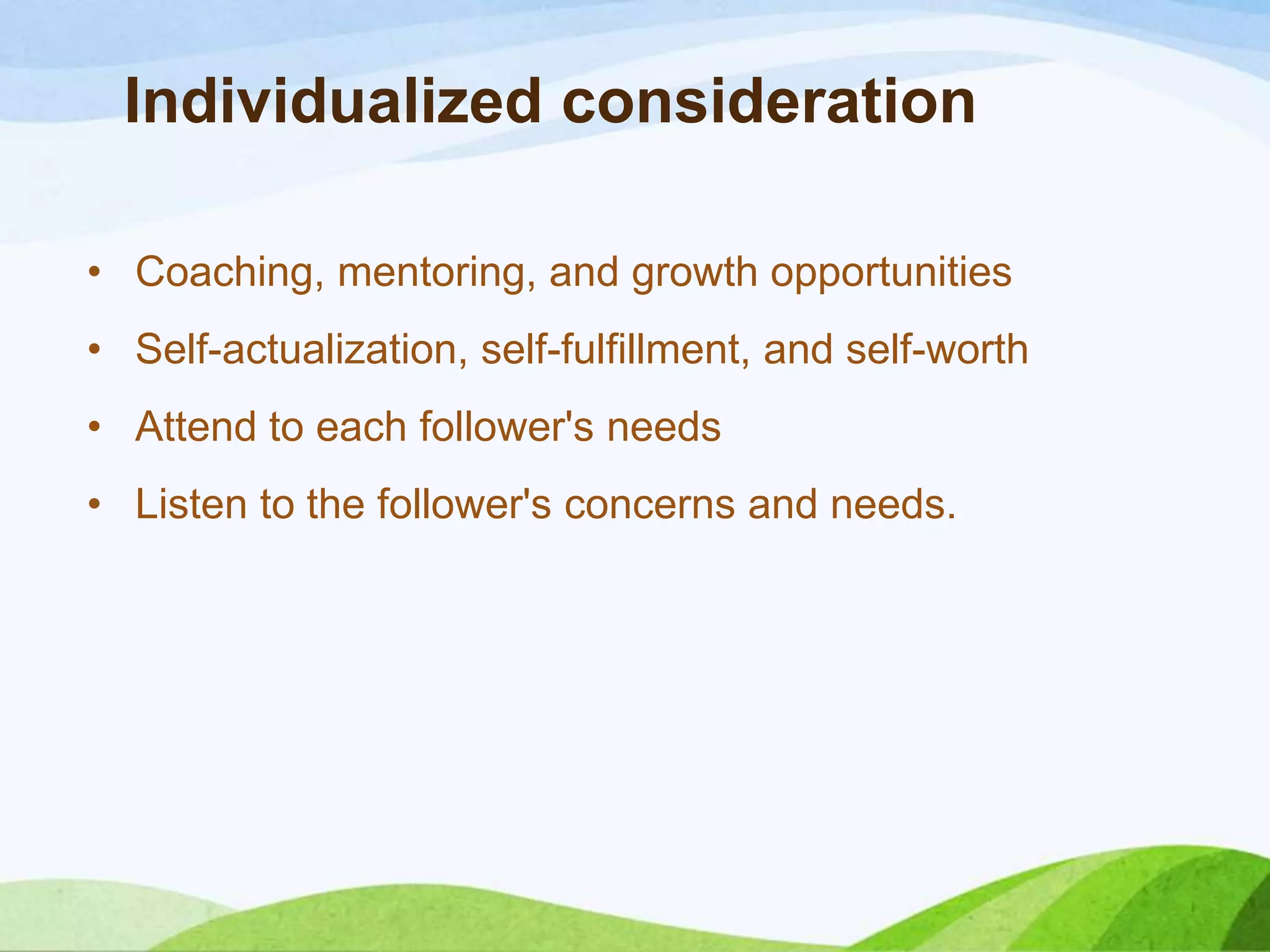
Individualized consideration
• Coaching, mentoring, and growth opportunities

• Self-actualization, self-fulfillment, and self-worth
• Attend to each follower's needs
• Listen to the follower's concerns and needs.
Intellectual stimulation
• Re-examine their assumptions about their work and
re-think how it can be performed
• Innovative and creative
• Helps followers see the big picture and how they
connect to the leader, organization, each other, and
the goal.
• Challenge followers to come up with new ideas
• Ask questions that make the followers think
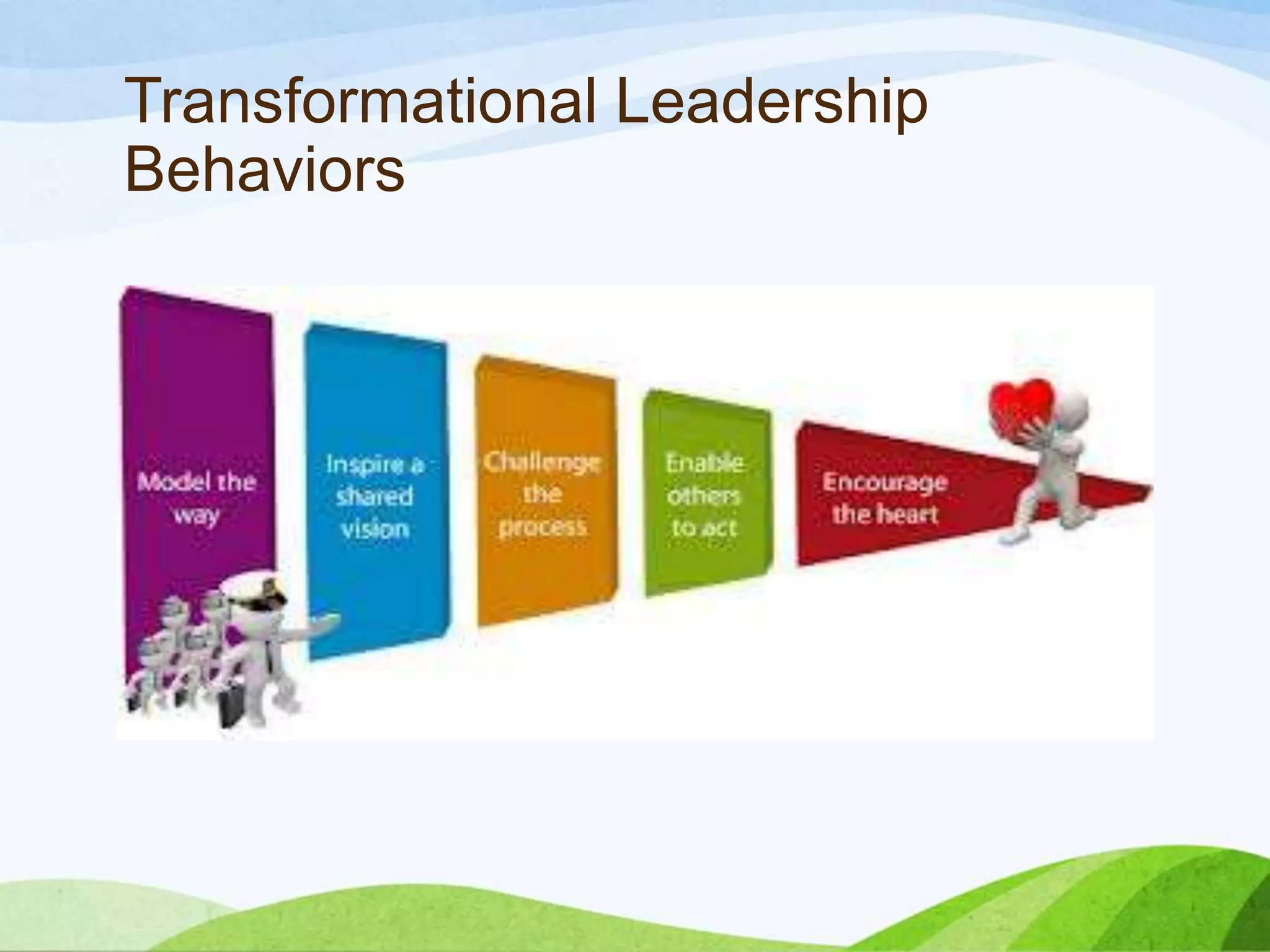
Transformational Leadership
Behaviors
Transformational Leadership
Evaluation Methods and Tools
• Evaluation, Validation and Comparative study.
• Evaluation of leaders in corporate and public
organizations, as well as the military
• Multifactor Leadership Questionnaire, known as the
MLQ.
• Leader Form and Rater Form
Benefits
• Focus on the followers’ value, needs and morals

• Develop future leaders
• Enthusiastic work atmosphere
• Innovations
• Higher output and efficiency
• Widely researched intuitive appeal
Limitations
• Lacks conceptual clarity

• Validity of MLQ is questionable
• Totally depends on the ability of leader
• Leaders might lack the required characteristics
Transformational leadership  ppt 2

Transformational leadership ppt 2

  • 1.
    Transformational leadership Presented by Khant ID– 56010555004 khantkhant07@gmail.com
  • 3.
    Definition • Transformational leadersstimulate and inspire their followers to achieve extraordinary outcomes and, in the process, develop their followers’ own leadership capacity. These leaders help followers to grow and develop by responding to followers’ individual needs by empowering them and aligning the objectives and goals of the individual followers, the leader, the group,and the larger organisation (Bass & Riggio, 2006).
  • 4.
    Assumption • People willfollow a leader who inspires them • Person with vision and passion can achieve great things • Energy and enthusiasm are the tonics that get things done
  • 5.
    A TRANSFORMATIONAL LEADER’S GOAL Toinspire followers to share the leaders’ values and connect with the leader’s vision
  • 7.
    James MacGregor Burns(1978) “Leaders and followers make each other to advance to a higher level of moral and motivation." Through the strength of their vision and personality, transformational leaders are able to inspire followers to change expectations, perceptions, and motivations to work towards common goals
  • 8.
    Burns was influencedby Abraham Maslow’s Theory of Human Needs
  • 9.
    BERNARD BASS (1985) Heidentified three ways in which leaders transform followers: • Increasing their awareness of task importance and value. • Getting them to focus first on team or organizational goals, rather than their own interests. • Activating their higher-order needs.
  • 10.
    FOUR COMPONENTS OFTRANSFORMATIONAL LEADERSHIP • Idealized influence • Inspirational motivation • Intellectual stimulation • Individualized consideration
  • 11.
    Idealized influence • Idealrole model • High moral and ethical standards • Show respect, attention, and consideration towards followers • Consider differences between followers levels of abilities, ways of learning, and approaches to work • Encourages the followers • Understanding personal feelings and needs
  • 12.
    Inspirational motivation • Abilityto inspire and motivate followers • Provides followers with challenges and meaning for engaging in shared goals and undertakings • Show followers how their work applies to real world • Behave in an enthusiastic, passionate and energetic way
  • 13.
    Individualized consideration • Coaching,mentoring, and growth opportunities • Self-actualization, self-fulfillment, and self-worth • Attend to each follower's needs • Listen to the follower's concerns and needs.
  • 14.
    Intellectual stimulation • Re-examinetheir assumptions about their work and re-think how it can be performed • Innovative and creative • Helps followers see the big picture and how they connect to the leader, organization, each other, and the goal. • Challenge followers to come up with new ideas • Ask questions that make the followers think
  • 15.
  • 17.
    Transformational Leadership Evaluation Methodsand Tools • Evaluation, Validation and Comparative study. • Evaluation of leaders in corporate and public organizations, as well as the military • Multifactor Leadership Questionnaire, known as the MLQ. • Leader Form and Rater Form
  • 18.
    Benefits • Focus onthe followers’ value, needs and morals • Develop future leaders • Enthusiastic work atmosphere • Innovations • Higher output and efficiency • Widely researched intuitive appeal
  • 19.
    Limitations • Lacks conceptualclarity • Validity of MLQ is questionable • Totally depends on the ability of leader • Leaders might lack the required characteristics