

















































TURNING SKEPTICS
INTO BELIEVERS
How to resonate with your audience
Communication Skills Training, Anton Kopytov
>86% CEO’s
communicating with clarity directly
impacts my career and income
                                  (www.distinction-services.com)
TODAY’S JOURNEY:
STORIES NOT INFO
MEANING NOT MEETING
DESIGN NOT DECOR
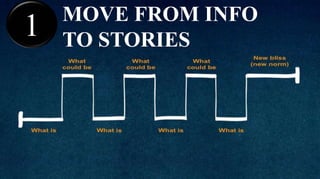
MOVE FROM INFO
1   TO STORIES
EXERCISE:

tell us 2” story why and how did you chose
career in advertising
ETHICAL APPEAL
LOGICAL APPEAL
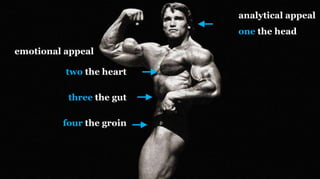
EMOTIONAL APPEAL
analytical appeal
                          one the head

emotional appeal

          two the heart

          three the gut

         four the groin
WHAT CAN WE
LEARN FROM
CINEMA AND
THEATER
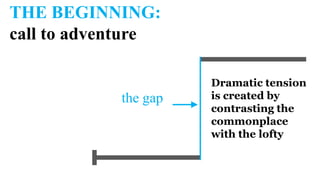
THE BEGINNING:
call to adventure

                      Dramatic tension
            the gap   is created by
                      contrasting the
                      commonplace
                      with the lofty
EXERCISE:


what’s your call to adventure   ?
THE MIDDLE:
contrast
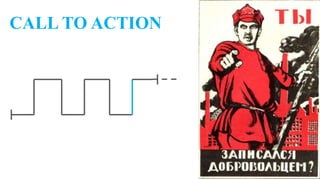
CALL TO ACTION
THE END
catalogue of personal stories
EXERCISE:

tell your presentation as a story
FROM SLIDES TO JOURNEY
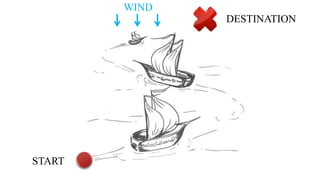
WIND
               DESTINATION


START
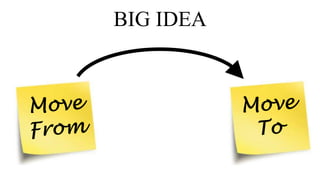
BIG IDEA
ONE KEY MESSAGE
you want to communicate
BIG IDEA
EXERCISE:

write down THE BIG IDEA of your
presentation
COMPONENTS
UNIQUE POINT
1   OF VIEW
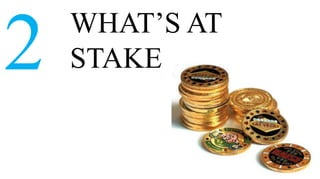
WHAT’S AT
2   STAKE
COMPLETE
3   SENTENSE
CRAFT A VISUAL
STORY that takes the
audience on a journey
from WHAT to WHY to
HOW
PLEASURE   PAIN
EXERCISE:

reframe your BIG IDEA
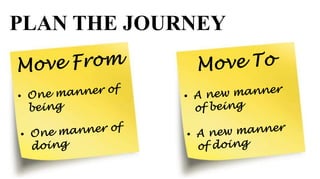
PLAN THE JOURNEY
MECE (McKinsey)

Mutually Exclusive

Collectively Exhaustive
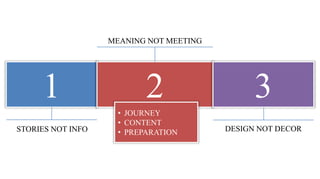
MEANING NOT MEETING


     1                     2                   3
                     • JOURNEY
                     • CONTENT
STORIES NOT INFO     • PREPARATION       DESIGN NOT DECOR
EXERCISE:

prepare your STRUCTURE
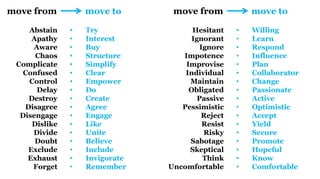
MAPPING A JOURNEY
move from          move to       move from             move to

    Abstain    •   Try                Hesitant     •   Willing
     Apathy    •   Interest           Ignorant     •   Learn
     Aware     •   Buy                   Ignore    •   Respond
      Chaos    •   Structure       Impotence       •   Influence
 Complicate    •   Simplify         Improvise      •   Plan
   Confused    •   Clear            Individual     •   Collaborator
    Control    •   Empower           Maintain      •   Change
      Delay    •   Do                Obligated     •   Passionate
    Destroy    •   Create               Passive    •   Active
   Disagree    •   Agree           Pessimistic     •   Optimistic
  Disengage    •   Engage                 Reject   •   Accept
     Dislike   •   Like                   Resist   •   Yield
     Divide    •   Unite                  Risky    •   Secure
      Doubt    •   Believe           Sabotage      •   Promote
    Exclude    •   Include           Skeptical     •   Hopeful
    Exhaust    •   Invigorate             Think    •   Know
     Forget    •   Remember     Uncomfortable      •   Comfortable
EXERCISE:
incorporate any 2 into your story
ACKNOWLEDGE THE RISK
EMPHASIZE SACRIFICE
ADDRESS RESISTANCE
WHY PEOPLE RESIST

• …

• …

• …
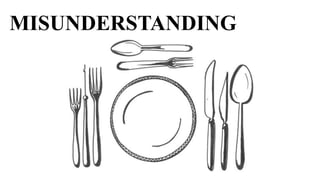
MISUNDERSTANDING
FEAR
VULNERABILITIES
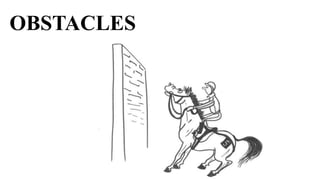
OBSTACLES
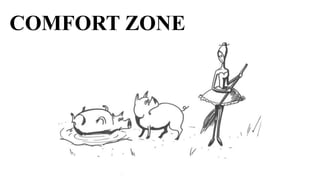
COMFORT ZONE
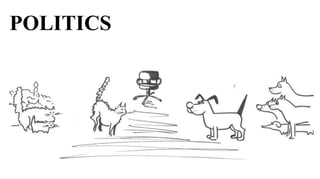
POLITICS
EXAMPLE
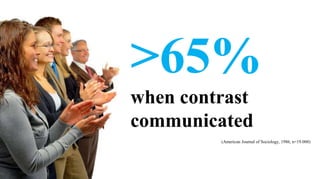
CONTRAST CREATES INTEREST
>65%
when contrast
communicated
         (American Journal of Sociology, 1986, n=19.000)
TYPES OF CONTRAST

• …

• …

• …
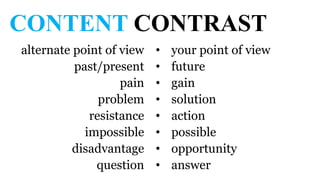
CONTENT CONTRAST
CONTENT CONTRAST
alternate point of view   •   your point of view
          past/present    •   future
                   pain   •   gain
               problem    •   solution
             resistance   •   action
            impossible    •   possible
          disadvantage    •   opportunity
              question    •   answer
EXERCISE
add CONTENT CONTRAST to your presentation
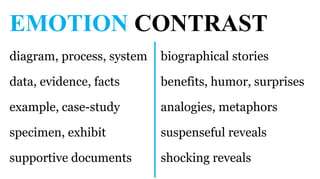
EMOTION CONTRAST
EMOTION CONTRAST
diagram, process, system   biographical stories

data, evidence, facts      benefits, humor, surprises

example, case-study        analogies, metaphors

specimen, exhibit          suspenseful reveals

supportive documents       shocking reveals
EXERCISE
add EMOTION CONTRAST to your presentation
DELIVERY CONTRAST
EXERCISE
add DELIVERY CONTRAST to your presentation
MEANING NOT DATA
SCALE
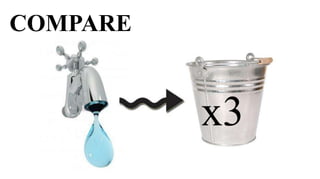
COMPARE


          x3
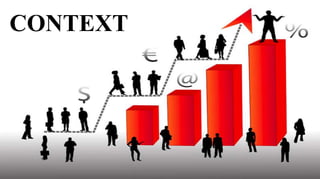
CONTEXT
STRUCTURE IS GREATER
THAN THE SUM OF PARTS
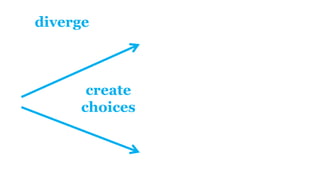
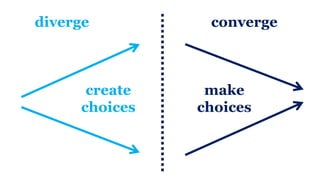
diverge


      create
     choices
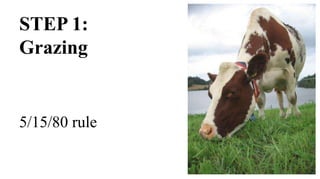
STEP 1:
Grazing


5/15/80 rule
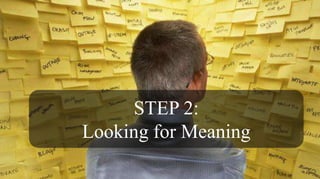
STEP 2:
Looking for Meaning
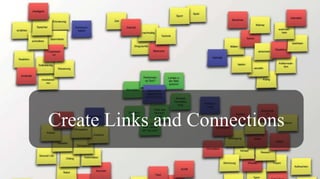
Create Links and Connections
#3: DISTILL AND ADOPT
diverge         converge


      create    make
     choices   choices
MURDER YOUR DARLINGS
EXERCISE:


what will you skip and kill   ?
MURDER YOUR DARLINGS
the best filter is BIG IDEA
“ the first draft
  of anything is
  shit
            “
EXERCISE:

give FEEDBACK to each other
TURNING SKEPTICS
INTO BELIEVERS
How to resonate with your audience
Communication Skills Training, Anton Kopytov
TODAY’S JOURNEY:
DESIGN NOT DECOR
KINGS NOT MARTYRS
IMPRESS NOT BORE
1   PRACTICE


    NOT DECORATION
welcome Hans Rosling
http://www.ted.com/talks/lang/en/hans_rosling_shows_the_best_stats_you_ve_ever_seen.html
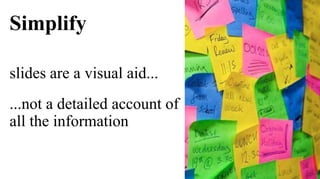
Simplify

slides are a visual aid...
...not a detailed account of
all the information
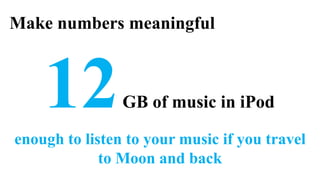
Make numbers meaningful


    12          GB of music in iPod

enough to listen to your music if you travel
             to Moon and back
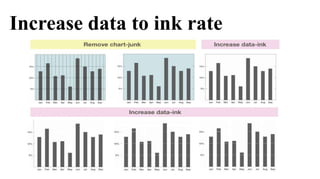
Increase data to ink rate
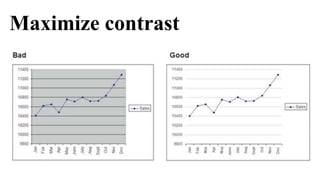
Maximize contrast
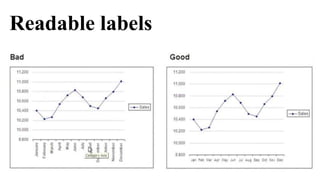
Readable labels
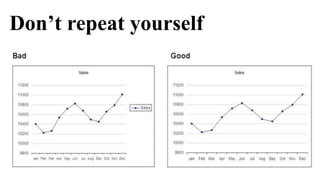
Don’t repeat yourself
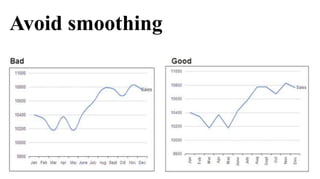
Avoid smoothing
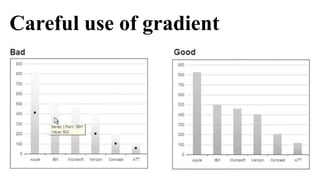
Careful use of gradient
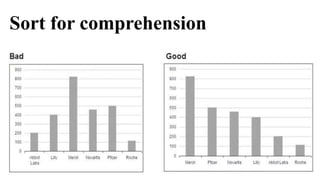
Sort for comprehension
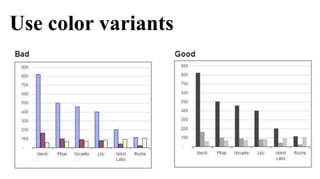
Use color variants
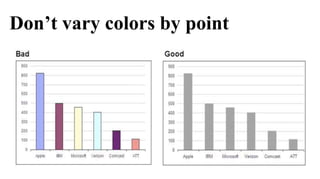
Don’t vary colors by point
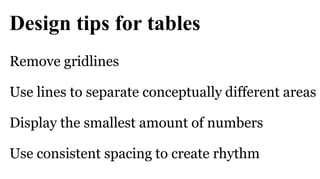
Design tips for tables
Remove gridlines

Use lines to separate conceptually different areas

Display the smallest amount of numbers

Use consistent spacing to create rhythm
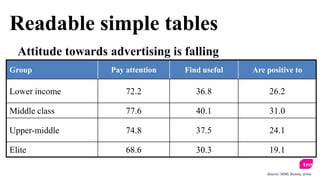
Readable simple tables
  Attitude towards advertising is falling
Group               Pay attention   Find useful   Are positive to

Lower income            72.2           36.8            26.2

Middle class            77.6           40.1            31.0

Upper-middle            74.8           37.5            24.1

Elite                   68.6           30.3            19.1

                                                      Source: MMI, Russia, 2009
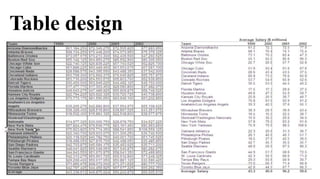
Table design
EXERCISE:

SIMPLIFY your presentation
2   TREAT YOUR
    AUDIENCE
    AS
         KING
ignite your audience with
    your introduction
MAKE A PROMISE


will get a process that empowers you
      to keep your audiences…
build your credibility only
 with relevant credentials
focus on
      their needs
on how you’ll help them
TALK EMOTIONALLY
DELIVER
3   SOMETHING THEY
    WILL ALWAYS
    REMEMBER
STRONG
OPENINGS
ORIGINAL
1   STORY
“POWERFUL
2   QUOTATION”
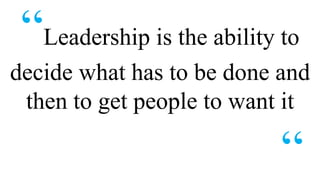
“Leadership is the ability to
decide what has to be done and
 then to get people to want it

                            “
PROVOKING
3   QUESTION
INTERESTING
4   STATISTIC
EXERCISE:

Think about your OPENING

PUT IT DOWN on paper
SOMETHING
THEY’LL
ALWAYS
REMEMBER
TYPES OF
S.T.A.R.
MOMENTS
MEMORABLE
1   DRAMA
REPEATABLE
2   SOUNDBITES
EVOCATIVE
3   VISUALS
EMOTIVE
4   STORYTELLING
SHOCKING
5   STATISTICS
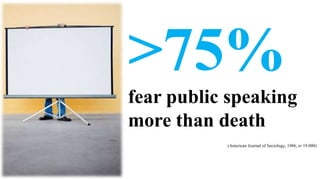
>75%
fear public speaking
more than death
           (American Journal of Sociology, 1986, n=19.000)
HOW TO REHEARSE
“ the first draft
  of anything is
  shit
            “
REHEARSE
ONE MORE TIME
EXERCISE:

give FEEDBACK to each other
SPONRENEITY


 connection comes from what you didn’t
            plan to do or say
SPONTANEITY
Deepen your connection
Humor to remember and repeat
One becomes a star of a speech
Get more buy-in because people “buy into what
they help create”
Refresh you as the speaker
REHEARSE
ONE MORE TIME
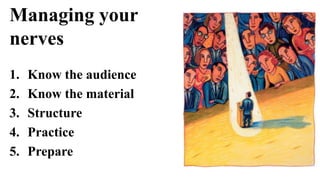
Managing your
nerves
1.   Know the audience
2.   Know the material
3.   Structure
4.   Practice
5.   Prepare
#1 KNOW YOUR AUDIENCE
#2 KNOW YOUR MATERIAL
#3 STRUCTURE
#4 PRACTICE, PRACTICE…
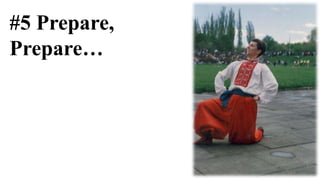
#5 Prepare,
Prepare…
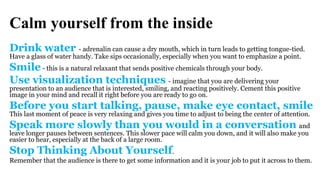
Calm yourself from the inside
Drink water - adrenalin can cause a dry mouth, which in turn leads to getting tongue-tied.
Have a glass of water handy. Take sips occasionally, especially when you want to emphasize a point.
Smile - this is a natural relaxant that sends positive chemicals through your body.
Use visualization techniques - imagine that you are delivering your
presentation to an audience that is interested, smiling, and reacting positively. Cement this positive
image in your mind and recall it right before you are ready to go on.
Before you start talking, pause, make eye contact, smile
This last moment of peace is very relaxing and gives you time to adjust to being the center of attention.
Speak more slowly than you would in a conversation and
leave longer pauses between sentences. This slower pace will calm you down, and it will also make you
easier to hear, especially at the back of a large room.
Stop Thinking About Yourself.
Remember that the audience is there to get some information and it is your job to put it across to them.
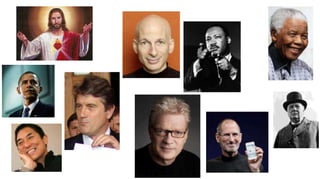
GET INSPIRATION
14-32
33-51
52-70
14-32
33-51
52-70
Training presentation skills

Training presentation skills

Editor's Notes

  • #2 You will probably agree that one of the most frustrating and boring activities in our work is listening to dull and silly presentations.Media provider comes to us to present irrelevant proposal, subordinates prepare unstructured presentation that is complete bullshit.You are lost, you are bored, you waste your time.My motto is “Never give a presentation you wouldn’t want to sit through yourself.”Take this credo and techniques in this training – they will help you to become much better in public speaking – Resonate with your audience and –Influence their behavior.
  • #3 My personal story – how much money do I earn annually speaking publicly.Isn’t it the reason to master some tools for developing nice presentations that persuade people?
  • #6 …DIM THE PROJECTOR
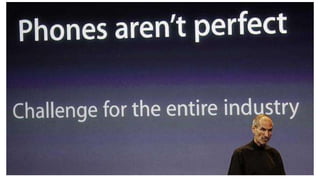
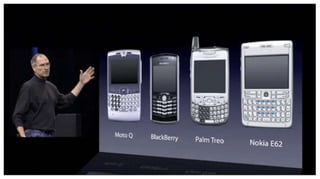
  • #7 Stories- this is why we love Steve Jobs presentations, this is why we love TED show.
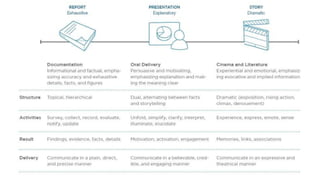
  • #11 Aristotle claimed that to persuade, one must employ three types of communication:Ethical appeal (ethos): garner respect through credibility and characterEmotional appeal (pathos): stir emotions and imagination of the audienceLogical appeal (logos): provide evidence through words, structure, and data
  • #12 Connect with the audience through shared values and experiences.Create the right balance of analytical and emotional appeal; this will bolster your creativity.The audience will feel connected to and have respect for your idea.
  • #13 Develop a structure to keep the presentation intact and help it make sense.Make a claim and supply evidence that supports the claim.It is necessary to use logical appeal in all presentations.
  • #14 Stimulate your audience through appeals to their feelings of pain and pleasure.When people feel these emotions, they will throw reason out the window.People make important decisions based on emotions.
  • #18 Сидел Илья Муромец на печи 33 года, да захотелось ему в Киев-град.В Киеве воевода понадобилсяНо беспокоился Илья за мать своюТогда Князь Владимир сам явился и поведал Илье о том, что…Соловей-Разбойник украл половину казныКнязь Владимир слово держать будет (звать самого сильного война на борьбу с бедой)За что обещал свою дочку в жены и палаты свои белокаменные (ровно половину)Отправился Илья в путь-дорогуПрямо в палаты княжеские, где Владимир и поведал ему историю страшную (про Соловья)Созвал Илья друзей своих Добрыню и АлешуПобедили они Соловья и сыновей его.Илья женился на дочери князя и стал счастливым.
  • #19 Most great presentations unknowingly follow this form.Here are some examples.
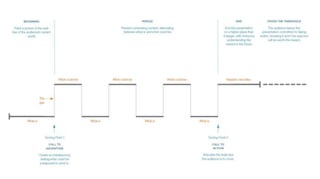
  • #20 The first turning point to occur in a presentation is a call to adventure, which triggers a significant shift in the content.The call to adventure asks the audience to jump into a situation that, unbeknownst to them, requires their attention and action.This moment sets the presentation in motion.
  • #23 Your job as a communicator is to create and resolve tension through contrast.My personal story is making a decision to continue mathematics and start working, still not losing competence – that’s why I’ve chosen media.
  • #24 The audience wants to know if your views are similar to or different from their views.Oppositional content is stimulating; familiar content is comforting.Together, these two types of content produce forward movement.
  • #26 Whether a presentation is political, corporate or academic, the audience consists of 4 distinct types of people capable of taking action:doers, suppliers, influencers, and innovators.When audience members see how they can help, it leads to momentum and quicker results.
  • #27 The end of the presentation is on a higher plane in the presentation from than the beginning.The ending should leave the audience with a heightened sense of what could be and a willingness to be transformed – - to be able to either understand something new or do something differently.Audience transformation is the goal of persuasion.Anecdote about Shtirlitz and skrepki.
  • #28 In order to get the most of the audience, describe the possible future outcomes with wonder and owe.Show the audience that the reward will be worth their efforts.The presentation should conclude with the assertion that your idea is not only possible but that it is the right – and better – choice to make.
  • #29 Евгения Михайловна Полонская – «Сказка про Голого Короля»
  • #31 Presentations should have a destination.If you don’t map out where you want the audience to be when they leave your presentation, the audience won’t get there.… a story about a sailor going elsewhere with resistant wind etc. …You have to set a course, and that means developing the right content.The destination you define can serve as a guide.Every bit of content you share should propel the audience towards that destination.
  • #32 Keep in mind that a presentation is designed to transport the audience from one location to another.They will feel a sense of loss as they move away from their familiar world and closer to your perspective.You are persuading the audience to let go of old beliefs or habits and adopt new ones.
  • #33 A big idea is that one key message you want to communicate.It contains the impetus that compels the audience to set a new course with a new compass heading.It has also been called the gist, the take-away, the thesis statement, the single unifying message.
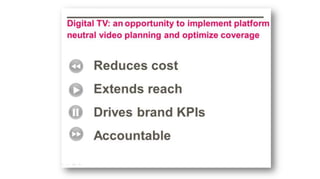
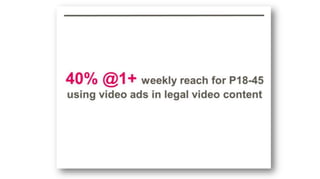
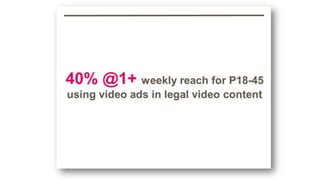
  • #37 People come to hear you speak; since they want to know your perspective on the subject, you should give it to them.For example, “Online Video in Russia” is not big idea – it’s merely a topic.“Online video has become mass communication channel that we cannot ignore as it reaches over 45% P18-45 weekly” is a big idea that has unique point of view.
  • #40 The big idea should articulate the reason why the audience should care enough to adopt your perspective.Conveying what’s at stake helps the audience recognize the need to participate to become heroes.Without a compelling reason to move, a big idea falls flat.
  • #41 Stating the big idea in sentence form forces it to have a noun and a verb.
  • #42 Example of a big idea in 20 words
  • #43 Emotion is another important component to the big idea.Ultimately there are 2 emotions – pleasure and pain.A truly persuasive presentation plays on those 2 emotions to do one of the following:Raise the likelihood of pain and lower the likelihood of pleasure if they reject the big ideaRaise the likelihood of pleasure and lower the likelihood of pain if the big idea is accepted
  • #46 Each idea should be mutually exclusive and not overlap with others.Otherwise you’ll confuse the audience – “Hay, haven’t we talked about it already?”Don’t leave anything out. The audience expects you do be complete.
  • #47 The journey should be mapped out, and all related messages should propel the audience closer to the destination.
  • #49 Bellow is a couple of tools from change management that can help trigger ideas as you map out the audience journey
  • #52 Change involves the addition of the new and the abandonment of the old.Always to accept something new means sacrificing something else.To adopt your perspective, the audience has to, at a minimum, abandon what they previously held as true.The source of audience resistance is usually related to the sacrifice they know will be required of them – their time for presentation is also their sacrifice…
  • #53 Sacrifice: What would they sacrifice to adopt your idea?What beliefs or ideas will be let go?How much will it cost them in time or money?Risk:what’s the perceived risk?Are there physical or emotional risk they will need to take?How will this stretch them?Who or what might they have to confront?
  • #54 Audience members will often push back or try to find errors in your presentation…Because if they don’t, they have to either live with the contradiction between their old position and the new one you have “sold” them…Or opt to change.
  • #55 They might resist your message because, from their point of view, it puts their reputations, credibility, or honor on the line.
  • #56 What might they misunderstand about the message, the proposed change, or the implications?Why might they believe the change doesn’t make sense for them or their organization?
  • #57 What keeps them up at night?What’s their greatest fear?What fears are valid, and which should be dispelled?
  • #58 In which areas are they vulnerable?Any recent changes, errors, or weaknesses?
  • #59 What mental or practical barriers are in their way?What obstacles cause friction?What will stop them from adopting and acting on your message?
  • #60 What’s their tolerance level of change?Where is their comfort zone?How far out of it are you asking them to go?
  • #61 Where is the balance of power?Who or what has influence over them?Would your idea create a shift of power?
  • #63 People are naturally attracted to opposites, so presentations should draw from this attraction to create interest.Communicating an idea juxtaposed with its polar opposite creates energy.Moving back and forth between the opposites encourages full engagement from the audience.
  • #66 Content contrast moves back and forth to compare what is to what could be - and your views vs. the audiences
  • #69 Emotional contrast moves back and forth between traditional and nontraditional delivery methods
  • #70 Emotional contrast moves back and forth between analytical and emotional content
  • #72 STAGE:Be the main event – share the main eventHide behind podium – be free to roamSTYLE:Serious business tone – humor and enthusiasmMonotone – vocal and pace varietyVISUALS:Read slides – minimize slidesStatic images – moving imagesTalk about your product – show them your productINTERACTIONS:Resist live feedback – embrace real-time feedbackRequest silence – encourage exchangesOne-way delivery – polling, shout-outs, playing, writing
  • #74 Numbers rarely speak for themselves.How big is a billion?Does that figure compare to others?What causes the numbers go up or down?You can leave it up to individual interpretation, or you can explain anomalies and trends by accompanying them with narrative.
  • #75 Explain the grandness of scale by contrasting it with items of familiar size.every day 5500 children die in Africait’s more than 2 000 000 people a year
  • #76 Some numbers sound deceptively small or large until they are put into context by comparing them to numbers of similar value in different context.Every day you waste 50-100 liters of water if your tap is not fixed.
  • #78 Numbers in charts go up and down or get bigger and smaller.Explaining the environmental and strategic factors that influence the changes gives the numbers meaning.
  • #80 Divergent and convergent thinking are two different types of thinking that occur in response to a problem
  • #85 Divergent and convergent thinking are two different types of thinking that occur in response to a problem
  • #86 The ideas need to be filtered down to the points that succinctly support your big idea.If you don’t filter your presentation, the audience will respond negatively – Because you’re making them work too hard to discern the most important pieces.
  • #88 The ideas need to be filtered down to the points that succinctly support your big idea.If you don’t filter your presentation, the audience will respond negatively – Because you’re making them work too hard to discern the most important pieces.
  • #89 Review your presentation again and eliminate all the fodder that doesn’t distinctly support your big idea.
  • #93 Make a point about Victory Day at school if we miss anyone from yesterday
  • #94 There is a definite process for keeping your audiences on the edge of their speech.It is not easy to come by, and it’s not easy to use.However, once you master it, you WILL find doors opening for you……that you never even knew existed.
  • #95 Rule number 4: Practice design, not decoration.
  • #100 Reduce chart junk by removing elements that are decorative or ornamental. Three dimensional chart effects, for example, add nothing of value to your chart. Increase data-to-ink ratio by making every pixel tell a story about your data.
  • #101 Maximize the contrast between your data and the background. The standard Excel default chart, for example, makes it more difficult than necessary to distinguish the line from the background. A white background and de-emphasized gridlines can help.
  • #102 Whenever possible, avoid rotated labels.They are hard for people to read and distract from focusing on the numbers.
  • #103 It’s not necessary to have both a legend and a title for single series graphs. Likewise, the title of a chart may suffice to explain what the reader is looking at.
  • #104 Avoid adding a smoothing feature to your line; it gives the impression of data points that are not there. Similarly, glossy 3D effects are a visual that was impressive in 1999 but contributes no value to your chart.
  • #105 Use flat colors or a bare minimum gradient. Ensure that the bar endpoint is visible. When the gradient fades toward the endpoint, it reduces the ability to clearly see the length of the bar.
  • #106 Add structure and clarity to the chart by sorting by a metric of interest.
  • #107 If you are displaying multicolumn or stacked charts, use variants on a hue or grey to show different data series
  • #108 This creates a lot of unnecessary visual noise and makes similar colors seem related. In addition, bright colors get more perceived emphasis.
  • #109 While graphs allow us to see the shape of data, tables allow us to perform precise lookups and comparison between small numbers of values
  • #114 There is a definite process for keeping your audiences on the edge of their speech.It is not easy to come by, and it’s not easy to use.However, once you master it, you WILL find doors opening for you……that you never even knew existed.
  • #115 Let them know not only what they will get, but also what those tools will empower them to do and to receive.In the example above, I tell them they will get a process that empowers them to keep their audiences…That’s a pretty compelling promise.
  • #116 Don’t toot about yourself as much as you toot about the processes you’ve uncovered.Put the process, not the person, on a pedestal.
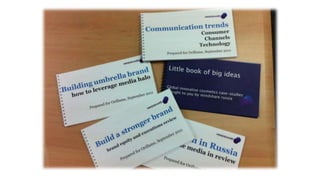
  • #117 Give the audience brochures about Mindshare agency
  • #118 Stimulate your audience through appeals to their feelings of pain and pleasure.When people feel these emotions, they will throw reason out the window.People make important decisions based on emotions.
  • #119 You may think you did a great job, but unless your audience agrees with you, that may not be the case. The first thing you need to do is understand what your audience wantsDetermine who the members of the audience are.Find out what they want and expect from your presentation. What do they need to learn? Do they have entrenched attitudes or interests that you need to respect? And what do they already know that you don't have to repeat?Create an outline for your presentation, and ask for advance feedback on your proposed content.
  • #122 “Leadership is the ability to decide what has to be done and then to get people to want it”
  • #124 Will you raise your hand if you want to make more money?Rhetoric question: If I were to ask you, “Is it the year you make more money” perhaps you would say, “Anton, I make enough. I don’t care”Or “Anton, I’d like to, show me how”
  • #125 “If you were born today in US, you would already owe $186,000 to pay off your share of national debt”
  • #129 Small dramatizations convey insights.They can be as simple as a prop or demo, or something more dramatic, like a reenactment or skit.
  • #130 Small repeated sound bites feed the press with headlines, populate and energize social media with insights, and give employees a rally cry.
  • #132 A picture really is worth 100 words and 1000 emotions.A compelling image can become an unforgettable emotional link to your information.
  • #133 Stories package information in a way that people remember.Attaching a great story to the big idea makes it easily repeatable beyond the presentation.
  • #134 If statistics are shocking, don’t gloss over them; draw attention to them.
  • #135 Have you seen a speaker who seemed to say the right things and even say them in the right way but just didn’t affect the audience very much?Have you seen a speaker who seemed to give all the right gestures and the perfect voice but just didn’t seem to connect?Have you wondered what was the thing that kept him from making a greater impact?From my experience, it normally comes down to one reason: a lack of proper mental preparation.
  • #136 Do not look into a mirror. Why? Because your speech is not about you. You wouldn’t look into a mirror when you’re actually speaking to your audience, would you? Then you shouldn’t do it during rehearsal. Rehearsal should mimic the actual performance, so make it as similar as possible. If you want to see what you look like, then record yourself on video (perhaps with a flip video camera) and watch it once you finish.Imagine your audience is in front of you. It’s not enough to just practice knowing your words. It’s important to really see your audience. What are they doing? How are they reacting? How are you responding to their reactions? Who are you looking at and when? Where are you moving and when? This is what I call speaking your way into speaking. Believe it or not, some speakers think rehearsal is sitting down, reading, and memorizing their speech! My belief is that you should not sit down and memorize; you should stand up and internalize. You do that by rehearsing as if your audience is really there.Do at least one mental rehearsal. This, more than any other practice, has been the most effective and meaningful to me. Here’s what I do. I close my eyes and go through the entire presentation in my mind. I see my audience and feel them around me. I mouth the words and make it as realistic as possible. This process is so powerful for one major reason: Once you arrive on stage, you’ll feel like you’re at home. Why? Because you’ve been there before.Don’t look for perfection; look for connection. If you stumble over words or do something that’s not 100% correct, don’t worry about it. It’s not about perfection, it’s about connection. Just keep moving on. Chances are you’re the only one who will notice anyway. This Guideline goes for rehearsal and for the real speech.Exaggerate the things you need to work on. For example, if you don’t pause long enough after making important statements or asking questions, then really exaggerate an extra long pause in rehearsal. Or if you constantly speak at the same energy level (or pace or volume, etc.), exaggerate your contrasts during rehearsal. If you exaggerate it in rehearsal, even though the adrenaline of the live performance will tend to make you revert to your old ways, you’ll be sufficiently stretched enough to fix the flaw. Eventually this new habit will become second nature.
  • #140 That past 10 years of professional speaking have taught me something invaluable that I never expected to learn about audiences
  • #142 You’ve taken your feedback – what should you do next? Rehearse one more time.
  • #144 Define who your target audience is.Ask people who are representative of the audience what they expect from the presentation.Run your agenda by a few people to see if they think something is missing or is overkill.Consider contacting participants by email beforehand and ask a few questions about what they expect.Greet audience members at the door and do a quick survey of why they are there and what they expect
  • #145 Nothing is worse for nerves than trying to give a presentation on a topic you are not well prepared for.you can't possibly cover everything you know in your presentationselect the most pertinent points and then supplement with other material if time allowsinclude occasional questions to the audience to encourage audience participation. This enhances the learning experience and gives you a break from presenting. It also allows you deliver your information in a more conversational manner which is often more believable
  • #146 A common technique for trying to calm nervousness is memorizing what you intend to say. But all this does is make your delivery sound like it is coming from a robot.Structure your presentation so that you give yourself clues to what is coming next.Have a set of key phrases listed on a cue card.
  • #147 Familiarity brings confidence, and practice helps you to deliver the words naturally. This means they will be coming more from your heart and mind, rather than from a piece of paper.If you do feel the need to memorize, limit it to your opening.Try videotaping yourself. You will see what you look like to others and then you can make a plan to change the things that need changing.Prepare for large speaking events by practicing with a smaller audience first; for example, by inviting colleagues to listen to a dry run during their lunch hour
  • #148 Once you know what you are going to say, you need to prepare yourself for the actual delivery.Decide what you are going to wear – make it comfortable and appropriate.Arrive early and get your equipment set up.Anticipate problems and have backups in case something doesn't work, you forget something, etc.If possible, give everything one last run through in the real environment.Prepare responses to anticipated questions.
  • #150 Watch brilliant presentations, get the insights, try to copy
  • #151 You’ve answered some questions I’ve distributed early this week
  • #152 You’ve answered some questions I’ve distributed early this week