
P R E S E N T E D B Y : - S U N I L P A N D E Y
M B A 1 S T Y E A R
Training & Development
Definition
 Training is organizational effort aimed at helping
employees to acquire the basic skills required for the
efficient execution of the functions for which they are
hired.
 Development on the other hand, deals with
activities undertaken to expose employees to
perform additional duties and assume positions of
importance in the organizational hierarchy.
Why Training & Development
 Relevantly remain in business.
 To Create a pool for replacements.
 Enhance the company’s ability.
 Ensure adequate human resources for expansion into new
programs.
 When a performance appraisal indicates performance
improvement is needed.
 Succession Planning.
Purpose of Training and development
 Workers are helped to focus, and priority is placed on
empowering employees.
 Productivity is increased, positively affecting the bottom
line.
 Job satisfaction, employee motivation and morale are
increased, reducing employee turnover.
 Processes increase in efficiency, resulting in financial
gain.
Purpose of Training and development
 Employee confidence is built.
 keeping and developing key performers
 Decreased need for supervision.
Training Process
 Organizational Objectives
 Needs Assessment
 Is There a Gap?
 Training Objectives
 Select the Trainees
 Select the Training Methods and Mode
 Choose a Means of Evaluating
 Administer Training
 Evaluate the Training
Identifying Training needs
Job
Present performance Desired performance
Gap
Setting Training Objectives and Policy
Designing Training Programme
Conducting the Training
Follow up and Evaluation
Approach to Training
F
E
E
D
B
A
C
K
&
R
E
V
I
E
w
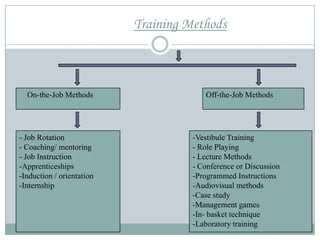
Training Methods
On-the-Job Methods Off-the-Job Methods
- Job Rotation
- Coaching/ mentoring
- Job Instruction
-Apprenticeships
-Induction / orientation
-Internship
-Vestibule Training
- Role Playing
- Lecture Methods
- Conference or Discussion
-Programmed Instructions
-Audiovisual methods
-Case study
-Management games
-In- basket technique
-Laboratory training
Trainers
 On-the-job training is conducted mostly by supervisors.
 off-the-job training, by either in-house personnel or outside instructors.
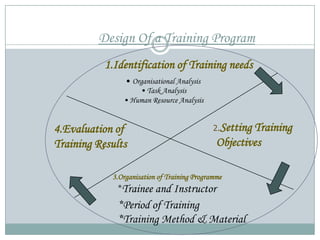
Design Of a Training Program
1.Identification of Training needs
• Organisational Analysis
• Task Analysis
• Human Resource Analysis
2.Setting Training
Objectives
3.Organisation of Training Programme
*Trainee and Instructor
*Period of Training
*Training Method & Material
4.Evaluation of
Training Results
Issues of training & management development
LEGAL ISSUES
 Failing to provide required training or providing inadequate
training.
 Incurring employee injury during a training activity.
 Incurring injuries to employees or others outside the training
session.
 Reproducing and using copyrighted material in training classes
without permission.
 Not ensuring equal treatment while in training.
The following criteria may be used to measure the
effectiveness of training :
(a) Reaction :- Trainees’ reaction to be objective, contents
and methods of training are good indicators of
effectiveness. In case the trainees considered the
programme worthwhile and liked it, the training can be
considered effective.
(b) Learning :- The extent to which the trainees have gained
the desired knowledge and skills during the training
period is a useful basis of evaluating training
effectiveness.
(c) Behavior :-Improvement in the job behavior of the
trainees reflects the manner and extend to which the
learning has been put to practice.
Training & development

Training & development

  • 1.
    P R ES E N T E D B Y : - S U N I L P A N D E Y M B A 1 S T Y E A R Training & Development
  • 2.
    Definition  Training isorganizational effort aimed at helping employees to acquire the basic skills required for the efficient execution of the functions for which they are hired.  Development on the other hand, deals with activities undertaken to expose employees to perform additional duties and assume positions of importance in the organizational hierarchy.
  • 3.
    Why Training &Development  Relevantly remain in business.  To Create a pool for replacements.  Enhance the company’s ability.  Ensure adequate human resources for expansion into new programs.  When a performance appraisal indicates performance improvement is needed.  Succession Planning.
  • 4.
    Purpose of Trainingand development  Workers are helped to focus, and priority is placed on empowering employees.  Productivity is increased, positively affecting the bottom line.  Job satisfaction, employee motivation and morale are increased, reducing employee turnover.  Processes increase in efficiency, resulting in financial gain.
  • 5.
    Purpose of Trainingand development  Employee confidence is built.  keeping and developing key performers  Decreased need for supervision.
  • 6.
    Training Process  OrganizationalObjectives  Needs Assessment  Is There a Gap?  Training Objectives  Select the Trainees  Select the Training Methods and Mode  Choose a Means of Evaluating  Administer Training  Evaluate the Training
  • 7.
    Identifying Training needs Job Presentperformance Desired performance Gap Setting Training Objectives and Policy Designing Training Programme Conducting the Training Follow up and Evaluation Approach to Training F E E D B A C K & R E V I E w
  • 8.
    Training Methods On-the-Job MethodsOff-the-Job Methods - Job Rotation - Coaching/ mentoring - Job Instruction -Apprenticeships -Induction / orientation -Internship -Vestibule Training - Role Playing - Lecture Methods - Conference or Discussion -Programmed Instructions -Audiovisual methods -Case study -Management games -In- basket technique -Laboratory training
  • 9.
    Trainers  On-the-job trainingis conducted mostly by supervisors.  off-the-job training, by either in-house personnel or outside instructors.
  • 10.
    Design Of aTraining Program 1.Identification of Training needs • Organisational Analysis • Task Analysis • Human Resource Analysis 2.Setting Training Objectives 3.Organisation of Training Programme *Trainee and Instructor *Period of Training *Training Method & Material 4.Evaluation of Training Results
  • 11.
    Issues of training& management development LEGAL ISSUES  Failing to provide required training or providing inadequate training.  Incurring employee injury during a training activity.  Incurring injuries to employees or others outside the training session.  Reproducing and using copyrighted material in training classes without permission.  Not ensuring equal treatment while in training.
  • 12.
    The following criteriamay be used to measure the effectiveness of training : (a) Reaction :- Trainees’ reaction to be objective, contents and methods of training are good indicators of effectiveness. In case the trainees considered the programme worthwhile and liked it, the training can be considered effective. (b) Learning :- The extent to which the trainees have gained the desired knowledge and skills during the training period is a useful basis of evaluating training effectiveness. (c) Behavior :-Improvement in the job behavior of the trainees reflects the manner and extend to which the learning has been put to practice.