“TRAIN THE TRAINER”
Presented By:
Neeraj Kumar Rai
M.Sc.(Organic Chemistry), PGDBM
Black Belt in Lean Six Sigma
Certified Lead Auditor in Quality Management System
What is training?
 The process of increasing the knowledge
and skill
 of an employee or group
 for doing a particular job
-------------------------------------------------------
(Structured and organized educational
programs designed to impart specific
knowledge, skills, and competencies to
individuals)
Difference between ‘Teaching’ &
‘Training’
 Teaching provides knowledge in
theory and practice of concepts,
facts and practices.
 Training provides the experience
to understand this knowledge and
transform it into real time
application.
Identification of Training needs
A learning need is:
 The gap between individual knows,
understand and can do and what the
person wants or needs to know,
understand and do to reach desired
learning outcomes.
Ways to identify training needs
 Interviewing
 Analysis of current skills against
performance standards
 Discussions with person and HODs
their of
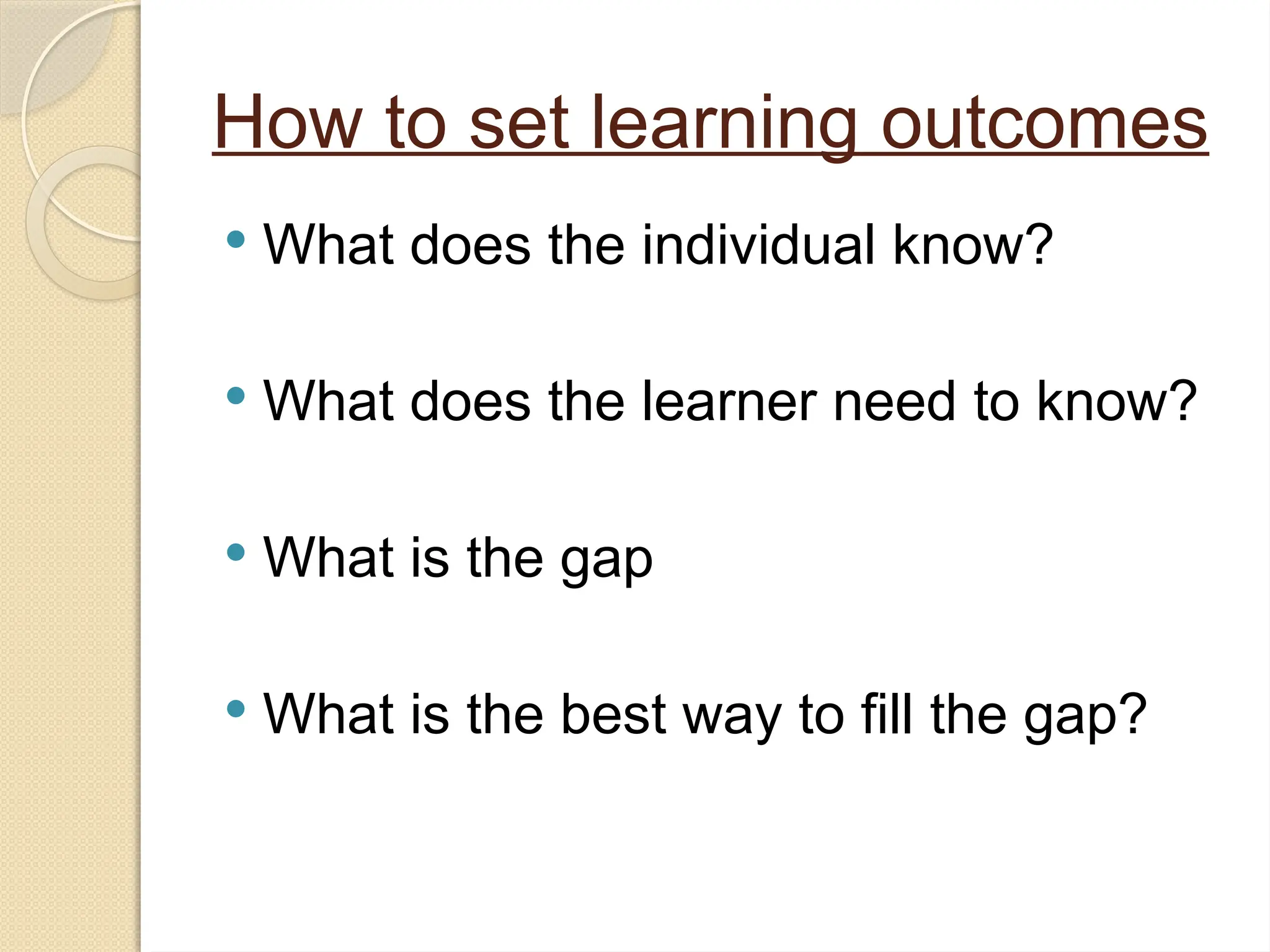
How to set learning outcomes
 What does the individual know?
 What does the learner need to know?
 What is the gap
 What is the best way to fill the gap?
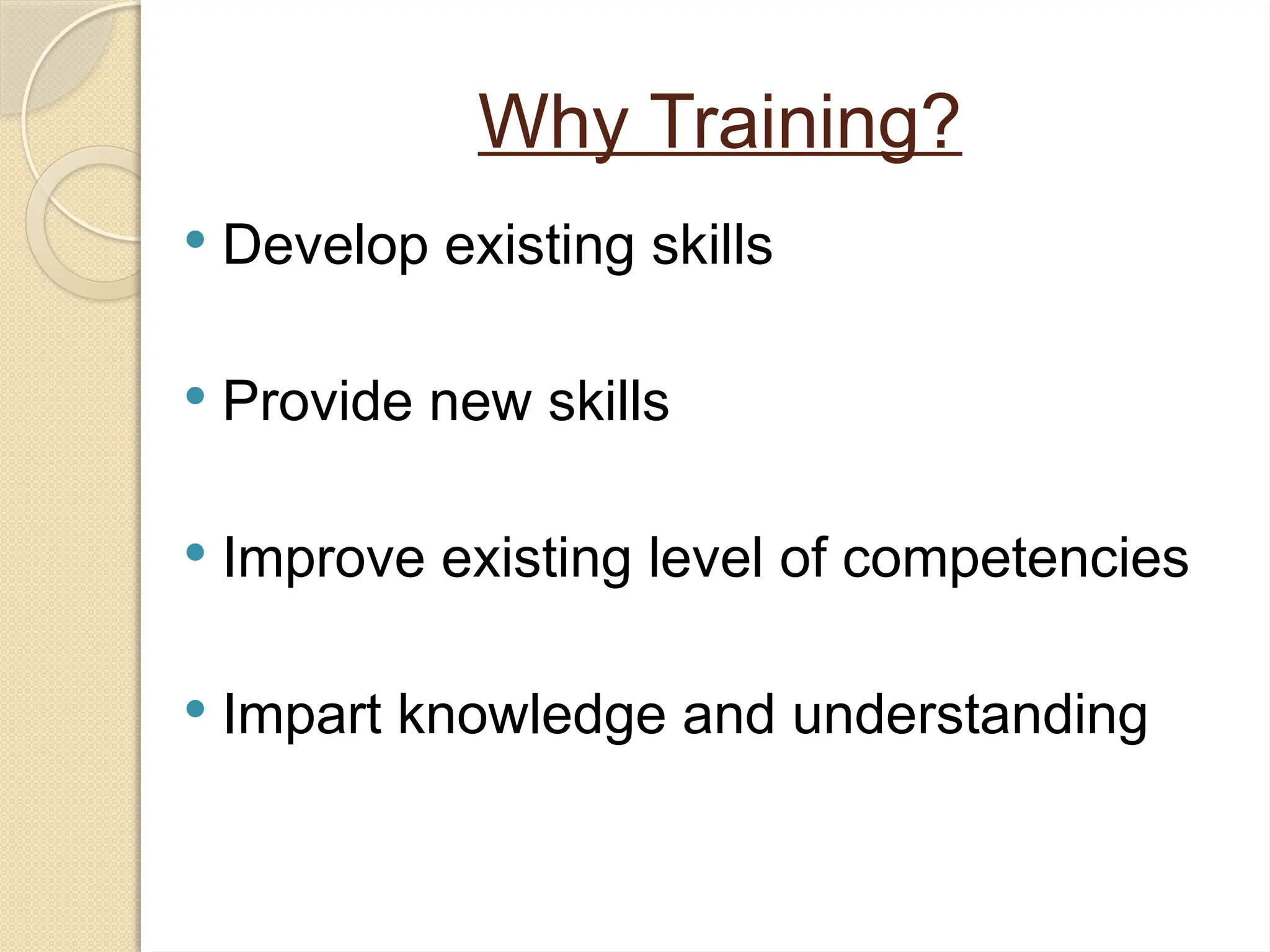
Why Training?
 Develop existing skills
 Provide new skills
 Improve existing level of competencies
 Impart knowledge and understanding
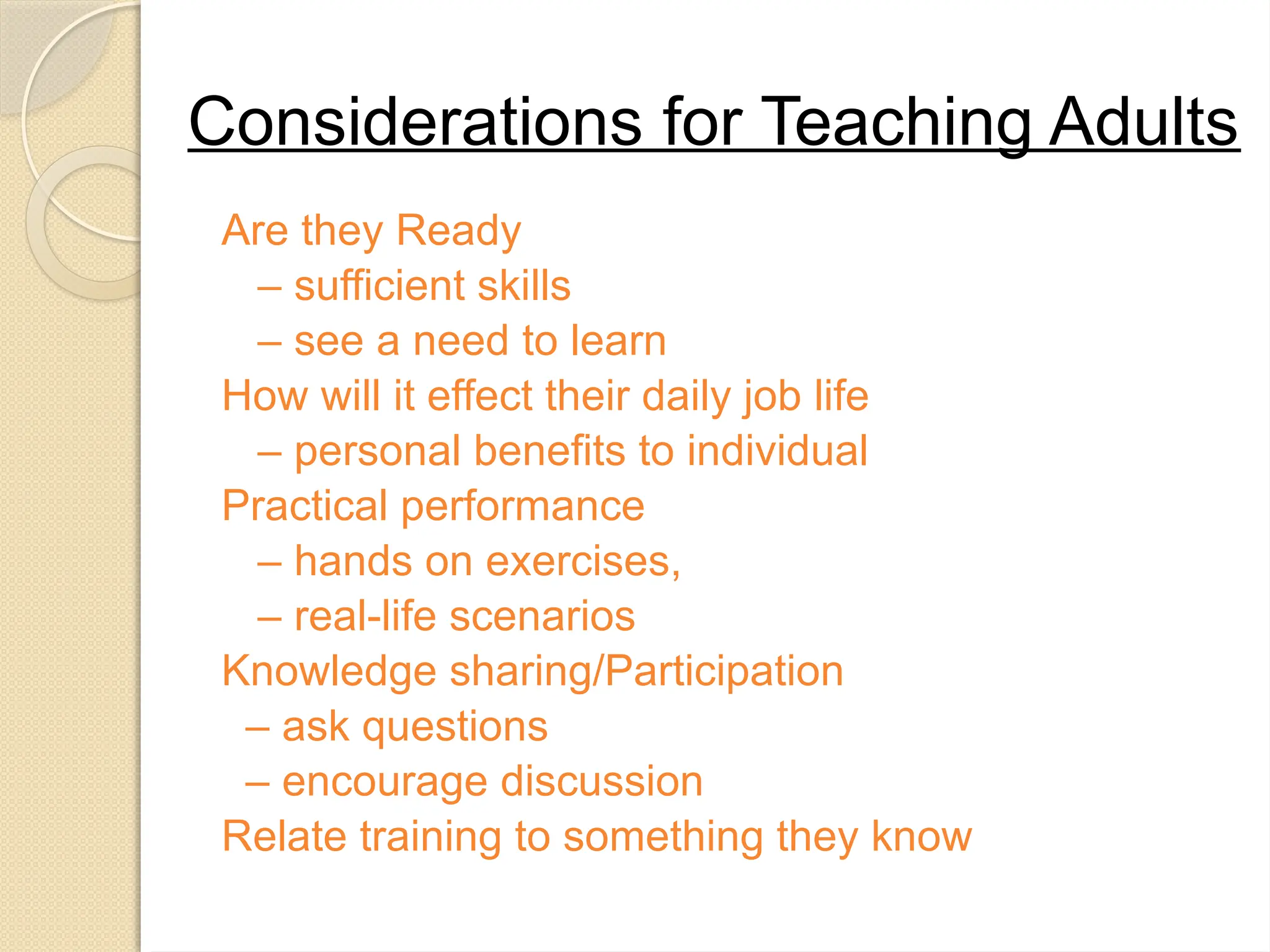
Considerations for Teaching Adults
Are they Ready
– sufficient skills
– see a need to learn
How will it effect their daily job life
– personal benefits to individual
Practical performance
– hands on exercises,
– real-life scenarios
Knowledge sharing/Participation
– ask questions
– encourage discussion
Relate training to something they know
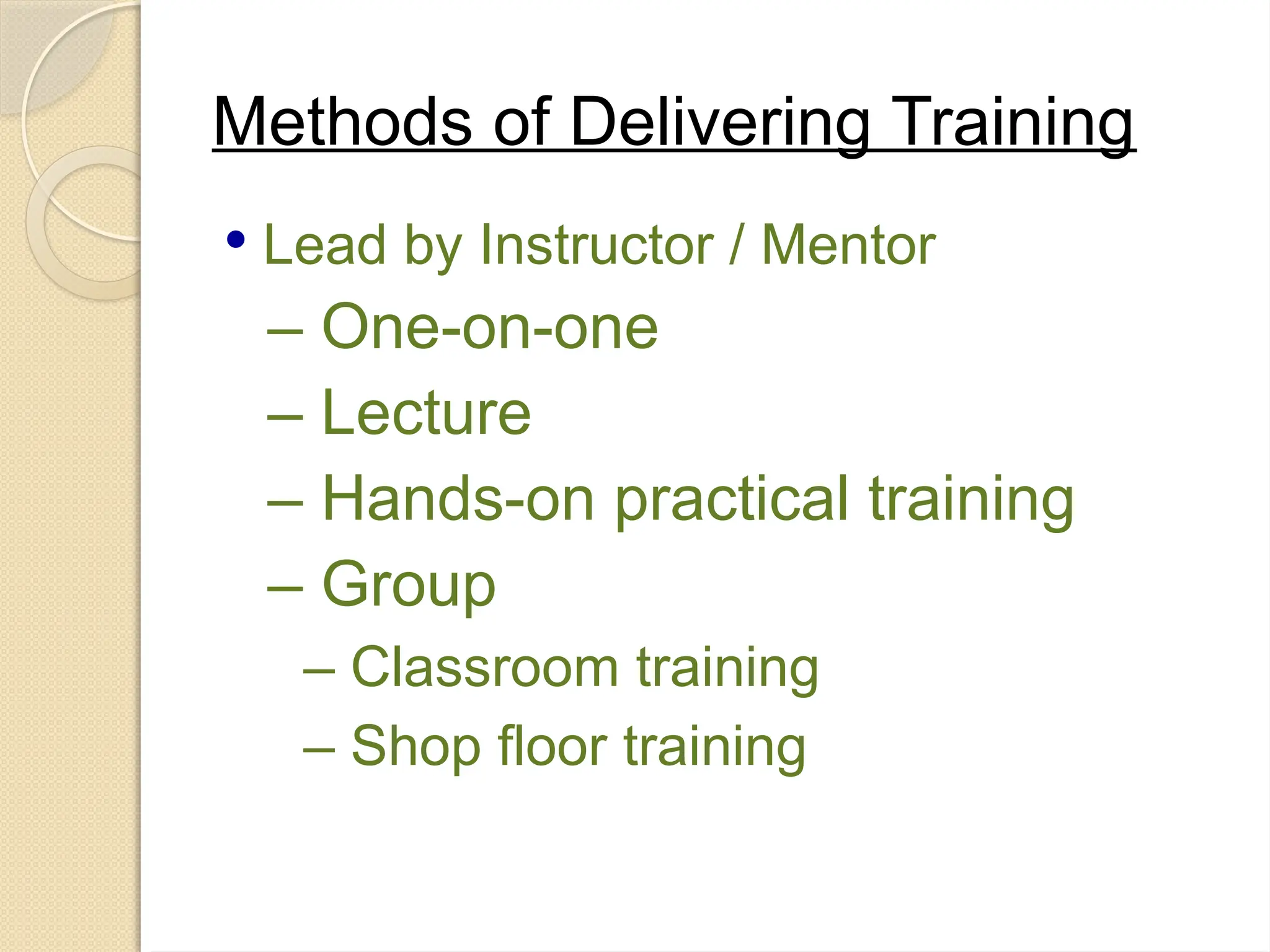
Methods of Delivering Training
 Lead by Instructor / Mentor
– One-on-one
– Lecture
– Hands-on practical training
– Group
– Classroom training
– Shop floor training
Organizing the Presentation
 summary
 questions
 other learning opportunities
 Content
– logically organize the main points (in
chunks)
– add sub-points to each chunk
– include Visual Aids, Exercises, Handouts
– agenda
Consider limitations due to
Facilities
– Language barrier
– Length of training/ How quickly the
training needs to happen
– Delivery method (interactive)
– Eliminate what is not necessary to match
your needs assessment and objectives
– What they already know
– More than they need to know now
– Brainstorm the topic
Skills Required to be a Trainer
Subject matter expertise
• Design
– instructional design
– apply learning principles
• Material collection
– graphics, layout, media creation
– computer experience
• Presentation
– voice:command on language/
communication
– personality
– technical expertise / skilled
Qualities of a Good Trainer
 Training Needs Analysis: A professional trainer
needs to be able to identify training
needs successfully and carry out an
accurate training needs analysis.
 Strong Organizational Skills: Trainers must
always be organized and well-prepared for
training delivery.
 Versatility: No matter how organized you
are, unexpected circumstances and challenges
can always occur.
 Confident Delivery: There are many aspects to
successful training delivery. Professional trainers
shall have a confident style of training delivery
Qualities of a Good Trainer
 Focus: When you are training a group in
any subject, you must have the ability to
remain focused in order to achieve your
goals and cover the planned material.
 Training Design Skills: Professional
trainers should also know how to
design effective and engaging training
programmes.
 Subject Matter Expert:Whatever you
train, you must understand well.
Qualities of a Good Trainer
 Excellent Communication:
Communication is at the core of all
training delivery. This incorporates
spoken, written, active listening, and
comprehension communication skills.
 Patience: People learn in different
ways and at different speeds. When
training others, it is essential that you
are patient and inclusive.
Qualities of a good trainer
 Time Management: Good time
management habits are the secret weapon
of effective, efficient trainers.
 Evaluation Techniques:For your benefit and
that of your trainees, you will need to
understand how to evaluate the outcome of
your training sessions. During Training
Delivery & Evaluation, we devote an entire
module to effective evaluation
techniques you can adopt to achieve this
goal.
Evaluations
Evaluate based on objectives
• Did the participants:
– learn what you had planned?
– implement what they learned?
– improve their job performance
or service to the public?
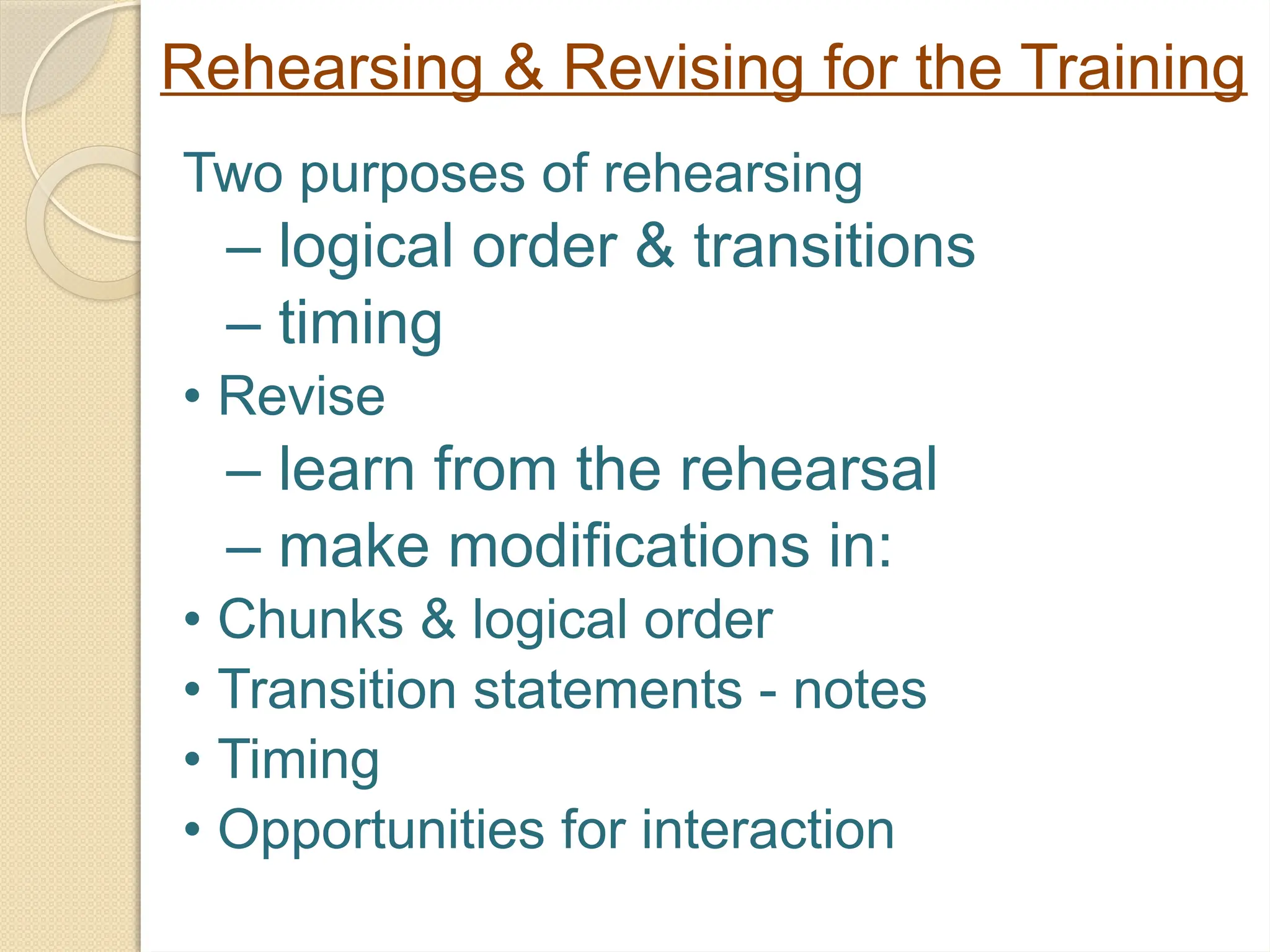
Rehearsing & Revising for the Training
Two purposes of rehearsing
– logical order & transitions
– timing
• Revise
– learn from the rehearsal
– make modifications in:
• Chunks & logical order
• Transition statements - notes
• Timing
• Opportunities for interaction
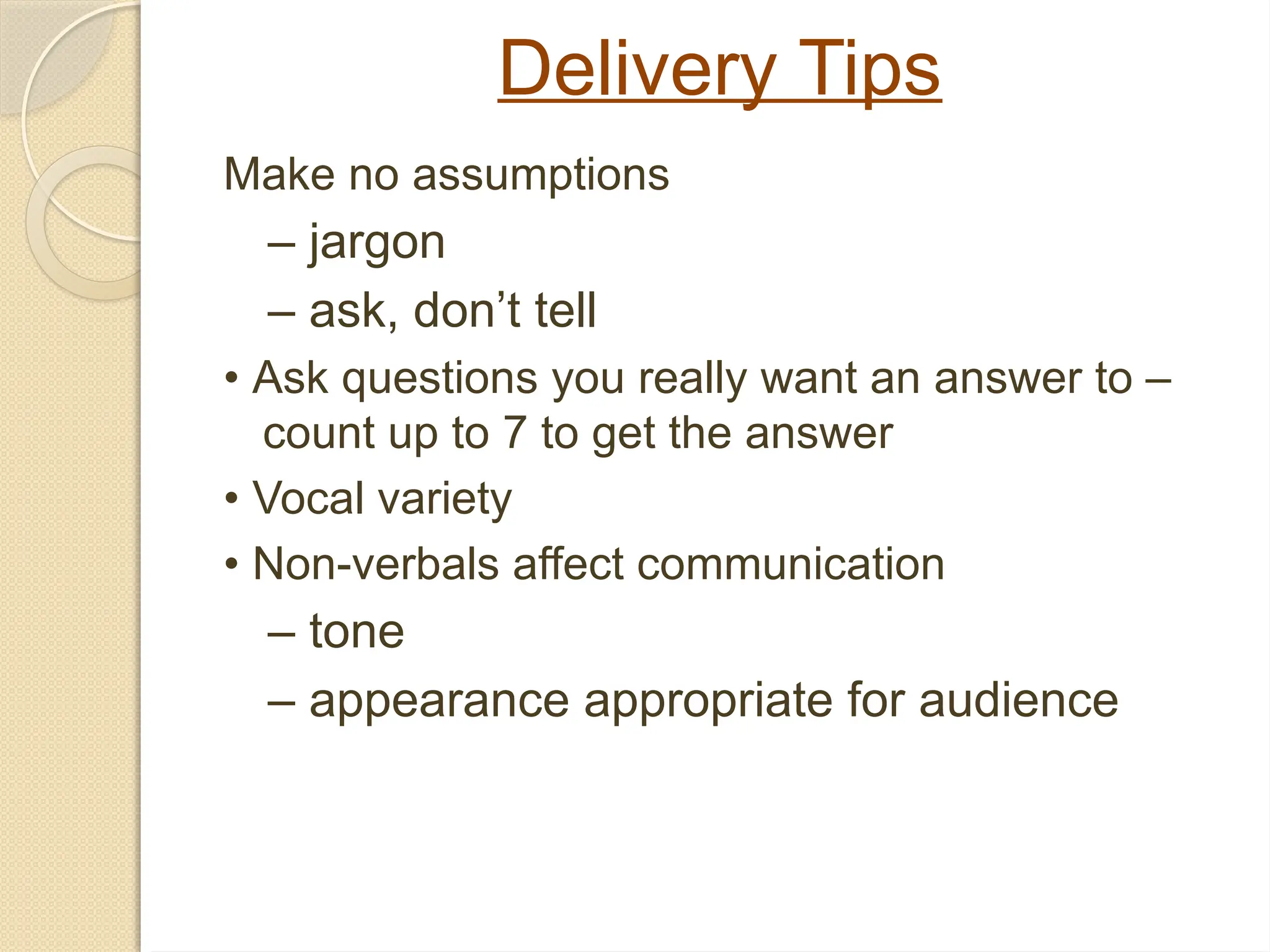
Delivery Tips
Make no assumptions
– jargon
– ask, don’t tell
• Ask questions you really want an answer to –
count up to 7 to get the answer
• Vocal variety
• Non-verbals affect communication
– tone
– appearance appropriate for audience
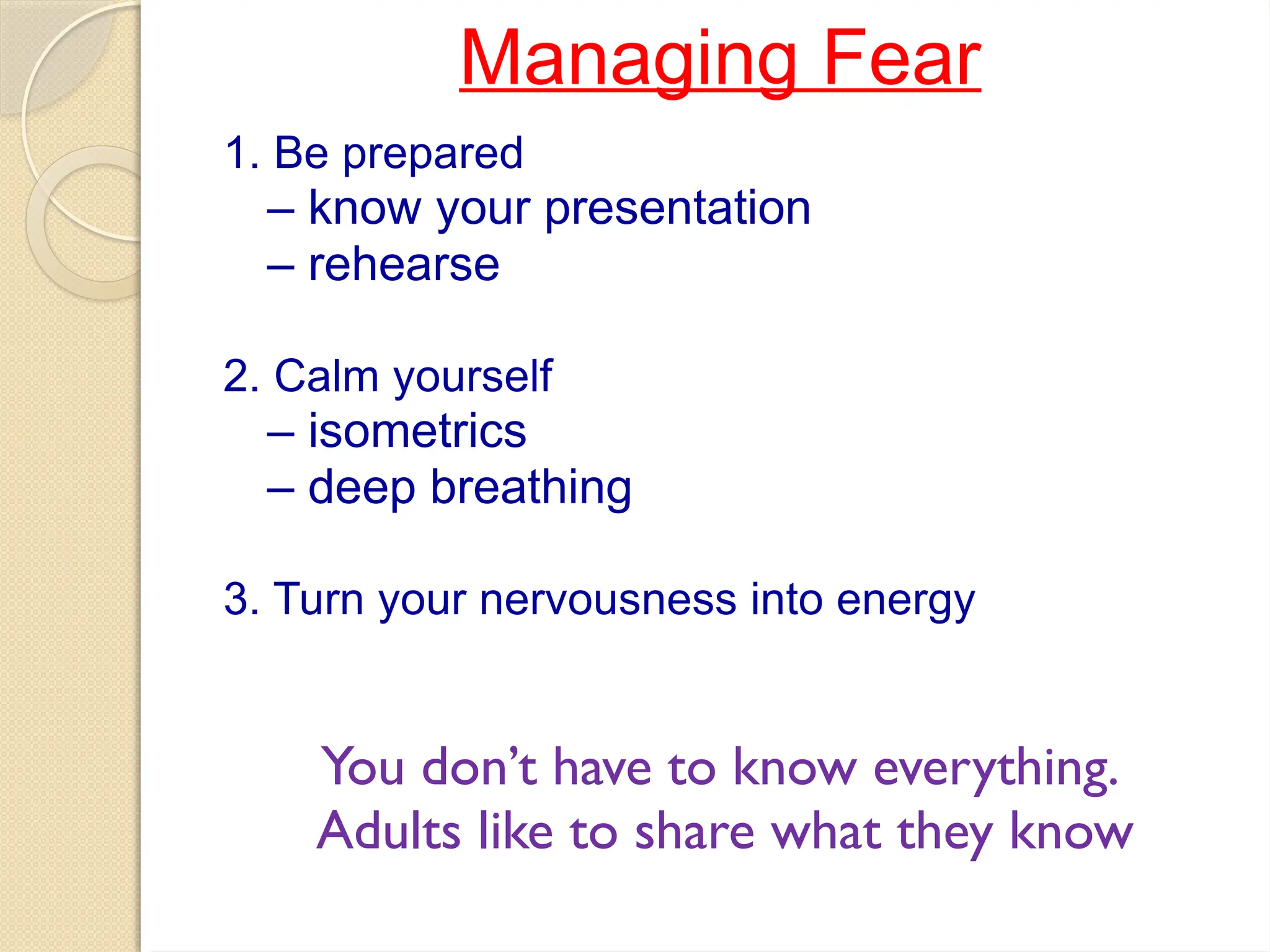
Managing Fear
1. Be prepared
– know your presentation
– rehearse
2. Calm yourself
– isometrics
– deep breathing
3. Turn your nervousness into energy
You don’t have to know everything.
Adults like to share what they know
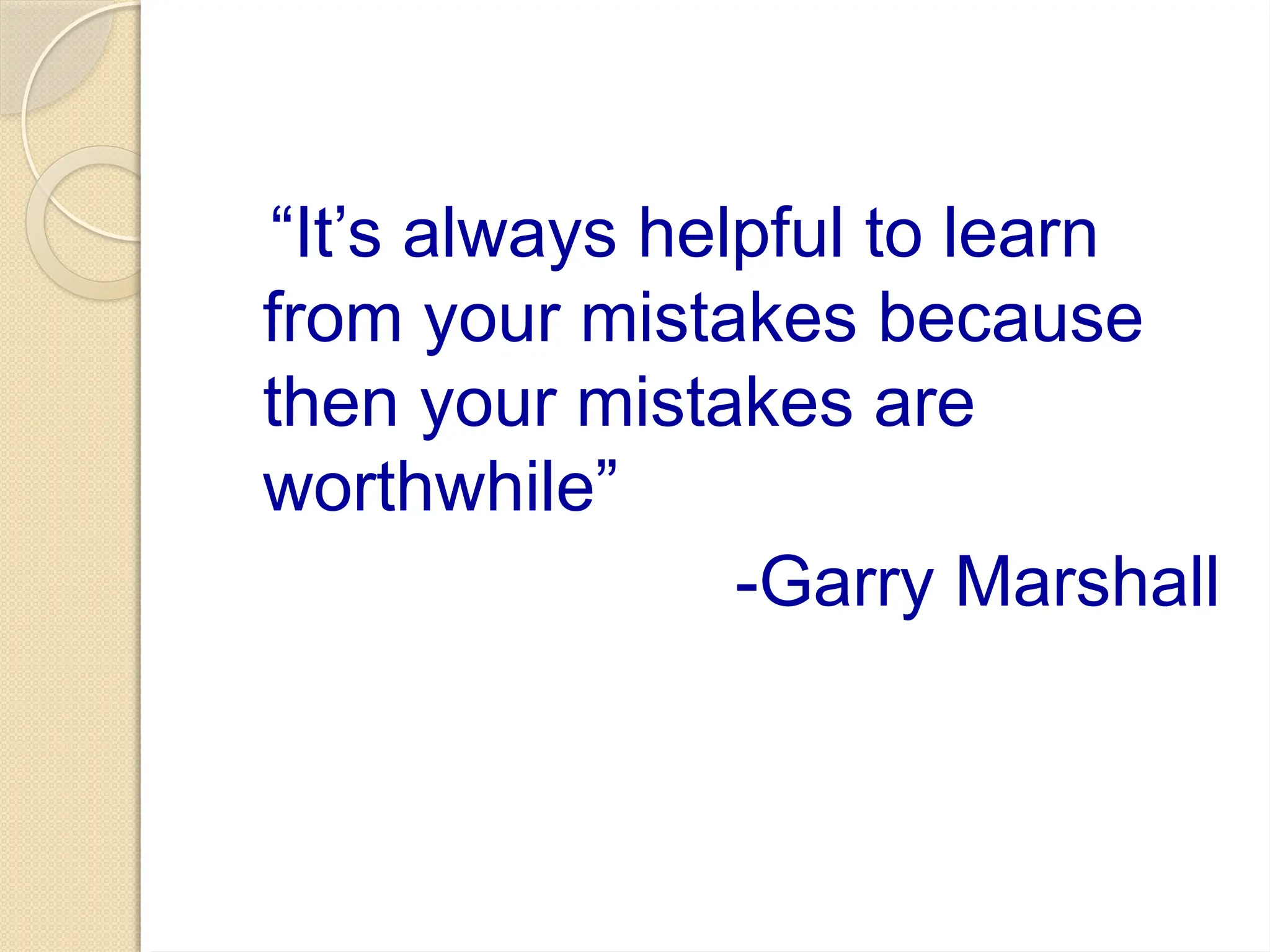
“It’s always helpful to learn
from your mistakes because
then your mistakes are
worthwhile”
-Garry Marshall
Train the Trainer.pptx A training programm for trainers

Train the Trainer.pptx A training programm for trainers

  • 1.
    “TRAIN THE TRAINER” PresentedBy: Neeraj Kumar Rai M.Sc.(Organic Chemistry), PGDBM Black Belt in Lean Six Sigma Certified Lead Auditor in Quality Management System
  • 2.
    What is training? The process of increasing the knowledge and skill  of an employee or group  for doing a particular job ------------------------------------------------------- (Structured and organized educational programs designed to impart specific knowledge, skills, and competencies to individuals)
  • 3.
    Difference between ‘Teaching’& ‘Training’  Teaching provides knowledge in theory and practice of concepts, facts and practices.  Training provides the experience to understand this knowledge and transform it into real time application.
  • 4.
    Identification of Trainingneeds A learning need is:  The gap between individual knows, understand and can do and what the person wants or needs to know, understand and do to reach desired learning outcomes.
  • 5.
    Ways to identifytraining needs  Interviewing  Analysis of current skills against performance standards  Discussions with person and HODs their of
  • 6.
    How to setlearning outcomes  What does the individual know?  What does the learner need to know?  What is the gap  What is the best way to fill the gap?
  • 7.
    Why Training?  Developexisting skills  Provide new skills  Improve existing level of competencies  Impart knowledge and understanding
  • 8.
    Considerations for TeachingAdults Are they Ready – sufficient skills – see a need to learn How will it effect their daily job life – personal benefits to individual Practical performance – hands on exercises, – real-life scenarios Knowledge sharing/Participation – ask questions – encourage discussion Relate training to something they know
  • 9.
    Methods of DeliveringTraining  Lead by Instructor / Mentor – One-on-one – Lecture – Hands-on practical training – Group – Classroom training – Shop floor training
  • 10.
    Organizing the Presentation summary  questions  other learning opportunities  Content – logically organize the main points (in chunks) – add sub-points to each chunk – include Visual Aids, Exercises, Handouts – agenda
  • 11.
    Consider limitations dueto Facilities – Language barrier – Length of training/ How quickly the training needs to happen – Delivery method (interactive) – Eliminate what is not necessary to match your needs assessment and objectives – What they already know – More than they need to know now – Brainstorm the topic
  • 12.
    Skills Required tobe a Trainer Subject matter expertise • Design – instructional design – apply learning principles • Material collection – graphics, layout, media creation – computer experience • Presentation – voice:command on language/ communication – personality – technical expertise / skilled
  • 13.
    Qualities of aGood Trainer  Training Needs Analysis: A professional trainer needs to be able to identify training needs successfully and carry out an accurate training needs analysis.  Strong Organizational Skills: Trainers must always be organized and well-prepared for training delivery.  Versatility: No matter how organized you are, unexpected circumstances and challenges can always occur.  Confident Delivery: There are many aspects to successful training delivery. Professional trainers shall have a confident style of training delivery
  • 14.
    Qualities of aGood Trainer  Focus: When you are training a group in any subject, you must have the ability to remain focused in order to achieve your goals and cover the planned material.  Training Design Skills: Professional trainers should also know how to design effective and engaging training programmes.  Subject Matter Expert:Whatever you train, you must understand well.
  • 15.
    Qualities of aGood Trainer  Excellent Communication: Communication is at the core of all training delivery. This incorporates spoken, written, active listening, and comprehension communication skills.  Patience: People learn in different ways and at different speeds. When training others, it is essential that you are patient and inclusive.
  • 16.
    Qualities of agood trainer  Time Management: Good time management habits are the secret weapon of effective, efficient trainers.  Evaluation Techniques:For your benefit and that of your trainees, you will need to understand how to evaluate the outcome of your training sessions. During Training Delivery & Evaluation, we devote an entire module to effective evaluation techniques you can adopt to achieve this goal.
  • 17.
    Evaluations Evaluate based onobjectives • Did the participants: – learn what you had planned? – implement what they learned? – improve their job performance or service to the public?
  • 18.
    Rehearsing & Revisingfor the Training Two purposes of rehearsing – logical order & transitions – timing • Revise – learn from the rehearsal – make modifications in: • Chunks & logical order • Transition statements - notes • Timing • Opportunities for interaction
  • 19.
    Delivery Tips Make noassumptions – jargon – ask, don’t tell • Ask questions you really want an answer to – count up to 7 to get the answer • Vocal variety • Non-verbals affect communication – tone – appearance appropriate for audience
  • 20.
    Managing Fear 1. Beprepared – know your presentation – rehearse 2. Calm yourself – isometrics – deep breathing 3. Turn your nervousness into energy You don’t have to know everything. Adults like to share what they know
  • 21.
    “It’s always helpfulto learn from your mistakes because then your mistakes are worthwhile” -Garry Marshall