Presented By: Maga Ram Patel
Department of Processing and Food Engineering
College of Technology and Engineering, MPUAT, Udaipur
Presentation
on
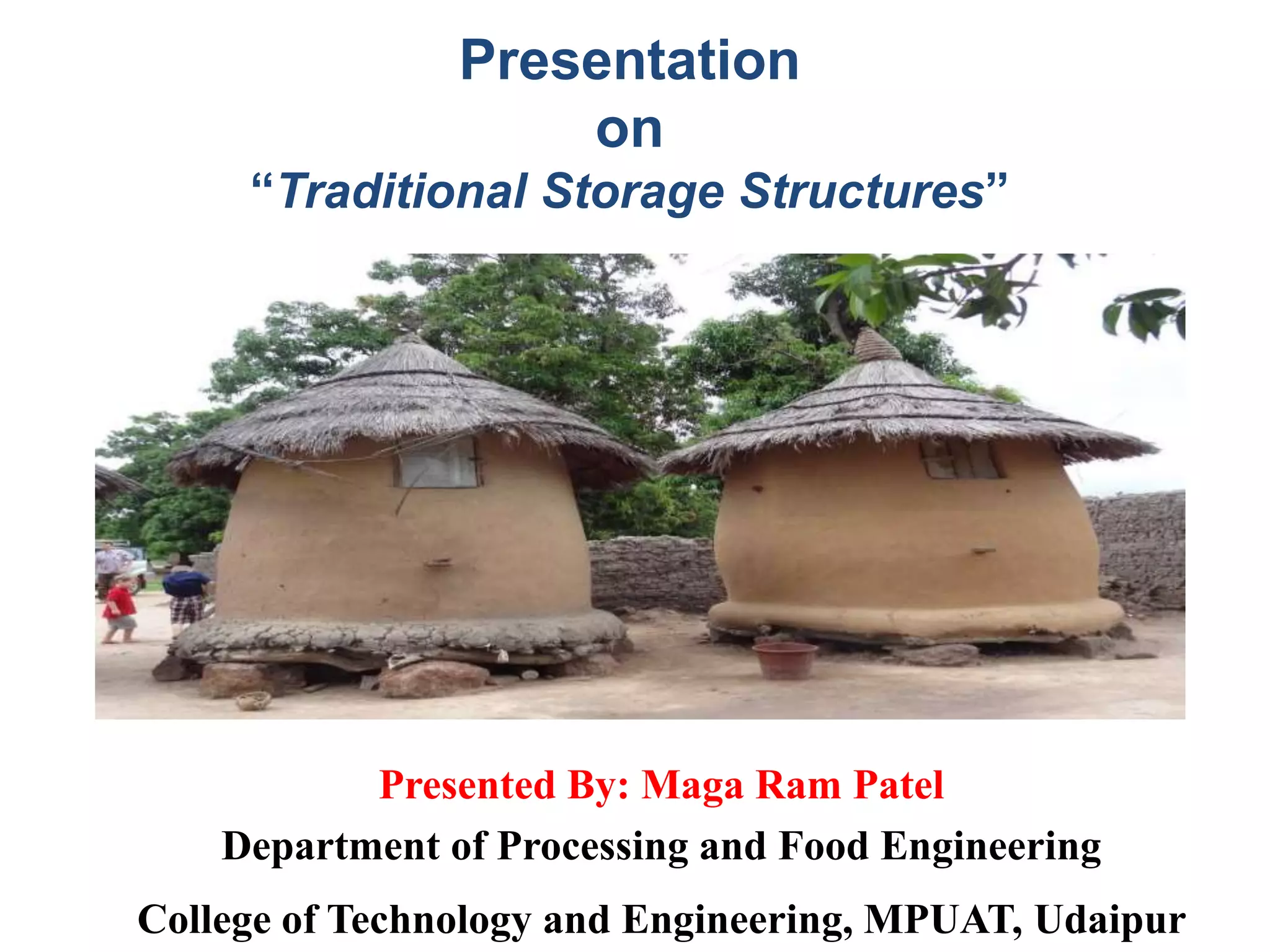
“Traditional Storage Structures”
What do you mean by storage
• Storage is an interim and a repeated phase during transit
to agricultural products from processor to consumer.
• Agriculture products need to be stored from one harvest
to next thus, demanding additional carry over as
safeguard
 against a following crop of low yield or poor quality.
 against speculation in price and market demand.
 against shortage and families.
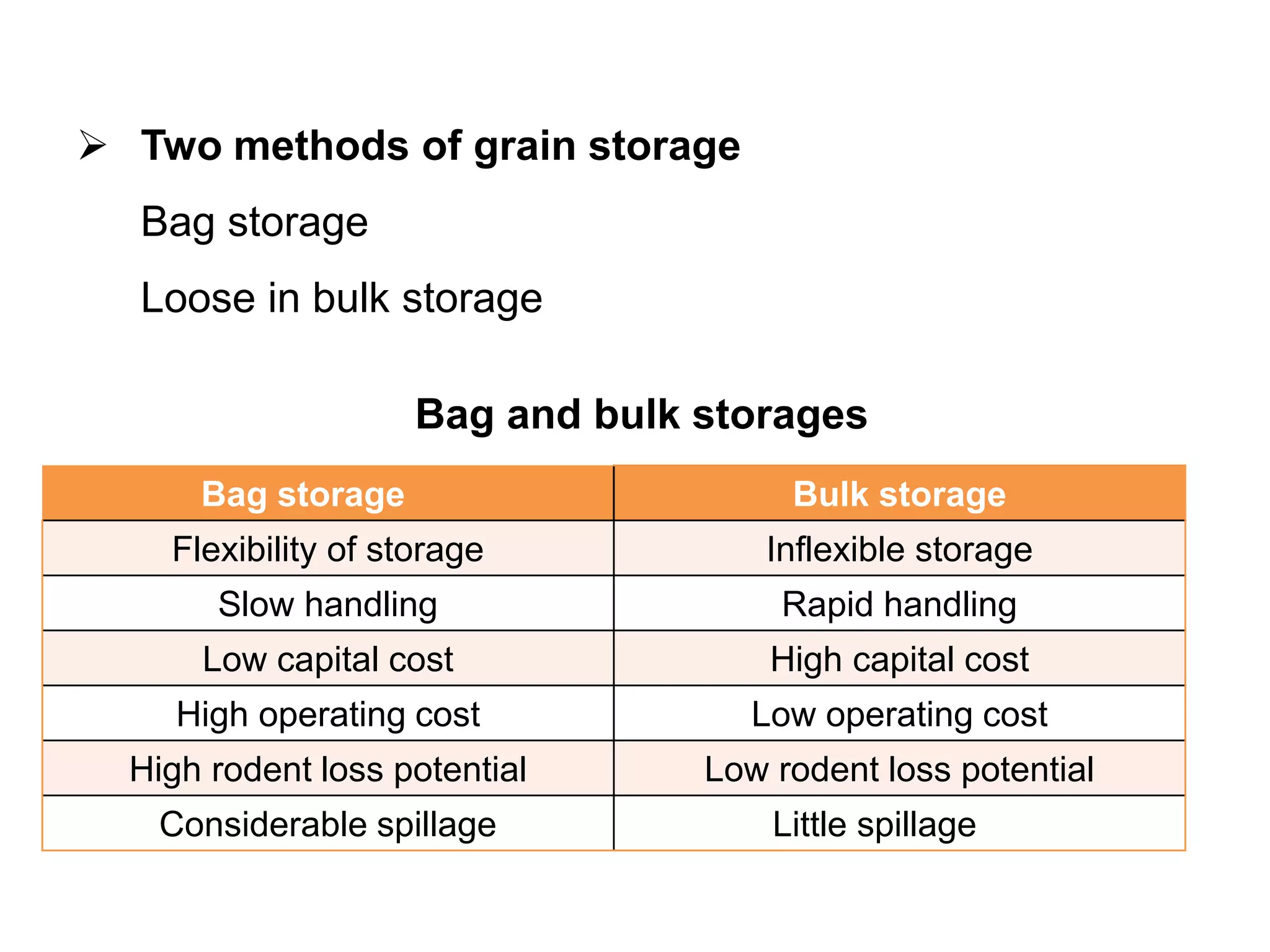
 Two methods of grain storage
Bag storage
Loose in bulk storage
Bag storage Bulk storage
Flexibility of storage Inflexible storage
Slow handling Rapid handling
Low capital cost High capital cost
High operating cost Low operating cost
High rodent loss potential Low rodent loss potential
Considerable spillage Little spillage
Bag and bulk storages
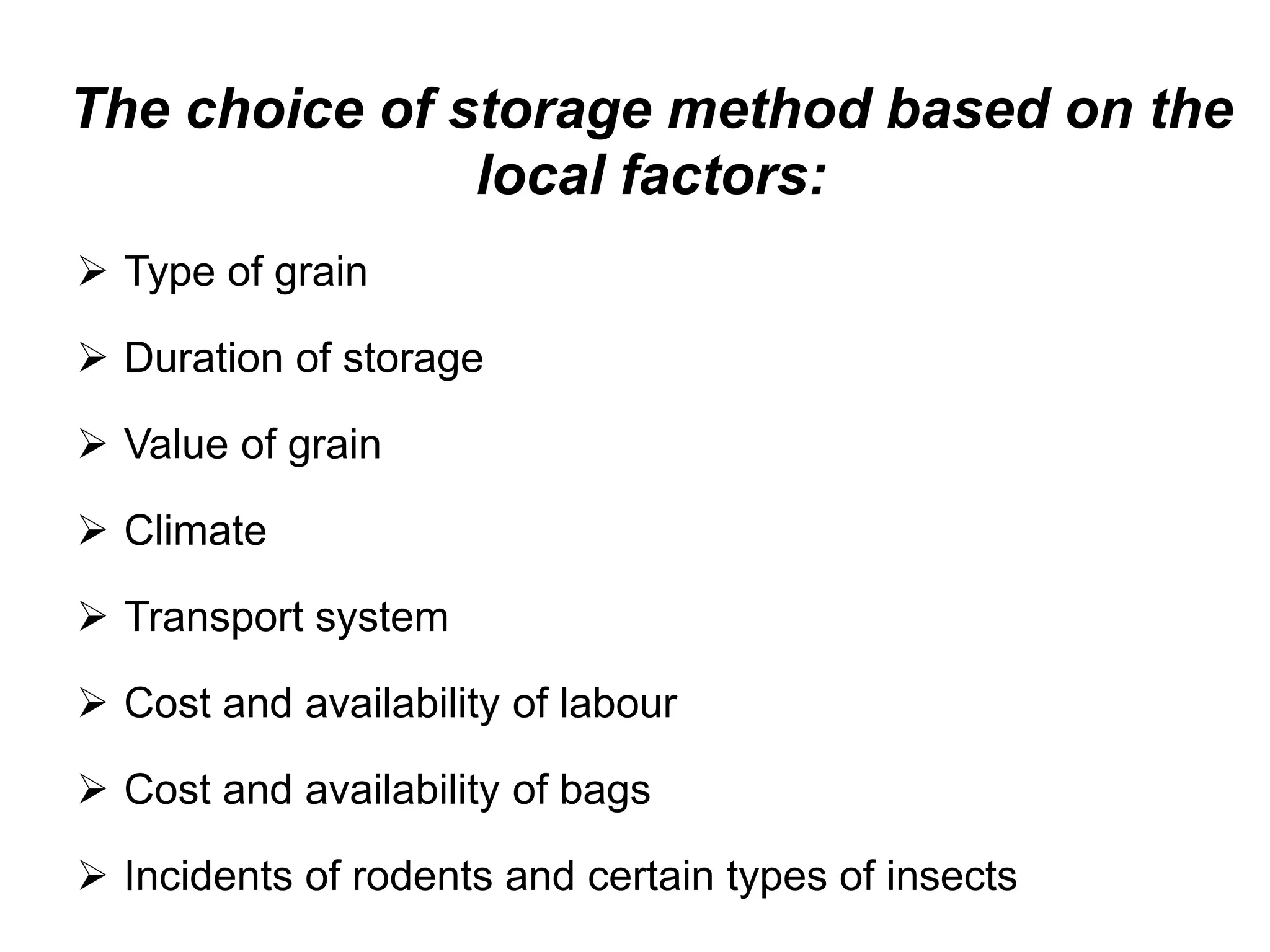
The choice of storage method based on the
local factors:
 Type of grain
 Duration of storage
 Value of grain
 Climate
 Transport system
 Cost and availability of labour
 Cost and availability of bags
 Incidents of rodents and certain types of insects
Traditional Storage Structures
• In this types of storage structures the grain is generally
stored in bulk.
• This types of storage structures having generally
capacities between 1 to 50 tonnes.
• The storage of grain is generally done in one of the
following storage structures in the different rural and
urban regions of India in bulk as well as in bag storage.
 Morai type
 Bukhari type
 Kothar type
 Mud Kothi type
 Muda type
 Kanaj type
 Kuthla type
 Metal/ Steel bin type
 Bag type
Morai type storage structure
• These structures are very similar to
the shape of an inverted cone.
• Used for the storage of paddy, maize
and sorghum (jowar) in the rural areas
of eastern and southern regions of
India.
• Capacity:- 3.5 to 18 tonnes.
• They are placed on a raised platform
supported on wooden or masonry
pillars.
Bukhari type storage structure
• Bukhari type storage structures
are cylindrical in shape.
• Used for storage of sorghum,
wheat, paddy, maize etc.
• Capacity:- 3.5 to 18 tonnes.
• Made of mud or combination of
mud and split bamboo.
• Raised above the ground by
wooden or masonry platform.
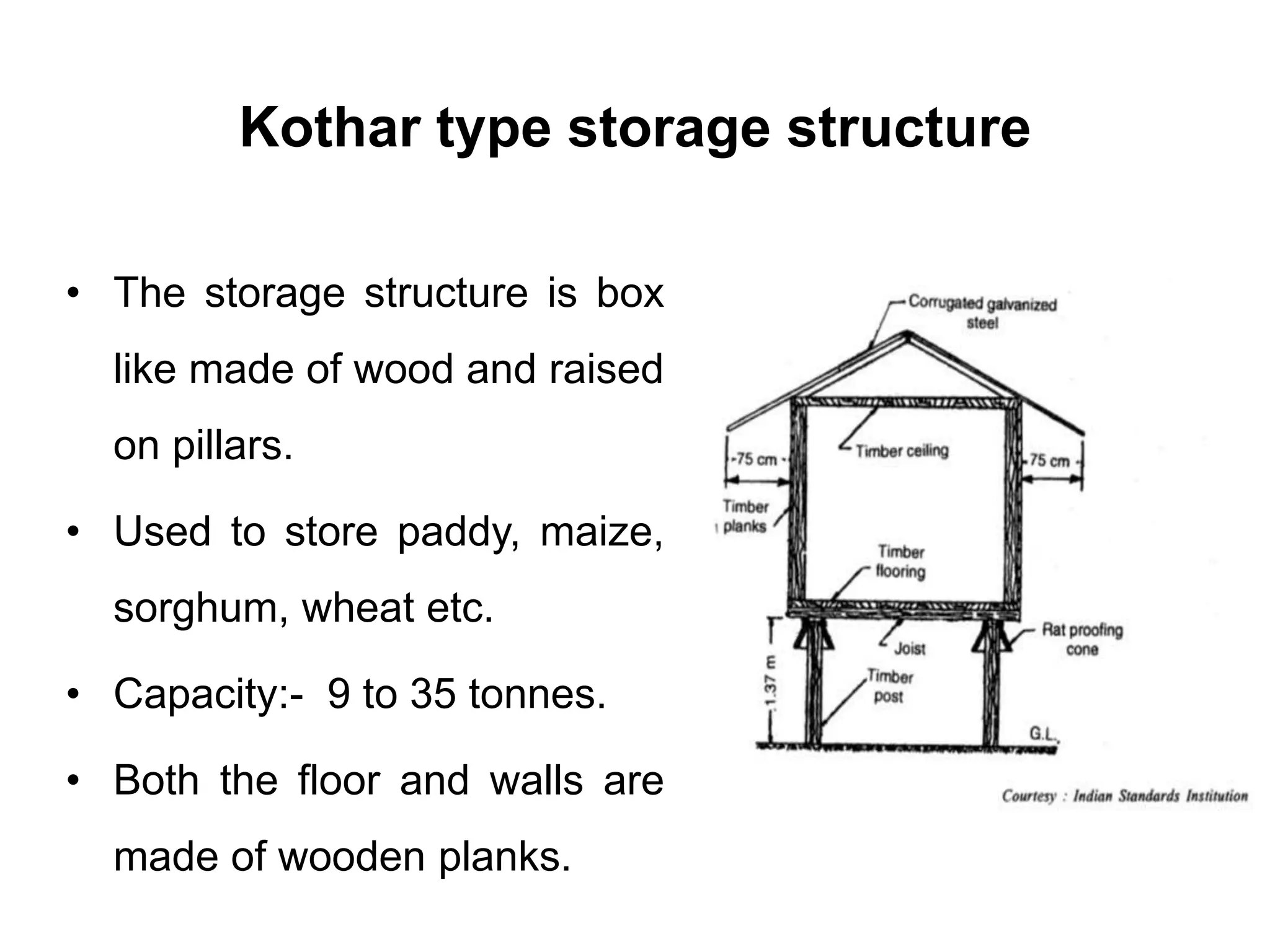
Kothar type storage structure
• The storage structure is box
like made of wood and raised
on pillars.
• Used to store paddy, maize,
sorghum, wheat etc.
• Capacity:- 9 to 35 tonnes.
• Both the floor and walls are
made of wooden planks.
Mud Kothi (Mud bin) type storage structure
• These Kothies are generally rectangular
in shape but cylindrical Kothi is also
common in some region.
• These storage structures are quite
common in rural areas for storage of
grains and other seeds.
• Capacity:- 1 to 50 tonnes.
• These are made from mud mixed with
dung and straw.
Kanaj type of Storage Structure
• These storage structures are very common in the rural
areas of Karnataka and Maharashtra for storage of grains.
• The capacity of Kanaj varies between 1 to 20 tonnes.
• It is being made by bamboo splits.
• The shape of storage structure is cylindrical.
• The walls of storage structure are sealed with mud plaster
on both sides.
• The roof of the structure is conical and thatched.
• The roof overhang on all sides.
Kuthla type of storage Structure
• These storage structures are very much common in rural
areas of Bihar and Uttar Pradesh.
• These structures are kept inside and made of burnt
mud.
Muda type of storage Structure
• These are in use for storing grains in the rural areas of
Bihar.
• The capacity of muda varies between 1 to 3 tonnes.
• It is being made of "Narai" ropes.
• The shape of muda is cylindrical and being made in
various sizes.
Metal Bin type of storage Structure
• Bins made of steel, Aluminum, R.C.C are used for
storage of grains inside and outside the house.
• These bins are fire and moisture proof.
• The bins have long durability and produced on
commercial scale.
• The capacity ranges from 50 kg to 10 tonnes.
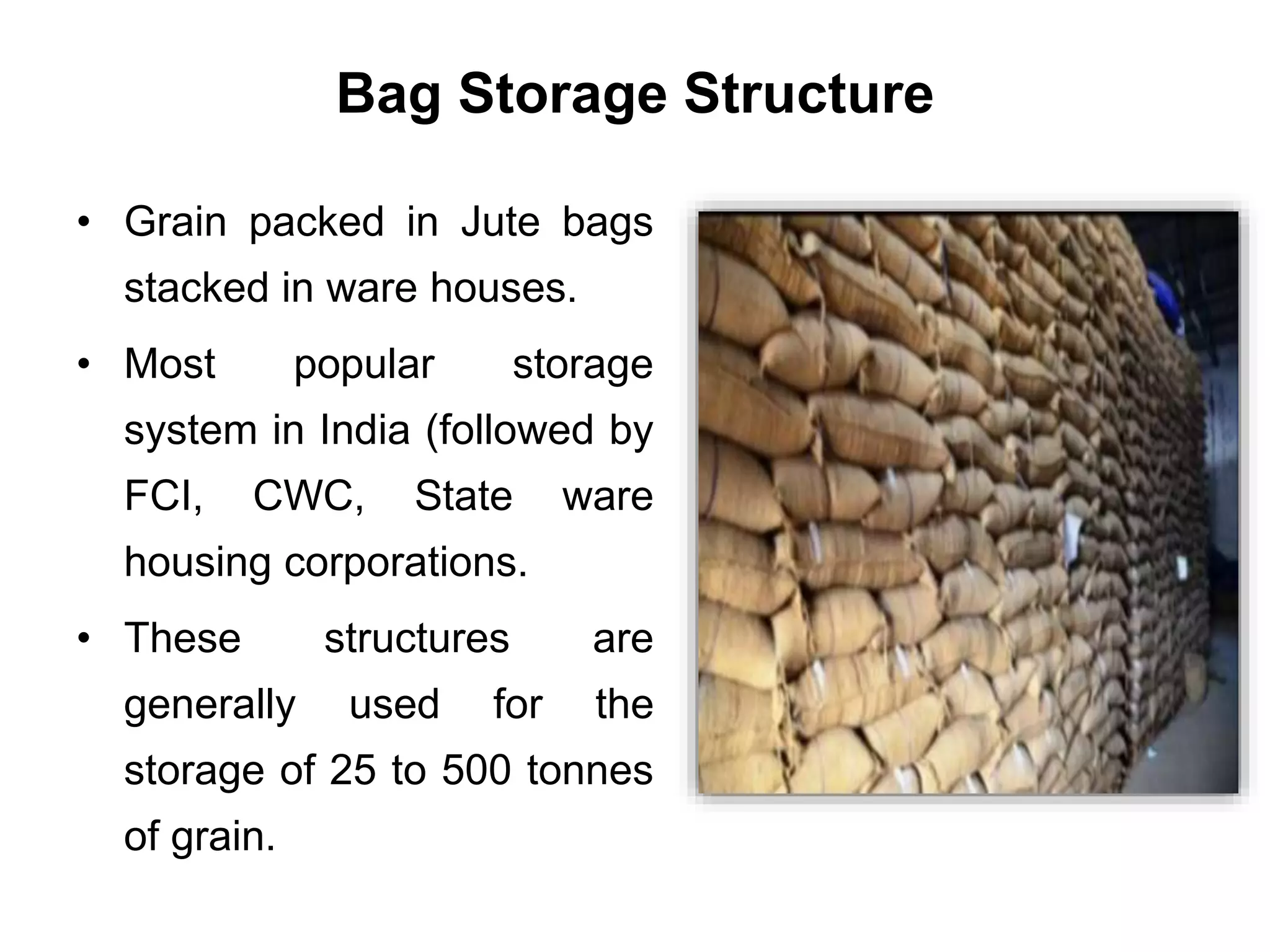
Bag Storage Structure
• Grain packed in Jute bags
stacked in ware houses.
• Most popular storage
system in India (followed by
FCI, CWC, State ware
housing corporations.
• These structures are
generally used for the
storage of 25 to 500 tonnes
of grain.
Continued…..
• Bags of different capacities (35,
50, 75 and 100 kg) with or
without inside plastic lining are
used.
• The standard size of a 100 kg
bag is 100 cm x 60 cm x 30
cm.
• This bag can store 93 Kg of
Wheat and 75 Kg of Paddy.
“What we earn is not important but what we save is important.
Save Energy and Save Earth for your future generations”
Looking forward for your feed back soon
M:- 9672824488, E-mail:- patelmagaram1139@gmail.com

Traditional storage structures

  • 1.
    Presented By: MagaRam Patel Department of Processing and Food Engineering College of Technology and Engineering, MPUAT, Udaipur Presentation on “Traditional Storage Structures”
  • 2.
    What do youmean by storage • Storage is an interim and a repeated phase during transit to agricultural products from processor to consumer. • Agriculture products need to be stored from one harvest to next thus, demanding additional carry over as safeguard  against a following crop of low yield or poor quality.  against speculation in price and market demand.  against shortage and families.
  • 3.
     Two methodsof grain storage Bag storage Loose in bulk storage Bag storage Bulk storage Flexibility of storage Inflexible storage Slow handling Rapid handling Low capital cost High capital cost High operating cost Low operating cost High rodent loss potential Low rodent loss potential Considerable spillage Little spillage Bag and bulk storages
  • 4.
    The choice ofstorage method based on the local factors:  Type of grain  Duration of storage  Value of grain  Climate  Transport system  Cost and availability of labour  Cost and availability of bags  Incidents of rodents and certain types of insects
  • 5.
    Traditional Storage Structures •In this types of storage structures the grain is generally stored in bulk. • This types of storage structures having generally capacities between 1 to 50 tonnes. • The storage of grain is generally done in one of the following storage structures in the different rural and urban regions of India in bulk as well as in bag storage.
  • 6.
     Morai type Bukhari type  Kothar type  Mud Kothi type  Muda type  Kanaj type  Kuthla type  Metal/ Steel bin type  Bag type
  • 7.
    Morai type storagestructure • These structures are very similar to the shape of an inverted cone. • Used for the storage of paddy, maize and sorghum (jowar) in the rural areas of eastern and southern regions of India. • Capacity:- 3.5 to 18 tonnes. • They are placed on a raised platform supported on wooden or masonry pillars.
  • 8.
    Bukhari type storagestructure • Bukhari type storage structures are cylindrical in shape. • Used for storage of sorghum, wheat, paddy, maize etc. • Capacity:- 3.5 to 18 tonnes. • Made of mud or combination of mud and split bamboo. • Raised above the ground by wooden or masonry platform.
  • 9.
    Kothar type storagestructure • The storage structure is box like made of wood and raised on pillars. • Used to store paddy, maize, sorghum, wheat etc. • Capacity:- 9 to 35 tonnes. • Both the floor and walls are made of wooden planks.
  • 10.
    Mud Kothi (Mudbin) type storage structure • These Kothies are generally rectangular in shape but cylindrical Kothi is also common in some region. • These storage structures are quite common in rural areas for storage of grains and other seeds. • Capacity:- 1 to 50 tonnes. • These are made from mud mixed with dung and straw.
  • 11.
    Kanaj type ofStorage Structure • These storage structures are very common in the rural areas of Karnataka and Maharashtra for storage of grains. • The capacity of Kanaj varies between 1 to 20 tonnes. • It is being made by bamboo splits. • The shape of storage structure is cylindrical. • The walls of storage structure are sealed with mud plaster on both sides. • The roof of the structure is conical and thatched. • The roof overhang on all sides.
  • 12.
    Kuthla type ofstorage Structure • These storage structures are very much common in rural areas of Bihar and Uttar Pradesh. • These structures are kept inside and made of burnt mud.
  • 13.
    Muda type ofstorage Structure • These are in use for storing grains in the rural areas of Bihar. • The capacity of muda varies between 1 to 3 tonnes. • It is being made of "Narai" ropes. • The shape of muda is cylindrical and being made in various sizes.
  • 14.
    Metal Bin typeof storage Structure • Bins made of steel, Aluminum, R.C.C are used for storage of grains inside and outside the house. • These bins are fire and moisture proof. • The bins have long durability and produced on commercial scale. • The capacity ranges from 50 kg to 10 tonnes.
  • 15.
    Bag Storage Structure •Grain packed in Jute bags stacked in ware houses. • Most popular storage system in India (followed by FCI, CWC, State ware housing corporations. • These structures are generally used for the storage of 25 to 500 tonnes of grain.
  • 16.
    Continued….. • Bags ofdifferent capacities (35, 50, 75 and 100 kg) with or without inside plastic lining are used. • The standard size of a 100 kg bag is 100 cm x 60 cm x 30 cm. • This bag can store 93 Kg of Wheat and 75 Kg of Paddy.
  • 17.
    “What we earnis not important but what we save is important. Save Energy and Save Earth for your future generations” Looking forward for your feed back soon M:- 9672824488, E-mail:- patelmagaram1139@gmail.com