Tracheostomy Care
Dr Ibrahim Baloch
Resident, Thoracic surgery department
Combined Military Hospital
Rawalpindi, Pakistan
Tracheostomy
Tracheostomy is an operative
procedure that creates a
surgical airway in the cervical
trachea.
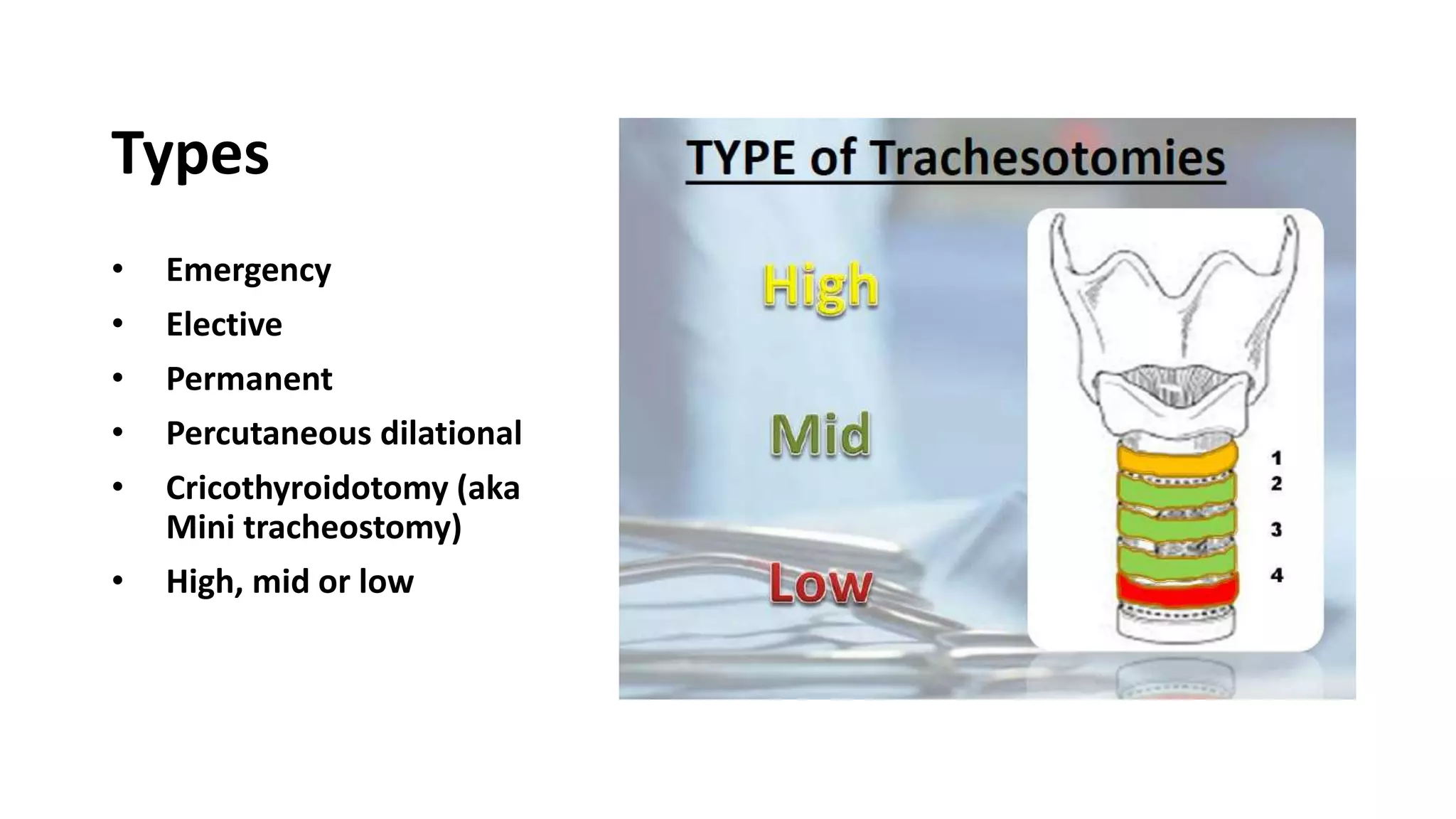
Types
• Emergency
• Elective
• Permanent
• Percutaneous dilational
• Cricothyroidotomy (aka
Mini tracheostomy)
• High, mid or low
Technique
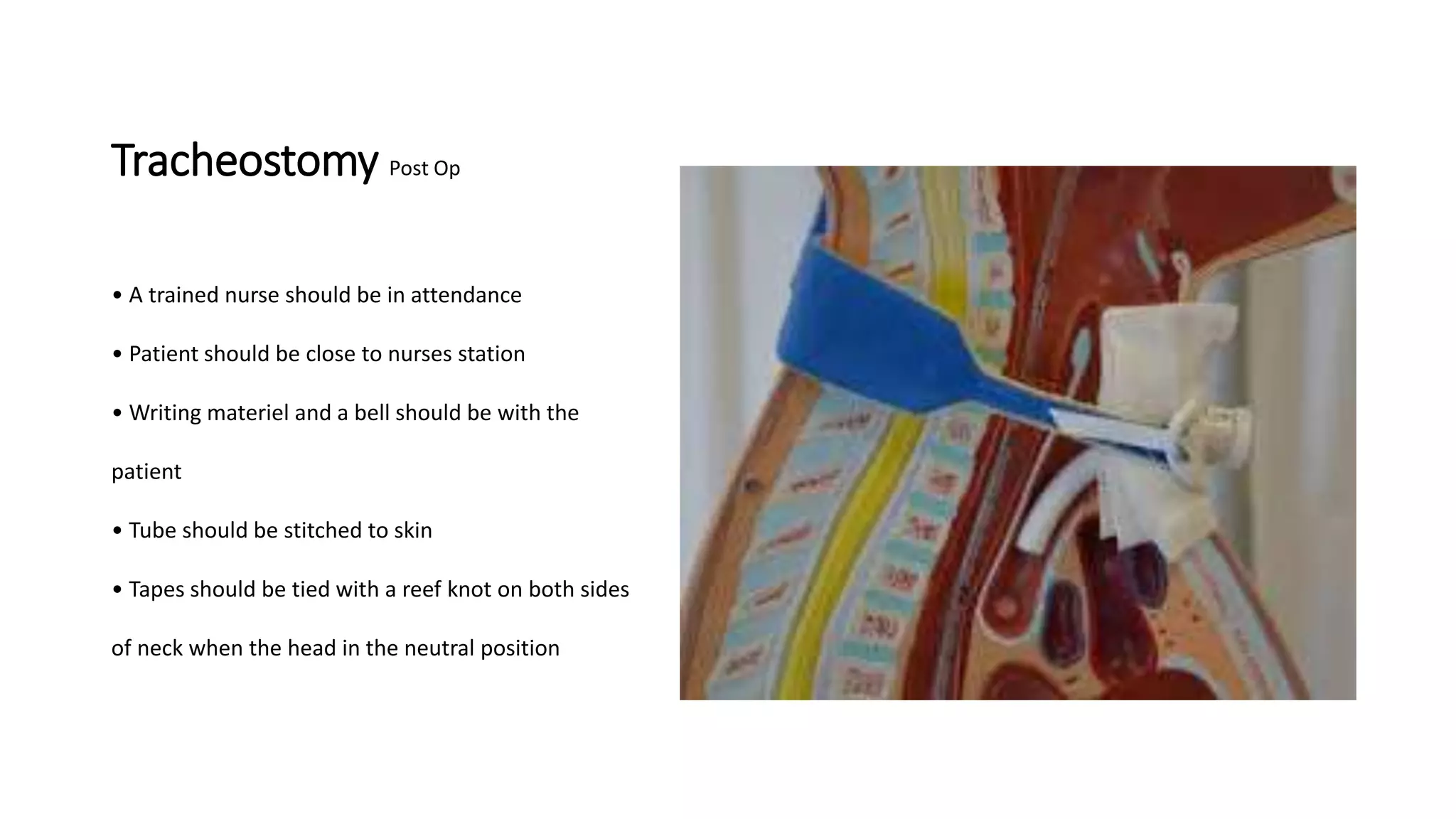
Tracheostomy Post Op
• A trained nurse should be in attendance
• Patient should be close to nurses station
• Writing materiel and a bell should be with the
patient
• Tube should be stitched to skin
• Tapes should be tied with a reef knot on both sides
of neck when the head in the neutral position
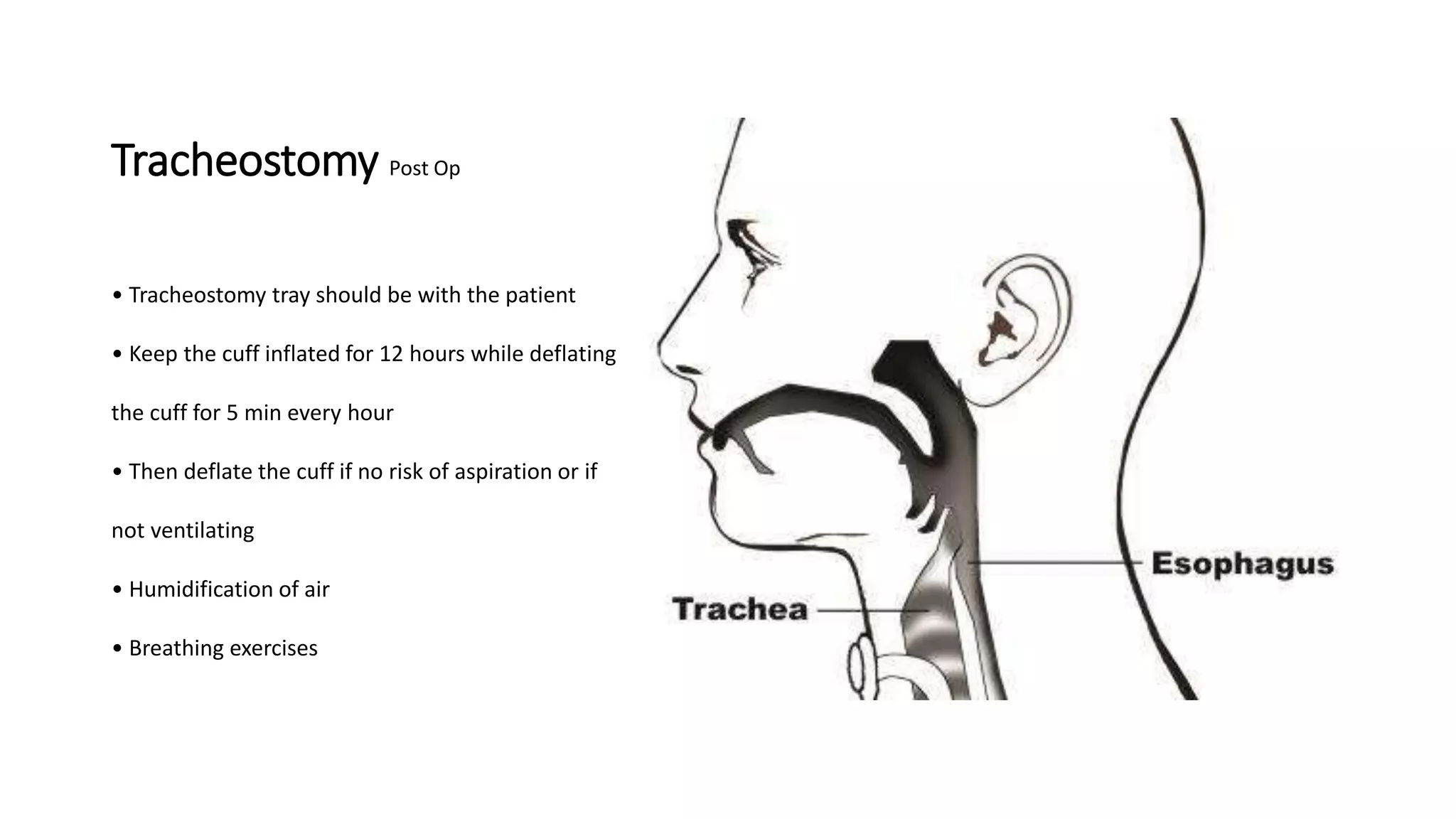
Tracheostomy Post Op
• Tracheostomy tray should be with the patient
• Keep the cuff inflated for 12 hours while deflating
the cuff for 5 min every hour
• Then deflate the cuff if no risk of aspiration or if
not ventilating
• Humidification of air
• Breathing exercises
Indications
• Rattling mucus sounds from the trachea.
• Fast breathing.
• Bubbles of mucus in trachea opening.
• Older children may signal a need to be suctioned.
• Signs of respiratory distress.
• Dry raspy breathing.
Equipment
• Suction machine
• Suction tubes
• Normal saline
• Sterile or clean cup
• Ambu bag
• Gauze swabs
• Gloves  mask
Tube Change
• Better to be done by the surgeon who did the
surgery
• Smaller size tracheostomy tubes, tracheal dilator,
oxygen, suction
• How to rail - road in difficult intubation
WHAT TO DO IF THE TRACHY TUBE COMES OUT
ACCIENTALLY
• Try to stay calm.
• Reinsert tube immediately.
• Use smaller size if the regular size does not fit.
• Opening the air way is the first priority ( use tracheal dialator)
• If you cannot reinsert the tube observe the child.
• Apply oxygen.
• Inform doctor.
• Monitor oxygen saturation
Precautions
• Try to treat child / patient as normally.
• Use shallow water for bath.
• No swimming.
• Avoid powder, chlorine bleach.
• Prevent foreign objects entering the trachy
tube.
• Avoid chalk dust.
• No plastic bibs.
• No necklaces.
• Avoid animals with fine hair.
• Do not allow anyone to smoke near child.
• There must be a trained person with the
patient at all time
Decannulation
• Should be done in a step wise fashion
• Uncuffed fenestrated small size tube should be inserted
• Close the tube during day time
• Tube close during day and night time (24Hrs)
• If patient tolerate can decannulate
Tracheostomy care

Tracheostomy care

  • 1.
    Tracheostomy Care Dr IbrahimBaloch Resident, Thoracic surgery department Combined Military Hospital Rawalpindi, Pakistan
  • 2.
    Tracheostomy Tracheostomy is anoperative procedure that creates a surgical airway in the cervical trachea.
  • 3.
    Types • Emergency • Elective •Permanent • Percutaneous dilational • Cricothyroidotomy (aka Mini tracheostomy) • High, mid or low
  • 6.
  • 8.
    Tracheostomy Post Op •A trained nurse should be in attendance • Patient should be close to nurses station • Writing materiel and a bell should be with the patient • Tube should be stitched to skin • Tapes should be tied with a reef knot on both sides of neck when the head in the neutral position
  • 9.
    Tracheostomy Post Op •Tracheostomy tray should be with the patient • Keep the cuff inflated for 12 hours while deflating the cuff for 5 min every hour • Then deflate the cuff if no risk of aspiration or if not ventilating • Humidification of air • Breathing exercises
  • 15.
    Indications • Rattling mucussounds from the trachea. • Fast breathing. • Bubbles of mucus in trachea opening. • Older children may signal a need to be suctioned. • Signs of respiratory distress. • Dry raspy breathing.
  • 18.
    Equipment • Suction machine •Suction tubes • Normal saline • Sterile or clean cup • Ambu bag • Gauze swabs • Gloves mask
  • 25.
    Tube Change • Betterto be done by the surgeon who did the surgery • Smaller size tracheostomy tubes, tracheal dilator, oxygen, suction • How to rail - road in difficult intubation
  • 26.
    WHAT TO DOIF THE TRACHY TUBE COMES OUT ACCIENTALLY • Try to stay calm. • Reinsert tube immediately. • Use smaller size if the regular size does not fit. • Opening the air way is the first priority ( use tracheal dialator) • If you cannot reinsert the tube observe the child. • Apply oxygen. • Inform doctor. • Monitor oxygen saturation
  • 27.
    Precautions • Try totreat child / patient as normally. • Use shallow water for bath. • No swimming. • Avoid powder, chlorine bleach. • Prevent foreign objects entering the trachy tube. • Avoid chalk dust. • No plastic bibs. • No necklaces. • Avoid animals with fine hair. • Do not allow anyone to smoke near child. • There must be a trained person with the patient at all time
  • 28.
    Decannulation • Should bedone in a step wise fashion • Uncuffed fenestrated small size tube should be inserted • Close the tube during day time • Tube close during day and night time (24Hrs) • If patient tolerate can decannulate

Editor's Notes

  • #5 Prolonged ventilation
  • #7 Pit falls of procedure. Stay sutures and tracheal dilator. Type of tracheal incision. “cut, dissect, feel, tracheostomy identification (aspirate)”