MEANING OF TQM
   The Institute of Management Services defines Total Quality Management as:

"A    strategy for improving business
    performance through the commitment and
    involvement of all employees to fully
    satisfying agreed customer requirements, at
    the optimum overall costs, through
    the continuous improvement of the
    products and services, business processes
    and people involved."
TOTAL QUALITY
    MANAGEMENT{DOING THINGS RIGHT}
   TOTAL- made up of whole


   QUALITY-degree of excellence i.e.
    performance over expectation


   MANAGEMENT- act,art,or the manner of
    handling, controlling, directing etc.
MEANING OF SIX SIGMA
 Six Sigma is a business management strategy,
  USA in 1986, that is widely used in many sectors
  of industry.
 Six Sigma seeks to improve the quality of process
  outputs by identifying and removing the causes of
  defect
  minimizing variability in manufacturing and busines
  s processes.
 A six sigma process is one in which 99.99966% of
  the products manufactured are statistically
  expected to be free of defects (3.4 defects per
PRINCIPLES OF TQM
 Produce Quality Work The First Time.
 Focus On The Customer
 Have A Strategic Approach To Improvement.
 Improve Continuously And Always
 Encourage Mutual Respect And Teamwork.
 Add Value To The Process
 Implement The New Technology
 Plan For All Contingencies
 Develop 'Win-win' Scenarios
 Develop A Master Plan
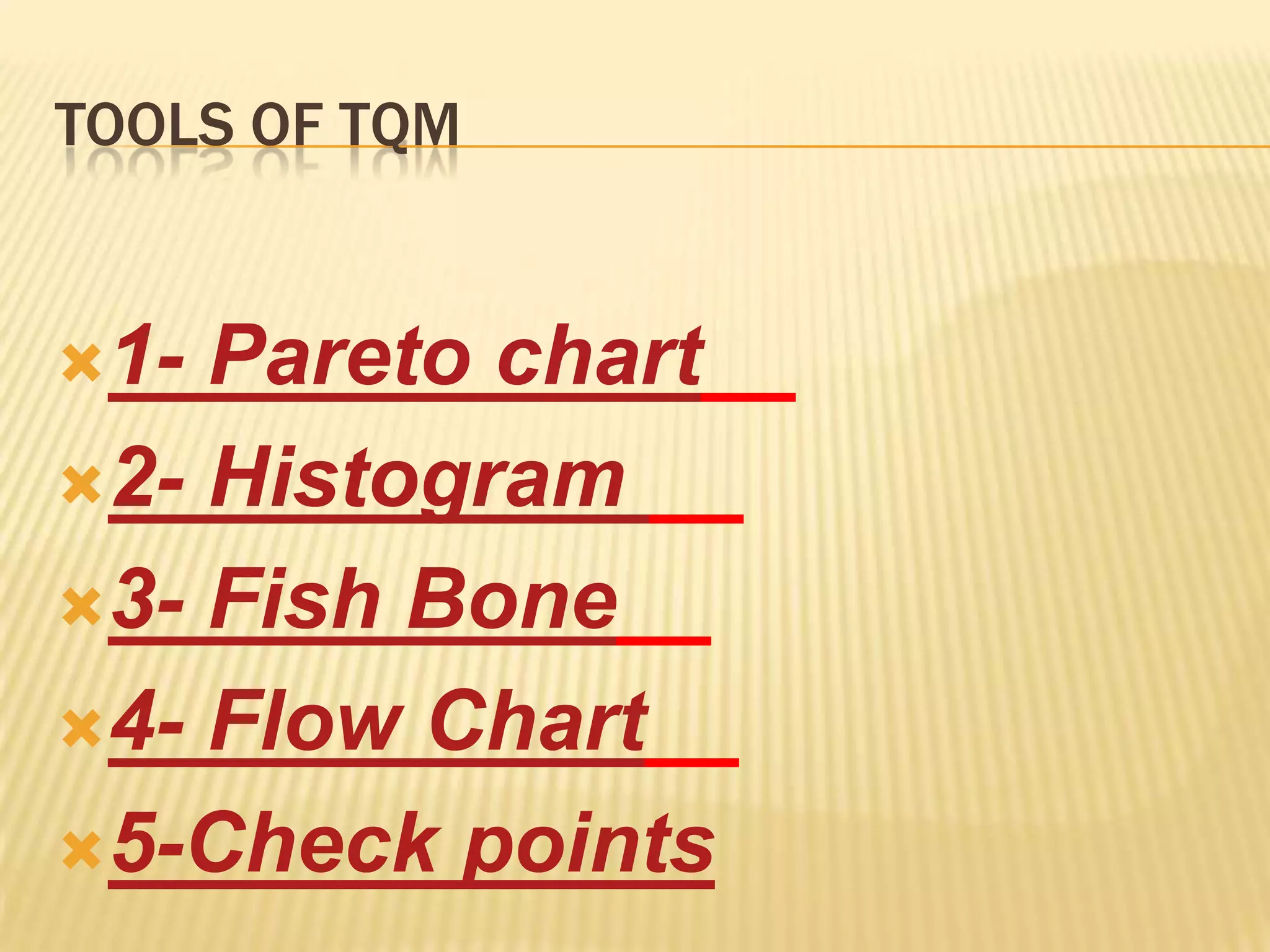
TOOLS OF TQM


1- Pareto chart
2- Histogram

3- Fish Bone

4- Flow Chart

5-Check points
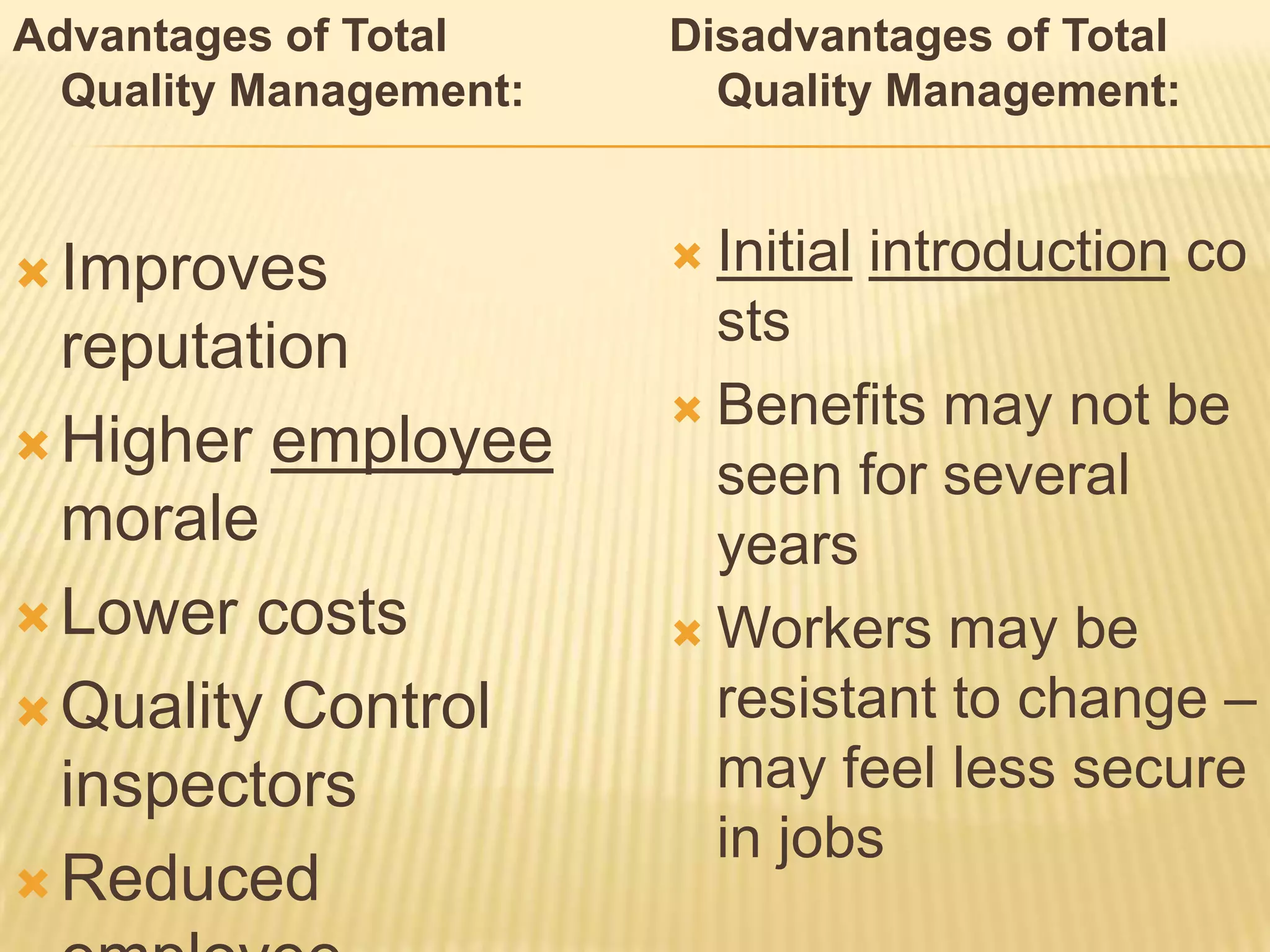
Advantages of Total     Disadvantages of Total
  Quality Management:     Quality Management:


 Improves               Initial   introduction co
  reputation              sts
                         Benefits may not be
 Higher employee
                          seen for several
  morale                  years
 Lower costs            Workers may be
 Quality Control         resistant to change –
  inspectors              may feel less secure
                          in jobs
 Reduced
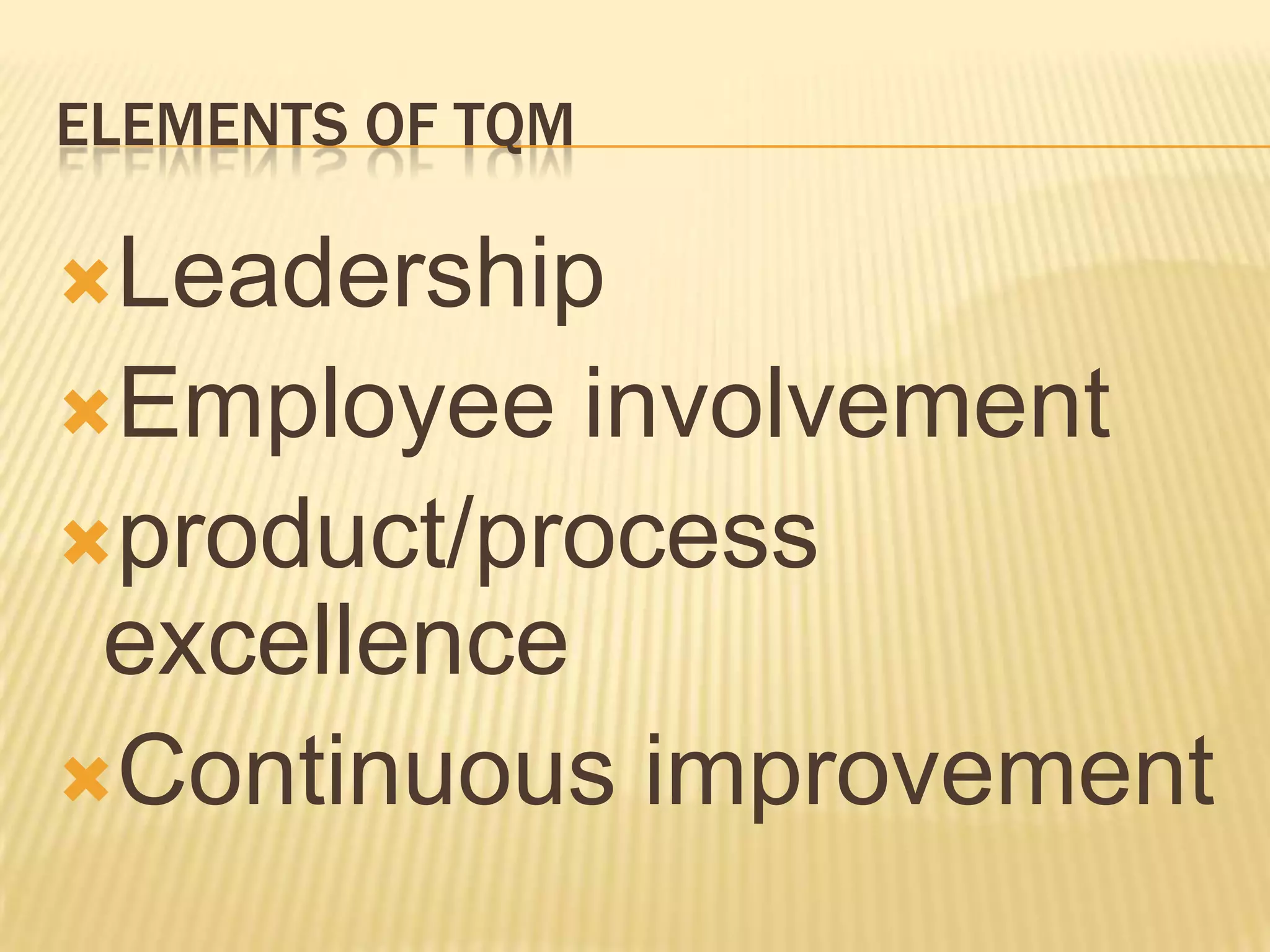
ELEMENTS OF TQM

Leadership
Employee   involvement
product/process
 excellence
Continuous improvement
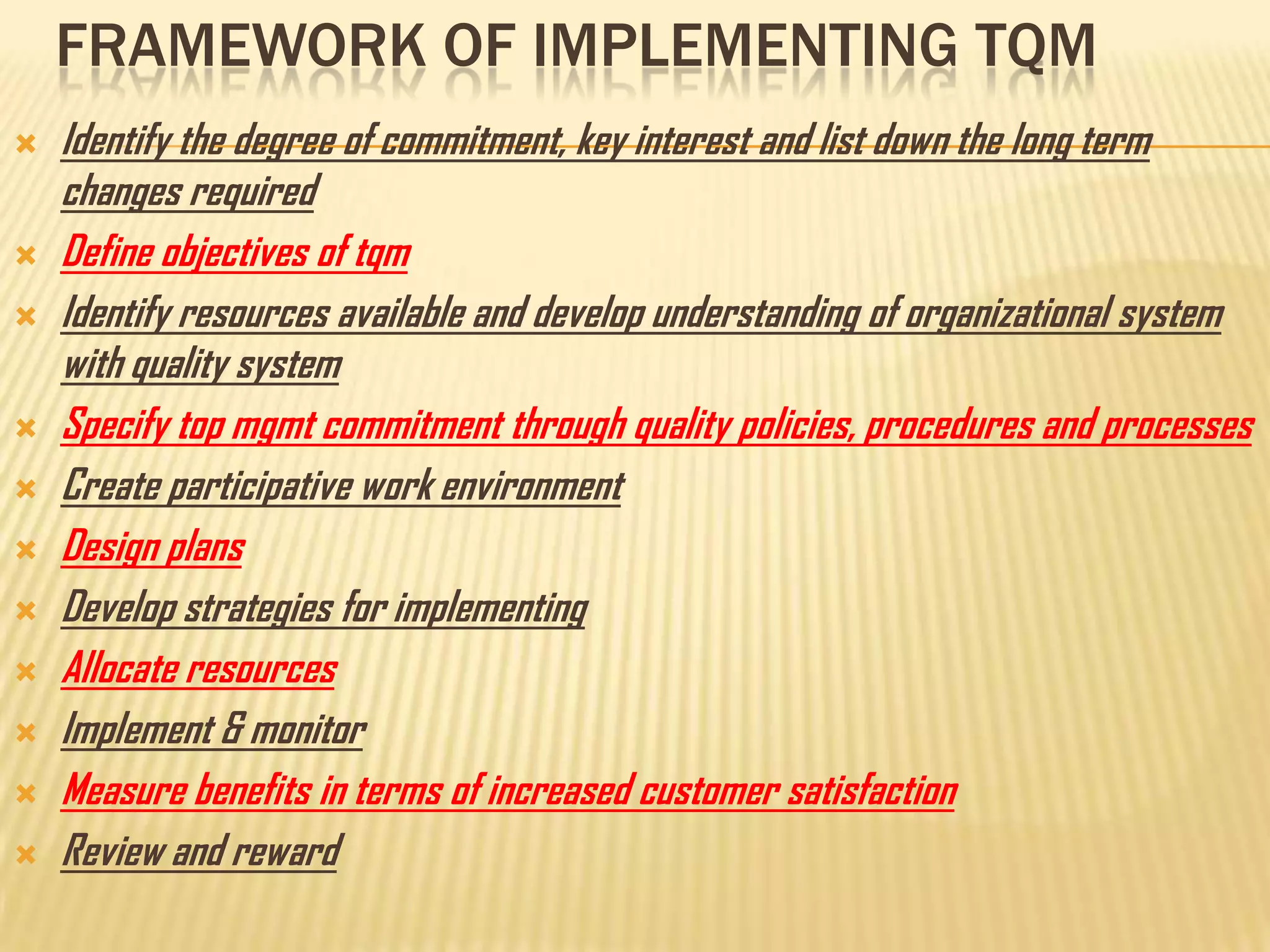
FRAMEWORK OF IMPLEMENTING TQM
   Identify the degree of commitment, key interest and list down the long term
    changes required
   Define objectives of tqm
   Identify resources available and develop understanding of organizational system
    with quality system
   Specify top mgmt commitment through quality policies, procedures and processes
   Create participative work environment
   Design plans
   Develop strategies for implementing
   Allocate resources
   Implement & monitor
   Measure benefits in terms of increased customer satisfaction
   Review and reward
OBSTACLES TO IMPLEMENT TQM

 Lack of company wide definition of quality
 Lack of formalized strategic plan for change

 Lack of customes focus

 Poor inter organixzational communication

 Lack of real employee empowerment

 Drive for short term financial results
conclusi    TQM – A WAY OF
             WORKING
on          INVOLVES EVERYONE

            HIGH PROMINENCE ON
             CUSTOMER
            AWARDS BASED ON
             TQM

         THANX….
      ROSHNI KAPOOR
          6942

total quality management

  • 1.
    MEANING OF TQM  The Institute of Management Services defines Total Quality Management as: "A strategy for improving business performance through the commitment and involvement of all employees to fully satisfying agreed customer requirements, at the optimum overall costs, through the continuous improvement of the products and services, business processes and people involved."
  • 2.
    TOTAL QUALITY MANAGEMENT{DOING THINGS RIGHT}  TOTAL- made up of whole  QUALITY-degree of excellence i.e. performance over expectation  MANAGEMENT- act,art,or the manner of handling, controlling, directing etc.
  • 3.
    MEANING OF SIXSIGMA  Six Sigma is a business management strategy, USA in 1986, that is widely used in many sectors of industry.  Six Sigma seeks to improve the quality of process outputs by identifying and removing the causes of defect minimizing variability in manufacturing and busines s processes.  A six sigma process is one in which 99.99966% of the products manufactured are statistically expected to be free of defects (3.4 defects per
  • 4.
    PRINCIPLES OF TQM Produce Quality Work The First Time.  Focus On The Customer  Have A Strategic Approach To Improvement.  Improve Continuously And Always  Encourage Mutual Respect And Teamwork.  Add Value To The Process  Implement The New Technology  Plan For All Contingencies  Develop 'Win-win' Scenarios  Develop A Master Plan
  • 5.
    TOOLS OF TQM 1-Pareto chart 2- Histogram 3- Fish Bone 4- Flow Chart 5-Check points
  • 6.
    Advantages of Total Disadvantages of Total Quality Management: Quality Management:  Improves  Initial introduction co reputation sts  Benefits may not be  Higher employee seen for several morale years  Lower costs  Workers may be  Quality Control resistant to change – inspectors may feel less secure in jobs  Reduced
  • 7.
    ELEMENTS OF TQM Leadership Employee involvement product/process excellence Continuous improvement
  • 8.
    FRAMEWORK OF IMPLEMENTINGTQM  Identify the degree of commitment, key interest and list down the long term changes required  Define objectives of tqm  Identify resources available and develop understanding of organizational system with quality system  Specify top mgmt commitment through quality policies, procedures and processes  Create participative work environment  Design plans  Develop strategies for implementing  Allocate resources  Implement & monitor  Measure benefits in terms of increased customer satisfaction  Review and reward
  • 9.
    OBSTACLES TO IMPLEMENTTQM  Lack of company wide definition of quality  Lack of formalized strategic plan for change  Lack of customes focus  Poor inter organixzational communication  Lack of real employee empowerment  Drive for short term financial results
  • 10.
    conclusi  TQM – A WAY OF WORKING on  INVOLVES EVERYONE  HIGH PROMINENCE ON CUSTOMER  AWARDS BASED ON TQM THANX…. ROSHNI KAPOOR 6942