TOTAL KNEE
REPLACEMENT
- NURSING MANAGEMENT
DR. RAJESH T EAPEN
ATLAS HOSPITAL
MUSCAT
Q&A
Goals of Joint Replacement Surgery
โ€ข Relieve pain!!!
โ€ข Restore function,
mobility
Evaluation Of Patient Before Surgery
โ€ข A Complete Medical History
โ€ข Thorough Physical Examination
โ€ข Laboratory Work-up
โ€ข Anesthesia Assessment
Preoperative Evaluation
โ€ข Soft tissue defects around the knee.
โ€ข Vascular status to the limb.
โ€ข Extensor mechanism.
โ€ข Preoperative range of motion.
โ€ข Standing (AP) view, a lateral view of the knee, and a
skyline view of the patella.
โ€ข Extreme pain
โ€ข Limited range of motion
โ€ข Previous surgeries to the knee
โ€ข Muscle atrophy
โ€ข Locking/catching within knee
โ€ข Chronic inflammation
โ€ข Deformity
โ€ข Unable to kneel down
โ€ข Lack of function
โ€ข Limiting activities of daily living and/or hobbies
PREEXISTING FACTORS LEADING TO
TOTAL KNEE REPLACEMENTS (TKR)
CONTRAINDICATIONS TO TKR
โ€ข Infection
โ€ข Severe vascular disease
โ€ข Neuropathic joint
โ€ข Obesity
โ€ข Skin diseases
Preparing for Joint
Replacement Surgery
โ€ข Ease anxiety by mentally preparing with:
โ€“ Breathing exercises
โ€“ Meditation
โ€“ Talking with friends and family
โ€ข Learn more about knee replacement surgery:
โ€“ Brochures
โ€“ Handouts
โ€“ Websites
โ€“ Videos
The Night Before Surgery
โ€ข Avoid medications, such as โ€œblood thinnersโ€
(aspirin, ibuprofen, etc.).
โ€ข Do not consume any food or liquid after
midnight.
โ€ข Make sure you have everything youโ€™ll need at
the hospital.
โ€ข Ask any questions you may have before
surgery.

Nursing Process: The Care of the Patient
Undergoing Orthopedic Surgeryโ€”
Assessment, Preoperative
โ€ข Routine preoperative assessment
โ€ข Hydration status
โ€ข Medication history
โ€ข Possible infection
โ€“ Ask specifically about colds, dental problems,
urinary tract infections, infections within 2 weeks
โ€ข Knowledge
โ€ข Support and coping
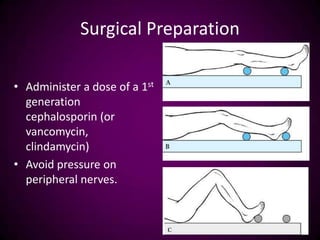
Surgical Preparation
โ€ข Administer a dose of a 1st
generation
cephalosporin (or
vancomycin,
clindamycin)
โ€ข Avoid pressure on
peripheral nerves.
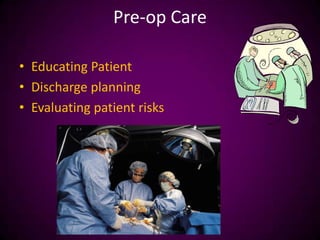
Pre-op Care
โ€ข Educating Patient
โ€ข Discharge planning
โ€ข Evaluating patient risks
BEFORE & AFTER SURGERY
โ€ข Before surgery:
โ€ข Begin rehabilitation to build up muscle and stability
โ€ข Knowing the exercises before hand will aid in a speedy recovery
โ€ข After surgery:
โ€ข Adhere to limitations set by doctor
โ€ข Attend and stick with rehab!!!
โ€ข Gradually begin light, low impact activities to tolerance
โ€ข Walking, swimming
โ€ข Avoid high impact activities
โ€ข Long-distance running, basketball, downhill skiing, impact aerobics
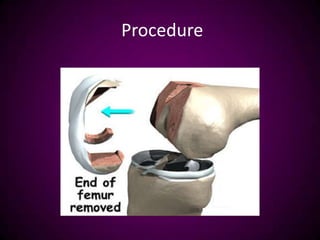
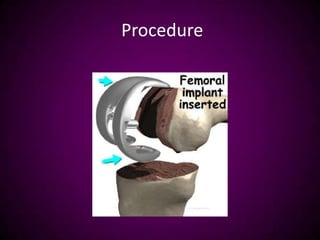
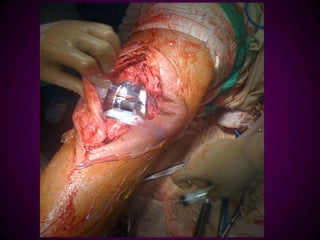
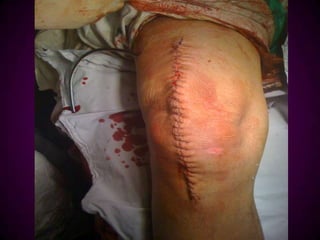
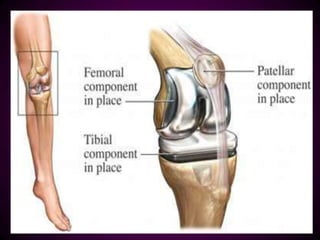
Procedure
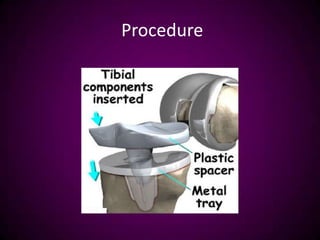
Procedure
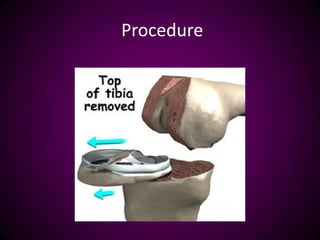
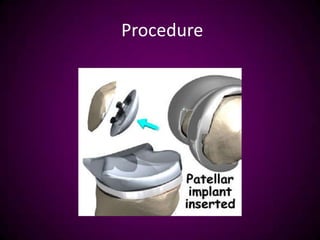
Procedure
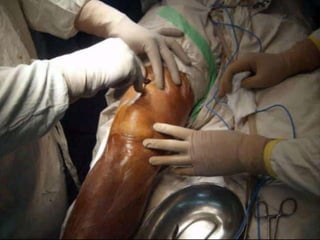
Procedure
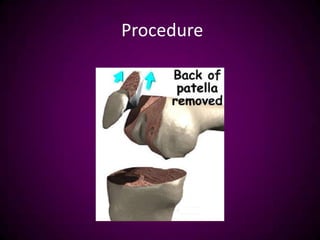
Procedure
Procedure
Postoperative Management
Post-op Care
โ€ข Monitor VS
โ€ข Wound assessments
โ€ข Neurovascular assessments
โ€ข Monitor wound drainage
โ€ข Pain relief
โ€ข Infection/Osteomyelitis prevention
โ€ข Promote early ambulation
โ€ข Ensure physiotherapy is consulted
After Surgery
โ€ข Movement of knee determined by doctor.
โ€ข Physical therapy is very important to regain
mobility and strength.
Post Operative Rehabilitation
โ€“ Rapid post-operative mobilization
โ€ข Range of motion exercises started
โ€ข CPM
โ€ข Passive extension by placing pillow under foot
โ€ข Flexion- by dangling the legs over the side of
bed
โ€ข Muscle strengthening exercises
โ€ข Weight bearing is allowed on first post op day
Post-op Nursing Interventions
โ€ข Observe dressing for bleeding/drainage
โ€ข Ice as ordered
โ€ข Neurovascular checks
โ€ข Pain meds as ordered
โ€ข Active flexion of foot q1h while awake
โ€ข Observe CAC in wound suction drainage
โ€ข Continuous passive motion (CPM) device
โ€ข Early ambulation with knee immobilizer
โ€ข Physical therapy as ordered
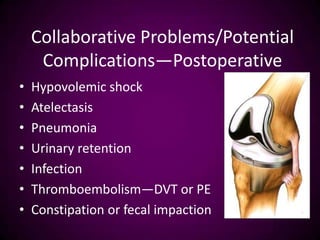
Collaborative Problems/Potential
Complicationsโ€”Postoperative
โ€ข Hypovolemic shock
โ€ข Atelectasis
โ€ข Pneumonia
โ€ข Urinary retention
โ€ข Infection
โ€ข Thromboembolismโ€”DVT or PE
โ€ข Constipation or fecal impaction
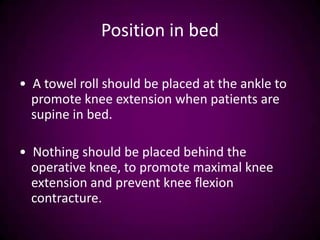
Position in bed
โ€ข A towel roll should be placed at the ankle to
promote knee extension when patients are
supine in bed.
โ€ข Nothing should be placed behind the
operative knee, to promote maximal knee
extension and prevent knee flexion
contracture.
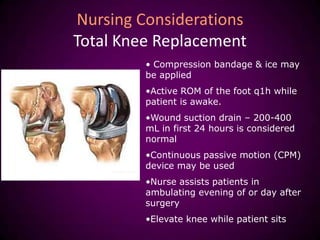
Nursing Considerations
Total Knee Replacement
โ€ข Compression bandage & ice may
be applied
โ€ขActive ROM of the foot q1h while
patient is awake.
โ€ขWound suction drain โ€“ 200-400
mL in first 24 hours is considered
normal
โ€ขContinuous passive motion (CPM)
device may be used
โ€ขNurse assists patients in
ambulating evening of or day after
surgery
โ€ขElevate knee while patient sits
Q&A
1. What Activities should I avoid after surgery?
- Activities that require stop-start, twisting, or high impact
loading
- Excessive or repetitive bending or squatting
- Heavy lifting
2. Will my new knee replacement set off a metal detector?
- It is unlikely that your implant will set off a a metal detector.
However, if it does, notify the security guard and they will pass a
hand-held unit over your knee to verify.
DOUBTS OF PATIENTS
Hospital Discharge
โ€ข You will be released from the hospital as soon as you
can:
โ€“ Get in and out of bed safely.
โ€“ Walk up to 75 feet with your crutches or walker.
โ€“ Get up and down flight of stairs.
โ€“ Access the bathroom.
โ€“ Demonstrate good muscle contraction of the upper thigh
muscle.
โ€ข Hospital stay usually lasts 3 to 4 days.
โ€ข May continue physical therapy at a rehabilitation center
or at home.
Thank You!!!

Total knee replacement nursing management

  • 1.
    TOTAL KNEE REPLACEMENT - NURSINGMANAGEMENT DR. RAJESH T EAPEN ATLAS HOSPITAL MUSCAT
  • 3.
  • 4.
    Goals of JointReplacement Surgery โ€ข Relieve pain!!! โ€ข Restore function, mobility
  • 5.
    Evaluation Of PatientBefore Surgery โ€ข A Complete Medical History โ€ข Thorough Physical Examination โ€ข Laboratory Work-up โ€ข Anesthesia Assessment
  • 6.
    Preoperative Evaluation โ€ข Softtissue defects around the knee. โ€ข Vascular status to the limb. โ€ข Extensor mechanism. โ€ข Preoperative range of motion. โ€ข Standing (AP) view, a lateral view of the knee, and a skyline view of the patella.
  • 7.
    โ€ข Extreme pain โ€ขLimited range of motion โ€ข Previous surgeries to the knee โ€ข Muscle atrophy โ€ข Locking/catching within knee โ€ข Chronic inflammation โ€ข Deformity โ€ข Unable to kneel down โ€ข Lack of function โ€ข Limiting activities of daily living and/or hobbies PREEXISTING FACTORS LEADING TO TOTAL KNEE REPLACEMENTS (TKR)
  • 8.
    CONTRAINDICATIONS TO TKR โ€ขInfection โ€ข Severe vascular disease โ€ข Neuropathic joint โ€ข Obesity โ€ข Skin diseases
  • 9.
    Preparing for Joint ReplacementSurgery โ€ข Ease anxiety by mentally preparing with: โ€“ Breathing exercises โ€“ Meditation โ€“ Talking with friends and family โ€ข Learn more about knee replacement surgery: โ€“ Brochures โ€“ Handouts โ€“ Websites โ€“ Videos
  • 10.
    The Night BeforeSurgery โ€ข Avoid medications, such as โ€œblood thinnersโ€ (aspirin, ibuprofen, etc.). โ€ข Do not consume any food or liquid after midnight. โ€ข Make sure you have everything youโ€™ll need at the hospital. โ€ข Ask any questions you may have before surgery.
  • 11.
    Nursing Process: TheCare of the Patient Undergoing Orthopedic Surgeryโ€” Assessment, Preoperative โ€ข Routine preoperative assessment โ€ข Hydration status โ€ข Medication history โ€ข Possible infection โ€“ Ask specifically about colds, dental problems, urinary tract infections, infections within 2 weeks โ€ข Knowledge โ€ข Support and coping
  • 12.
    Surgical Preparation โ€ข Administera dose of a 1st generation cephalosporin (or vancomycin, clindamycin) โ€ข Avoid pressure on peripheral nerves.
  • 13.
    Pre-op Care โ€ข EducatingPatient โ€ข Discharge planning โ€ข Evaluating patient risks
  • 14.
    BEFORE & AFTERSURGERY โ€ข Before surgery: โ€ข Begin rehabilitation to build up muscle and stability โ€ข Knowing the exercises before hand will aid in a speedy recovery โ€ข After surgery: โ€ข Adhere to limitations set by doctor โ€ข Attend and stick with rehab!!! โ€ข Gradually begin light, low impact activities to tolerance โ€ข Walking, swimming โ€ข Avoid high impact activities โ€ข Long-distance running, basketball, downhill skiing, impact aerobics
  • 15.
  • 16.
  • 17.
  • 18.
  • 19.
  • 20.
  • 25.
  • 26.
    Post-op Care โ€ข MonitorVS โ€ข Wound assessments โ€ข Neurovascular assessments โ€ข Monitor wound drainage โ€ข Pain relief โ€ข Infection/Osteomyelitis prevention โ€ข Promote early ambulation โ€ข Ensure physiotherapy is consulted
  • 27.
    After Surgery โ€ข Movementof knee determined by doctor. โ€ข Physical therapy is very important to regain mobility and strength.
  • 28.
    Post Operative Rehabilitation โ€“Rapid post-operative mobilization โ€ข Range of motion exercises started โ€ข CPM โ€ข Passive extension by placing pillow under foot โ€ข Flexion- by dangling the legs over the side of bed โ€ข Muscle strengthening exercises โ€ข Weight bearing is allowed on first post op day
  • 29.
    Post-op Nursing Interventions โ€ขObserve dressing for bleeding/drainage โ€ข Ice as ordered โ€ข Neurovascular checks โ€ข Pain meds as ordered โ€ข Active flexion of foot q1h while awake โ€ข Observe CAC in wound suction drainage โ€ข Continuous passive motion (CPM) device โ€ข Early ambulation with knee immobilizer โ€ข Physical therapy as ordered
  • 30.
    Collaborative Problems/Potential Complicationsโ€”Postoperative โ€ข Hypovolemicshock โ€ข Atelectasis โ€ข Pneumonia โ€ข Urinary retention โ€ข Infection โ€ข Thromboembolismโ€”DVT or PE โ€ข Constipation or fecal impaction
  • 31.
    Position in bed โ€ขA towel roll should be placed at the ankle to promote knee extension when patients are supine in bed. โ€ข Nothing should be placed behind the operative knee, to promote maximal knee extension and prevent knee flexion contracture.
  • 32.
    Nursing Considerations Total KneeReplacement โ€ข Compression bandage & ice may be applied โ€ขActive ROM of the foot q1h while patient is awake. โ€ขWound suction drain โ€“ 200-400 mL in first 24 hours is considered normal โ€ขContinuous passive motion (CPM) device may be used โ€ขNurse assists patients in ambulating evening of or day after surgery โ€ขElevate knee while patient sits
  • 33.
    Q&A 1. What Activitiesshould I avoid after surgery? - Activities that require stop-start, twisting, or high impact loading - Excessive or repetitive bending or squatting - Heavy lifting 2. Will my new knee replacement set off a metal detector? - It is unlikely that your implant will set off a a metal detector. However, if it does, notify the security guard and they will pass a hand-held unit over your knee to verify. DOUBTS OF PATIENTS
  • 34.
    Hospital Discharge โ€ข Youwill be released from the hospital as soon as you can: โ€“ Get in and out of bed safely. โ€“ Walk up to 75 feet with your crutches or walker. โ€“ Get up and down flight of stairs. โ€“ Access the bathroom. โ€“ Demonstrate good muscle contraction of the upper thigh muscle. โ€ข Hospital stay usually lasts 3 to 4 days. โ€ข May continue physical therapy at a rehabilitation center or at home.
  • 35.

Editor's Notes

  • #6ย Remember that TKR surgery is elective it is not an emergency so the patientโ€™s condition should be optimized before embarking on surgery. A detailed medical history should be obtained to prevent potential complications that can be life threatening or limb threatening. b/c most pts undergoing TKR are elderly, comorbid diseases must be considered. Examination> end stage arthritis may be associated with flexion contractures, varus or valgus angulations. All of these mal alignments must be taken into consideration when planning for TKR. Rule out and evaluate for potential serious vascular disease in the lower extremity. assessment of the skin is also important in TKR
  • #29ย Post operative physical therapy and rehabilitation greatly influence the outcome of TKR. ROM exercises are performed post operatively with or with out the assistance of CPM. CPM assist in obtaining knee flexion more quickly and thus decreasing the hospital stay.