TOOLS
FOR
CONFLICT
ANALYSIS
What is conflict?
“ A relationship between two
or more interdependent
parties in which at least one
of the parties perceives the
relationship to be negative &
pursues opposing interests &
needs.
What is violence?
1. Structural Violence
2. Cultural Violence
3. Direct Violence
Structural Violence
- How certain groups are
discriminated against
through social, political &
economic system.
Cultural Violence
- Deeply ingrained attitudes
& beliefs that justify the
necessity of violence.
Direct Violence
- The use of threat of physical
force or verbal attacks.
Why do a conflict analysis?
1. Conflict analysis helps
thinking about how
programmes are going to
work in conflict-affected
contexts.
Why do a conflict analysis?
2. Participatory conflict
analysis can help parties to
articulate the issues more
clearly.
Why do a conflict analysis?
3. Understanding your
context helps you adopt a
conflict sensitive practice to
your programmes.
TOOLS
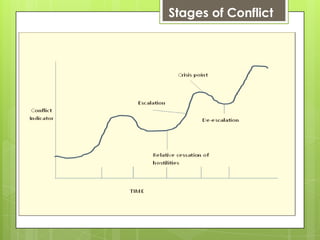
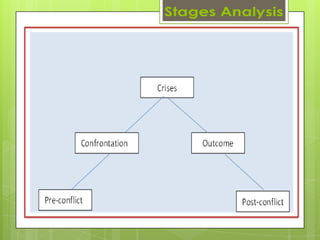
Stages of Conflict
Stages of Conflict
To see the stages & cycles of
escalation & de-escalation of
conflict
To assess where the situation is
now
To try to predict future patterns of
escalation with the aim of
preventing these from occurring
Analysis
Stages of Conflict
To analyse stages from the
viewpoints of different sides or
different parts of a country in
conflict
To highlight critical points for
possible intervention
To identify the cycles & triggers to
escalating conflict
Intervention
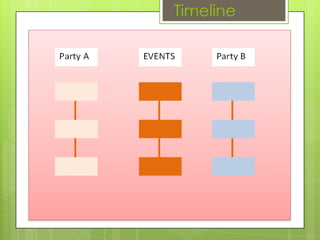
Timeline
Timeline
To show different views of
history in a conflict;
To clarify and understand each
side’s perception of events
To identify which events are
most important to each side.
Analysis
Timeline
Used as a way of helping
people to accept their own
perspective as only part of the
truth.
Can be used by the parties
themselves & shared with each
other.
Intervention
Actor Mapping
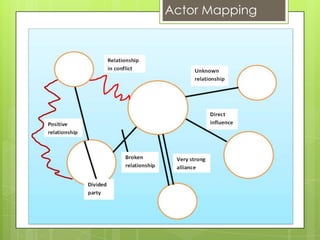
Actor Mapping
To represent the conflict
graphically
To place the parties in relation
to the problem and each other
To identify all the parties
directly or indirectly invloved
Analysis
Actor Mapping
To look for openings or new
strategies
To see where our allies or
potential allies are placed to
find our own niche
To evaluate what has been
done.
Intervention
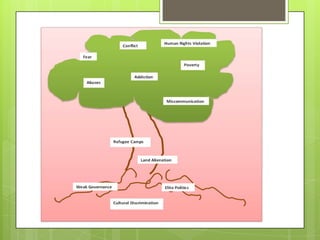
Conflict Tree
To stimulate discussion about
causes & effects in a conflict
To help a group to agree on
the core problem
To relate causes & effects to
each other & to the focus of
the organization
Analysis
Conflict Tree
To assist a group or team to
make decisions about priorities
for addressing conflict issues
To decide about which conflict
issues they should try to
address.
Intervention
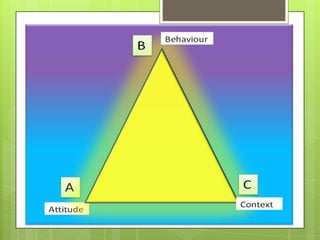
ABC Triangle
To identify these three sets of
factors for each of the major
parties
To analyse how these
influence each other
To relate these to the needs &
fears of each party
Analysis
ABC Triangle
To identify a starting point for
intervention in the situation
To identify what factors might
be addressed by an
intervention
To reveal how change in one
aspect might affect another.
Intervention
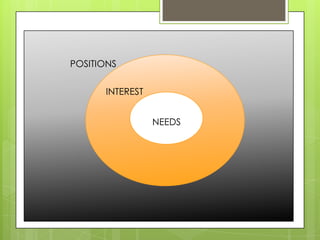
POSITIONS
NEEDS
INTEREST
Onion
To identify the positions, interest &
needs of each party
To identify possible common areas
of divergence in the interests or
needs of parties
To build a comprehensive picture
of each parties positions, interests
and needs
Analysis
Onion
To prepare for mediation
To identify entry points for
joint work
To build on commonalities
Intervention
Sukran!

Tools for conflict analysis

  • 1.
  • 2.
    What is conflict? “A relationship between two or more interdependent parties in which at least one of the parties perceives the relationship to be negative & pursues opposing interests & needs.
  • 3.
    What is violence? 1.Structural Violence 2. Cultural Violence 3. Direct Violence
  • 4.
    Structural Violence - Howcertain groups are discriminated against through social, political & economic system.
  • 5.
    Cultural Violence - Deeplyingrained attitudes & beliefs that justify the necessity of violence.
  • 6.
    Direct Violence - Theuse of threat of physical force or verbal attacks.
  • 7.
    Why do aconflict analysis? 1. Conflict analysis helps thinking about how programmes are going to work in conflict-affected contexts.
  • 8.
    Why do aconflict analysis? 2. Participatory conflict analysis can help parties to articulate the issues more clearly.
  • 9.
    Why do aconflict analysis? 3. Understanding your context helps you adopt a conflict sensitive practice to your programmes.
  • 10.
  • 11.
  • 12.
    Stages of Conflict Tosee the stages & cycles of escalation & de-escalation of conflict To assess where the situation is now To try to predict future patterns of escalation with the aim of preventing these from occurring Analysis
  • 13.
    Stages of Conflict Toanalyse stages from the viewpoints of different sides or different parts of a country in conflict To highlight critical points for possible intervention To identify the cycles & triggers to escalating conflict Intervention
  • 14.
  • 15.
    Timeline To show differentviews of history in a conflict; To clarify and understand each side’s perception of events To identify which events are most important to each side. Analysis
  • 16.
    Timeline Used as away of helping people to accept their own perspective as only part of the truth. Can be used by the parties themselves & shared with each other. Intervention
  • 17.
  • 18.
    Actor Mapping To representthe conflict graphically To place the parties in relation to the problem and each other To identify all the parties directly or indirectly invloved Analysis
  • 19.
    Actor Mapping To lookfor openings or new strategies To see where our allies or potential allies are placed to find our own niche To evaluate what has been done. Intervention
  • 21.
    Conflict Tree To stimulatediscussion about causes & effects in a conflict To help a group to agree on the core problem To relate causes & effects to each other & to the focus of the organization Analysis
  • 22.
    Conflict Tree To assista group or team to make decisions about priorities for addressing conflict issues To decide about which conflict issues they should try to address. Intervention
  • 24.
    ABC Triangle To identifythese three sets of factors for each of the major parties To analyse how these influence each other To relate these to the needs & fears of each party Analysis
  • 25.
    ABC Triangle To identifya starting point for intervention in the situation To identify what factors might be addressed by an intervention To reveal how change in one aspect might affect another. Intervention
  • 26.
  • 27.
    Onion To identify thepositions, interest & needs of each party To identify possible common areas of divergence in the interests or needs of parties To build a comprehensive picture of each parties positions, interests and needs Analysis
  • 28.
    Onion To prepare formediation To identify entry points for joint work To build on commonalities Intervention
  • 31.