TO STUDY NEW DRUG
REGISTRATION PROCESS IN U.S
MANOJ DAGWAR
GULBERGA UNIVERSITY
MBA SEM IV
Objectives
Learn the processes involved in drug discovery and
development
Define the phases involved in FDA drug approval
Explain the role of the Food and Drug Administration
(FDA) in the drug development and review process in
the United States
Reasons for Medication Use
 Prevention
 Vaccines
 Antimalarial agents
 Antibiotic prophylaxis
 Curative
 Antibacterial
 Oncology drugs
 Antifungal
 Control of Disease
Process
 Antihypertensive
 Ant diabetics
 Thyroid agents
 Palliation
 Analgesics
 Oncology drugs
Research and Development Process (R&D)
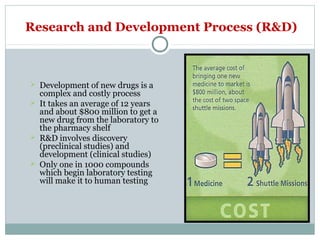
 Development of new drugs is a
complex and costly process
 It takes an average of 12 years
and about $800 million to get a
new drug from the laboratory to
the pharmacy shelf
 R&D involves discovery
(preclinical studies) and
development (clinical studies)
 Only one in 1000 compounds
which begin laboratory testing
will make it to human testing
Research and Development Process (R&D)
It takes 12-15 year to discover and develop the new
medicine
Researcher can screen up to 1,000,000 compound,
but only five make it to clinical trial, of those five
only one is approved for patient use
More than 50,000 people involve in drug research
and development process in US.
Clinical trial just 1 new medicine involve more than
5000 patient.
Food and Drug Administration
Drug Approval Process In USA
In 1820, the new era of USA drug regulation was
started with establishment of U.S pharmacopoeia
In 1906 passed Food and Drug Act
1937 sulphanilamide tragedy
Drug and cosmetic act
Role of FDA
The Food and Drug Administration (FDA) is
required to review and approve all new drugs in the
United States
The FDA reviews and evaluates new drugs based on
the evidence presented from the clinical research
studies performed by the drug sponsor-typically a
pharmaceutical company
Discovery/Pre-Clinical Testing
Laboratory & animal studies
Assess safety, biological
activity (if any) MOA and formulations
5,000 compounds evaluated
6.5 years
Preclinical Studies
Synthesis and purification of the new drug
Pharmacology of the new drug:
 Pharmacokinetics: absorption, distribution, metabolism, excretion,
half-life
 Pharmacodynamics: mechanism of action and estimates of
therapeutic effects
 Toxicology including carcinogenicity, mutagenicity, and
teratogenicity
Efficacy studies on animals
IND
 Investigational New Drug (IND): Application for
permission to administer a new drug to humans
 Outlines the proposal to use the new drug for
human testing in clinical trials
 Studies in humans can only begin after IND is
reviewed and approved by the FDA and an
institutional review board (IRB)
Clinical Studies
 Phase 1: Efficacy studies on healthy volunteers
 Phase 2: Clinical studies on a limited scale
 Phase 3: Comparative studies on large number of patients
 New Drug Application (NDA): Regulatory review
 Phase 4: Continued comparative studies. Registration and
market introduction
Phase 1
Typically involves 20-80 healthy
Emphasis is on drug safety
Goal is to identify major side effects, metabolism and
routes of excretion
About 70% of drugs will pass this phase
Phase 2
Typically involves 100-300 individuals who have the
target disease
Emphasis is on effectiveness
Patients receiving the drug are compared to similar
patients receiving a placebo or another drug
About 33% of drugs will pass this phase
Evaluate side effects & effectiveness
Pharmacodynamics
Determine dose response curve
Phase 3
Typically involves 1000-3000 patients
Emphasis is on safety and effectiveness
Investigates through well-controlled studies different
populations and different dosages as well as uses
new drug in combination with other drugs
25-30% of drugs will pass this phase
 Confirm effectiveness monitor adverse
 reactions from long-term use
NDA
Pre-NDA period: FDA and drug sponsors meet
Submission of NDA: Formal step asking the FDA to
consider approving a drug for marketing
FDA has 60 days to decide whether it will file it for
approval consideration
If filed, a review team is assigned to evaluate the new
drug
FDA Role
 The review team evaluates the research on the safety of
the drug and its effectiveness
 The FDA reviews the information to go on the drug label
 It inspects the facilities where the drug will be
manufactured
 The application will be classified as “approvable” or “not
approvable”
FDA Role
If approvable, the FDA requests additional
information from the sponsor
The NDA is again reviewed
Following drug approval, sponsors of the drug will be
required to continually assess the safety of the drug
Phase 4
Post-market surveillance of the drug to continually
assess the safety of the drug
May include incidence and severity of rare adverse
reactions, cost-effectiveness analyses, comparative
trials, and quality of life studies
Additional testing as required by the FDA
Continuous monitoring of drug in public use
Resources
http://www.fda.gov/Drugs/DevelopmentApprovalProce
THANK YOU

To study new drug registration process in u.s

  • 1.
    TO STUDY NEWDRUG REGISTRATION PROCESS IN U.S MANOJ DAGWAR GULBERGA UNIVERSITY MBA SEM IV
  • 2.
    Objectives Learn the processesinvolved in drug discovery and development Define the phases involved in FDA drug approval Explain the role of the Food and Drug Administration (FDA) in the drug development and review process in the United States
  • 3.
    Reasons for MedicationUse  Prevention  Vaccines  Antimalarial agents  Antibiotic prophylaxis  Curative  Antibacterial  Oncology drugs  Antifungal  Control of Disease Process  Antihypertensive  Ant diabetics  Thyroid agents  Palliation  Analgesics  Oncology drugs
  • 4.
    Research and DevelopmentProcess (R&D)  Development of new drugs is a complex and costly process  It takes an average of 12 years and about $800 million to get a new drug from the laboratory to the pharmacy shelf  R&D involves discovery (preclinical studies) and development (clinical studies)  Only one in 1000 compounds which begin laboratory testing will make it to human testing
  • 5.
    Research and DevelopmentProcess (R&D) It takes 12-15 year to discover and develop the new medicine Researcher can screen up to 1,000,000 compound, but only five make it to clinical trial, of those five only one is approved for patient use More than 50,000 people involve in drug research and development process in US. Clinical trial just 1 new medicine involve more than 5000 patient.
  • 6.
    Food and DrugAdministration Drug Approval Process In USA In 1820, the new era of USA drug regulation was started with establishment of U.S pharmacopoeia In 1906 passed Food and Drug Act 1937 sulphanilamide tragedy Drug and cosmetic act
  • 7.
    Role of FDA TheFood and Drug Administration (FDA) is required to review and approve all new drugs in the United States The FDA reviews and evaluates new drugs based on the evidence presented from the clinical research studies performed by the drug sponsor-typically a pharmaceutical company
  • 8.
    Discovery/Pre-Clinical Testing Laboratory &animal studies Assess safety, biological activity (if any) MOA and formulations 5,000 compounds evaluated 6.5 years
  • 9.
    Preclinical Studies Synthesis andpurification of the new drug Pharmacology of the new drug:  Pharmacokinetics: absorption, distribution, metabolism, excretion, half-life  Pharmacodynamics: mechanism of action and estimates of therapeutic effects  Toxicology including carcinogenicity, mutagenicity, and teratogenicity Efficacy studies on animals
  • 10.
    IND  Investigational NewDrug (IND): Application for permission to administer a new drug to humans  Outlines the proposal to use the new drug for human testing in clinical trials  Studies in humans can only begin after IND is reviewed and approved by the FDA and an institutional review board (IRB)
  • 11.
    Clinical Studies  Phase1: Efficacy studies on healthy volunteers  Phase 2: Clinical studies on a limited scale  Phase 3: Comparative studies on large number of patients  New Drug Application (NDA): Regulatory review  Phase 4: Continued comparative studies. Registration and market introduction
  • 12.
    Phase 1 Typically involves20-80 healthy Emphasis is on drug safety Goal is to identify major side effects, metabolism and routes of excretion About 70% of drugs will pass this phase
  • 13.
    Phase 2 Typically involves100-300 individuals who have the target disease Emphasis is on effectiveness Patients receiving the drug are compared to similar patients receiving a placebo or another drug About 33% of drugs will pass this phase Evaluate side effects & effectiveness Pharmacodynamics Determine dose response curve
  • 14.
    Phase 3 Typically involves1000-3000 patients Emphasis is on safety and effectiveness Investigates through well-controlled studies different populations and different dosages as well as uses new drug in combination with other drugs 25-30% of drugs will pass this phase  Confirm effectiveness monitor adverse  reactions from long-term use
  • 15.
    NDA Pre-NDA period: FDAand drug sponsors meet Submission of NDA: Formal step asking the FDA to consider approving a drug for marketing FDA has 60 days to decide whether it will file it for approval consideration If filed, a review team is assigned to evaluate the new drug
  • 16.
    FDA Role  Thereview team evaluates the research on the safety of the drug and its effectiveness  The FDA reviews the information to go on the drug label  It inspects the facilities where the drug will be manufactured  The application will be classified as “approvable” or “not approvable”
  • 17.
    FDA Role If approvable,the FDA requests additional information from the sponsor The NDA is again reviewed Following drug approval, sponsors of the drug will be required to continually assess the safety of the drug
  • 18.
    Phase 4 Post-market surveillanceof the drug to continually assess the safety of the drug May include incidence and severity of rare adverse reactions, cost-effectiveness analyses, comparative trials, and quality of life studies Additional testing as required by the FDA Continuous monitoring of drug in public use
  • 19.
  • 20.