To join the sheet metal for boiler:
INTRODUCTION:
In the case of a fire tube boiler, the main part of the boiler is referred to as the shell
& the boiler tubes are contained within this main part.
The water tube boiler, on the other hand, features a drum or drums instead of shell & the
tubes run between the drums or between drums and headers, rather than being contained
within them.
Shells and drums are made up of steel
plates, which are rolled to the correct
curvature.
The thickness of the plates ranges from
6 mm to 250 mm depending upon the
pressure they have to withstand and the
required diameter of the shell or drum. If
the plate is thick, it is first heated and
shaped into half-cylindrical sections
which are then welded together to form
the complete cylinder.
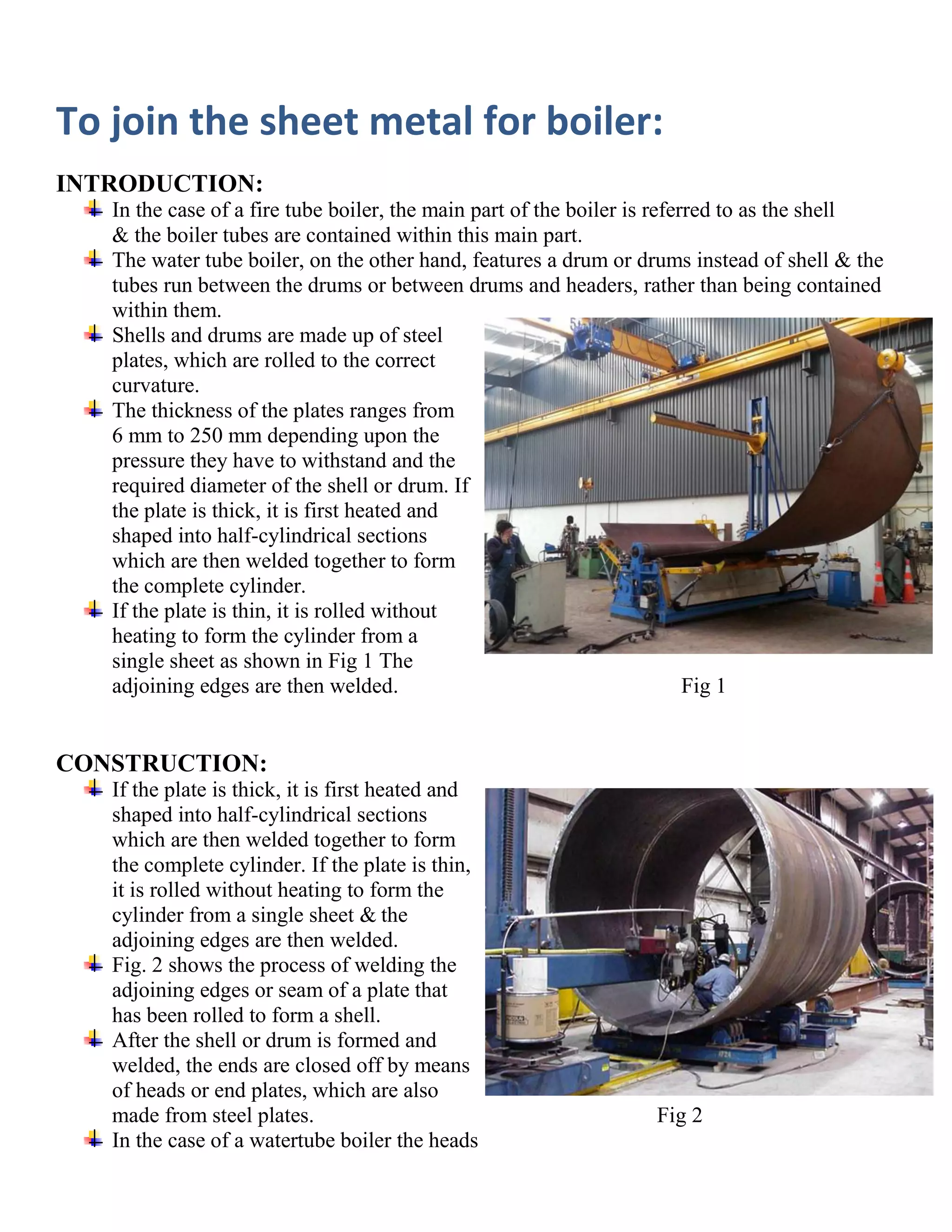
If the plate is thin, it is rolled without
heating to form the cylinder from a
single sheet as shown in Fig 1 The
adjoining edges are then welded. Fig 1
CONSTRUCTION:
If the plate is thick, it is first heated and
shaped into half-cylindrical sections
which are then welded together to form
the complete cylinder. If the plate is thin,
it is rolled without heating to form the
cylinder from a single sheet & the
adjoining edges are then welded.
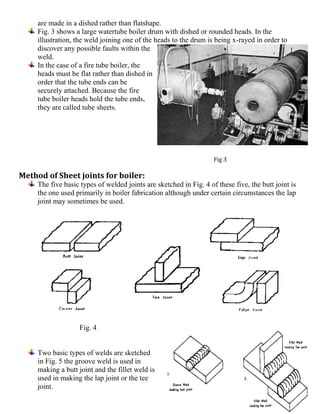
Fig. 2 shows the process of welding the
adjoining edges or seam of a plate that
has been rolled to form a shell.
After the shell or drum is formed and
welded, the ends are closed off by means
of heads or end plates, which are also
made from steel plates. Fig 2
In the case of a watertube boiler the heads
are made in a dished rather than flatshape.
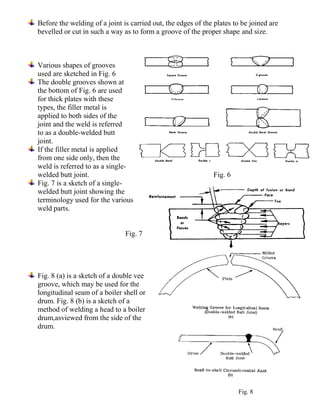
Fig. 3 shows a large watertube boiler drum with dished or rounded heads. In the
illustration, the weld joining one of the heads to the drum is being x-rayed in order to
discover any possible faults within the
weld.
In the case of a fire tube boiler, the
heads must be flat rather than dished in
order that the tube ends can be
securely attached. Because the fire
tube boiler heads hold the tube ends,
they are called tube sheets.
Fig 3
Method of Sheet joints for boiler:
The five basic types of welded joints are sketched in Fig. 4 of these five, the butt joint is
the one used primarily in boiler fabrication although under certain circumstances the lap
joint may sometimes be used.
Fig. 4
Two basic types of welds are sketched
in Fig. 5 the groove weld is used in
making a butt joint and the fillet weld is
used in making the lap joint or the tee
joint.
Before the welding of a joint is carried out, the edges of the plates to be joined are
bevelled or cut in such a way as to form a groove of the proper shape and size.
Various shapes of grooves
used are sketched in Fig. 6
The double grooves shown at
the bottom of Fig. 6 are used
for thick plates with these
types, the filler metal is
applied to both sides of the
joint and the weld is referred
to as a double-welded butt
joint.
If the filler metal is applied
from one side only, then the
weld is referred to as a single-
welded butt joint. Fig. 6
Fig. 7 is a sketch of a single-
welded butt joint showing the
terminology used for the various
weld parts.
Fig. 7
Fig. 8 (a) is a sketch of a double vee
groove, which may be used for the
longitudinal seam of a boiler shell or
drum. Fig. 8 (b) is a sketch of a
method of welding a head to a boiler
drum,asviewed from the side of the
drum.
Fig. 8
Heat Treatment for welding:
During the welding process, stresses are set up in the metal. These stresses are due to
temperature differences existing in the weld area and these stresses may be removed or
reduced by heat treatment of the metal.
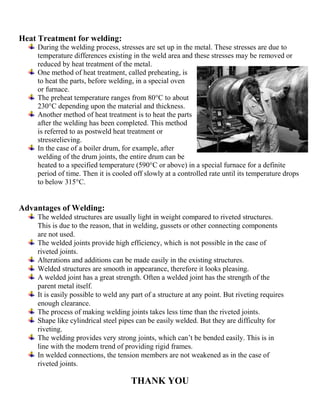
One method of heat treatment, called preheating, is
to heat the parts, before welding, in a special oven
or furnace.
The preheat temperature ranges from 80°C to about
230°C depending upon the material and thickness.
Another method of heat treatment is to heat the parts
after the welding has been completed. This method
is referred to as postweld heat treatment or
stressrelieving.
In the case of a boiler drum, for example, after
welding of the drum joints, the entire drum can be
heated to a specified temperature (590°C or above) in a special furnace for a definite
period of time. Then it is cooled off slowly at a controlled rate until its temperature drops
to below 315°C.
Advantages of Welding:
The welded structures are usually light in weight compared to riveted structures.
This is due to the reason, that in welding, gussets or other connecting components
are not used.
The welded joints provide high efficiency, which is not possible in the case of
riveted joints.
Alterations and additions can be made easily in the existing structures.
Welded structures are smooth in appearance, therefore it looks pleasing.
A welded joint has a great strength. Often a welded joint has the strength of the
parent metal itself.
It is easily possible to weld any part of a structure at any point. But riveting requires
enough clearance.
The process of making welding joints takes less time than the riveted joints.
Shape like cylindrical steel pipes can be easily welded. But they are difficulty for
riveting.
The welding provides very strong joints, which can’t be bended easily. This is in
line with the modern trend of providing rigid frames.
In welded connections, the tension members are not weakened as in the case of
riveted joints.
THANK YOU

To join the sheet metal for boiler

  • 1.
    To join thesheet metal for boiler: INTRODUCTION: In the case of a fire tube boiler, the main part of the boiler is referred to as the shell & the boiler tubes are contained within this main part. The water tube boiler, on the other hand, features a drum or drums instead of shell & the tubes run between the drums or between drums and headers, rather than being contained within them. Shells and drums are made up of steel plates, which are rolled to the correct curvature. The thickness of the plates ranges from 6 mm to 250 mm depending upon the pressure they have to withstand and the required diameter of the shell or drum. If the plate is thick, it is first heated and shaped into half-cylindrical sections which are then welded together to form the complete cylinder. If the plate is thin, it is rolled without heating to form the cylinder from a single sheet as shown in Fig 1 The adjoining edges are then welded. Fig 1 CONSTRUCTION: If the plate is thick, it is first heated and shaped into half-cylindrical sections which are then welded together to form the complete cylinder. If the plate is thin, it is rolled without heating to form the cylinder from a single sheet & the adjoining edges are then welded. Fig. 2 shows the process of welding the adjoining edges or seam of a plate that has been rolled to form a shell. After the shell or drum is formed and welded, the ends are closed off by means of heads or end plates, which are also made from steel plates. Fig 2 In the case of a watertube boiler the heads
  • 2.
    are made ina dished rather than flatshape. Fig. 3 shows a large watertube boiler drum with dished or rounded heads. In the illustration, the weld joining one of the heads to the drum is being x-rayed in order to discover any possible faults within the weld. In the case of a fire tube boiler, the heads must be flat rather than dished in order that the tube ends can be securely attached. Because the fire tube boiler heads hold the tube ends, they are called tube sheets. Fig 3 Method of Sheet joints for boiler: The five basic types of welded joints are sketched in Fig. 4 of these five, the butt joint is the one used primarily in boiler fabrication although under certain circumstances the lap joint may sometimes be used. Fig. 4 Two basic types of welds are sketched in Fig. 5 the groove weld is used in making a butt joint and the fillet weld is used in making the lap joint or the tee joint.
  • 3.
    Before the weldingof a joint is carried out, the edges of the plates to be joined are bevelled or cut in such a way as to form a groove of the proper shape and size. Various shapes of grooves used are sketched in Fig. 6 The double grooves shown at the bottom of Fig. 6 are used for thick plates with these types, the filler metal is applied to both sides of the joint and the weld is referred to as a double-welded butt joint. If the filler metal is applied from one side only, then the weld is referred to as a single- welded butt joint. Fig. 6 Fig. 7 is a sketch of a single- welded butt joint showing the terminology used for the various weld parts. Fig. 7 Fig. 8 (a) is a sketch of a double vee groove, which may be used for the longitudinal seam of a boiler shell or drum. Fig. 8 (b) is a sketch of a method of welding a head to a boiler drum,asviewed from the side of the drum. Fig. 8
  • 4.
    Heat Treatment forwelding: During the welding process, stresses are set up in the metal. These stresses are due to temperature differences existing in the weld area and these stresses may be removed or reduced by heat treatment of the metal. One method of heat treatment, called preheating, is to heat the parts, before welding, in a special oven or furnace. The preheat temperature ranges from 80°C to about 230°C depending upon the material and thickness. Another method of heat treatment is to heat the parts after the welding has been completed. This method is referred to as postweld heat treatment or stressrelieving. In the case of a boiler drum, for example, after welding of the drum joints, the entire drum can be heated to a specified temperature (590°C or above) in a special furnace for a definite period of time. Then it is cooled off slowly at a controlled rate until its temperature drops to below 315°C. Advantages of Welding: The welded structures are usually light in weight compared to riveted structures. This is due to the reason, that in welding, gussets or other connecting components are not used. The welded joints provide high efficiency, which is not possible in the case of riveted joints. Alterations and additions can be made easily in the existing structures. Welded structures are smooth in appearance, therefore it looks pleasing. A welded joint has a great strength. Often a welded joint has the strength of the parent metal itself. It is easily possible to weld any part of a structure at any point. But riveting requires enough clearance. The process of making welding joints takes less time than the riveted joints. Shape like cylindrical steel pipes can be easily welded. But they are difficulty for riveting. The welding provides very strong joints, which can’t be bended easily. This is in line with the modern trend of providing rigid frames. In welded connections, the tension members are not weakened as in the case of riveted joints. THANK YOU