GoaHippyTribe
           caseStudy


      GO
Why?
 This project is exceptional because of its use of
Facebook as a central hub and as a galvanizing
        force for audience development
theOverview
The Goa Hippy Tribe project is about people who shared a common space and time on the shores of Goa, India
during the 70’s ‘hippy revolution’ and are now re-uniting after more than 30 years via Facebook.

Australian film-maker Darius Devas has travelled back to Goa to document this unique re-union of old friends and
posted video interviews to the Goa Hippy Tribe Facebook group and fanpages with people central to this story.

The project is realized entirely online with it’s core being a community hub on Facebook.
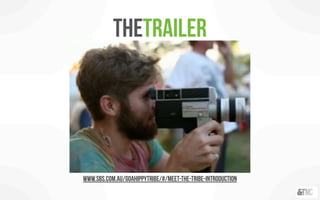
theTrailer


www.sbs.com.au/goahippytribe/#/meet-the-tribe-introduction
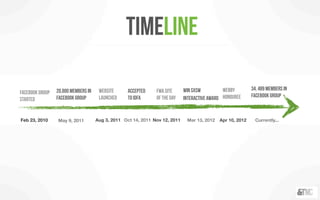
timeline

                 20,000 Members in    website      Accepted    FWA Site      Win sxsw          Webby        34, 489 Members in
Facebook Group
                 Facebook Group       launched     to IDFA     of the day    interactive award honouree     Facebook Group
started


Feb 23, 2010     May 9, 2011         Aug 3, 2011 Oct 14, 2011 Nov 12, 2011    Mar 13, 2012   Apr 10, 2012     Currently...
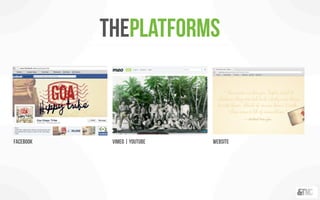
thePlatforms


Facebook    VIMEO | YouTUBE   Website
The Platforms


        startingwithCommunity
       Goa Hippy Tribe was built
     around community first with
Facebook as itʼs main platform.
It launched the Facebook page
  as a way for the community to
   reconnect after more than 30
  years. From this group Darius
Devas, who spent the early part
     of his life in this community,
  contacted and interviewed his
    subjects as they all gathered
              for a reunion in Goa.
The Platforms


startingwithCommunity
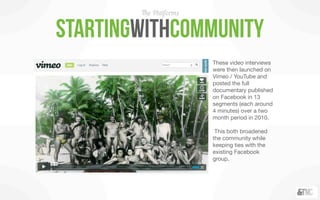
                        These video interviews
                        were then launched on
                        Vimeo / YouTube and
                        posted the full
                        documentary published
                        on Facebook in 13
                        segments (each around
                        4 minutes) over a two
                        month period in 2010.

                         This both broadened
                        the community while
                        keeping ties with the
                        existing Facebook
                        group.
The Platforms


startingwithCommunity
              18 months after the initial Facebook launch, all of
              these assets were then pulled into a Facebook
              Connect enabled website. This allowed for
              personalization of the users experience, as well as
              the ability to collect and save a variety of assets
              including music, photos and videos. As well, all of
              the assets on the site are sharable to enable users
              to send music, videos and photos out to their own
              social media networks including Facebook and
              Twitter.

              This is a great example of a project that has looked
              to the nature of their project in order to choose the
              appropriate platforms. In this case, building and
              maintaining community are at the core of this
              community, past and present so a social network
              such as Facebook is the perfect tentpole for this
              project.
Social Media Campaign


facebookConnect
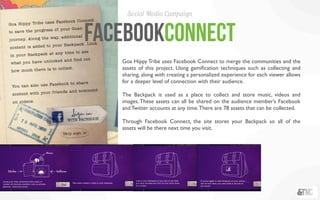
   Goa Hippy Tribe uses Facebook Connect to merge the communities and the
   assets of this project. Using gamification techniques such as collecting and
   sharing, along with creating a personalized experience for each viewer allows
   for a deeper level of connection with their audience.

   The Backpack is used as a place to collect and store music, videos and
   images. These assets can all be shared on the audience member’s Facebook
   and Twitter accounts at any time. There are 78 assets that can be collected.

   Through Facebook Connect, the site stores your Backpack so all of the
   assets will be there next time you visit.
theAudience
According to Darius Devas, the Director,
there are three main audiences for
Goa Hippy Tribe:

1. People who had been interviewed in Goa 2. People who knew them 3. Likeminded people from all over the world
Audience is integral to Goa Hippy Tribe, not only as viewers, but also as researchers and contributors to the project.
Justin Buckwell, Creative Head of Dubz.tv (who collaborated on GHT), explains it by saying: “Traditionally in the lead up
to creating a documentary there would be a research and interview process that would never be released to audiences.
What we are looking to achieve with GHT is allowing people to experience and become part of the whole documentary
process.”{A}

In addition, the high level of user interaction is also intended to deepen the experience for the viewer. According to
Freehand TV executive producer Paul Rudd: “Through the use of digital it is our hope that the build up of interaction will
ensure the Facebook audience will feel a greater sense of community and involvement with the documentary than they
would otherwise feel from simply watching on the television.” {A}

Buckwell goes on to say: “Facebook allows audiences to become involved in grow discussions surrounding the whole
process helping to influence the shape of the documentary. This approach is turning the documentary from passive into
an active experience, helping to build an increased community with the audience. The project shows how
using the internet you can find an audience then have it create, shape and share your story.” {A}
Awardsetc.
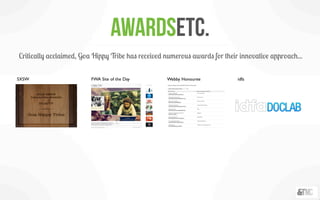
Critically acclaimed, Goa Hippy Tribe has received numerous awards for their innovative approach...

SXSW                     FWA Site of the Day       Webby Honouree           idfa
CONTENT
                                         theteam
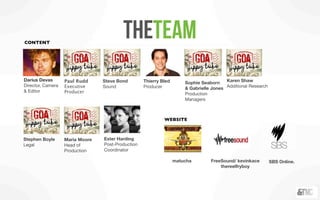
Darius Devas       Paul Rudd     Steve Bond        Thierry Bled                         Karen Shaw
                                                                      Sophie Seaborn
Director, Camera   Executive     Sound             Producer           & Gabrielle Jones Additional Research
& Editor           Producer                                           Production
                                                                      Managers


                                                            WEBSITE


Stephen Boyle      Maria Moore   Ester Harding
Legal              Head of       Post-Production
                   Production    Coordinator

                                                                  matucha        FreeSound/ kevinkace         SBS Online.
                                                                                     thereelfryboy
links&resources

www.freehandtv.com.au       www.facebook.com/     www.sbs.com.au/goahippytribe


vimeo.com/goahippytribe   www.youtube.com/user/    www.beingfilms.com
references
A   www.monpamplemousse.wordpress.com/page/3/
Get in Touch


       contactus
            TMC Resource Kit
           info@tmcresourcekit.com
              tmcresourcekit.com


Goa Hippy Tribe Case Study was prepared by:
                anthea foyer
        antheafoyer.com @antheafoyer
tmcrkpartners
    THANKS to...
The Goa Hippy Tribe Case Study is released under a NonCommercial
ShareAlike Creative Commons license to be shared, remixed and
expanded non-­‐commercially, as long as you credit the TMC
Resource Kit, the creator of the Case Study, Anthea Foyer or Dr.
Siobhan O’Flynn, and license your new creations under the identical
terms.

Images from third parties (IE. Goa Hippy Tribe) retain original copyright.

TMC Goa Hippy Tribe Case Study

  • 1.
    GoaHippyTribe caseStudy GO
  • 2.
    Why? This projectis exceptional because of its use of Facebook as a central hub and as a galvanizing force for audience development
  • 3.
    theOverview The Goa HippyTribe project is about people who shared a common space and time on the shores of Goa, India during the 70’s ‘hippy revolution’ and are now re-uniting after more than 30 years via Facebook. Australian film-maker Darius Devas has travelled back to Goa to document this unique re-union of old friends and posted video interviews to the Goa Hippy Tribe Facebook group and fanpages with people central to this story. The project is realized entirely online with it’s core being a community hub on Facebook.
  • 4.
  • 5.
    timeline 20,000 Members in website Accepted FWA Site Win sxsw Webby 34, 489 Members in Facebook Group Facebook Group launched to IDFA of the day interactive award honouree Facebook Group started Feb 23, 2010 May 9, 2011 Aug 3, 2011 Oct 14, 2011 Nov 12, 2011 Mar 13, 2012 Apr 10, 2012 Currently...
  • 6.
    thePlatforms Facebook VIMEO | YouTUBE Website
  • 7.
    The Platforms startingwithCommunity Goa Hippy Tribe was built around community first with Facebook as itʼs main platform. It launched the Facebook page as a way for the community to reconnect after more than 30 years. From this group Darius Devas, who spent the early part of his life in this community, contacted and interviewed his subjects as they all gathered for a reunion in Goa.
  • 8.
    The Platforms startingwithCommunity These video interviews were then launched on Vimeo / YouTube and posted the full documentary published on Facebook in 13 segments (each around 4 minutes) over a two month period in 2010. This both broadened the community while keeping ties with the existing Facebook group.
  • 9.
    The Platforms startingwithCommunity 18 months after the initial Facebook launch, all of these assets were then pulled into a Facebook Connect enabled website. This allowed for personalization of the users experience, as well as the ability to collect and save a variety of assets including music, photos and videos. As well, all of the assets on the site are sharable to enable users to send music, videos and photos out to their own social media networks including Facebook and Twitter. This is a great example of a project that has looked to the nature of their project in order to choose the appropriate platforms. In this case, building and maintaining community are at the core of this community, past and present so a social network such as Facebook is the perfect tentpole for this project.
  • 10.
    Social Media Campaign facebookConnect Goa Hippy Tribe uses Facebook Connect to merge the communities and the assets of this project. Using gamification techniques such as collecting and sharing, along with creating a personalized experience for each viewer allows for a deeper level of connection with their audience. The Backpack is used as a place to collect and store music, videos and images. These assets can all be shared on the audience member’s Facebook and Twitter accounts at any time. There are 78 assets that can be collected. Through Facebook Connect, the site stores your Backpack so all of the assets will be there next time you visit.
  • 11.
    theAudience According to DariusDevas, the Director, there are three main audiences for Goa Hippy Tribe: 1. People who had been interviewed in Goa 2. People who knew them 3. Likeminded people from all over the world Audience is integral to Goa Hippy Tribe, not only as viewers, but also as researchers and contributors to the project. Justin Buckwell, Creative Head of Dubz.tv (who collaborated on GHT), explains it by saying: “Traditionally in the lead up to creating a documentary there would be a research and interview process that would never be released to audiences. What we are looking to achieve with GHT is allowing people to experience and become part of the whole documentary process.”{A} In addition, the high level of user interaction is also intended to deepen the experience for the viewer. According to Freehand TV executive producer Paul Rudd: “Through the use of digital it is our hope that the build up of interaction will ensure the Facebook audience will feel a greater sense of community and involvement with the documentary than they would otherwise feel from simply watching on the television.” {A} Buckwell goes on to say: “Facebook allows audiences to become involved in grow discussions surrounding the whole process helping to influence the shape of the documentary. This approach is turning the documentary from passive into an active experience, helping to build an increased community with the audience. The project shows how using the internet you can find an audience then have it create, shape and share your story.” {A}
  • 12.
    Awardsetc. Critically acclaimed, GoaHippy Tribe has received numerous awards for their innovative approach... SXSW FWA Site of the Day Webby Honouree idfa
  • 13.
    CONTENT theteam Darius Devas Paul Rudd Steve Bond Thierry Bled Karen Shaw Sophie Seaborn Director, Camera Executive Sound Producer & Gabrielle Jones Additional Research & Editor Producer Production Managers WEBSITE Stephen Boyle Maria Moore Ester Harding Legal Head of Post-Production Production Coordinator matucha FreeSound/ kevinkace SBS Online. thereelfryboy
  • 14.
    links&resources www.freehandtv.com.au www.facebook.com/ www.sbs.com.au/goahippytribe vimeo.com/goahippytribe www.youtube.com/user/ www.beingfilms.com
  • 15.
    references A www.monpamplemousse.wordpress.com/page/3/
  • 16.
    Get in Touch contactus TMC Resource Kit info@tmcresourcekit.com tmcresourcekit.com Goa Hippy Tribe Case Study was prepared by: anthea foyer antheafoyer.com @antheafoyer
  • 17.
    tmcrkpartners THANKS to...
  • 18.
    The Goa HippyTribe Case Study is released under a NonCommercial ShareAlike Creative Commons license to be shared, remixed and expanded non-­‐commercially, as long as you credit the TMC Resource Kit, the creator of the Case Study, Anthea Foyer or Dr. Siobhan O’Flynn, and license your new creations under the identical terms. Images from third parties (IE. Goa Hippy Tribe) retain original copyright.