WE12 Conference
November 8-10 2012
Houston, TX
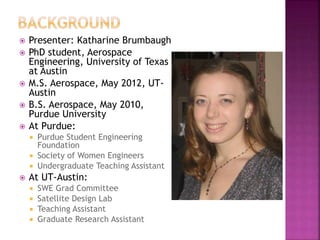
 Presenter: Katharine Brumbaugh
 PhD student, Aerospace
Engineering, University of Texas
at Austin
 M.S. Aerospace, May 2012, UT-
Austin
 B.S. Aerospace, May 2010,
Purdue University
 At Purdue:
 Purdue Student Engineering
Foundation
 Society of Women Engineers
 Undergraduate Teaching Assistant
 At UT-Austin:
 SWE Grad Committee
 Satellite Design Lab
 Teaching Assistant
 Graduate Research Assistant
Purpose Format
Share lessons from:
 TAing as Undergrad
and Grad
 Managing technical
team of mostly
undergrads
 Managing/Leading/
Working with
organizations of
undergrads
 Non-lab research
projects with
undergrads
 Situation-based group
discussion
 Lessons learned after
discussion
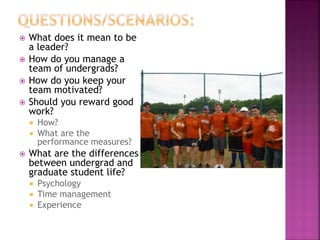
 What does it mean to be
a leader?
 How do you manage a
team of undergrads?
 How do you keep your
team motivated?
 Should you reward good
work?
 How?
 What are the
performance measures?
 What are the differences
between undergrad and
graduate student life?
 Psychology
 Time management
 Experience
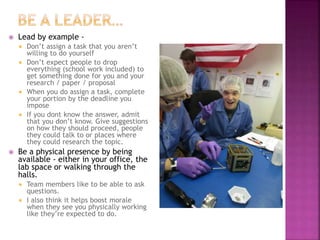
 Lead by example -
 Don’t assign a task that you aren’t
willing to do yourself
 Don’t expect people to drop
everything (school work included) to
get something done for you and your
research / paper / proposal
 When you do assign a task, complete
your portion by the deadline you
impose
 If you dont know the answer, admit
that you don’t know. Give suggestions
on how they should proceed, people
they could talk to or places where
they could research the topic.
 Be a physical presence by being
available - either in your office, the
lab space or walking through the
halls.
 Team members like to be able to ask
questions.
 I also think it helps boost morale
when they see you physically working
like they’re expected to do.
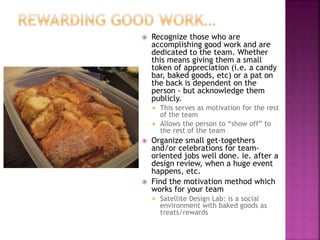
 Recognize those who are
accomplishing good work and are
dedicated to the team. Whether
this means giving them a small
token of appreciation (i.e. a candy
bar, baked goods, etc) or a pat on
the back is dependent on the
person - but acknowledge them
publicly.
 This serves as motivation for the rest
of the team
 Allows the person to “show off” to
the rest of the team
 Organize small get-togethers
and/or celebrations for team-
oriented jobs well done. ie. after a
design review, when a huge event
happens, etc.
 Find the motivation method which
works for your team
 Satellite Design Lab: is a social
environment with baked goods as
treats/rewards
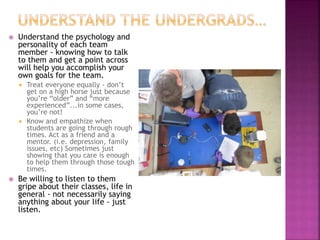
 Understand the psychology and
personality of each team
member - knowing how to talk
to them and get a point across
will help you accomplish your
own goals for the team.
 Treat everyone equally - don’t
get on a high horse just because
you’re “older” and “more
experienced”...in some cases,
you’re not!
 Know and empathize when
students are going through rough
times. Act as a friend and a
mentor. (i.e. depression, family
issues, etc) Sometimes just
showing that you care is enough
to help them through those tough
times.
 Be willing to listen to them
gripe about their classes, life in
general - not necessarily saying
anything about your life - just
listen.
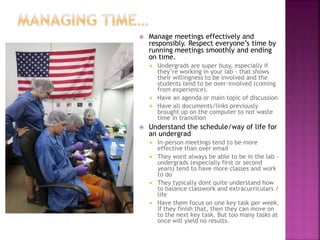
 Manage meetings effectively and
responsibly. Respect everyone’s time by
running meetings smoothly and ending
on time.
 Undergrads are super busy, especially if
they’re working in your lab - that shows
their willingness to be involved and the
students tend to be over-involved (coming
from experience).
 Have an agenda or main topic of discussion
 Have all documents/links previously
brought up on the computer to not waste
time in transition
 Understand the schedule/way of life for
an undergrad
 In-person meetings tend to be more
effective than over email
 They wont always be able to be in the lab -
undergrads (especially first or second
years) tend to have more classes and work
to do
 They typically dont quite understand how
to balance classwork and extracurriculars /
life
 Have them focus on one key task per week.
If they finish that, then they can move on
to the next key task. But too many tasks at
once will yield no results.
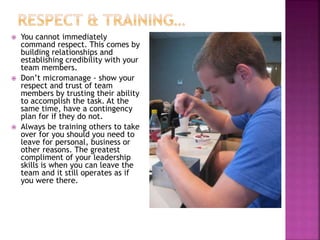
 You cannot immediately
command respect. This comes by
building relationships and
establishing credibility with your
team members.
 Don’t micromanage - show your
respect and trust of team
members by trusting their ability
to accomplish the task. At the
same time, have a contingency
plan for if they do not.
 Always be training others to take
over for you should you need to
leave for personal, business or
other reasons. The greatest
compliment of your leadership
skills is when you can leave the
team and it still operates as if
you were there.
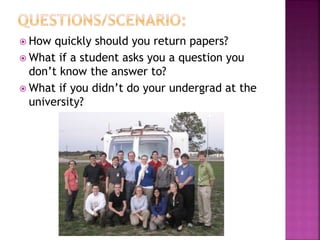
 How quickly should you return papers?
 What if a student asks you a question you
don’t know the answer to?
 What if you didn’t do your undergrad at the
university?
 Return graded/commented papers
as quickly as you are able
(preferably within a week)
 Don’t act like you know everything.
If you don’t know an answer to their
question, admit as much and say
you’ll look it up or ask a professor.
 Be familiar with their curriculum
and what classes they’ve taken so
you know how to explain things to
them.
 If you’re knowledgeable about the
material (say, a senior design class),
explain to them your background
and why you are knowledgeable.
Offer feedback based in your
experience with the topic.
 If you try to give them feedback
without explaining your background,
more than likely they’ll just blow you
off.
 If you explain your background, now
you have credibility and clout with
them. They’ll respect your advice
much more.
 How does this
situation differ from
being a lab/program
manager or a TA?
 What kind of
experience do they
usually have?
 How can you teach
them the material in
a non-TA method?
 How often should you
meet with them?
 Ask them what their experience
is, class and industry.
 Frequently ask them whether or
not they understand the
material, or whether they need
it to be repeated / explained
differently.
 Be aware that their schedule
will typically be busier than
yours. Plan accordingly.
 Make time to meet with them
once a week, or however often
is necessary. If appropriate, get
a professor to sit in on those
meetings for additional
feedback.
 Share your background research
/ class material / initial steps
with them, so they have a
baseline of where to start.
Tips for Mentoring and Teaching Undergraduates

Tips for Mentoring and Teaching Undergraduates

  • 1.
  • 2.
     Presenter: KatharineBrumbaugh  PhD student, Aerospace Engineering, University of Texas at Austin  M.S. Aerospace, May 2012, UT- Austin  B.S. Aerospace, May 2010, Purdue University  At Purdue:  Purdue Student Engineering Foundation  Society of Women Engineers  Undergraduate Teaching Assistant  At UT-Austin:  SWE Grad Committee  Satellite Design Lab  Teaching Assistant  Graduate Research Assistant
  • 3.
    Purpose Format Share lessonsfrom:  TAing as Undergrad and Grad  Managing technical team of mostly undergrads  Managing/Leading/ Working with organizations of undergrads  Non-lab research projects with undergrads  Situation-based group discussion  Lessons learned after discussion
  • 5.
     What doesit mean to be a leader?  How do you manage a team of undergrads?  How do you keep your team motivated?  Should you reward good work?  How?  What are the performance measures?  What are the differences between undergrad and graduate student life?  Psychology  Time management  Experience
  • 6.
     Lead byexample -  Don’t assign a task that you aren’t willing to do yourself  Don’t expect people to drop everything (school work included) to get something done for you and your research / paper / proposal  When you do assign a task, complete your portion by the deadline you impose  If you dont know the answer, admit that you don’t know. Give suggestions on how they should proceed, people they could talk to or places where they could research the topic.  Be a physical presence by being available - either in your office, the lab space or walking through the halls.  Team members like to be able to ask questions.  I also think it helps boost morale when they see you physically working like they’re expected to do.
  • 7.
     Recognize thosewho are accomplishing good work and are dedicated to the team. Whether this means giving them a small token of appreciation (i.e. a candy bar, baked goods, etc) or a pat on the back is dependent on the person - but acknowledge them publicly.  This serves as motivation for the rest of the team  Allows the person to “show off” to the rest of the team  Organize small get-togethers and/or celebrations for team- oriented jobs well done. ie. after a design review, when a huge event happens, etc.  Find the motivation method which works for your team  Satellite Design Lab: is a social environment with baked goods as treats/rewards
  • 8.
     Understand thepsychology and personality of each team member - knowing how to talk to them and get a point across will help you accomplish your own goals for the team.  Treat everyone equally - don’t get on a high horse just because you’re “older” and “more experienced”...in some cases, you’re not!  Know and empathize when students are going through rough times. Act as a friend and a mentor. (i.e. depression, family issues, etc) Sometimes just showing that you care is enough to help them through those tough times.  Be willing to listen to them gripe about their classes, life in general - not necessarily saying anything about your life - just listen.
  • 9.
     Manage meetingseffectively and responsibly. Respect everyone’s time by running meetings smoothly and ending on time.  Undergrads are super busy, especially if they’re working in your lab - that shows their willingness to be involved and the students tend to be over-involved (coming from experience).  Have an agenda or main topic of discussion  Have all documents/links previously brought up on the computer to not waste time in transition  Understand the schedule/way of life for an undergrad  In-person meetings tend to be more effective than over email  They wont always be able to be in the lab - undergrads (especially first or second years) tend to have more classes and work to do  They typically dont quite understand how to balance classwork and extracurriculars / life  Have them focus on one key task per week. If they finish that, then they can move on to the next key task. But too many tasks at once will yield no results.
  • 10.
     You cannotimmediately command respect. This comes by building relationships and establishing credibility with your team members.  Don’t micromanage - show your respect and trust of team members by trusting their ability to accomplish the task. At the same time, have a contingency plan for if they do not.  Always be training others to take over for you should you need to leave for personal, business or other reasons. The greatest compliment of your leadership skills is when you can leave the team and it still operates as if you were there.
  • 12.
     How quicklyshould you return papers?  What if a student asks you a question you don’t know the answer to?  What if you didn’t do your undergrad at the university?
  • 13.
     Return graded/commentedpapers as quickly as you are able (preferably within a week)  Don’t act like you know everything. If you don’t know an answer to their question, admit as much and say you’ll look it up or ask a professor.  Be familiar with their curriculum and what classes they’ve taken so you know how to explain things to them.  If you’re knowledgeable about the material (say, a senior design class), explain to them your background and why you are knowledgeable. Offer feedback based in your experience with the topic.  If you try to give them feedback without explaining your background, more than likely they’ll just blow you off.  If you explain your background, now you have credibility and clout with them. They’ll respect your advice much more.
  • 15.
     How doesthis situation differ from being a lab/program manager or a TA?  What kind of experience do they usually have?  How can you teach them the material in a non-TA method?  How often should you meet with them?
  • 16.
     Ask themwhat their experience is, class and industry.  Frequently ask them whether or not they understand the material, or whether they need it to be repeated / explained differently.  Be aware that their schedule will typically be busier than yours. Plan accordingly.  Make time to meet with them once a week, or however often is necessary. If appropriate, get a professor to sit in on those meetings for additional feedback.  Share your background research / class material / initial steps with them, so they have a baseline of where to start.