COMMUNICATING WITH
INSTRUCTORS
Workshop Overview
■ General ground rules
■ Dealing with Tough Instructors
■ Regaining Credibility
■ Visiting Office Hours
■ Email Etiquette
■ Zoom Etiquette
Question:
What do instructors & students
always have in common?
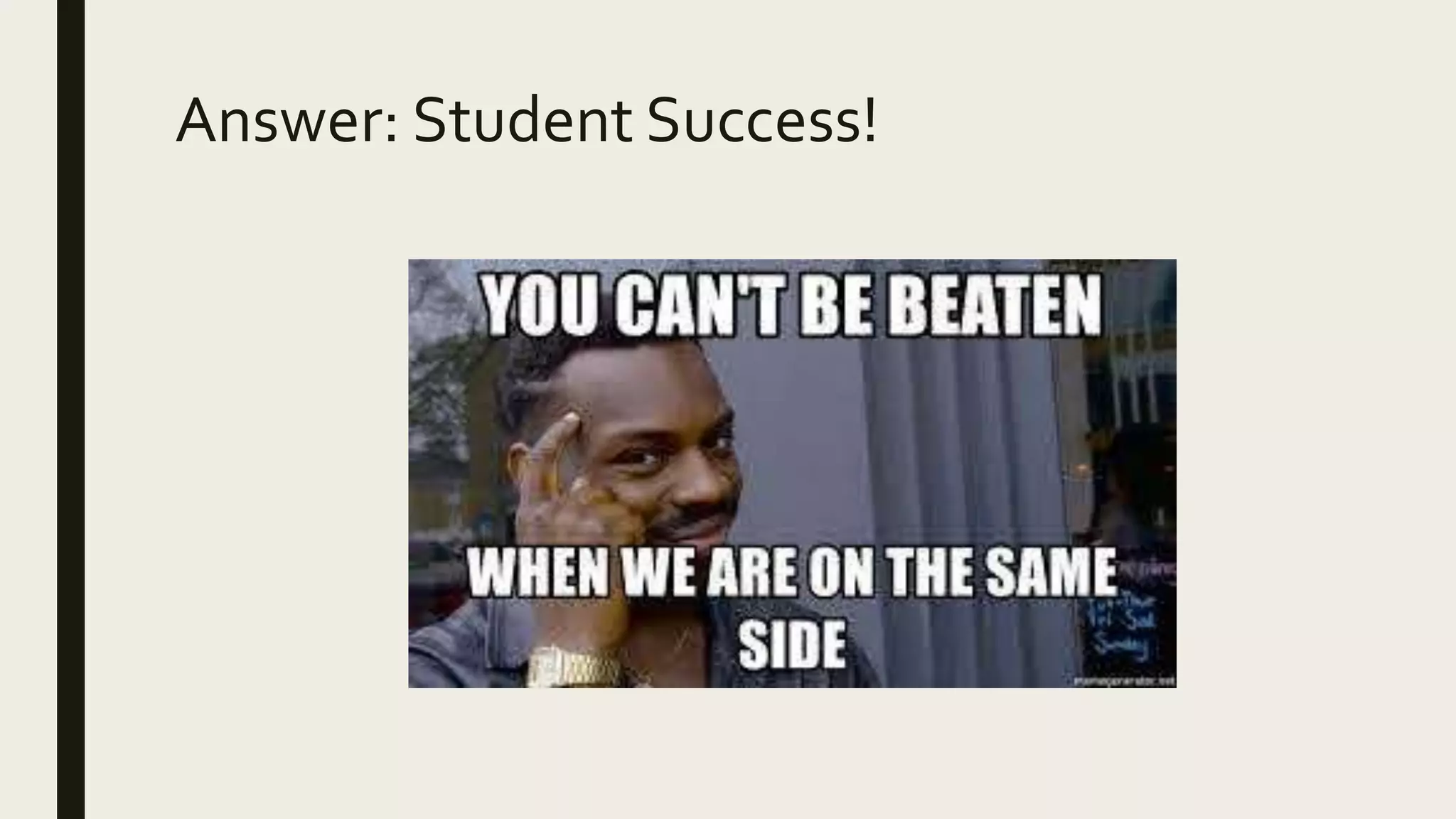
Answer: Student Success!
The real problem is the difficulty
of maintaining the relationship,
while getting needs met on both
sides.
GROUND
RULES
Be Respectful to All
■ Use the right title, name, pronouns, etc.
■ Show respect for their time
■ Don’t offer comparisons, implicitly or explicitly, to other instructors
– Do not challenge the instructor’s qualifications or credentials
■ Know what their responsibilities to you are—and what they are not
■ Keep the relationship professional
Respect is earned
by being respectful to all.
Self-Regulation
■ Practice adult behaviors in the
classroom (no matter your age)
■ Honesty is the best policy
■ Be prepared to do the work
■ Use clear communication
■ Practice being concise
■ Attend to social obligations
(classroom, office hours, etc.)
■ Abide by the syllabus rules
■ Don’t expect special treatment
■ Take responsibility for your outcomes
■ Put enough time into the course
■ Treat yourself gently on tough days
■ Purchase & use required course
materials
DEALINGWITH
TOUGH PROFS
Mindset
■ Adjust your expectations
■ Be Patient
■ Be Open-minded
■ Read & accept the course syllabus rules—or “eject” on Day 1
■ Be Intellectually curious
■ Participate more
■ Get an accountability partner
Up the Professionalism
■ Accountability
■ Consideration
■ Humility
■ Communication
■ Tidiness
■ Kindness
■ Consistency
■ Optimism
Use Campus Resources to Get
More Done
■ Office Hours
■ Tutoring
■ Academic Advising
■ Success Coaches
■ Librarians
■ IT or Learning Commons Lab
REGAINING
CREDIBILITY
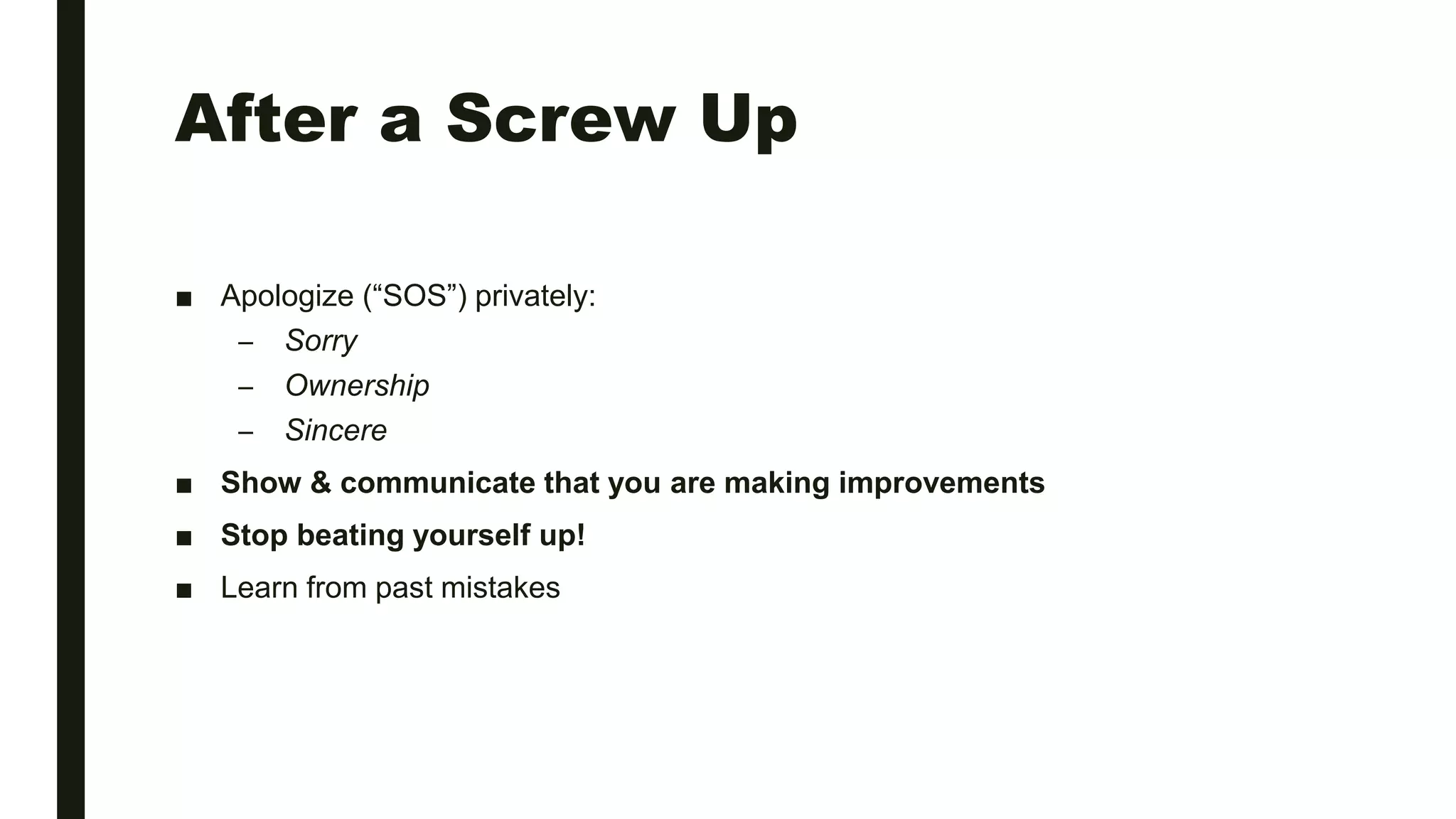
After a Screw Up
■ Apologize (“SOS”) privately:
– Sorry
– Ownership
– Sincere
■ Show & communicate that you are making improvements
■ Stop beating yourself up!
■ Learn from past mistakes
VISITING
OFFICE HOURS
Reality:
Instructors want to help.
They can’t if you don’t let them!
GeneralTips
■ At the first meeting introduce yourself & remind them of your course section
■ It’s your meeting, so take the lead
■ Take notes while the instructor answers your questions
■ Be brave and explain your ideas using examples—they may never have thought of it!
■ If other students are waiting, don’t be upset about
– getting in line after 10-15 minutes
– scheduling a meeting later
■ Bring books, notes, homework to reference
■ Attend office hours BEFORE expected absences
Leave the “beef,”
bring the agenda
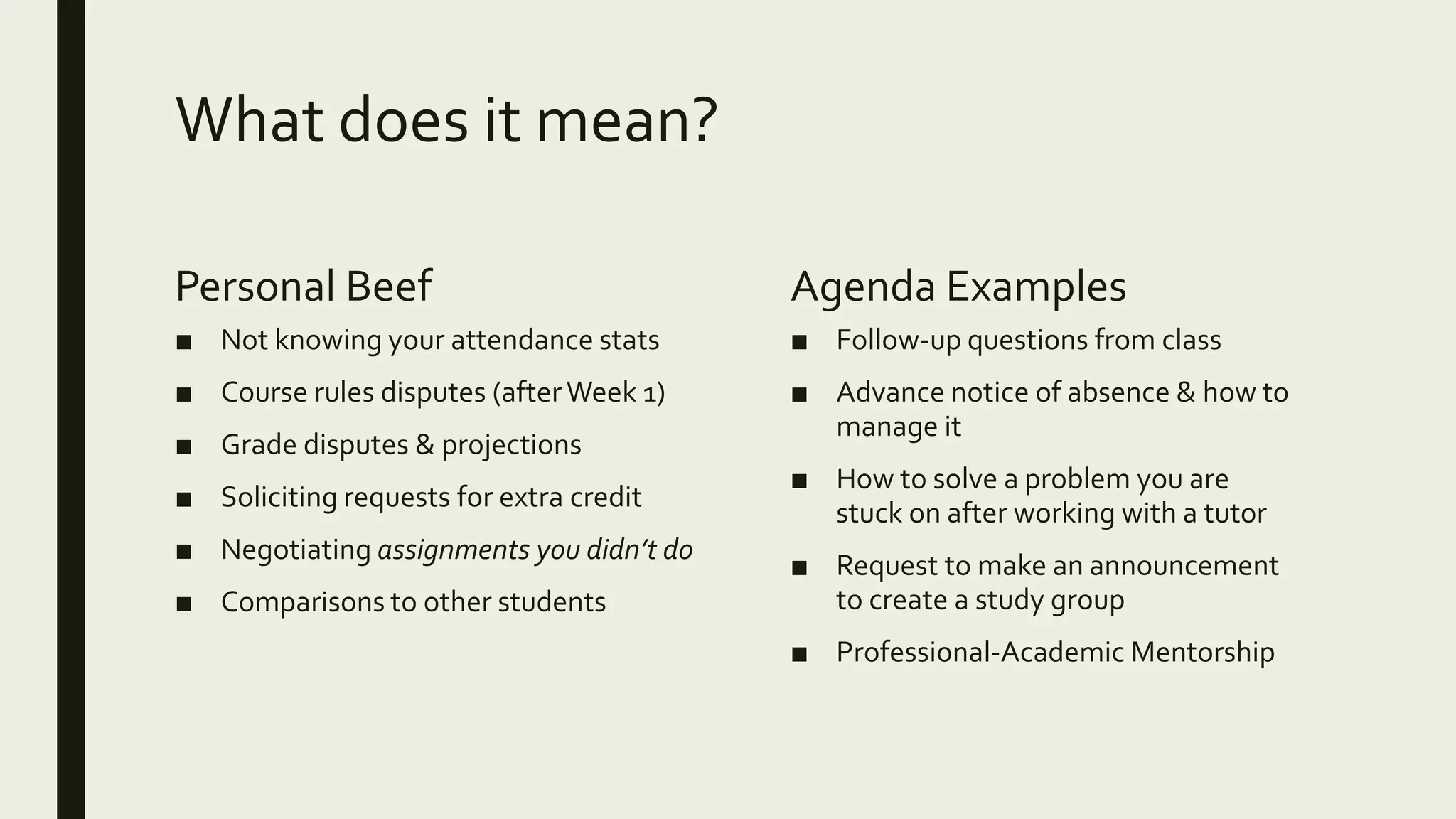
What does it mean?
Personal Beef
■ Not knowing your attendance stats
■ Course rules disputes (afterWeek 1)
■ Grade disputes & projections
■ Soliciting requests for extra credit
■ Negotiating assignments you didn’t do
■ Comparisons to other students
Agenda Examples
■ Follow-up questions from class
■ Advance notice of absence & how to
manage it
■ How to solve a problem you are
stuck on after working with a tutor
■ Request to make an announcement
to create a study group
■ Professional-Academic Mentorship
Meeting Agenda Tips
■ Create an agenda early
■ Define meeting objectives
■ Prioritize agenda items
■ Break down agenda topics into key
points
■ Allow adequate time to discuss each
■ Classify outcomes: decide, discuss,
etc.
What if the beef
IS the agenda?
Handling Special Situations
■ Read over the course syllabus
■ Talk it over with a friend
■ Create an agenda & email it in advance
■ Make an appointment for a private meeting
■ Give the instructor time to think
■ Accept their decision
■ Ask what a more productive next step could be
Tutoring is an excellent way
to role-play a visit to office
hours.
EMAIL ETIQUETTE
A Note on Email & Emailing
■ There are many kinds of email styles
– College email is considered workplace-professional
■ Email is another channel for course content
– Check email daily during the work week
– Check email the week before the semester
■ Email is public
– Don’t write about anything that is personal or sensitive
Email Do’s
■ Use specific subject lines
■ Identify yourself formally, using first & last name
■ Acknowledge the person by name
■ “put the bottom line on top”
■ Clearly label attachments (ex name, assignment, & course number/section)
■ Sign your name
Email Don’ts
■ Skip the subject
■ Attach files with unclear names
■ Use texting, emojis, or too many exclamation points!!!!!
■ Skip the greeting to get to what you want
■ Skip the sign-off
■ Be too personal
■ Be long-winded
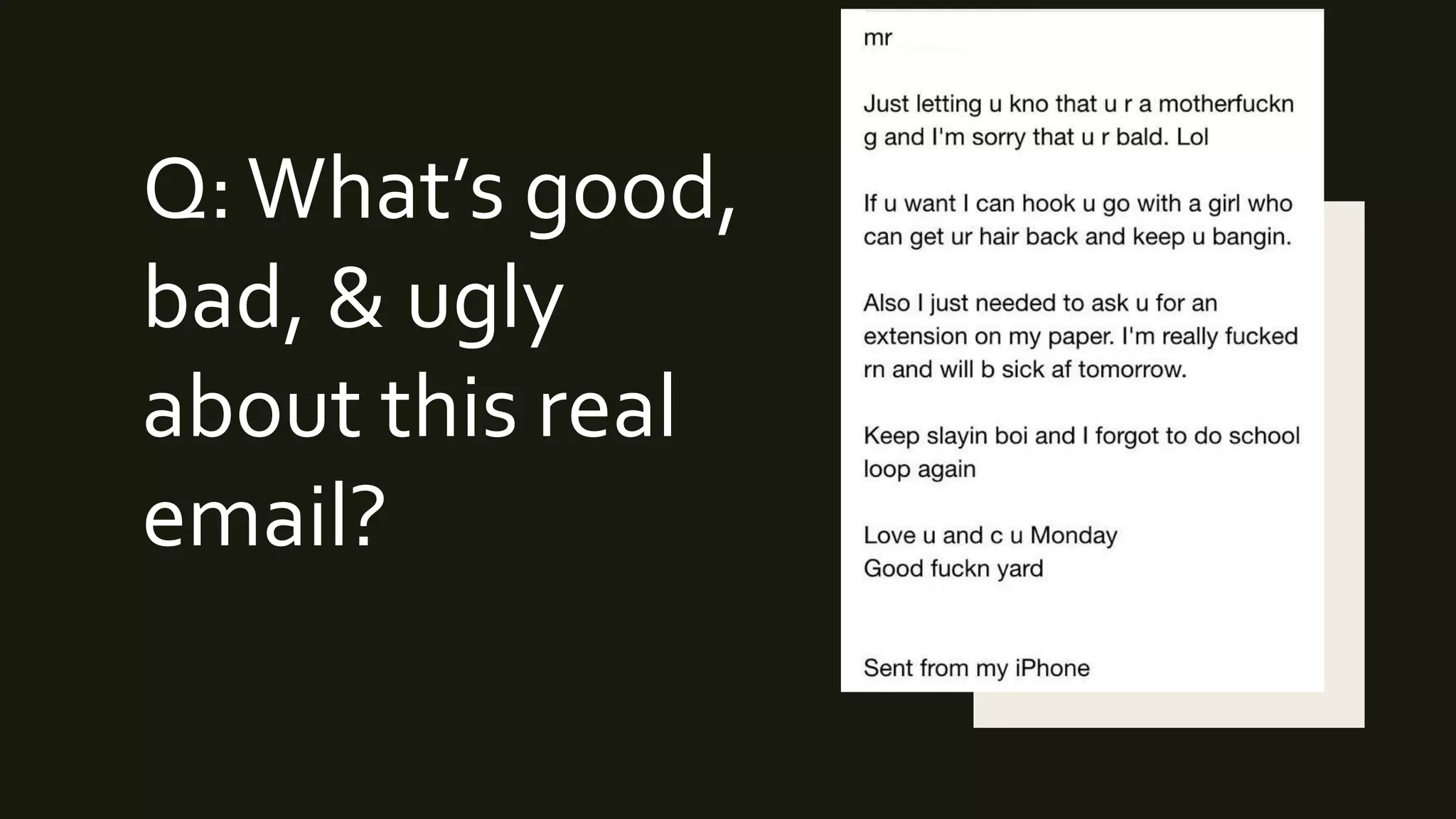
Q:What’s good,
bad, & ugly
about this real
email?
ZOOM ETIQUETTE
Zoom Don’ts
■ Enter sessions you are not invited to or give access to uninvited guests
■ Take screenshots or record attendees without permission
■ Change your name
■ Change your background during a meeting
■ Have off-topic conversations on the chat with classmates
■ Sit in a place with distracting background traffic
■ Wear fewer articles of clothing than is acceptable for an in-person meeting
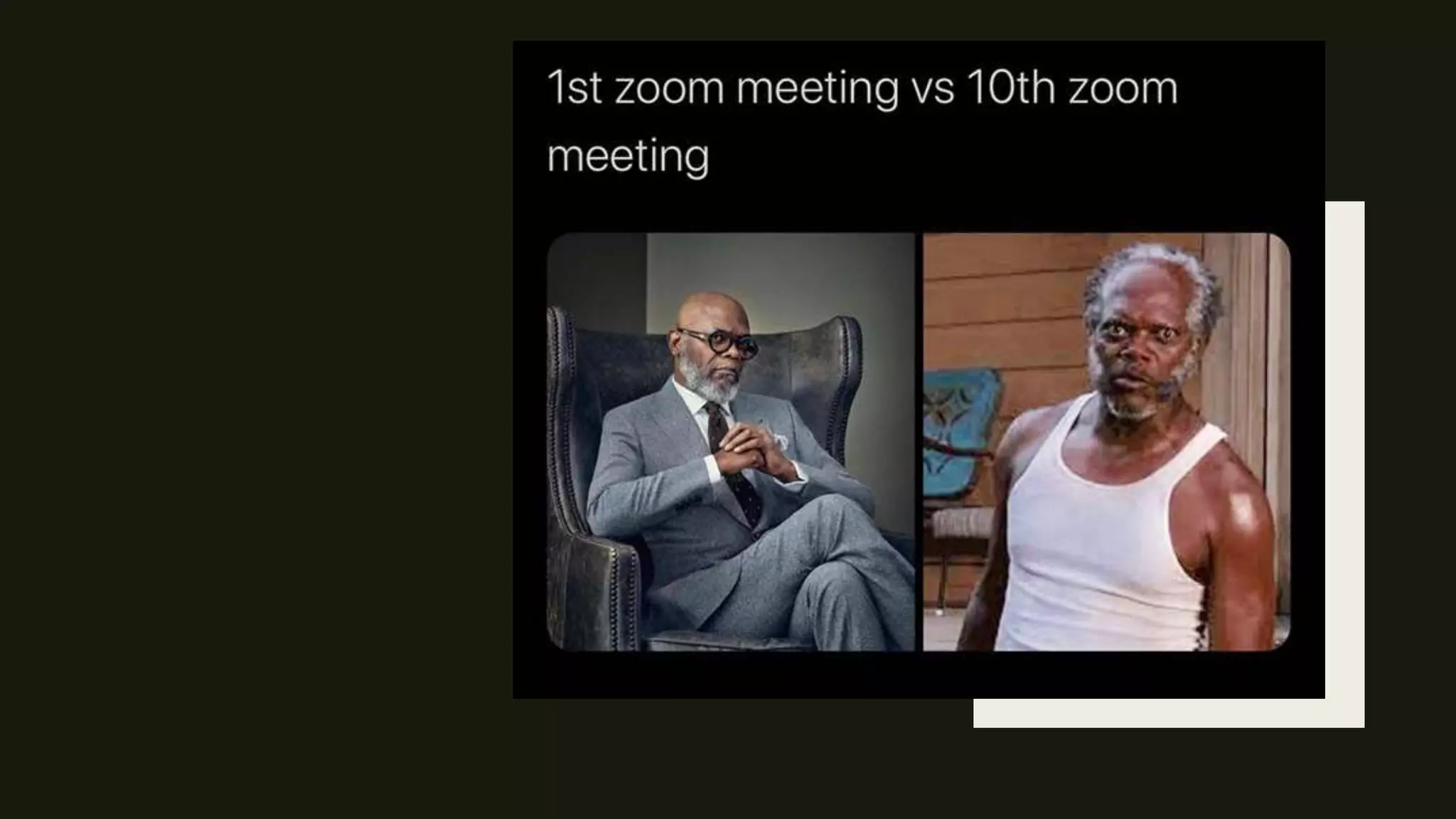
FUNNY, BUT NO…
Zoom Do’s
■ Find a clean, quiet space
■ Dress appropriately
■ Let household members know
when/where you are in class
■ Make sure your full name is visible
■ Use good lighting
■ Mute speaker until required to talk
■ Raise your hand to speak
■ Use an appropriate background
■ Turn off cell phones & other window
tabs
■ Be on time
■ Pay attention
■ Take notes
■ Ask questions
■ Use chat feature professionally
■ Keep video streaming on—or explain
your needs privately to host/ess
UPCOMING
EVENTS
■ Study-O-Gram
■ Motivation
Our Services
Study Help
• Drop-In Study Help for all courses
• Study Groups
• On-Track Appointments
• Question Drop-Off
Tech Help
• Drop-In Student Tech Help
• Ask-a-Lab Associate Question Drop-off
• Get Tech Ready and Appy Hour Workshops
Learning Help
• Check out our collection of self-service resources that supplement classroom materials
Get In Touch!
www.wccnet.edu/LC (live chat assistance offered during regular hours)
(734) 973-3420
Lab Email: LCLab@wccnet.edu
Tutoring Email: TutorWCC@wccnet.edu

Communicating with instructors

  • 1.
  • 2.
    Workshop Overview ■ Generalground rules ■ Dealing with Tough Instructors ■ Regaining Credibility ■ Visiting Office Hours ■ Email Etiquette ■ Zoom Etiquette
  • 3.
    Question: What do instructors& students always have in common?
  • 4.
  • 5.
    The real problemis the difficulty of maintaining the relationship, while getting needs met on both sides.
  • 6.
  • 7.
    Be Respectful toAll ■ Use the right title, name, pronouns, etc. ■ Show respect for their time ■ Don’t offer comparisons, implicitly or explicitly, to other instructors – Do not challenge the instructor’s qualifications or credentials ■ Know what their responsibilities to you are—and what they are not ■ Keep the relationship professional
  • 8.
    Respect is earned bybeing respectful to all.
  • 9.
    Self-Regulation ■ Practice adultbehaviors in the classroom (no matter your age) ■ Honesty is the best policy ■ Be prepared to do the work ■ Use clear communication ■ Practice being concise ■ Attend to social obligations (classroom, office hours, etc.) ■ Abide by the syllabus rules ■ Don’t expect special treatment ■ Take responsibility for your outcomes ■ Put enough time into the course ■ Treat yourself gently on tough days ■ Purchase & use required course materials
  • 10.
  • 12.
    Mindset ■ Adjust yourexpectations ■ Be Patient ■ Be Open-minded ■ Read & accept the course syllabus rules—or “eject” on Day 1 ■ Be Intellectually curious ■ Participate more ■ Get an accountability partner
  • 13.
    Up the Professionalism ■Accountability ■ Consideration ■ Humility ■ Communication ■ Tidiness ■ Kindness ■ Consistency ■ Optimism
  • 14.
    Use Campus Resourcesto Get More Done ■ Office Hours ■ Tutoring ■ Academic Advising ■ Success Coaches ■ Librarians ■ IT or Learning Commons Lab
  • 15.
  • 17.
    After a ScrewUp ■ Apologize (“SOS”) privately: – Sorry – Ownership – Sincere ■ Show & communicate that you are making improvements ■ Stop beating yourself up! ■ Learn from past mistakes
  • 19.
  • 20.
    Reality: Instructors want tohelp. They can’t if you don’t let them!
  • 21.
    GeneralTips ■ At thefirst meeting introduce yourself & remind them of your course section ■ It’s your meeting, so take the lead ■ Take notes while the instructor answers your questions ■ Be brave and explain your ideas using examples—they may never have thought of it! ■ If other students are waiting, don’t be upset about – getting in line after 10-15 minutes – scheduling a meeting later ■ Bring books, notes, homework to reference ■ Attend office hours BEFORE expected absences
  • 22.
  • 23.
    What does itmean? Personal Beef ■ Not knowing your attendance stats ■ Course rules disputes (afterWeek 1) ■ Grade disputes & projections ■ Soliciting requests for extra credit ■ Negotiating assignments you didn’t do ■ Comparisons to other students Agenda Examples ■ Follow-up questions from class ■ Advance notice of absence & how to manage it ■ How to solve a problem you are stuck on after working with a tutor ■ Request to make an announcement to create a study group ■ Professional-Academic Mentorship
  • 24.
    Meeting Agenda Tips ■Create an agenda early ■ Define meeting objectives ■ Prioritize agenda items ■ Break down agenda topics into key points ■ Allow adequate time to discuss each ■ Classify outcomes: decide, discuss, etc.
  • 25.
    What if thebeef IS the agenda?
  • 26.
    Handling Special Situations ■Read over the course syllabus ■ Talk it over with a friend ■ Create an agenda & email it in advance ■ Make an appointment for a private meeting ■ Give the instructor time to think ■ Accept their decision ■ Ask what a more productive next step could be
  • 27.
    Tutoring is anexcellent way to role-play a visit to office hours.
  • 28.
  • 29.
    A Note onEmail & Emailing ■ There are many kinds of email styles – College email is considered workplace-professional ■ Email is another channel for course content – Check email daily during the work week – Check email the week before the semester ■ Email is public – Don’t write about anything that is personal or sensitive
  • 30.
    Email Do’s ■ Usespecific subject lines ■ Identify yourself formally, using first & last name ■ Acknowledge the person by name ■ “put the bottom line on top” ■ Clearly label attachments (ex name, assignment, & course number/section) ■ Sign your name
  • 31.
    Email Don’ts ■ Skipthe subject ■ Attach files with unclear names ■ Use texting, emojis, or too many exclamation points!!!!! ■ Skip the greeting to get to what you want ■ Skip the sign-off ■ Be too personal ■ Be long-winded
  • 32.
    Q:What’s good, bad, &ugly about this real email?
  • 33.
  • 35.
    Zoom Don’ts ■ Entersessions you are not invited to or give access to uninvited guests ■ Take screenshots or record attendees without permission ■ Change your name ■ Change your background during a meeting ■ Have off-topic conversations on the chat with classmates ■ Sit in a place with distracting background traffic ■ Wear fewer articles of clothing than is acceptable for an in-person meeting
  • 36.
  • 37.
    Zoom Do’s ■ Finda clean, quiet space ■ Dress appropriately ■ Let household members know when/where you are in class ■ Make sure your full name is visible ■ Use good lighting ■ Mute speaker until required to talk ■ Raise your hand to speak ■ Use an appropriate background ■ Turn off cell phones & other window tabs ■ Be on time ■ Pay attention ■ Take notes ■ Ask questions ■ Use chat feature professionally ■ Keep video streaming on—or explain your needs privately to host/ess
  • 38.
  • 39.
    Our Services Study Help •Drop-In Study Help for all courses • Study Groups • On-Track Appointments • Question Drop-Off Tech Help • Drop-In Student Tech Help • Ask-a-Lab Associate Question Drop-off • Get Tech Ready and Appy Hour Workshops Learning Help • Check out our collection of self-service resources that supplement classroom materials Get In Touch! www.wccnet.edu/LC (live chat assistance offered during regular hours) (734) 973-3420 Lab Email: LCLab@wccnet.edu Tutoring Email: TutorWCC@wccnet.edu

Editor's Notes

  • #3 Source: https://www.lifehack.org/articles/communication/advice-for-students-how-to-talk-to-professors.html
  • #5 Myths: Instructors are out to get you They make courses difficult on purpose They don’t want any student to get an A Students they don’t like are given lower grades Reality: Instructors are successful when students are successful Instructors have an obligation to report truthful records & certify them
  • #6 The reality is that just showing up consistently in all adult relationships is challenging. The key is using a process
  • #8 Adapted from: https://www.lifehack.org/articles/communication/advice-for-students-how-to-talk-to-professors.html College instructors have specific titles: “Doctor, Professor, Instructor, etc.” Read the Syllabus to find the correct title DO NOT call a woman “Mrs.” ever! (Her marital status isn’t your concern—just use “Ms.” or “Instructor”) Instructors don’t call you the night before a due date, so don’t call them the night before either! Each classroom, course and instructor have their own teaching & grading style Read the syllabus Ask questions at office hours If you aren’t comfortable accepting their rules, get out while you can Instructors may be Younger, older, or the same age as students Differently-abled Of a different creed or nationality Non-native speakers of English Of a different social class Cis or Trans-gendered People of color Working at other Colleges or part-time jobs around town Less technologically-able Completely new to WCC Very formal or very informal (Ex. Three-piece suit or long hair & sandles) Etc. These differences DO NOT change their qualifications to teach the class All candidates have been vetted by HR & the Department You don’t need to know If you feel truly uncomfortable Get to know them better Drop the class Responsibility: College Students Responsible for their own learning & studying choices Other responsibilities are listed in the student handbook, computing code, & course syllabus Instructors Responsible for creating a course plan, teaching, assessment, & certifying grades/attendance to the institution It is an asymmetrical relationship Both sides have credibility and authority—but in different ways Learn to value your contribution Work to value the contribution of the other party Don’t make it personal Making threats Flirting Etc. Do allow it to be real Share professional interests, intellectual curiosities Ask for help & accept their aid
  • #9 Respect is earned but is lost when you play favorites Respecting those that are respectful and disrespecting those that are disrespectful is an act defined by egotism—not dignity. Another way to describe this choice is “trolling” Being a college student, faculty, or staff at WCC is a special thing. You can also treat people well out of respect for the place, team, or common goal.
  • #10 These are examples of behaviors that require choosing self-discipline as a practice. Good students appear to do these things out of habit—but really they struggle to follow rules & meet obligations as much as those that don’t follow rules. Practicing conscious self-regulation is a good way to maintain success.
  • #12 Not every college student enters the classroom with the same goal or feelings about a class. The instructor has to treat everyone the same. Question: how will you respond to being asked to make unusual efforts & be a winner? This can lead to tensions!
  • #13 Source: https://www.campusexplorer.com/college-advice-tips/68BBFD61/6-Tips-for-Dealing-With-Tough-Professors/ Try out one of these strategies to create a different mindset. “Attitude is everything” – you might surprise yourself!
  • #14  Take another approach and put effort into the course because you demand professionalism of yourself—in other words, be the bigger person. This is excellent training for the workplace, university, family life, etc.
  • #15 College students are independent—but this doesn’t mean you have to be a loner. Corporations know that work gets done at a higher quality with the right people on the team. Decide to become part of the campus culture & use the resources freely available. It can save you Actual effort Time Mental energy Motivation These are all finite resources that need to be expended carefully
  • #16 Everyone screws up. There is a better solution than skipping class.

  • #18 Making an apology If it’s not sincere—don’t! Tone: quiet, controlled, questioning Keep it moving The other party doesn’t need a dirge The most important thing is making improvements Show that you are accountable for yourself What NOT to do Ask for a grade projection Ask for extra credit Expect that you get a redo Instead Ask for suggestions for a better way Instructors were also students too! Get some accountability (5 minute check in) Success coach Academic Advisor Peer Tutor
  • #19 How do instructors feel about receiving an apology? Just like you: it can be positive but also slightly awkward to receive an apology Teaching at all levels is a service-oriented calling Instructors are more interested in how you fix the issue than the apology itself Ultimately instructors shrug off the event Hatred takes energy & there are many miles left on the journey
  • #20 Students typically shun office hours because they think it’s just like classroom. Actually, the classroom requires focus. The instructor may act totally different privately—and this can change your perception of the class entirely.
  • #21 It’s worth learning how to handle a visit at office hours. You may not get what you wanted but it may make you feel better.
  • #22 Read over the slide points!
  • #23 The instructor wants to help you accomplish something. Learn to classify your needs as actual “actionable” items vs (legitimate) gripes.
  • #24 Here are examples Read through slide
  • #25 The agenda can be informal but it should include common elements. Read bullet points.
  • #27 Sometimes a grade dispute, etc. is the main focus. Review the course rules & figure out if your actions are “out of bounds” on anything Go over what happened & how you feel Talk over it with a friend or advisor Write a short journal Create an agenda & send it to the instructor List the “facts” Say what you want! Explain why Make & keep a private appointment Give the instructor time to “digest” the situation Accept their decision, even if you don’t like it Focus on productivity
  • #28 Tutors can help you with Creating an agenda Locating examples Working through examples as a first go-through Finding relevant class notes & readings Verbalizing questions Double-checking civility
  • #31 Read bullet points.
  • #33 What’s good & bad about this email? Discuss! Main Point: Slow down & think about what you are sending & why.
  • #34 Most people know what is acceptable but over time behaviors change as things get busy.
  • #35 Here are Dos & Don’ts for Zoom.