TIME MANAGEMENT S.RAMPRADEEP
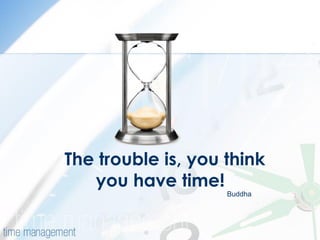
The trouble is, you think you have time! 
Buddha
Critical Questions 
Why do I need to manage time? 
Is time management an essential skill for success? 
What are the common challenges in managing time? 
How do successful people manage time?
Lack of Time Management 
Life becomes a struggle as 
Smooth life  Hectic life 
Effect on personal and work life 
Increase in stress levels 
Decrease in efficiency and productivity 
Drop in performance
Benefits of Time Management 
Increases efficiency 
Increases success rate 
Highly motivating 
Stress free life 
Better work life balance
Objectives of this Session 
What are Time thieves? 
How to improve organizing skills? 
How to increase work efficiency? 
What specific skills are required to manage time? 
How to overcome stress and create work- life balance? 
How to get an achieve goals?
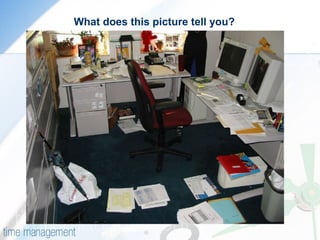
What does this picture tell you?
What are Time Thieves 
Failure to set goals, priorities, or deadlines 
Failure to say no 
Interruptions and disorganization 
Procrastination 
Poor communication 
Failure to delegate 
Distractions – Personal calls & emails, Social Networks
How to beat Time Thieves 
Key Tasks 
Reorganize 
Beat procrastination 
Prioritize work 
Create schedules 
Set personal and professional goals 
Tools 
Time Management Matrix 
80-20 Pareto principle 
SWOT Analysis 
SMART Goals
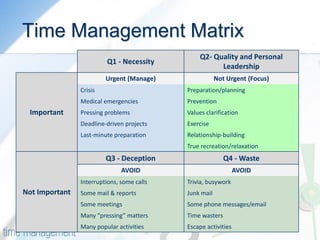
Time Management Matrix 
Q1 - Necessity 
Q2- Quality and Personal Leadership 
Important 
Urgent (Manage) 
Not Urgent (Focus) 
Crisis 
Preparation/planning 
Medical emergencies 
Prevention 
Pressing problems 
Values clarification 
Deadline-driven projects 
Exercise 
Last-minute preparation 
Relationship-building 
True recreation/relaxation 
Not Important 
Q3 - Deception 
Q4 - Waste 
AVOID 
AVOID 
Interruptions, some calls 
Trivia, busywork 
Some mail & reports 
Junk mail 
Some meetings 
Some phone messages/email 
Many “pressing” matters 
Time wasters 
Many popular activities 
Escape activities
80-20 Pareto Principle 
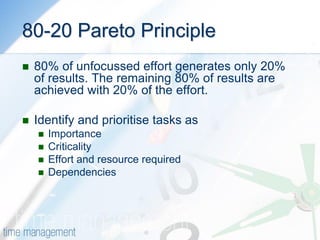
80% of unfocussed effort generates only 20% of results. The remaining 80% of results are achieved with 20% of the effort. 
Identify and prioritise tasks as 
Importance 
Criticality 
Effort and resource required 
Dependencies
SWOT Analysis 
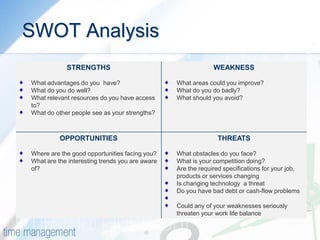
STRENGTHS 
What advantages do you have? What do you do well? What relevant resources do you have access to? What do other people see as your strengths? 
WEAKNESS 
What areas could you improve? What do you do badly? What should you avoid? 
OPPORTUNITIES 
Where are the good opportunities facing you? What are the interesting trends you are aware of? 
THREATS 
What obstacles do you face? What is your competition doing? Are the required specifications for your job, products or services changing Is changing technology a threat Do you have bad debt or cash-flow problems Could any of your weaknesses seriously threaten your work life balance
Effective Scheduling Identify the available time Prioritize important tasks Schedule and plan for high priority urgent tasks Block time for unpredictable interruptions Schedule time for personal goals
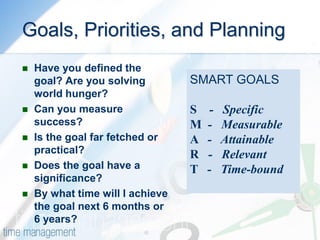
Goals, Priorities, and Planning 
Have you defined the goal? Are you solving world hunger? 
Can you measure success? 
Is the goal far fetched or practical? 
Does the goal have a significance? 
By what time will I achieve the goal next 6 months or 6 years? 
SMART GOALS S - Specific M - Measurable A - Attainable R - Relevant T - Time-bound
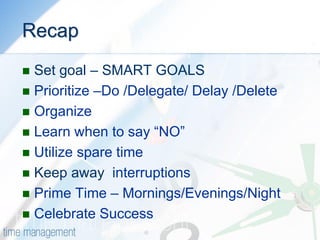
Recap 
Set goal – SMART GOALS 
Prioritize –Do /Delegate/ Delay /Delete 
Organize 
Learn when to say “NO” 
Utilize spare time 
Keep away interruptions 
Prime Time – Mornings/Evenings/Night 
Celebrate Success
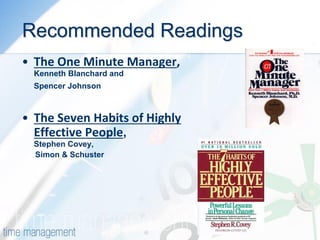
Recommended Readings 
•The One Minute Manager, Kenneth Blanchard and Spencer Johnson 
•The Seven Habits of Highly Effective People, Stephen Covey, Simon & Schuster

Time management

  • 1.
  • 2.
    The trouble is,you think you have time! Buddha
  • 3.
    Critical Questions Whydo I need to manage time? Is time management an essential skill for success? What are the common challenges in managing time? How do successful people manage time?
  • 4.
    Lack of TimeManagement Life becomes a struggle as Smooth life  Hectic life Effect on personal and work life Increase in stress levels Decrease in efficiency and productivity Drop in performance
  • 5.
    Benefits of TimeManagement Increases efficiency Increases success rate Highly motivating Stress free life Better work life balance
  • 6.
    Objectives of thisSession What are Time thieves? How to improve organizing skills? How to increase work efficiency? What specific skills are required to manage time? How to overcome stress and create work- life balance? How to get an achieve goals?
  • 7.
    What does thispicture tell you?
  • 8.
    What does thispicture tell you?
  • 9.
    What are TimeThieves Failure to set goals, priorities, or deadlines Failure to say no Interruptions and disorganization Procrastination Poor communication Failure to delegate Distractions – Personal calls & emails, Social Networks
  • 10.
    How to beatTime Thieves Key Tasks Reorganize Beat procrastination Prioritize work Create schedules Set personal and professional goals Tools Time Management Matrix 80-20 Pareto principle SWOT Analysis SMART Goals
  • 11.
    Time Management Matrix Q1 - Necessity Q2- Quality and Personal Leadership Important Urgent (Manage) Not Urgent (Focus) Crisis Preparation/planning Medical emergencies Prevention Pressing problems Values clarification Deadline-driven projects Exercise Last-minute preparation Relationship-building True recreation/relaxation Not Important Q3 - Deception Q4 - Waste AVOID AVOID Interruptions, some calls Trivia, busywork Some mail & reports Junk mail Some meetings Some phone messages/email Many “pressing” matters Time wasters Many popular activities Escape activities
  • 12.
    80-20 Pareto Principle 80% of unfocussed effort generates only 20% of results. The remaining 80% of results are achieved with 20% of the effort. Identify and prioritise tasks as Importance Criticality Effort and resource required Dependencies
  • 13.
    SWOT Analysis STRENGTHS What advantages do you have? What do you do well? What relevant resources do you have access to? What do other people see as your strengths? WEAKNESS What areas could you improve? What do you do badly? What should you avoid? OPPORTUNITIES Where are the good opportunities facing you? What are the interesting trends you are aware of? THREATS What obstacles do you face? What is your competition doing? Are the required specifications for your job, products or services changing Is changing technology a threat Do you have bad debt or cash-flow problems Could any of your weaknesses seriously threaten your work life balance
  • 14.
    Effective Scheduling Identifythe available time Prioritize important tasks Schedule and plan for high priority urgent tasks Block time for unpredictable interruptions Schedule time for personal goals
  • 15.
    Goals, Priorities, andPlanning Have you defined the goal? Are you solving world hunger? Can you measure success? Is the goal far fetched or practical? Does the goal have a significance? By what time will I achieve the goal next 6 months or 6 years? SMART GOALS S - Specific M - Measurable A - Attainable R - Relevant T - Time-bound
  • 16.
    Recap Set goal– SMART GOALS Prioritize –Do /Delegate/ Delay /Delete Organize Learn when to say “NO” Utilize spare time Keep away interruptions Prime Time – Mornings/Evenings/Night Celebrate Success
  • 17.
    Recommended Readings •TheOne Minute Manager, Kenneth Blanchard and Spencer Johnson •The Seven Habits of Highly Effective People, Stephen Covey, Simon & Schuster