

by Dr Surinder Kumar Time Management Image by Grant Cochrane/FreeDigitalPhotos.net
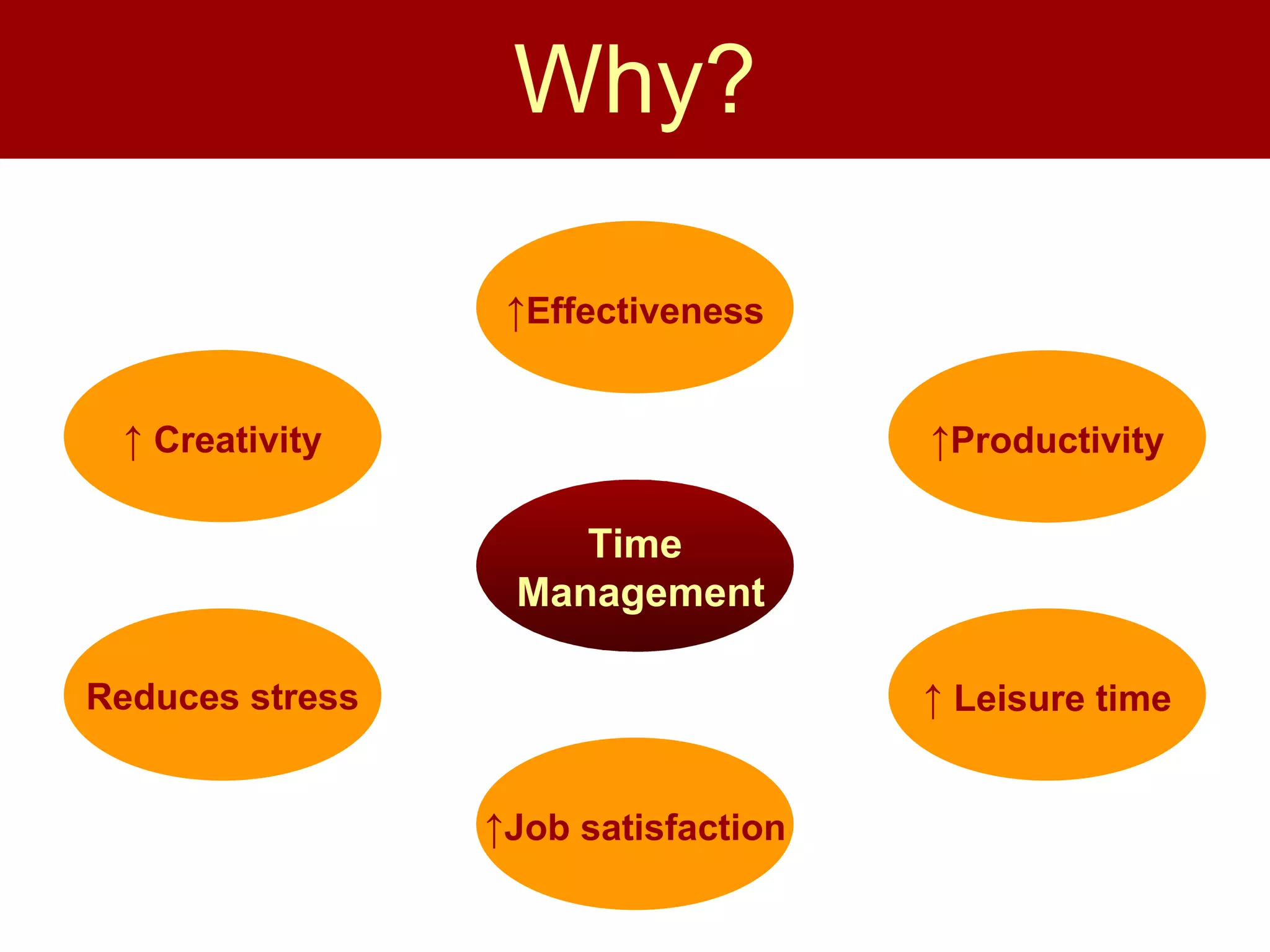
Why? ↑   Creativity Reduces stress ↑ Job satisfaction ↑   Leisure time ↑ Productivity ↑ Effectiveness Time Management
Two great friends of good Time Management Master isolated images/FreeDigitalPhotos.net
Prioritization & Planning
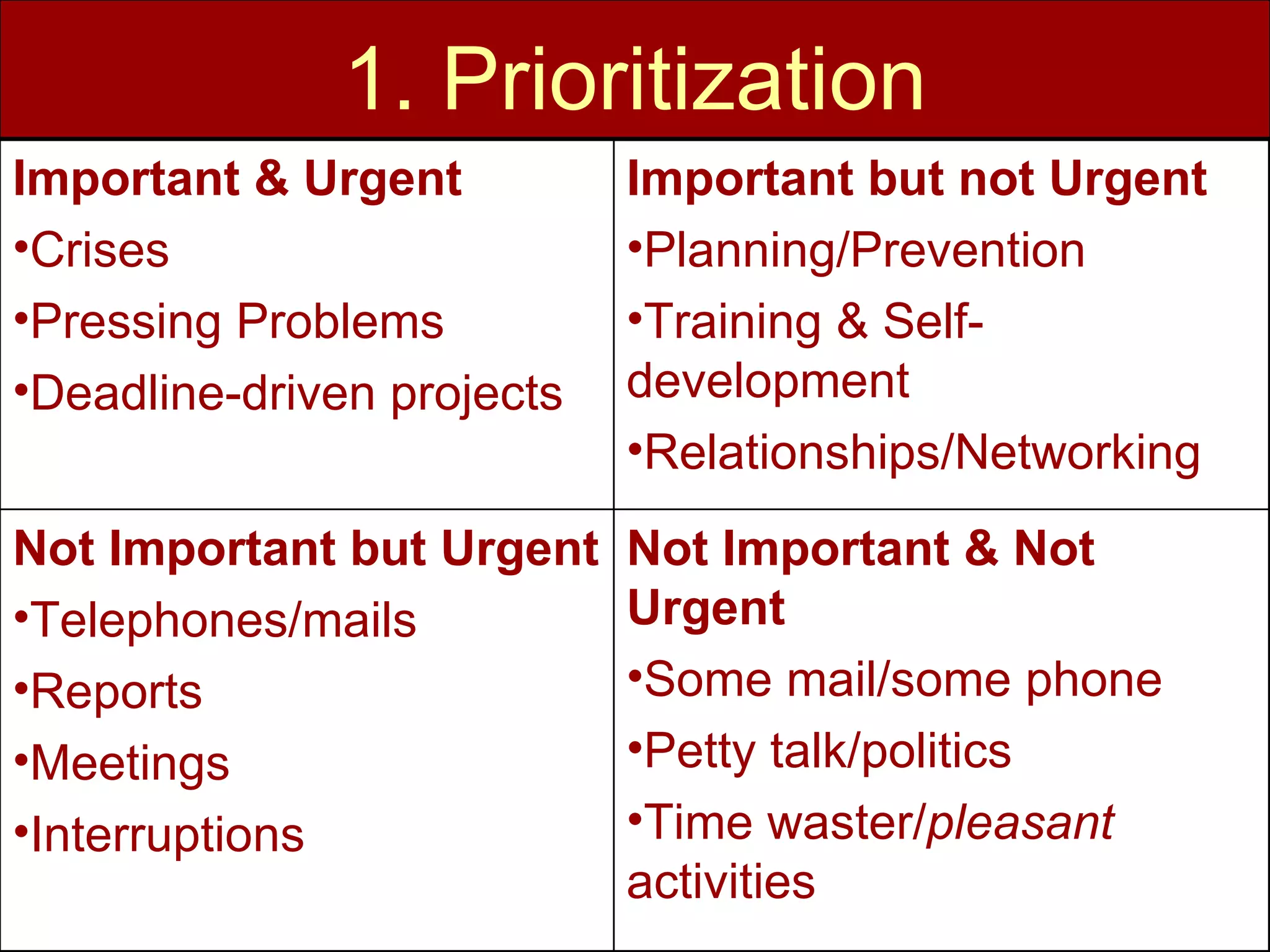
1. Prioritization Important & Urgent Crises Pressing Problems Deadline-driven projects Important but not Urgent Planning/Prevention Training & Self-  development Relationships/Networking Not Important but Urgent Telephones/mails Reports Meetings Interruptions Not Important & Not Urgent Some mail/some phone Petty talk/politics Time waster/ pleasant   activities
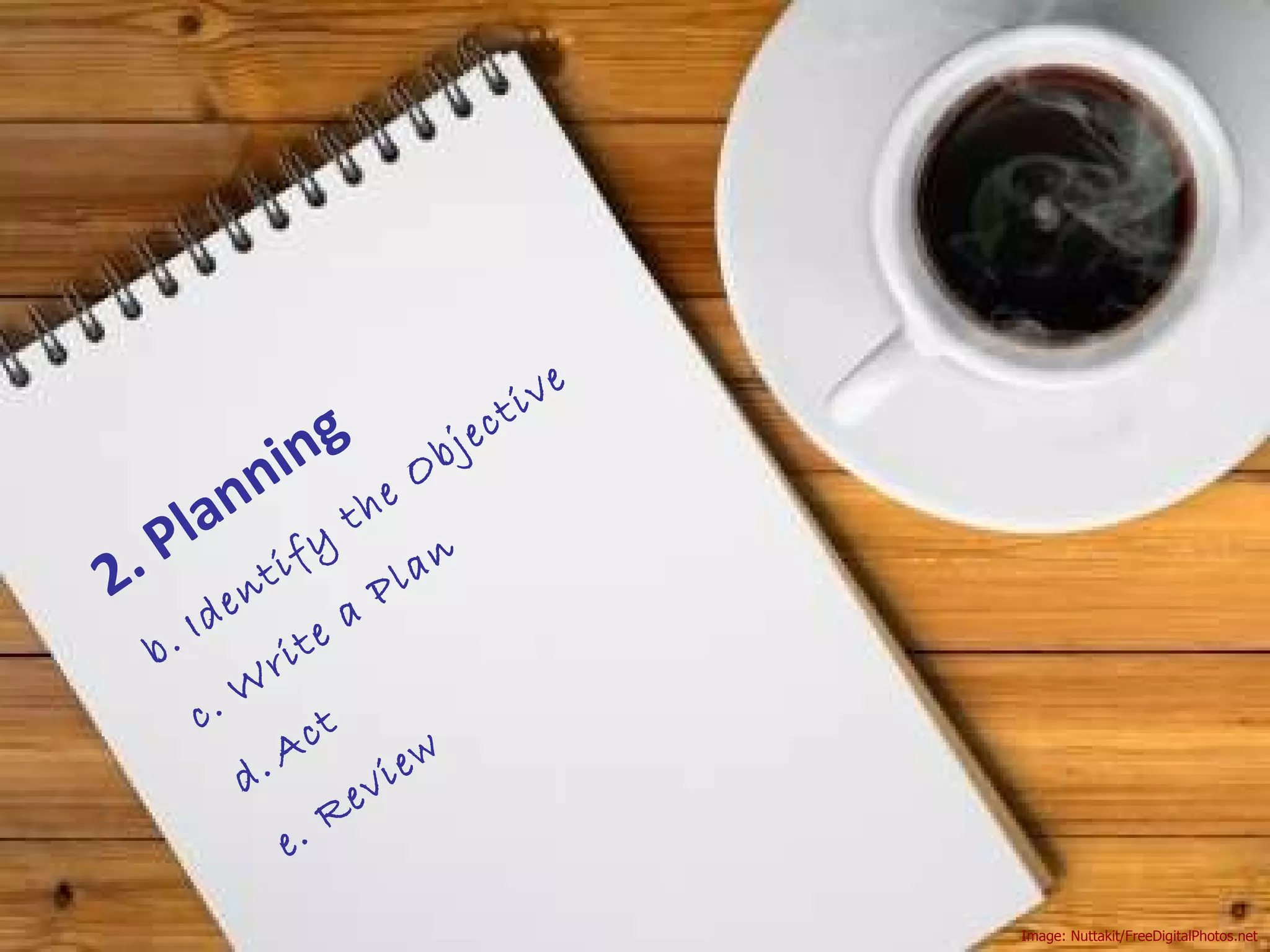
Image: Nuttakit/FreeDigitalPhotos.net 2. Planning Identify the Objective Write a Plan Act Review
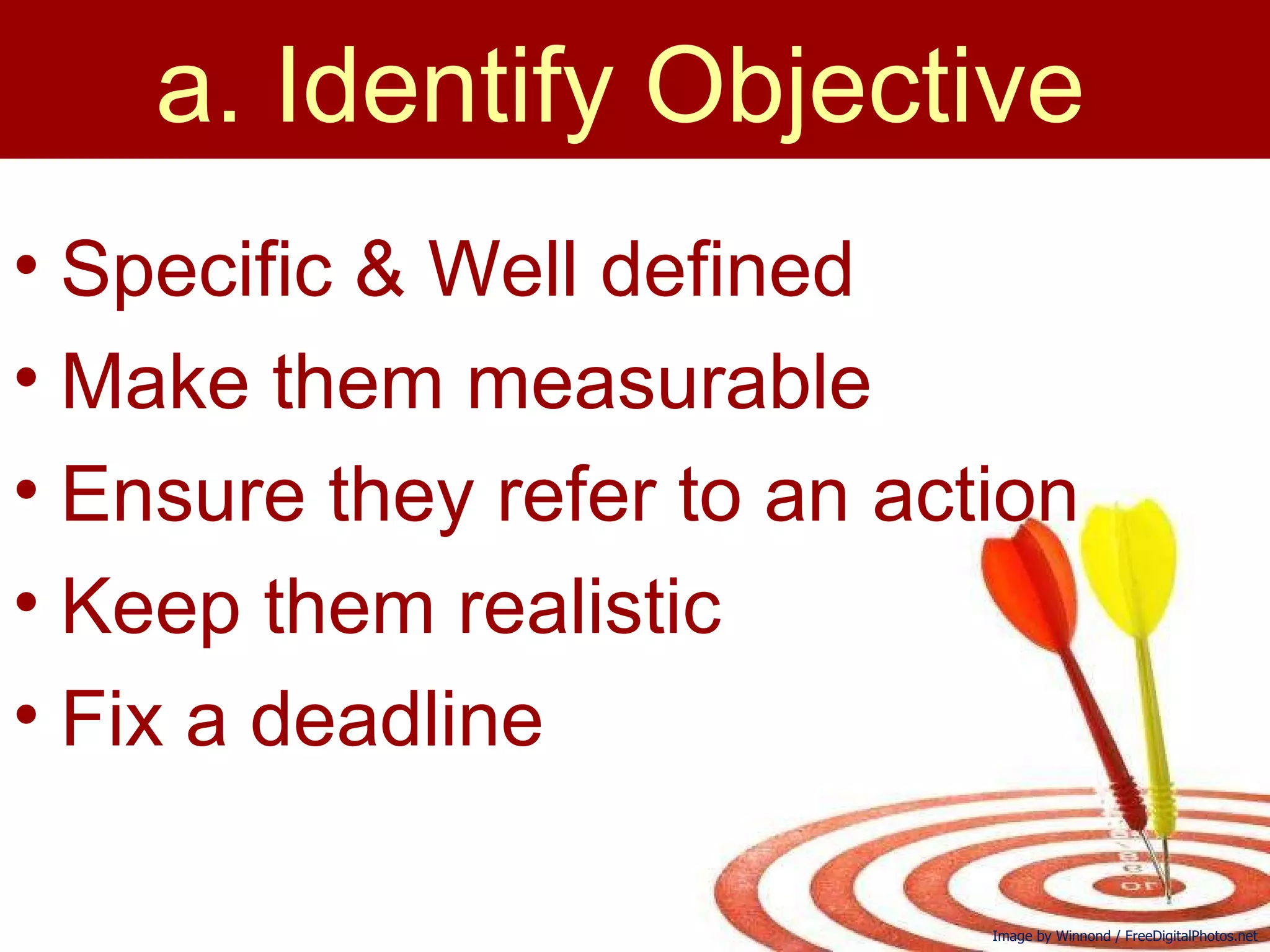
Specific & Well defined Make them measurable Ensure they refer to an action Keep them realistic Fix a deadline  a. Identify Objective  Image by Winnond / FreeDigitalPhotos.net
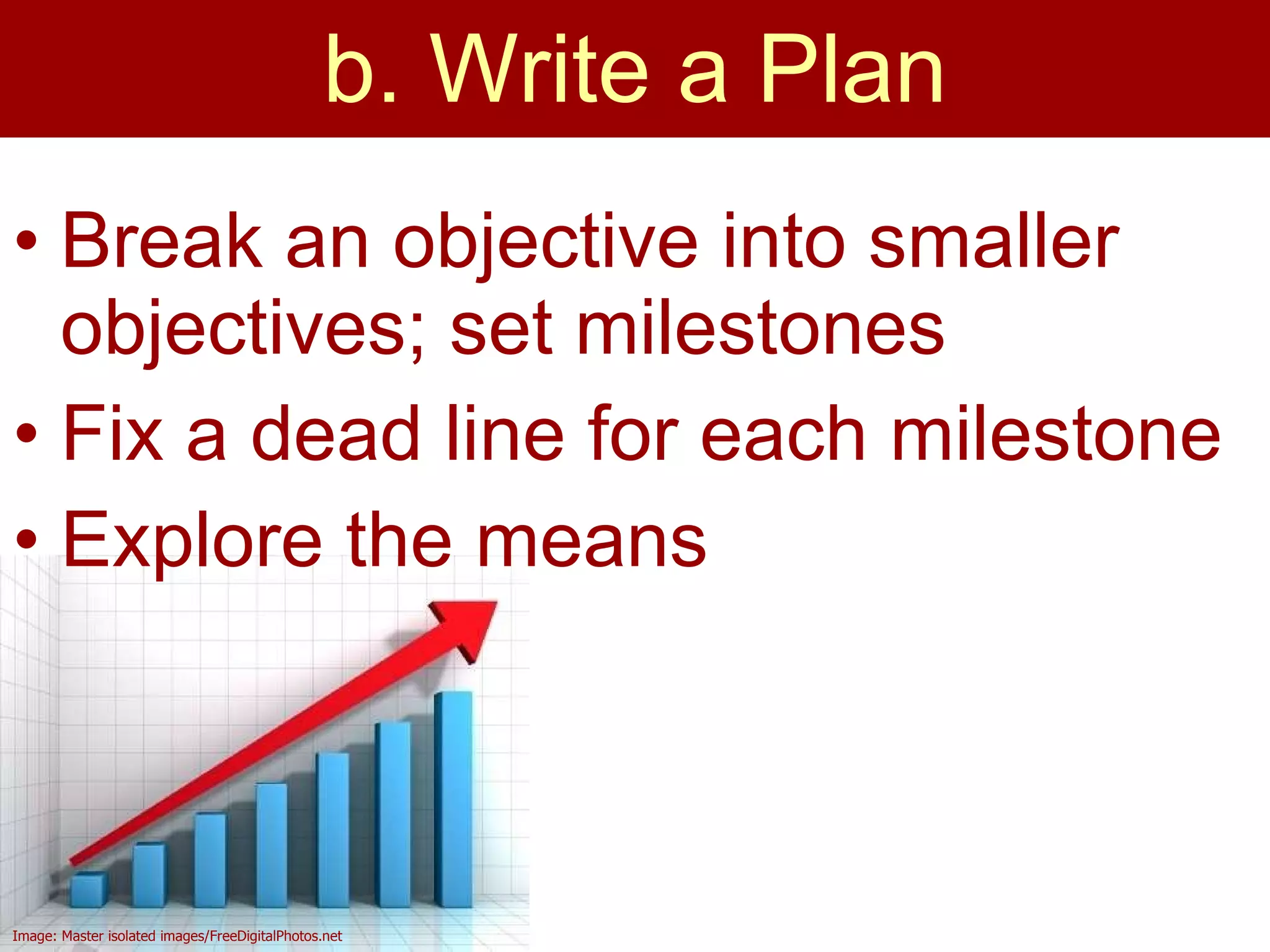
b. Write a Plan Break an objective into smaller objectives; set milestones Fix a dead line for each milestone Explore the means  Image: Master isolated images/FreeDigitalPhotos.net
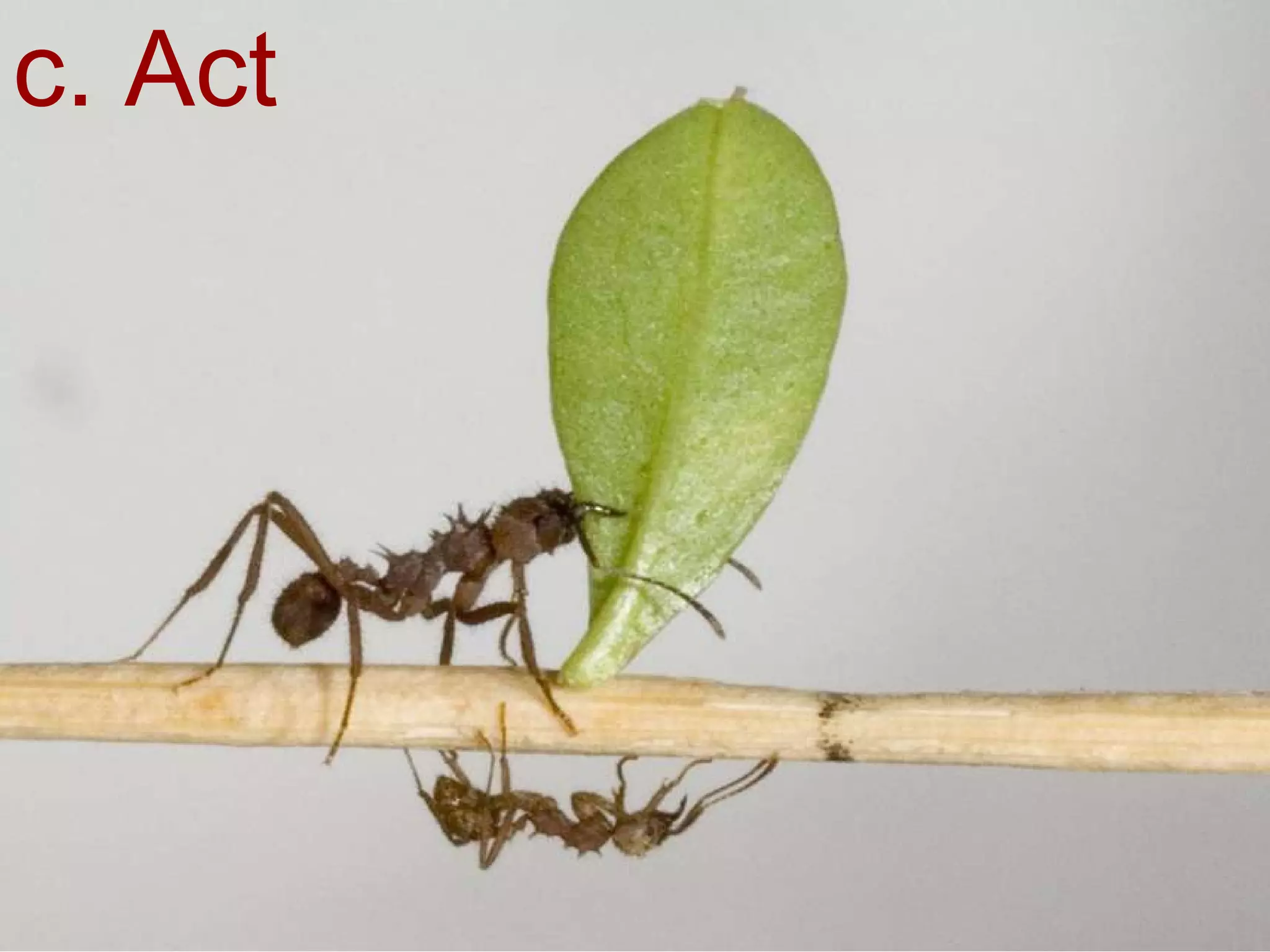
c. Act
d. Review To evaluate the progress New insights Make mid-course correction
If a plan fails Fault in the plan—inadequate or unrealistic Fault in you—execution Fault in others—non-cooperation, misunderstanding, change in environment
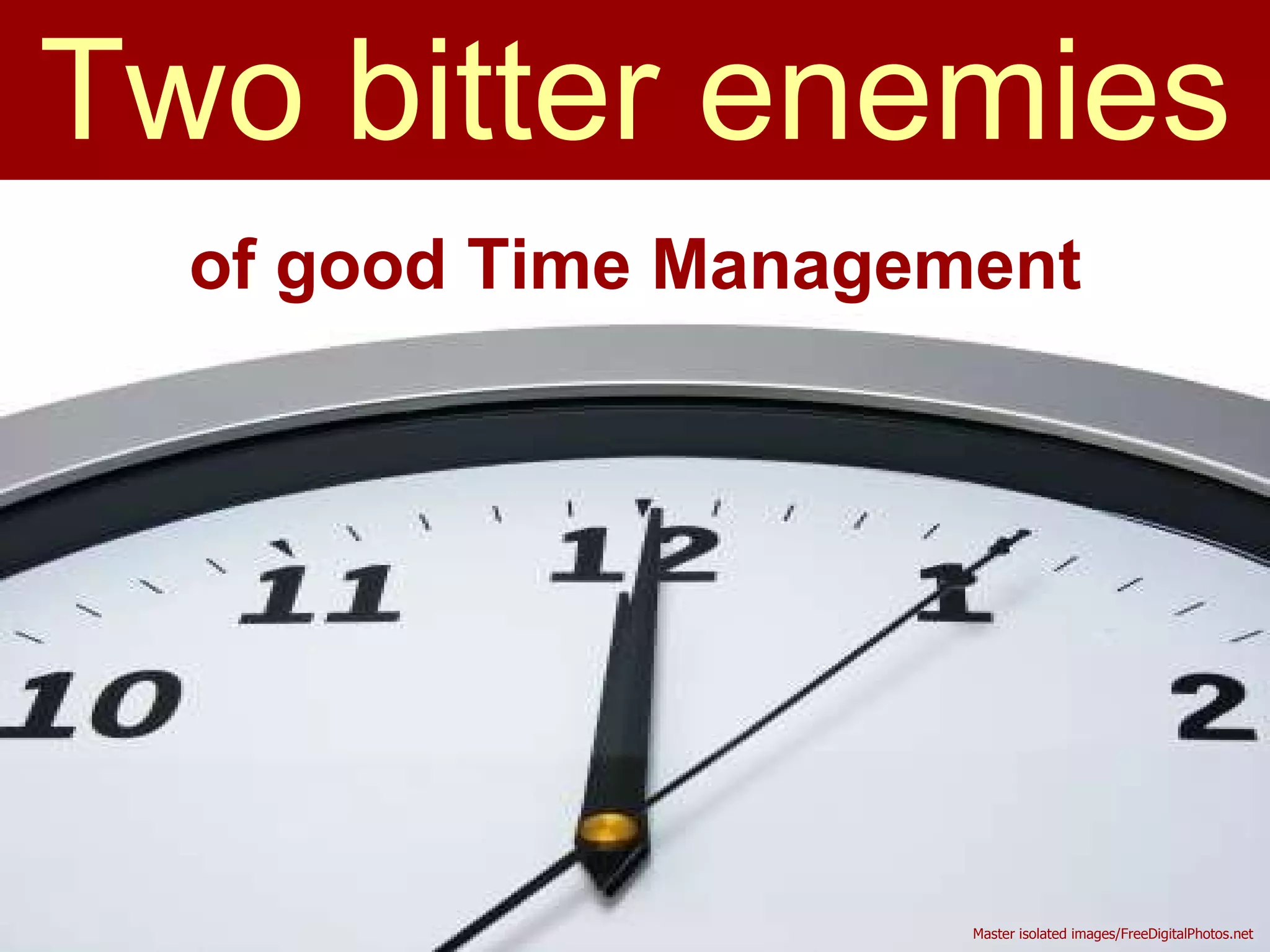
Two bitter enemies of good Time Management Master isolated images/FreeDigitalPhotos.net
1. Procrastination 2. Failure to delegate
1. Procrastination - Reasons Unpleasant jobs Indecisiveness Perfectionism Laziness
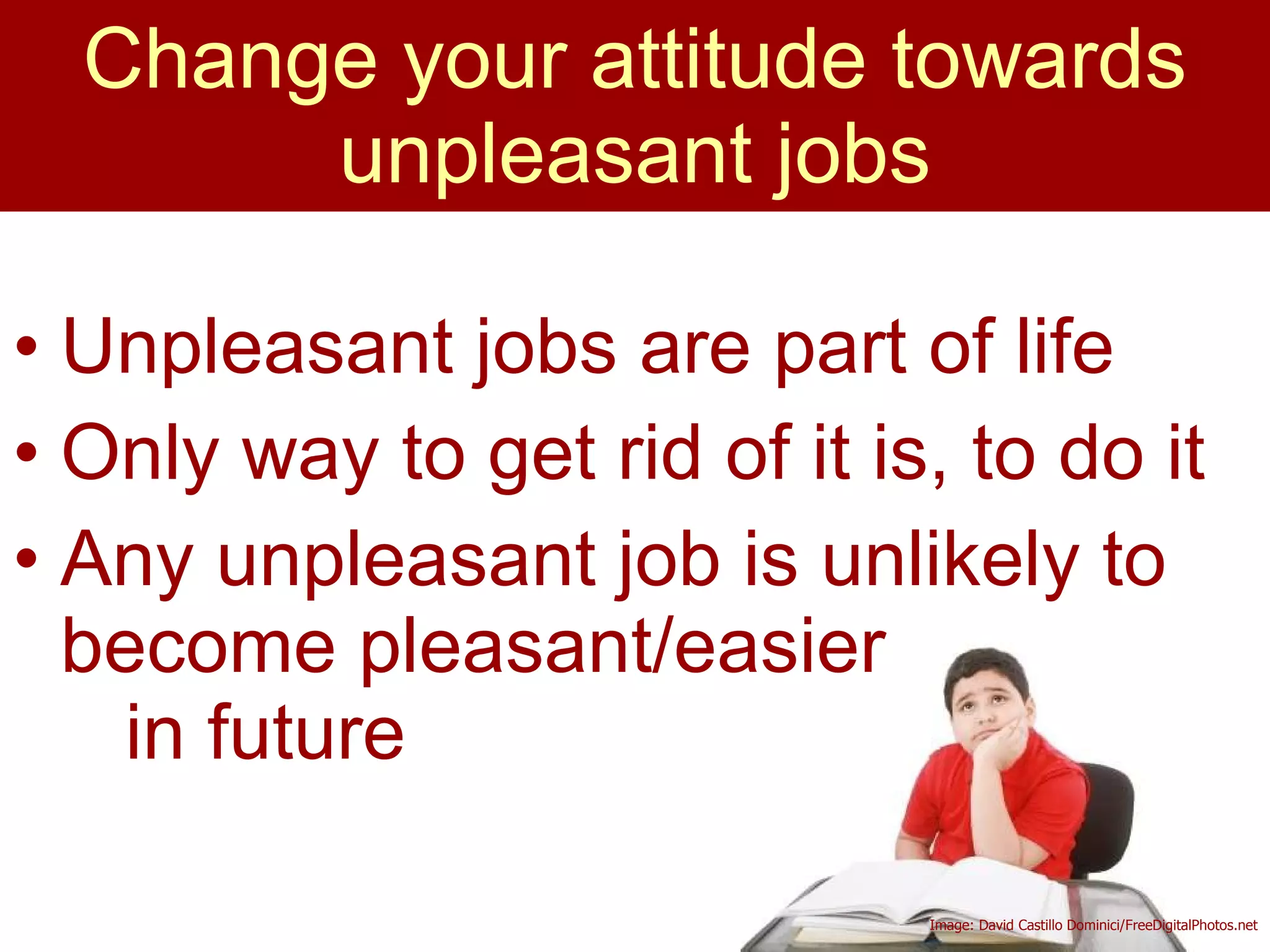
Unpleasant jobs are part of life Only way to get rid of it is, to do it Any unpleasant job is unlikely to become pleasant/easier  in future Change your attitude towards unpleasant jobs Image: David Castillo Dominici/FreeDigitalPhotos.net
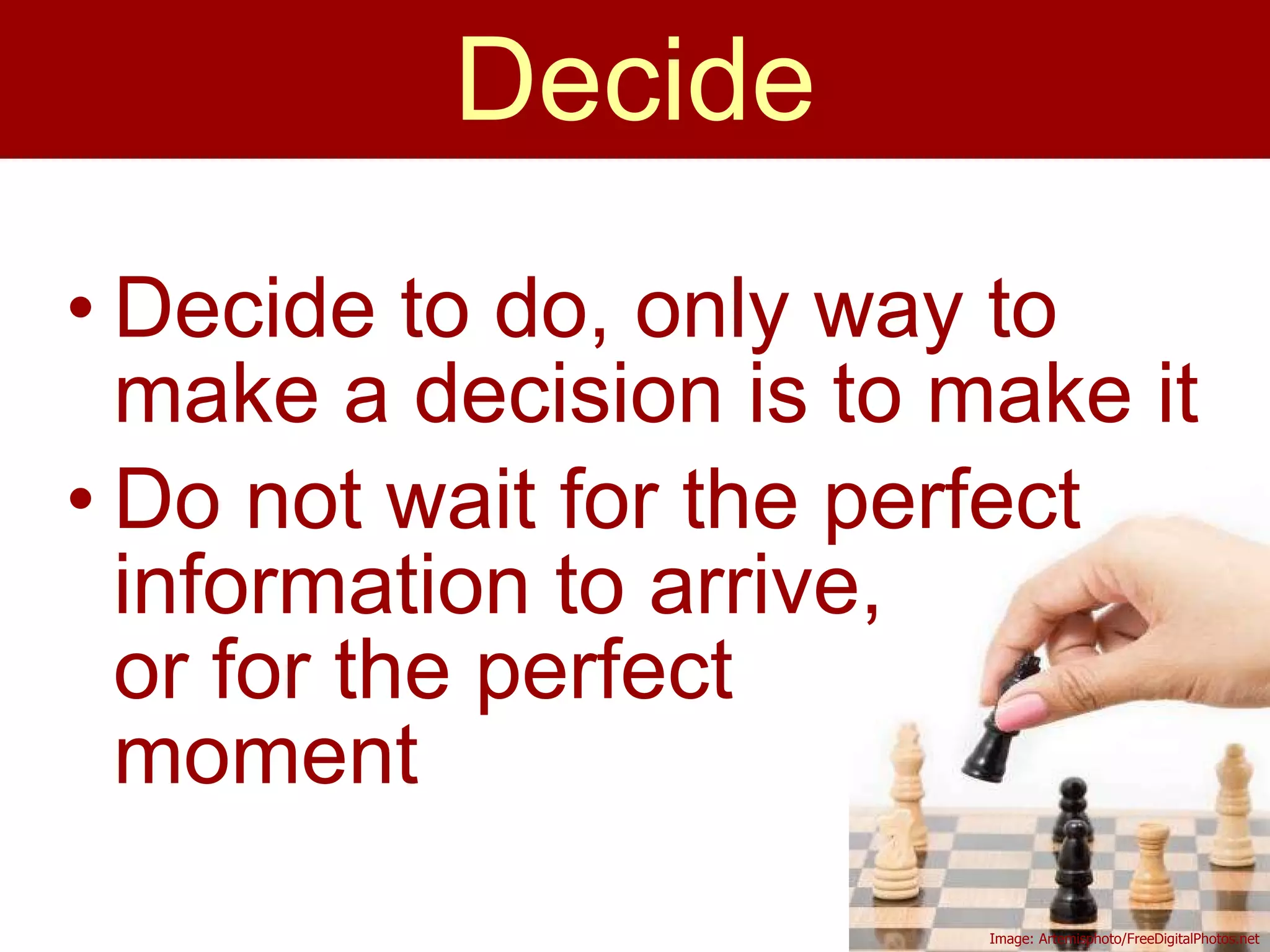
Decide Decide to do, only way to make a decision is to make it Do not wait for the perfect information to arrive,  or for the perfect  moment Image: Artemisphoto/FreeDigitalPhotos.net
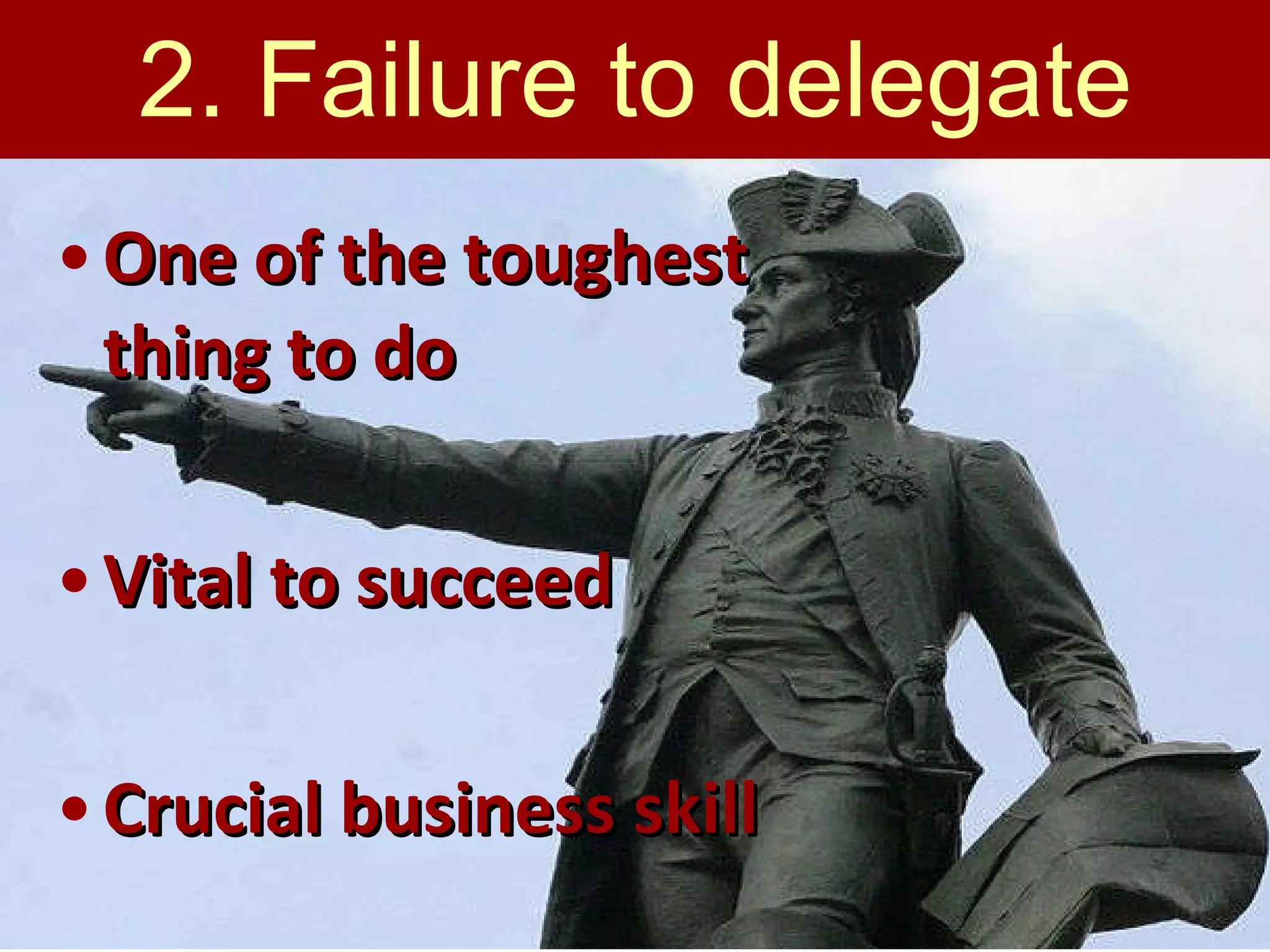
2. Failure to delegate One of the toughest thing to do Vital to succeed Crucial business skill
How to delegate? Define and explain the task properly Prepare plan with objectives and milestones Review periodically
Seven Good Practices which help in Time Management Image by Grant Cochrane/FreeDigitalPhotos.net
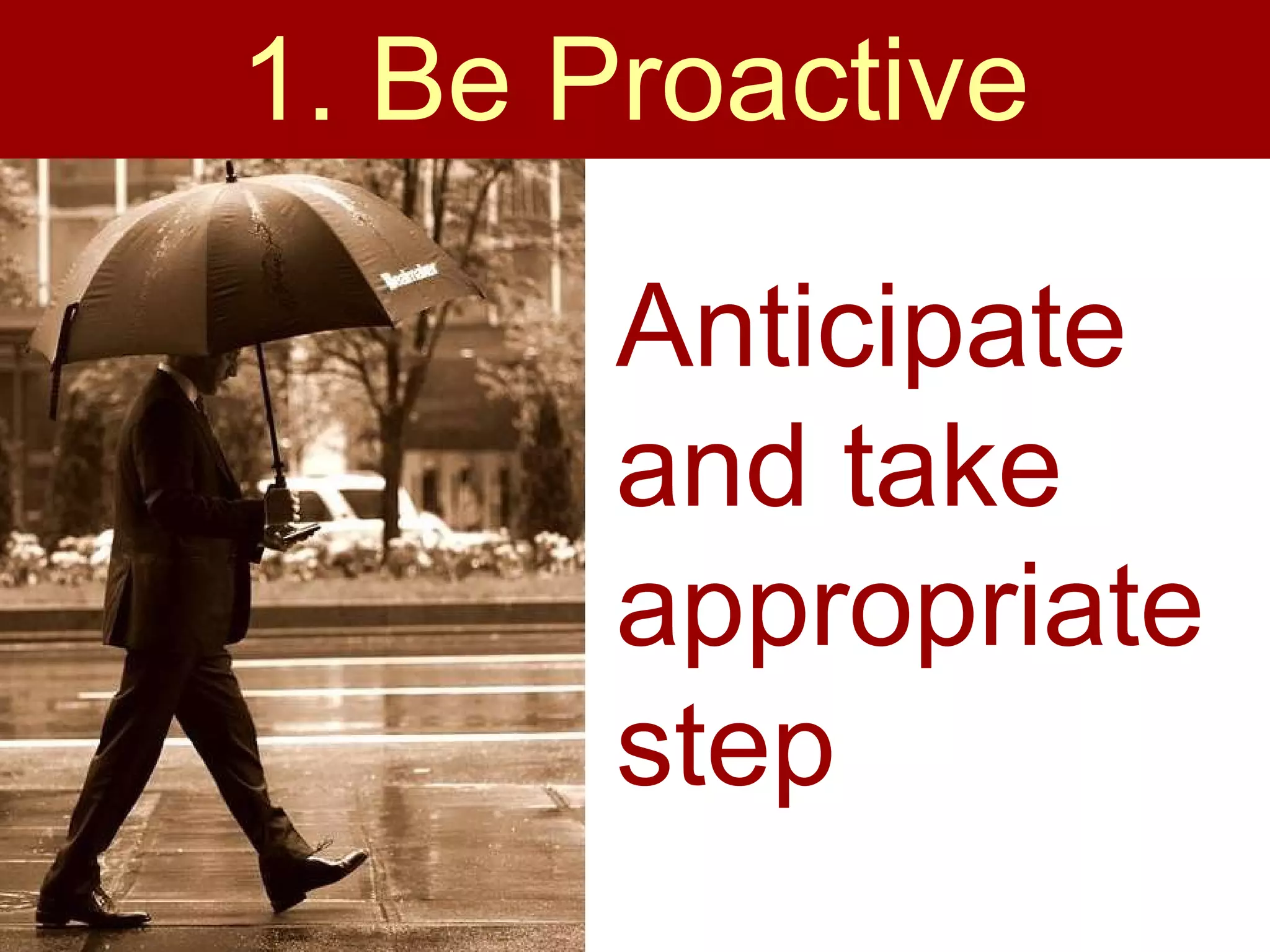
1. Be Proactive Anticipate and take appropriate step
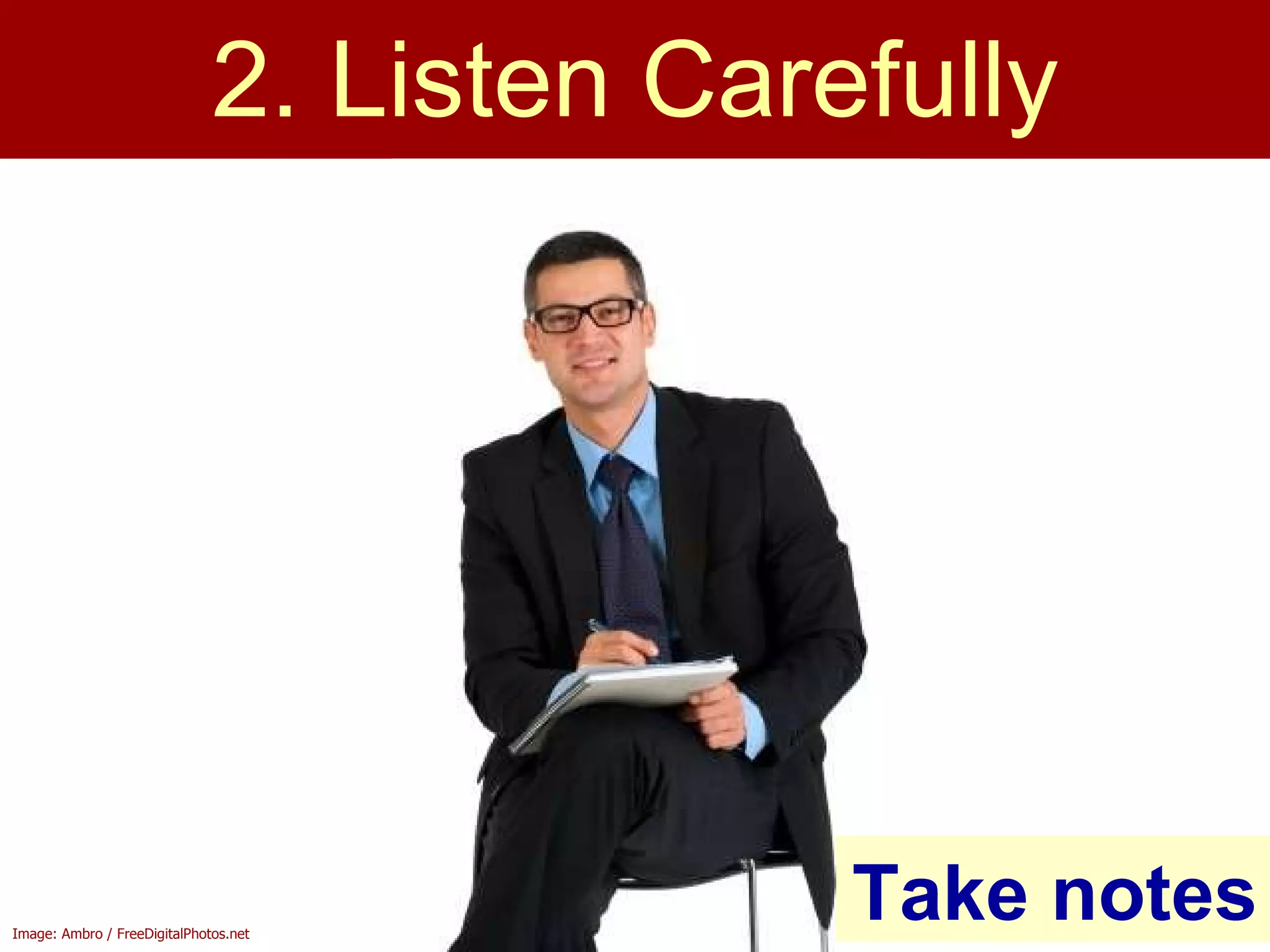
2. Listen Carefully Take notes Image: Ambro / FreeDigitalPhotos.net
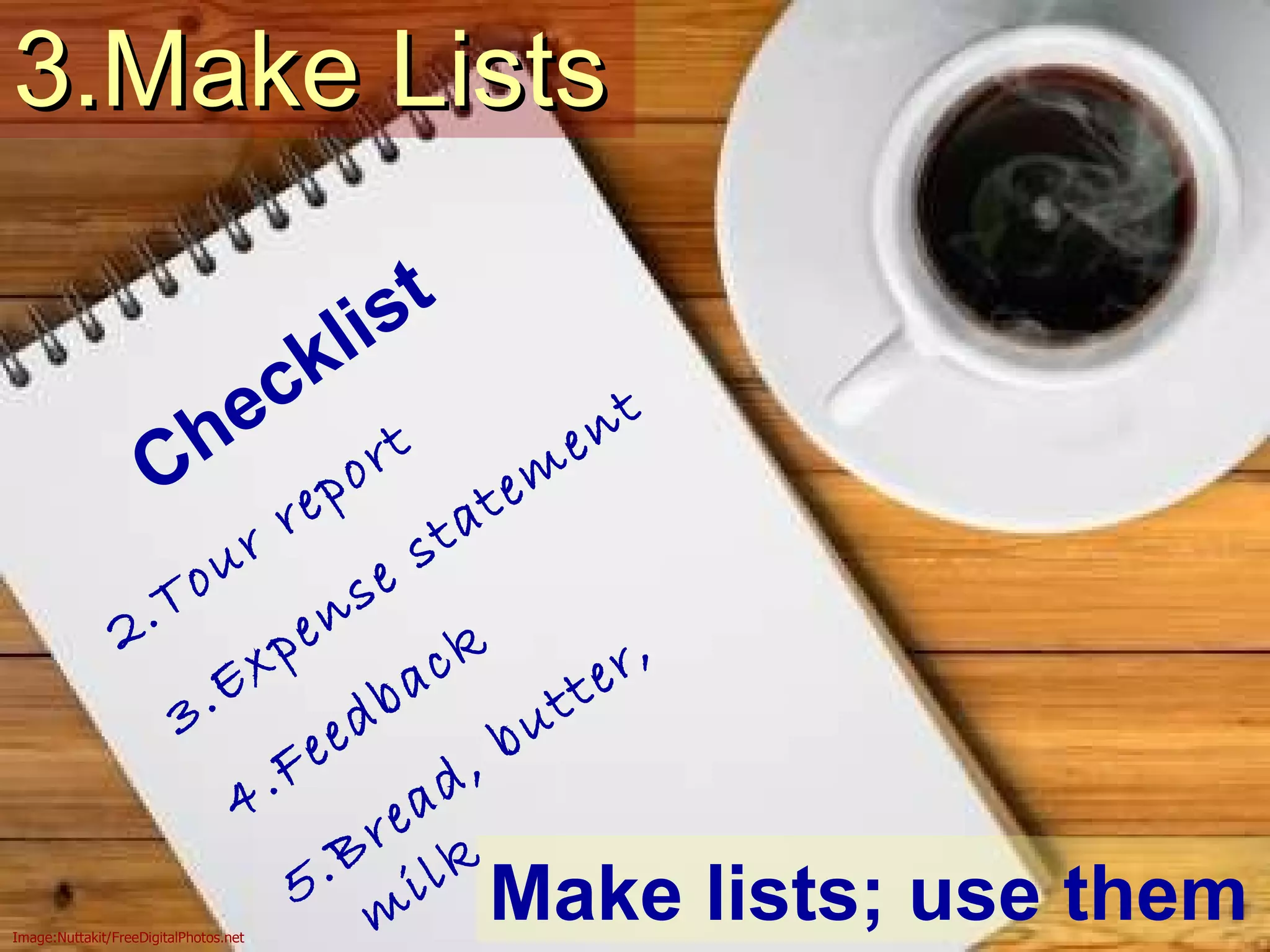
3.Make Lists Make lists; use them Checklist Tour report Expense statement Feedback Bread, butter, milk Image:Nuttakit/FreeDigitalPhotos.net
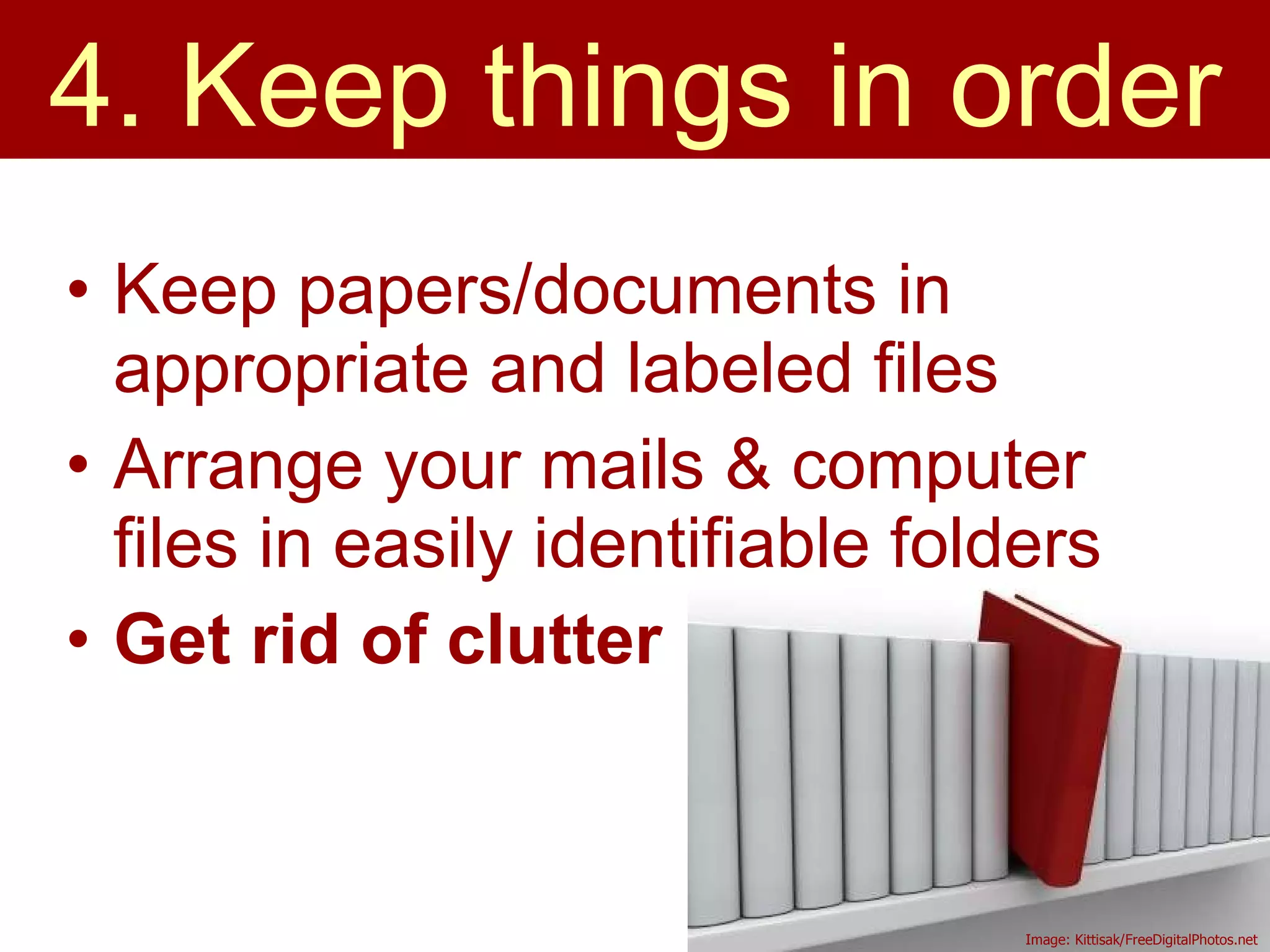
Keep papers/documents in appropriate and labeled files Arrange your mails & computer files in easily identifiable folders  Get rid of clutter 4. Keep things in order Image: Kittisak/FreeDigitalPhotos.net
5. Have Patience
6. Keep the big picture in mind
7. Reflect
Thank you For Transcript visit:  www.surinderkumar.com
Images’ Credits Clock - Grant Cochrane/FreeDigitalPhotos.net Planning - Nuttakit / FreeDigitalPhotos.net  Dart - : winnond / FreeDigitalPhotos.net  Chess board - artemisphoto / FreeDigitalPhotos.net  Graph: Master isolated images / FreeDigitalPhotos.net Ant: Deadstar0 via Wikimedia Commons  Bored student:  David Castillo Dominici / FreeDigitalPhotos.net  Rochambeau DC by Timault via Wikimedia Commons Umbrella man :Dealmaker by Alex, Wikimedia commons.  Book shelf: Kittisak / FreeDigitalPhotos.net  Gentleman taking notes: Ambro / FreeDigitalPhotos.net Thoughtful woman: Roberto Terracini, Wikimedia Commons Forest: SU03Ai via Wikimedia Commons Earth via Wikimedia Commons Pocket watch: Isabelle Grosjean ZA via Wikimedia Commons

Time Management

  • 1.
    by Dr SurinderKumar Time Management Image by Grant Cochrane/FreeDigitalPhotos.net
  • 2.
    Why? ↑ Creativity Reduces stress ↑ Job satisfaction ↑ Leisure time ↑ Productivity ↑ Effectiveness Time Management
  • 3.
    Two great friendsof good Time Management Master isolated images/FreeDigitalPhotos.net
  • 4.
  • 5.
    1. Prioritization Important& Urgent Crises Pressing Problems Deadline-driven projects Important but not Urgent Planning/Prevention Training & Self- development Relationships/Networking Not Important but Urgent Telephones/mails Reports Meetings Interruptions Not Important & Not Urgent Some mail/some phone Petty talk/politics Time waster/ pleasant activities
  • 6.
    Image: Nuttakit/FreeDigitalPhotos.net 2.Planning Identify the Objective Write a Plan Act Review
  • 7.
    Specific & Welldefined Make them measurable Ensure they refer to an action Keep them realistic Fix a deadline a. Identify Objective Image by Winnond / FreeDigitalPhotos.net
  • 8.
    b. Write aPlan Break an objective into smaller objectives; set milestones Fix a dead line for each milestone Explore the means Image: Master isolated images/FreeDigitalPhotos.net
  • 9.
  • 10.
    d. Review Toevaluate the progress New insights Make mid-course correction
  • 11.
    If a planfails Fault in the plan—inadequate or unrealistic Fault in you—execution Fault in others—non-cooperation, misunderstanding, change in environment
  • 12.
    Two bitter enemiesof good Time Management Master isolated images/FreeDigitalPhotos.net
  • 13.
    1. Procrastination 2.Failure to delegate
  • 14.
    1. Procrastination -Reasons Unpleasant jobs Indecisiveness Perfectionism Laziness
  • 15.
    Unpleasant jobs arepart of life Only way to get rid of it is, to do it Any unpleasant job is unlikely to become pleasant/easier in future Change your attitude towards unpleasant jobs Image: David Castillo Dominici/FreeDigitalPhotos.net
  • 16.
    Decide Decide todo, only way to make a decision is to make it Do not wait for the perfect information to arrive, or for the perfect moment Image: Artemisphoto/FreeDigitalPhotos.net
  • 17.
    2. Failure todelegate One of the toughest thing to do Vital to succeed Crucial business skill
  • 18.
    How to delegate?Define and explain the task properly Prepare plan with objectives and milestones Review periodically
  • 19.
    Seven Good Practiceswhich help in Time Management Image by Grant Cochrane/FreeDigitalPhotos.net
  • 20.
    1. Be ProactiveAnticipate and take appropriate step
  • 21.
    2. Listen CarefullyTake notes Image: Ambro / FreeDigitalPhotos.net
  • 22.
    3.Make Lists Makelists; use them Checklist Tour report Expense statement Feedback Bread, butter, milk Image:Nuttakit/FreeDigitalPhotos.net
  • 23.
    Keep papers/documents inappropriate and labeled files Arrange your mails & computer files in easily identifiable folders Get rid of clutter 4. Keep things in order Image: Kittisak/FreeDigitalPhotos.net
  • 24.
  • 25.
    6. Keep thebig picture in mind
  • 26.
  • 27.
    Thank you ForTranscript visit: www.surinderkumar.com
  • 28.
    Images’ Credits Clock- Grant Cochrane/FreeDigitalPhotos.net Planning - Nuttakit / FreeDigitalPhotos.net Dart - : winnond / FreeDigitalPhotos.net Chess board - artemisphoto / FreeDigitalPhotos.net Graph: Master isolated images / FreeDigitalPhotos.net Ant: Deadstar0 via Wikimedia Commons Bored student: David Castillo Dominici / FreeDigitalPhotos.net Rochambeau DC by Timault via Wikimedia Commons Umbrella man :Dealmaker by Alex, Wikimedia commons. Book shelf: Kittisak / FreeDigitalPhotos.net Gentleman taking notes: Ambro / FreeDigitalPhotos.net Thoughtful woman: Roberto Terracini, Wikimedia Commons Forest: SU03Ai via Wikimedia Commons Earth via Wikimedia Commons Pocket watch: Isabelle Grosjean ZA via Wikimedia Commons

Editor's Notes

  • #2 Time management means making the best of Time. Time is a capital not a renewable income. For every living thing, a fixed time is apportioned. Even Gods, when they took birth as human, had limited time. There is a story of a person on deathbed who asked God for a few more moments so that he could set his accounts straight…. Managing time well is a matter of attitude and habit. Once we realize practical importance of time management in our life and decide to put the effort, like any other habit, time management also, can be learnt. Time management does not mean we become a machine. Time management means managing your time well enabling you to find time to relax and enjoy.
  • #3 Proper time management has many advantages. It gives you time to relax, time for your family, and time for self development.
  • #6 Important and Urgent: Unfortunately, people spend a lot of time in these activities, some call them routine. Spending a lot of time here means - stress, frustration, burn out. Your long term goal must be to reduce time spent here. This can be done by working on activities in ‘important but not urgent’ quadrant. Important but not Urgent This area is most important and a good amount of time must be spent here. III. Not important but urgent This is usually due to other people demanding your time for their agenda, and at their convenience. This area bring a lot of stress, especially if you are at the lower end of the food chain! Just be aware of such activities, and start finding ways to minimize time spent in this area. IV. Not important and not urgent This is totally under your control. Obviously, shun from such activities.
  • #7 Most important point – planning shall be in the form of written document, not a thoughtument . Planning increases efficiency, decreases chances of one fooling himself, dispels assumptions, and is a no-nonsense approach to achieve results. Saves us a lot of time—according to a study 20 minutes spent on planning saves 4.5 hours. Planning is proverbial sharpening your axe before you start cutting the tree .
  • #8 Many of you must have heard – S.M.A.R.T objectives; Specific, Measurable, Actionable, Realistic/Reviewable and Time-bound. It is essential you verify your objectives with S.M.A.R.T template.
  • #9 Means – available/ to be arranged. Keep provision for change of plan, or an alternate plan. Plan is a blue print, not a check list. Plan must be a detailed document, covering every aspect in complete detail. Do not leave any provision for interpretations.
  • #10 “Take time to deliberate; but when the time for action arrives, stop thinking and go in.” Napoleon Bonaparte
  • #11 Review at predefined milestones. If there is some problem, find another way.
  • #12 Your plan might have been faulty to begin with – mostly due to lack of knowledge, wrong assessment of capabilities/means, unrealistic. Or you might need to learn new knowledge/skill to execute plan. There could be wrong in estimating the environment; competitors, regulatory authorities. There is possibility of unforeseen changes in environment. It is a learning process. What is the alternate plan?
  • #16 Even the most enviable (by you) jobs have associated unwanted/unpleasant work. Dealing with such a work is purely an attitude matter and manner of our approach. A thorn, best is to be removed immediately. Cumulating unpleasant jobs increases stress, impairs performance, and takes away joy from life. Unpleasant jobs, not done at appropriate time, one day is going to stare at your face as urgent and important.
  • #17 Perfect moment/solution may, and usually, never arrive. But be sure that you have collected the information you can collect with best of your abilities. It is more important to make decisions. Story of a out-going captain… Aim for excellence, rather than perfection. Best solution to laziness is a kick… . Give it to yourself before anybody else give it to you.
  • #18 Some people can’t simply let go. They think they have to do everything as no body can do it better. Human civilization has excelled and progressed due to invention of division of labor. Aristotle was able to spend time thinking because there were others to do routine errands for him. Learning to delegate is vital for a manager to be successful. It is a crucial business skill. You can develop others by delegating; they will be grateful for being taught new things; and you will have satisfaction. More significant, you will have time to devote to other important things.
  • #19 Defining the task and explaining it is very crucial. Delegation is likely to fail if a manager does not spend sufficient time in explaining the task. Story of a boy who was asked to feed the snake…. Don’t delegate only the unpleasant jobs!
  • #22 Active listening saves a lot of time wasted due to wrong understanding of tasks/issues. Take notes during a meeting, or immediately after a meeting. Make minutes as soon, after a meeting, as possible.
  • #23 Things to do today. A list of points - before going to a meeting, while making a phone call or before writing a mail/memo – is of great help in increasing efficiency and effectiveness.
  • #24 Lot of time is wasted in ‘finding’ documents or files. More importantly, it is exhausting, frustrating and increases stress. And it eats away a lot of productive time.
  • #25 A session on time management appears to be quite a unlikely place for a virtue like Patience. A work executed with focus, dedication and patience is usually a work done well. I believe haste is one of the important reasons which makes people waste (Haste makes waste!) a lot of time. A work done shabbily, in haste, needs to be redone, and many time creates complications resulting in time wastage & stress; many accidents happen due to lack of patience; list is rather long. Patience is assigning each task the time it deserves. Many plans fail due to impatience in achieving results - like when a child plants a seed, he has irresistible desire to dig it out the very next day to find out the progress.
  • #26 Keeping the big picture in mind is very helpful in setting priorities in life. Sometimes people spend/waste months and years chasing the wrong goals. “Many men fish all their lives without ever realizing that it is not the fish they are after.” What a tragedy for a person, who can not wait a second in elevator, but wastes life in groping in the dark. Like a person who jumps into the taxi and ask driver to drive fast, without knowing or telling the driver about the destination.
  • #27 Every night, before going to bed, reflect on the day. What I could have done better? Nothing develops one better than a sincere reflection. Keeping a journal is of great help. This is also a good time to write to-do-list for the next day.