Integrantes: 
Freydali Suarez 
Exp: CJP 103-00-549
Present Perfect 
El presente perfecto se usa para expresar acciones que ocurrieron en un 
tiempo no concreto antes de ahora. El tiempo específico no es importante. 
Por lo tanto, no solemos usar expresiones de tiempo específicas ("this 
morning", "yesterday", "last year"...) con el presente perfecto.
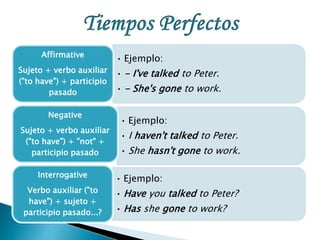
• Ejemplo: 
• - I've talked to Peter. 
• - She's gone to work. 
Affirmative 
Sujeto + verbo auxiliar 
("to have") + participio 
pasado 
• Ejemplo: 
• I haven't talked to Peter. 
• She hasn't gone to work. 
Negative 
Sujeto + verbo auxiliar 
("to have") + "not" + 
participio pasado 
• Ejemplo: 
•Have you talked to Peter? 
• Has she gone to work? 
Interrogative 
Verbo auxiliar ("to 
have") + sujeto + 
participio pasado...?
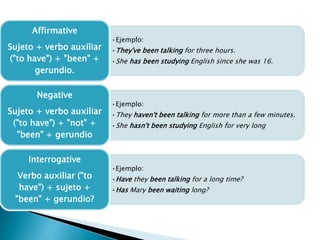
Present Perfect Continuous 
Usamos este tiempo cuando queremos expresar el sentido de la 
continuidad de una acción que ha comenzado en el pasado y que 
dura todavía en el presente o que acaba de terminar.
•Ejemplo: 
•They've been talking for three hours. 
•She has been studying English since she was 16. 
Affirmative 
Sujeto + verbo auxiliar 
("to have") + "been" + 
gerundio. 
•Ejemplo: 
•They haven't been talking for more than a few minutes. 
•She hasn't been studying English for very long 
Negative 
Sujeto + verbo auxiliar 
("to have") + "not" + 
"been" + gerundio 
•Ejemplo: 
•Have they been talking for a long time? 
•Has Mary been waiting long? 
Interrogative 
Verbo auxiliar ("to 
have") + sujeto + 
"been" + gerundio?
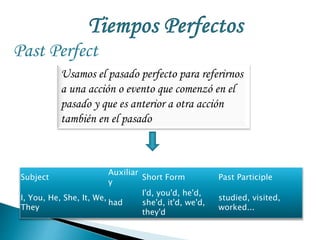
Past Perfect 
Usamos el pasado perfecto para referirnos 
a una acción o evento que comenzó en el 
pasado y que es anterior a otra acción 
también en el pasado 
Subject 
Auxiliar 
y 
Short Form Past Participle 
I, You, He, She, It, We, 
They 
had 
I'd, you'd, he'd, 
she'd, it'd, we'd, 
they'd 
studied, visited, 
worked...
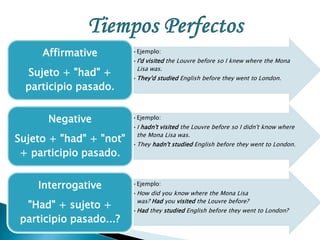
•Ejemplo: 
•I'd visited the Louvre before so I knew where the Mona 
Lisa was. 
•They'd studied English before they went to London. 
Affirmative 
Sujeto + "had" + 
participio pasado. 
•Ejemplo: 
•I hadn't visited the Louvre before so I didn't know where 
the Mona Lisa was. 
•They hadn't studied English before they went to London. 
Negative 
Sujeto + "had" + "not" 
+ participio pasado. 
•Ejemplo: 
•How did you know where the Mona Lisa 
was? Had you visited the Louvre before? 
•Had they studied English before they went to London? 
Interrogative 
"Had" + sujeto + 
participio pasado...?
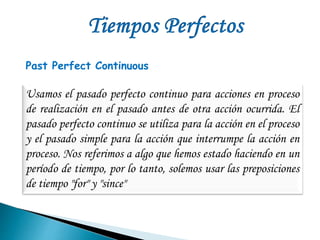
Past Perfect Continuous 
Usamos el pasado perfecto continuo para acciones en proceso 
de realización en el pasado antes de otra acción ocurrida. El 
pasado perfecto continuo se utiliza para la acción en el proceso 
y el pasado simple para la acción que interrumpe la acción en 
proceso. Nos referimos a algo que hemos estado haciendo en un 
período de tiempo, por lo tanto, solemos usar las preposiciones 
de tiempo "for" y "since"
•Ejemplo: 
•I'd been studying English for 2 years 
when I went to London. 
Affirmative 
Sujeto + "had" + "been" 
+ gerundio... 
• Ejemplo: 
•I had not [hadn't] been studying 
English long when I went to London. 
Negative 
Sujeto + "had" + "not" + 
"been" + gerundio. 
• Ejemplo: 
•Had you been studying English for a 
long time before you went to London? 
Interrogative 
"Had" + sujeto + "been" 
+ gerundio...?
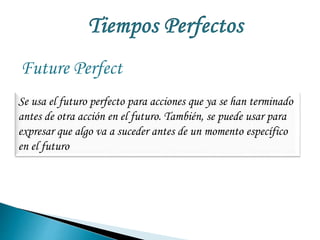
Future Perfect 
Se usa el futuro perfecto para acciones que ya se han terminado 
antes de otra acción en el futuro. También, se puede usar para 
expresar que algo va a suceder antes de un momento específico 
en el futuro
Affirmative 
•Sujeto + "will have" + verbo principal. 
•Sujeto + verbos auxiliar ("to be") + "going to have" + verbo principal 
•Ejemplo: The party will [is going to] have ended by the time you finish work. 
•I'll [I'm going to] have eaten before we meet. 
Negative 
•Sujeto + "will" + "not" + "have" + verbo principal. 
•Sujeto + verbo auxiliar ("to be") + "not" + "going to have" + verbo principal. 
•Ejemplo: The party won't [isn't going to] have ended by the time you finish work. 
•I won't [I'm not going to] have eaten before we meet. 
Interrogative 
•"Will" + sujeto + "have" + verbo principal...? 
•Verbo auxiliar ("to be") + sujeto + "going to have" + verbo principal...? 
•Ejemplo: Will [Is] the party [going to] have ended before you finish work? ( 
•Will [Are] you [going to] have eaten before we meet?
Future Perfect Continuous Utilizamos el futuro perfecto 
continuo para mostrar que 
algo va a continuar hasta 
otra acción o tiempo en el 
futuro
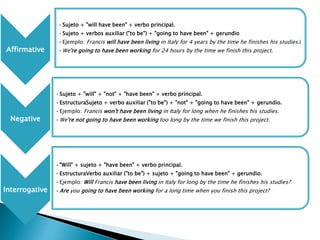
Affirmative 
•Sujeto + "will have been" + verbo principal. 
•Sujeto + verbos auxiliar ("to be") + "going to have been" + gerundio 
• Ejemplo: Francis will have been living in Italy for 4 years by the time he finishes his studies.( 
•We're going to have been working for 24 hours by the time we finish this project. 
Negative 
•Sujeto + "will" + "not" + "have been" + verbo principal. 
•EstructuraSujeto + verbo auxiliar ("to be") + "not" + "going to have been" + gerundio. 
• Ejemplo: Francis won't have been living in Italy for long when he finishes his studies. 
•We're not going to have been working too long by the time we finish this project. 
Interrogative 
• "Will" + sujeto + "have been" + verbo principal. 
•EstructuraVerbo auxiliar ("to be") + sujeto + "going to have been" + gerundio. 
• Ejemplo: Will Francis have been living in Italy for long by the time he finishes his studies? 
•Are you going to have been working for a long time when you finish this project?

TIEMPOS PERFECTOS

  • 1.
    Integrantes: Freydali Suarez Exp: CJP 103-00-549
  • 2.
    Present Perfect Elpresente perfecto se usa para expresar acciones que ocurrieron en un tiempo no concreto antes de ahora. El tiempo específico no es importante. Por lo tanto, no solemos usar expresiones de tiempo específicas ("this morning", "yesterday", "last year"...) con el presente perfecto.
  • 3.
    • Ejemplo: •- I've talked to Peter. • - She's gone to work. Affirmative Sujeto + verbo auxiliar ("to have") + participio pasado • Ejemplo: • I haven't talked to Peter. • She hasn't gone to work. Negative Sujeto + verbo auxiliar ("to have") + "not" + participio pasado • Ejemplo: •Have you talked to Peter? • Has she gone to work? Interrogative Verbo auxiliar ("to have") + sujeto + participio pasado...?
  • 4.
    Present Perfect Continuous Usamos este tiempo cuando queremos expresar el sentido de la continuidad de una acción que ha comenzado en el pasado y que dura todavía en el presente o que acaba de terminar.
  • 5.
    •Ejemplo: •They've beentalking for three hours. •She has been studying English since she was 16. Affirmative Sujeto + verbo auxiliar ("to have") + "been" + gerundio. •Ejemplo: •They haven't been talking for more than a few minutes. •She hasn't been studying English for very long Negative Sujeto + verbo auxiliar ("to have") + "not" + "been" + gerundio •Ejemplo: •Have they been talking for a long time? •Has Mary been waiting long? Interrogative Verbo auxiliar ("to have") + sujeto + "been" + gerundio?
  • 6.
    Past Perfect Usamosel pasado perfecto para referirnos a una acción o evento que comenzó en el pasado y que es anterior a otra acción también en el pasado Subject Auxiliar y Short Form Past Participle I, You, He, She, It, We, They had I'd, you'd, he'd, she'd, it'd, we'd, they'd studied, visited, worked...
  • 7.
    •Ejemplo: •I'd visitedthe Louvre before so I knew where the Mona Lisa was. •They'd studied English before they went to London. Affirmative Sujeto + "had" + participio pasado. •Ejemplo: •I hadn't visited the Louvre before so I didn't know where the Mona Lisa was. •They hadn't studied English before they went to London. Negative Sujeto + "had" + "not" + participio pasado. •Ejemplo: •How did you know where the Mona Lisa was? Had you visited the Louvre before? •Had they studied English before they went to London? Interrogative "Had" + sujeto + participio pasado...?
  • 8.
    Past Perfect Continuous Usamos el pasado perfecto continuo para acciones en proceso de realización en el pasado antes de otra acción ocurrida. El pasado perfecto continuo se utiliza para la acción en el proceso y el pasado simple para la acción que interrumpe la acción en proceso. Nos referimos a algo que hemos estado haciendo en un período de tiempo, por lo tanto, solemos usar las preposiciones de tiempo "for" y "since"
  • 9.
    •Ejemplo: •I'd beenstudying English for 2 years when I went to London. Affirmative Sujeto + "had" + "been" + gerundio... • Ejemplo: •I had not [hadn't] been studying English long when I went to London. Negative Sujeto + "had" + "not" + "been" + gerundio. • Ejemplo: •Had you been studying English for a long time before you went to London? Interrogative "Had" + sujeto + "been" + gerundio...?
  • 10.
    Future Perfect Seusa el futuro perfecto para acciones que ya se han terminado antes de otra acción en el futuro. También, se puede usar para expresar que algo va a suceder antes de un momento específico en el futuro
  • 11.
    Affirmative •Sujeto +"will have" + verbo principal. •Sujeto + verbos auxiliar ("to be") + "going to have" + verbo principal •Ejemplo: The party will [is going to] have ended by the time you finish work. •I'll [I'm going to] have eaten before we meet. Negative •Sujeto + "will" + "not" + "have" + verbo principal. •Sujeto + verbo auxiliar ("to be") + "not" + "going to have" + verbo principal. •Ejemplo: The party won't [isn't going to] have ended by the time you finish work. •I won't [I'm not going to] have eaten before we meet. Interrogative •"Will" + sujeto + "have" + verbo principal...? •Verbo auxiliar ("to be") + sujeto + "going to have" + verbo principal...? •Ejemplo: Will [Is] the party [going to] have ended before you finish work? ( •Will [Are] you [going to] have eaten before we meet?
  • 12.
    Future Perfect ContinuousUtilizamos el futuro perfecto continuo para mostrar que algo va a continuar hasta otra acción o tiempo en el futuro
  • 13.
    Affirmative •Sujeto +"will have been" + verbo principal. •Sujeto + verbos auxiliar ("to be") + "going to have been" + gerundio • Ejemplo: Francis will have been living in Italy for 4 years by the time he finishes his studies.( •We're going to have been working for 24 hours by the time we finish this project. Negative •Sujeto + "will" + "not" + "have been" + verbo principal. •EstructuraSujeto + verbo auxiliar ("to be") + "not" + "going to have been" + gerundio. • Ejemplo: Francis won't have been living in Italy for long when he finishes his studies. •We're not going to have been working too long by the time we finish this project. Interrogative • "Will" + sujeto + "have been" + verbo principal. •EstructuraVerbo auxiliar ("to be") + sujeto + "going to have been" + gerundio. • Ejemplo: Will Francis have been living in Italy for long by the time he finishes his studies? •Are you going to have been working for a long time when you finish this project?