Simple Past 
Vs. 
Present Perfect
PRESENT PERFECT 
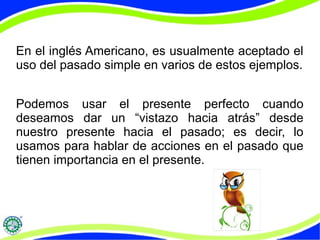
Primero habrá que hacer notar que tanto el Inglés 
Británico ( British English) y el Inglés Americano 
( American English ) tienen diferentes reglas para 
este tiempo en específico. 
La explicación que a continuación veremos hace 
referencia al inglés Británico.
En el inglés Americano, es usualmente aceptado el 
uso del pasado simple en varios de estos ejemplos. 
Podemos usar el presente perfecto cuando 
deseamos dar un “vistazo hacia atrás” desde 
nuestro presente hacia el pasado; es decir, lo 
usamos para hablar de acciones en el pasado que 
tienen importancia en el presente.
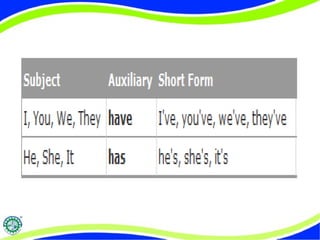
ESTRUCTURA (+) 
+ have / has + Verb in Past Participle + C 
● Alicia has broken with her boyfriend 
(Alicia ha roto con su novio) 
● Pedro and Guillermo have brought a little puppy 
(Pedro y Guillermo han traído a un perrito)
Lo podemos usar para hablar del pasado mas 
“reciente”; es decir, para describir una experiencia, 
usado las palabras “just” o “already”. No se usa para 
acciones específicas. 
● I've broken my watch so I don't know what time it is. 
● They have cancelled the meeting. 
● We have been to Rio de Jaeiro. 
● I've just finished. 
● We've already spoken about that.
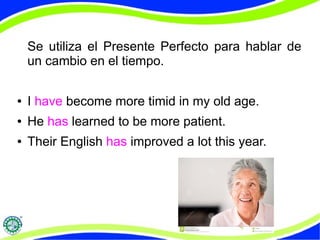
Se utiliza el Presente Perfecto para hablar de 
un cambio en el tiempo. 
● I have become more timid in my old age. 
● He has learned to be more patient. 
● Their English has improved a lot this year.
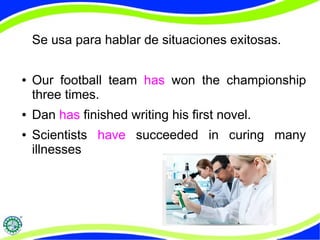
Se usa para hablar de situaciones exitosas. 
● Our football team has won the championship 
three times. 
● Dan has finished writing his first novel. 
● Scientists have succeeded in curing many 
illnesses
El Presente Perfecto se usa para hablar de 
situaciones que todavía no han sucedido. 
El uso del presente perfecto en estos casos 
indica que aún estamos esperando la acción, 
por eso, frecuentemente usamos los adverbios: 
● 'still' 
● 'yet' (in negatives and questions only)
● The plane hasn't arrived yet. 
● Our team still hasn't won a championship. 
● I haven't finished yet. 
● Maria hasn't married yet.
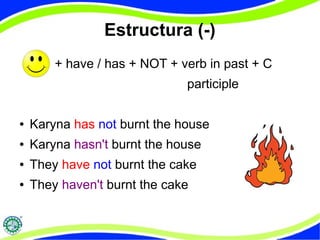
Estructura (-) 
+ have / has + NOT + verb in past + C 
participle 
● Karyna has not burnt the house 
● Karyna hasn't burnt the house 
● They have not burnt the cake 
● They haven't burnt the cake
También podemos usar al Presente Perfecto 
para hablar de un pasado más distante. 
● I've been to Singapore a lot over the years. 
● He's done this type of project several times 
before. 
● They've talked about it in the past.
En muchas ocasiones cuando hablamos del 
pasado más distante usamos palabras como 
'ever' (in questions) y 'never'. 
● Have you ever been to Indonesia? 
● Has he ever spoken to you about the problem? 
● I've never met him. 
● We've never considered investing in Canada.
ESTRUCTURA (?) 
● Have / Has + + Verb in Past + C + ? 
Participle 
● Has he forgotten to buy the wine ? 
● Have we flown by Aeromexico ? 
● Has Ana ever forgiven the infidelity ? 
● Have you ever slept in class ?
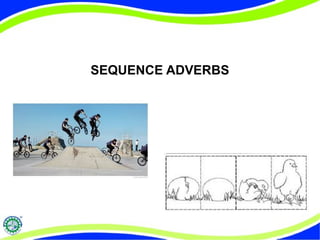
SEQUENCE ADVERBS
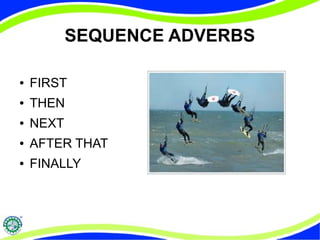
SEQUENCE ADVERBS 
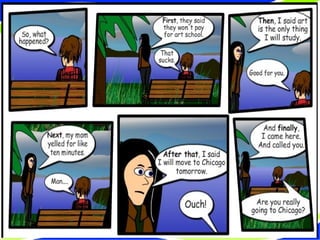
● FIRST 
● THEN 
● NEXT 
● AFTER THAT 
● FINALLY
EJEMPLOS 
● First, I typed "sequence adverbs" into Google. 
● Then, I clicked on a few links that weren't very 
good. 
● Next, I clicked on the Small Town English link. 
● After that, I read a helpful list and watched a 
cartoon about sequence adverbs. 
● Finally, I told my friends to visit the site for all 
their grammar needs.
EJEMPLOS 
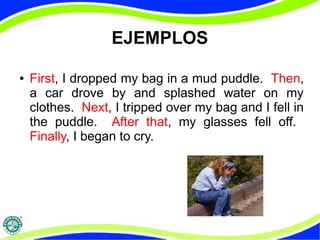
● First, I dropped my bag in a mud puddle. Then, 
a car drove by and splashed water on my 
clothes. Next, I tripped over my bag and I fell in 
the puddle. After that, my glasses fell off. 
Finally, I began to cry.
Sesion 3-Pasado Simple en inglés - Simple past

Sesion 3-Pasado Simple en inglés - Simple past

  • 1.
    Simple Past Vs. Present Perfect
  • 2.
    PRESENT PERFECT Primerohabrá que hacer notar que tanto el Inglés Británico ( British English) y el Inglés Americano ( American English ) tienen diferentes reglas para este tiempo en específico. La explicación que a continuación veremos hace referencia al inglés Británico.
  • 3.
    En el inglésAmericano, es usualmente aceptado el uso del pasado simple en varios de estos ejemplos. Podemos usar el presente perfecto cuando deseamos dar un “vistazo hacia atrás” desde nuestro presente hacia el pasado; es decir, lo usamos para hablar de acciones en el pasado que tienen importancia en el presente.
  • 4.
    ESTRUCTURA (+) +have / has + Verb in Past Participle + C ● Alicia has broken with her boyfriend (Alicia ha roto con su novio) ● Pedro and Guillermo have brought a little puppy (Pedro y Guillermo han traído a un perrito)
  • 5.
    Lo podemos usarpara hablar del pasado mas “reciente”; es decir, para describir una experiencia, usado las palabras “just” o “already”. No se usa para acciones específicas. ● I've broken my watch so I don't know what time it is. ● They have cancelled the meeting. ● We have been to Rio de Jaeiro. ● I've just finished. ● We've already spoken about that.
  • 7.
    Se utiliza elPresente Perfecto para hablar de un cambio en el tiempo. ● I have become more timid in my old age. ● He has learned to be more patient. ● Their English has improved a lot this year.
  • 8.
    Se usa parahablar de situaciones exitosas. ● Our football team has won the championship three times. ● Dan has finished writing his first novel. ● Scientists have succeeded in curing many illnesses
  • 9.
    El Presente Perfectose usa para hablar de situaciones que todavía no han sucedido. El uso del presente perfecto en estos casos indica que aún estamos esperando la acción, por eso, frecuentemente usamos los adverbios: ● 'still' ● 'yet' (in negatives and questions only)
  • 10.
    ● The planehasn't arrived yet. ● Our team still hasn't won a championship. ● I haven't finished yet. ● Maria hasn't married yet.
  • 11.
    Estructura (-) +have / has + NOT + verb in past + C participle ● Karyna has not burnt the house ● Karyna hasn't burnt the house ● They have not burnt the cake ● They haven't burnt the cake
  • 12.
    También podemos usaral Presente Perfecto para hablar de un pasado más distante. ● I've been to Singapore a lot over the years. ● He's done this type of project several times before. ● They've talked about it in the past.
  • 13.
    En muchas ocasionescuando hablamos del pasado más distante usamos palabras como 'ever' (in questions) y 'never'. ● Have you ever been to Indonesia? ● Has he ever spoken to you about the problem? ● I've never met him. ● We've never considered investing in Canada.
  • 14.
    ESTRUCTURA (?) ●Have / Has + + Verb in Past + C + ? Participle ● Has he forgotten to buy the wine ? ● Have we flown by Aeromexico ? ● Has Ana ever forgiven the infidelity ? ● Have you ever slept in class ?
  • 15.
  • 16.
    SEQUENCE ADVERBS ●FIRST ● THEN ● NEXT ● AFTER THAT ● FINALLY
  • 17.
    EJEMPLOS ● First,I typed "sequence adverbs" into Google. ● Then, I clicked on a few links that weren't very good. ● Next, I clicked on the Small Town English link. ● After that, I read a helpful list and watched a cartoon about sequence adverbs. ● Finally, I told my friends to visit the site for all their grammar needs.
  • 18.
    EJEMPLOS ● First,I dropped my bag in a mud puddle. Then, a car drove by and splashed water on my clothes. Next, I tripped over my bag and I fell in the puddle. After that, my glasses fell off. Finally, I began to cry.