REPÚBLICA BOLIVARIANA DE VENEZUELA 
UNIVERSIDAD YACAMBU 
VICERRECTORADO ACADÉMICO 
FALCULTAD DE HUMANIDADES 
ESCUELA DE PSICOLOGÍA 
Bachiller: 
Matrúndola D, Luisanna 
C.I. 25.359.812 
Exp. HPS-14200477 
Cabudare, Noviembre 2014
ESTRUCTURA 
Se refiere a acciones que suceden en un pasado 
reciente, y que guarda relación con el presente. 
Es una combinación del pasado y presente 
Se forma 
have/has + past participle 
Auxiliar Verbo en participio 
- ¿What has happened? ¿Qué ha sucedido?
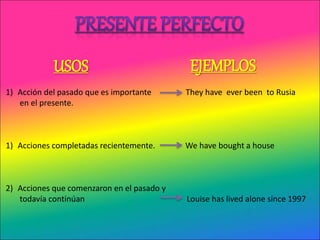
USOS 
EJEMPLOS 
1) Acción del pasado que es importante They have ever been to Rusia 
en el presente. 
1) Acciones completadas recientemente. We have bought a house 
2) Acciones que comenzaron en el pasado y 
todavía continúan Louise has lived alone since 1997
Oraciones 
Interrogativas 
EJEMPLOS 
Oraciones 
Afirmativas 
Oraciones 
Negativas 
¿Have you eaten cake? I have eaten cake I have not eaten cake 
I´ve eaten cake I haven´t eaten cake 
¿Has Mary visited México? Mary has visited México Mary has not visited México 
Mary´s visited México Mary hasn´t visited México 
¿Have they worked? They have worked They have not worked 
They´ve worked They haven´t worked
ESTRUCTURA 
Se refiere a 2 acciones pasadas que se combinan, 
sucediendo una antes de comenzar la otra. 
Se forma 
had + past participle 
Auxiliar Verbo en participio
USOS 
EJEMPLOS 
1) Junto con el Pasado Simple The concert had started when the director 
arrived 
2) El Pasado equivalente del 
Presente Perfecto He had worked
Oraciones 
Interrogativas 
EJEMPLOS 
Oraciones 
Afirmativas 
Oraciones 
Negativas 
¿Had she gone to the theater? She had gone to the theater She had not gone to the theater 
She´d gone to the theater She hadn´t gone to the theater 
¿Had They played the violin? They had played the violin They had not played the violin 
They´d played the violin They hadn´t played the violin
BIBLIOGRAFIA 
Gran enciclopedia Interactiva Siglo XXI (Diccionario de Ingles) Editorial 
Océano. 
 Clases Idioma I. Universidad Yacambu, Aula Semipresencial.

Presentación presente perfecto. ingles

  • 1.
    REPÚBLICA BOLIVARIANA DEVENEZUELA UNIVERSIDAD YACAMBU VICERRECTORADO ACADÉMICO FALCULTAD DE HUMANIDADES ESCUELA DE PSICOLOGÍA Bachiller: Matrúndola D, Luisanna C.I. 25.359.812 Exp. HPS-14200477 Cabudare, Noviembre 2014
  • 2.
    ESTRUCTURA Se refierea acciones que suceden en un pasado reciente, y que guarda relación con el presente. Es una combinación del pasado y presente Se forma have/has + past participle Auxiliar Verbo en participio - ¿What has happened? ¿Qué ha sucedido?
  • 3.
    USOS EJEMPLOS 1)Acción del pasado que es importante They have ever been to Rusia en el presente. 1) Acciones completadas recientemente. We have bought a house 2) Acciones que comenzaron en el pasado y todavía continúan Louise has lived alone since 1997
  • 4.
    Oraciones Interrogativas EJEMPLOS Oraciones Afirmativas Oraciones Negativas ¿Have you eaten cake? I have eaten cake I have not eaten cake I´ve eaten cake I haven´t eaten cake ¿Has Mary visited México? Mary has visited México Mary has not visited México Mary´s visited México Mary hasn´t visited México ¿Have they worked? They have worked They have not worked They´ve worked They haven´t worked
  • 5.
    ESTRUCTURA Se refierea 2 acciones pasadas que se combinan, sucediendo una antes de comenzar la otra. Se forma had + past participle Auxiliar Verbo en participio
  • 6.
    USOS EJEMPLOS 1)Junto con el Pasado Simple The concert had started when the director arrived 2) El Pasado equivalente del Presente Perfecto He had worked
  • 7.
    Oraciones Interrogativas EJEMPLOS Oraciones Afirmativas Oraciones Negativas ¿Had she gone to the theater? She had gone to the theater She had not gone to the theater She´d gone to the theater She hadn´t gone to the theater ¿Had They played the violin? They had played the violin They had not played the violin They´d played the violin They hadn´t played the violin
  • 8.
    BIBLIOGRAFIA Gran enciclopediaInteractiva Siglo XXI (Diccionario de Ingles) Editorial Océano.  Clases Idioma I. Universidad Yacambu, Aula Semipresencial.