Thyroid Health
Jeffrey Bauman, MD FACE ECNU
Chair, Department of Endocrinology
January 24, 2018
Outline
• What is the thyroid and what does it do?
• Hypothyroidism (underactive): diagnosis
and treatment
• Hyperthyroidism (overactive): diagnosis
and treatment
• Thyroid nodules
• Questions
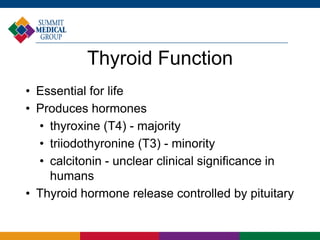
• Butterfly-shaped gland
• Right and Left lobes with connecting Isthmus in center
• Parathyroids - nothing to do with thyroid
Anatomy
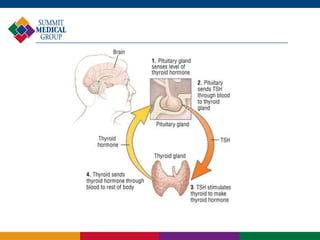
Thyroid Function
• Essential for life
• Produces hormones
• thyroxine (T4) - majority
• triiodothyronine (T3) - minority
• calcitonin - unclear clinical significance in
humans
• Thyroid hormone release controlled by pituitary
Iodine
• Iodine is necessary ingredient to make
thyroid hormone
• Not made by the body so we rely on our diet
• Iodine deficiency most common cause of
underactive thyroid and “goiter” worldwide
• Salt iodization program starting in 1920’s has
mostly eliminated iodine deficiency in US
(and other 1st world countries)
Common Sources of Dietary Iodine
• Dairy (milk, cheese, yogurt, ice cream)
• Soy milk
• Eggs
• Fruits including strawberries, cranberries,
bananas, pineapple
• Vegetables including potatoes, green beans
• Seawater fish
• Some breads
Lab Evaluation of Thyroid Function
• TSH
• most reliable indicator of thyroid function
• Main screening test
• Free & Total T4
• Free & Total T3
• Thyroid antibodies (TPO most common)
• Common in healthy population
Hypothyroidism
Hypothyroidism: Causes
• Hashimotos (autoimmune) - most common in
US
• Surgery
• Radiation treatment
• Thyroiditis
• Medications (lithium, amiodarone)
• Iodine deficiency (most common worldwide)
• Pituitary disease (uncommon)
• Other (rare)
Symptoms of Hypothyroidism
• Fatigue
• Increased sensitivity to cold
• Constipation
• Dry skin
• Weight gain
• Puffy face
• Hoarseness
• Muscle weakness
• Elevated blood cholesterol
• Muscle aches
• Pain, stiffness or swelling
in your joints
• Heavier than normal or
irregular menstrual periods
• Thinning hair
• Slowed heart rate
• Depression
• Impaired memory
Hypothyroidism: Labs
TSH:
T4/T3: (can be normal)
TPO Antibodies:
– often positive in Hashimotos
Treatment of Hypothyroidism
• Levothyroxine/T4 (Synthroid, Levoxyl,
Tirosint)
• Liothyronine/T3 (Cytomel)
• T4/T3 combination (Armour,
NatureThyroid)
Thyroid Hormone Replacement
• Long half-life, level is stable
• Best absorbed on empty
stomach
• Allow time before
eating/drinking/vitamins/other
medications
• Be consistent
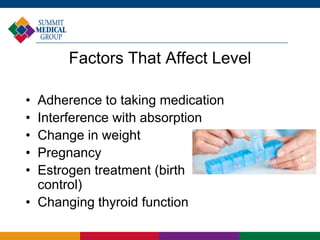
• Adherence to taking medication
• Interference with absorption
• Change in weight
• Pregnancy
• Estrogen treatment (birth
control)
• Changing thyroid function
Factors That Affect Level
Hyperthyroidism
Hyperthyroidism: Causes
• Graves (autoimmune) – most common
• Hyperfunctioning nodules (toxic nodules)
• Temporary thyroiditis
• Medications (amiodarone)
Hyperthyroidism: Labs
TSH:
T4/T3: (can be normal)
Antibodies: often positive in Graves
Sed Rate (ESR): often elevated in temporary
thyroiditis
Hyperthyroidism: Imaging
Thyroid Ultrasound
• noninvasive, no radiation
• general appearance of gland
• identifies thyroid nodules
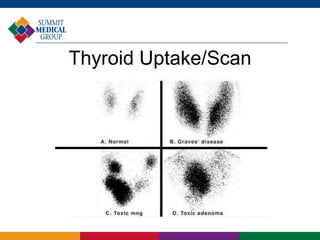
Thyroid Uptake/Scan
• assesses how much iodine taken up
by thyroid and in the pattern
Thyroid Uptake/Scan
Hyperthyroidism: Treatment
1. Reduce thyroid hormone production
(methimazole, PTU)
2. Radioactive iodine (RAI)
3. Surgery
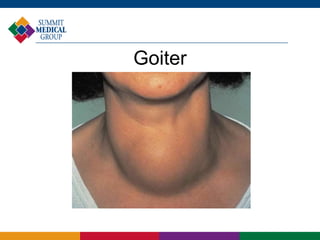
Goiter
Goiter
• Enlargement of thyroid
• Independent of function:
• can be hypo, hyper, or normal
• If very large, can cause obstructive
symptoms
Causes of Goiter
• Iodine deficiency
• Hashimoto’s
• Graves’
• Nodules
• Medications
Thyroid Nodules
• Very common
• Often incidental on non-thyroid imaging
• Thyroid Ultrasound - best test
• Growth of thyroid cells forming a lump
within the thyroid gland
• Majority are benign
• Thyroid cancers are usually curable
Fine Needle Aspiration/Biopsy
• Safe and simple procedure
• Often done in office
• Ultrasound guidance to ensure correct
placement of needle when sampling
• Small needle - thinner than lab draw
• Minimal discomfort
Thyroid Health

Thyroid Health

  • 1.
    Thyroid Health Jeffrey Bauman,MD FACE ECNU Chair, Department of Endocrinology January 24, 2018
  • 2.
    Outline • What isthe thyroid and what does it do? • Hypothyroidism (underactive): diagnosis and treatment • Hyperthyroidism (overactive): diagnosis and treatment • Thyroid nodules • Questions
  • 3.
    • Butterfly-shaped gland •Right and Left lobes with connecting Isthmus in center • Parathyroids - nothing to do with thyroid Anatomy
  • 4.
    Thyroid Function • Essentialfor life • Produces hormones • thyroxine (T4) - majority • triiodothyronine (T3) - minority • calcitonin - unclear clinical significance in humans • Thyroid hormone release controlled by pituitary
  • 6.
    Iodine • Iodine isnecessary ingredient to make thyroid hormone • Not made by the body so we rely on our diet • Iodine deficiency most common cause of underactive thyroid and “goiter” worldwide • Salt iodization program starting in 1920’s has mostly eliminated iodine deficiency in US (and other 1st world countries)
  • 7.
    Common Sources ofDietary Iodine • Dairy (milk, cheese, yogurt, ice cream) • Soy milk • Eggs • Fruits including strawberries, cranberries, bananas, pineapple • Vegetables including potatoes, green beans • Seawater fish • Some breads
  • 8.
    Lab Evaluation ofThyroid Function • TSH • most reliable indicator of thyroid function • Main screening test • Free & Total T4 • Free & Total T3 • Thyroid antibodies (TPO most common) • Common in healthy population
  • 9.
  • 10.
    Hypothyroidism: Causes • Hashimotos(autoimmune) - most common in US • Surgery • Radiation treatment • Thyroiditis • Medications (lithium, amiodarone) • Iodine deficiency (most common worldwide) • Pituitary disease (uncommon) • Other (rare)
  • 11.
    Symptoms of Hypothyroidism •Fatigue • Increased sensitivity to cold • Constipation • Dry skin • Weight gain • Puffy face • Hoarseness • Muscle weakness • Elevated blood cholesterol • Muscle aches • Pain, stiffness or swelling in your joints • Heavier than normal or irregular menstrual periods • Thinning hair • Slowed heart rate • Depression • Impaired memory
  • 12.
    Hypothyroidism: Labs TSH: T4/T3: (canbe normal) TPO Antibodies: – often positive in Hashimotos
  • 13.
    Treatment of Hypothyroidism •Levothyroxine/T4 (Synthroid, Levoxyl, Tirosint) • Liothyronine/T3 (Cytomel) • T4/T3 combination (Armour, NatureThyroid)
  • 14.
    Thyroid Hormone Replacement •Long half-life, level is stable • Best absorbed on empty stomach • Allow time before eating/drinking/vitamins/other medications • Be consistent
  • 15.
    • Adherence totaking medication • Interference with absorption • Change in weight • Pregnancy • Estrogen treatment (birth control) • Changing thyroid function Factors That Affect Level
  • 16.
  • 17.
    Hyperthyroidism: Causes • Graves(autoimmune) – most common • Hyperfunctioning nodules (toxic nodules) • Temporary thyroiditis • Medications (amiodarone)
  • 18.
    Hyperthyroidism: Labs TSH: T4/T3: (canbe normal) Antibodies: often positive in Graves Sed Rate (ESR): often elevated in temporary thyroiditis
  • 19.
    Hyperthyroidism: Imaging Thyroid Ultrasound •noninvasive, no radiation • general appearance of gland • identifies thyroid nodules Thyroid Uptake/Scan • assesses how much iodine taken up by thyroid and in the pattern
  • 20.
  • 21.
    Hyperthyroidism: Treatment 1. Reducethyroid hormone production (methimazole, PTU) 2. Radioactive iodine (RAI) 3. Surgery
  • 22.
  • 23.
    Goiter • Enlargement ofthyroid • Independent of function: • can be hypo, hyper, or normal • If very large, can cause obstructive symptoms
  • 24.
    Causes of Goiter •Iodine deficiency • Hashimoto’s • Graves’ • Nodules • Medications
  • 25.
    Thyroid Nodules • Verycommon • Often incidental on non-thyroid imaging • Thyroid Ultrasound - best test • Growth of thyroid cells forming a lump within the thyroid gland • Majority are benign • Thyroid cancers are usually curable
  • 26.
    Fine Needle Aspiration/Biopsy •Safe and simple procedure • Often done in office • Ultrasound guidance to ensure correct placement of needle when sampling • Small needle - thinner than lab draw • Minimal discomfort