 THUNDERSTORM
 FOUR NECESSARY CONDITION FOR
THUNDERSTORM
 TYPES OF THUNDERSTORM
 HEAT TYPE THUNDERSTORM
 THUNDERSTORM DEVELOPMENT
 FORECASTING
 SUPER CELL THUNDERSTORM
Thunderstorm is a violent short-lived weather
disturbance that is almost always associated
with lightning , thunder, dense clouds, heavy
rain or hail , air rise in large, swift updraft to
cooler regions of the atmosphere.
 1. instability through a reasonable depth of
atmosphere: very approximately at least
3000m/250 hpa.
 2. Enough humidity to sustain/feed deep
convection through a reasonable depth (at
least 100hpa above the freezing
level):advection of warm, humid air at low
levels greatly assists thunderstorm
development.
 3. Cloud tops reaching to a level where the
temperature is at least : minus 18*c.
 4. A large amount of energy available to be
released (CAPE).if the CAPE is large then the
cloud top temperature can be as warm as
minus 15*c and thunder will occur –how ever
these are the exception rather than the rule.
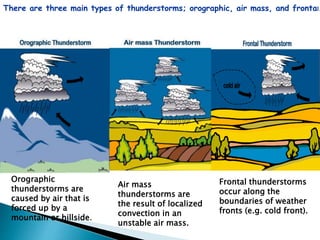
There are three main types of thunderstorms; orographic, air mass, and frontal.
Orographic
thunderstorms are
caused by air that is
forced up by a
mountain or hillside.
Air mass
thunderstorms are
the result of localized
convection in an
unstable air mass.
Frontal thunderstorms
occur along the
boundaries of weather
fronts (e.g. cold front).
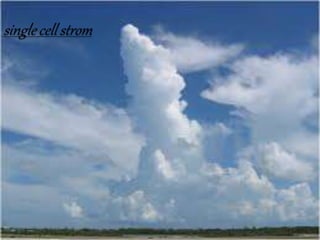
 1)single cell storms Typically last 20-
30 minutes. Pulse storms can produce severe
weather elements such as hail, some heavy
rainfall and occasionally weak tornadoes.
 Single Cell (Sometimes called Air Mass
Thunderstorms)
 Scattered, late afternoon, summertime
storms
 Size: typically less than a couple of miles
across
 Short lasting, typically 1 hour or less
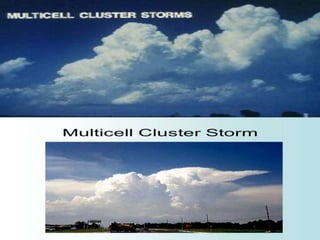
 A group of cells moving as a single unit, with
each cell in a different stage of the
thunderstorm life cycle. Multi cell storms can
produce moderate size hail, flash floods and
weak tornadoes .
 Group of cells moving as a single unit with
each cell in a different stage of thunderstorm
development.
 Since new cells develop as older ones die,
multi cell cluster storms can last for several
hours
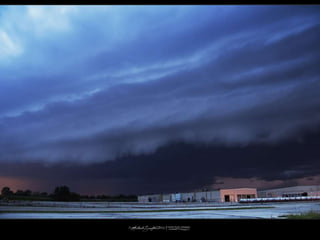
 Multi cell line storms consist of a line of storms with
a continuous developed gust front at the leading
edge of the line. Also known as squall lines, these
storms can produce small to moderate size hail,
occasional flash floods and weak tornadoes.
 - Multi cell lines (Often called Squall lines)
 - Line of storms (composed of many individual
cells) that move together as the line moves
 - Often (but not always) associated with cold fronts
 - Lines may be 500 or more miles long
 - Lines may last for several hours and move
hundreds of miles
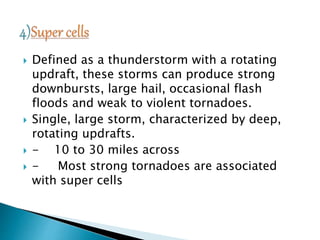
 Defined as a thunderstorm with a rotating
updraft, these storms can produce strong
downbursts, large hail, occasional flash
floods and weak to violent tornadoes.
 Single, large storm, characterized by deep,
rotating updrafts.
 - 10 to 30 miles across
 - Most strong tornadoes are associated
with super cells
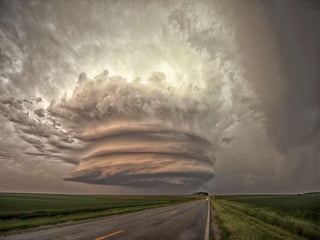
 A super cell thunderstorm characterized by
the presence of mesocyclon.
 A deep persistently rotating updraft.
 For this reason these storms are sometimes
referred to as rotating thunderstorms.
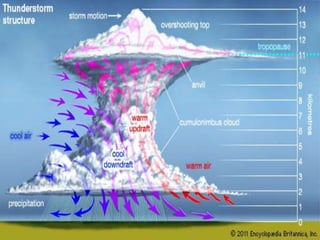
 On a hot summer day the surface of the Earth is
heated by the sun. The Earth's surface heats the air
just above the surface through the process of
conduction.
 The action of warm air rising and cold air sinking
(convection) plays a key role in the formation of
severe thunderstorms. If the warm surface air is
forced to rise, it will continue to rise, because it is
less dense than the surrounding air. In addition, it
will transfer heat from the land surface to upper
levels of the atmosphere through the process of
convection . Two of the most important ingredients
for thunderstorm formation are instability (unstable
air) and moisture.
 Thunderstorms typically develop in the
warmer months of spring, summer, and fall,
but they can occur at any time of the year
over most of the United States. There are
three basic ingredients needed for
thunderstorm development:
 Moisture
 Atmospheric stability
 The third ingredient needed for thunderstorm
development is something that will trigger
motion in the atmosphere.
 Forecasting is a method used in numerical
weather prediction. Instead of making a
single forecast of the most likely weather, a
set (or ensemble) of forecasts are produced.
 Forecasts aims to give an indication of the
range of possible future states of the
atmosphere.

thunderstorm (presentation

  • 2.
     THUNDERSTORM  FOURNECESSARY CONDITION FOR THUNDERSTORM  TYPES OF THUNDERSTORM  HEAT TYPE THUNDERSTORM  THUNDERSTORM DEVELOPMENT  FORECASTING  SUPER CELL THUNDERSTORM
  • 3.
    Thunderstorm is aviolent short-lived weather disturbance that is almost always associated with lightning , thunder, dense clouds, heavy rain or hail , air rise in large, swift updraft to cooler regions of the atmosphere.
  • 5.
     1. instabilitythrough a reasonable depth of atmosphere: very approximately at least 3000m/250 hpa.  2. Enough humidity to sustain/feed deep convection through a reasonable depth (at least 100hpa above the freezing level):advection of warm, humid air at low levels greatly assists thunderstorm development.
  • 6.
     3. Cloudtops reaching to a level where the temperature is at least : minus 18*c.  4. A large amount of energy available to be released (CAPE).if the CAPE is large then the cloud top temperature can be as warm as minus 15*c and thunder will occur –how ever these are the exception rather than the rule.
  • 7.
    There are threemain types of thunderstorms; orographic, air mass, and frontal. Orographic thunderstorms are caused by air that is forced up by a mountain or hillside. Air mass thunderstorms are the result of localized convection in an unstable air mass. Frontal thunderstorms occur along the boundaries of weather fronts (e.g. cold front).
  • 8.
     1)single cellstorms Typically last 20- 30 minutes. Pulse storms can produce severe weather elements such as hail, some heavy rainfall and occasionally weak tornadoes.  Single Cell (Sometimes called Air Mass Thunderstorms)  Scattered, late afternoon, summertime storms  Size: typically less than a couple of miles across  Short lasting, typically 1 hour or less
  • 10.
     A groupof cells moving as a single unit, with each cell in a different stage of the thunderstorm life cycle. Multi cell storms can produce moderate size hail, flash floods and weak tornadoes .  Group of cells moving as a single unit with each cell in a different stage of thunderstorm development.  Since new cells develop as older ones die, multi cell cluster storms can last for several hours
  • 12.
     Multi cellline storms consist of a line of storms with a continuous developed gust front at the leading edge of the line. Also known as squall lines, these storms can produce small to moderate size hail, occasional flash floods and weak tornadoes.  - Multi cell lines (Often called Squall lines)  - Line of storms (composed of many individual cells) that move together as the line moves  - Often (but not always) associated with cold fronts  - Lines may be 500 or more miles long  - Lines may last for several hours and move hundreds of miles
  • 14.
     Defined asa thunderstorm with a rotating updraft, these storms can produce strong downbursts, large hail, occasional flash floods and weak to violent tornadoes.  Single, large storm, characterized by deep, rotating updrafts.  - 10 to 30 miles across  - Most strong tornadoes are associated with super cells
  • 15.
     A supercell thunderstorm characterized by the presence of mesocyclon.  A deep persistently rotating updraft.  For this reason these storms are sometimes referred to as rotating thunderstorms.
  • 17.
     On ahot summer day the surface of the Earth is heated by the sun. The Earth's surface heats the air just above the surface through the process of conduction.  The action of warm air rising and cold air sinking (convection) plays a key role in the formation of severe thunderstorms. If the warm surface air is forced to rise, it will continue to rise, because it is less dense than the surrounding air. In addition, it will transfer heat from the land surface to upper levels of the atmosphere through the process of convection . Two of the most important ingredients for thunderstorm formation are instability (unstable air) and moisture.
  • 18.
     Thunderstorms typicallydevelop in the warmer months of spring, summer, and fall, but they can occur at any time of the year over most of the United States. There are three basic ingredients needed for thunderstorm development:  Moisture  Atmospheric stability  The third ingredient needed for thunderstorm development is something that will trigger motion in the atmosphere.
  • 19.
     Forecasting isa method used in numerical weather prediction. Instead of making a single forecast of the most likely weather, a set (or ensemble) of forecasts are produced.  Forecasts aims to give an indication of the range of possible future states of the atmosphere.