THUMB SPICA SPLINT
Is an orthopedic splint that is used to immobilize the thumb
and the wrist while allowing movement of other fingers.
 It is designed to restrict movement in the thumb and provide
stability to the surrounding structures, including the thumb
metacarpal bone and the wrist
Indications
Thumb Sprains: A thumb spica splint helps immobilize the thumb and stabilize the
injured ligaments, promoting healing process.
Thumb Fractures: A thumb spica splint restricts thumb and wrist movement, providing
support and protection during the healing process.
Thumb tendonities:A thumb spica splint can help reduce movement in the thumb and
wrist, relieving strain on the inflamed tendons and allowing them to heal.
Thumb arthritis:. A thumb spica splint provides support and stability,
reducing stress on the arthritic joint and alleviating symptoms.
Postoperative Support:After thumb surgeries, such as tendon repairs,
ligament reconstructions, or joint fusions, a thumb spica splint may
be used to protect the surgical site, limit movement, and facilitate
proper healing.
Thumb Instability: Instability of the thumb joint, such as from
ligament laxity or repeated subluxations (partial dislocations), may
benefit from a thumb spica splint.
Technique or treatment:
material for application of thumb spica splint;
• plaster of paris or fiberglass
• soft ban
• water
• scissors
• crepe bandage
Application procedure;
1. Perform a comprehensive physical examination before splinting
2. Have the patient rest his or her elbow on a table, and the forarm should be in a neutral position
3. The thumb should be in the normal resting anatomic position.
4. Measure a 4-inch wide, eight layers thick plaster measured from the
tip of the thumb to the proximal forearm.
5. Soak plaster in water.
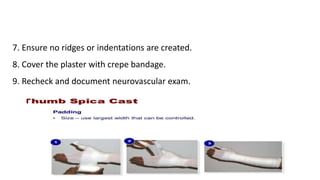
6. Apply plaster to the radial side of forearm and thumb so that this
area is protected from the thumb tip to the mid- to distal-third of the
forearm.
7. Ensure no ridges or indentations are created.
8. Cover the plaster with crepe bandage.
9. Recheck and document neurovascular exam.
Contraindications;
Skin infection
Open wound or infection
allergic reaction
Complications;
• Skin Irritation or Pressure Sores: Prolonged or improper use of a thumb spica splint can
cause skin irritation, redness, or pressure sores at the contact points between the splint
and the skin.
• Joint Stiffness: Prolonged immobilization of the thumb joint can lead
to joint stiffness or decreased range of motion.
• Skin Sensitivity or Allergic Reactions: Some individuals may develop
skin sensitivity or allergic reactions to the materials used in the thumb
spica splint e.g pop.
• Discomfort and pain:This can be due to improper fitting, excessive
pressure.
• Muscle Weakness or Atrophy: Long-term immobilization of the thumb
and wrist through the use of a thumb spica splint can result in muscle
weakness or atrophy. This is because of disuse.
THUMB SPICA SPLINT 2.pptx

THUMB SPICA SPLINT 2.pptx

  • 1.
  • 2.
    Is an orthopedicsplint that is used to immobilize the thumb and the wrist while allowing movement of other fingers.  It is designed to restrict movement in the thumb and provide stability to the surrounding structures, including the thumb metacarpal bone and the wrist
  • 5.
    Indications Thumb Sprains: Athumb spica splint helps immobilize the thumb and stabilize the injured ligaments, promoting healing process. Thumb Fractures: A thumb spica splint restricts thumb and wrist movement, providing support and protection during the healing process. Thumb tendonities:A thumb spica splint can help reduce movement in the thumb and wrist, relieving strain on the inflamed tendons and allowing them to heal.
  • 6.
    Thumb arthritis:. Athumb spica splint provides support and stability, reducing stress on the arthritic joint and alleviating symptoms. Postoperative Support:After thumb surgeries, such as tendon repairs, ligament reconstructions, or joint fusions, a thumb spica splint may be used to protect the surgical site, limit movement, and facilitate proper healing. Thumb Instability: Instability of the thumb joint, such as from ligament laxity or repeated subluxations (partial dislocations), may benefit from a thumb spica splint.
  • 7.
    Technique or treatment: materialfor application of thumb spica splint; • plaster of paris or fiberglass • soft ban • water • scissors • crepe bandage Application procedure; 1. Perform a comprehensive physical examination before splinting 2. Have the patient rest his or her elbow on a table, and the forarm should be in a neutral position
  • 8.
    3. The thumbshould be in the normal resting anatomic position. 4. Measure a 4-inch wide, eight layers thick plaster measured from the tip of the thumb to the proximal forearm. 5. Soak plaster in water. 6. Apply plaster to the radial side of forearm and thumb so that this area is protected from the thumb tip to the mid- to distal-third of the forearm.
  • 9.
    7. Ensure noridges or indentations are created. 8. Cover the plaster with crepe bandage. 9. Recheck and document neurovascular exam.
  • 10.
    Contraindications; Skin infection Open woundor infection allergic reaction Complications; • Skin Irritation or Pressure Sores: Prolonged or improper use of a thumb spica splint can cause skin irritation, redness, or pressure sores at the contact points between the splint and the skin.
  • 11.
    • Joint Stiffness:Prolonged immobilization of the thumb joint can lead to joint stiffness or decreased range of motion. • Skin Sensitivity or Allergic Reactions: Some individuals may develop skin sensitivity or allergic reactions to the materials used in the thumb spica splint e.g pop. • Discomfort and pain:This can be due to improper fitting, excessive pressure. • Muscle Weakness or Atrophy: Long-term immobilization of the thumb and wrist through the use of a thumb spica splint can result in muscle weakness or atrophy. This is because of disuse.