MS.AKSHATA BANSODE
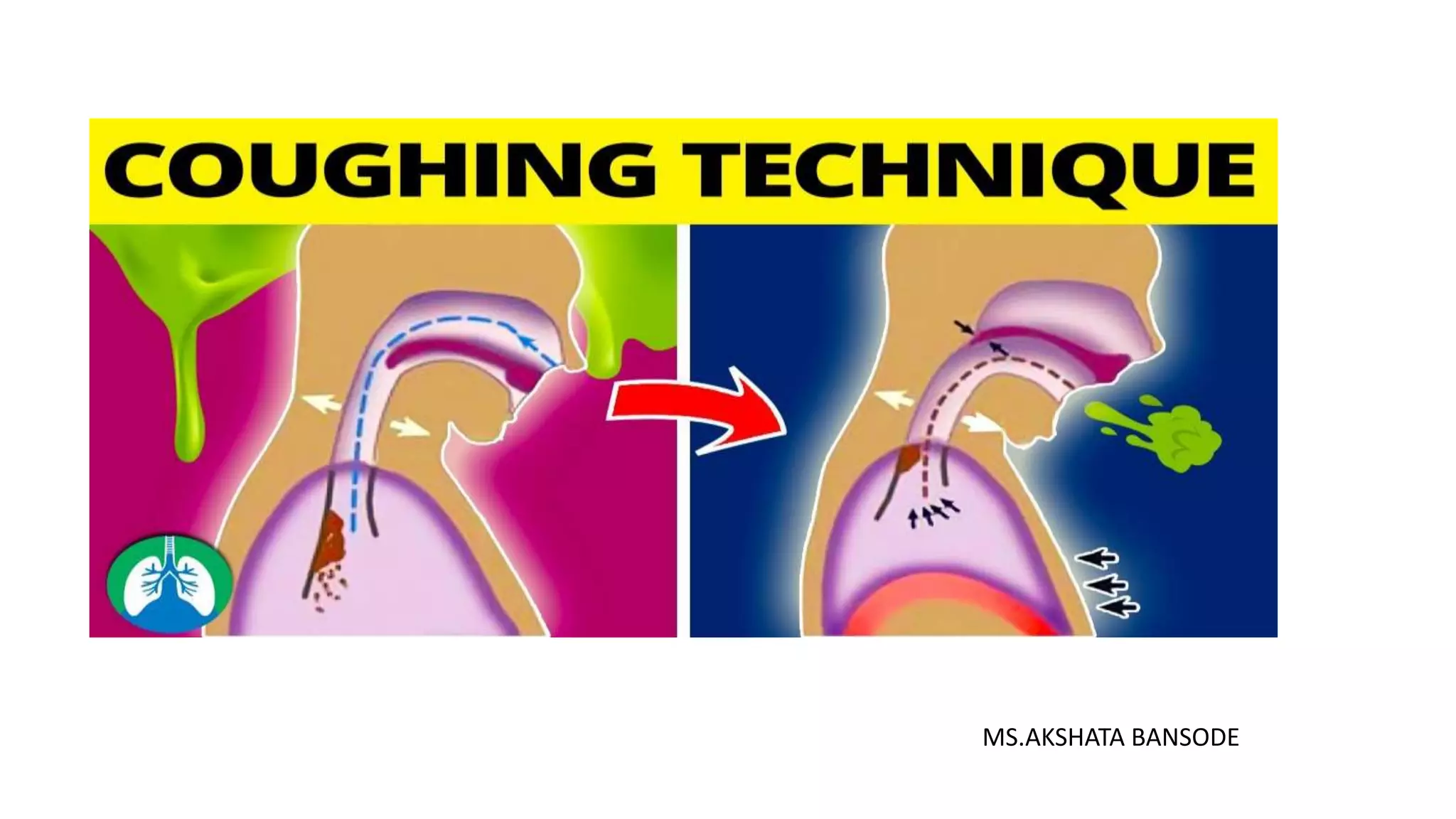
Coughing is an effective way to maintain patency of the
airway.
Coughing helps the patient to remove or clear the secretions
from both upper and lower airways. It helps the patient to
breathe better.
It also lowers the chance for respiratory infection. The cough
assist helps to clear secretion or sputum by applying a
positive pressure to fill the lungs then quickly switching to a
negative pressure to produce a high expiratory flow rate and
stimulate a cough
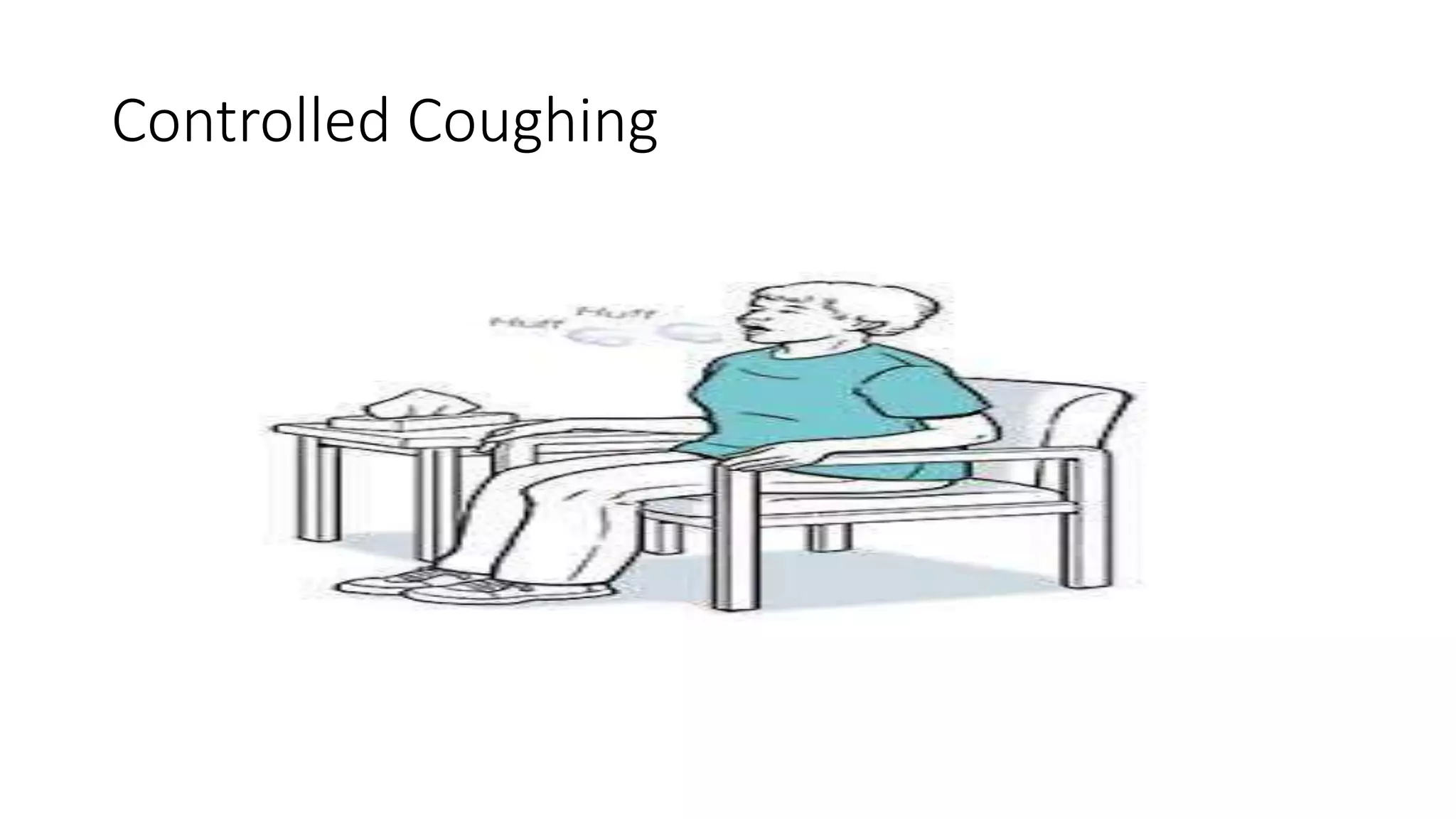
Controlled Coughing
a) Controlled Coughing:
b) Huff Coughing
c) Quad Coughing
d) Cascade Coughing
a) Controlled coughing has just enough force to loosen and carry
mucus through the airways without causing them to narrow and
collapse. Controlled coughing starts deep in lungs. It saves energy
and helps the patient get rid of as much mucus as possible.
1. Instruct the patient to sit on a chair or on the edge of the bed, with
both feet on the floor.
2. Lean forward a little. Relax and breathe in slowly through the nose.
3. Patient fold his arms across abdomen and push his arms against the
abdomen while breathe
4. Cough 2-3 times through a slightly open mouth. Coughs should be
short and sharp. The first cough loosens the mucus and moves it through
the airways. The second and third cough enables to cough the mucus up
and out.
5. Breathe in again by sniffing slowly and gently through the nose. This
gentle breath helps prevent mucus from moving back down the airways.
6. Rest and do it again if needed.
7. The effective ness of cough is determined by the amount of sputum
expectorated and the patient's report of swallowed sputum.
HUFF COUGHING:
b) Huff Coughing:
Huff Coughing is a low pressure cough, which uses a series of several
"mini-coughs" instead of a typical single big cough.
Huff coughing, also known as huffing, is a technique that helps move
mucus from the lungs.
It involves taking a breath in, holding it, and actively exhaling.
Breathing in and holding it enables air to get behind the mucus and
separates it from the lung wall so it can be coughed out.
• Instruct the patient to begin huff cough in a sitting position with the
chin slightly upward
• Patient will use his diaphragm (stomach muscle) to breathe in slowly
• Encourage the patient to hold the breath for 2 to 3 seconds
• Force the breath out of the mouth in one quick burst of air
• Make sure the back of throat is kept open during huff coughing.
• Repeat the huffs until the patient feel cleared mucus or become tired
• Try to do 3 to 5 cycles of huffing and resting
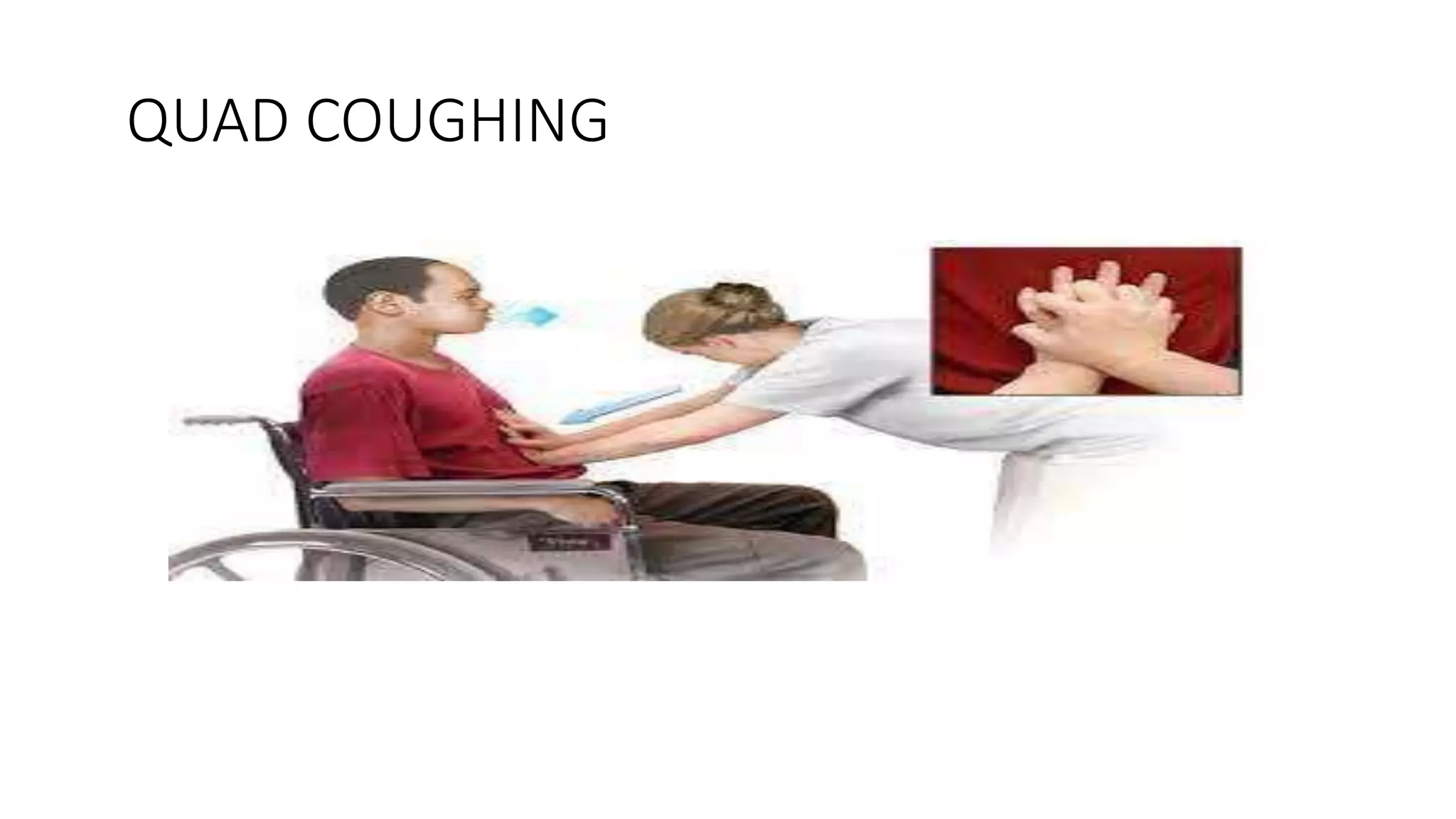
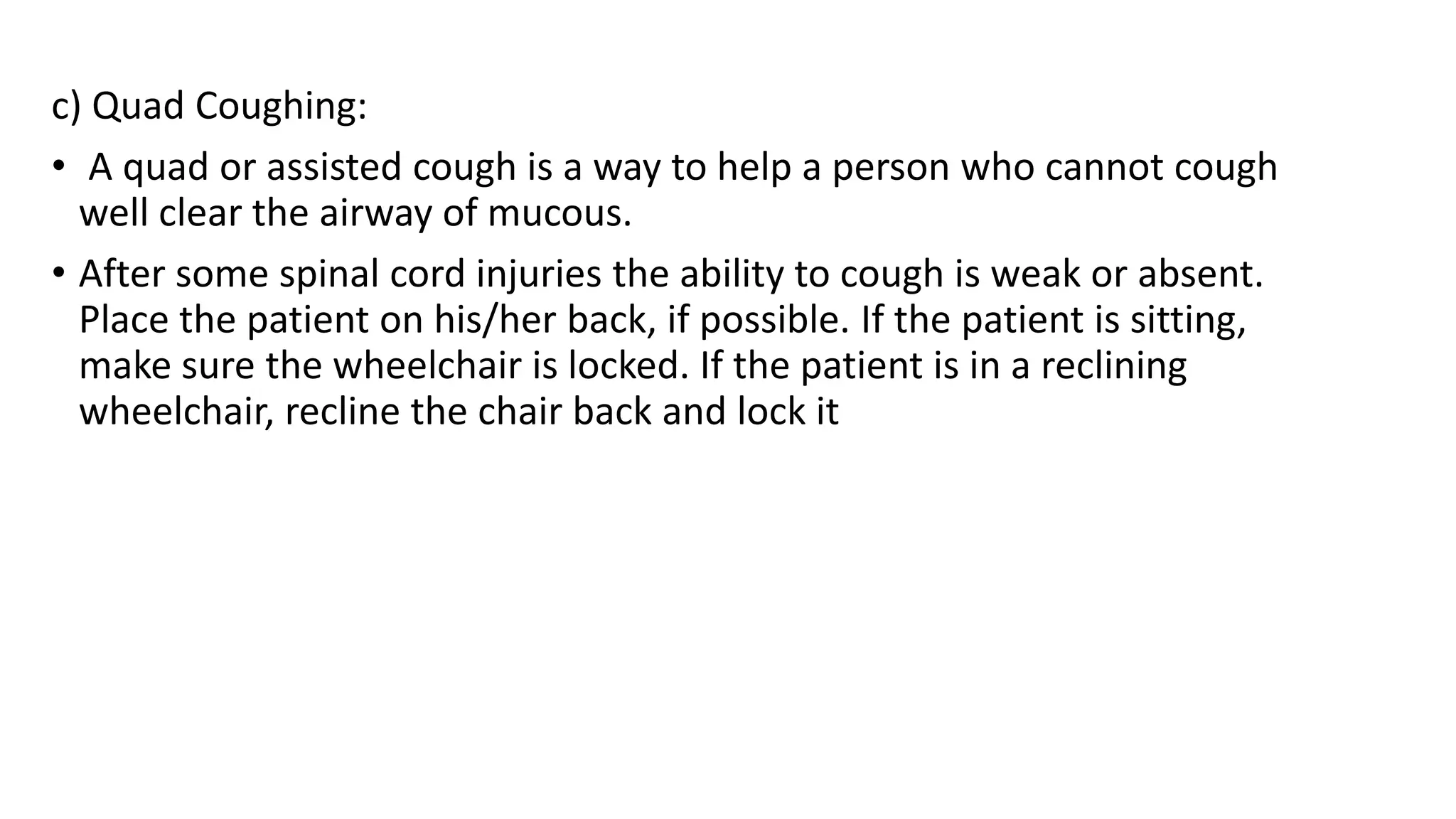
QUAD COUGHING
c) Quad Coughing:
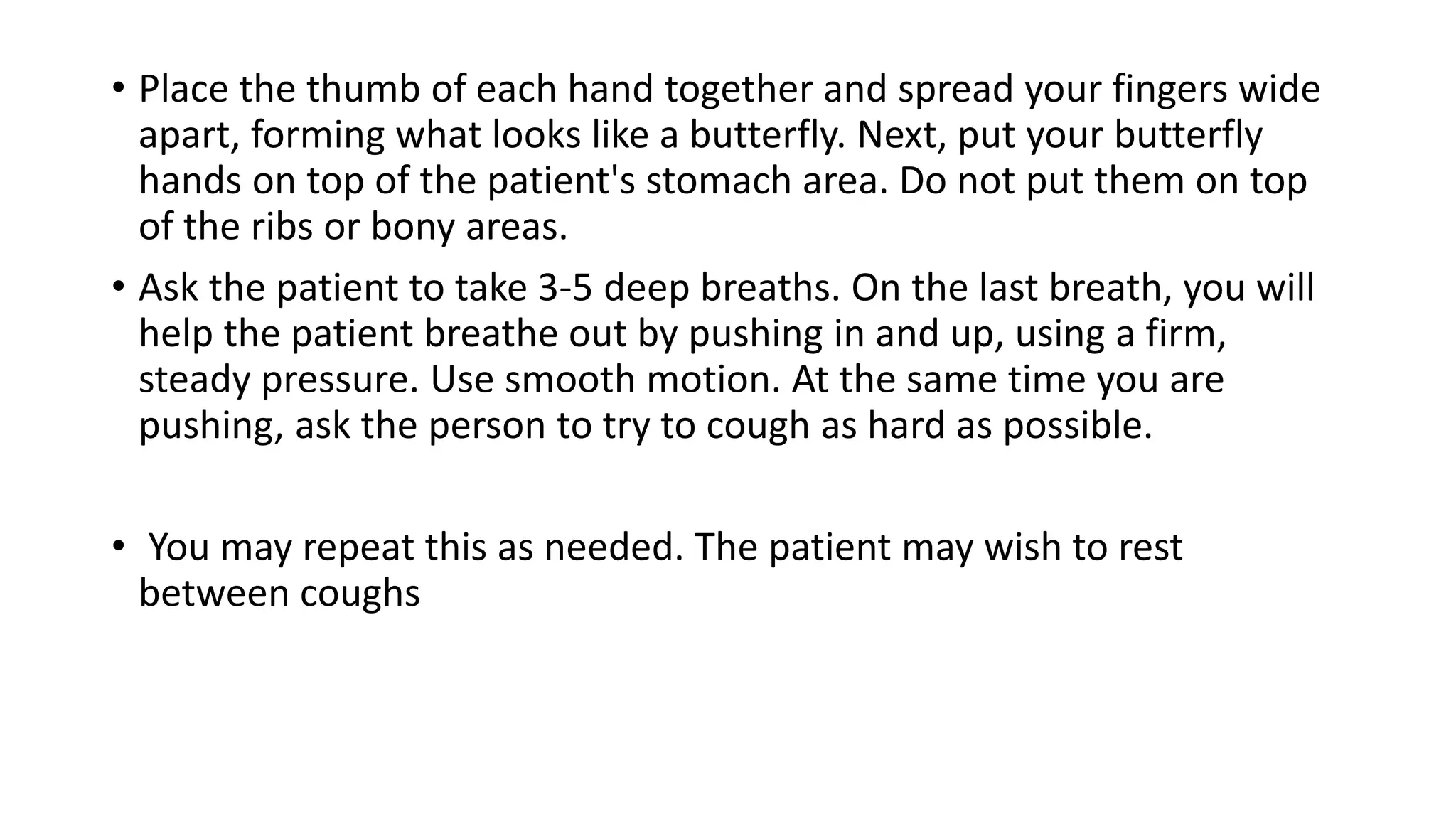
• A quad or assisted cough is a way to help a person who cannot cough
well clear the airway of mucous.
• After some spinal cord injuries the ability to cough is weak or absent.
Place the patient on his/her back, if possible. If the patient is sitting,
make sure the wheelchair is locked. If the patient is in a reclining
wheelchair, recline the chair back and lock it
• Place the thumb of each hand together and spread your fingers wide
apart, forming what looks like a butterfly. Next, put your butterfly
hands on top of the patient's stomach area. Do not put them on top
of the ribs or bony areas.
• Ask the patient to take 3-5 deep breaths. On the last breath, you will
help the patient breathe out by pushing in and up, using a firm,
steady pressure. Use smooth motion. At the same time you are
pushing, ask the person to try to cough as hard as possible.
• You may repeat this as needed. The patient may wish to rest
between coughs
CASCADE COUGHING
d) Cascade Coughing:
Cascade coughing is a useful technique during the postoperative period
with patients who have neuromuscular diseases or those who are
bedridden.
It allows the patient to increase chest expansion during inhalation and
more forcefully expel secretions with coughing.
• Ask the patient to take a slow deep breath and hold it for 2 seconds
while contracting expiratory muscles.
• Instruct the patient to open the mouth and perform a series of
coughs throughout exhalation, thereby coughing at lowered lung
volumes.
• This helps for airway clearance and maintain a patent airway in
patients with large volumes of sputum
EFFECTS OF COUGHING
• Coughing clears secretions out of the bigger airways.
• The secretions from the distal airways are mobilized by Huff.
LIMITATIONS OF COUGHING
• Patients who are unwilling to cooperate.
• Patients who have an artificial airway and cannot close the glottis
well
• Other forms of therapy may be required if the secretion is extremely
thick and tenacious.
COMPLICATIONS OF COUGHING
• Bronchospasm may occur.
• Can result in an increase in blood pressure and a decrease in cardiac
output.
• Tussive Syncope (is a type of syncope that occurs when a person
loses consciousness)

COUGHING TECHNIQUES.pptx

  • 2.
  • 3.
    Coughing is aneffective way to maintain patency of the airway. Coughing helps the patient to remove or clear the secretions from both upper and lower airways. It helps the patient to breathe better. It also lowers the chance for respiratory infection. The cough assist helps to clear secretion or sputum by applying a positive pressure to fill the lungs then quickly switching to a negative pressure to produce a high expiratory flow rate and stimulate a cough
  • 4.
  • 5.
    a) Controlled Coughing: b)Huff Coughing c) Quad Coughing d) Cascade Coughing
  • 6.
    a) Controlled coughinghas just enough force to loosen and carry mucus through the airways without causing them to narrow and collapse. Controlled coughing starts deep in lungs. It saves energy and helps the patient get rid of as much mucus as possible. 1. Instruct the patient to sit on a chair or on the edge of the bed, with both feet on the floor.
  • 7.
    2. Lean forwarda little. Relax and breathe in slowly through the nose. 3. Patient fold his arms across abdomen and push his arms against the abdomen while breathe 4. Cough 2-3 times through a slightly open mouth. Coughs should be short and sharp. The first cough loosens the mucus and moves it through the airways. The second and third cough enables to cough the mucus up and out.
  • 8.
    5. Breathe inagain by sniffing slowly and gently through the nose. This gentle breath helps prevent mucus from moving back down the airways. 6. Rest and do it again if needed. 7. The effective ness of cough is determined by the amount of sputum expectorated and the patient's report of swallowed sputum.
  • 9.
  • 10.
    b) Huff Coughing: HuffCoughing is a low pressure cough, which uses a series of several "mini-coughs" instead of a typical single big cough. Huff coughing, also known as huffing, is a technique that helps move mucus from the lungs. It involves taking a breath in, holding it, and actively exhaling. Breathing in and holding it enables air to get behind the mucus and separates it from the lung wall so it can be coughed out.
  • 11.
    • Instruct thepatient to begin huff cough in a sitting position with the chin slightly upward • Patient will use his diaphragm (stomach muscle) to breathe in slowly • Encourage the patient to hold the breath for 2 to 3 seconds
  • 12.
    • Force thebreath out of the mouth in one quick burst of air • Make sure the back of throat is kept open during huff coughing. • Repeat the huffs until the patient feel cleared mucus or become tired • Try to do 3 to 5 cycles of huffing and resting
  • 13.
  • 14.
    c) Quad Coughing: •A quad or assisted cough is a way to help a person who cannot cough well clear the airway of mucous. • After some spinal cord injuries the ability to cough is weak or absent. Place the patient on his/her back, if possible. If the patient is sitting, make sure the wheelchair is locked. If the patient is in a reclining wheelchair, recline the chair back and lock it
  • 15.
    • Place thethumb of each hand together and spread your fingers wide apart, forming what looks like a butterfly. Next, put your butterfly hands on top of the patient's stomach area. Do not put them on top of the ribs or bony areas. • Ask the patient to take 3-5 deep breaths. On the last breath, you will help the patient breathe out by pushing in and up, using a firm, steady pressure. Use smooth motion. At the same time you are pushing, ask the person to try to cough as hard as possible. • You may repeat this as needed. The patient may wish to rest between coughs
  • 16.
  • 17.
    d) Cascade Coughing: Cascadecoughing is a useful technique during the postoperative period with patients who have neuromuscular diseases or those who are bedridden. It allows the patient to increase chest expansion during inhalation and more forcefully expel secretions with coughing.
  • 18.
    • Ask thepatient to take a slow deep breath and hold it for 2 seconds while contracting expiratory muscles. • Instruct the patient to open the mouth and perform a series of coughs throughout exhalation, thereby coughing at lowered lung volumes. • This helps for airway clearance and maintain a patent airway in patients with large volumes of sputum
  • 19.
    EFFECTS OF COUGHING •Coughing clears secretions out of the bigger airways. • The secretions from the distal airways are mobilized by Huff.
  • 20.
    LIMITATIONS OF COUGHING •Patients who are unwilling to cooperate. • Patients who have an artificial airway and cannot close the glottis well • Other forms of therapy may be required if the secretion is extremely thick and tenacious.
  • 21.
    COMPLICATIONS OF COUGHING •Bronchospasm may occur. • Can result in an increase in blood pressure and a decrease in cardiac output. • Tussive Syncope (is a type of syncope that occurs when a person loses consciousness)