Presented by;
Ben Ka’K
PRNCPL. Ortho
N.DIP, Ortho Techno, KMTC Nbi.
HND Med Edu, KMTC Nbi
BSc Med Edu, MMU
CASTS/SPLINTS GENERAL
APPLICATION PROCEDURES
Splint/Cast General Application Procedures
❑ Carefully inspect the involved extremity and
document skin lesions, soft-tissue injuries, and
neurovascular status before splint or cast
application.
❑ Following immobilization, neurovascular status
should be rechecked and documented.
❑ The patient's clothing should also
be covered with sheets to protect
it and the surrounding area from
being soiled by water and plaster
or fiberglass.
❑ To prepare the injured extremity
for splinting/casting, stockinette is
measured and applied to cover the
area and extend about 10 cm
beyond each end of the intended
splint sit
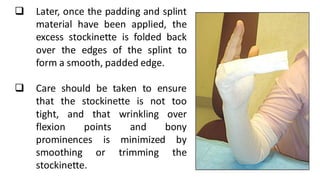
❑ Later, once the padding and splint
material have been applied, the
excess stockinette is folded back
over the edges of the splint to
form a smooth, padded edge.
❑ Care should be taken to ensure
that the stockinette is not too
tight, and that wrinkling over
flexion points and bony
prominences is minimized by
smoothing or trimming the
stockinette.
❑ Generally, a stockinette 2 to 3 inches wide is used for the
upper extremities and 4 inches wide for the lower
extremities.
❑ Next, layers of padding are placed over the stockinette to
prevent maceration of the underlying skin and to
accommodate for swelling. Padding is wrapped
circumferentially around the extremity, rolling the material
from one end of the extremity to the other, each new layer
overlapping the previous layer by 50 percent. This
technique will automatically provide two layers of padding.
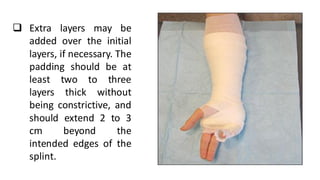
❑ Extra layers may be
added over the initial
layers, if necessary. The
padding should be at
least two to three
layers thick without
being constrictive, and
should extend 2 to 3
cm beyond the
intended edges of the
splint.
❑ Extra padding is placed at each end of the intended
splint border, between digits, and over areas of
bony prominence. Prominences at highest risk are
the ulnar styloid, heel, olecranon, and malleoli. If
significant swelling is anticipated, more padding
may be used; however, care must be taken not to
compromise the support provided by the splint by
using too many layers. Both too much and too little
padding are associated with potential
complications and poor fit of the splint or cast.
❑ Joints should be placed in their proper position of function
before, during, and after padding is applied to avoid areas
of excess wrinkling and subsequent pressure. In general,
the wrist is placed in slight extension and ulnar deviation,
and the ankle is placed at 90 degrees of flexion.
❑ Padding comes in several widths. In general, padding 2
inches wide is used for the hands, 2 to 4 inches for upper
extremities, 3 inches for feet, and 4 to 6 inches for lower
extremities.
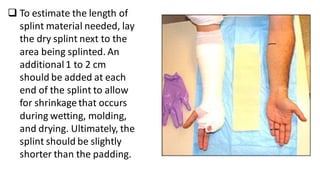
❑ To estimate the length of
splint material needed, lay
the dry splint next to the
area being splinted. An
additional1 to 2 cm
should be added at each
end of the splint to allow
for shrinkage that occurs
during wetting, molding,
and drying. Ultimately, the
splint should be slightly
shorter than the padding.
❑ If using plaster, measure and layer the appropriate number of
sheets for the desired splint. If using a roll of fiberglass, unroll the
material to the appropriate length to create the first layer. When
the splint edge is reached, the next layer should be folded back
on itself to create the subsequent layer. This process should be
repeated until a splint with the appropriate number of layers has
been created. The thickness of the splint depends on the
patient's size, the extremity involved, and the desired strength of
the final product. Use of more sheets provides more strength, but
the splint will weigh more, produce more heat, and be bulkier. In
general, the minimum number of layers necessary to achieve
adequate strength should be used.
❑ Dry, layered splint material should be submerged in water until
bubbling from the materials stops. The material is removed and
excess water squeezed out. Fiberglass will feel damp; plaster will
have a wet, sloppy consistency. The material is then placed on a
hard surface and smoothed to remove any wrinkles and to
ensure even wetness of all layers. With the extremity still in its
position of function, the wet material is placed over the padding
and molded to the contours of the extremity using only the palm
of the hand to avoid pressure points produced by the fingers.
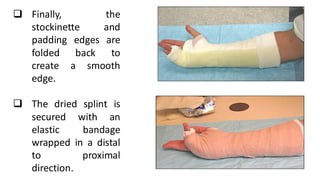
❑ Finally, the
stockinette and
padding edges are
folded back to
create a smooth
edge.
❑ The dried splint is
secured with an
elastic bandage
wrapped in a distal
to proximal
direction.

7. Cast&splint application procedure.pdf

  • 1.
    Presented by; Ben Ka’K PRNCPL.Ortho N.DIP, Ortho Techno, KMTC Nbi. HND Med Edu, KMTC Nbi BSc Med Edu, MMU CASTS/SPLINTS GENERAL APPLICATION PROCEDURES
  • 2.
    Splint/Cast General ApplicationProcedures ❑ Carefully inspect the involved extremity and document skin lesions, soft-tissue injuries, and neurovascular status before splint or cast application. ❑ Following immobilization, neurovascular status should be rechecked and documented.
  • 3.
    ❑ The patient'sclothing should also be covered with sheets to protect it and the surrounding area from being soiled by water and plaster or fiberglass. ❑ To prepare the injured extremity for splinting/casting, stockinette is measured and applied to cover the area and extend about 10 cm beyond each end of the intended splint sit
  • 4.
    ❑ Later, oncethe padding and splint material have been applied, the excess stockinette is folded back over the edges of the splint to form a smooth, padded edge. ❑ Care should be taken to ensure that the stockinette is not too tight, and that wrinkling over flexion points and bony prominences is minimized by smoothing or trimming the stockinette.
  • 5.
    ❑ Generally, astockinette 2 to 3 inches wide is used for the upper extremities and 4 inches wide for the lower extremities. ❑ Next, layers of padding are placed over the stockinette to prevent maceration of the underlying skin and to accommodate for swelling. Padding is wrapped circumferentially around the extremity, rolling the material from one end of the extremity to the other, each new layer overlapping the previous layer by 50 percent. This technique will automatically provide two layers of padding.
  • 6.
    ❑ Extra layersmay be added over the initial layers, if necessary. The padding should be at least two to three layers thick without being constrictive, and should extend 2 to 3 cm beyond the intended edges of the splint.
  • 7.
    ❑ Extra paddingis placed at each end of the intended splint border, between digits, and over areas of bony prominence. Prominences at highest risk are the ulnar styloid, heel, olecranon, and malleoli. If significant swelling is anticipated, more padding may be used; however, care must be taken not to compromise the support provided by the splint by using too many layers. Both too much and too little padding are associated with potential complications and poor fit of the splint or cast.
  • 8.
    ❑ Joints shouldbe placed in their proper position of function before, during, and after padding is applied to avoid areas of excess wrinkling and subsequent pressure. In general, the wrist is placed in slight extension and ulnar deviation, and the ankle is placed at 90 degrees of flexion. ❑ Padding comes in several widths. In general, padding 2 inches wide is used for the hands, 2 to 4 inches for upper extremities, 3 inches for feet, and 4 to 6 inches for lower extremities.
  • 9.
    ❑ To estimatethe length of splint material needed, lay the dry splint next to the area being splinted. An additional1 to 2 cm should be added at each end of the splint to allow for shrinkage that occurs during wetting, molding, and drying. Ultimately, the splint should be slightly shorter than the padding.
  • 10.
    ❑ If usingplaster, measure and layer the appropriate number of sheets for the desired splint. If using a roll of fiberglass, unroll the material to the appropriate length to create the first layer. When the splint edge is reached, the next layer should be folded back on itself to create the subsequent layer. This process should be repeated until a splint with the appropriate number of layers has been created. The thickness of the splint depends on the patient's size, the extremity involved, and the desired strength of the final product. Use of more sheets provides more strength, but the splint will weigh more, produce more heat, and be bulkier. In general, the minimum number of layers necessary to achieve adequate strength should be used.
  • 11.
    ❑ Dry, layeredsplint material should be submerged in water until bubbling from the materials stops. The material is removed and excess water squeezed out. Fiberglass will feel damp; plaster will have a wet, sloppy consistency. The material is then placed on a hard surface and smoothed to remove any wrinkles and to ensure even wetness of all layers. With the extremity still in its position of function, the wet material is placed over the padding and molded to the contours of the extremity using only the palm of the hand to avoid pressure points produced by the fingers.
  • 12.
    ❑ Finally, the stockinetteand padding edges are folded back to create a smooth edge. ❑ The dried splint is secured with an elastic bandage wrapped in a distal to proximal direction.