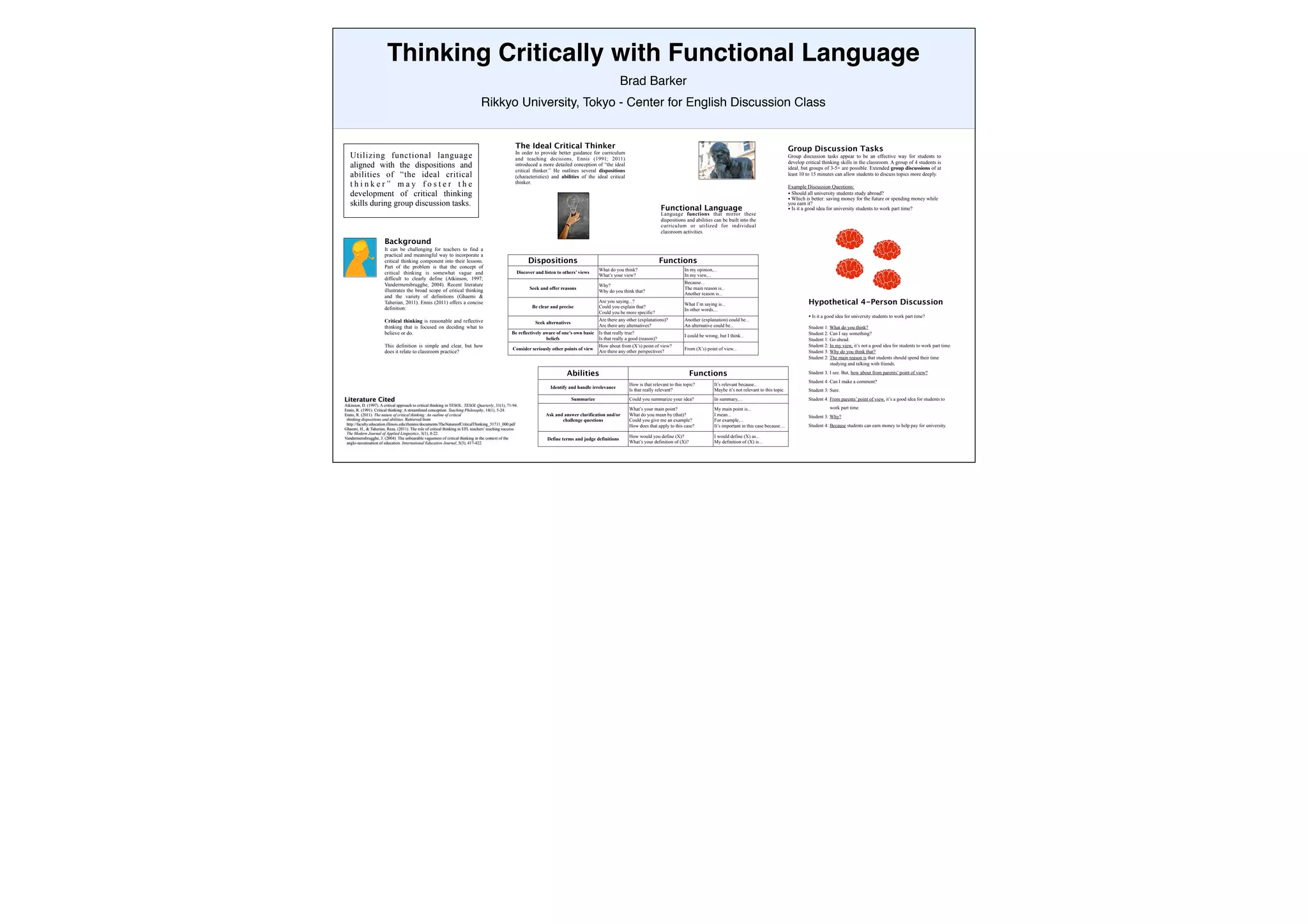
This document discusses incorporating critical thinking into classroom lessons. It defines critical thinking as reasonable and reflective thinking focused on deciding what to believe or do. To provide better guidance, Ennis introduced the concept of the "ideal critical thinker" with certain dispositions and abilities. These include seeking and offering reasons, considering different perspectives, and being precise. The document suggests using language mirroring these traits during group discussions to foster critical thinking skills. An example discussion prompts students to debate if university students should work part-time while using functional language like "why", "what do you think", and "from this perspective".

![Reciprocal teaching look fors correct[1]](https://cdn.slidesharecdn.com/ss_thumbnails/reciprocalteachinglook-forscorrect1-150306223916-conversion-gate01-thumbnail.jpg?width=640&height=640&fit=bounds)


