Attention
Presentation: Thinking about Meaning
Section 1 Theory
Section 2 Practice
Presentation that accompanies the thinking about meaning word document for PWPs
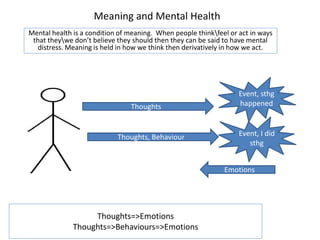
Meaning and Mental Health
Mental health is a condition of meaning. When people thinkfeel or act in ways
that theywe don’t believe they should then they can be said to have mental
distress. Meaning is held in how we think then derivatively in how we act.
Event, sthg
happened
Thoughts, Behaviour
Thoughts=>Emotions
Thoughts=>Behaviours=>Emotions
Thoughts
Emotions
Event, I did
sthg
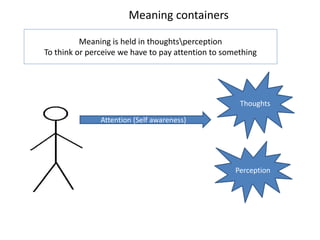
Meaning containers
Meaning is held in thoughtsperception
To think or perceive we have to pay attention to something
Perception
Thoughts
Attention (Self awareness)
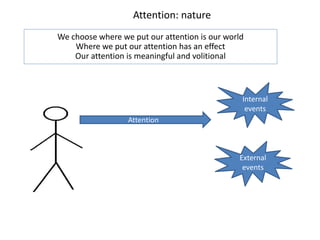
Attention: nature
We choose where we put our attention is our world
Where we put our attention has an effect
Our attention is meaningful and volitional
External
events
Internal
events
Attention
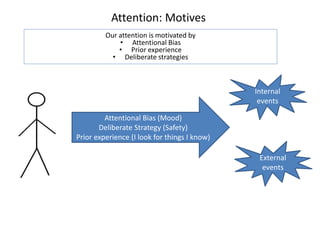
Attention: Motives
Our attention is motivated by
• Attentional Bias
• Prior experience
• Deliberate strategies
External
events
Internal
events
Attentional Bias (Mood)
Deliberate Strategy (Safety)
Prior experience (I look for things I know)
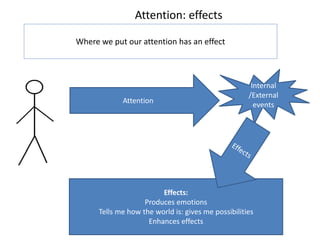
Attention: effects
Where we put our attention has an effect
Internal
/External
events
Attention
Effects:
Produces emotions
Tells me how the world is: gives me possibilities
Enhances effects
Thoughts : construction
What are thoughts made of?
Images
Language
Language
Used to
speak
Images
Used to
act/react
Speak/Listen ActsReacts
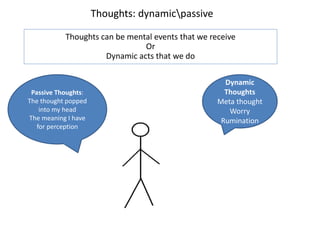
Thoughts: dynamicpassive
Thoughts can be mental events that we receive
Or
Dynamic acts that we do
Dynamic
Thoughts
Meta thought
Worry
Rumination
Passive Thoughts:
The thought popped
into my head
The meaning I have
for perception
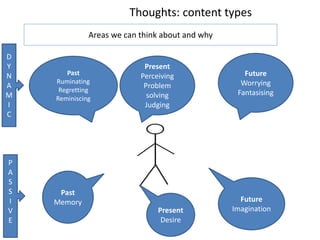
Thoughts: content types
Areas we can think about and why
Present
Perceiving
Problem
solving
Judging
Past
Ruminating
Regretting
Reminiscing
Future
Worrying
Fantasising
D
Y
N
A
M
I
C
P
A
S
S
I
V
E
Past
Memory Future
ImaginationPresent
Desire
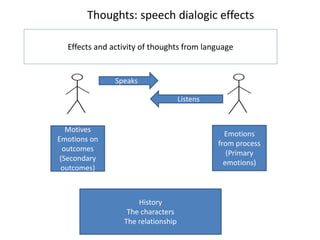
Thoughts: speech dialogic effects
Effects and activity of thoughts from language
Motives
Emotions on
outcomes
(Secondary
outcomes)
Emotions
from process
(Primary
emotions)
History
The characters
The relationship
Speaks
Listens
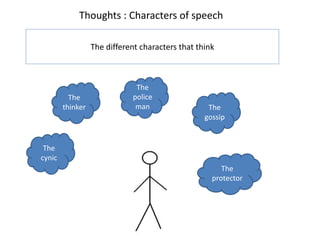
Thoughts : Characters of speech
The different characters that think
The
cynic
The
thinker
The
police
man The
gossip
The
protector
Clinical Utility
1. Meaning is core to mental health
2. Meaning is held in thoughtsperception
3. Thoughts can be dynamicpassive
4. Thoughts are communication
5. Communication can be between different characters
6. Attentional focus
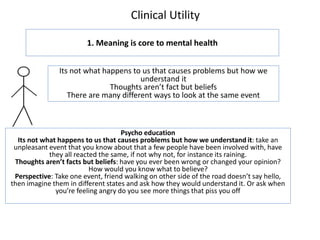
Clinical Utility
1. Meaning is core to mental health
Its not what happens to us that causes problems but how we
understand it
Thoughts aren’t fact but beliefs
There are many different ways to look at the same event
Psycho education
Its not what happens to us that causes problems but how we understand it: take an
unpleasant event that you know about that a few people have been involved with, have
they all reacted the same, if not why not, for instance its raining.
Thoughts aren’t facts but beliefs: have you ever been wrong or changed your opinion?
How would you know what to believe?
Perspective: Take one event, friend walking on other side of the road doesn’t say hello,
then imagine them in different states and ask how they would understand it. Or ask when
you’re feeling angry do you see more things that piss you off
Clinical Utility
2. Meaning is held in thoughtsperception
Scenario: Client feels emotion and you ask what were they thinking
to help us understand their emotion, they say I don’t know.
Ask what the situation was like for them, if you can get them to
describe their experience, i.e. what they perceived, you will find out
what they were thinking.
Clinical Utility
3. Thoughts can be dynamicpassive
If a thought is dynamic, i.e. worry or rumination, then we can look at its effect
and ask if we want it.
If a thought is passive then mental distress can be caused if we think it is
dynamic, i.e. we chose it. For instance OCD
If you try to suppress passive thoughts, it creates more of them!
Clinical Utility
4. Thoughts are communication
Understand what the effects of types of thought are
from both sides of the conversation
Rumination
Self criticism
Understand the origin of this type of conversation
Dad used to talk to me this way. Doing this, gives you the
idea that things could be different, you didn’t like it then
so why do it now, and you can then also ask about other
more benign influences
Clinical Utility
5. Communication can be between different characters
Understand what all of the different experiences that contribute to a character=> this leads to being able to challenge beliefs, firstly as
when you see how something is created, you can see how it can be created differently and secondly as it reminds you of different ways you
could have acted in the original scene, so therefore different ways you can react now
Get to know the beliefsbehavioursemotions of a character so you can see when they are active
Doing this gives you a distance from yourself, and doing this enables you to choose differently. If you’re not aware of something you cant
change it so the first stage to change is awareness. What seems helpful is to also not see it as an essential part of me, as the former doesn't’
take responsibility, which again is the precursor to change.
When you start recognizing the characters, you can see what the relationships are like
As you recognise a character you can see how much effect they have in your life
Start to see the characters with lesser voices
This gives clients the option to build on marginalised parts of themselves, which in so doing, can reduce some of the unhelpful parts of
themselves
Clinical Utility
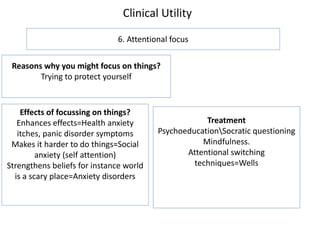
6. Attentional focus
Reasons why you might focus on things?
Trying to protect yourself
Effects of focussing on things?
Enhances effects=Health anxiety
itches, panic disorder symptoms
Makes it harder to do things=Social
anxiety (self attention)
Strengthens beliefs for instance world
is a scary place=Anxiety disorders
Treatment
PsychoeducationSocratic questioning
Mindfulness.
Attentional switching
techniques=Wells

Thinking About Meaning

  • 1.
    Attention Presentation: Thinking aboutMeaning Section 1 Theory Section 2 Practice Presentation that accompanies the thinking about meaning word document for PWPs
  • 2.
    Meaning and MentalHealth Mental health is a condition of meaning. When people thinkfeel or act in ways that theywe don’t believe they should then they can be said to have mental distress. Meaning is held in how we think then derivatively in how we act. Event, sthg happened Thoughts, Behaviour Thoughts=>Emotions Thoughts=>Behaviours=>Emotions Thoughts Emotions Event, I did sthg
  • 3.
    Meaning containers Meaning isheld in thoughtsperception To think or perceive we have to pay attention to something Perception Thoughts Attention (Self awareness)
  • 4.
    Attention: nature We choosewhere we put our attention is our world Where we put our attention has an effect Our attention is meaningful and volitional External events Internal events Attention
  • 5.
    Attention: Motives Our attentionis motivated by • Attentional Bias • Prior experience • Deliberate strategies External events Internal events Attentional Bias (Mood) Deliberate Strategy (Safety) Prior experience (I look for things I know)
  • 6.
    Attention: effects Where weput our attention has an effect Internal /External events Attention Effects: Produces emotions Tells me how the world is: gives me possibilities Enhances effects
  • 7.
    Thoughts : construction Whatare thoughts made of? Images Language Language Used to speak Images Used to act/react Speak/Listen ActsReacts
  • 8.
    Thoughts: dynamicpassive Thoughts canbe mental events that we receive Or Dynamic acts that we do Dynamic Thoughts Meta thought Worry Rumination Passive Thoughts: The thought popped into my head The meaning I have for perception
  • 9.
    Thoughts: content types Areaswe can think about and why Present Perceiving Problem solving Judging Past Ruminating Regretting Reminiscing Future Worrying Fantasising D Y N A M I C P A S S I V E Past Memory Future ImaginationPresent Desire
  • 10.
    Thoughts: speech dialogiceffects Effects and activity of thoughts from language Motives Emotions on outcomes (Secondary outcomes) Emotions from process (Primary emotions) History The characters The relationship Speaks Listens
  • 11.
    Thoughts : Charactersof speech The different characters that think The cynic The thinker The police man The gossip The protector
  • 12.
    Clinical Utility 1. Meaningis core to mental health 2. Meaning is held in thoughtsperception 3. Thoughts can be dynamicpassive 4. Thoughts are communication 5. Communication can be between different characters 6. Attentional focus
  • 13.
    Clinical Utility 1. Meaningis core to mental health Its not what happens to us that causes problems but how we understand it Thoughts aren’t fact but beliefs There are many different ways to look at the same event Psycho education Its not what happens to us that causes problems but how we understand it: take an unpleasant event that you know about that a few people have been involved with, have they all reacted the same, if not why not, for instance its raining. Thoughts aren’t facts but beliefs: have you ever been wrong or changed your opinion? How would you know what to believe? Perspective: Take one event, friend walking on other side of the road doesn’t say hello, then imagine them in different states and ask how they would understand it. Or ask when you’re feeling angry do you see more things that piss you off
  • 14.
    Clinical Utility 2. Meaningis held in thoughtsperception Scenario: Client feels emotion and you ask what were they thinking to help us understand their emotion, they say I don’t know. Ask what the situation was like for them, if you can get them to describe their experience, i.e. what they perceived, you will find out what they were thinking.
  • 15.
    Clinical Utility 3. Thoughtscan be dynamicpassive If a thought is dynamic, i.e. worry or rumination, then we can look at its effect and ask if we want it. If a thought is passive then mental distress can be caused if we think it is dynamic, i.e. we chose it. For instance OCD If you try to suppress passive thoughts, it creates more of them!
  • 16.
    Clinical Utility 4. Thoughtsare communication Understand what the effects of types of thought are from both sides of the conversation Rumination Self criticism Understand the origin of this type of conversation Dad used to talk to me this way. Doing this, gives you the idea that things could be different, you didn’t like it then so why do it now, and you can then also ask about other more benign influences
  • 17.
    Clinical Utility 5. Communicationcan be between different characters Understand what all of the different experiences that contribute to a character=> this leads to being able to challenge beliefs, firstly as when you see how something is created, you can see how it can be created differently and secondly as it reminds you of different ways you could have acted in the original scene, so therefore different ways you can react now Get to know the beliefsbehavioursemotions of a character so you can see when they are active Doing this gives you a distance from yourself, and doing this enables you to choose differently. If you’re not aware of something you cant change it so the first stage to change is awareness. What seems helpful is to also not see it as an essential part of me, as the former doesn't’ take responsibility, which again is the precursor to change. When you start recognizing the characters, you can see what the relationships are like As you recognise a character you can see how much effect they have in your life Start to see the characters with lesser voices This gives clients the option to build on marginalised parts of themselves, which in so doing, can reduce some of the unhelpful parts of themselves
  • 18.
    Clinical Utility 6. Attentionalfocus Reasons why you might focus on things? Trying to protect yourself Effects of focussing on things? Enhances effects=Health anxiety itches, panic disorder symptoms Makes it harder to do things=Social anxiety (self attention) Strengthens beliefs for instance world is a scary place=Anxiety disorders Treatment PsychoeducationSocratic questioning Mindfulness. Attentional switching techniques=Wells