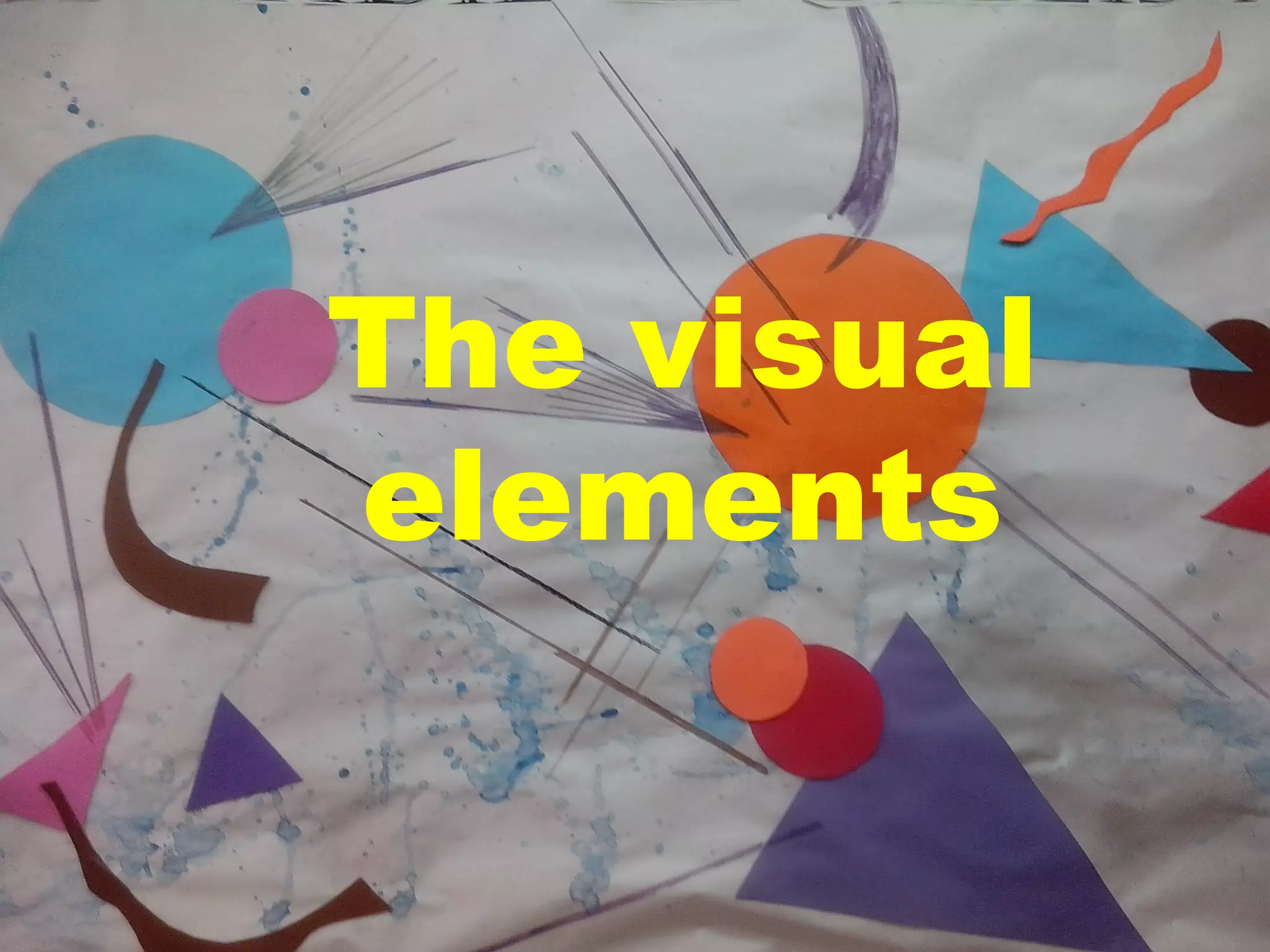
The visual elements
The visual
elements
• …….READ ON TO SEE AND
DISCOVER MORE AROUND
TEXTURES IN THE NEXT POWER
POINT…….
TEXTURES
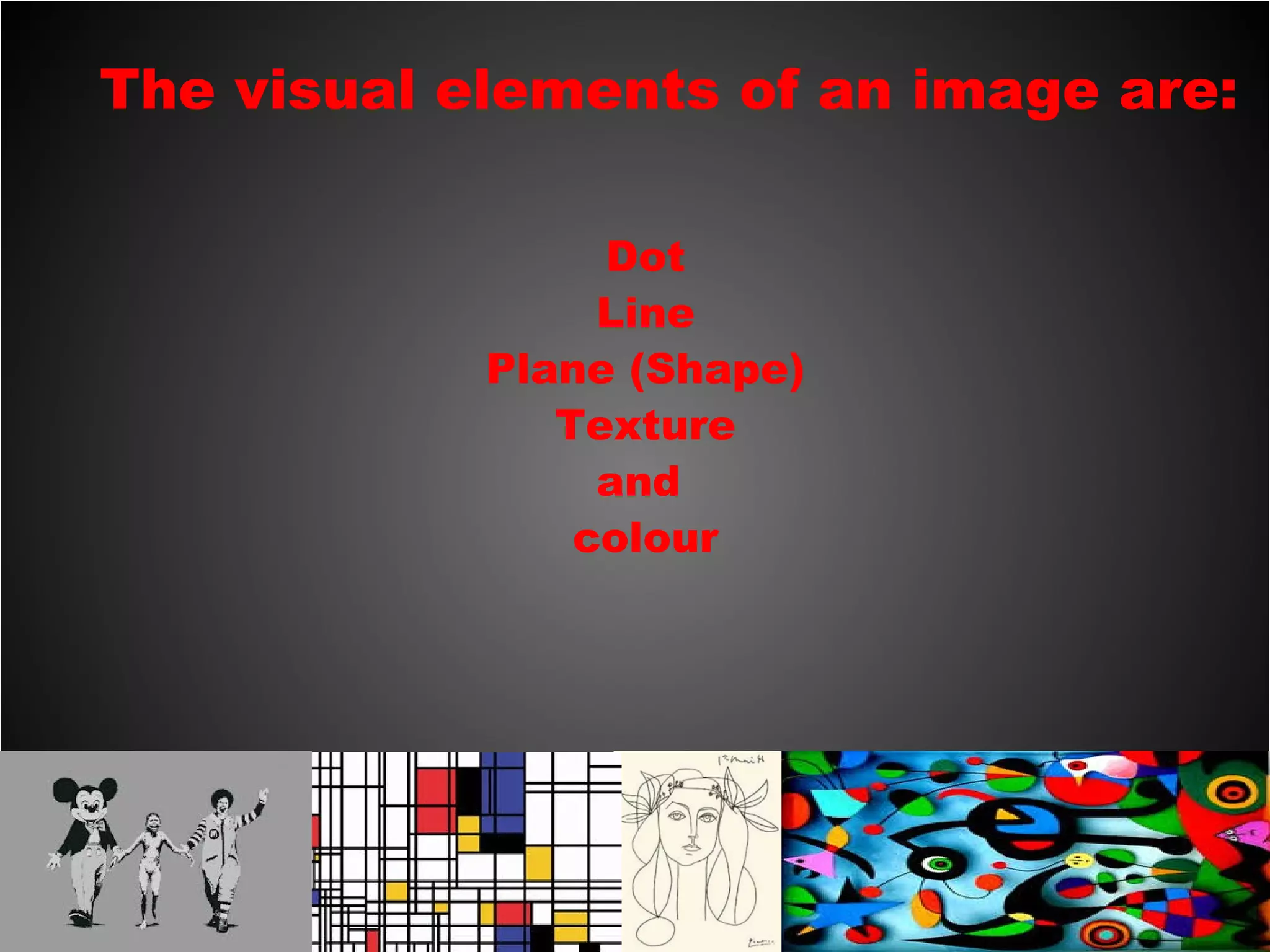
The visual elements of an image are:
Dot
Line
Plane (Shape)
Texture
and
colour
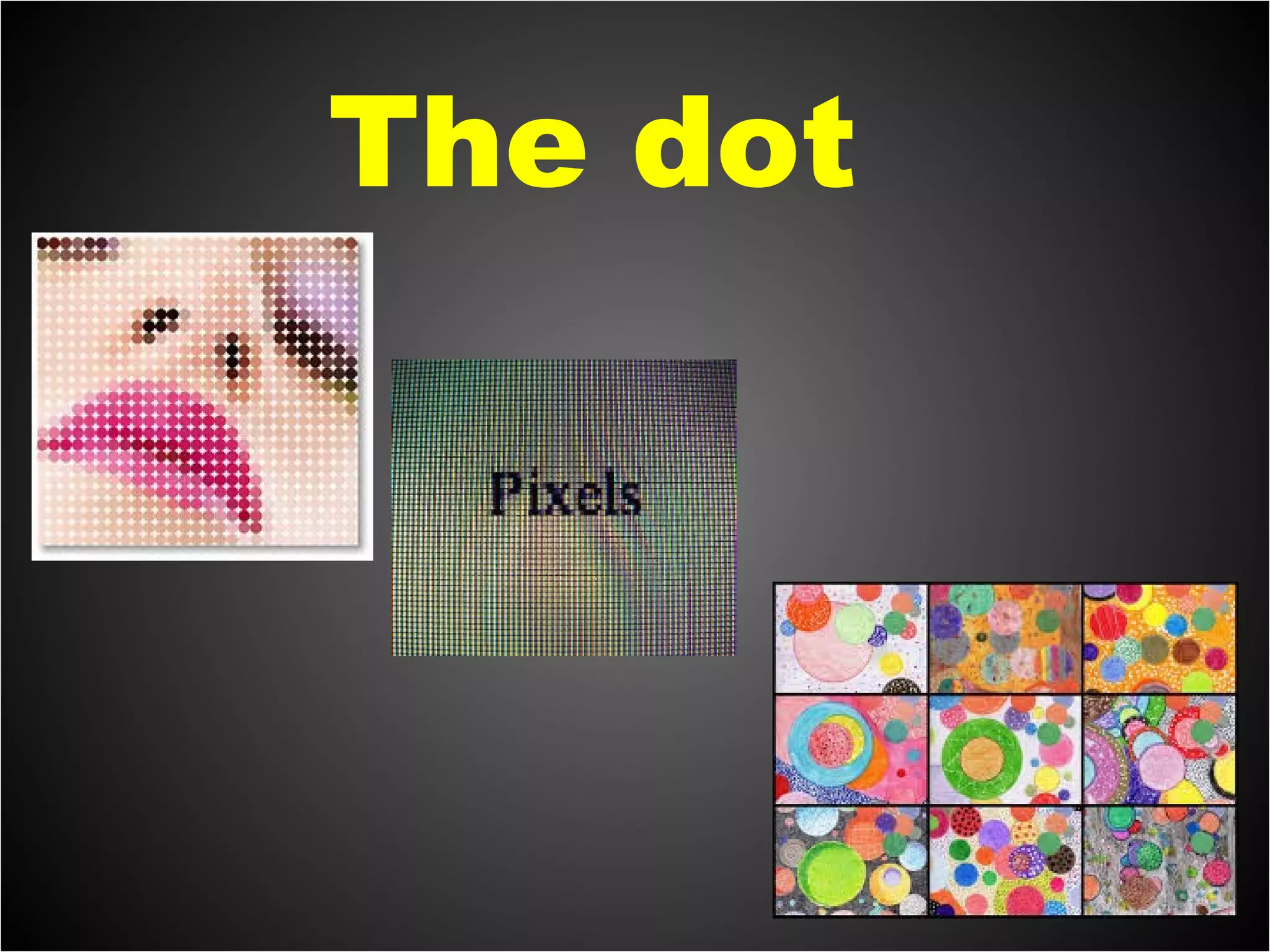
The dot
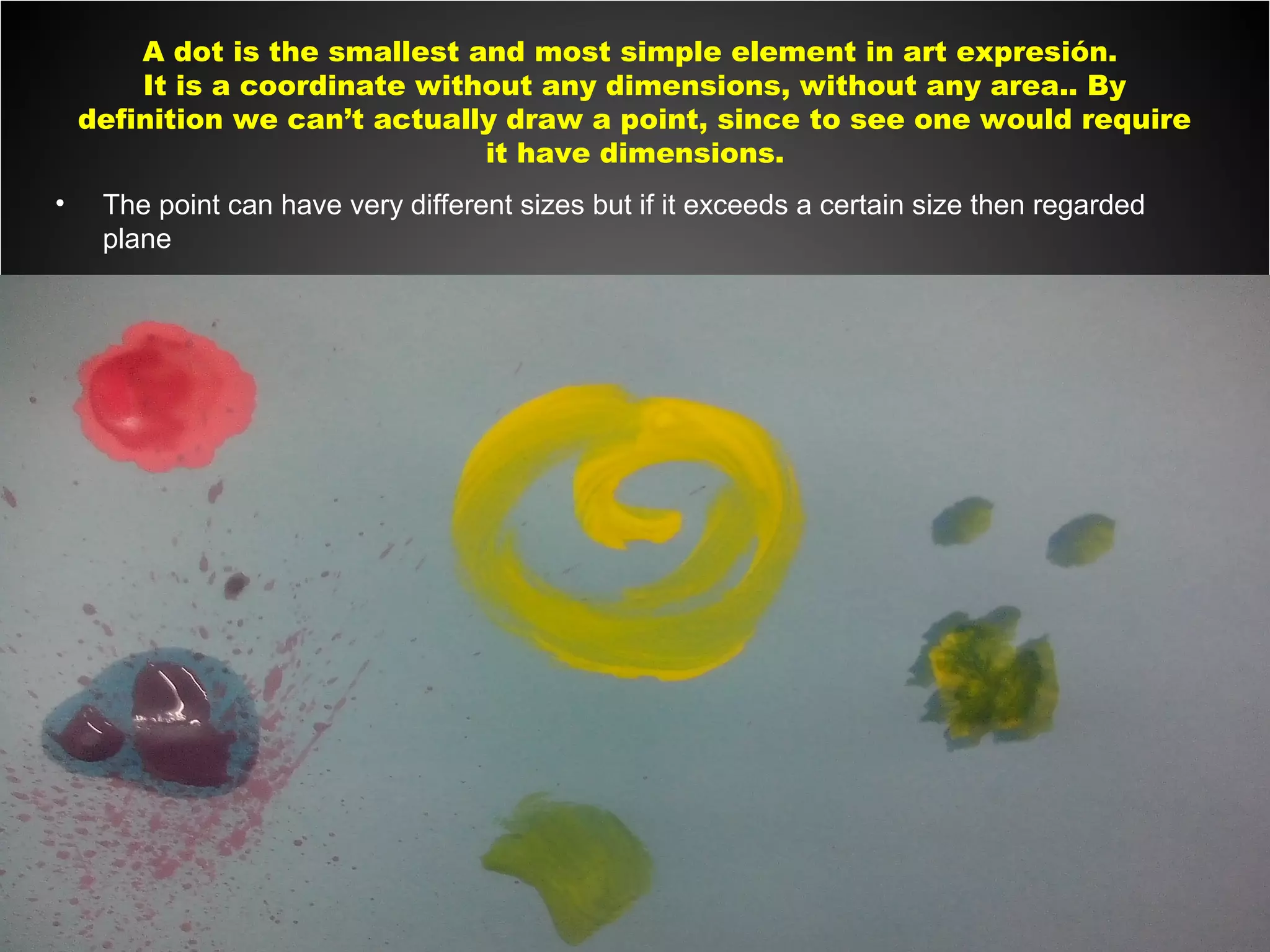
A dot is the smallest and most simple element in art expresión.
It is a coordinate without any dimensions, without any area.. By
definition we can’t actually draw a point, since to see one would require
it have dimensions.
• The point can have very different sizes but if it exceeds a certain size then regarded
plane
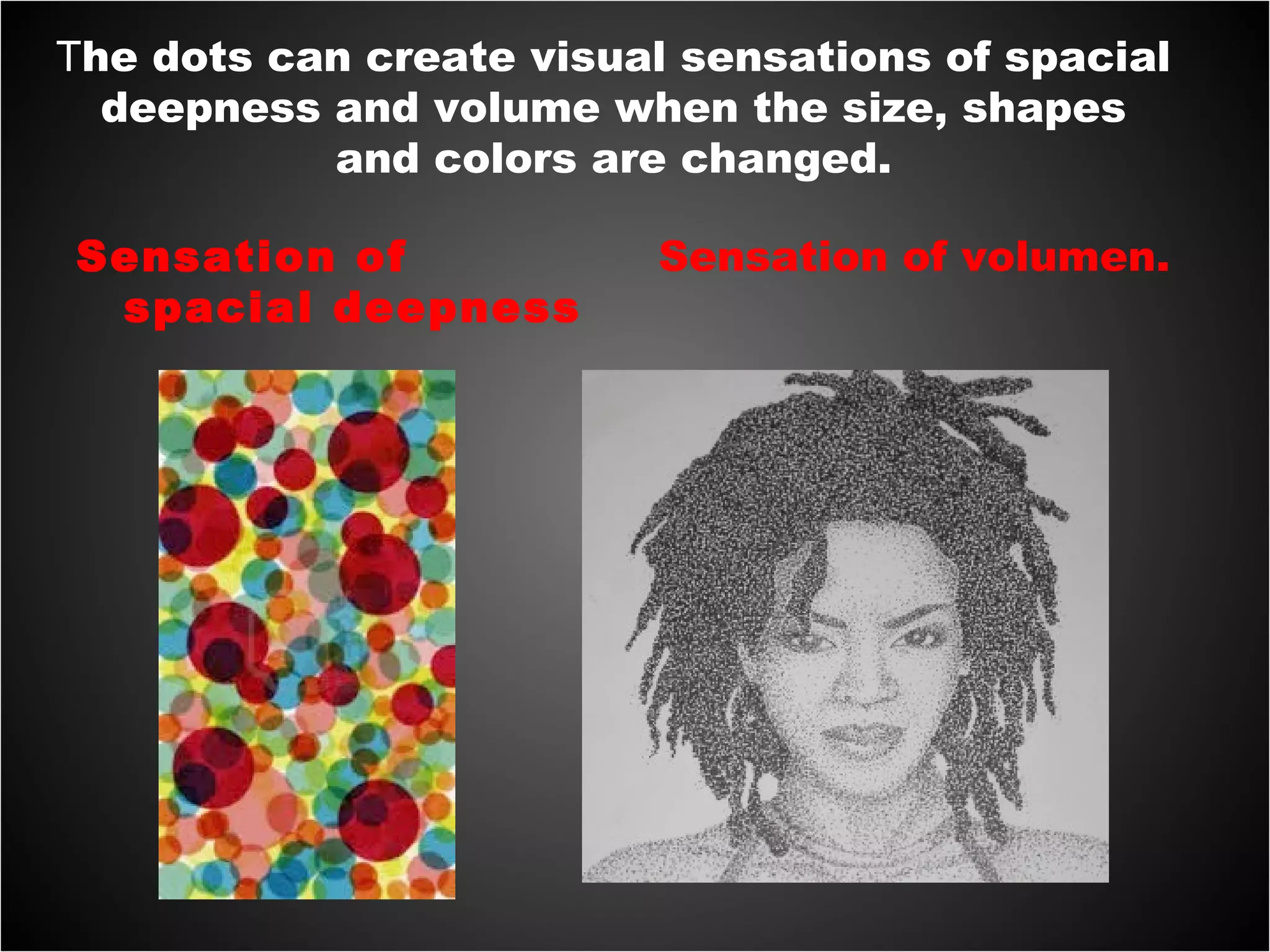
The dots can create visual sensations of spacial
deepness and volume when the size, shapes
and colors are changed.
Sensation of
spacial deepness
Sensation of volumen.
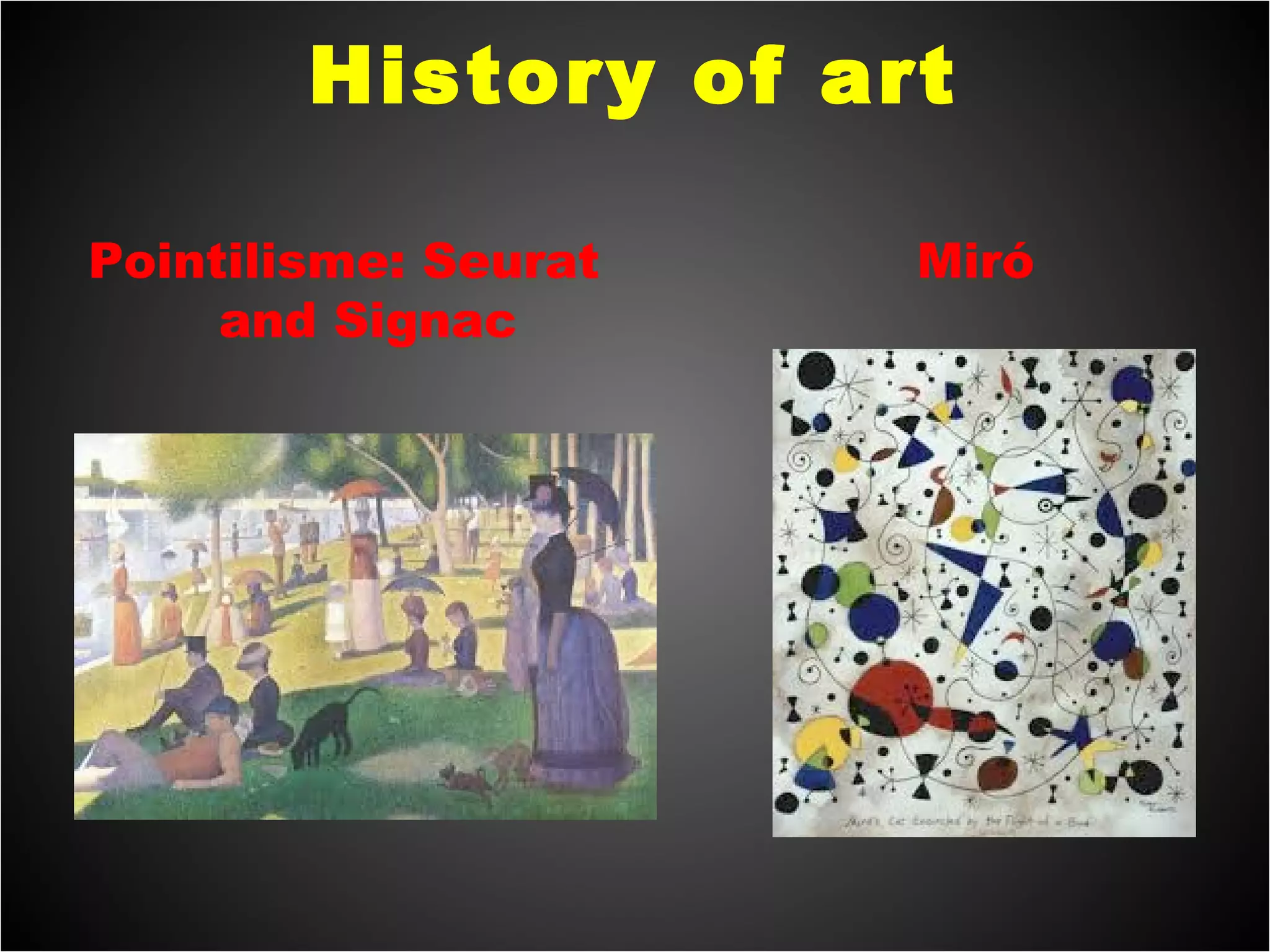
History of art
Pointilisme: Seurat
and Signac
Miró
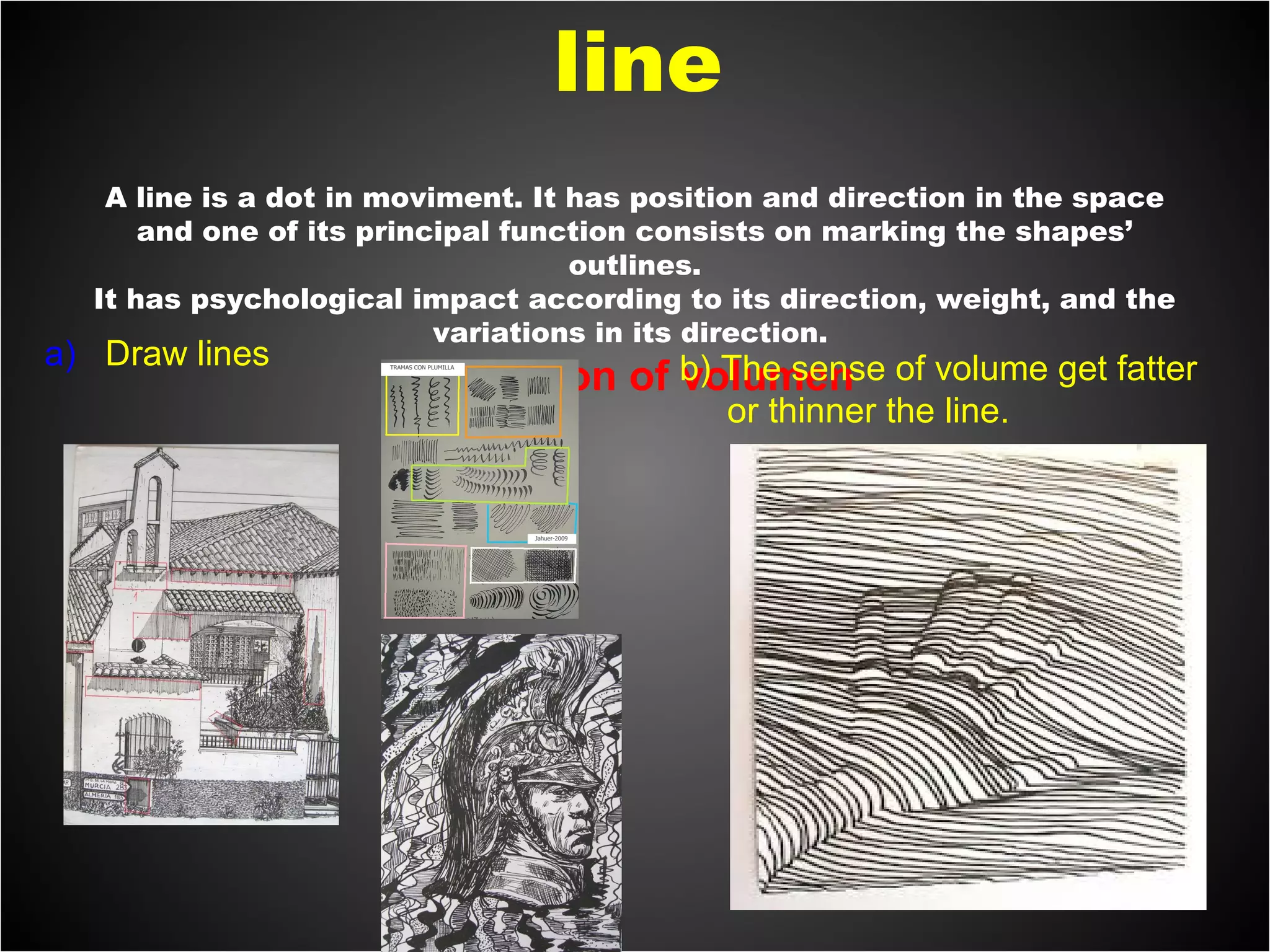
A line is a dot in moviment. It has position and direction in the space
and one of its principal function consists on marking the shapes’
outlines.
It has psychological impact according to its direction, weight, and the
variations in its direction.
Sensation of volumen
a) Draw lines b) The sense of volume get fatter
or thinner the line.
line
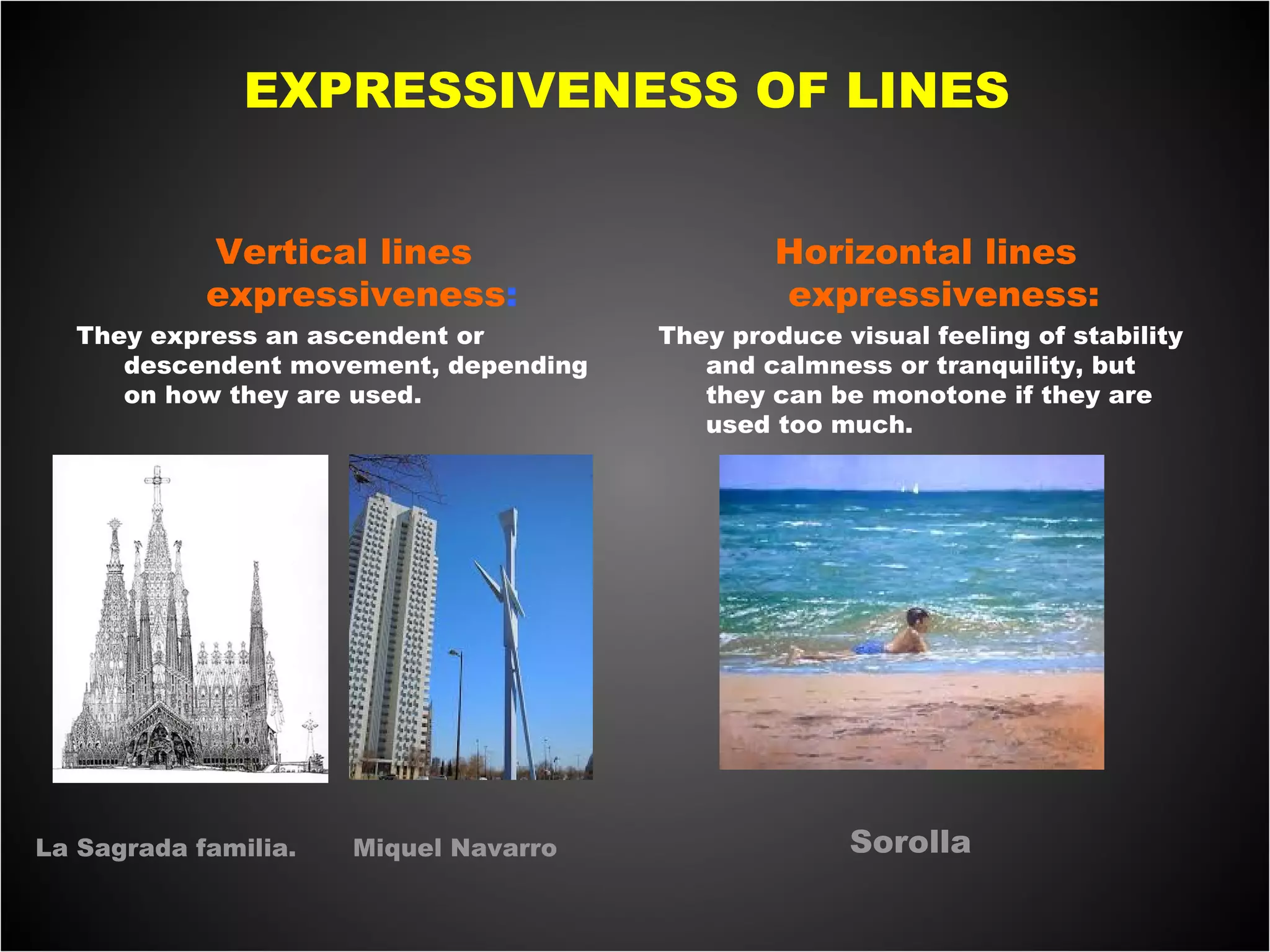
EXPRESSIVENESS OF LINES
Vertical lines
expressiveness:
They express an ascendent or
descendent movement, depending
on how they are used.
 
Horizontal lines
expressiveness:
They produce visual feeling of stability
and calmness or tranquility, but
they can be monotone if they are
used too much.
 
 
La Sagrada familia. Miquel Navarro Sorolla
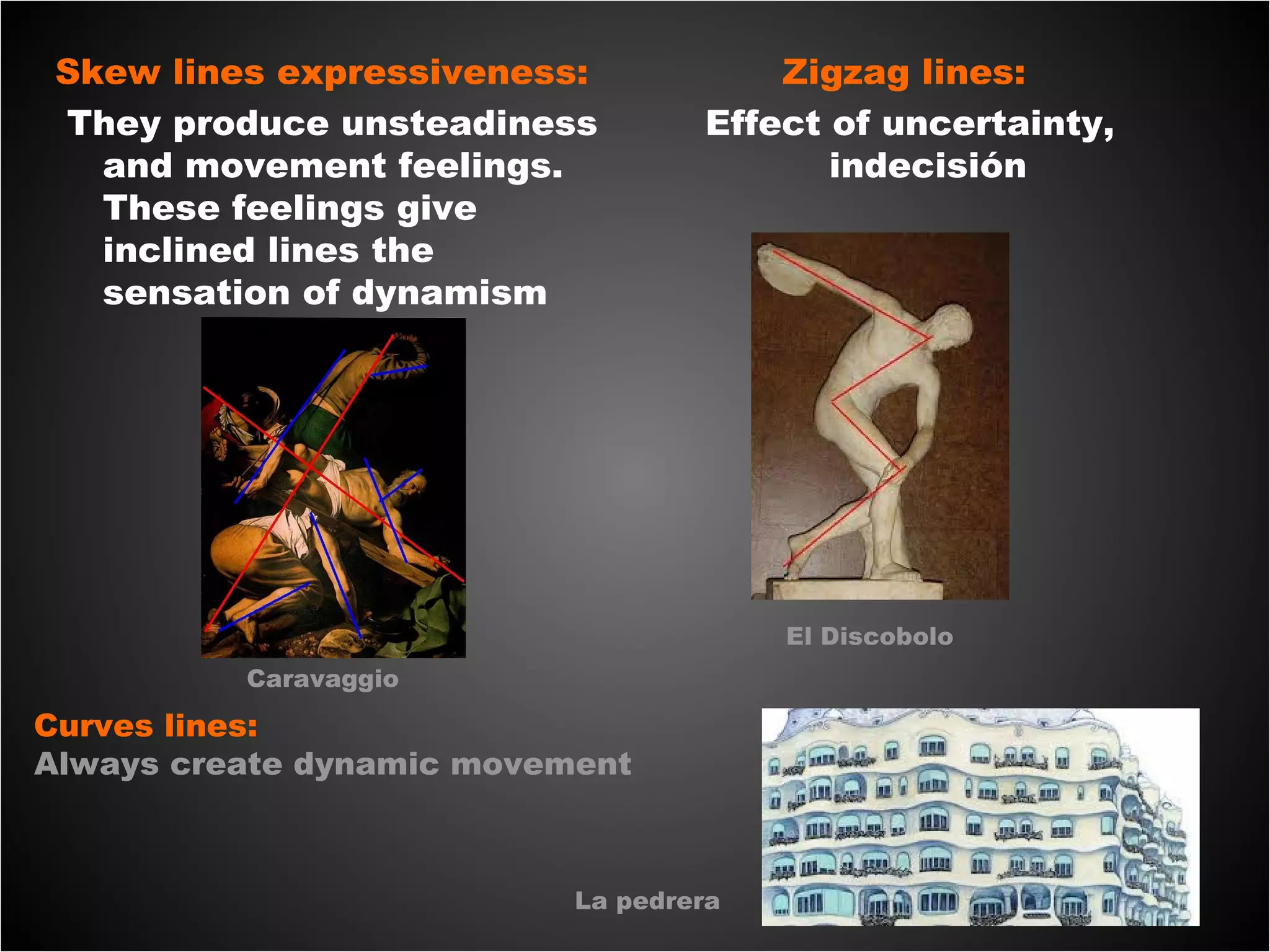
Skew lines expressiveness:
They produce unsteadiness
and movement feelings.
These feelings give
inclined lines the
sensation of dynamism
Zigzag lines:
Effect of uncertainty,
indecisión
Caravaggio
El Discobolo
Curves lines:
Always create dynamic movement
La pedrera
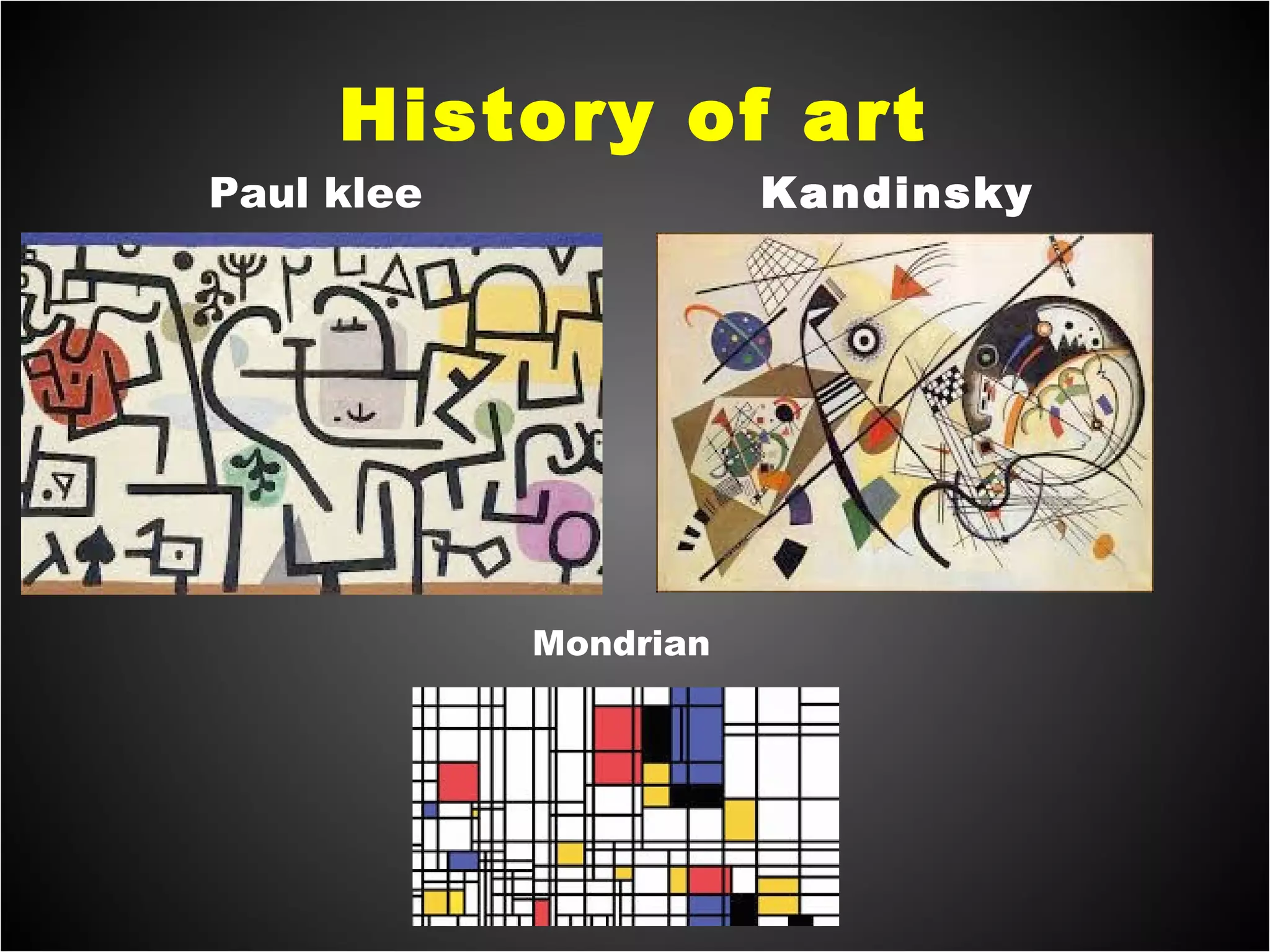
History of art
Paul klee Kandinsky
Mondrian
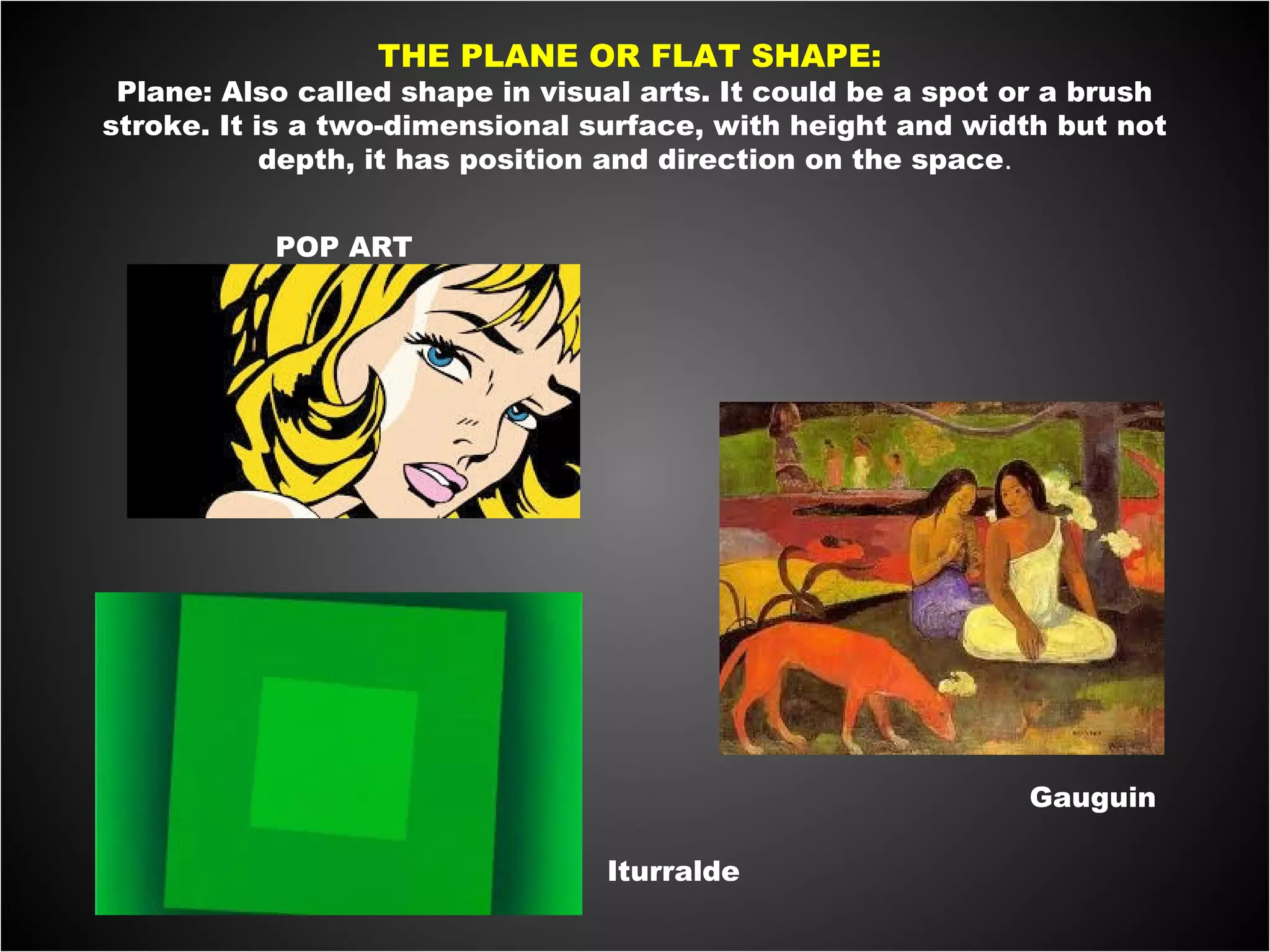
THE PLANE OR FLAT SHAPE:
Plane: Also called shape in visual arts. It could be a spot or a brush
stroke. It is a two-dimensional surface, with height and width but not
depth, it has position and direction on the space.
 
POP ART
Iturralde
Gauguin
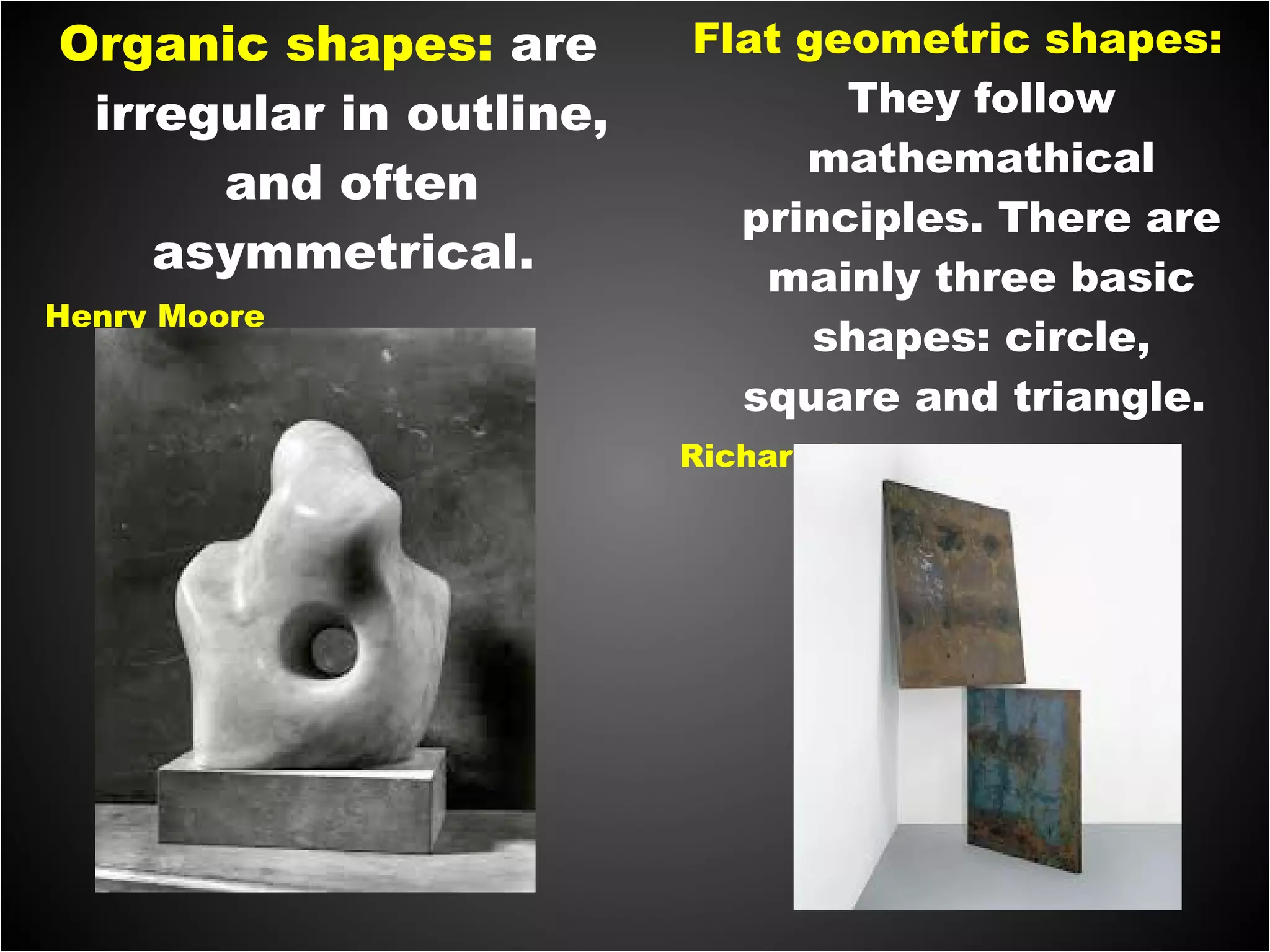
Organic shapes: are
irregular in outline,
and often
asymmetrical.
Henry Moore
Flat geometric shapes:
They follow
mathemathical
principles. There are
mainly three basic
shapes: circle,
square and triangle.
Richard Serra
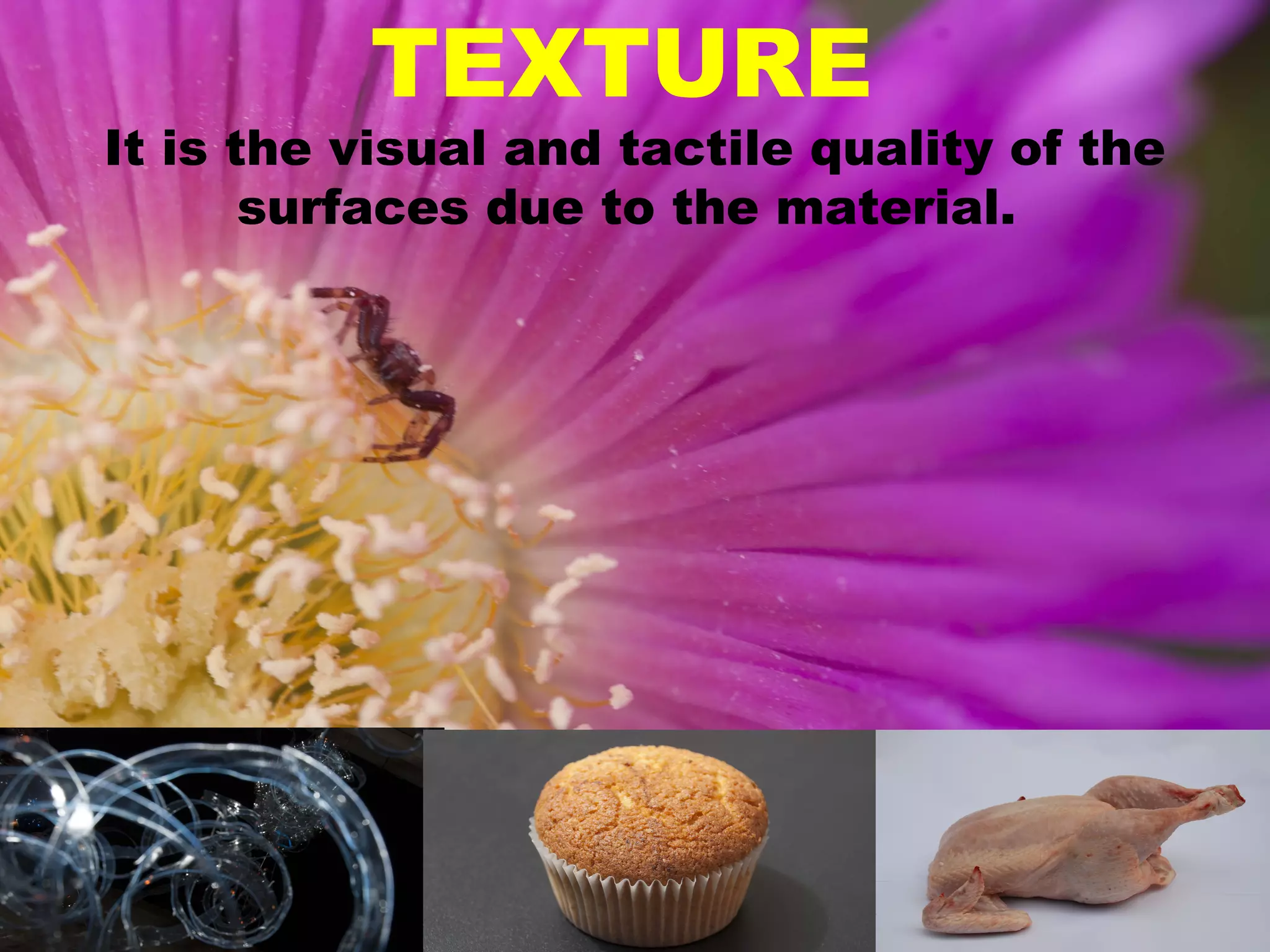
TEXTURE
It is the visual and tactile quality of the
surfaces due to the material.
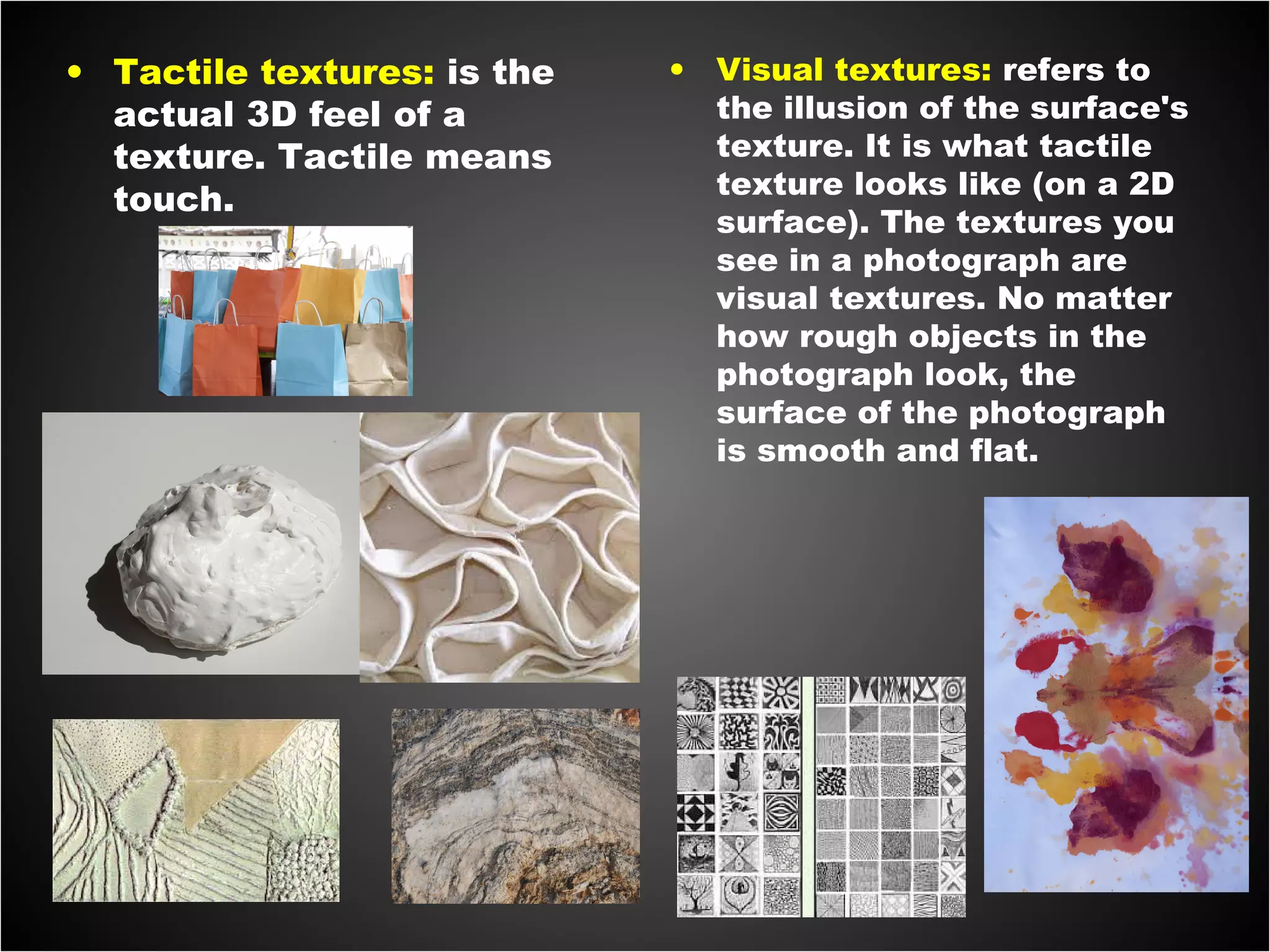
• Tactile textures: is the
actual 3D feel of a
texture. Tactile means
touch.
• Visual textures: refers to
the illusion of the surface's
texture. It is what tactile
texture looks like (on a 2D
surface). The textures you
see in a photograph are
visual textures. No matter
how rough objects in the
photograph look, the
surface of the photograph
is smooth and flat.
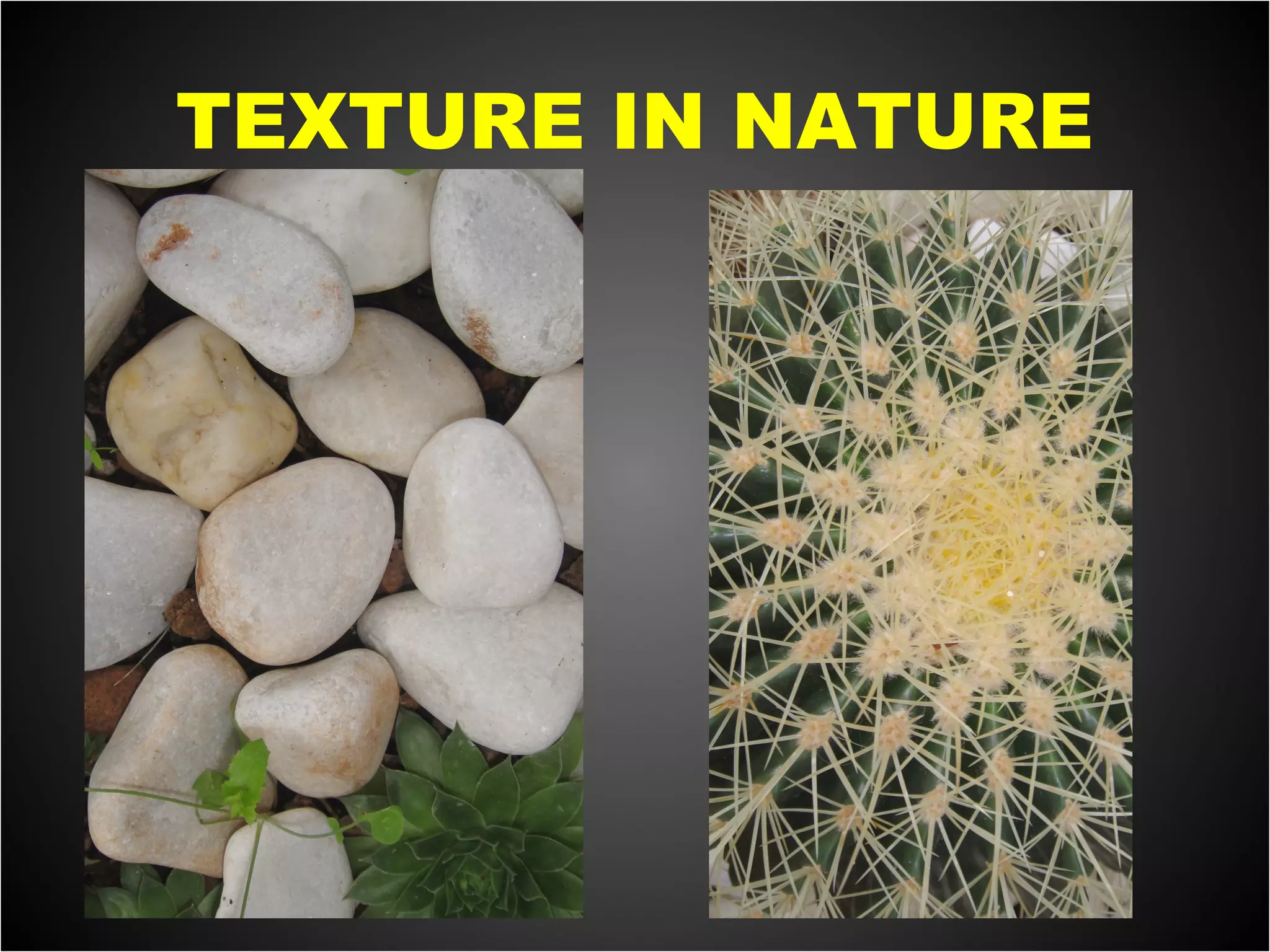
TEXTURE IN NATURE

Thevisualelementsofanimage 090414165725-phpapp01

  • 1.
    The visual elements Thevisual elements
  • 2.
    • …….READ ONTO SEE AND DISCOVER MORE AROUND TEXTURES IN THE NEXT POWER POINT……. TEXTURES
  • 3.
    The visual elementsof an image are: Dot Line Plane (Shape) Texture and colour
  • 4.
  • 5.
    A dot isthe smallest and most simple element in art expresión. It is a coordinate without any dimensions, without any area.. By definition we can’t actually draw a point, since to see one would require it have dimensions. • The point can have very different sizes but if it exceeds a certain size then regarded plane
  • 6.
    The dots cancreate visual sensations of spacial deepness and volume when the size, shapes and colors are changed. Sensation of spacial deepness Sensation of volumen.
  • 7.
    History of art Pointilisme:Seurat and Signac Miró
  • 8.
    A line isa dot in moviment. It has position and direction in the space and one of its principal function consists on marking the shapes’ outlines. It has psychological impact according to its direction, weight, and the variations in its direction. Sensation of volumen a) Draw lines b) The sense of volume get fatter or thinner the line. line
  • 9.
    EXPRESSIVENESS OF LINES Verticallines expressiveness: They express an ascendent or descendent movement, depending on how they are used.   Horizontal lines expressiveness: They produce visual feeling of stability and calmness or tranquility, but they can be monotone if they are used too much.     La Sagrada familia. Miquel Navarro Sorolla
  • 10.
    Skew lines expressiveness: Theyproduce unsteadiness and movement feelings. These feelings give inclined lines the sensation of dynamism Zigzag lines: Effect of uncertainty, indecisión Caravaggio El Discobolo Curves lines: Always create dynamic movement La pedrera
  • 11.
    History of art Paulklee Kandinsky Mondrian
  • 12.
    THE PLANE ORFLAT SHAPE: Plane: Also called shape in visual arts. It could be a spot or a brush stroke. It is a two-dimensional surface, with height and width but not depth, it has position and direction on the space.   POP ART Iturralde Gauguin
  • 13.
    Organic shapes: are irregularin outline, and often asymmetrical. Henry Moore Flat geometric shapes: They follow mathemathical principles. There are mainly three basic shapes: circle, square and triangle. Richard Serra
  • 14.
    TEXTURE It is thevisual and tactile quality of the surfaces due to the material.
  • 15.
    • Tactile textures:is the actual 3D feel of a texture. Tactile means touch. • Visual textures: refers to the illusion of the surface's texture. It is what tactile texture looks like (on a 2D surface). The textures you see in a photograph are visual textures. No matter how rough objects in the photograph look, the surface of the photograph is smooth and flat.
  • 16.