THE LINE
1.Definition
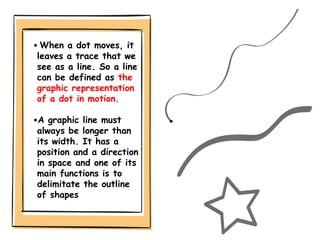
• When a dot moves, it
leaves a trace that we
see as a line. So a line
can be defined as the
graphic representation
of a dot in motion.
•A graphic line must
always be longer than
its width. It has a
position and a direction
in space and one of its
main functions is to
delimitate the outline
of shapes
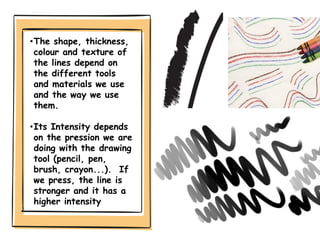
•The shape, thickness,
colour and texture of
the lines depend on
the different tools
and materials we use
and the way we use
them.
•Its Intensity depends
on the pression we are
doing with the drawing
tool (pencil, pen,
brush, crayon...). If
we press, the line is
stronger and it has a
higher intensity
2.Types of
lines
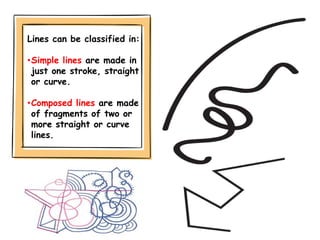
Lines can be classified in:
•Simple lines are made in
just one stroke, straight
or curve.
•Composed lines are made
of fragments of two or
more straight or curve
lines.
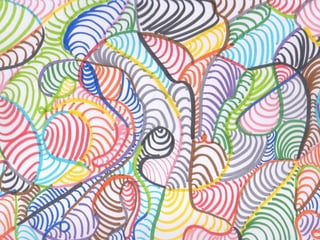
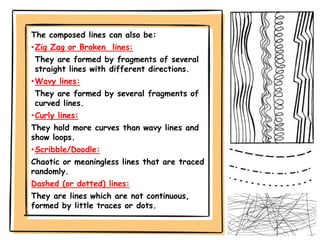
The composed lines can also be:
•Zig Zag or Broken lines:
They are formed by fragments of several
straight lines with different directions.
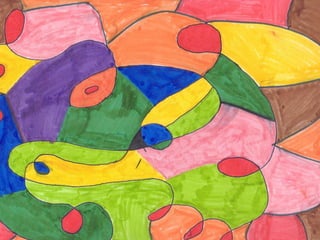
•Wavy lines:
They are formed by several fragments of
curved lines.
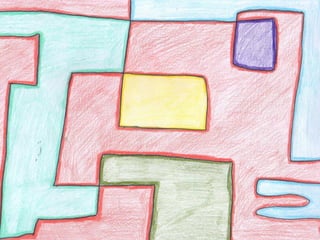
•Curly lines:
They hold more curves than wavy lines and
show loops.
•Scribble/Doodle:
Chaotic or meaningless lines that are traced
randomly.
Dashed (or dotted) lines:
They are lines which are not continuous,
formed by little traces or dots.
3.Expressive
capacity
of the line
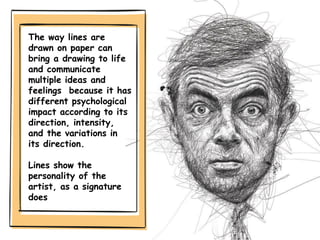
The way lines are
drawn on paper can
bring a drawing to life
and communicate
multiple ideas and
feelings because it has
different psychological
impact according to its
direction, intensity,
and the variations in
its direction.
Lines show the
personality of the
artist, as a signature
does
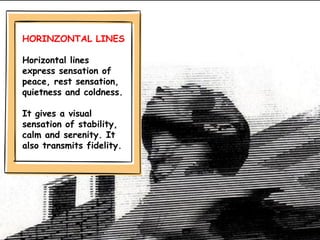
HORINZONTAL LINES
Horizontal lines
express sensation of
peace, rest sensation,
quietness and coldness.
It gives a visual
sensation of stability,
calm and serenity. It
also transmits fidelity.
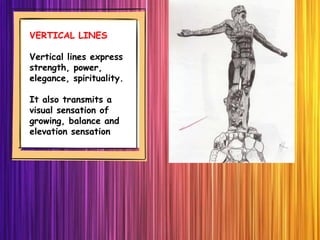
VERTICAL LINES
Vertical lines express
strength, power,
elegance, spirituality.
It also transmits a
visual sensation of
growing, balance and
elevation sensation
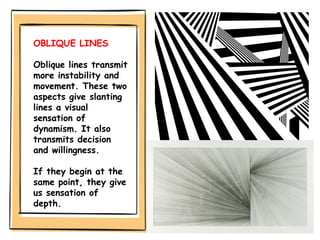
OBLIQUE LINES
Oblique lines transmit
more instability and
movement. These two
aspects give slanting
lines a visual
sensation of
dynamism. It also
transmits decision
and willingness.
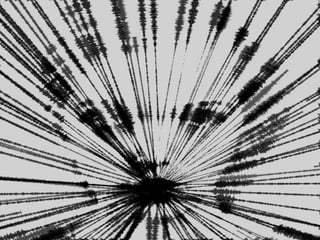
If they begin at the
same point, they give
us sensation of
depth.
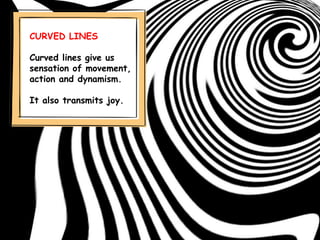
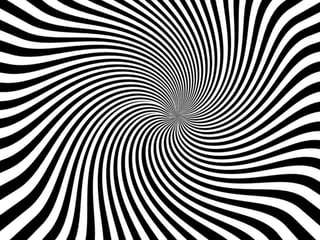
CURVED LINES
Curved lines give us
sensation of movement,
action and dynamism.
It also transmits joy.
4.Line´s uses
We can use
lines for:
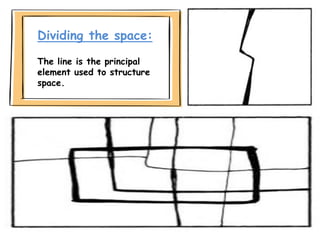
Dividing the space:
The line is the principal
element used to structure
space.
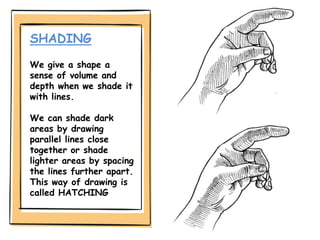
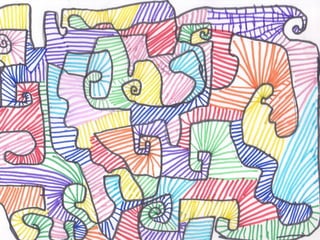
SHADING
We give a shape a
sense of volume and
depth when we shade it
with lines.
We can shade dark
areas by drawing
parallel lines close
together or shade
lighter areas by spacing
the lines further apart.
This way of drawing is
called HATCHING
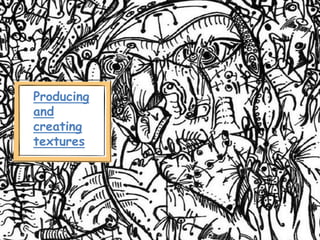
Producing
and
creating
textures
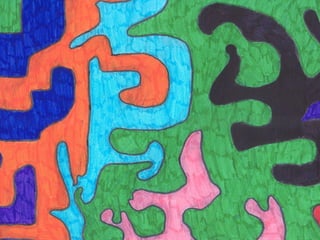
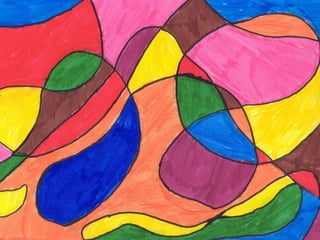
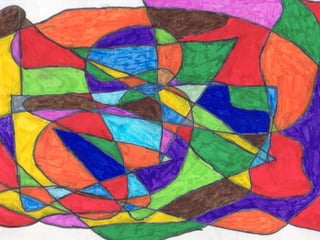
Exercises
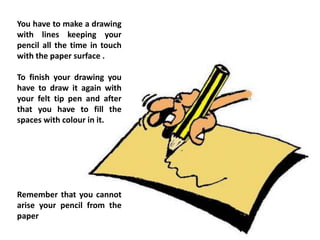
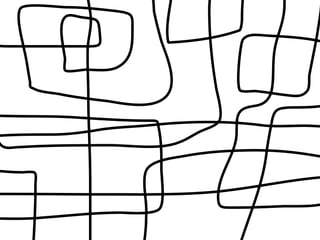
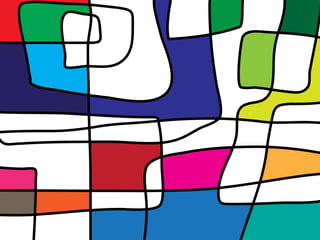
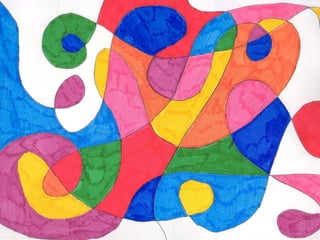
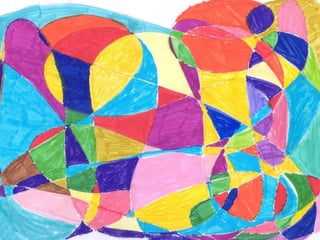
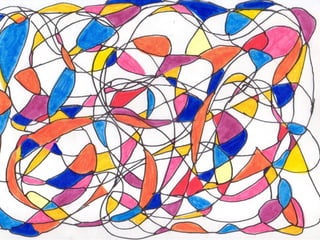
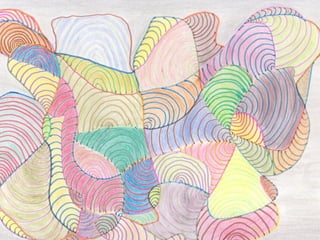
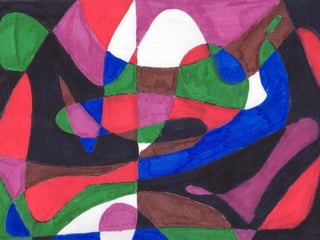
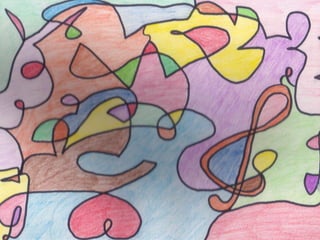
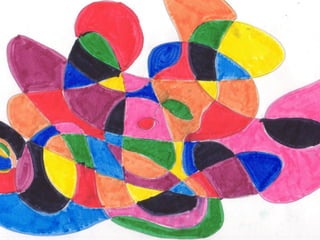
You have to make a drawing
with lines keeping your
pencil all the time in touch
with the paper surface .
To finish your drawing you
have to draw it again with
your felt tip pen and after
that you have to fill the
spaces with colour in it.
Remember that you cannot
arise your pencil from the
paper
The line
The line
The line
The line
The line
The line
The line
The line
The line
The line
The line
The line
The line
The line
The line
The line
The line

The line

  • 1.
  • 2.
  • 3.
    • When adot moves, it leaves a trace that we see as a line. So a line can be defined as the graphic representation of a dot in motion. •A graphic line must always be longer than its width. It has a position and a direction in space and one of its main functions is to delimitate the outline of shapes
  • 4.
    •The shape, thickness, colourand texture of the lines depend on the different tools and materials we use and the way we use them. •Its Intensity depends on the pression we are doing with the drawing tool (pencil, pen, brush, crayon...). If we press, the line is stronger and it has a higher intensity
  • 5.
  • 6.
    Lines can beclassified in: •Simple lines are made in just one stroke, straight or curve. •Composed lines are made of fragments of two or more straight or curve lines.
  • 7.
    The composed linescan also be: •Zig Zag or Broken lines: They are formed by fragments of several straight lines with different directions. •Wavy lines: They are formed by several fragments of curved lines. •Curly lines: They hold more curves than wavy lines and show loops. •Scribble/Doodle: Chaotic or meaningless lines that are traced randomly. Dashed (or dotted) lines: They are lines which are not continuous, formed by little traces or dots.
  • 8.
  • 9.
    The way linesare drawn on paper can bring a drawing to life and communicate multiple ideas and feelings because it has different psychological impact according to its direction, intensity, and the variations in its direction. Lines show the personality of the artist, as a signature does
  • 17.
    HORINZONTAL LINES Horizontal lines expresssensation of peace, rest sensation, quietness and coldness. It gives a visual sensation of stability, calm and serenity. It also transmits fidelity.
  • 18.
    VERTICAL LINES Vertical linesexpress strength, power, elegance, spirituality. It also transmits a visual sensation of growing, balance and elevation sensation
  • 19.
    OBLIQUE LINES Oblique linestransmit more instability and movement. These two aspects give slanting lines a visual sensation of dynamism. It also transmits decision and willingness. If they begin at the same point, they give us sensation of depth.
  • 21.
    CURVED LINES Curved linesgive us sensation of movement, action and dynamism. It also transmits joy.
  • 23.
    4.Line´s uses We canuse lines for:
  • 24.
    Dividing the space: Theline is the principal element used to structure space.
  • 25.
    SHADING We give ashape a sense of volume and depth when we shade it with lines. We can shade dark areas by drawing parallel lines close together or shade lighter areas by spacing the lines further apart. This way of drawing is called HATCHING
  • 26.
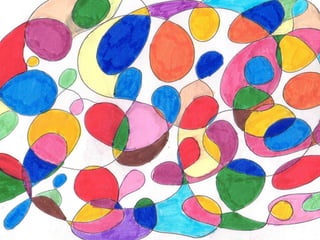
  • 27.
  • 28.
    You have tomake a drawing with lines keeping your pencil all the time in touch with the paper surface . To finish your drawing you have to draw it again with your felt tip pen and after that you have to fill the spaces with colour in it. Remember that you cannot arise your pencil from the paper