The Thematic Approach to teaching Chinese [email_address]
Shaz [email_address]
 
 
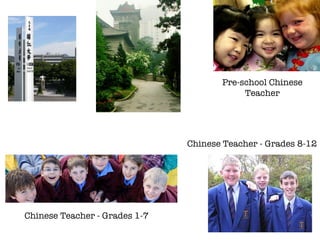
Chinese Teacher - Grades 1-7 Chinese Teacher - Grades 8-12 Pre-school Chinese Teacher
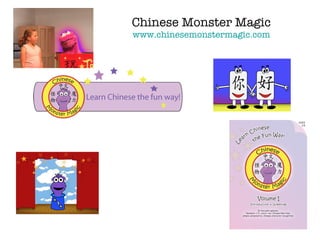
Chinese Monster Magic www.chinesemonstermagic.com
Creative Chinese www.creativechinese.com
Gigglepotz.com www.gigglepotz.com
What  is Thematic Teaching?
Why  teach with Themes?
How  do I develop my own Theme?
1.  What  is Thematic Teaching?
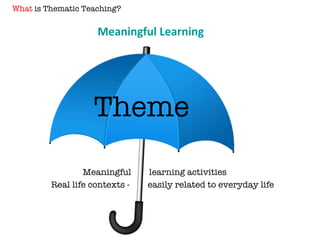
Meaningful  learning activities Real life contexts -  easily related to everyday life  Meaningful Learning Theme What  is Thematic Teaching?
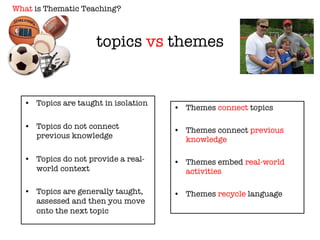
topics  vs  themes Themes  connect  topics Themes connect  previous knowledge Themes embed  real-world activities Themes  recycle  language What  is Thematic Teaching?
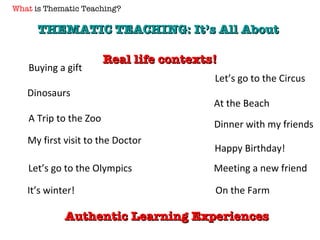
THEMATIC TEACHING: It’s All About   Real life contexts! A Trip to the Zoo My first visit to the Doctor Let’s go to the Olympics Dinner with my friends Happy Birthday! Meeting a new friend Buying a gift At the Beach On the Farm Let’s go to the Circus Authentic Learning Experiences Dinosaurs It’s winter! What  is Thematic Teaching?
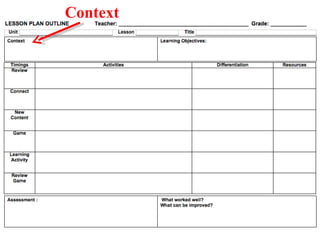
Context What  is Thematic Teaching?
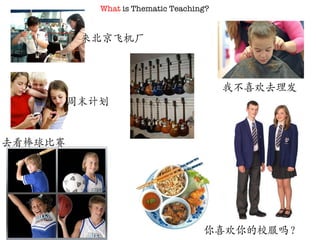
来北京飞机厂 我不喜欢去理发 周末计划 去看棒球比赛 你喜欢你的校服 吗 ? What  is Thematic Teaching?
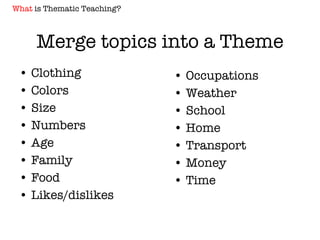
Merge topics into a Theme Clothing Colors Size Numbers Age Family Food Likes/dislikes Occupations Weather School Home Transport Money Time What  is Thematic Teaching?
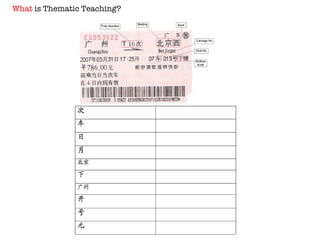
What  is Thematic Teaching?
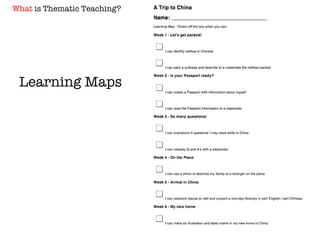
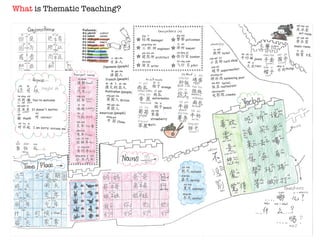
Learning Maps What  is Thematic Teaching?
What  is Thematic Teaching?
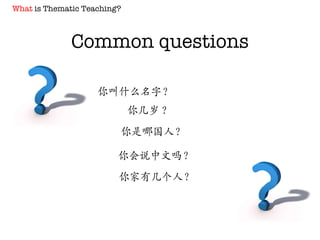
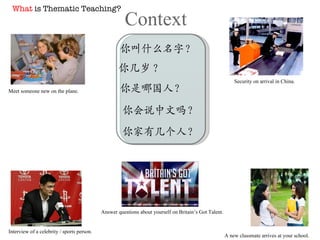
Common questions 你叫什么名字?   你几岁 ? 你是哪国人? 你家有几个人? 你会说中文吗? What  is Thematic Teaching?
Context 你叫什么名字? 你几岁 ? 你是哪国人? 你家有几个人? 你会说中文吗? Meet someone new on the plane. Security on arrival in China. A new classmate arrives at your school. Interview of a celebrity / sports person. Answer questions about yourself on Britain’s Got Talent. What  is Thematic Teaching?
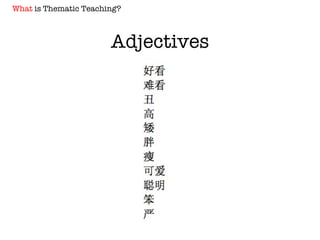
Adjectives What  is Thematic Teaching?
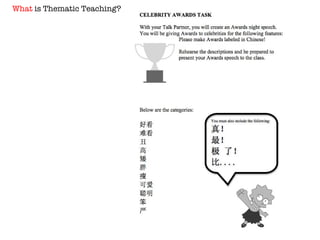
What  is Thematic Teaching?
Lesson Planning Context
2.  Why  use Themes?
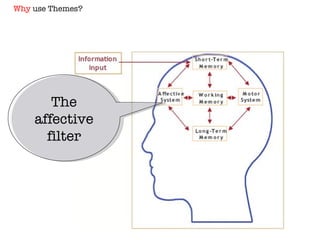
The affective filter Why  use Themes?
The search for meaning is  innate . The search for meaning comes through  patterning . Emotions  are critical to patterning. Why  use Themes?
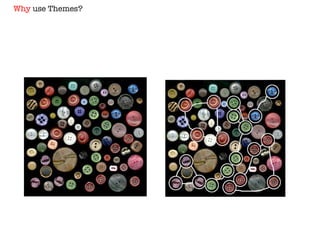
Why  use Themes?
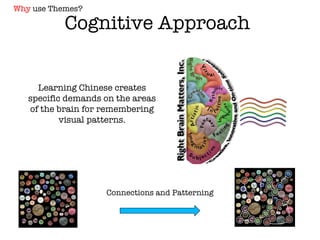
Cognitive Approach Learning Chinese creates specific demands on the areas of the brain for remembering visual patterns. Connections and Patterning Why  use Themes?
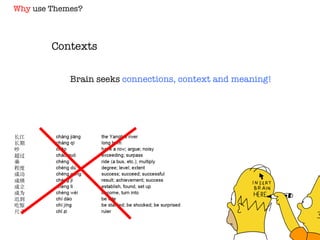
Contexts Brain seeks  connections, context and meaning!   Why  use Themes?
Why  use Themes?
Students are engaged! Why  use Themes?
Language has a purpose Communication Why  use Themes?
3.  How  can I develop my own Thematic Unit?
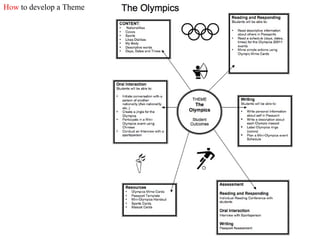
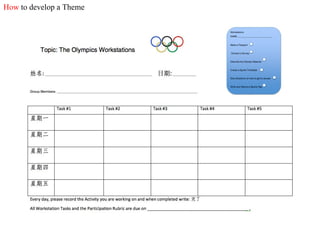
Theme : The Olympics 奥林匹克
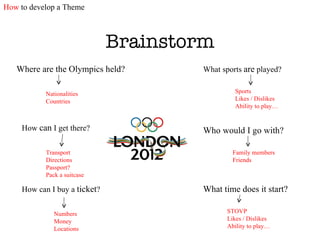
Brainstorm Where are the Olympics held? How  can  I get there? What sports  are  played? What time does it start? How can I buy a  ticket ? Who would I go with? Nationalities Countries Sports Likes / Dislikes Ability to play… Transport Directions Passport? Pack a suitcase Numbers Money Locations STOVP Likes / Dislikes Ability to play… Family members Friends How  to develop a Theme
How  to develop a Theme
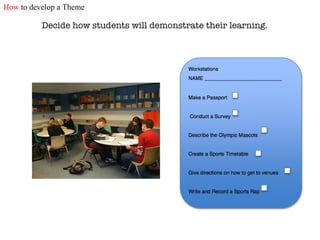
Decide how students will demonstrate their learning. How  to develop a Theme
How  to develop a Theme
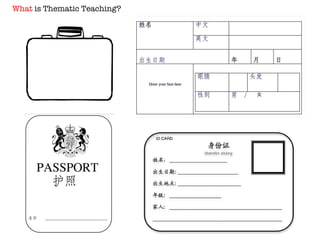
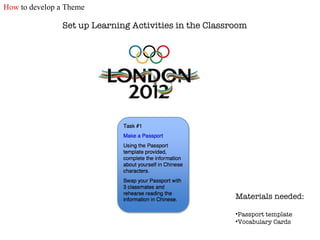
Set up Learning Activities in the Classroom Materials needed: Passport template Vocabulary Cards How  to develop a Theme
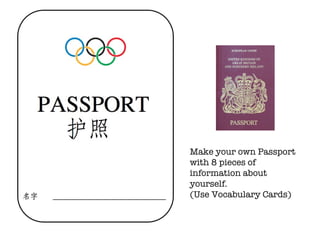
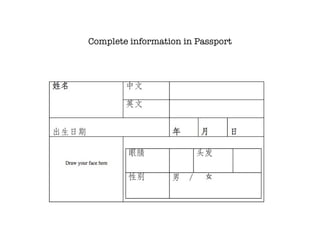
Make your own Passport with 8 pieces of information about yourself. (Use Vocabulary Cards)
Complete information in Passport
Set up Learning Activities Materials needed: Graph paper Sport Vocabulary Cards
Set up Learning Activities Materials needed: Mascot Images Poster paper Olympic logo How  to develop a Theme
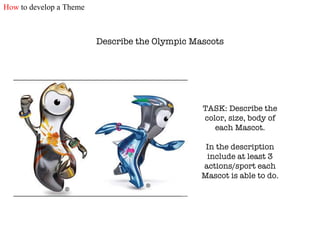
Describe the Olympic Mascots TASK: Describe the color, size, body of each Mascot. In the description include at least 3 actions/sport each Mascot is able to do. How  to develop a Theme
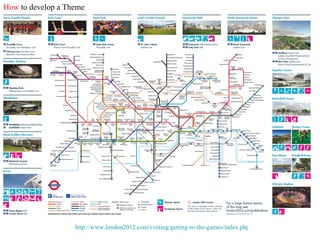
Set up Learning Activities Materials needed: Olympic venues Map Writing paper How  to develop a Theme
http://www.london2012.com/visiting/getting-to-the-games/index.php How  to develop a Theme
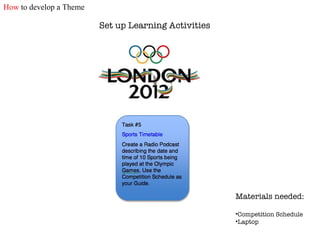
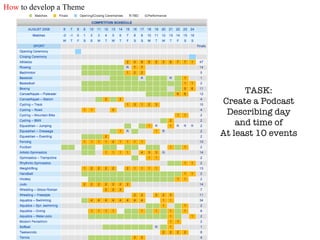
Set up Learning Activities Materials needed: Competition Schedule Laptop How  to develop a Theme
TASK: Create a Podcast Describing day and time of At least 10 events How  to develop a Theme
Set up Learning Activities Materials needed: Vocabulary Sheets How  to develop a Theme
How  to develop a Theme
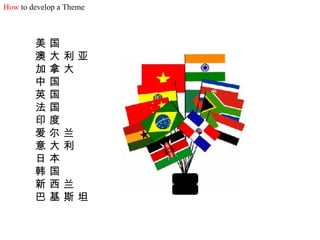
美   国   澳   大   利   亚   加   拿   大   中   国   英   国   法   国   印   度   爱   尔   兰   意   大   利   日   本   韩   国   新   西   兰   巴   基   斯   坦   How  to develop a Theme
At the Airport Students  exchange information  about themselves and nationality. 你好! 你是哪国人? How  to develop a Theme
Culminating Activity Mini-Olympics In Chinese How  to develop a Theme
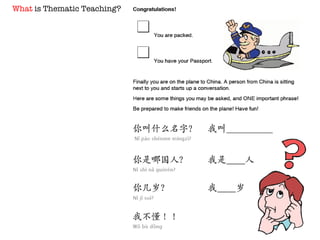
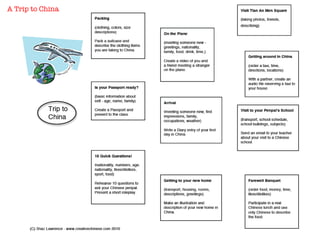
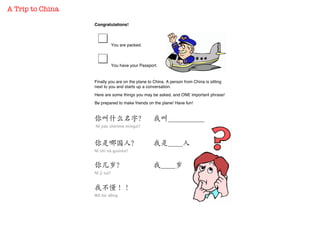
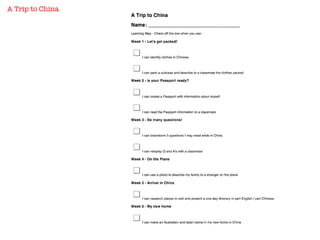
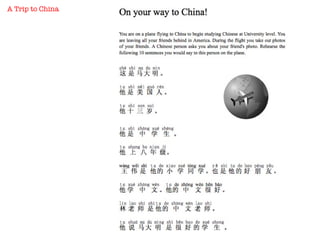
A Trip to China Theme
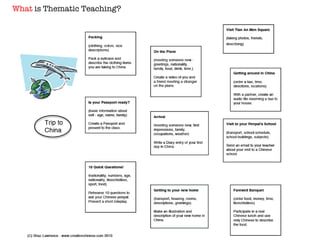
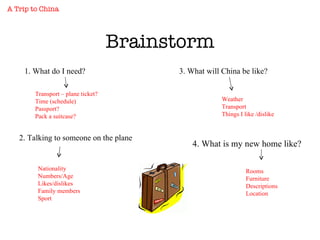
Brainstorm 1. What do I need? 3. What will China be like? 4. What is my new home like? 2. Talking to someone on the plane Weather Transport Things I like /dislike Transport – plane ticket? Time (schedule) Passport? Pack a suitcase? Nationality Numbers/Age Likes/dislikes Family members Sport Rooms Furniture Descriptions Location A Trip to China
A Trip to China
A Trip to China
A Trip to China
A Trip to China
A Trip to China
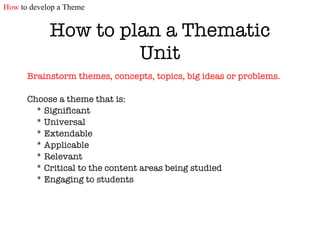
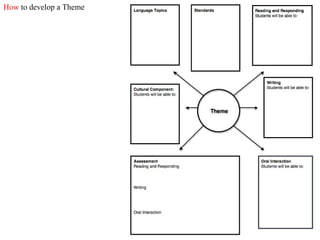
How to plan a Thematic Unit Brainstorm themes, concepts, topics, big ideas or problems.   Choose a theme that is: * Significant * Universal * Extendable * Applicable * Relevant * Critical to the content areas being studied * Engaging to students How  to develop a Theme
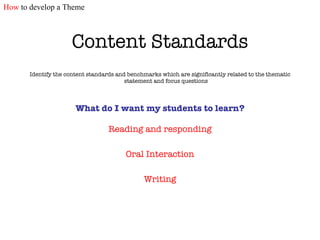
Content Standards Identify the content standards and benchmarks which are significantly related to the thematic statement and focus questions What do I want my students to learn? Reading and responding Oral Interaction Writing How  to develop a Theme
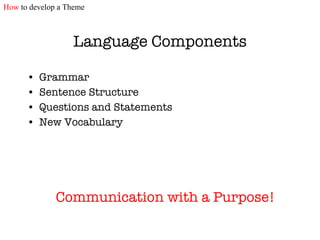
Language Components Grammar Sentence Structure Questions and Statements New Vocabulary Communication with a Purpose! How  to develop a Theme
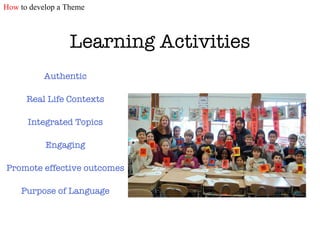
Learning Activities Authentic Real Life Contexts Integrated Topics Engaging Promote effective outcomes Purpose of Language How  to develop a Theme
How  to develop a Theme
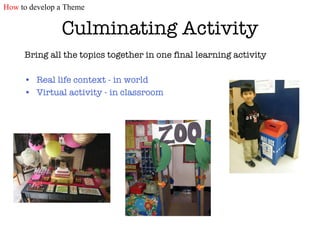
Culminating Activity Bring all the topics together in one final learning activity Real life context - in world Virtual activity - in classroom How  to develop a Theme
Student Assessment Establish  criteria  for evaluating your student products and performances.  What will you accept as  evidence  that students have achieved the targeted content standards and benchmarks? Use the language of the culminating task and the key elements of the content standards and benchmarks to draft concise statements of criteria. How  to develop a Theme
How  to develop a Theme
The Thematic Approach to teaching Chinese [email_address]

Thematic Approach to Teaching Chinese

  • 1.
    The Thematic Approachto teaching Chinese [email_address]
  • 2.
  • 3.
  • 4.
  • 5.
    Chinese Teacher -Grades 1-7 Chinese Teacher - Grades 8-12 Pre-school Chinese Teacher
  • 6.
    Chinese Monster Magicwww.chinesemonstermagic.com
  • 7.
  • 8.
  • 9.
    What isThematic Teaching?
  • 10.
    Why teachwith Themes?
  • 11.
    How doI develop my own Theme?
  • 12.
    1. What is Thematic Teaching?
  • 13.
    Meaningful learningactivities Real life contexts - easily related to everyday life Meaningful Learning Theme What is Thematic Teaching?
  • 14.
    topics vs themes Themes connect topics Themes connect previous knowledge Themes embed real-world activities Themes recycle language What is Thematic Teaching?
  • 15.
    THEMATIC TEACHING: It’sAll About Real life contexts! A Trip to the Zoo My first visit to the Doctor Let’s go to the Olympics Dinner with my friends Happy Birthday! Meeting a new friend Buying a gift At the Beach On the Farm Let’s go to the Circus Authentic Learning Experiences Dinosaurs It’s winter! What is Thematic Teaching?
  • 16.
    Context What is Thematic Teaching?
  • 17.
    来北京飞机厂 我不喜欢去理发 周末计划去看棒球比赛 你喜欢你的校服 吗 ? What is Thematic Teaching?
  • 18.
    Merge topics intoa Theme Clothing Colors Size Numbers Age Family Food Likes/dislikes Occupations Weather School Home Transport Money Time What is Thematic Teaching?
  • 19.
    What isThematic Teaching?
  • 20.
    What isThematic Teaching?
  • 21.
    What isThematic Teaching?
  • 22.
    Learning Maps What is Thematic Teaching?
  • 23.
    What isThematic Teaching?
  • 24.
    Common questions 你叫什么名字? 你几岁 ? 你是哪国人? 你家有几个人? 你会说中文吗? What is Thematic Teaching?
  • 25.
    Context 你叫什么名字? 你几岁? 你是哪国人? 你家有几个人? 你会说中文吗? Meet someone new on the plane. Security on arrival in China. A new classmate arrives at your school. Interview of a celebrity / sports person. Answer questions about yourself on Britain’s Got Talent. What is Thematic Teaching?
  • 26.
    Adjectives What is Thematic Teaching?
  • 27.
    What isThematic Teaching?
  • 28.
    What isThematic Teaching?
  • 29.
  • 30.
    2. Why use Themes?
  • 31.
    The affective filterWhy use Themes?
  • 32.
    The search formeaning is innate . The search for meaning comes through patterning . Emotions are critical to patterning. Why use Themes?
  • 33.
    Why useThemes?
  • 34.
    Cognitive Approach LearningChinese creates specific demands on the areas of the brain for remembering visual patterns. Connections and Patterning Why use Themes?
  • 35.
    Contexts Brain seeks connections, context and meaning! Why use Themes?
  • 36.
    Why useThemes?
  • 37.
    Students are engaged!Why use Themes?
  • 38.
    Language has apurpose Communication Why use Themes?
  • 39.
    3. How can I develop my own Thematic Unit?
  • 40.
    Theme : TheOlympics 奥林匹克
  • 41.
    Brainstorm Where arethe Olympics held? How can I get there? What sports are played? What time does it start? How can I buy a ticket ? Who would I go with? Nationalities Countries Sports Likes / Dislikes Ability to play… Transport Directions Passport? Pack a suitcase Numbers Money Locations STOVP Likes / Dislikes Ability to play… Family members Friends How to develop a Theme
  • 42.
    How todevelop a Theme
  • 43.
    Decide how studentswill demonstrate their learning. How to develop a Theme
  • 44.
    How todevelop a Theme
  • 45.
    Set up LearningActivities in the Classroom Materials needed: Passport template Vocabulary Cards How to develop a Theme
  • 46.
    Make your ownPassport with 8 pieces of information about yourself. (Use Vocabulary Cards)
  • 47.
  • 48.
    Set up LearningActivities Materials needed: Graph paper Sport Vocabulary Cards
  • 49.
    Set up LearningActivities Materials needed: Mascot Images Poster paper Olympic logo How to develop a Theme
  • 50.
    Describe the OlympicMascots TASK: Describe the color, size, body of each Mascot. In the description include at least 3 actions/sport each Mascot is able to do. How to develop a Theme
  • 51.
    Set up LearningActivities Materials needed: Olympic venues Map Writing paper How to develop a Theme
  • 52.
  • 53.
    Set up LearningActivities Materials needed: Competition Schedule Laptop How to develop a Theme
  • 54.
    TASK: Create aPodcast Describing day and time of At least 10 events How to develop a Theme
  • 55.
    Set up LearningActivities Materials needed: Vocabulary Sheets How to develop a Theme
  • 56.
    How todevelop a Theme
  • 57.
    国 澳 大 利 亚 加 拿 大 中 国 英 国 法 国 印 度 爱 尔 兰 意 大 利 日 本 韩 国 新 西 兰 巴 基 斯 坦 How to develop a Theme
  • 58.
    At the AirportStudents exchange information about themselves and nationality. 你好! 你是哪国人? How to develop a Theme
  • 59.
    Culminating Activity Mini-OlympicsIn Chinese How to develop a Theme
  • 60.
    A Trip toChina Theme
  • 61.
    Brainstorm 1. Whatdo I need? 3. What will China be like? 4. What is my new home like? 2. Talking to someone on the plane Weather Transport Things I like /dislike Transport – plane ticket? Time (schedule) Passport? Pack a suitcase? Nationality Numbers/Age Likes/dislikes Family members Sport Rooms Furniture Descriptions Location A Trip to China
  • 62.
    A Trip toChina
  • 63.
    A Trip toChina
  • 64.
    A Trip toChina
  • 65.
    A Trip toChina
  • 66.
    A Trip toChina
  • 67.
    How to plana Thematic Unit Brainstorm themes, concepts, topics, big ideas or problems. Choose a theme that is: * Significant * Universal * Extendable * Applicable * Relevant * Critical to the content areas being studied * Engaging to students How to develop a Theme
  • 68.
    Content Standards Identifythe content standards and benchmarks which are significantly related to the thematic statement and focus questions What do I want my students to learn? Reading and responding Oral Interaction Writing How to develop a Theme
  • 69.
    Language Components GrammarSentence Structure Questions and Statements New Vocabulary Communication with a Purpose! How to develop a Theme
  • 70.
    Learning Activities AuthenticReal Life Contexts Integrated Topics Engaging Promote effective outcomes Purpose of Language How to develop a Theme
  • 71.
    How todevelop a Theme
  • 72.
    Culminating Activity Bringall the topics together in one final learning activity Real life context - in world Virtual activity - in classroom How to develop a Theme
  • 73.
    Student Assessment Establish criteria for evaluating your student products and performances. What will you accept as evidence that students have achieved the targeted content standards and benchmarks? Use the language of the culminating task and the key elements of the content standards and benchmarks to draft concise statements of criteria. How to develop a Theme
  • 74.
    How todevelop a Theme
  • 75.
    How todevelop a Theme
  • 76.
    The Thematic Approachto teaching Chinese [email_address]

Editor's Notes

  • #3 My name is Shaz…Shaz Lawrence That’s my email address, if anyone would like to get in touch with me afterwards.
  • #4 Although I am living in the US now, I am from Australia originally and that’s where I began my teaching career…in the general classroom as well as Chinese teaching. Long before teaching and learning Chinese was popular, Australia in the late 80’s decided to make it mandatory for every student from R-12 learn a second language. Chinese was a priority language.
  • #6 I studied at Fu Ren University in Taiwan, and then received 2 scholarships to study Chinese in Beijing and Nanjing. I started off teaching Chinese in a primary school of 800 students and taught every one of them once a week. PreSchool and Highschool…mainly boys.
  • #8 Earlier this year, began a new project – Paper Bag Chinese. Teachers contacted me regarding materials for the adolescent years and highly motivating.
  • #9 Finally, this is my general teaching website – Gigglepotz.com
  • #13 Most of us are familiar with teaching topics… As language teachers, we generally start of with my name, age, family etc., Nothing wrong with that, but there is a better way.
  • #14 A theme acts as an umbrella..it gives topics a CONTEXT The theme groups topics together so learning is meaningful and related to real world situations.
  • #15 WE are going to learn to say your name, ask how old you are, tell me what you like…etc, There is no context and sometimes when I see teachers teach that way…..I want the kids to say… but why? How is this useful? When will I use this?
  • #16 Buying a gift…topics might include money, numbers, descriptions, greetings, Let’s go to the circus – transport, location, animals, food, descriptions,
  • #17 After looking at learning standards, content…comes the context
  • #19 Common topics.. Don’t have to start with ‘What’s your name?
  • #25 Common teaching practice…drill kids, repeat, practice with each other..???
  • #26 Give students a purpose to communicate - personal information
  • #27 Drill, repeat after me…taught in isolation
  • #30 Context needs to be developmentally appropriate
  • #32 Emotions, how we feel about input..can negatively affect learning.. Bored…lack of meaning,……anxiety… All these things function as a filter… and reduce the amount of language students are able to understand/… Actually prevent the processing of the language input.
  • #34 Affective filter is so important How do we get from here…to…
  • #36 Now that sounds quite logical..doesn’t it? But often we give students a list of new vocabulary and there is no intrinsic value or meaning attached to the characters. Make connections – to first language Context – introduce new vocab in a context Meaning – do the new words have meaning to the student? If you are given a list of things to remember, it is easier when sorted into groups…like fruits, vegetables, drinks etc.,
  • #37 Connected..better able to retrieve information over time.