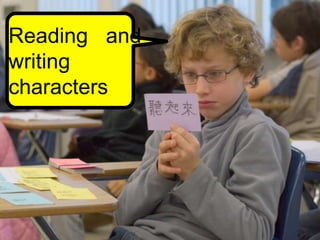
Reading and
writing
characters
高 高 高 高 高 高 高 高 高 高 高 高 高 高 高 高 高 高 高 高 高 高 高
高 高 高 高 高 高 高 高 高高 高 高 高 高 高 高 高 高 高 高 高 高 高 高
高 高 高 高 高 高 高 高高 高 高 高 高 高 高 高 高 高 高 高 高 高 高 高
高 高 高 高 高 高 高 高 高 高 高 高 高 高 高 高高 高 高 高 高 高 高 高
高 高 高 高 高 高高 高 高 高 高 高 高 高 高 高 高 高 高 高 高 高 高 高
高 高 高 高 高 高 高 高 高 高 高 高 高 高 高 高 高高 高 高 高 高 高 高
高 高 高 高 高 高 高 高 高 高 高 高 高 高 高 高 高 高 高 高 高 高 高
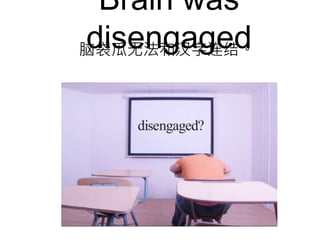
Brain was
disengaged脑袋瓜无法和汉字连结。
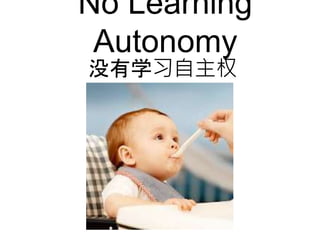
No Learning
Autonomy
没有学习自主权
Chinese Journals
Choice Boards
Work Stations
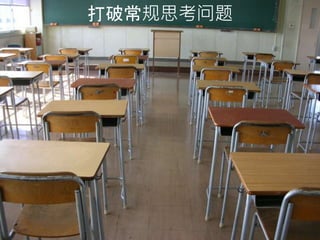
打破常规思考问题
要解决这个问题,你需要打破常规思维。
创造性思考
创造性思维
That’s the way we
have always done it!
这就是我们一直做事的方法
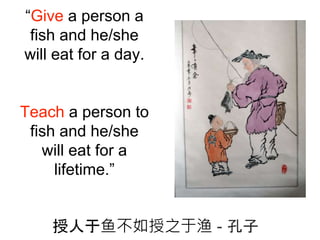
“Give a person a
fish and he/she
will eat for a day.
Teach a person to
fish and he/she
will eat for a
lifetime.”
授人于鱼不如授之于渔 - 孔子
跳出传统的思维框框,以新的眼光看问题
New ways of ensuring students are successful learners
确保学生新的方式是成功的学习者
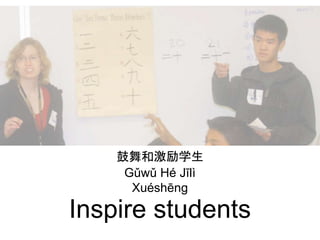
Inspire students
鼓舞和激励学生
Gǔwǔ Hé Jīlì
Xuéshēng
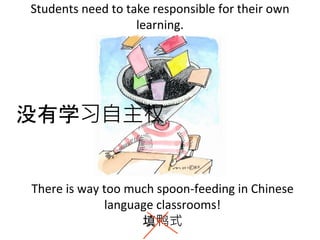
Students need to take responsible for their own
learning.
There is way too much spoon-feeding in Chinese
language classrooms!
填鸭式
没有学习自主权
创新性思维
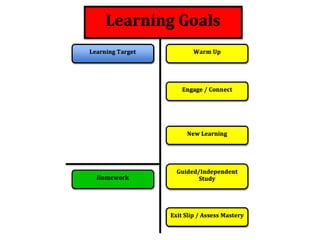
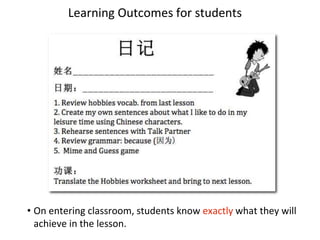
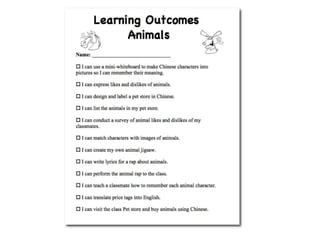
Learning Outcomes for students
• On entering classroom, students know exactly what they will
achieve in the lesson.
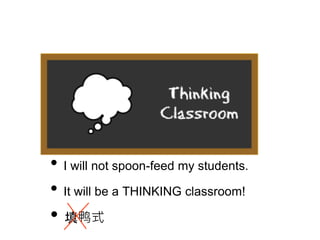
• I will not spoon-feed my students.
• It will be a THINKING classroom!
• 填鸭式
‘Raising the bar’
High ExpectationsEngage Learners
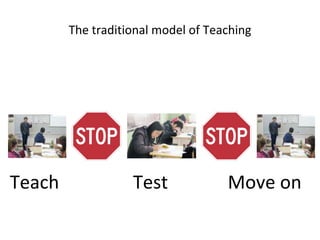
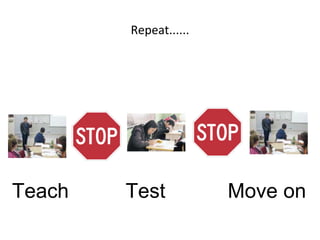
The traditional model of Teaching
Teach Test Move on
Repeat......
Teach Test Move on
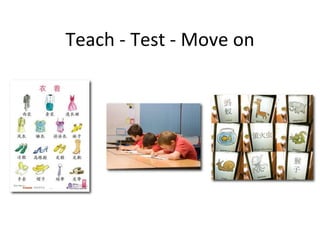
Teach - Test - Move on
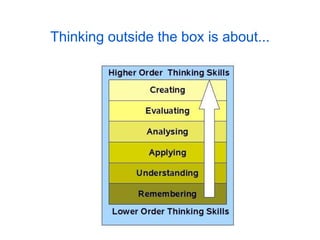
Thinking outside the box is about...
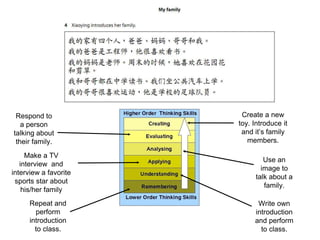
Repeat and
perform
introduction
to class.
Write own
introduction
and perform
to class.
Make a TV
interview and
interview a favorite
sports star about
his/her family
Use an
image to
talk about a
family.
Respond to
a person
talking about
their family.
Create a new
toy. Introduce it
and it’s family
members.
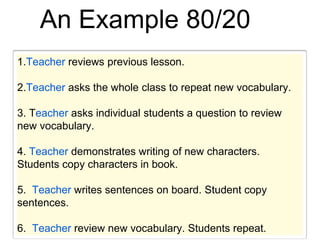
An Example 80/20
1.Teacher reviews previous lesson.
2.Teacher asks the whole class to repeat new vocabulary.
3. Teacher asks individual students a question to review
new vocabulary.
4. Teacher demonstrates writing of new characters.
Students copy characters in book.
5. Teacher writes sentences on board. Student copy
sentences.
6. Teacher review new vocabulary. Students repeat.
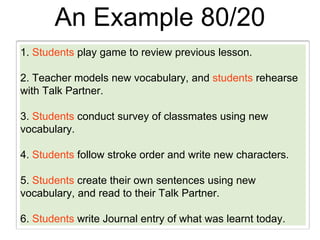
An Example 80/20
1. Students play game to review previous lesson.
2. Teacher models new vocabulary, and students rehearse
with Talk Partner.
3. Students conduct survey of classmates using new
vocabulary.
4. Students follow stroke order and write new characters.
5. Students create their own sentences using new
vocabulary, and read to their Talk Partner.
6. Students write Journal entry of what was learnt today.
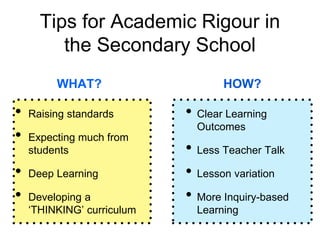
Tips for Academic Rigour in
the Secondary School
• Clear Learning
Outcomes
• Less Teacher Talk
• Lesson variation
• More Inquiry-based
Learning
• Raising standards
• Expecting much from
students
• Deep Learning
• Developing a
‘THINKING’ curriculum
WHAT? HOW?
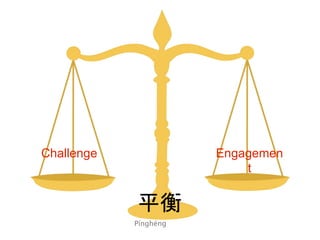
Challenge Engagemen
t
平衡
Pínghéng
How often do your students go into this mode?
Engaged Learners
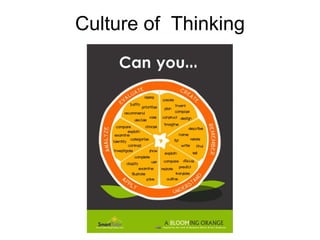
Culture of Thinking
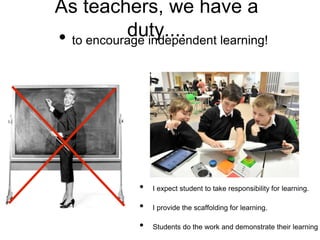
As teachers, we have a
duty....• to encourage independent learning!
• I expect student to take responsibility for learning.
• I provide the scaffolding for learning.
• Students do the work and demonstrate their learning
How do we engage our Secondary School
students?
Engagement in the
Secondary School classroom
• Secondary school students want
Meaningful Learning (purpose)
• Culture as a delivery of language
(interest)
• Technology (relevance)
• Learning Contracts (choice)
• Collaboration (motivation)
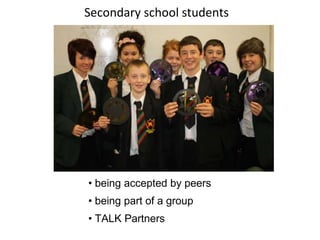
Secondary school students
• being accepted by peers
• being part of a group
• TALK Partners
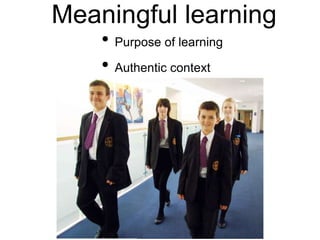
Meaningful learning
• Purpose of learning
• Authentic context
Innovation in the Chinese
classroom
The student has:
 Some freedom/choice in acquiring skills and
understandings
 Responsibility for learning independently
 Guidelines for completing work and time management
 Expectations tailored to readiness level
 The teacher is available as a guide to learning
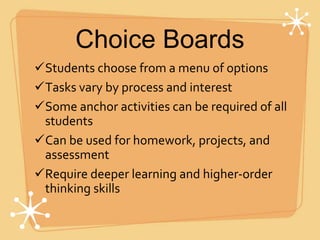
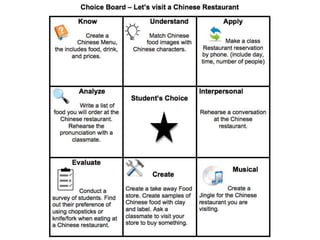
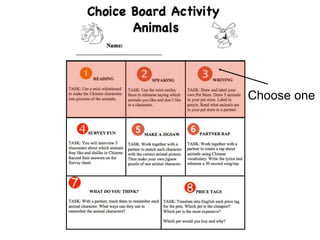
Choice Boards
Students choose from a menu of options
Tasks vary by process and interest
Some anchor activities can be required of all
students
Can be used for homework, projects, and
assessment
Require deeper learning and higher-order
thinking skills
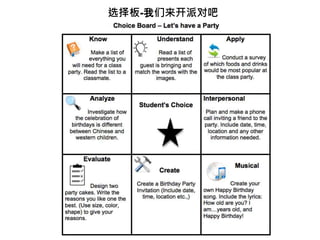
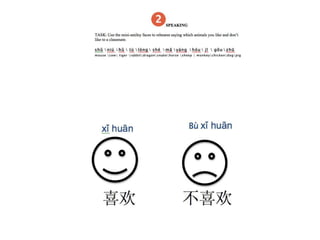
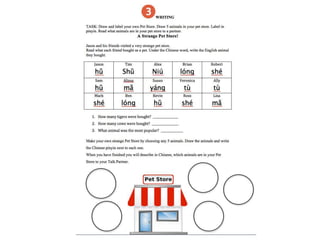
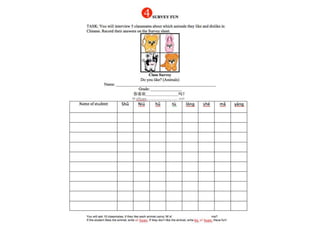
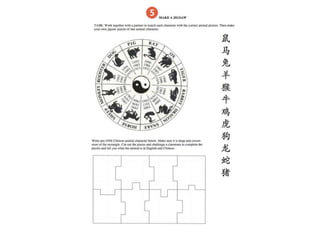
选择板-我们来开派对吧
Choice Boards
Topics: Chinese New
Year
Animals of the Zodiac
Choose one
Choose any ONE activity from the top
row to complete in this lesson.
Reminders
At the end of this lesson you must pass
up ONE completed activity.
Please write your name on your
worksheet or Index card.
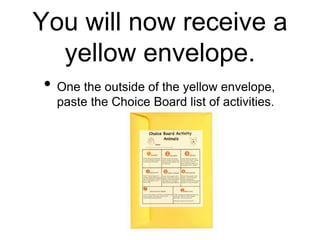
You will now receive a
yellow envelope.
• One the outside of the yellow envelope,
paste the Choice Board list of activities.
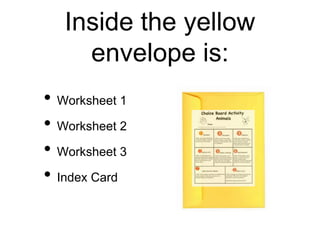
Inside the yellow
envelope is:
• Worksheet 1
• Worksheet 2
• Worksheet 3
• Index Card
A Learning contract
is...
 A written agreement between the student
and the teacher which includes opportunities
for the student to work relatively
independently on demonstrating their
learning.
Learning Contracts
The student has:
 Some freedom/choice in acquiring skills and
understandings
 Responsibility for learning independently
 Guidelines for completing work and time management
 Expectations tailored to readiness level
 The teacher is available as a guide to learning
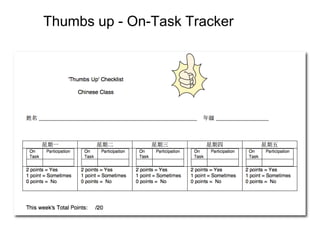
Thumbs up - On-Task Tracker
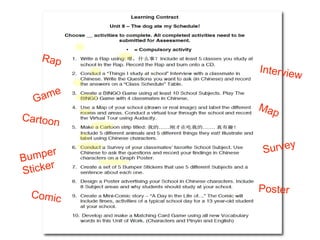
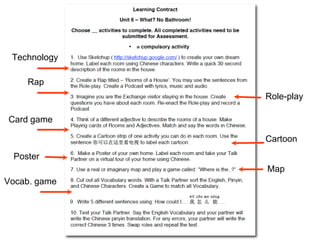
Rap
Role-play
Card game
Cartoon
Poster
Map
Vocab. game
Technology
Work Stations
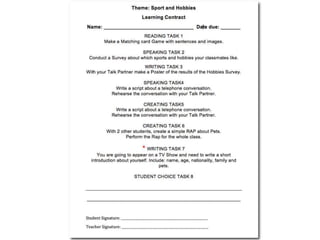
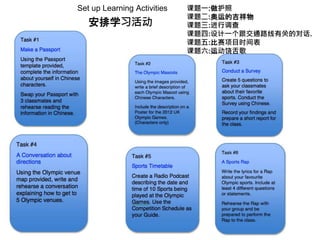
Set up Learning Activities
安排学习活动
课题一:做护照
课题二:奥运的吉祥物
课题三:进行调查
课题四:设计一个跟交通路线有关的对话.
课题五:比赛项目时间表
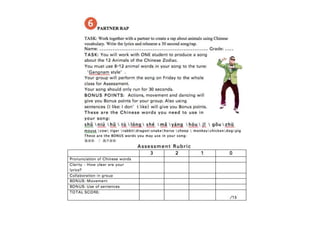
课题六:运动饶舌歌
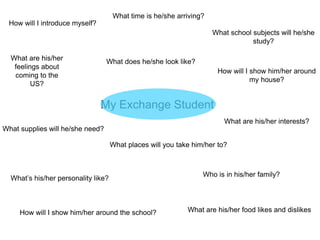
My Exchange Student
What supplies will he/she need?
What are his/her interests?
What time is he/she arriving?
How will I show him/her around the school?
What places will you take him/her to?
What are his/her food likes and dislikes
What’s his/her personality like?
What school subjects will he/she
study?
What are his/her
feelings about
coming to the
US?
How will I show him/her around
my house?
How will I introduce myself?
What does he/she look like?
Who is in his/her family?
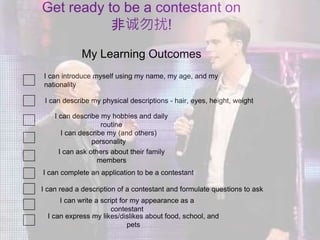
非诚勿扰
Guess what? Over the next 6 months you will prepare to
go on the TV show Fēichéngwùrǎo
I can introduce myself using my name, my age, and my
nationality
I can describe my (and others)
personality
I can describe my physical descriptions - hair, eyes, height, weight
My Learning Outcomes
I can ask others about their family
members
I can describe my hobbies and daily
routine
I can read a description of a contestant and formulate questions to ask
I can write a script for my appearance as a
contestant
I can express my likes/dislikes about food, school, and
pets
Get ready to be a contestant on
非诚勿扰!
I can complete an application to be a contestant
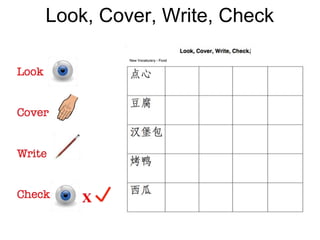
Look, Cover, Write, Check
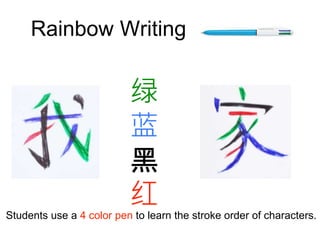
Rainbow Writing
绿
蓝
黑
红
Students use a 4 color pen to learn the stroke order of characters.
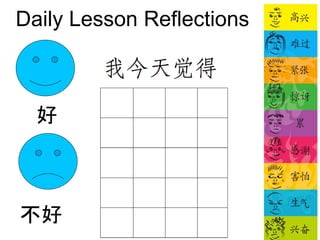
Daily Lesson Reflections
好
不好
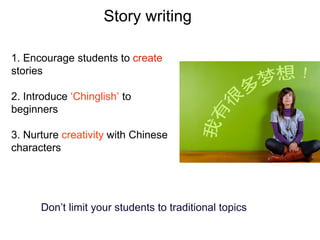
Story writing
1. Encourage students to create
stories
2. Introduce ‘Chinglish’ to
beginners
3. Nurture creativity with Chinese
characters
Don’t limit your students to traditional topics
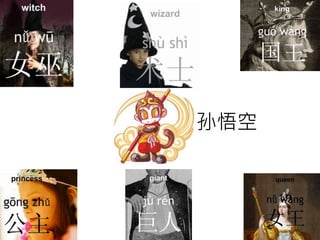
孙悟空
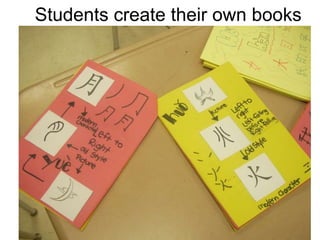
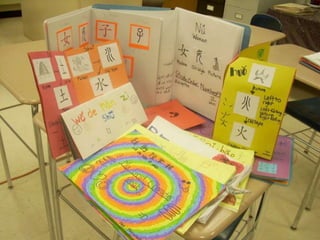
Students create their own books
89
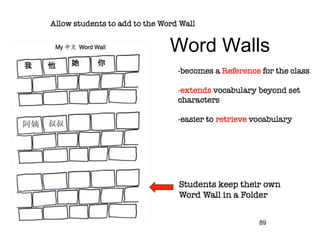
Word Walls
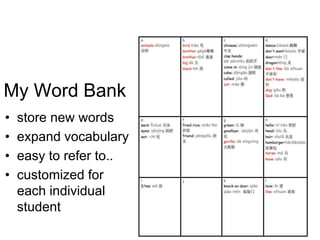
My Word Bank
• store new words
• expand vocabulary
• easy to refer to..
• customized for
each individual
student
90
91
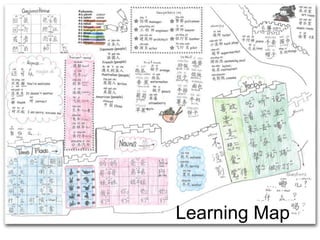
Learning Map
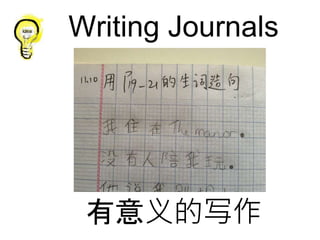
Writing Journals
写日记
有意义的写作
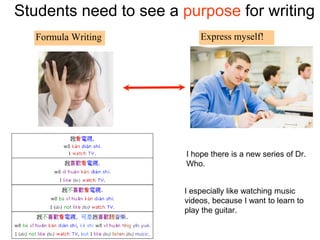
Formula Writing Express myself!
I hope there is a new series of Dr.
Who.
I especially like watching music
videos, because I want to learn to
play the guitar.
Students need to see a purpose for writing
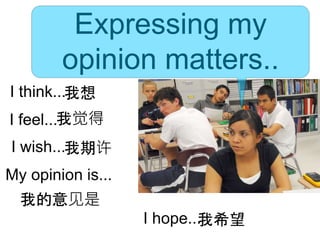
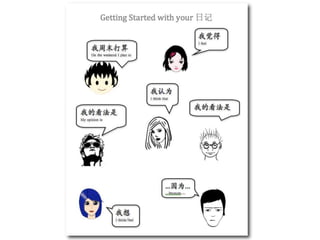
Expressing my
opinion matters..
I think...
I feel...
I wish...
I hope...
My opinion is...
我想
我觉得
我期许
我的意见是
我希望
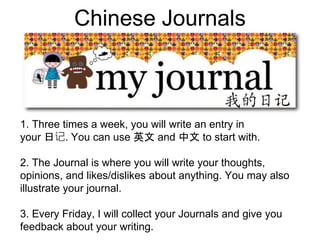
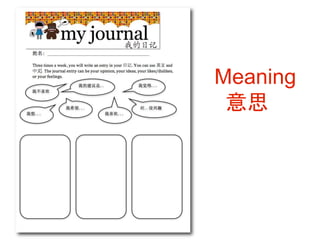
Chinese Journals
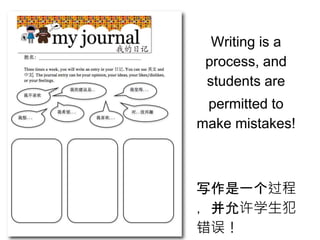
1. Three times a week, you will write an entry in
your 日记. You can use 英文 and 中文 to start with.
2. The Journal is where you will write your thoughts,
opinions, and likes/dislikes about anything. You may also
illustrate your journal.
3. Every Friday, I will collect your Journals and give you
feedback about your writing.
写作是一个过程
,并允许学生犯
错误!
Writing is a
process, and
students are
permitted to
make mistakes!
There’s a Celebrity in my Journal
Week
What does he look like?
他是什么样子的?
What do you like about him?
关于他你喜欢他什么?
What don’t you like about him?
关于他你不喜欢他什么?
What kind of person is he?
他是什么样的人呢?
What does he do best?
他(是)做什么最好?
在周记里有名人(学生在他们的日记里写一个名人.)
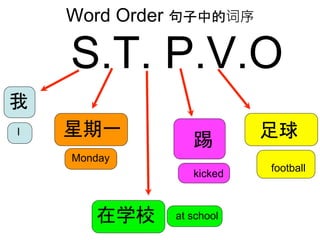
Word Order 句子中的词序
S.T. P.V.O
我
星期一
在学校
踢 足球I
Monday
at school
kicked
football
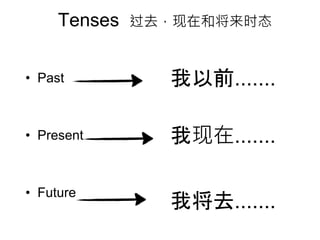
Tenses 过去,现在和将来时态
• Past
• Present
• Future
我现在.......
我以前.......
我将去.......
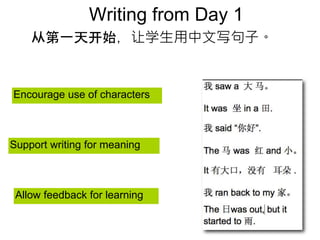
Writing from Day 1
Support writing for meaning
Encourage use of characters
Allow feedback for learning
从第一天开始,让学生用中文写句子。
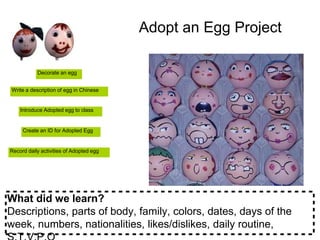
Adopt an Egg Project
Decorate an egg
Write a description of egg in Chinese
Introduce Adopted egg to class
Create an ID for Adopted Egg
Record daily activities of Adopted egg
What did we learn?
Descriptions, parts of body, family, colors, dates, days of the
week, numbers, nationalities, likes/dislikes, daily routine,
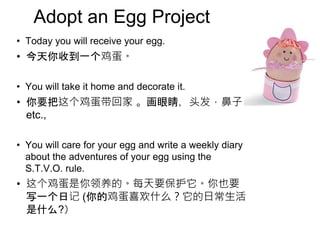
Adopt an Egg Project
• Today you will receive your egg.
• 今天你收到一个鸡蛋。
• You will take it home and decorate it.
• 你要把这个鸡蛋带回家 。画眼睛,头发,鼻子
etc.,
• You will care for your egg and write a weekly diary
about the adventures of your egg using the
S.T.V.O. rule.
• 这个鸡蛋是你领养的。每天要保护它。你也要
写一个日记 (你的鸡蛋喜欢什么?它的日常生活
是什么?)
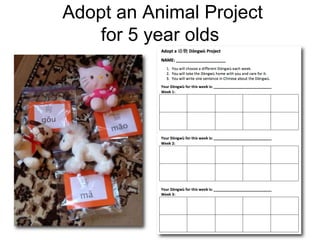
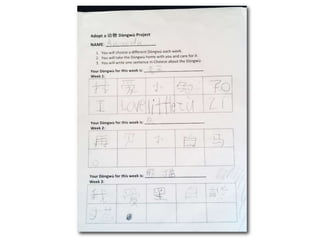
Adopt an Animal Project
for 5 year olds
104
Think, Pair, Share
想, 谈, 分享
Talk about how you can start
Journal writing in your classroom.
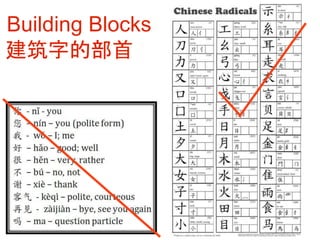
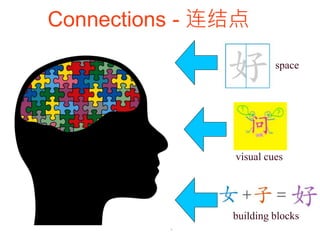
Building Blocks
建筑字的部首
Meaning
意思
Connections - 连结点
space
visual cues
building blocks
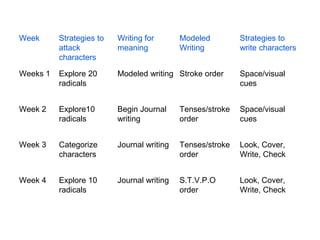
Week Strategies to
attack
characters
Writing for
meaning
Modeled
Writing
Strategies to
write characters
Weeks 1 Explore 20
radicals
Modeled writing Stroke order Space/visual
cues
Week 2 Explore10
radicals
Begin Journal
writing
Tenses/stroke
order
Space/visual
cues
Week 3 Categorize
characters
Journal writing Tenses/stroke
order
Look, Cover,
Write, Check
Week 4 Explore 10
radicals
Journal writing S.T.V.P.O
order
Look, Cover,
Write, Check

Creative ideas to teach Chinese - Grades 6-8

  • 2.
  • 3.
    高 高 高高 高 高 高 高 高 高 高 高 高 高 高 高 高 高 高 高 高 高 高 高 高 高 高 高 高 高 高 高 高 高 高 高 高 高 高 高 高 高 高 高 高 高 高 高 高 高 高 高 高 高 高 高 高 高 高 高 高 高 高 高 高 高 高 高 高 高 高 高 高 高 高 高 高 高 高 高 高 高 高 高 高 高 高 高 高 高 高 高 高 高 高 高 高 高 高 高 高 高 高 高 高 高 高 高 高 高 高 高 高 高 高 高 高 高 高 高 高 高 高 高 高 高 高 高 高 高 高 高 高 高 高 高 高 高 高 高 高 高 高 高 高 高 高 高 高 高 高 高 高 高 高 高 高 高 高 高 高 高 高 高 高 高 高 高 高 高 高 高 高 高 高 高 高 高 高 高 高 高 高 高 高 高 高 高 高 高 高 高 高 高 高 高 高 高 高 高 高 高 高 高 高 高 高 高 高 高 高 高 高 高 高 高 高 高 高 高 高 高 高 高 高 高 高 高 高 高 高 高 高 高 高 高 高 高 高 高 高 高 高 高 高 高 高 高 高 高 高 高 高 高 高 高 高 高 高 高 高 高 高 高 高 高 高 高 高 高 高 高 高 高 高 高 高 高 高 高 高 高 高 高 高 高 高 高 高 高 高 高 高 高 高 高 高 高 高 高 高 高 高 高 高 高 高 高高 高 高 高 高 高 高 高 高 高 高 高 高 高 高 高 高 高 高 高 高 高 高高 高 高 高 高 高 高 高 高 高 高 高 高 高 高 高 高 高 高 高 高 高 高 高 高 高 高 高 高 高 高 高高 高 高 高 高 高 高 高 高 高 高 高 高 高高 高 高 高 高 高 高 高 高 高 高 高 高 高 高 高 高 高 高 高 高 高 高 高 高 高 高 高 高 高 高 高 高 高 高高 高 高 高 高 高 高 高 高 高 高 高 高 高 高 高 高 高 高 高 高 高 高 高 高 高 高 高 高 高
  • 4.
  • 5.
  • 6.
  • 7.
  • 8.
  • 9.
  • 10.
    That’s the waywe have always done it! 这就是我们一直做事的方法
  • 11.
    “Give a persona fish and he/she will eat for a day. Teach a person to fish and he/she will eat for a lifetime.” 授人于鱼不如授之于渔 - 孔子
  • 12.
  • 13.
    New ways ofensuring students are successful learners 确保学生新的方式是成功的学习者
  • 14.
  • 15.
    Students need totake responsible for their own learning. There is way too much spoon-feeding in Chinese language classrooms! 填鸭式 没有学习自主权
  • 16.
  • 19.
    Learning Outcomes forstudents • On entering classroom, students know exactly what they will achieve in the lesson.
  • 20.
    • I willnot spoon-feed my students. • It will be a THINKING classroom! • 填鸭式
  • 22.
    ‘Raising the bar’ HighExpectationsEngage Learners
  • 23.
    The traditional modelof Teaching Teach Test Move on
  • 24.
  • 25.
    Teach - Test- Move on
  • 26.
    Thinking outside thebox is about...
  • 27.
    Repeat and perform introduction to class. Writeown introduction and perform to class. Make a TV interview and interview a favorite sports star about his/her family Use an image to talk about a family. Respond to a person talking about their family. Create a new toy. Introduce it and it’s family members.
  • 29.
    An Example 80/20 1.Teacherreviews previous lesson. 2.Teacher asks the whole class to repeat new vocabulary. 3. Teacher asks individual students a question to review new vocabulary. 4. Teacher demonstrates writing of new characters. Students copy characters in book. 5. Teacher writes sentences on board. Student copy sentences. 6. Teacher review new vocabulary. Students repeat.
  • 30.
    An Example 80/20 1.Students play game to review previous lesson. 2. Teacher models new vocabulary, and students rehearse with Talk Partner. 3. Students conduct survey of classmates using new vocabulary. 4. Students follow stroke order and write new characters. 5. Students create their own sentences using new vocabulary, and read to their Talk Partner. 6. Students write Journal entry of what was learnt today.
  • 31.
    Tips for AcademicRigour in the Secondary School • Clear Learning Outcomes • Less Teacher Talk • Lesson variation • More Inquiry-based Learning • Raising standards • Expecting much from students • Deep Learning • Developing a ‘THINKING’ curriculum WHAT? HOW?
  • 32.
  • 33.
    How often doyour students go into this mode? Engaged Learners
  • 34.
  • 35.
    As teachers, wehave a duty....• to encourage independent learning! • I expect student to take responsibility for learning. • I provide the scaffolding for learning. • Students do the work and demonstrate their learning
  • 37.
    How do weengage our Secondary School students?
  • 38.
    Engagement in the SecondarySchool classroom • Secondary school students want Meaningful Learning (purpose) • Culture as a delivery of language (interest) • Technology (relevance) • Learning Contracts (choice) • Collaboration (motivation)
  • 39.
    Secondary school students •being accepted by peers • being part of a group • TALK Partners
  • 40.
    Meaningful learning • Purposeof learning • Authentic context
  • 47.
    Innovation in theChinese classroom The student has:  Some freedom/choice in acquiring skills and understandings  Responsibility for learning independently  Guidelines for completing work and time management  Expectations tailored to readiness level  The teacher is available as a guide to learning
  • 48.
    Choice Boards Students choosefrom a menu of options Tasks vary by process and interest Some anchor activities can be required of all students Can be used for homework, projects, and assessment Require deeper learning and higher-order thinking skills
  • 50.
  • 53.
    Choice Boards Topics: ChineseNew Year Animals of the Zodiac
  • 55.
  • 64.
    Choose any ONEactivity from the top row to complete in this lesson. Reminders
  • 65.
    At the endof this lesson you must pass up ONE completed activity.
  • 66.
    Please write yourname on your worksheet or Index card.
  • 67.
    You will nowreceive a yellow envelope. • One the outside of the yellow envelope, paste the Choice Board list of activities.
  • 68.
    Inside the yellow envelopeis: • Worksheet 1 • Worksheet 2 • Worksheet 3 • Index Card
  • 70.
    A Learning contract is... A written agreement between the student and the teacher which includes opportunities for the student to work relatively independently on demonstrating their learning.
  • 71.
    Learning Contracts The studenthas:  Some freedom/choice in acquiring skills and understandings  Responsibility for learning independently  Guidelines for completing work and time management  Expectations tailored to readiness level  The teacher is available as a guide to learning
  • 73.
    Thumbs up -On-Task Tracker
  • 76.
  • 77.
  • 78.
    Set up LearningActivities 安排学习活动 课题一:做护照 课题二:奥运的吉祥物 课题三:进行调查 课题四:设计一个跟交通路线有关的对话. 课题五:比赛项目时间表 课题六:运动饶舌歌
  • 79.
    My Exchange Student Whatsupplies will he/she need? What are his/her interests? What time is he/she arriving? How will I show him/her around the school? What places will you take him/her to? What are his/her food likes and dislikes What’s his/her personality like? What school subjects will he/she study? What are his/her feelings about coming to the US? How will I show him/her around my house? How will I introduce myself? What does he/she look like? Who is in his/her family?
  • 80.
    非诚勿扰 Guess what? Overthe next 6 months you will prepare to go on the TV show Fēichéngwùrǎo
  • 81.
    I can introducemyself using my name, my age, and my nationality I can describe my (and others) personality I can describe my physical descriptions - hair, eyes, height, weight My Learning Outcomes I can ask others about their family members I can describe my hobbies and daily routine I can read a description of a contestant and formulate questions to ask I can write a script for my appearance as a contestant I can express my likes/dislikes about food, school, and pets Get ready to be a contestant on 非诚勿扰! I can complete an application to be a contestant
  • 82.
  • 83.
    Rainbow Writing 绿 蓝 黑 红 Students usea 4 color pen to learn the stroke order of characters.
  • 84.
  • 85.
    Story writing 1. Encouragestudents to create stories 2. Introduce ‘Chinglish’ to beginners 3. Nurture creativity with Chinese characters Don’t limit your students to traditional topics
  • 86.
  • 87.
  • 89.
  • 90.
    My Word Bank •store new words • expand vocabulary • easy to refer to.. • customized for each individual student 90
  • 91.
  • 92.
  • 93.
    Formula Writing Expressmyself! I hope there is a new series of Dr. Who. I especially like watching music videos, because I want to learn to play the guitar. Students need to see a purpose for writing
  • 94.
    Expressing my opinion matters.. Ithink... I feel... I wish... I hope... My opinion is... 我想 我觉得 我期许 我的意见是 我希望
  • 95.
    Chinese Journals 1. Threetimes a week, you will write an entry in your 日记. You can use 英文 and 中文 to start with. 2. The Journal is where you will write your thoughts, opinions, and likes/dislikes about anything. You may also illustrate your journal. 3. Every Friday, I will collect your Journals and give you feedback about your writing.
  • 96.
  • 98.
    There’s a Celebrityin my Journal Week What does he look like? 他是什么样子的? What do you like about him? 关于他你喜欢他什么? What don’t you like about him? 关于他你不喜欢他什么? What kind of person is he? 他是什么样的人呢? What does he do best? 他(是)做什么最好? 在周记里有名人(学生在他们的日记里写一个名人.)
  • 99.
    Word Order 句子中的词序 S.T.P.V.O 我 星期一 在学校 踢 足球I Monday at school kicked football
  • 100.
    Tenses 过去,现在和将来时态 • Past •Present • Future 我现在....... 我以前....... 我将去.......
  • 101.
    Writing from Day1 Support writing for meaning Encourage use of characters Allow feedback for learning 从第一天开始,让学生用中文写句子。
  • 102.
    Adopt an EggProject Decorate an egg Write a description of egg in Chinese Introduce Adopted egg to class Create an ID for Adopted Egg Record daily activities of Adopted egg What did we learn? Descriptions, parts of body, family, colors, dates, days of the week, numbers, nationalities, likes/dislikes, daily routine,
  • 103.
    Adopt an EggProject • Today you will receive your egg. • 今天你收到一个鸡蛋。 • You will take it home and decorate it. • 你要把这个鸡蛋带回家 。画眼睛,头发,鼻子 etc., • You will care for your egg and write a weekly diary about the adventures of your egg using the S.T.V.O. rule. • 这个鸡蛋是你领养的。每天要保护它。你也要 写一个日记 (你的鸡蛋喜欢什么?它的日常生活 是什么?)
  • 104.
    Adopt an AnimalProject for 5 year olds 104
  • 107.
    Think, Pair, Share 想,谈, 分享 Talk about how you can start Journal writing in your classroom.
  • 108.
  • 109.
  • 110.
  • 111.
    Week Strategies to attack characters Writingfor meaning Modeled Writing Strategies to write characters Weeks 1 Explore 20 radicals Modeled writing Stroke order Space/visual cues Week 2 Explore10 radicals Begin Journal writing Tenses/stroke order Space/visual cues Week 3 Categorize characters Journal writing Tenses/stroke order Look, Cover, Write, Check Week 4 Explore 10 radicals Journal writing S.T.V.P.O order Look, Cover, Write, Check

Editor's Notes

  • #2 Today we are going to think outside the box.
  • #3 So this afternoon, we will explore fun and creative ways to make writing Chinese characters enjoyable.
  • #4 The writing of characters over and over again has always perplexed me. I mean that is how I learnt in China, and of course people do learn that way....you are all a product of this system...am I right?
  • #5 The brain was disengaged...Many kids gave up...Why? Because as teachers...I failed to give them the keys that could have given them an understanding of the characters. I required them to write over and over to learn the characters.
  • #6 My students relied completely on me to give them new characters. There was no way a student could discover a character and go “Ah-huh”...that has the same component and if we put these together.... Students relied on me to feed them characters and they dutifully copied them until they were memorized.
  • #11 It seemed to be the way it was always done that way. If you ask almost every Chinese teacher...’多写‘ But what I saw in the classroom...kids turned off...negative experience,
  • #12 Every day in classrooms all over the UK, teachers are giving students character to learn... Might be starting a unit on transport...so students will learn to write those characters. So this is how characters are taught in the regular classroom...and I have taught this way as well. But there is a change in how some teachers are looking at the teaching of characters...mainly from Australia. Hey, but if we teach students how to understand characters....they will have the life-time skills to read them. They won’t have to rely on being given a fish a day...as it were.
  • #16 You need to get these students working, thinking, and creating things to demonstrate their learning.
  • #21 I see myself more as a facilitator...I expect students to work. I expect students to THINK. We as teachers of Chinese must make that happen. This is very important...especially in the Secondary classroom. Sometimes in language learning, we treat older students the same way we teach younger students. BUT... Secondary students are cognitively different. They have prior knowledge that needs to be activated. And as we will find out...Secondary students are actually easy to engage in learning Chinese... So, today we started off looking at Classroom management and now we will look at how to help our programs grow.. so students AND parents will be demanding Chinese programs.
  • #23 The way we raise the bar is to 1. engage learners and 2. promote high standards and expectations.
  • #26 Let me say... that may work for some students...highly motivated... BUT for the majority of students...produce mediocre results.
  • #27 Academic rigour is about raising our expectations But also...deeper learning.
  • #29 I know... you are all thinking...but Chinese is hard enough already. Students can’t remember all the characters, they get the tones wrong...and YES IT IS HARD WORK> BUT we can be smart about having high expectations. We can insist on academic rigour.....by requiring students to ‘OWN’ their learning.
  • #33 It is a balance of providing a challenging curriculum...does not settle for just facts or knowledge, but extends students in applying knowledge. And engagement. It really is a curriculum that has high expectations with accomodations for students.
  • #34 I have been in many Chinese classrooms...I see the teacher modeling Chinese...which is good of course. But it is always teacher-directed. Not a lot of deep thinking occurs.
  • #35 Not of passive listening. You
  • #38 You will not be surprised that the majority of subjects taught in Secondary schools are still taught..in this manner...
  • #39 I want you to remember these things. The next time you plan to teach a lesson... Ask yourself...???
  • #41 SO if we are going to make the learning of Chinese meaningful, we need to teach differently. Just going into a classroom..and say...today we are going to learn to say...我叫。。。
  • #42 Chinese is the language of today.
  • #43 Chinese opens up so many new doors to students.
  • #44 It’s fun to learn Chinese. We need to remove the barrier to “Chinese is too hard to learn” and use fun and effective methods of teaching.
  • #45 We need to nurture independent learners of Chinese. And in these days of technology...we need to nurture students who find out
  • #46 We need to nurture the natural curiosity of students.
  • #47 So hopefully today, you will take away a few things you can use in your classroom. And hopefully, you can all explore ways we can advance the teaching and learning of Chinese here in Wales.
  • #50 Academic rigour is about raising our expectations But also...deeper learning.
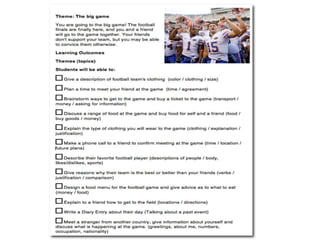
  • #77 ** Example Contract - What? No Bathroom!!
  • #78 Another way of raising standards and engaging students... CHOICES... very effective in Secondary School
  • #86 This is an area that for some reason is very neglected when teaching Chinese. A lot of teachers feel that students need to be directed in learning set characters, and that going outside the prescribed list, is not a good idea. I’m here to tell you that the more freedom we give to our learners, the better writers they will become! Sure…there is the problem of quite complicated characters, and grammar, and sentence structures….but whenever I begin teaching a beginner class of Chinese, I always set aside at least one lesson a week to story writing. Why??
  • #90 Word Walls are essential in a Chinese language classroom. Students can refer to the wall for new words, and they can keep a personal Word Wall as well.
  • #92 Give students a learning map.
  • #93 What are the BIG ideas today? Writing Journals...and look at writing as a process...students try things out...express their ideas...make mistakes...get feedback
  • #94 Here’s what is needed in Chinese writing programs. A balance of modelled or formula writing and encouraging students to find their voice. We expect students to sit for exams with only part of this equation..we drill them on formula writing (foundation) but we don’t encourage
  • #95 My personality comes through. I can express my opinions.
  • #96 Every Friday I require my students to write a Journal in Chinese. When they begin it is a combination of characters and English. But I can’t emphasize enough...that characters should not be taught in isolation, but be a way to communicate an idea...
  • #98 I give students a starter worksheet like this.
  • #99 As the students get better at expressing opinions...I include Journal tasks focusing on something in particular...This is There’s a Celebrity in my Journal activity.
  • #102 Right from the first lesson, I try to get students to use Chinese characters in meaningful ways....to convey meaning. I don’t wait until they know every character to make a sentence. I use chinglish - part English and part Chinese. It is really important that characters are taught as a way to communicate....not just practice writing characters in isolation.
  • #103 This was one of my most popular projects.
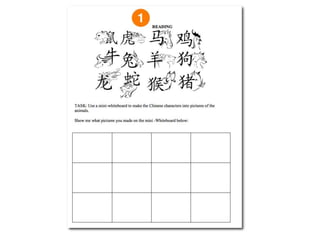
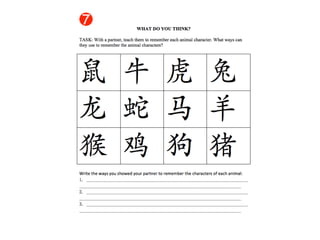
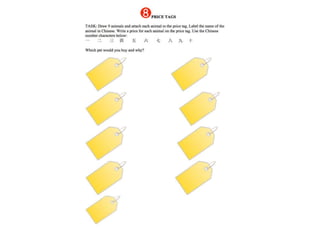
  • #105 During Chinese New Year I usually introduce the animals of the Chinese zodiac, and we have a project called ‘Adopt an Animal’. Students adopt an animal each week and write a diary using Chinese characters.
  • #109 We are going to explore how – Writing for Communication and reading Characters for Meaning can actually ASSIST students in learning to write characters. Very often we get so hung up on the mechanics….learning how to write and forget the purpose of writing. So as I said before, we can’t avoid the mechanics, but too often teachers forget that writing is all about COMMUNICATING…. We will look at 10 ways we as teachers can bring that focus back to the writing of characters.